

Water Heater Services in Plano, TX
The shower turns cold halfway through. The tap runs with a faint rust color. Something is dripping under the tank onto the closet floor. We service and replace tank water heaters across Plano's ranches, townhomes, and condos, and a total failure gets a truck out the same day it's reported.
Where the Tank Sits Changes the Job as Much as Its Age Does
No two Plano water heater closets are quite alike. A postwar ranch usually has an easy-access interior utility space. A townhome near Legacy Town Center often crowds the tank into a narrow closet where the pressure-relief discharge needs careful routing to reach an approved drain point. A condo mechanical chase near Legacy West can be tight enough that only certain tank dimensions physically fit. Threaded through all of it is water that the city's own testing rates moderately hard to hard, which wears through a sacrificial anode noticeably faster than most manufacturer literature assumes.
Plano also requires a permit before a water heater gets replaced or added, and that isn't paperwork we treat as optional. Every install we complete gets a correctly sized expansion tank for a closed system, a drain pan with proper routing under any elevated or closeted unit, and pressure-relief discharge piped the way code actually requires — the exact details that get skipped to save a few dollars and then surface as a problem on an insurance claim.
Some tanks are worth saving; a bad thermocouple, a stuck gas valve, a burnt element, a spent anode, or heavy sediment can all be repaired rather than replaced. Others genuinely aren't. Telling those two situations apart is a diagnostic call, and we show you what we found before recommending either direction.

Signs Your Plano Water Heater Needs Attention
Some of what's below points to a service call. Some points to replacement. None of it is worth waiting on.
A dip tube on its way out, a tank that was undersized for the household from day one, or sediment eating into usable volume can all look identical from the shower — the cause has to be checked, not assumed.
Sediment sitting on the bottom of the tank flash-boils and makes a knocking sound as steam pushes through it. A flush often resolves a tank that's simply overdue for cleaning; a tank that's been loud for a long while may be closer to done regardless.
That usually points to a sacrificial anode that's been consumed, letting the tank interior start corroding directly. A fresh anode can add real years back if it's caught early; heavily discolored water usually means the tank itself is past saving.
A cracked steel tank has no repair — it's a one-way failure. Shut the water off, and shut off the gas or the breaker feeding it, until a truck can get there.
A struggling burner or a heavy layer of sediment forces the unit to run longer to produce the same hot water. An unexplained increase is reason enough for a diagnostic visit rather than waiting it out.
That's the valve doing its job — releasing excess pressure or temperature, or telling you it's failed outright. Left unaddressed long enough, the risk moves from a drip on the floor to real tank failure.
Find the Real Problem First. Bring the Whole Install Up to Code When It's Time to Replace.
A tank with life left gets repaired. A tank being replaced gets every code detail that goes with a proper install, not a bare swap.
- 1Run the actual diagnostic before quoting anything
We pull the tank's age from its serial number, check sediment depth, look at the anode's condition, test the pressure-relief valve, verify the thermocouple or heating element, and check combustion on gas units. From there we tell you honestly which way the money is better spent.
- 2Repair the piece that actually failed
Whether that's a thermocouple, a gas valve, an element, a thermostat, a dip tube, an anode rod, or simply a sediment flush, we carry the common parts for what we see most often in this city.
- 3When it's time to replace, install to the current code, not the old one
That means BTU or wattage sized to the household's actual demand, an expansion tank sized correctly for a closed system, a drain pan with a real discharge path on any elevated or closet unit, proper relief-valve piping, fresh dielectric unions at the connections, and a seismic strap wherever the install calls for it.
- 4Take the old unit off your hands entirely
A drained tank is heavy and awkward, and nobody wants it dragged through a finished hallway or condo. We remove it for recycling and leave the space vacuumed when we're done.
- 5Verify it, dial it in, and explain it
Combustion gets checked on gas models, recovery rate gets confirmed, temperature gets set where you want it, and we walk through the shutoff location, the relief valve, and a sensible flush schedule going forward.
What We See in Plano Water Heater Closets, Area by Area
The house dictates the install, and the install shapes how it eventually fails.
Some of the homes near 15th and Ave K, dating to before 1940, still have a heater sitting in a small original utility nook, and getting that space up to modern code — expansion tank, pan, correct venting — is often more work than swapping the tank itself.
The custom homes off the Tollway near Parker Road, built from the late 1970s through the early 2000s, are large enough that a fair number run two separate heaters, which doubles the sizing, permitting, and upkeep conversation.
Large lots ringing the golf course, built mostly in the late 1980s and 1990s, tend to pair a single big tank with several bathrooms, so getting the sizing right for simultaneous demand carries more weight than in a smaller floor plan.
Condos and mixed-use units built from the 2010s on frequently tuck the heater into a tight mechanical chase, and confirming the replacement tank's actual footprint fits before we even quote the job comes first.
The postwar-boom neighborhoods that filled in once the Central Expressway opened, roughly the late 1950s through the mid-1980s, are old enough that missing expansion tanks and missing drain pans still turn up regularly on replacement calls.
New construction near this redevelopment already meets current code from day one, so what we're usually called out for here is routine maintenance or an early-life issue rather than a code catch-up.
What Plano Homeowners Say

Repaired Where It Makes Sense. Replaced Right Where It Doesn't.
Replacements come with the manufacturer's own tank coverage plus warrantied labor from us, and repairs carry warrantied parts and labor too. When we say replace instead of repair, that recommendation comes from what the diagnostic actually showed, not from convenience.
We're a family-owned, insured shop licensed through the Texas State Board of Plumbing Examiners, dispatching every truck from our shop in The Colony. We handle the permit application wherever Plano's code calls for one, and we run same-day service seven days a week, 8 AM to 6 PM.
Straight Answers, No Sales Pitch
Our Other Plumbing Services in Plano, TX
A failed water heater is often a sign the rest of the plumbing is the same vintage. Since we're already on-site in Plano, ask us to take a look at the rest of the system too.

Electronic detection under Plano slabs — reroute options that save your finished floors when possible.

Trenchless replacement for the aging laterals across Plano's older runs — camera first, quote in writing, minimal yard damage.
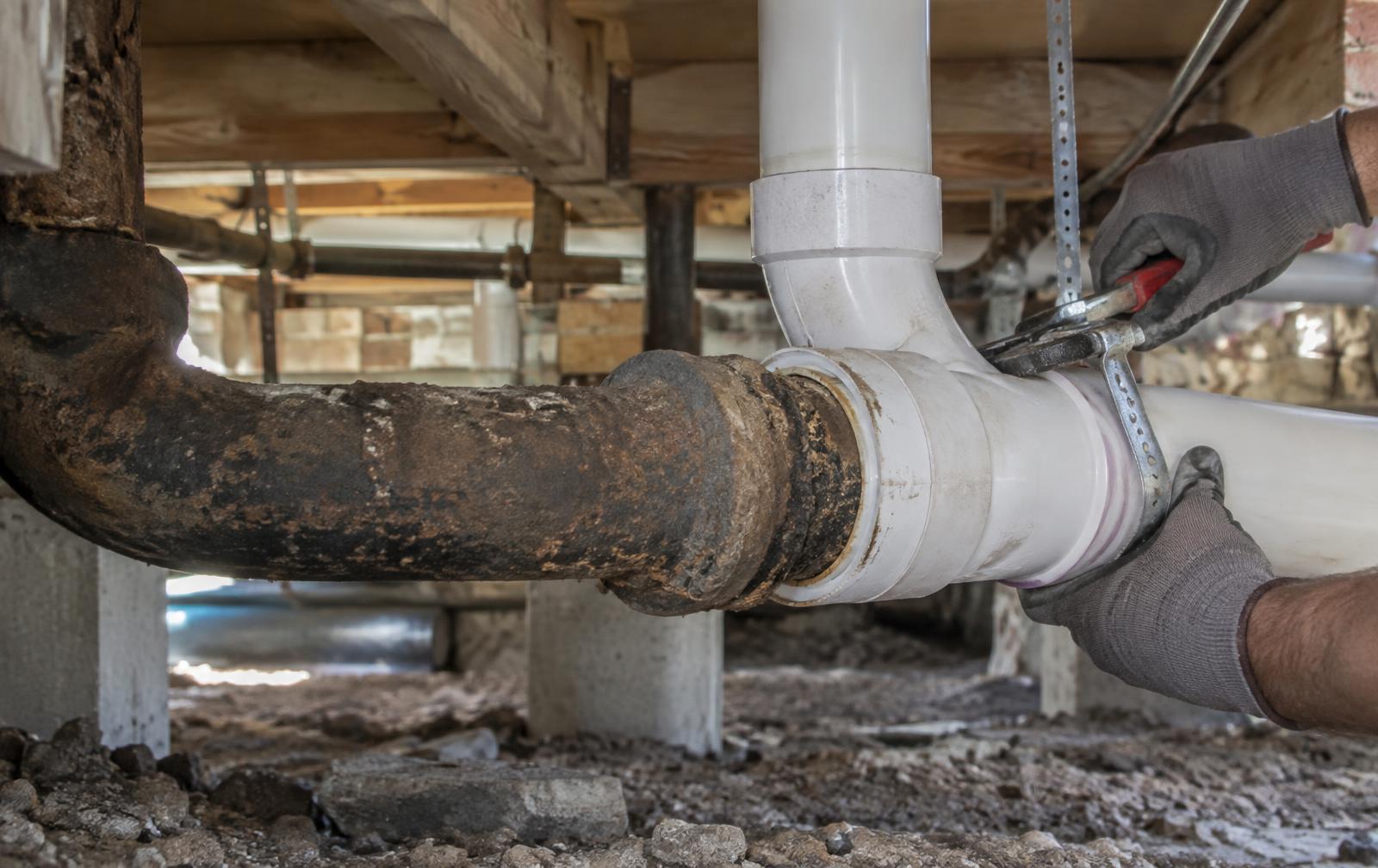
Camera inspection and PVC replacement for the aging cast iron drain lines in older Plano homes, with a written quote first.

Acoustic, thermal, and pressure testing to pinpoint hidden leaks in Plano slab and wall lines without tearing into finishes.

Licensed install, repair, and pressure-testing for Plano homes — every line signed off to Texas code and Atmos requirements.

Full-clear service and camera confirmation for the drains under Plano's neighborhoods.

Install, service, and annual descaling — Plano's hard tap water eats tankless heat exchangers without it.

same-day, 7 days a week response across Plano for burst pipes, heater failures, and main-line backups.

High-pressure cleaning that clears scale, grease, and roots from Plano's lateral runs — full-diameter, lasting clean.

Cartridge, stem, and full-fixture replacement for Plano kitchens and bathrooms — hard-water-ready parts stocked on the truck.

Rebuilds, wax-ring resets, flange repairs, and full replacements — the running toilets and rocking bowls in Plano homes.

Jam clearing, leaking-unit swaps, and quiet 3/4 HP upgrades for Plano kitchens — same-visit install.
Water Heater Trouble at Your Plano Home?
An honest diagnostic, a code-correct replacement when it's needed, and same-day attention for total failures.