

Gas Line Services in Plano, TX
A faint gas smell nobody can trace. A new stove or dryer waiting on a supply run. Atmos holding the meter until paperwork clears. Plano homeowners call us for gas repairs, new runs, and the testing and permitting that has to go along with it.
This Trade Doesn't Get Handed to Just Anyone
State board rules keep gas piping work inside or under a home restricted to a licensed plumber, and Atmos, the utility serving Plano through its Mid-Tex Division as an Atmos Cities Steering Committee member, won't bring a meter back online without documented proof that a qualified test passed. Skip that step by having a handyman tie in your range or dryer, and the exposure usually surfaces the day a technician looks closely at the meter — at which point fixing it right costs more than doing it right the first time would have.
Plano's Building Inspection Department also has to sign off any time piping gets added or reworked, and we handle that filing as part of the job rather than sending you to city hall. Homes from the city's fast build-out between the late 1950s and mid-1980s, common through the east and central parts of town, more often still carry their original rigid steel piping, and decades of shifting in the expansive clay under those slabs can loosen joints in ways nobody notices from inside the house. Newer construction, including the towers and townhomes around Legacy West, generally runs a flexible corrugated line instead — quicker to put in, but only as safe as its grounding bond.
Whether the job is finding a leak, adding a supply run for a new cooktop, setting up an outdoor connection for a grill or generator, or replacing a section the utility flagged, the work ends the same way every time: permitted through the city, tested under pressure, and documented for both you and the inspector's file.

Signs You Have a Gas Line Problem in Plano
Spot any of the following, close the valve at the meter, and reach out — don't go looking with a flashlight or a lighter.
Raw natural gas has no smell on its own; that odor is a safety additive mixed in deliberately. Get everyone outside, place the call from the yard, and skip anything that could throw a spark, including the garage door opener.
A steady hissing sound near a range shutoff, a furnace inlet, or a water heater's flex fitting usually means gas is escaping under pressure. Close that appliance's valve, then the meter valve too if the sound keeps up.
An underground leak can burn through gas quietly without ever announcing itself above ground. A winter bill that jumps with no change in habits is reason enough to book a test.
A buried line that's leaking tends to kill the lawn directly overhead in a thin, straight-edged path rather than a random dead patch — often turning up along a yard run feeding a generator or pool heater.
Dropping gas pressure from a leak elsewhere in the system can starve a burner or pilot. One appliance struggling might be isolated; more than one points further upstream.
Don't remove it. Restoring service requires a licensed pressure test and whatever repair that test points to before the utility will relight the system.
Track It Down, Build It Correctly, Prove It Holds
Nothing on a gas job counts as finished until it's permitted, sealed, and signed off by the city.
- 1Track down the leak, or map the new run
On a suspected leak, we shut the system down, charge it with compressed air, and walk every joint with an electronic sniffer and soap solution until we find every leak point. For new work, we lay out the shortest legal path and match the pipe to the appliance it will feed.
- 2File the paperwork with the City of Plano
New gas piping and most repair work call for a permit from the city's Building Inspection Department. That filing is on us, not something you have to chase down separately.
- 3Build with materials that pass inspection
Indoor runs go in rigid steel or a code-listed flexible line with proper bonding, supported correctly with the right sediment trap at every appliance drop. Buried outdoor runs use polyethylene pipe with a compliant metal riser where it surfaces.
- 4Charge the line and watch for a drop
The completed system sits under air pressure for as long as code requires, gauge visible if you want to check it yourself. Any drop sends us hunting for the failed fitting before we call the job done.
- 5Coordinate the inspection and the restart
We set the appointment with Plano's inspector, walk the system with them, and if Atmos had shut the meter down, arrange to have service brought back online. The paperwork stays with you afterward.
What's Usually Behind the Wall Across Plano
The decade a block went up tells us more about the piping inside than the square footage does.
This part of the city mostly predates 1940, and gas work here regularly turns up piping additions layered on over the decades near 15th Street and Avenue K, which is why we lean toward a full test rather than checking a single fitting.
Custom homes from 1979 through 2001 on bigger lots sometimes have long buried runs out to a pool heater or outdoor kitchen, and those are exactly the sections worth testing on a recurring basis.
Large late-1980s and 1990s homes near the golf course frequently feed gas to more than one structure on the property, and each connected appliance needs its own correctly sized drip leg.
New condos and apartments dating from the 2010s forward typically rely on flexible corrugated tubing, which holds up fine once it's properly bonded — and bonding is the very first thing we check on any service call in this area.
Homes ringing the mall corridor mostly went up during Plano's 1958-1985 growth surge, the group of houses most likely to still be running on original rigid piping worth a look before a new appliance goes in.
This corner of west Plano filled in with the Dallas North Tollway through the late 1980s and 1990s, and the mature trees planted then mean a buried yard line sometimes announces itself as dead grass well before anyone notices a smell.
What Plano Homeowners Say

Every Job Leaves a Paper Trail
Once we finish a gas job, you keep the filed city permit, the test readings, and the inspector's sign-off in hand. If Atmos had cut service, we coordinate getting the meter turned back on and confirm gas is actually flowing before we pack up. That paperwork tends to matter down the road — selling the house, filing a claim, or booking the next visit.
Our license sits with the Texas State Board of Plumbing Examiners, we carry insurance, and the company is family-run, sending trucks out of our shop in The Colony with room for same-day response on a confirmed active leak.
Straight Answers, No Sales Pitch
Our Other Plumbing Services in Plano, TX
Gas line jobs often overlap with a water heater swap or a switch to a tankless unit. We handle both from our shop in The Colony — one local call in Plano.

Electronic detection under Plano slabs — reroute options that save your finished floors when possible.

Trenchless replacement for the aging laterals across Plano's older runs — camera first, quote in writing, minimal yard damage.
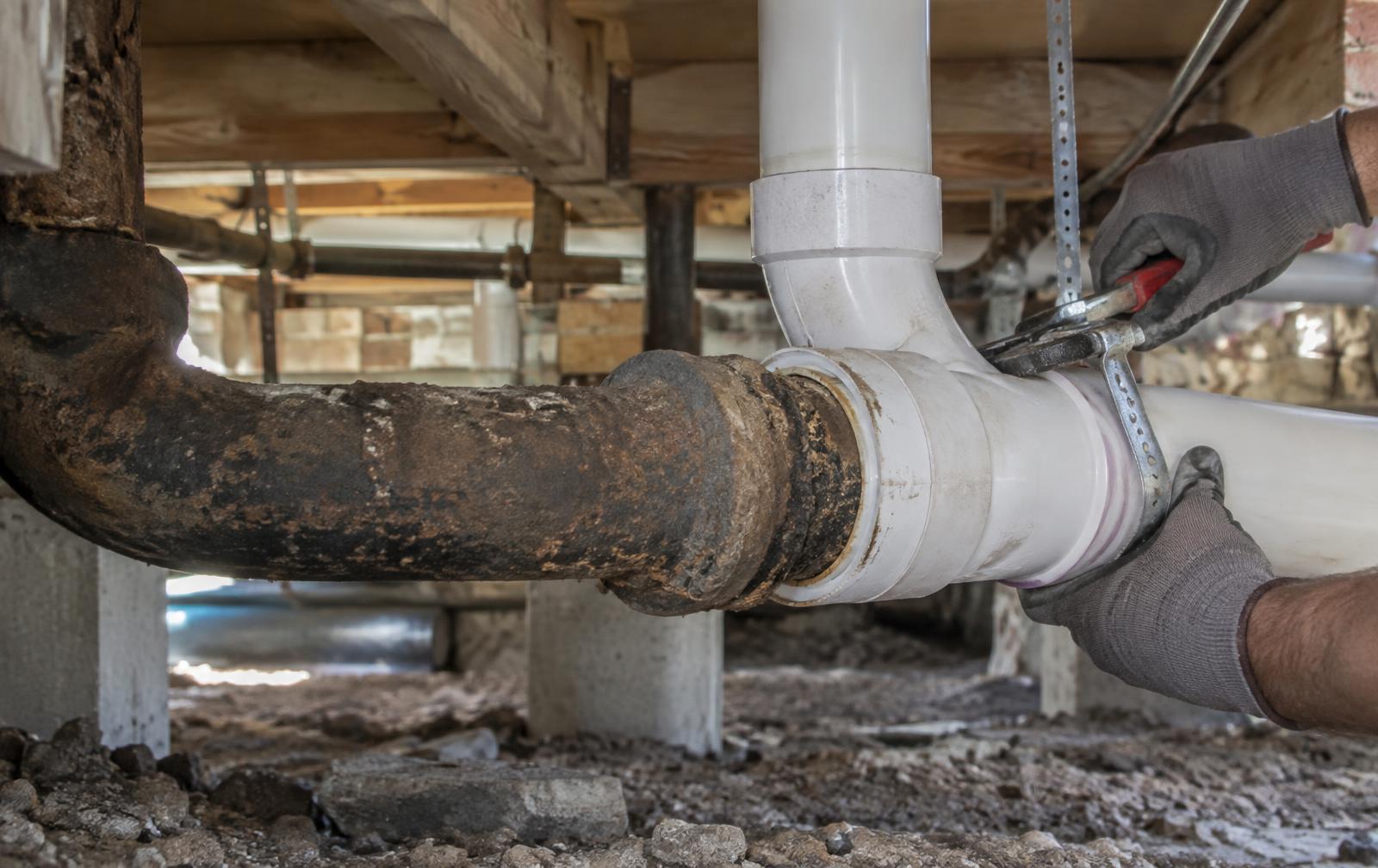
Camera inspection and PVC replacement for the aging cast iron drain lines in older Plano homes, with a written quote first.

Acoustic, thermal, and pressure testing to pinpoint hidden leaks in Plano slab and wall lines without tearing into finishes.

Full-clear service and camera confirmation for the drains under Plano's neighborhoods.

Repair, flush, and replacement of tank units — including attic and garage heaters common to Plano homes.

Install, service, and annual descaling — Plano's hard tap water eats tankless heat exchangers without it.

same-day, 7 days a week response across Plano for burst pipes, heater failures, and main-line backups.

High-pressure cleaning that clears scale, grease, and roots from Plano's lateral runs — full-diameter, lasting clean.

Cartridge, stem, and full-fixture replacement for Plano kitchens and bathrooms — hard-water-ready parts stocked on the truck.

Rebuilds, wax-ring resets, flange repairs, and full replacements — the running toilets and rocking bowls in Plano homes.

Jam clearing, leaking-unit swaps, and quiet 3/4 HP upgrades for Plano kitchens — same-visit install.
Need Gas Line Work in Plano?
Permitted, pressure-tested, and documented from start to finish. Reach out for a leak check or a quote on new work.