

Tankless Water Heater Services in Plano, TX
A new install sized for how your household actually uses hot water. A unit under warranty that needs its documented service. The annual descale that keeps a tankless unit from scaling shut in Plano's water. Correct venting and correct gas sizing, every time, so nothing voids the warranty down the line.
Tankless Rewards the Install That Was Done Right
The 2024 city water quality report puts Plano's hardness right around 12 grains per gallon, squarely in moderately hard to hard territory, with total dissolved solids high enough that scale-forming water is simply the baseline here. A tank heater tolerates that reasonably well. A tankless heat exchanger does not — mineral buildup narrows the internal passages fast, and we regularly find units still fairly new that already show exchanger scale because nobody flushed them on schedule.
Sizing the install correctly matters just as much as maintaining it afterward. Rinnai and Navien both spec minimum gas line diameters tied to BTU output, and a lot of older Plano homes were plumbed with half-inch gas lines that simply can't feed a large-output tankless unit at full fire. Add manufacturer-specific vent materials, required condensate handling on condensing models, and dedicated service valves, and the install itself decides whether the unit reaches anywhere near its rated lifespan.
We install to full manufacturer spec — the vent, the gas sizing, the isolation valves, the condensate handling, all of it documented for the warranty file — and we come back on a schedule to descale the unit so the water doesn't quietly undo the install over time.

Signs Your Plano Tankless Unit Needs Service
Tankless units usually signal trouble before they actually fail. The signal is easy to miss if you're not looking for it.
Every manufacturer's code points at something specific — flame sense, flow, temperature, or scale-related restriction. We look up the exact code for your unit's make and model before quoting anything.
Scale narrowing the heat exchanger's internal passages is the usual reason a tub takes longer to fill than it once did. It's also the easiest of these symptoms to write off as normal wear.
A brief cold-water interruption can come from a scale-restricted flow sensor, an undersized recirculation setup, or the unit's own flow modulation acting up. Each has a different fix, so the symptom alone doesn't tell the whole story.
This usually means the unit is undersized for how the house actually uses hot water, or the gas line can't deliver enough fuel at peak demand. Checking gas line diameter is often the first thing worth ruling out in an older Plano home.
In Plano's water, that's not a minor maintenance item to put off. Manufacturers generally require documented annual descaling to keep the warranty valid at all.
That sound is usually flash steam escaping through scale sitting on the heat exchanger. Left alone, it moves from an annoyance to permanent exchanger damage.
Sized for Your House, Vented to Spec, Descaled on Schedule
The install decides the first several years. The descaling schedule decides the rest.
- 1Size the unit for real demand, not a guess
We count fixtures that could realistically run at once and calculate the flow rate needed at winter incoming-water temperatures, which run colder here than many online sizing calculators assume. That math usually lands on a larger-output unit paired with a larger gas line than the one already in the wall.
- 2Match the vent to what the manufacturer actually calls for
Depending on the model that means PVC, CPVC, or stainless, run at the right slope, terminated the right distance from windows and doors, with a concentric kit where the mechanical space is cramped. Skimping on vent diameter or swapping in the wrong material is the shortcut we see most, and manufacturers treat it as grounds to deny coverage outright.
- 3Add isolation valves and condensate handling
Full-port valves on both the hot and cold sides turn a future descale into a short, self-contained job instead of a full plumbing call. Condensing models get a condensate neutralizer so acidic runoff doesn't eat through nearby drain lines.
- 4Keep it clean on a yearly rhythm
Shutting the service valves lets us loop a mild acid solution through the exchanger, rinse it out, and bring the unit back online without disturbing the rest of the plumbing. Before we pack up we're also looking over the igniter, the flame sensor, the flow sensor, and the condensate trap, and logging the whole visit for the file.
- 5Fix what breaks with parts built for that unit
Flame sensors, igniters, gas valves, flow sensors, and control boards are all replaceable on the units we service, and we keep common ones on hand rather than waiting on a special order. Between the brands homeowners in Plano tend to have installed, we're comfortable working on nearly all of them.
Where Tankless Fits Well Across Plano
Housing type and install location shape the job as much as the unit itself.
Homes near 15th and Ave K date to before 1940, and a tankless retrofit here almost always means upgrading the gas line and reworking the vent path from scratch — older infrastructure was never built with a 199,000 BTU appliance in mind.
Custom homes off the Tollway near Parker Road, built from the late 1970s through the early 2000s, are frequently large enough to justify two tankless units feeding different zones rather than a single oversized one.
The wide, golf-course-facing lots built through the late 1980s and 1990s tend to have detached structures or pool houses that make good candidates for a dedicated tankless unit instead of running long hot-water lines from the main house heater.
Condos and mixed-use units built from the 2010s onward typically have small mechanical closets where a compact tankless unit and a concentric vent kit solve a space problem that a tank heater simply can't.
The postwar-boom housing that filled in once the Central Expressway opened, mostly the late 1950s through the mid-1980s, is the segment of Plano most likely to still be running a half-inch gas line that needs upsizing before tankless works right.
Newer construction near this redevelopment is usually already plumbed with adequate gas capacity, which makes a tankless install here more straightforward than in much of the rest of the city.
What Plano Homeowners Say

Documented Work Is What Keeps a Tankless Warranty Valid
Registration paperwork goes in for every install — serial number, how the gas and vent were configured, which valves went in where. Each yearly cleaning gets logged against that same file, and that paper trail is the actual reason a long manufacturer warranty stays intact instead of getting denied later.
We're licensed through the Texas State Board of Plumbing Examiners, insured, and family-owned, with every truck dispatching from our shop in The Colony. A unit that's stopped working gets same-day attention; routine upkeep gets scheduled around you, seven days a week, 8 AM to 6 PM.
Straight Answers, No Sales Pitch
Our Other Plumbing Services in Plano, TX
A tankless install often turns into a gas line conversation, and sometimes a water heater comparison too. We're glad to cover all of it in one visit here in Plano.

Electronic detection under Plano slabs — reroute options that save your finished floors when possible.

Trenchless replacement for the aging laterals across Plano's older runs — camera first, quote in writing, minimal yard damage.
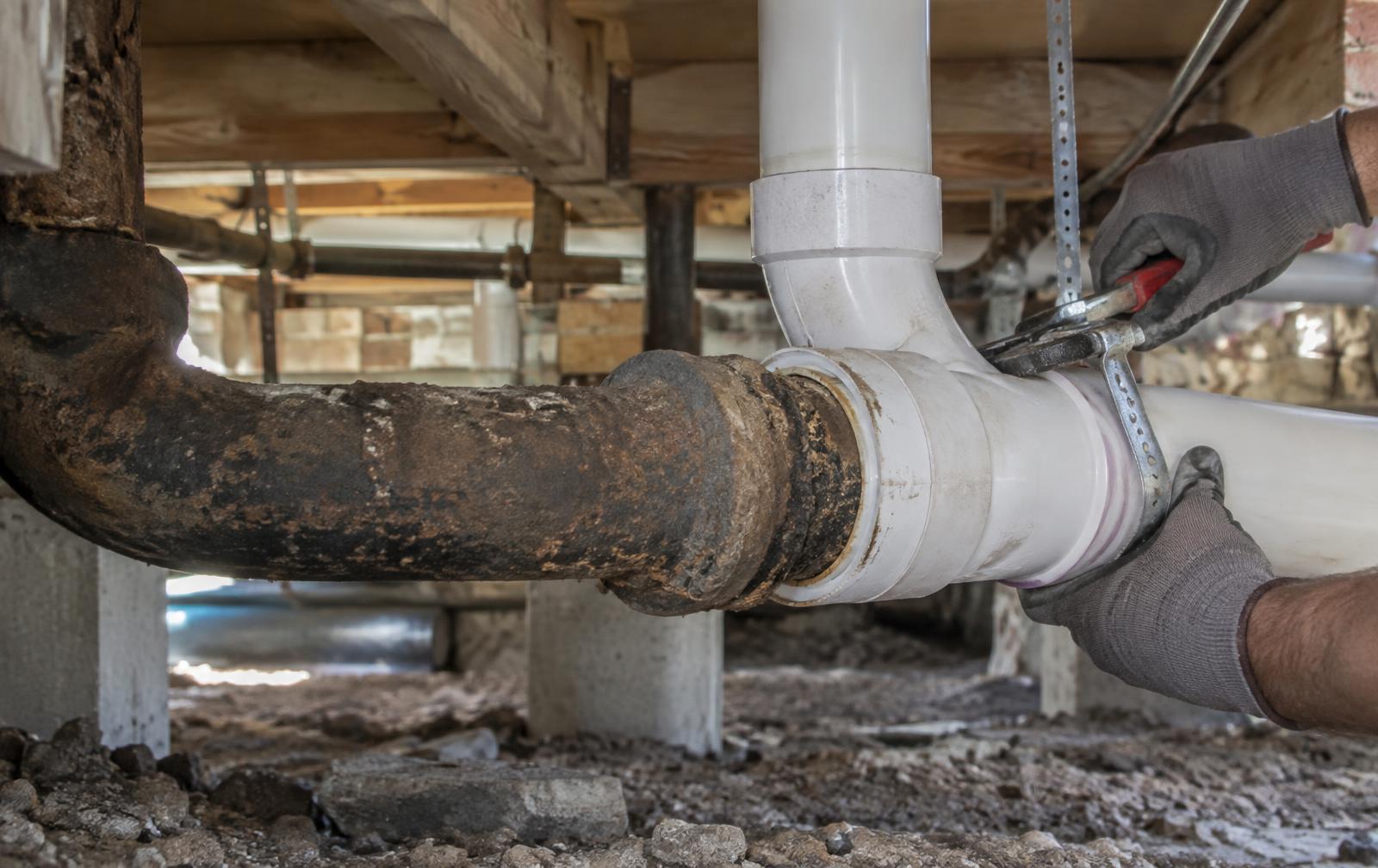
Camera inspection and PVC replacement for the aging cast iron drain lines in older Plano homes, with a written quote first.

Acoustic, thermal, and pressure testing to pinpoint hidden leaks in Plano slab and wall lines without tearing into finishes.

Licensed install, repair, and pressure-testing for Plano homes — every line signed off to Texas code and Atmos requirements.

Full-clear service and camera confirmation for the drains under Plano's neighborhoods.

Repair, flush, and replacement of tank units — including attic and garage heaters common to Plano homes.

same-day, 7 days a week response across Plano for burst pipes, heater failures, and main-line backups.

High-pressure cleaning that clears scale, grease, and roots from Plano's lateral runs — full-diameter, lasting clean.

Cartridge, stem, and full-fixture replacement for Plano kitchens and bathrooms — hard-water-ready parts stocked on the truck.

Rebuilds, wax-ring resets, flange repairs, and full replacements — the running toilets and rocking bowls in Plano homes.

Jam clearing, leaking-unit swaps, and quiet 3/4 HP upgrades for Plano kitchens — same-visit install.
Tankless Install or Service Needed in Plano?
Manufacturer-spec installation, documented annual service, and a warranty that stays valid because the paperwork backs it up. Book now.