

Sewer Line Replacement in Plano, TX
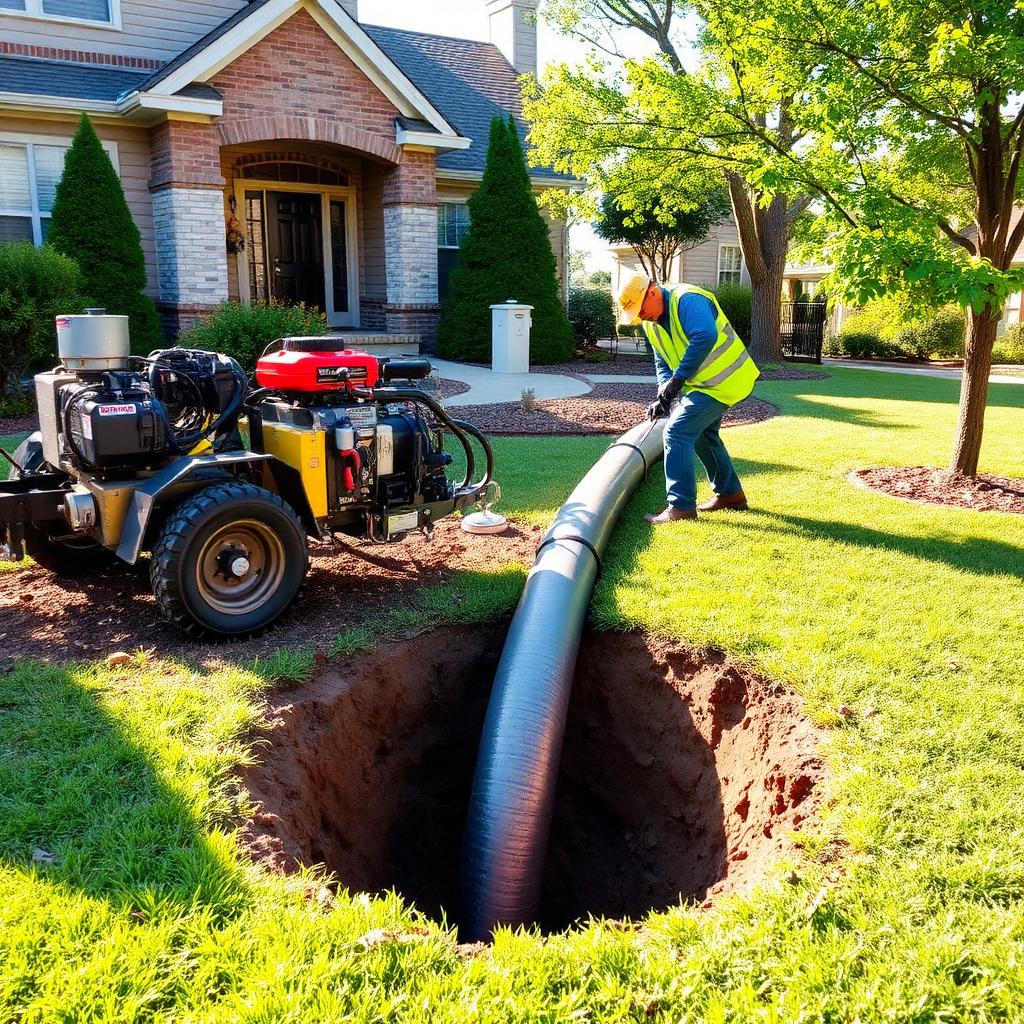
One rooter visit stopped fixing it. The next one didn't hold either. Now the scope shows a split pipe, a low spot holding standing water, or roots packed solid through a joint. Our crews swap out Plano sewer laterals using trenchless methods even on tight, narrow lots — the yard stays mostly the way you left it.
Fifty-Year-Old Pipe Doesn't Respond to Rooting Anymore
Plano's ordinance draws a clean line: the city owns the sewer main and installs the lateral stub out to the property boundary, and everything from that point toward the house belongs to the homeowner. Much of that private stretch dates to the neighborhood building wave between the late 1950s and mid-1980s, when cast iron ran near the house and gave way to vitrified clay closer to the street. Half a century later, that cast iron has often scaled down to a fraction of its original channel, and clay joints have separated just enough for roots to squeeze through.
The Blackland Prairie clay sitting beneath essentially all of Plano keeps shifting through wet and dry seasons regardless of when a home was built, and that shifting is exactly what pries open joints and tips low spots into standing-water bellies. A scope that keeps showing the same sag or offset section run after run isn't bad luck — it's the ground doing what expansive clay does.
Rather than trench the entire yard open, we generally reach for pipe bursting or a cured-in-place liner, both of which replace the pipe through one or two small access points instead of a continuous ditch. On the narrower downtown lots and the tighter setbacks near Legacy Town Center, that's frequently the only way the job gets done without taking out a driveway or mature landscaping in the process.
Signs Your Plano Sewer Line Has Failed, Not Just Clogged
One of these earns a camera look. Several together usually mean cabling won't hold this time either.
A sound line doesn't need rooting every month or two. If cabling only buys a short window before the identical fixture backs up again, the pipe itself has given out somewhere along the run.
A gurgling tub, an overflowing washer, and a slow toilet all at once means the main line is compromised, not a single branch.
A leaking lateral waters and feeds the soil directly above it. A recurring damp patch or an unusually green stripe tracing the pipe's path is often visible before anything shows up indoors.
When a line under the slab leaks or collapses, it can erode the soil holding up the foundation above it. Cracking that starts near a bathroom or utility wall deserves a scope before anything else.
Gas escaping into open air points to an actual joint or vent failure, not a clog. Cabling the line will not touch that kind of problem.
If a prior inspection flagged heavy root intrusion or a low section holding water, and the same fixture keeps backing up, that footage had it right the first time.
Look Before We Dig. Choose the Method the Line Actually Needs.
Nobody gets a sewer price over the phone here. We inspect first, then match the fix to what the pipe shows us.
- 1Scope the full length from the cleanout
The camera travels from the house connection out to the city tap while we record everything along the way, and you're welcome to watch alongside us. If the footage shows a fixable clog rather than a failed pipe, that's what we'll tell you — and price accordingly.
- 2Track depth and direction with a locating beacon
A transmitter riding in the camera head lets us trace the pipe's path, depth, and bends from above ground. That reading tells us whether bursting or lining fits better and exactly where any access points should sit.
- 3Put the method and the number on paper first
Before anything breaks ground, we hand over a document spelling out the chosen method, the footage involved, the access point locations, the replacement pipe's material and size, and what restoration is included.
- 4Handle the permit and utility coordination
Replacing a sewer line inside Plano requires a plumbing permit through the city's Building Inspection Department, and the work often runs close enough to Atmos Energy's gas infrastructure that a locate call comes first. We manage both so the paperwork isn't on your plate.
- 5Finish the run and re-scope it
Bursting drags new pipe through the old channel while splitting the failed material outward; lining cures a fresh interior wall inside the existing pipe. Either method ends with a follow-up camera pass and footage handed over for your records.
What Turns Up in Sewer Lines Across Plano
The build era still tells us the most about what a scope will find.
Homes clustered near 15th and Ave K trace back to the city's original platting before 1940. Where the lateral hasn't already been swapped once, it's frequently still cast iron or clay end to end — the exact combination that calls for full replacement over another cleaning.
Custom homes built off the Tollway near Parker Road from the late 1970s into the early 2000s often sit on deeper lots, meaning more linear feet of aging pipe for Blackland clay to work against over the decades.
Large-lot homes from the late 1980s and 1990s ringing the golf course tend to have longer runs out to the street, so a trenchless job here usually covers more distance than a standard downtown lot.
Construction here runs mostly 2010s and later, and the tighter setbacks between mixed-use buildings mean access points have to be planned around shared driveways and landscaping rather than dropped wherever's easiest.
The stretch of Plano that filled in once the Central Expressway opened, roughly the late 1950s through the mid-1980s, is the same generation that put cast iron and clay in the ground — and the age bracket most often calling us today.
Building here is recent enough that laterals tend to be younger PVC, so when we do get a call in this pocket it's more often a single section damaged by nearby construction than a pipe simply aging out.
What Plano Homeowners Say
A Paper Trail on the Pipe, Start to Finish
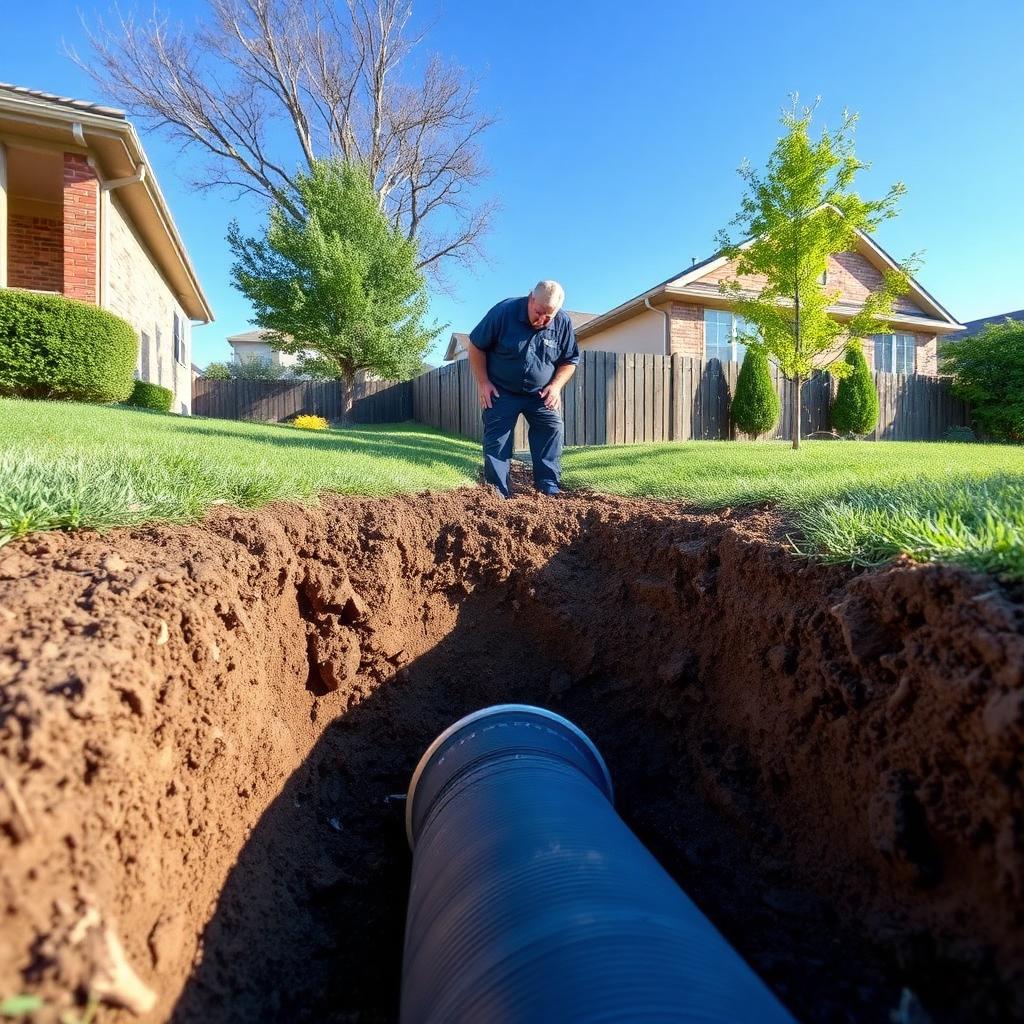
Every trenchless job includes the manufacturer's warranty on the pipe material along with warrantied labor on our end of the install. The before footage, the after footage, and a copy of the pulled permit all land in one folder handed to you at the end.
We're licensed by the Texas State Board of Plumbing Examiners, insured, and family-owned, and every truck rolls out of our shop in The Colony. We're on the schedule same-day, seven days a week, 8 AM to 6 PM.
Straight Answers, No Sales Pitch
Our Other Plumbing Services in Plano, TX
A sewer line that's failed often isn't the only aging pipe in the house. Ask us to look at the rest of the system while the crew is already on site in Plano.

Electronic detection under Plano slabs — reroute options that save your finished floors when possible.
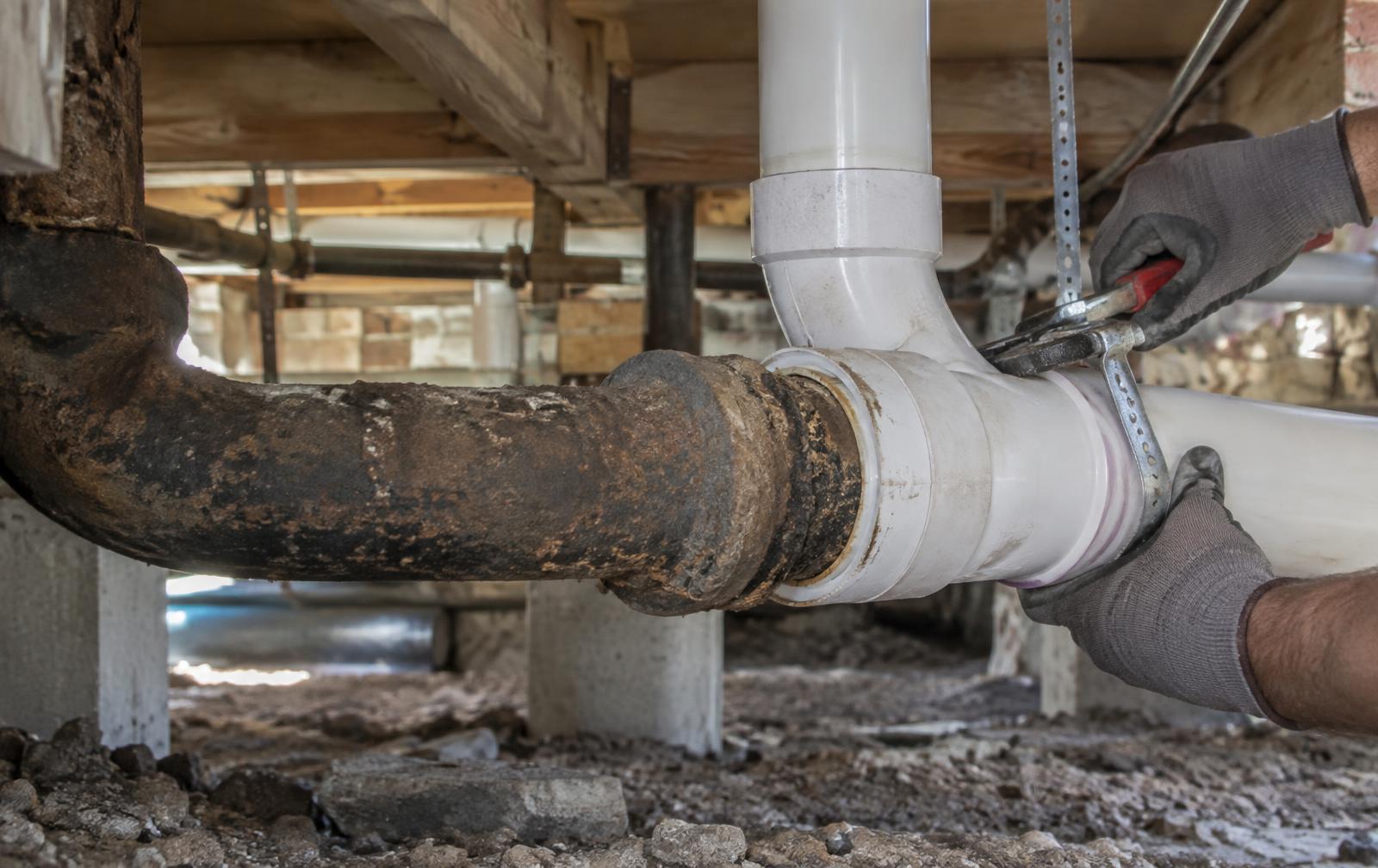
Camera inspection and PVC replacement for the aging cast iron drain lines in older Plano homes, with a written quote first.

Acoustic, thermal, and pressure testing to pinpoint hidden leaks in Plano slab and wall lines without tearing into finishes.

Licensed install, repair, and pressure-testing for Plano homes — every line signed off to Texas code and Atmos requirements.

Full-clear service and camera confirmation for the drains under Plano's neighborhoods.

Repair, flush, and replacement of tank units — including attic and garage heaters common to Plano homes.

Install, service, and annual descaling — Plano's hard tap water eats tankless heat exchangers without it.

same-day, 7 days a week response across Plano for burst pipes, heater failures, and main-line backups.

High-pressure cleaning that clears scale, grease, and roots from Plano's lateral runs — full-diameter, lasting clean.

Cartridge, stem, and full-fixture replacement for Plano kitchens and bathrooms — hard-water-ready parts stocked on the truck.

Rebuilds, wax-ring resets, flange repairs, and full replacements — the running toilets and rocking bowls in Plano homes.

Jam clearing, leaking-unit swaps, and quiet 3/4 HP upgrades for Plano kitchens — same-visit install.
Sewer Backing Up at Your Plano Home?
A scope before any digging, a written method and price, and the manufacturer's warranty on the pipe. Get a scope scheduled today.