
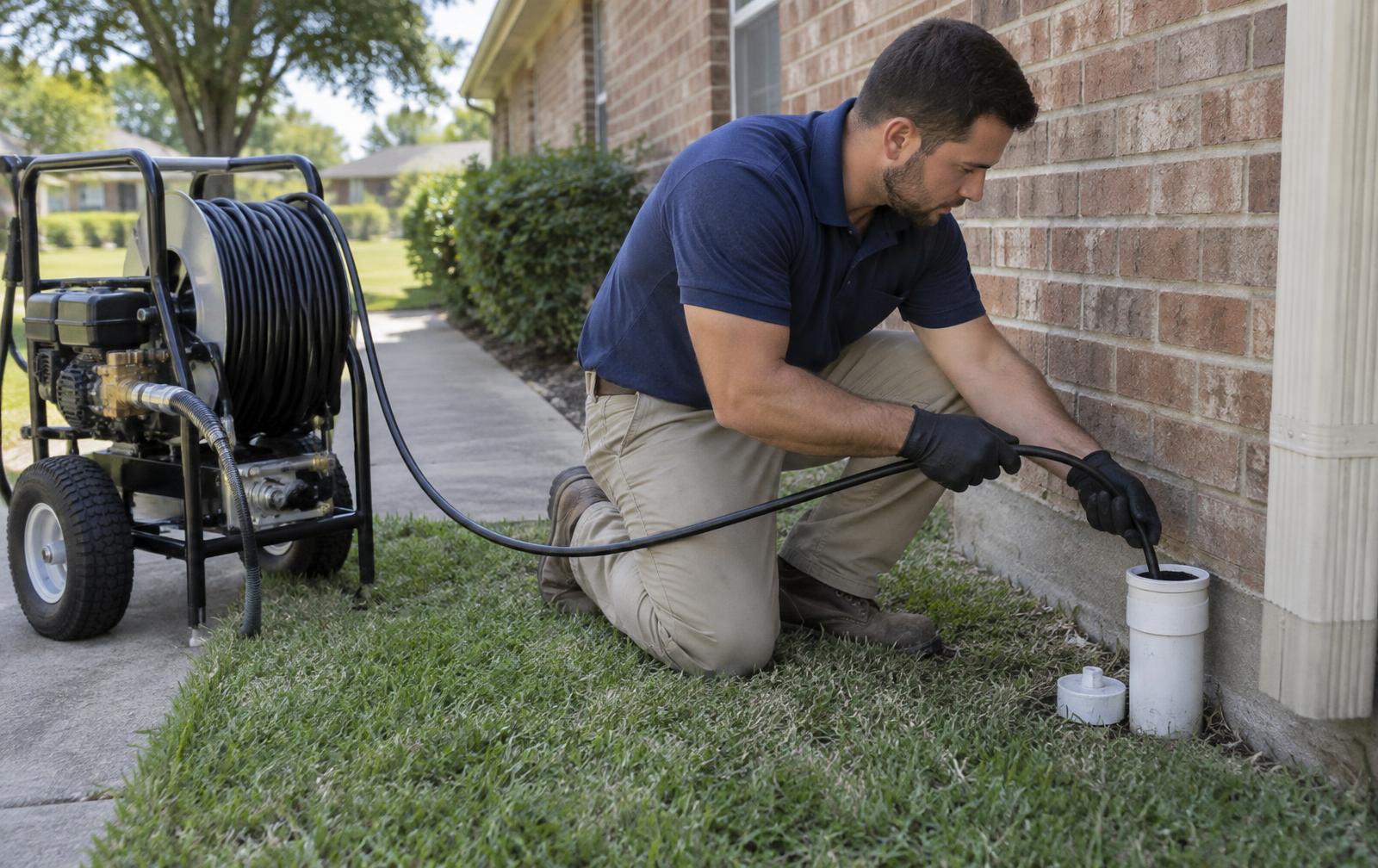
Hydro Jetting in Plano, TX
A drain snake that used to work and doesn't anymore. A line that slows down within days of being cabled. A scope that shows buildup lining the walls of the pipe. Jetting strips that lining out entirely instead of punching through it, which matters most in a city carrying so much aging, mineral-affected cast iron underground.
One Tool Opens a Gap. The Other Rebuilds the Pipe.
Send a cable down a clogged line and it bores a path about as wide as the cutter head — enough for water to start flowing, but everything coating the surrounding pipe stays put. A jetter takes a completely different approach: pressurized water fires backward through a rotating nozzle, stripping the buildup off the entire interior surface and hauling it back out through the cleanout rather than leaving it behind to rebuild the blockage.
That gap between the two methods shows up more here than in most surrounding suburbs. The City of Plano's water quality data lists dissolved solids at 509 parts per million and hardness near 202 as calcium carbonate — enough mineral content that, given decades, it lines the inside of a drain pipe the same way it scales a water heater tank. Add in the volume of cast iron sewer piping tied to Plano's 1958-1985 building boom, and a line that left the factory at four inches across is frequently running at a fraction of that today. A cable cuts through whatever's softest in that narrowed space. A jetter actually removes what narrowed it.
This is the tool we reach for on the older cast iron mains near Historic Downtown Plano, on the deeper lateral runs in Willow Bend and Gleneagles where roots tend to intrude more, and as scheduled upkeep on aging pipe anywhere in the city before a slow problem becomes a flooded utility room. Every job includes a scope before we start and another after, so the difference is visible, not just claimed.

When Hydro Jetting Is the Right Call in Plano
A cable resolves plenty of blockages on its own. The situations below usually call for something more thorough.
If a line has needed cabling more than once in the past year at the identical spot, the interior surface has buildup that a cutter head simply passes through without disturbing.
A properly functioning pipe reads smooth on camera. Texture or crusting running the length of the shot is a coating that only pressurized water actually removes.
A cutting head chops through a root intrusion but the finer strands survive and regrow within a season. Water pressure clears that remaining material out instead of leaving it to take hold again.
When cabling doesn't meaningfully speed things back up, the pipe's usable width has likely shrunk from built-up residue rather than a single obstruction sitting in the way.
Frequent cooking builds a coating faster than an average household generates. Scheduling jetting ahead of time beats dealing with a backup once it actually happens.
Plano's older sewer piping benefits from a periodic cleaning pass even with no complaint yet, buying back diameter and pushing off the day full replacement becomes necessary.
Match the Tool to the Pipe, Verify With a Camera
The nozzle and the pressure setting both depend on what the pipe is made of and what's actually built up inside.
- 1Look before we spray anything
A camera goes down the line first so we know exactly what we're dealing with — grease, mineral coating, roots, or several at once — and to confirm the pipe itself can handle jetting. A section that's cracked or out of alignment gets flagged instead, since high-pressure water through a break just sends debris into the surrounding soil.
- 2Pick the head and the pressure to match
A pointed tip works mineral coating loose, a chain-style head handles heavier roots, a penetrating nozzle breaks up solid grease, and a flat cleaning head strips general buildup off cast iron. Pressure gets dialed down on older or more brittle pipe and run higher on iron and PVC that can take it.
- 3Feed past the problem, clean on the way back
The hose travels beyond the blockage first, then the water fires as it's pulled back toward the cleanout, so loosened material comes out with the hose instead of getting shoved further down the line.
- 4Go back through again if it needs it
Thick buildup or a heavy root mass sometimes takes a second or third run with a larger head to finish properly. That extra time is part of the same visit, not a reason to call it done early.
- 5Scope it again before we leave
A follow-up camera pass shows the interior cleaned out, side by side with the first look. If that same pass turns up a structural issue hiding under the old coating, we explain it and price the repair honestly — pressure alone can't fix a pipe that's actually failed.
Where Jetting Works Best in Plano
What's actually built up in a given line tends to follow the neighborhood's age and layout.
This district traces back to the 1872-1920s railroad era, with much of it built before 1940. Sewer lines from that period were frequently clay or early iron, and finding aged joints with root intrusion and buildup before a jetting job is routine here.
Custom homes from 1979 through 2001 sit on larger lots with longer lateral runs to the street, which gives both tree roots and mineral buildup more distance to accumulate before anyone notices a change in how the drains perform.
Large late-1980s and 1990s homes on wide golf-course lots often have substantial landscaping close to the lateral, which tends to make root intrusion, more than mineral buildup, the main reason we're called out here.
Condos and apartments built from the 2010s onward mostly run PVC instead of iron, so a jetting call in this area is usually about shared-line grease rather than the mineral coating found on an older pipe.
The subdivisions surrounding the mall corridor largely date to Plano's 1958-1985 growth years, the group most likely to still have original iron mains narrowed by decades of mineral exposure from the city's water.
This part of west Plano grew alongside the Dallas North Tollway through the late 1980s and 1990s, and the mature tree cover planted then is exactly the kind of landscaping that eventually sends roots into an aging lateral line.
What Plano Homeowners Say

Not Just a Claim — Footage You Can Compare
Every jetting appointment comes with footage from before and after, kept for your own file. If the first look at the pipe shows a structural failure, we stop there and tell you directly — pushing high-pressure water through a broken section only forces debris out into the ground and worsens the underlying issue.
We hold our license through the Texas State Board of Plumbing Examiners, carry insurance, and run as a family business, sending the trailer-mounted jetter out from our shop in The Colony — roughly 25 to 35 minutes from most Plano addresses under normal traffic — with room for same-day visits on a backup that keeps coming back.
Straight Answers, No Sales Pitch
Our Other Plumbing Services in Plano, TX
Jetting often sits between a routine cable job and a full pipe replacement. When the scope shows the line itself has failed, we handle that replacement locally as well.
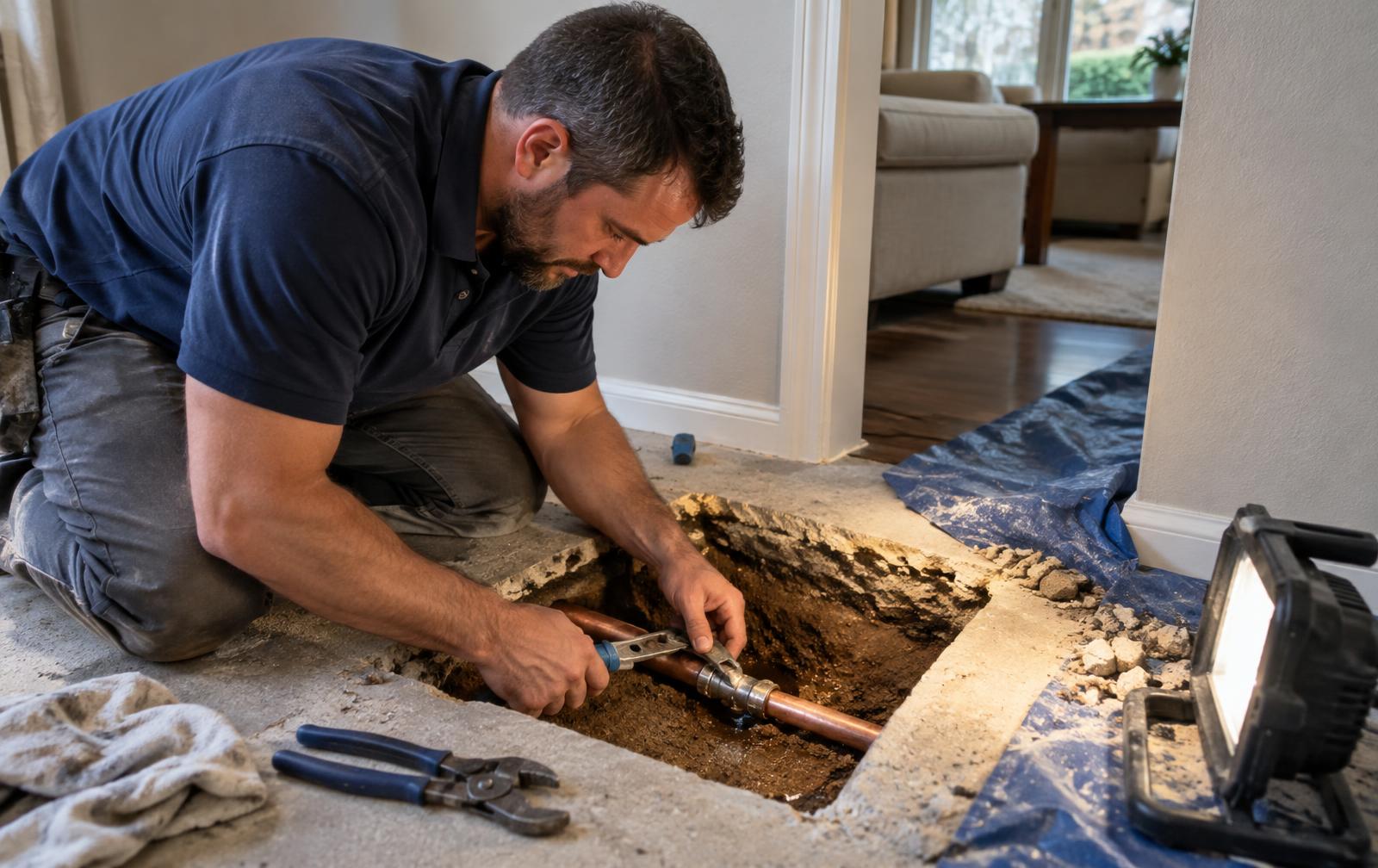
Electronic detection under Plano slabs — reroute options that save your finished floors when possible.
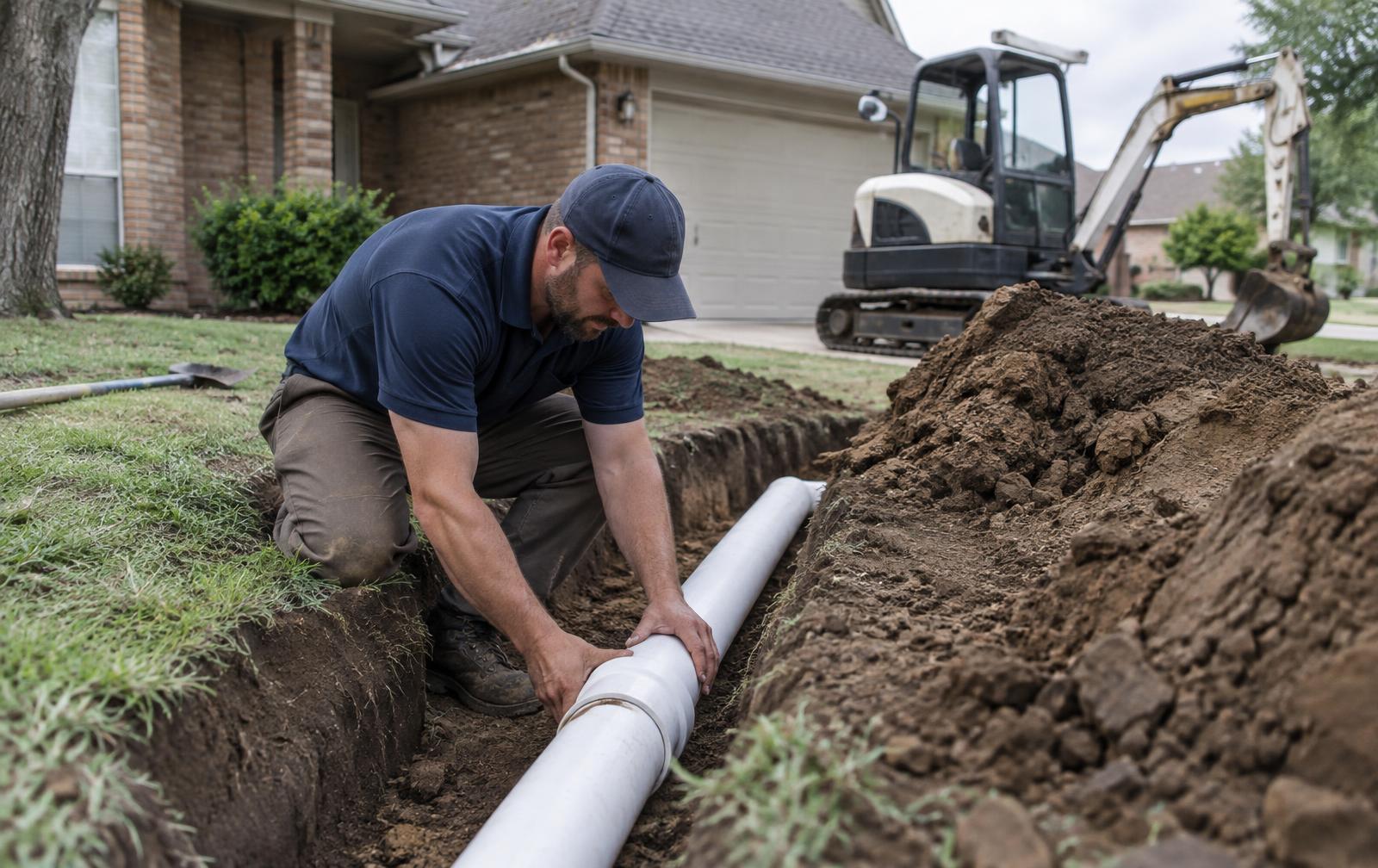
Trenchless replacement for the aging laterals across Plano's older runs — camera first, quote in writing, minimal yard damage.
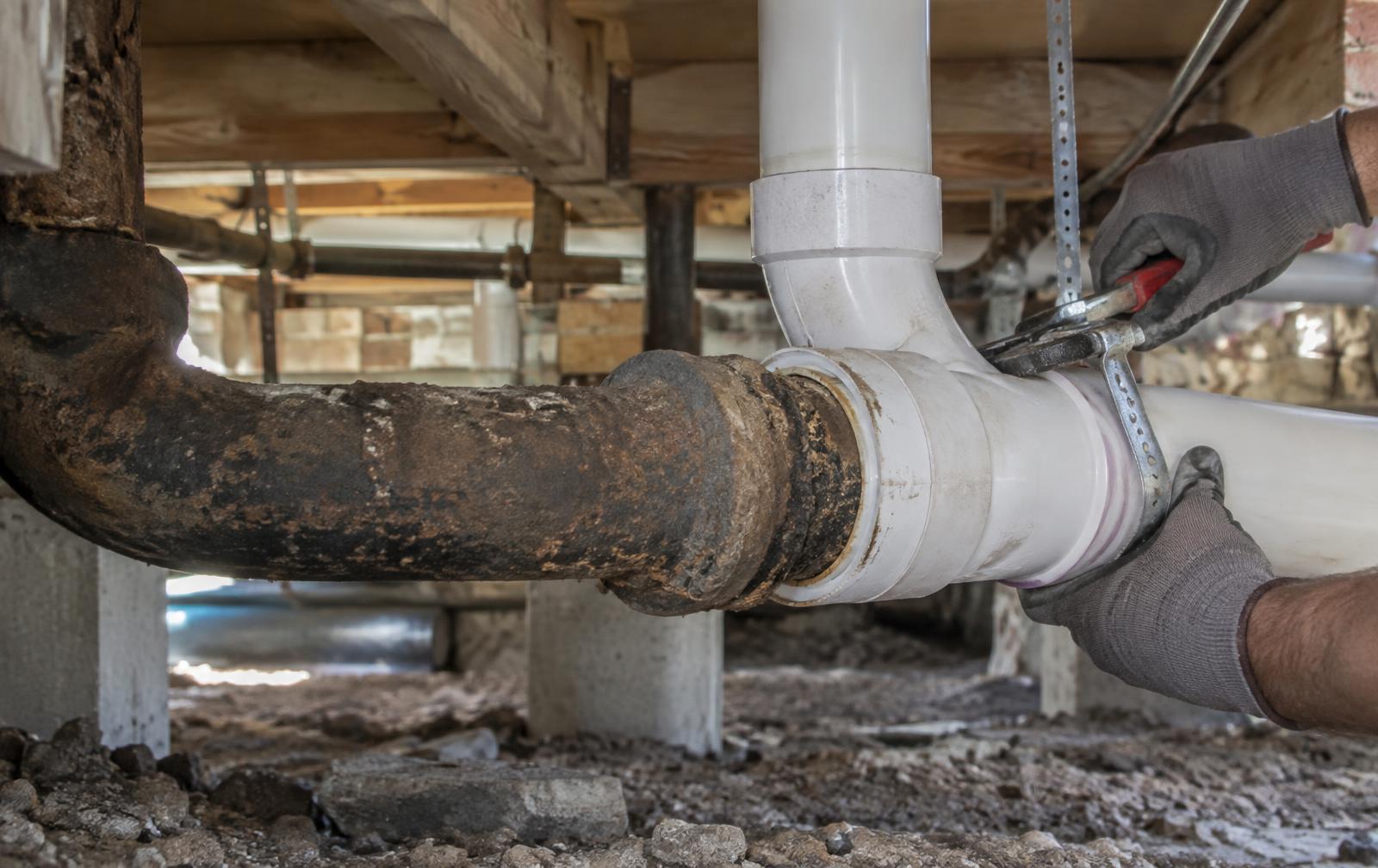
Camera inspection and PVC replacement for the aging cast iron drain lines in older Plano homes, with a written quote first.
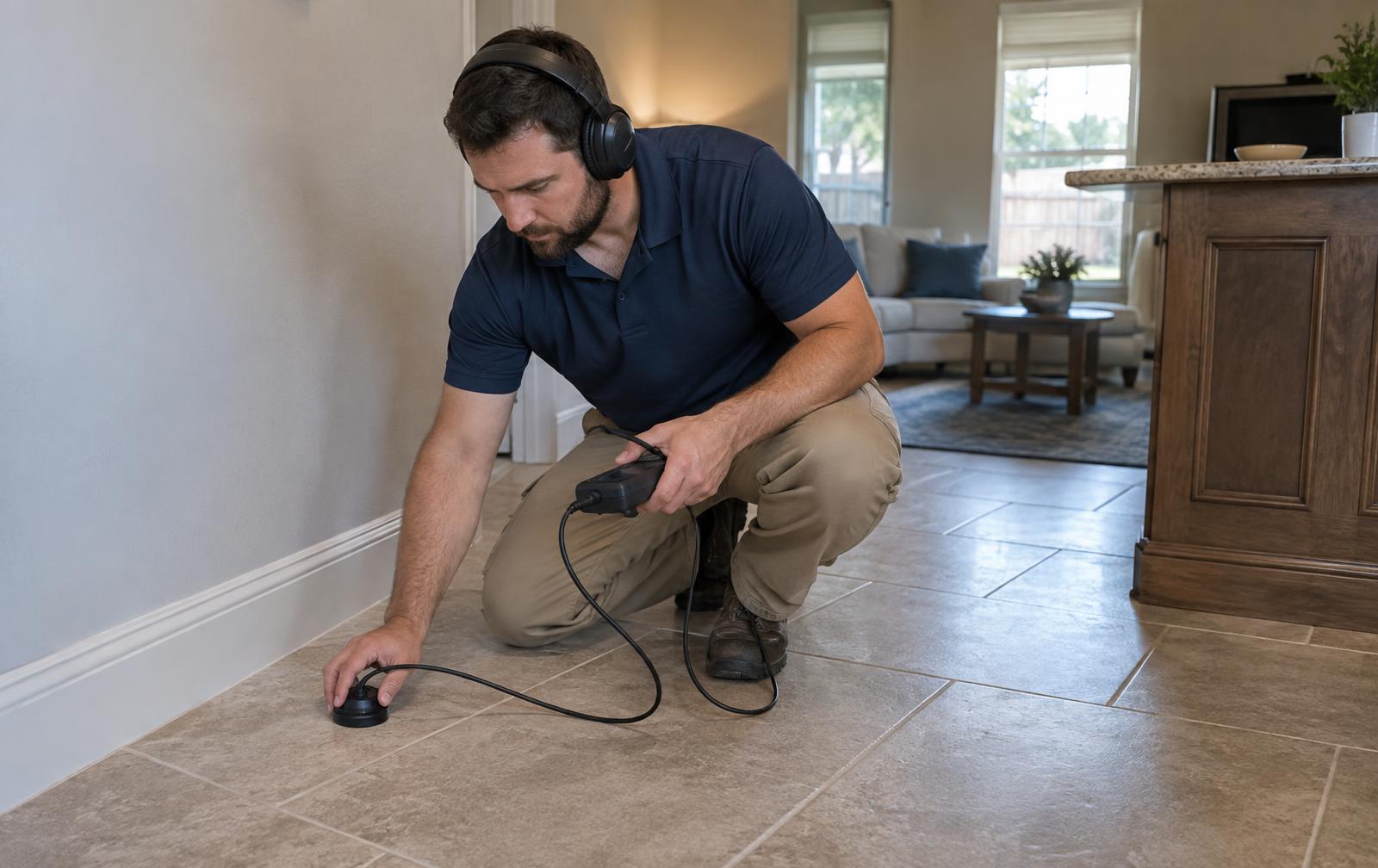
Acoustic, thermal, and pressure testing to pinpoint hidden leaks in Plano slab and wall lines without tearing into finishes.
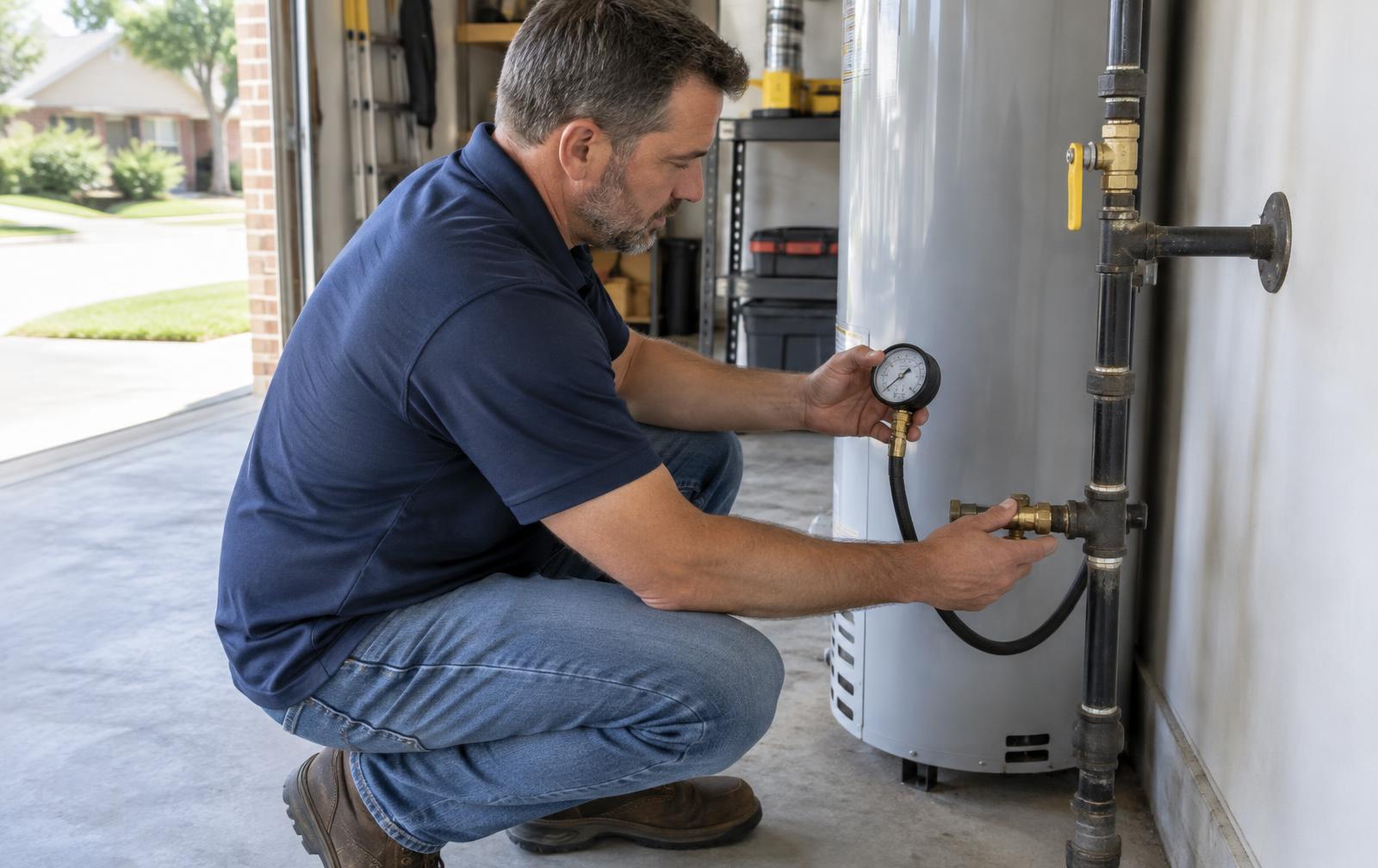
Licensed install, repair, and pressure-testing for Plano homes — every line signed off to Texas code and Atmos requirements.
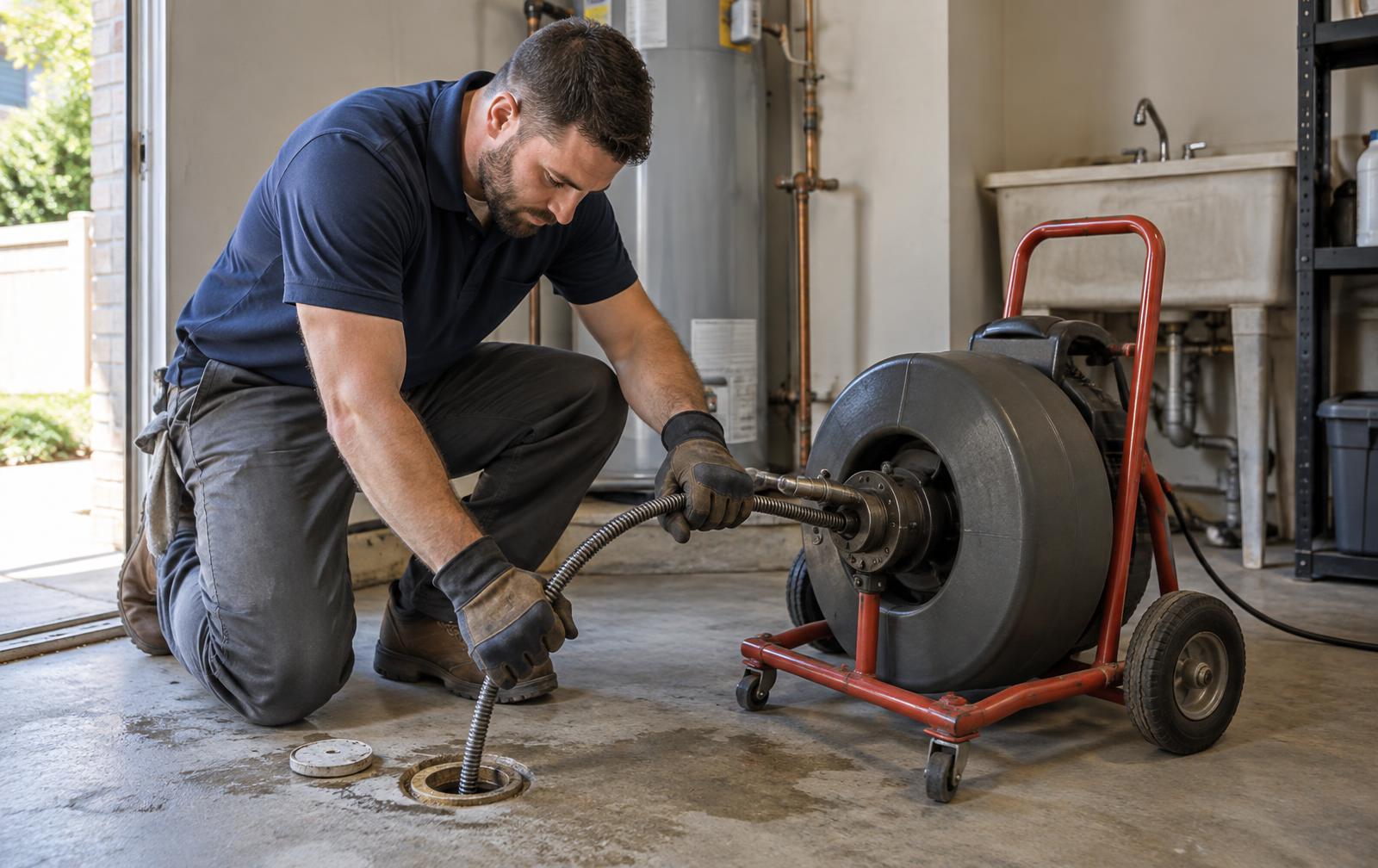
Full-clear service and camera confirmation for the drains under Plano's neighborhoods.
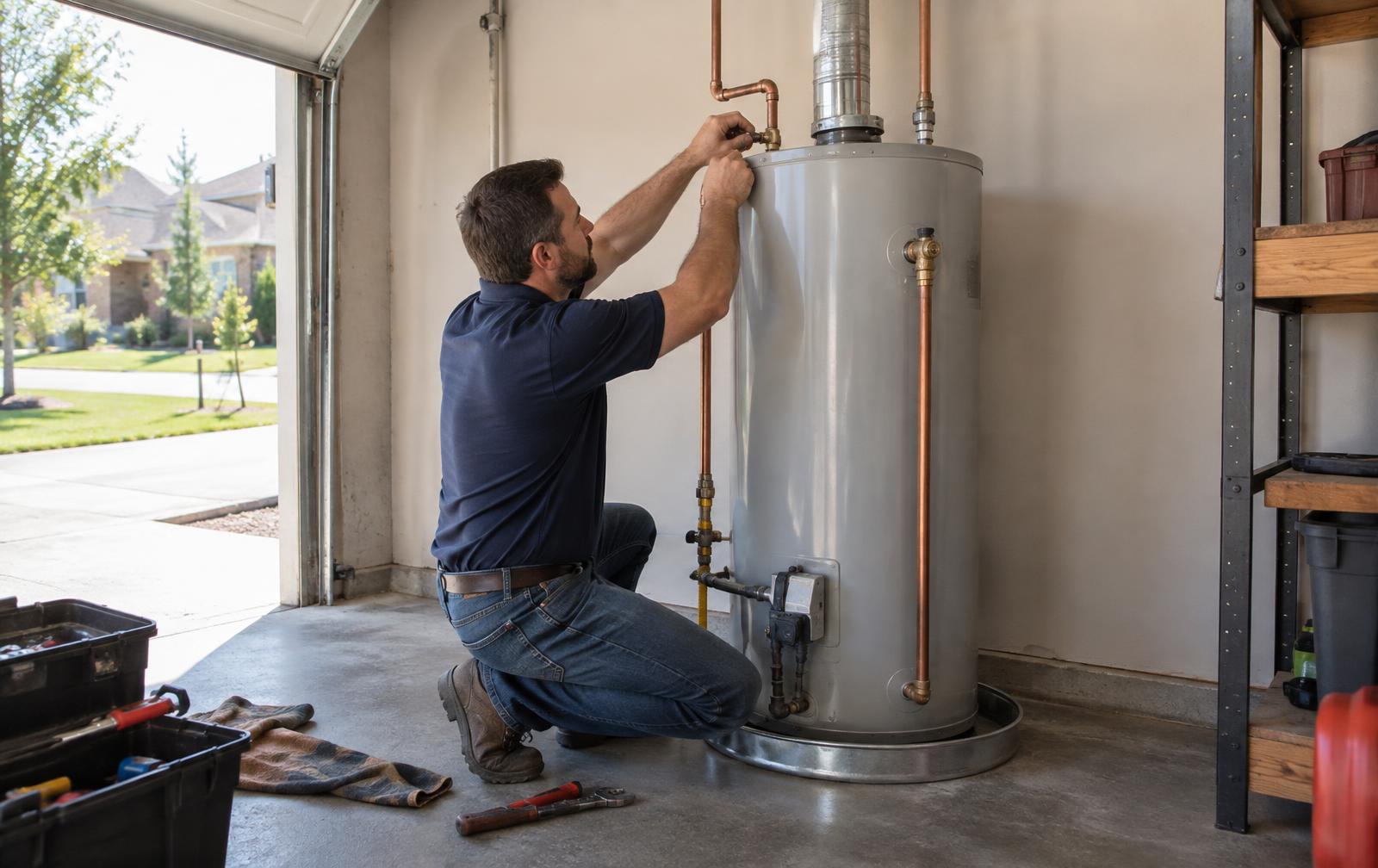
Repair, flush, and replacement of tank units — including attic and garage heaters common to Plano homes.
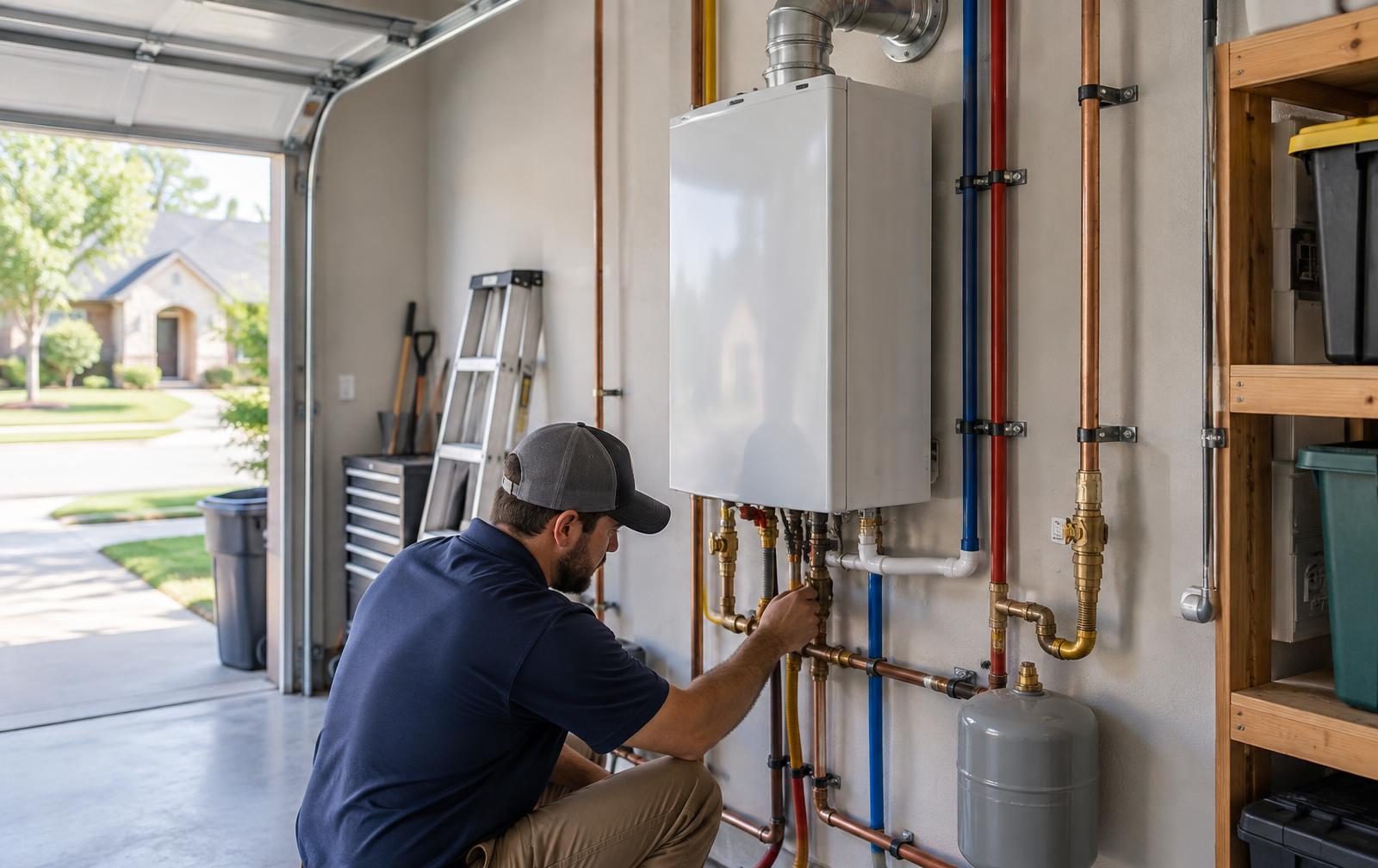
Install, service, and annual descaling — Plano's hard tap water eats tankless heat exchangers without it.
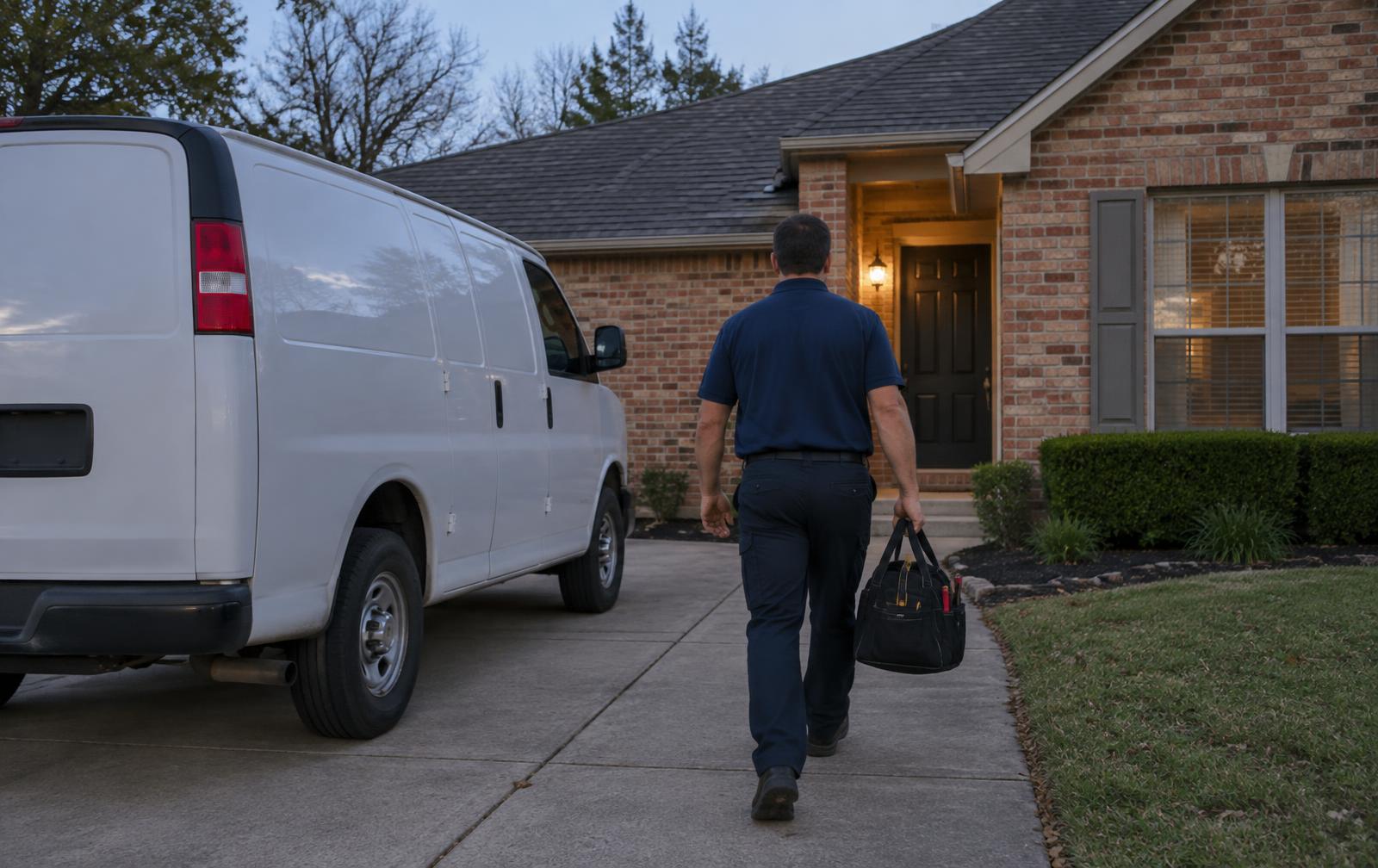
same-day, 7 days a week response across Plano for burst pipes, heater failures, and main-line backups.
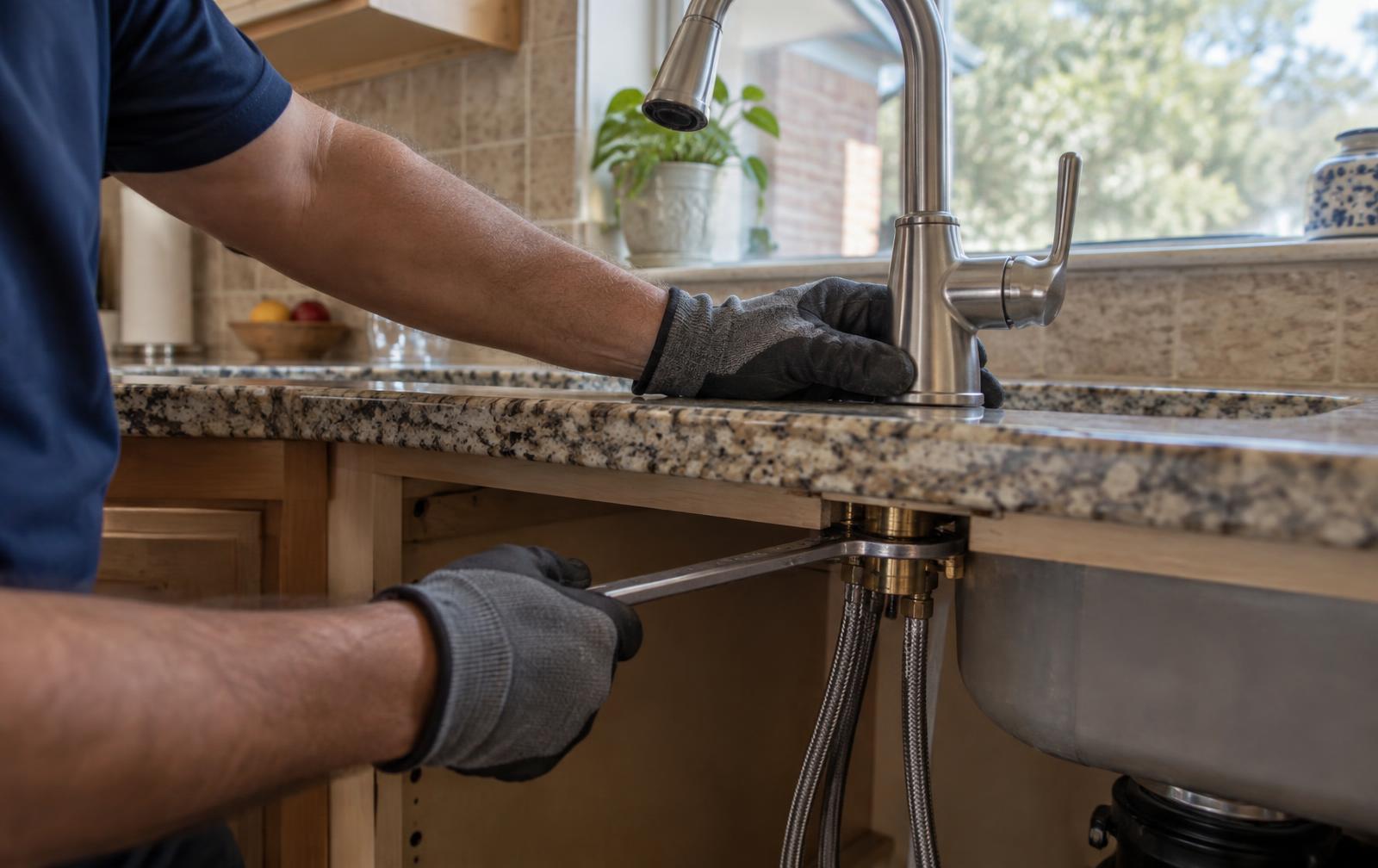
Cartridge, stem, and full-fixture replacement for Plano kitchens and bathrooms — hard-water-ready parts stocked on the truck.
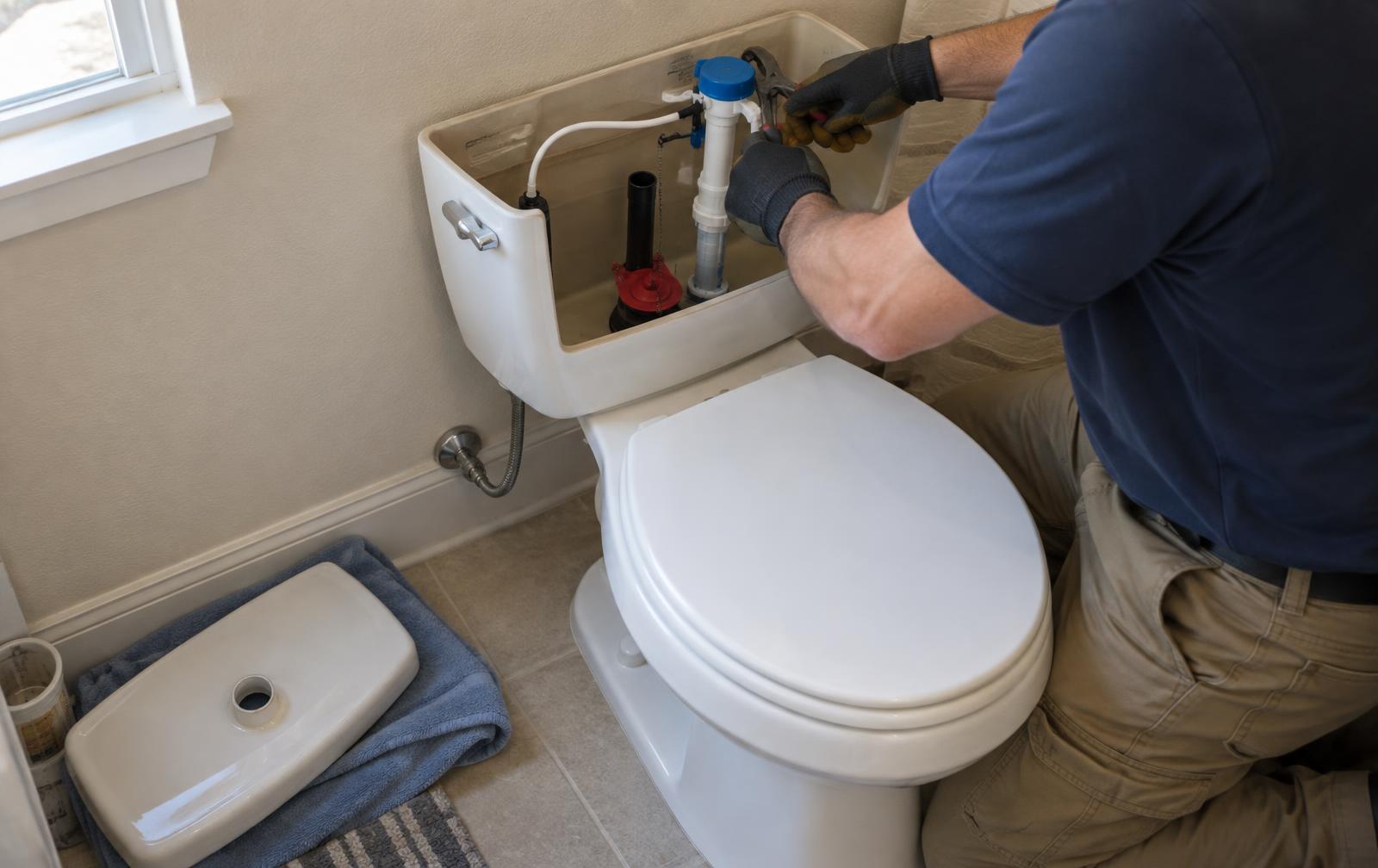
Rebuilds, wax-ring resets, flange repairs, and full replacements — the running toilets and rocking bowls in Plano homes.
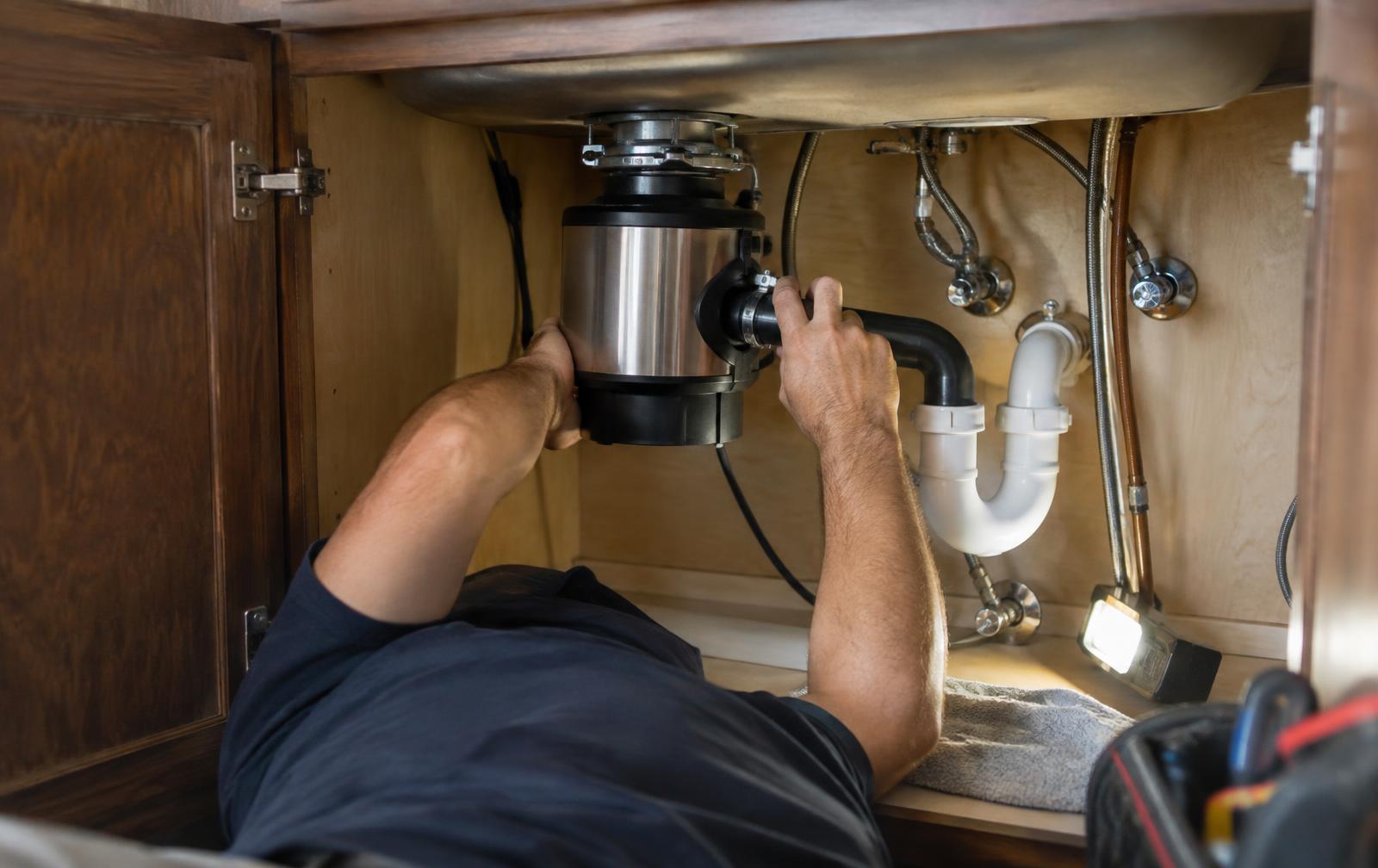
Jam clearing, leaking-unit swaps, and quiet 3/4 HP upgrades for Plano kitchens — same-visit install.
Recurring Drain Problem in Plano?
Full-diameter cleaning with camera footage before and after. Book now.