

Toilet Repair & Installation in Plano, TX
It won't stop cycling on its own. It shifts under you the moment you sit down. There's a small puddle at the base every single time it's flushed. Whatever the symptom, we cover toilet work across Plano — quick tank rebuilds, flange repairs, full comfort-height swaps — and the parts are already riding on the truck.
One Trip Handles Almost Every Toilet Call We Get
Ghost flushing is about as simple a fix as plumbing gets: a tired flapper or fill valve, swapped out in well under an hour most of the time. What people underestimate is how much city water disappears while that toilet keeps refilling itself unnoticed, quietly padding a Plano bill drawn from the same NTMWD-sourced supply that fills every tap in the house.
A rocking bowl is the other regular. Around Plano it's almost always one of two culprits — a wax seal that finally let go, or a hair of slab movement from the Blackland Prairie clay sitting under most of the city. Either way we lift the toilet and inspect the closet flange directly. A sound flange gets a fresh wax or wax-free seal and a proper reseat; a cracked one, or one buried below the finished floor after an old tile job, gets a stainless repair ring or a new flange first.
When a swap makes more sense than a repair, we set comfort-height, low-flow bowls that meet current Texas code, and we're equally happy installing a toilet you sourced yourself — that install carries the exact same labor coverage either way. Upstairs bathrooms in some of Plano's newer townhome layouts come up often enough that floor protection travels with us as a matter of routine.
Signs Your Plano Toilet Needs Attention
A toilet running unnoticed wastes water hour after hour. Catching it early keeps the fix small.
Nine times out of ten the flapper has stopped sealing. It's about as cheap a repair as exists in this trade, though a full inside-tank swap sometimes beats replacing the flapper alone twice in a row.
Point to a wax seal giving out, a hairline crack somewhere in the bowl, or supply tubing that's loosened at the connection. Lifting the fixture and checking the flange tells us which one we're dealing with.
In this part of Texas that's typically a cracked or loose flange, sometimes nudged along by minor slab settling. Fixing it means shimming and resetting properly, not simply cranking the floor bolts down harder.
Could be a partially clogged trap, scale-clogged rim jets, or a fill valve set too conservatively. Each has its own quick test, so we check rather than assume.
Usually a corroded handle arm or a chain that's finally snapped off the flapper — an inexpensive part that tends to get ignored for months before anyone calls.
A dried-out trap, a failed wax seal, or a vent stack problem can all be the cause. If it appeared right after we reset a wax ring, the seal probably didn't seat, and we'll return to redo it under that same warrantied labor.
Figure Out What's Wrong, Put a Number on It, Then Fix It
Nothing gets shut off until you know both the diagnosis and the price.
- 1Separate the symptoms from the cause
Constant running, base leaks, a weak flush, and a rocking bowl are four distinct failures, each needing its own test — we don't assume the fix based on what you described over the phone.
- 2Walk through what each path costs
On a toilet that's getting up there in age, we'll frequently price a rebuild, a reset, and a full swap side by side, so the decision comes down to how much longer you actually want to keep the fixture.
- 3Pull from what's already stocked
Name-brand tank kits, seals of both the wax and wax-free variety, closet bolts, supply tubing, and stainless flange rings cover most of what shows up on a Plano toilet call without a parts-run delay.
- 4Set it level and secure it evenly
A wax seal only compresses the way it's supposed to when the bowl is dead level and the bolts are snugged evenly in the right sequence — tight enough to hold, never so tight the porcelain cracks.
- 5Run it through several flushes before we go
Multiple full-tank flushes, a look around and behind the base, one more level check, and the area gets left clean. Any old fixture we're replacing leaves with us.
What We Run Into in Plano Bathrooms, Area by Area
The home's age and how its slab has settled usually predict the call.
The oldest homes near 15th and Ave K date to before 1940, and original cast-iron closet flanges are still around wherever a full repipe hasn't happened yet. A repair ring or an outright flange swap is often the necessary first step before a new bowl goes in.
Custom homes off the Tollway near Parker Road, dating from the late 1970s through the early 2000s, tend to pack several full baths under one roof — which is why a single scheduled visit here sometimes means three or four bowls swapped to comfort height at once.
The large golf-course-adjacent homes built through the late 1980s and 1990s are old enough that original higher-volume toilets are still fairly common, and moving those to a modern low-flow model tends to show up on the next water bill.
This corridor's condos and townhomes date mostly from the 2010s forward, with tighter bathroom footprints that call for compact-elongated or wall-hung fixtures, and flange-repair-ring work on the concrete slab beneath them comes up regularly.
The neighborhoods that filled in once the Central Expressway opened, largely the late 1950s through the mid-1980s, are old enough now that original toilets are due for replacement on age alone, separate from whatever symptom prompted the call.
Construction near this redevelopment skews recent, so fixtures there are still well within a normal service life — calls in this pocket tend to be about a bowl rocking from slab settling rather than a worn-out toilet.
What Plano Homeowners Say
A Toilet That's Actually Fixed, Not Just Silenced
Every visit includes checking the actual condition of the closet flange and confirming the finished set sits level. If a repair ring or a full flange swap turns out to be needed, that goes into the estimate before we touch it — never added as a surprise afterward.
We're family-owned and insured, licensed through the Texas State Board of Plumbing Examiners, and every truck comes out of our shop in The Colony. Labor is warrantied on every rebuild and reset, and a running or actively leaking toilet gets worked in the same day, seven days a week, 8 AM to 6 PM.
Straight Answers, No Sales Pitch
Our Other Plumbing Services in Plano, TX
Pulling a toilet sometimes turns up a cracked flange or a sluggish drain underneath it. We deal with both in that same visit instead of scheduling a second trip and a second quote.

Electronic detection under Plano slabs — reroute options that save your finished floors when possible.

Trenchless replacement for the aging laterals across Plano's older runs — camera first, quote in writing, minimal yard damage.
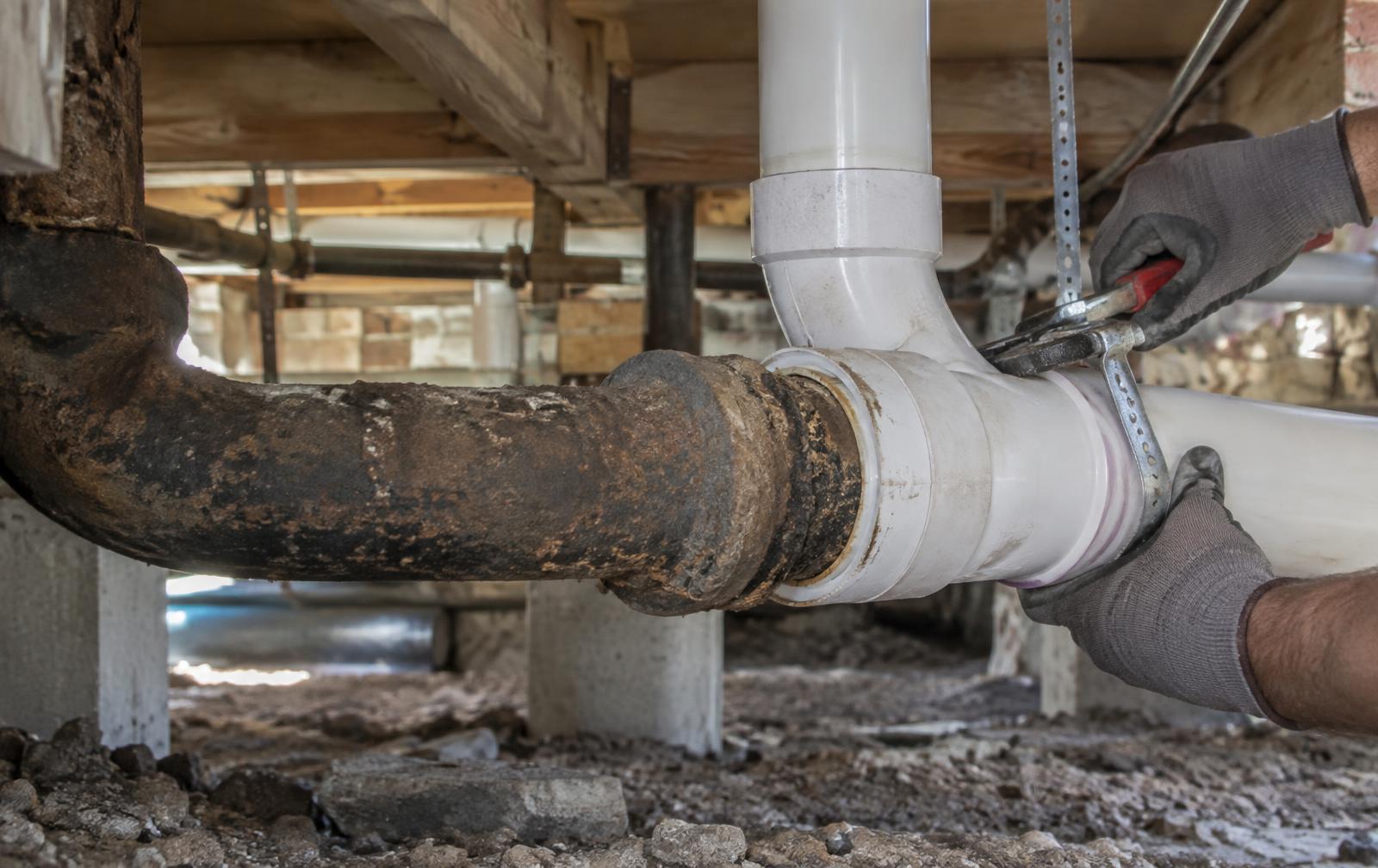
Camera inspection and PVC replacement for the aging cast iron drain lines in older Plano homes, with a written quote first.

Acoustic, thermal, and pressure testing to pinpoint hidden leaks in Plano slab and wall lines without tearing into finishes.

Licensed install, repair, and pressure-testing for Plano homes — every line signed off to Texas code and Atmos requirements.

Full-clear service and camera confirmation for the drains under Plano's neighborhoods.

Repair, flush, and replacement of tank units — including attic and garage heaters common to Plano homes.

Install, service, and annual descaling — Plano's hard tap water eats tankless heat exchangers without it.

same-day, 7 days a week response across Plano for burst pipes, heater failures, and main-line backups.

High-pressure cleaning that clears scale, grease, and roots from Plano's lateral runs — full-diameter, lasting clean.

Cartridge, stem, and full-fixture replacement for Plano kitchens and bathrooms — hard-water-ready parts stocked on the truck.

Jam clearing, leaking-unit swaps, and quiet 3/4 HP upgrades for Plano kitchens — same-visit install.
Toilet Acting Up at Your Plano Home?
Rebuild, reset, or full replacement — priced up front, warrantied labor, same-day for active leaks.