
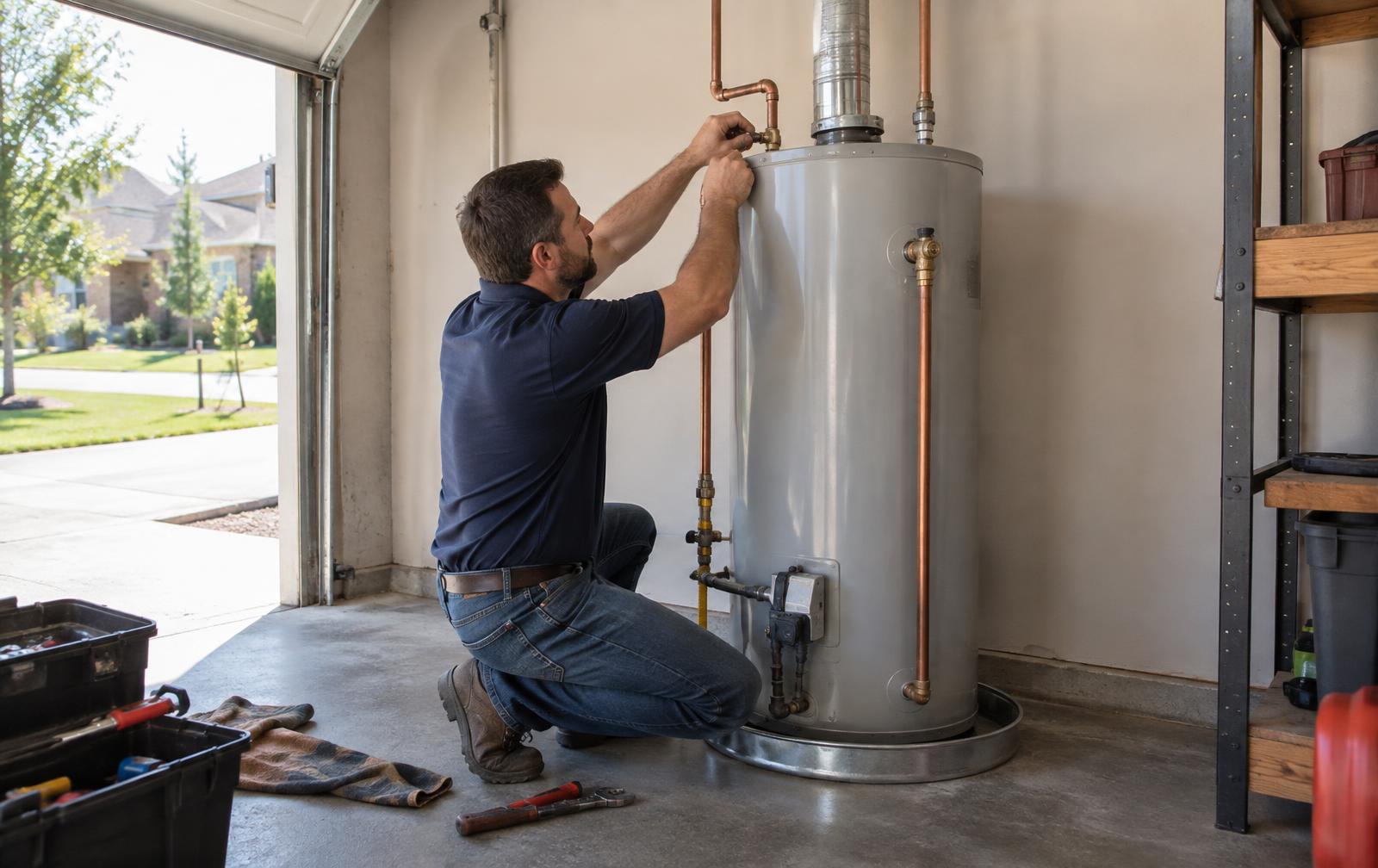
Water Heater Services in Coppell, TX
Cold showers with no warning. Rust-colored water at the tap. A puddle forming at the base of the tank. Rumbling coming from the closet. We repair, maintain, and replace water heaters across Coppell, permit included where the city requires one, and same-day when the unit has failed outright.
The Install Has to Match Coppell's Code and Coppell's Water
Coppell buys its treated water wholesale from Dallas Water Utilities, and by the time it reaches a home here it tests moderately hard to hard — around 143 to 150 milligrams per liter as calcium carbonate. That mineral content shortens anode rod life and speeds sediment buildup inside a tank faster than in a lot of the country, which is one reason heaters here often need attention well before the theoretical end of their service life.
The city's own inspection requirements add a second layer that matters at install time. Coppell's Building Inspections department requires a permit for water heater replacement, and where incoming pressure tests above 80 psi — common across the city's system — the plumber has to complete a Water Heater Expansion Tank form confirming a pressure-reducing valve and a correctly matched expansion tank are in place. Skipping either step is exactly the kind of corner-cutting that passes inspection on paper and fails on the first insurance claim.
We repair a tank that still has service life left in it — a bad thermocouple, a failed gas valve, a worn heating element, a spent anode rod, or simple sediment needing a flush — and we replace the ones that don't. On an aging tank, that call is a diagnostic one, and we'll tell you honestly which side of the line yours falls on.
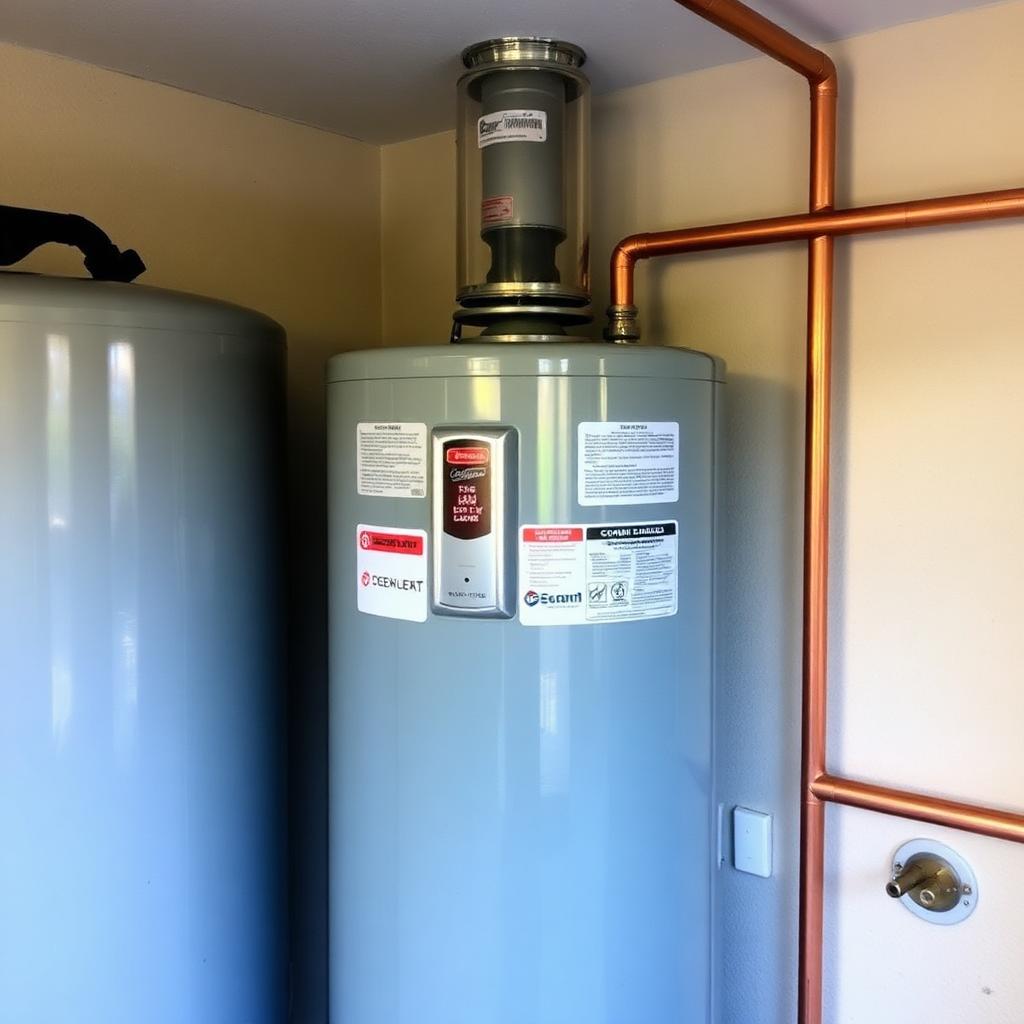
Signs Your Coppell Water Heater Needs Attention
Some of these call for a service visit. Others call for replacement. All of them are worth a look before they get worse.
Struggling to finish a second shower or fill a tub with hot water can trace to a bad dip tube, an undersized unit for the household, or sediment eating into usable tank capacity — each with a different fix.
That noise is typically sediment on the tank floor flashing to steam. A flush restores efficiency if it's been a while since the last one; severe noise can mean the tank is closer to failing outright.
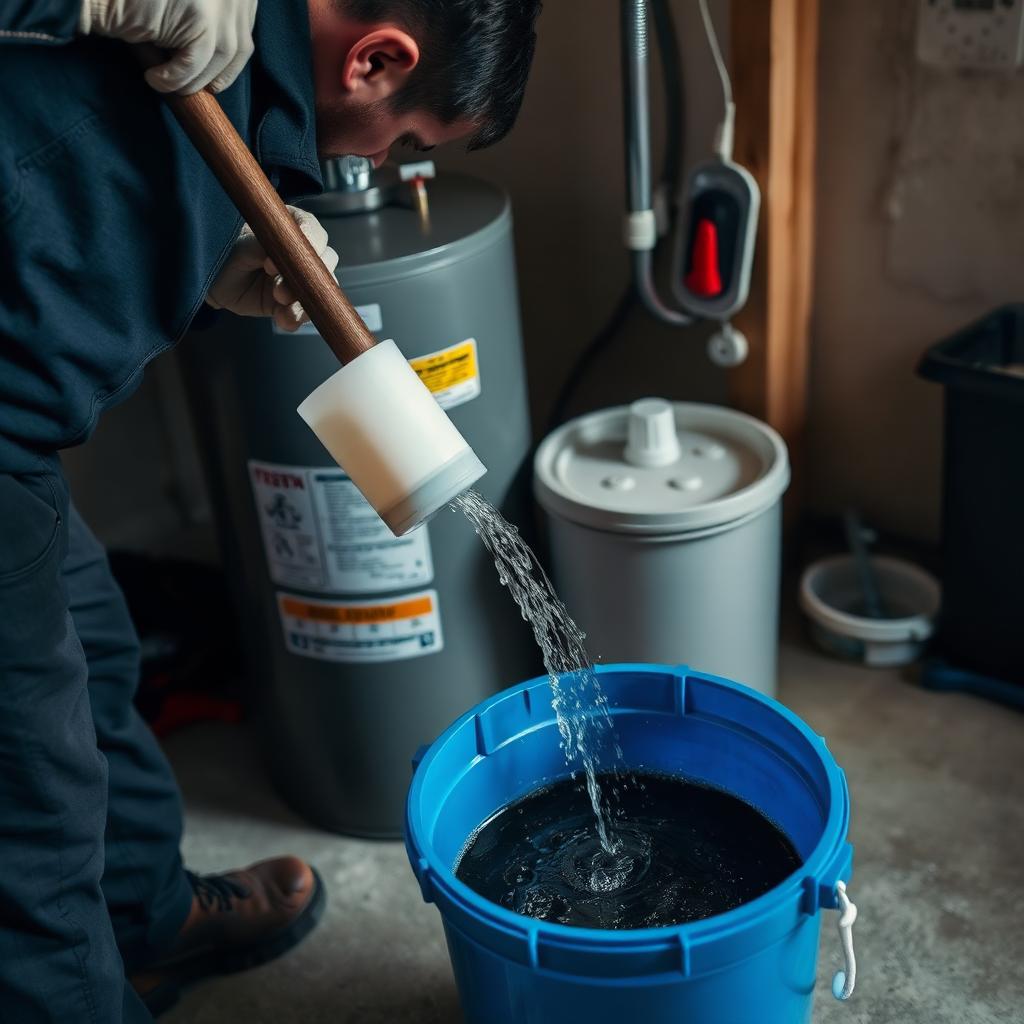
This usually means the sacrificial anode rod has been consumed and the tank itself has started corroding from the inside. Catching it early with an anode swap can extend the tank's life; heavily discolored water usually means replacement is close.
A crack in the tank itself cannot be repaired. Shut off the water and the gas or power to the unit, and treat this as a replacement, not a repair.
Heavy sediment or a struggling burner makes the unit run longer to deliver the same hot water. An unexplained jump in the utility bill, with nothing else changed, is worth a diagnostic visit.
That relief valve drips when pressure is too high, the thermostat is set too hot, or the valve itself has failed. Left alone, the next stage can be a full tank rupture.
Diagnose First. Install to Full Code on Every Replacement.
A repairable tank gets repaired. A replacement gets every code upgrade it needs, not just a new tank in the old spot.
- 1Diagnose before quoting anything
We check the unit's age from its serial number, sediment level, anode condition, T&P function, thermocouple or element performance, and combustion or draft on gas units, then tell you plainly whether repair or replacement makes more sense.
- 2Repair the specific failure, not the whole unit
Thermocouple, gas valve, heating element, thermostat, dip tube, or anode rod replacement, or a full flush for sediment — common parts are stocked on the truck for most residential models.
- 3Replace with the correct tank, to full code
That means BTU or element sizing matched to household demand, a code-compliant expansion tank on a closed system, a drain pan with a routed discharge on any closet or elevated install, correct T&P routing, dielectric unions at the supply connections, and a seismic strap where the location calls for one — and, where Coppell's pressure requires it, a documented pressure-reducing valve to match the city's own form.
- 4Pull the permit and remove the old tank
Coppell requires a permit for water heater replacement, and we handle that filing directly. The old tank leaves with us for recycling rather than getting dragged, still dripping, through a finished house.
- 5Test, tune, and walk you through it
We verify combustion on gas units, check the recovery rate, set the temperature where you want it, and go over the shutoff location, the T&P test, and when the next flush should happen.
How Water Heater Closets Differ Across Coppell
Where the tank sits, and how old the house is, both shape the likely failure.
Some of these homes date to the 1920s, and mechanical spaces here are often tight and original, which limits how large a replacement tank can be without also reworking the surrounding closet.
Built around 1979, these brick homes commonly have garage or interior closet installs from that era where venting has since fallen out of step with current code, something we correct as part of any replacement.
This 1980s-to-early-1990s section typically has straightforward utility closet access, though older units here are frequently past due for the anode and flush service that extends tank life in Coppell's hard water.
Homes from the early-to-mid 1990s here are a common fit for a tankless conversion where closet space allows it, though the gas line and vent path both need verifying before that swap is quoted.
Homes near Grapevine Springs Park see the same hard water as the rest of the city, and a documented annual flush schedule matters here just as much for tank longevity as anywhere else in Coppell.
This part of the Denton Tap corridor filled in during the 1980s-1990s wave, and original garage-installed tanks from that period are frequently well past the point where preventive replacement beats waiting for a failure.
What Coppell Homeowners Say
Replaced When It Should Be, Repaired When It Can Be
Every tank replacement includes the manufacturer's tank warranty and warrantied labor from us, and every repair carries warrantied parts and labor as well. If we recommend replacement, it's because the diagnostic actually supports it, not because a new tank happened to be on the truck.
We're licensed by the Texas State Board of Plumbing Examiners, insured, and family-owned, dispatching every truck from our shop in The Colony. Same-day appointments are available seven days a week, 8 AM to 6 PM, for a total failure in Coppell.
Straight Answers, No Sales Pitch
Our Other Plumbing Services in Coppell, TX
A failing water heater often shows up next to other plumbing the same age. We'll check the rest of the system — leaks, drain condition, gas line health — while we're already on site in Coppell.
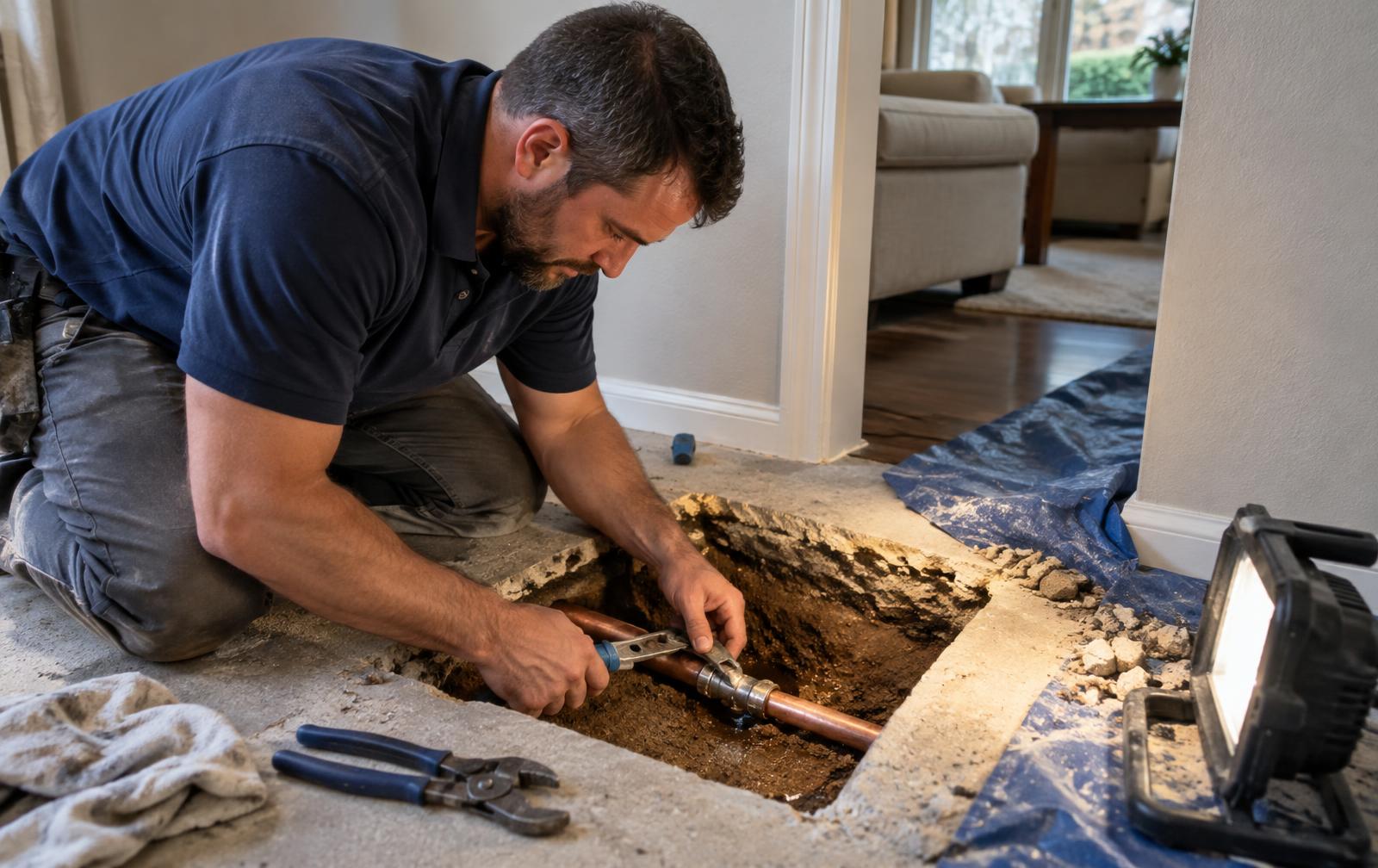
Electronic detection under Coppell slabs — reroute options that save your finished floors when possible.
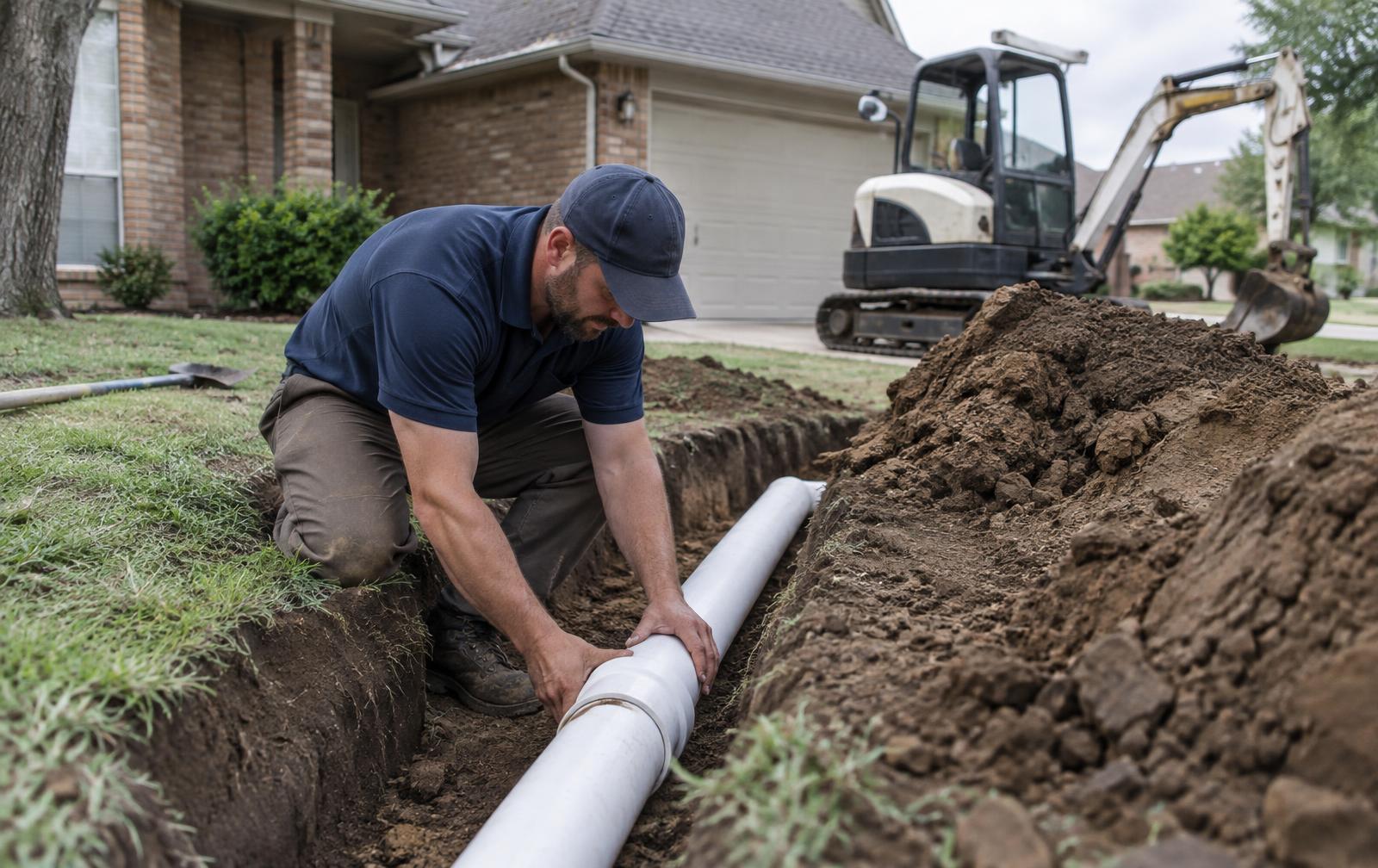
Trenchless replacement for the aging laterals across Coppell's older runs — camera first, quote in writing, minimal yard damage.
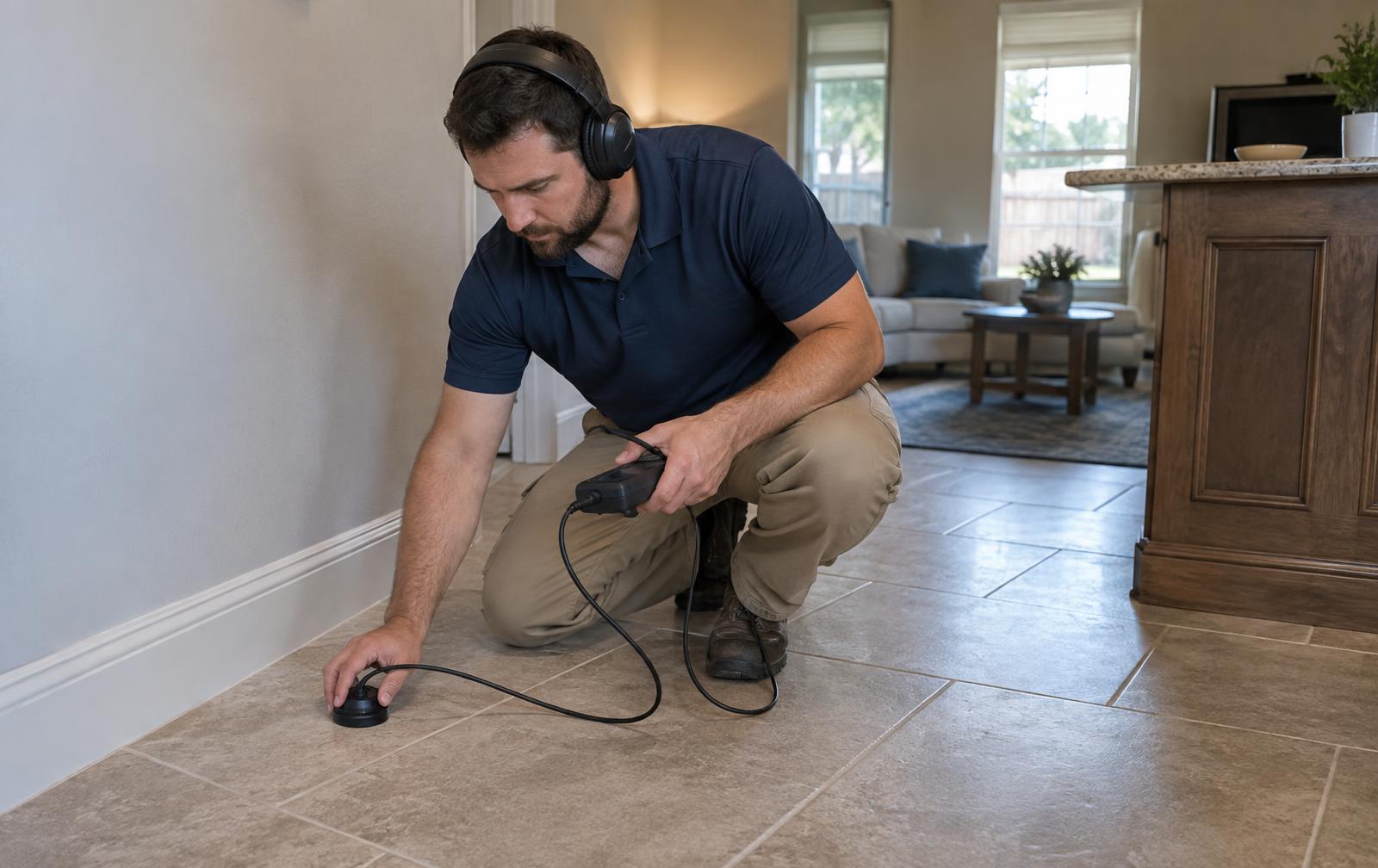
Acoustic, thermal, and pressure testing to pinpoint hidden leaks in Coppell slab and wall lines without tearing into finishes.
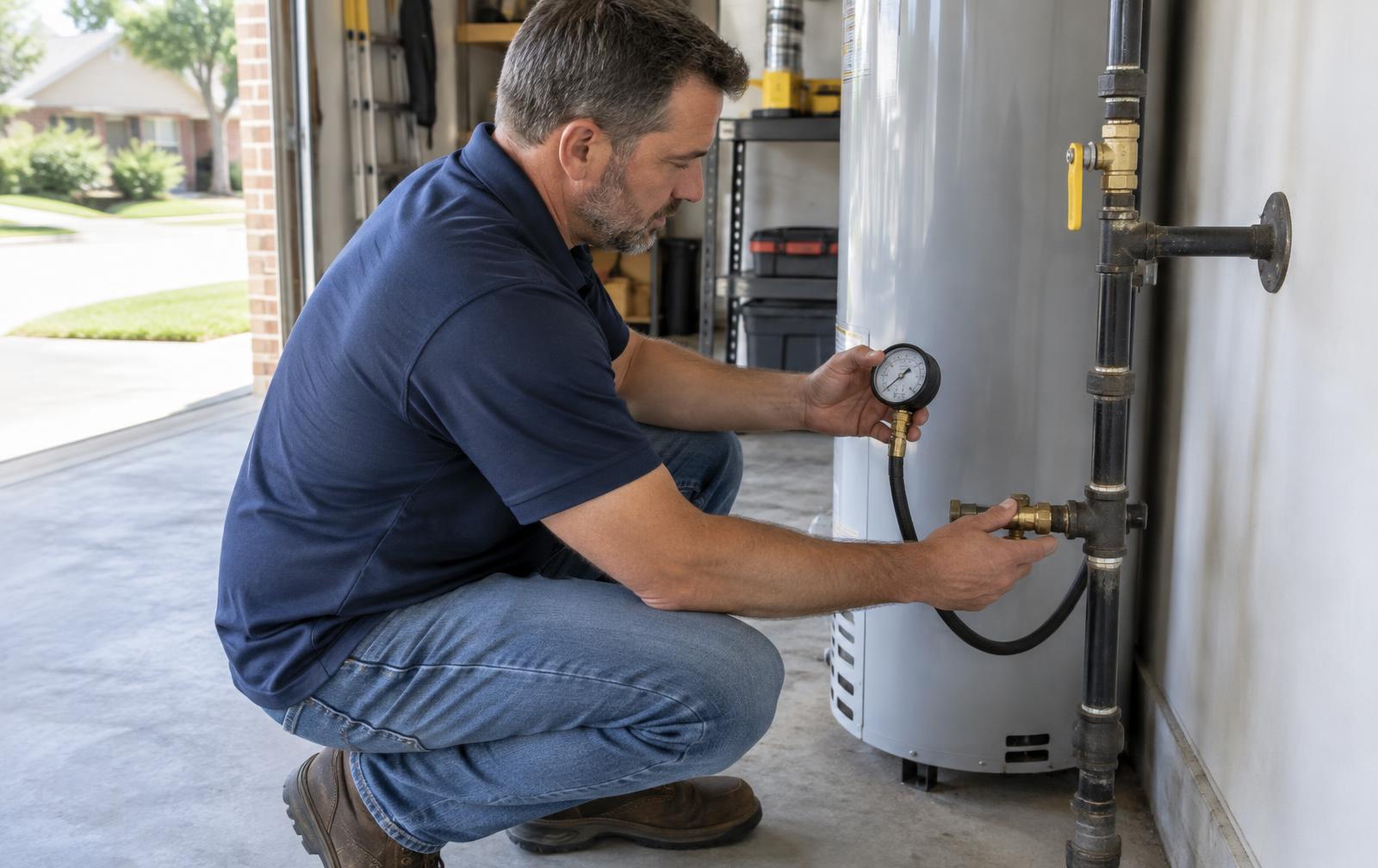
Licensed install, repair, and pressure-testing for Coppell homes — every line signed off to Texas code and Atmos requirements.
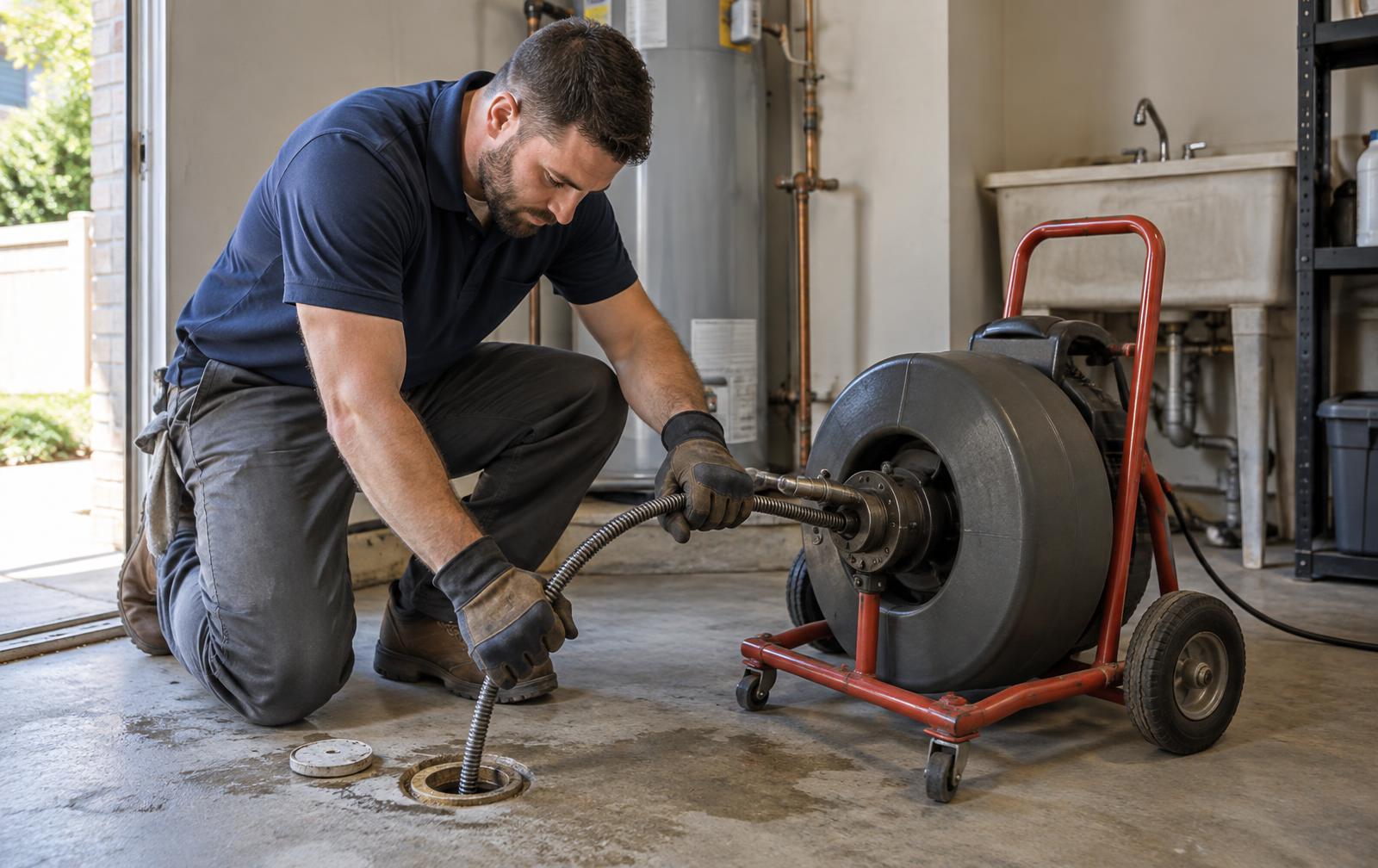
Full-clear service and camera confirmation for the drains under Coppell's neighborhoods.
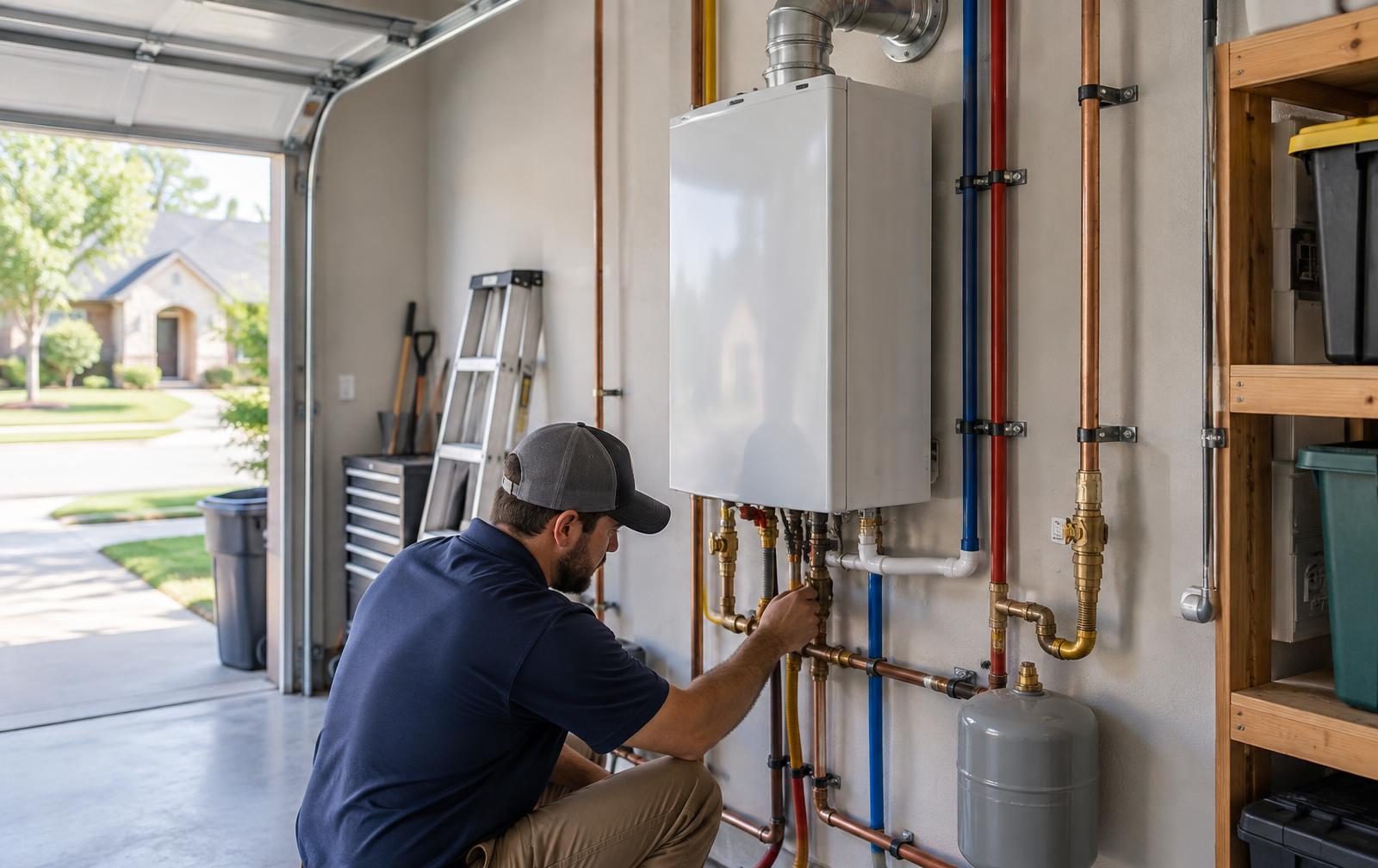
Install, service, and annual descaling — Coppell's hard tap water eats tankless heat exchangers without it.
same-day, 7 days a week response across Coppell for burst pipes, heater failures, and main-line backups.
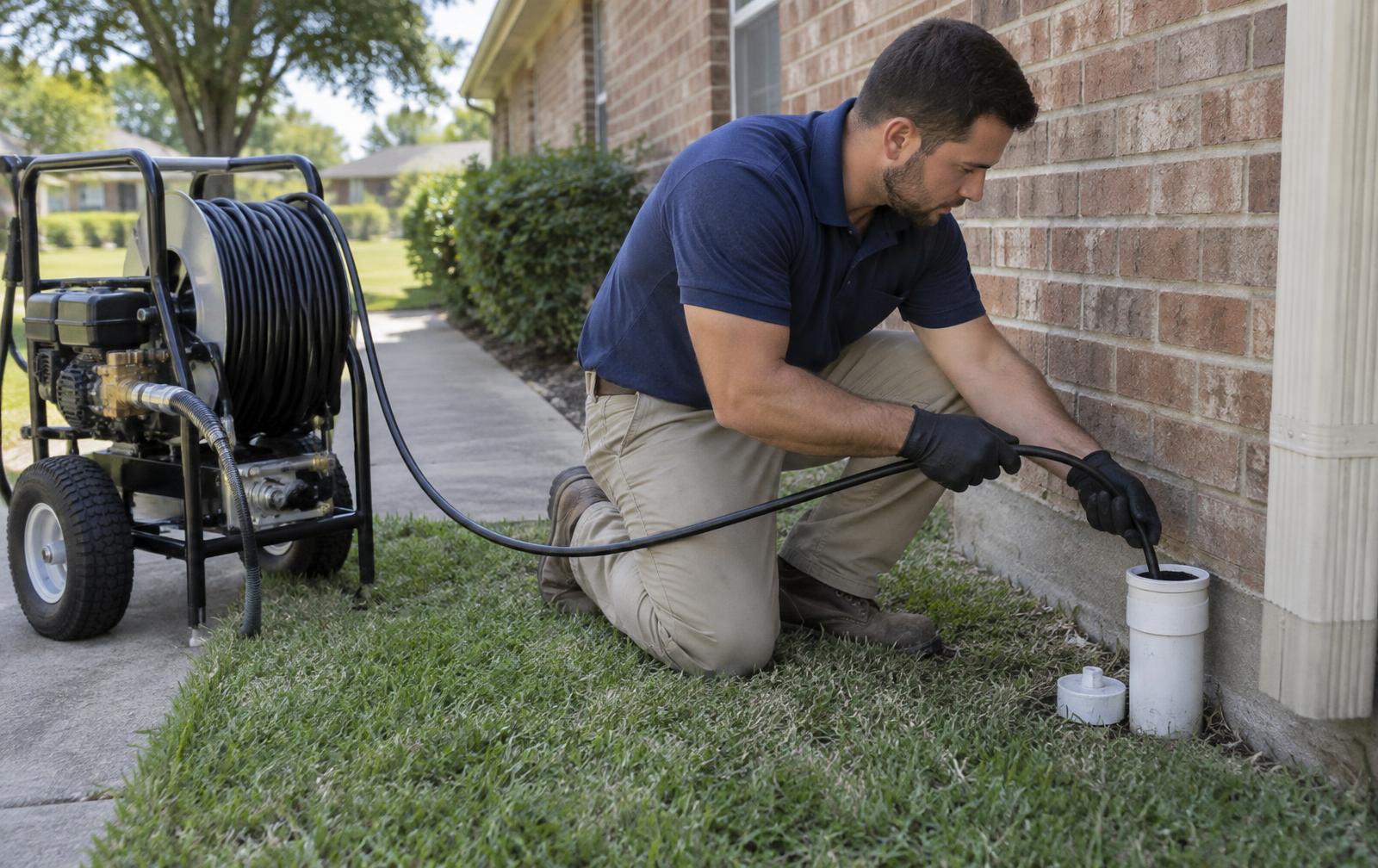
High-pressure cleaning that clears scale, grease, and roots from Coppell's lateral runs — full-diameter, lasting clean.
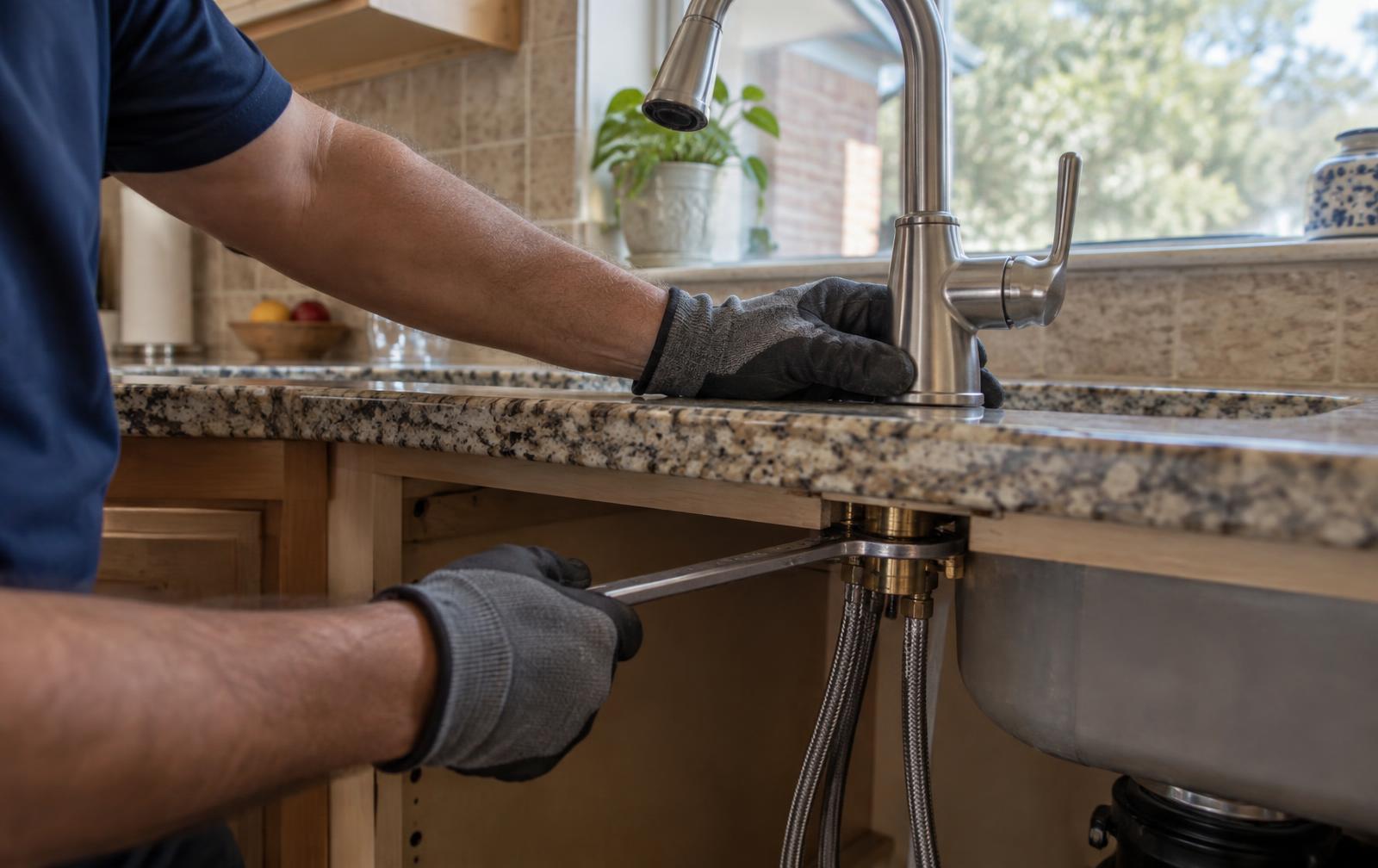
Cartridge, stem, and full-fixture replacement for Coppell kitchens and bathrooms — hard-water-ready parts stocked on the truck.
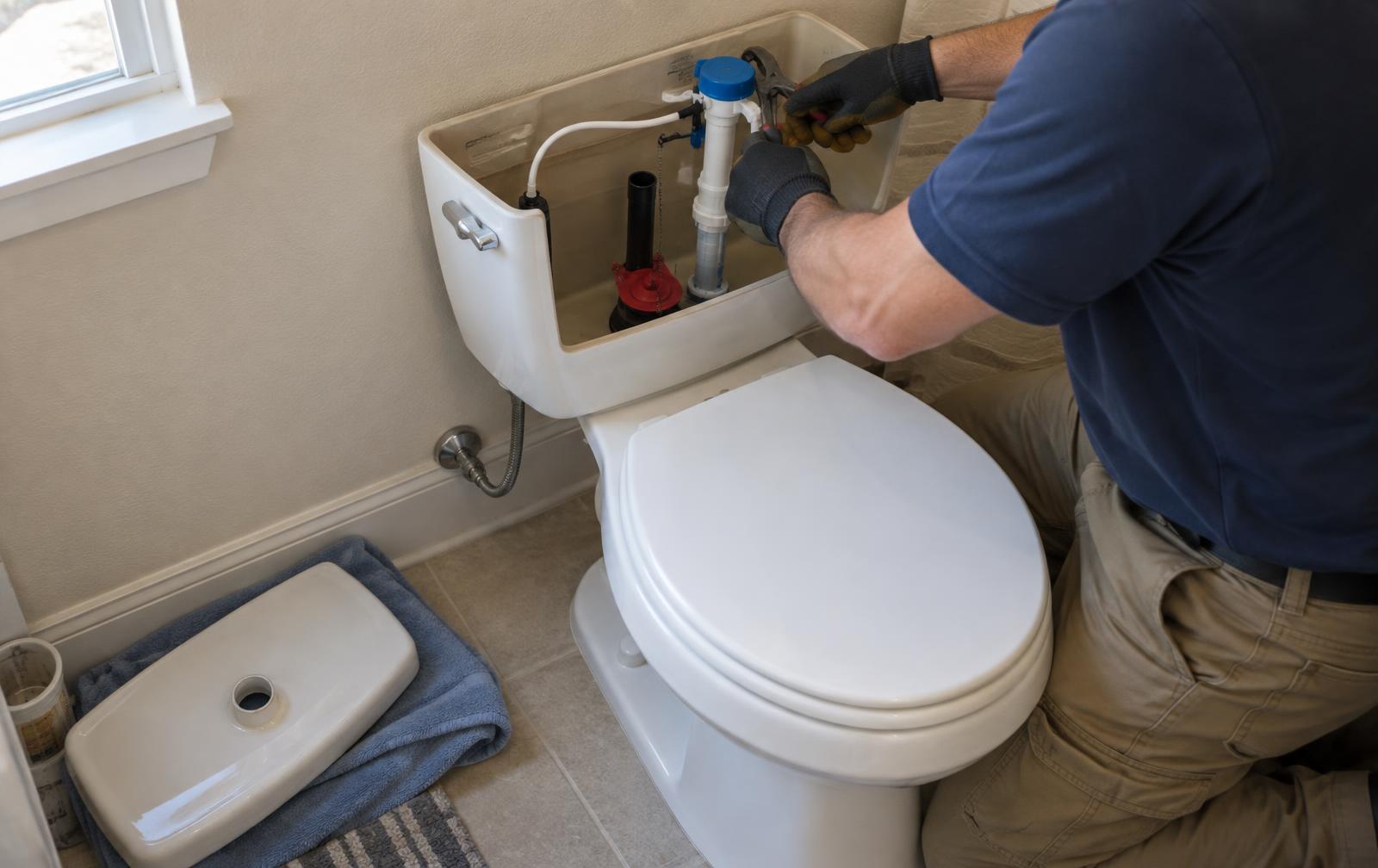
Rebuilds, wax-ring resets, flange repairs, and full replacements — the running toilets and rocking bowls in Coppell homes.
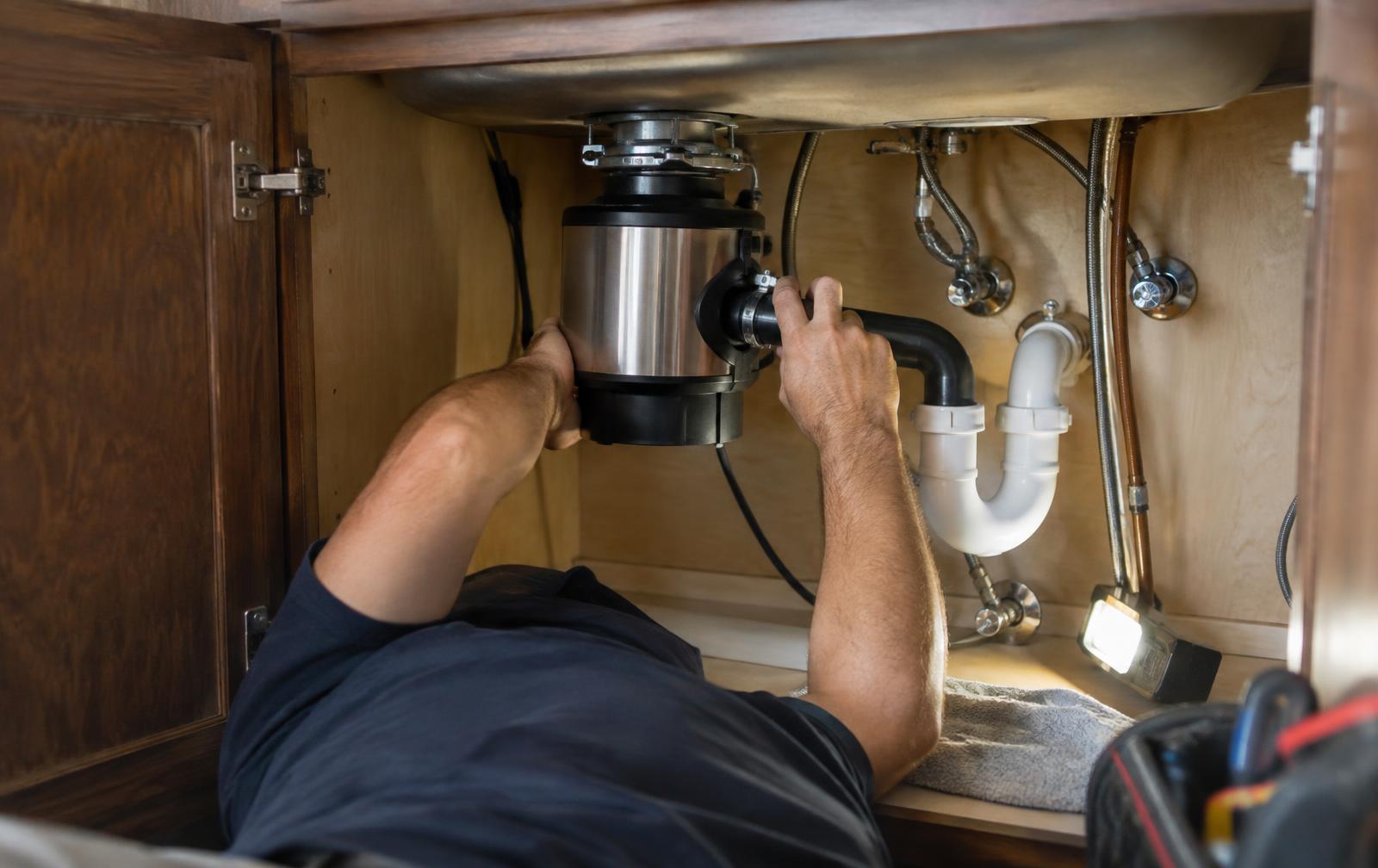
Jam clearing, leaking-unit swaps, and quiet 3/4 HP upgrades for Coppell kitchens — same-visit install.
Water Heater Problem in Your Coppell Home?
Honest diagnosis, code-compliant replacement with the permit handled, same-day for total failures. Book now.