
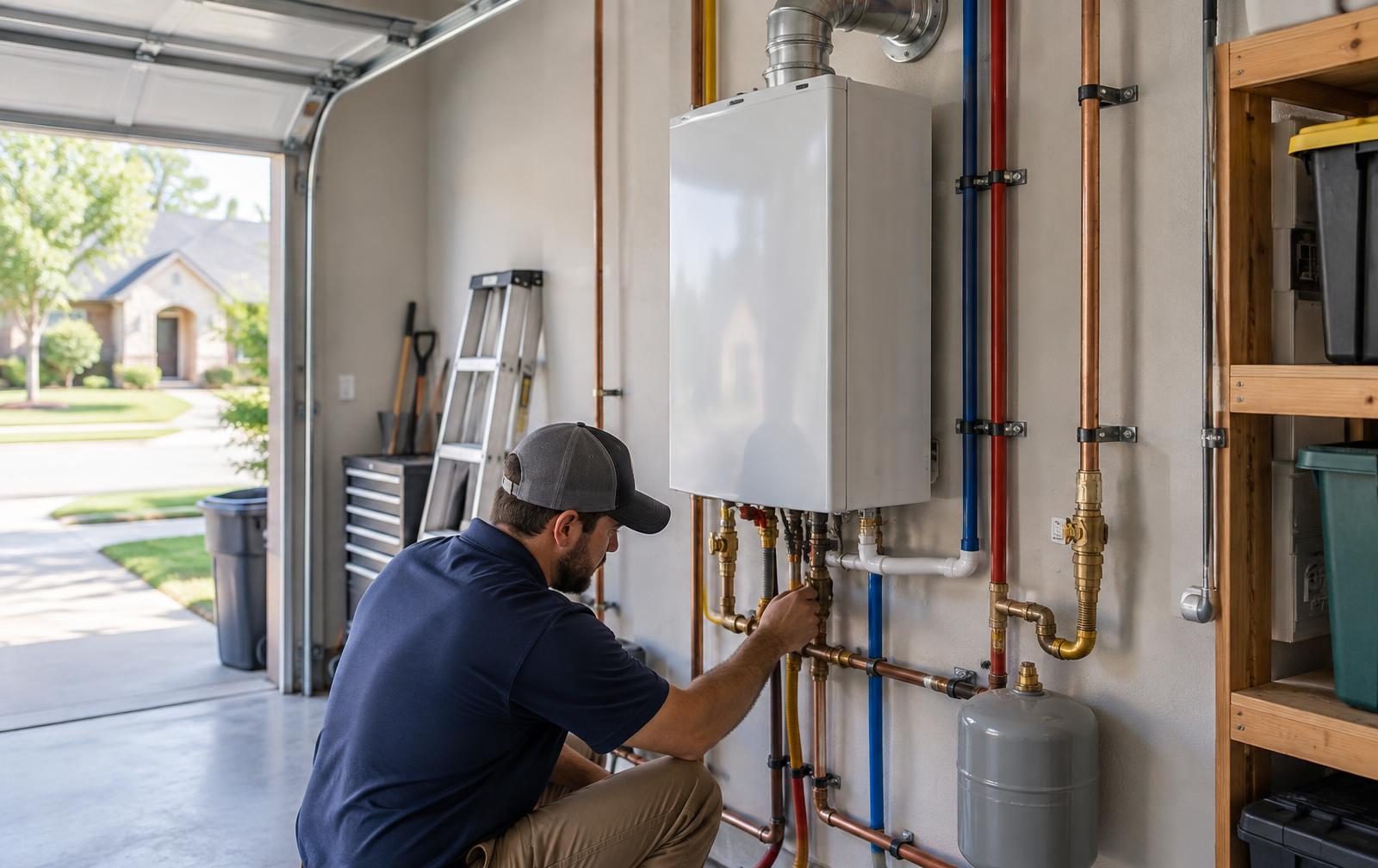
Tankless Water Heater Services in Coppell, TX
A new install, a warranty repair, or the annual descale that keeps a tankless unit running in Coppell's mineral-heavy water. We size the gas and venting correctly the first time, and we keep the maintenance record that manufacturers actually ask for.
Endless Hot Water Depends on Two Things: the Install and the Descale
Coppell's tap water runs moderately hard to hard, in the range local water-quality data puts around 143 to 150 milligrams per liter as calcium carbonate — call it roughly 8 to 9 grains per gallon. Every gallon that passes through a tankless heat exchanger leaves a little mineral scale behind, and most manufacturers require documented annual descaling just to keep the warranty intact, not as an upsell. We regularly find units in Coppell homes only a few years old already running restricted because that service was skipped.
The install side matters just as much here. Coppell's municipal water pressure commonly runs above 80 psi, which is exactly why the city's own water heater permit process requires a pressure-reducing valve and a matched expansion tank to be verified at inspection — a step that applies to tankless replacements too, not only tank units. Add correct vent material and clearances, and gas line sizing rated for the unit's full BTU draw, since a lot of older Coppell houses were plumbed for a smaller tank heater and need the gas line upsized before a large tankless unit can fire at full output.
We install to the manufacturer's full specification — venting, gas sizing, isolation valves, condensate handling, all documented — and then we come back on schedule to descale, because a tankless unit only reaches its full service life if both halves of that equation are handled.
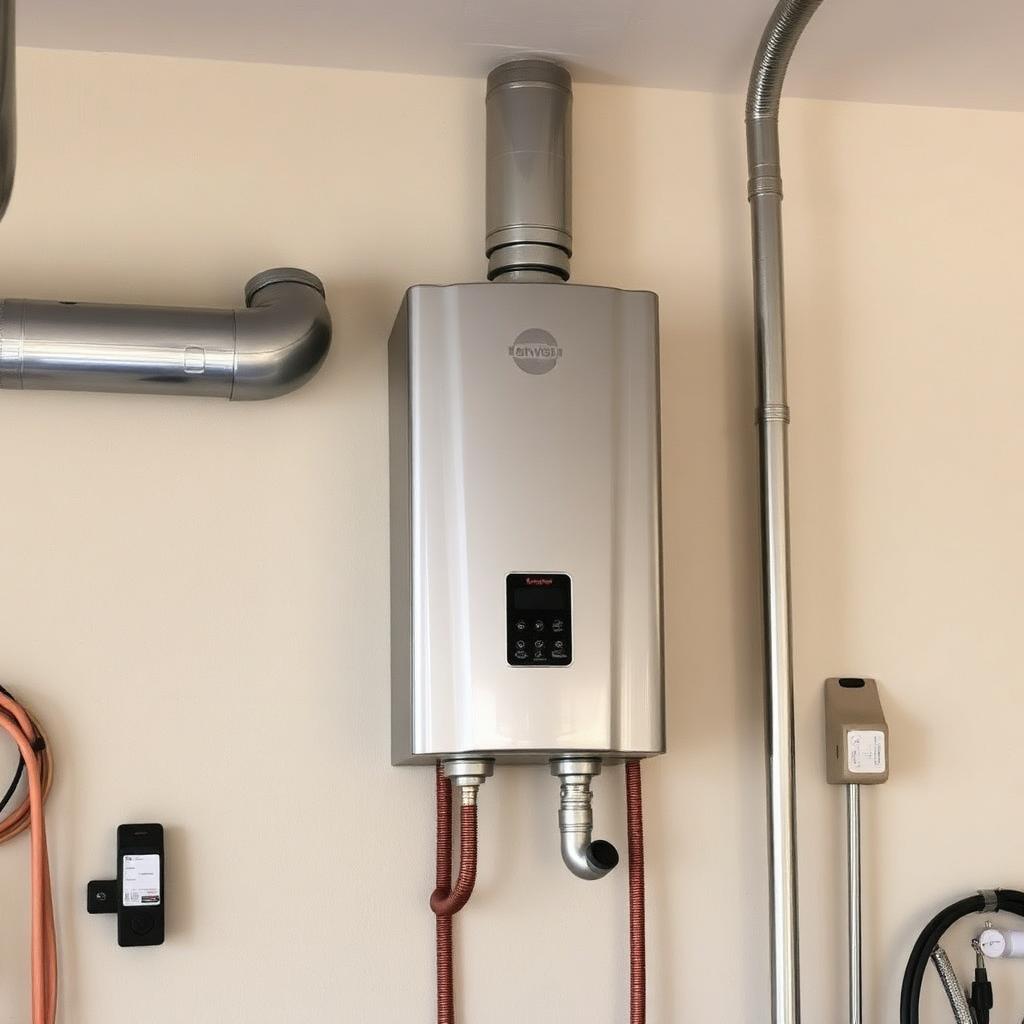
Signs Your Coppell Tankless Unit Needs Service
A tankless unit signals trouble well before it fails outright. Ignoring the signal is what voids the warranty.
Every code points to something specific — combustion, flow restriction, temperature, or scale. We pull the exact meaning for your make and model before quoting anything.
Scale building up inside the heat exchanger restricts flow gradually. If filling a tub takes longer than it used to, a descale is usually overdue.
That cold-hot-cold sandwich can trace back to a scale-restricted flow sensor, an undersized recirculation setup, or a flow-modulation issue — each with a different fix, so we test rather than guess.
This usually means the unit is undersized for the household's demand, or the gas line cannot deliver peak BTU. In older Coppell homes, an undersized gas line is the first thing we check.
In Coppell's water, annual descaling is not optional maintenance — most manufacturers require it in writing to keep the warranty valid at all.
That noise is flash steam escaping through scale built up on the heat exchanger. Left alone, it moves from an annoyance to permanent exchanger damage.
Sized for Demand, Vented to Spec, Descaled on a Real Schedule
The install determines the first decade. The maintenance schedule determines the second.
- 1Size the unit and the gas line to actual demand
We count fixtures that could realistically run at once and size the flow rate against realistic cold-weather incoming water temperatures, not the optimistic default a lot of generic sizing calculators assume. That usually points to a larger BTU unit and a gas line upgrade to match.
- 2Vent exactly to manufacturer specification
Correct material, correct pitch, correct clearance from windows and doors, and a concentric vent kit where the install is tight. Undersized or mismatched venting is a common corner-cut that voids warranty coverage and can cause backdraft.
- 3Add isolation valves and, where needed, a PRV
Full-port isolation valves on both hot and cold sides turn an annual descale into a short service call instead of a bigger job. Where incoming pressure tests above 80 psi, which is common in Coppell, we install and document a pressure-reducing valve and expansion tank to match the city's own inspection requirement.
- 4Run the full annual descale and inspection
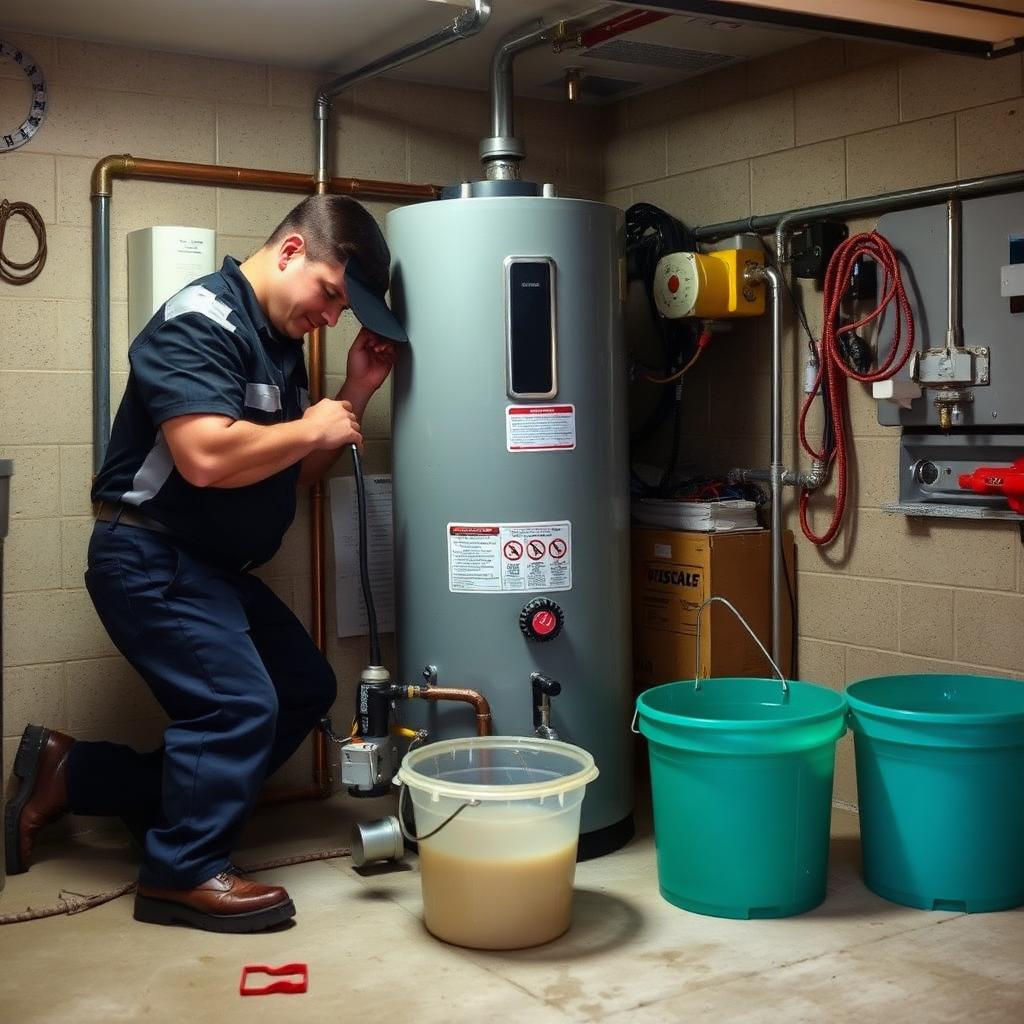
We isolate at the valves, circulate a citric-acid descaling solution through the exchanger, flush clean, and restart. While we're there, we check the burner, flame rod, flow sensor, and condensate trap, and log the service for warranty purposes.
- 5Repair with manufacturer parts and procedure
Flame rods, ignitors, gas valves, flow sensors, and controllers are all serviceable parts we carry or can get quickly. We work on the major tankless brands sold and installed across Coppell.
How the Install Site Changes the Job Across Coppell
Housing era and install location both shape what a tankless conversion actually requires.
Homes here date as far back as the 1920s, so a tankless conversion almost always means bringing the gas line up to modern diameter from whatever undersized run was originally installed, alongside a full vent path that did not exist before.
These brick homes from around 1979 usually still run their original tank-sized gas line, which is close to the top reason a tankless retrofit here needs a gas upgrade before the new unit can fire at full BTU.
Built through the 1980s into the early 1990s, houses in this section typically have enough garage or utility space for a straightforward tankless swap, though the gas line still needs verifying against the new unit's BTU rating.
This early-to-mid-1990s section tends to have slightly more modern gas infrastructure, but isolation valves are still frequently missing from the original installation and are worth adding during any tankless work.
Homes near Grapevine Springs Park often have exterior-adjacent utility closets, where freeze protection settings and insulated lines matter during the handful of hard freezes North Texas sees most winters.
This part of the Denton Tap corridor filled in during the 1980s-1990s wave, and garage installs with side-wall venting are typically the cleanest fit for the layout common to these homes.
What Coppell Homeowners Say
Warranty Protection Comes From the Paper Trail, Not Luck
Every install we complete is logged with the model, serial number, gas configuration, vent configuration, and isolation valve setup, and every descale is dated and documented. That record is what keeps a long manufacturer warranty valid instead of voided years early over a missed service.
We are licensed by the Texas State Board of Plumbing Examiners, insured, and family-owned, dispatching every truck from our shop in The Colony. Same-day visits are available seven days a week, 8 AM to 6 PM, for a unit that has stopped producing hot water.
Straight Answers, No Sales Pitch
Our Other Plumbing Services in Coppell, TX
A tankless install often pairs naturally with a gas line upgrade or a pressure-reducing valve. We handle all of it together, one visit and one quote, for Coppell homes.
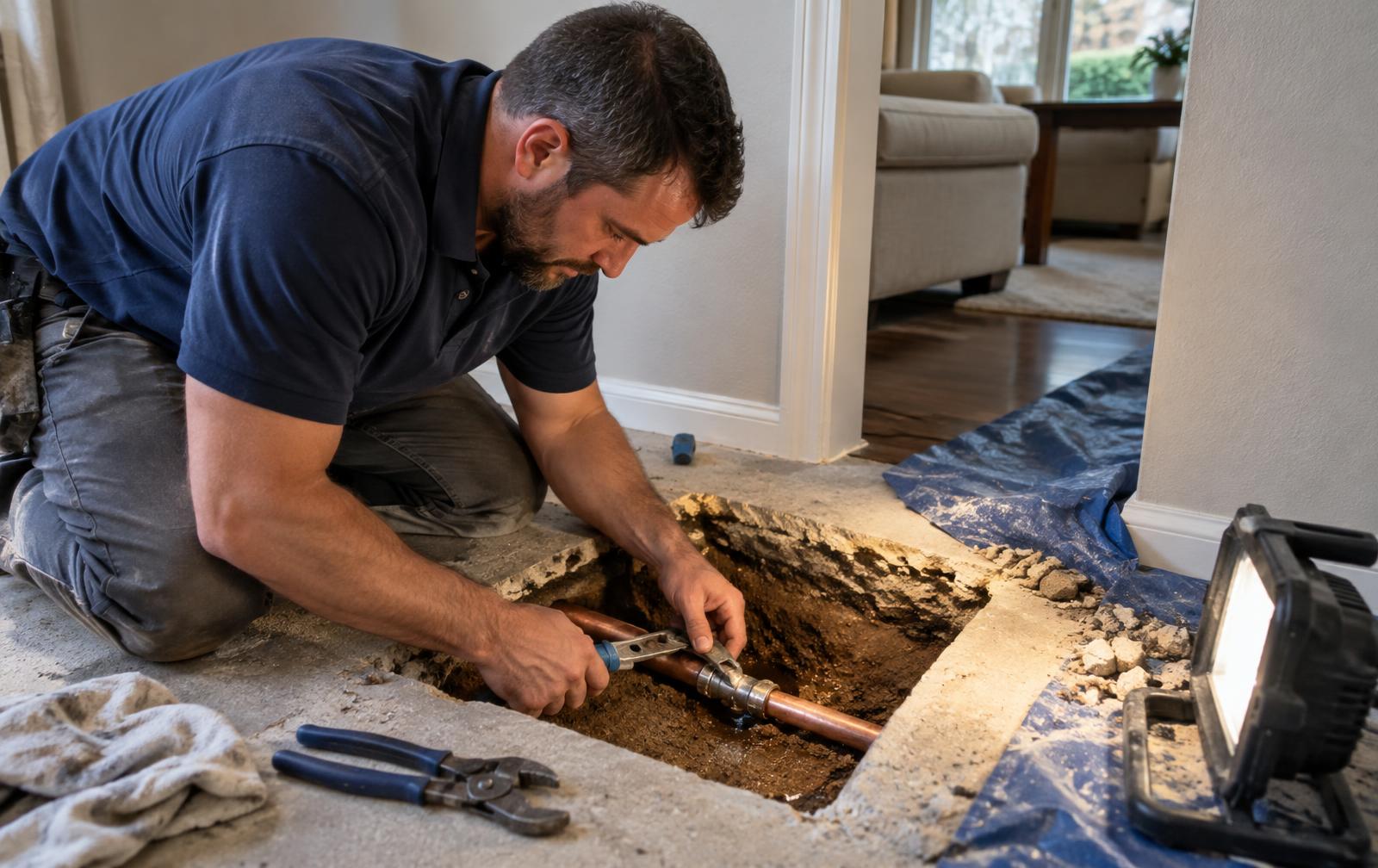
Electronic detection under Coppell slabs — reroute options that save your finished floors when possible.
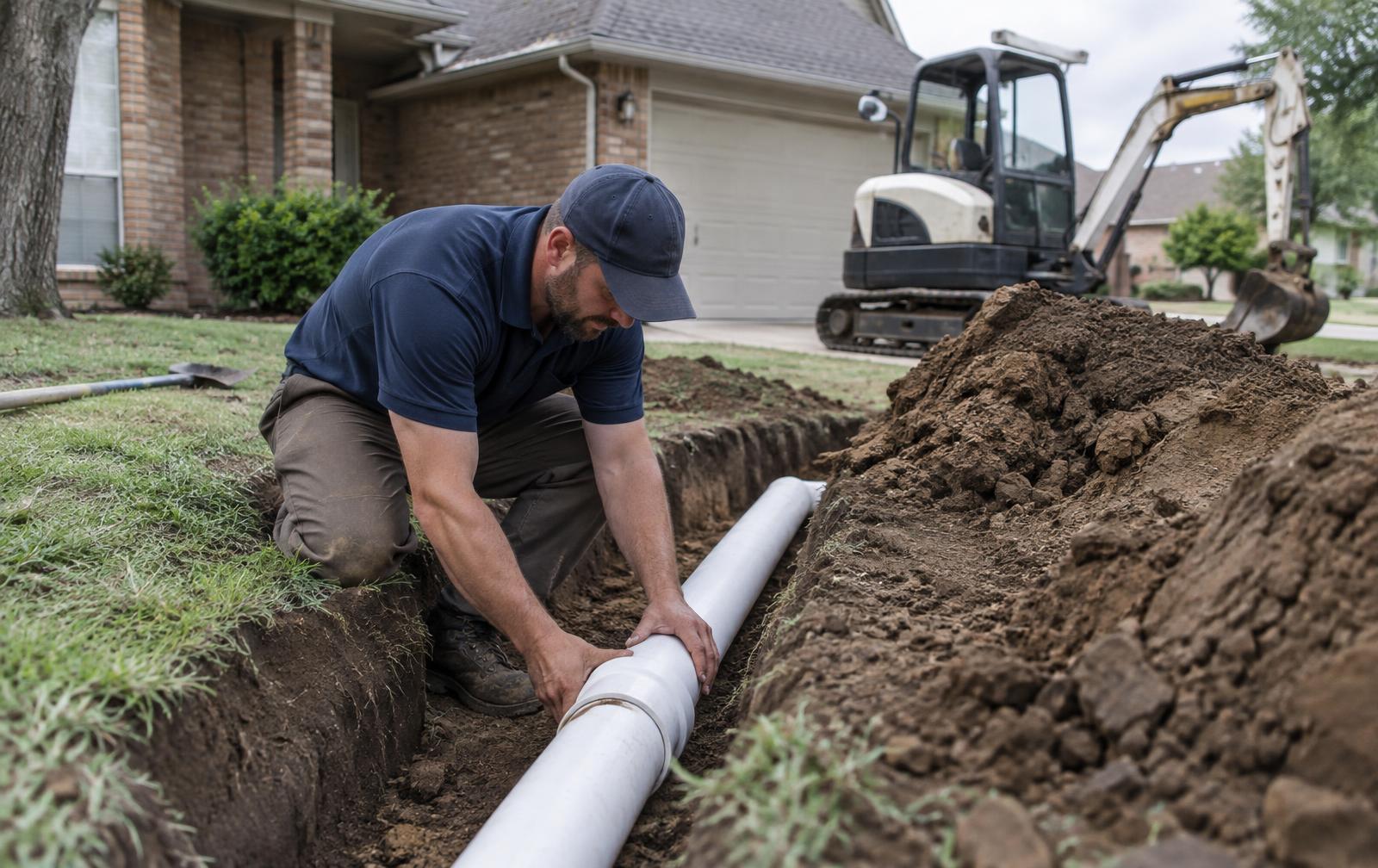
Trenchless replacement for the aging laterals across Coppell's older runs — camera first, quote in writing, minimal yard damage.
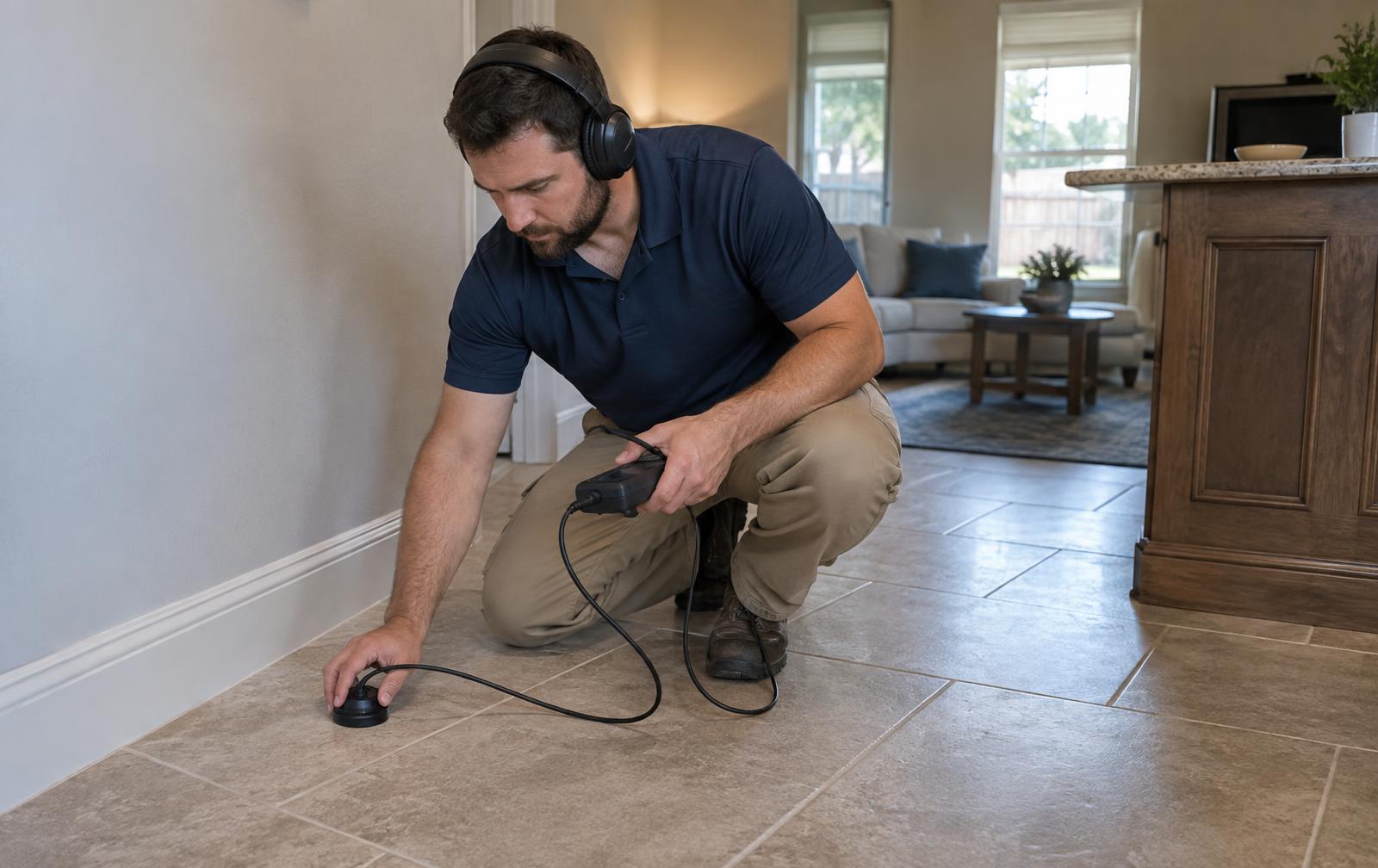
Acoustic, thermal, and pressure testing to pinpoint hidden leaks in Coppell slab and wall lines without tearing into finishes.
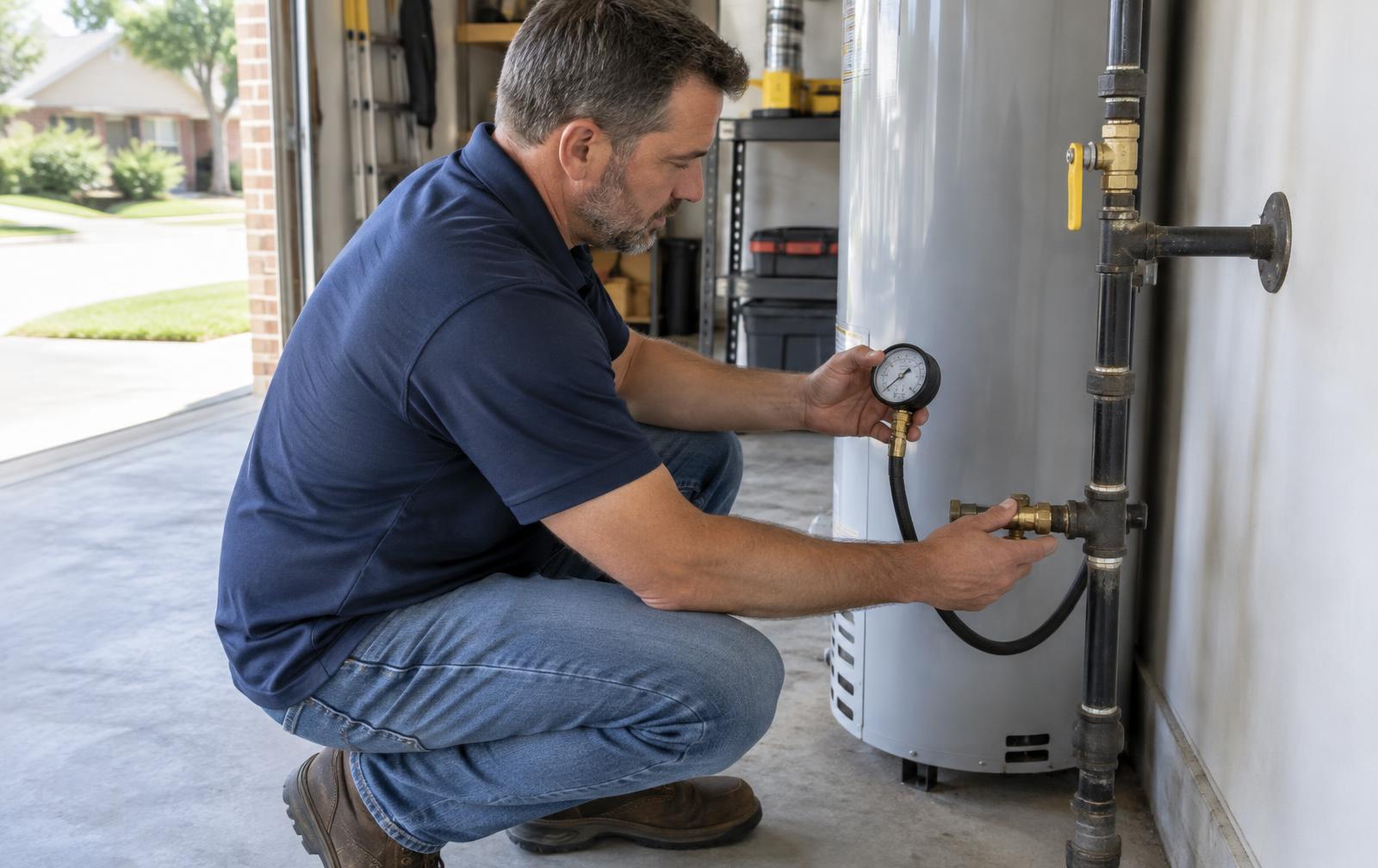
Licensed install, repair, and pressure-testing for Coppell homes — every line signed off to Texas code and Atmos requirements.
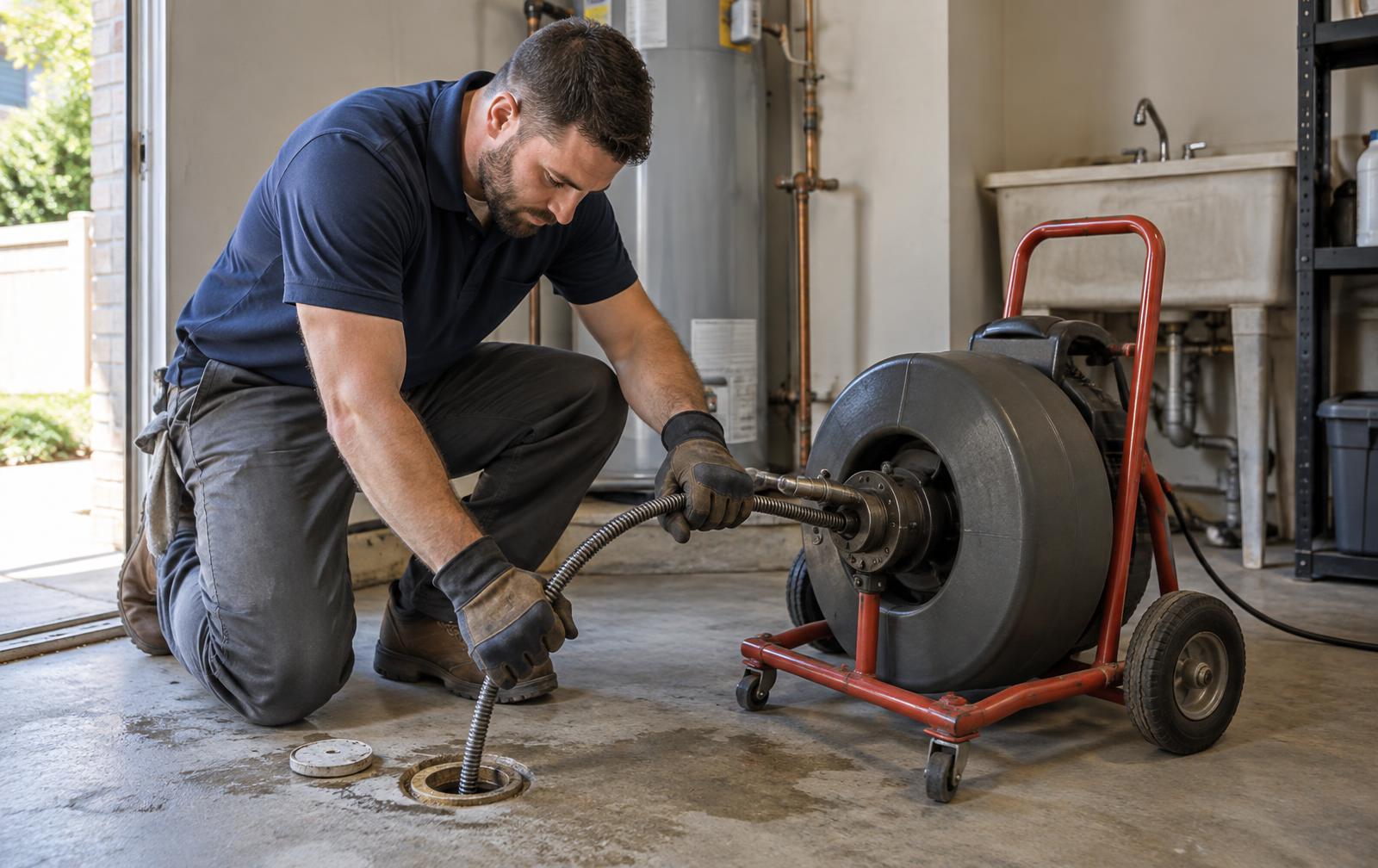
Full-clear service and camera confirmation for the drains under Coppell's neighborhoods.
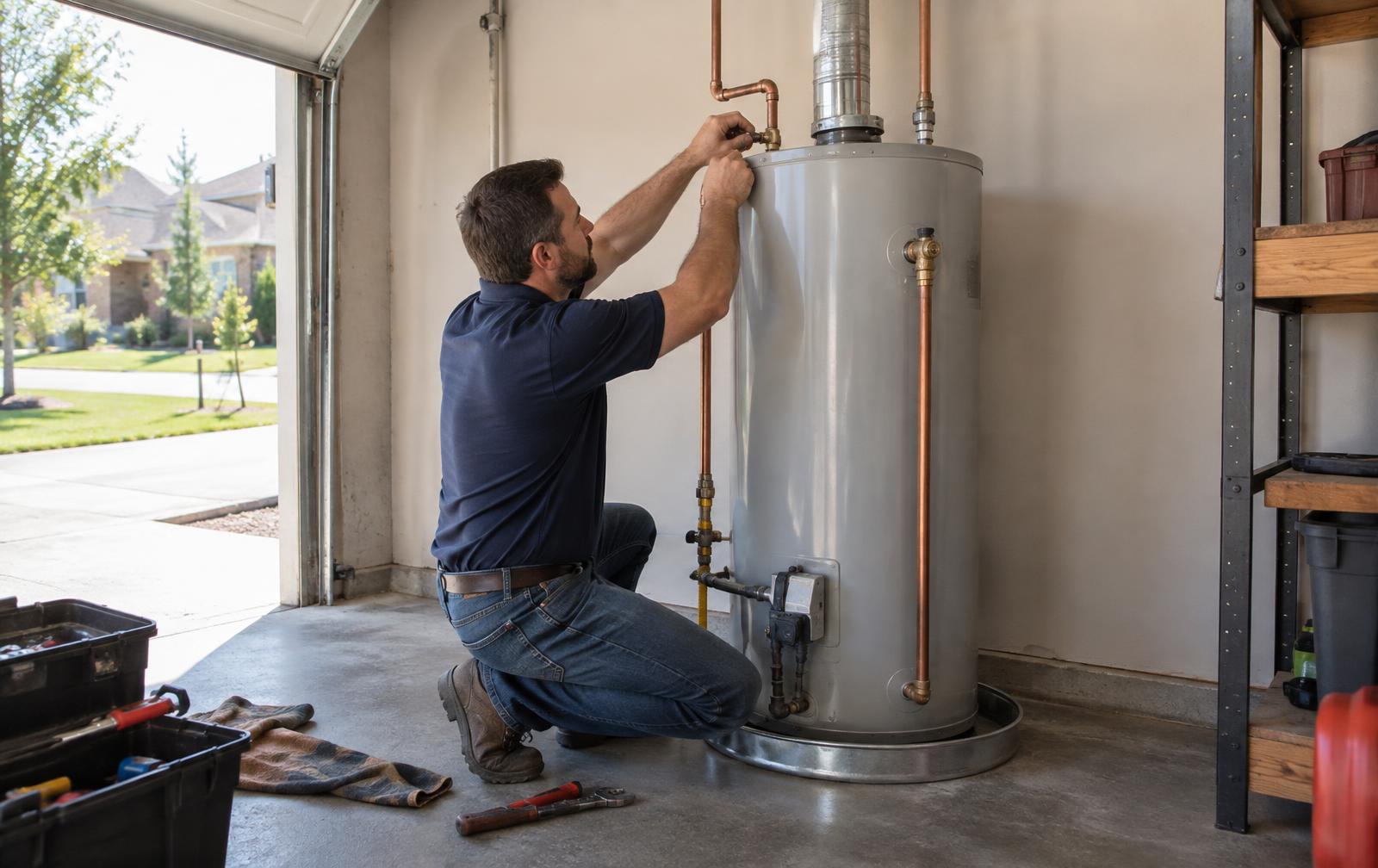
Repair, flush, and replacement of tank units — including attic and garage heaters common to Coppell homes.
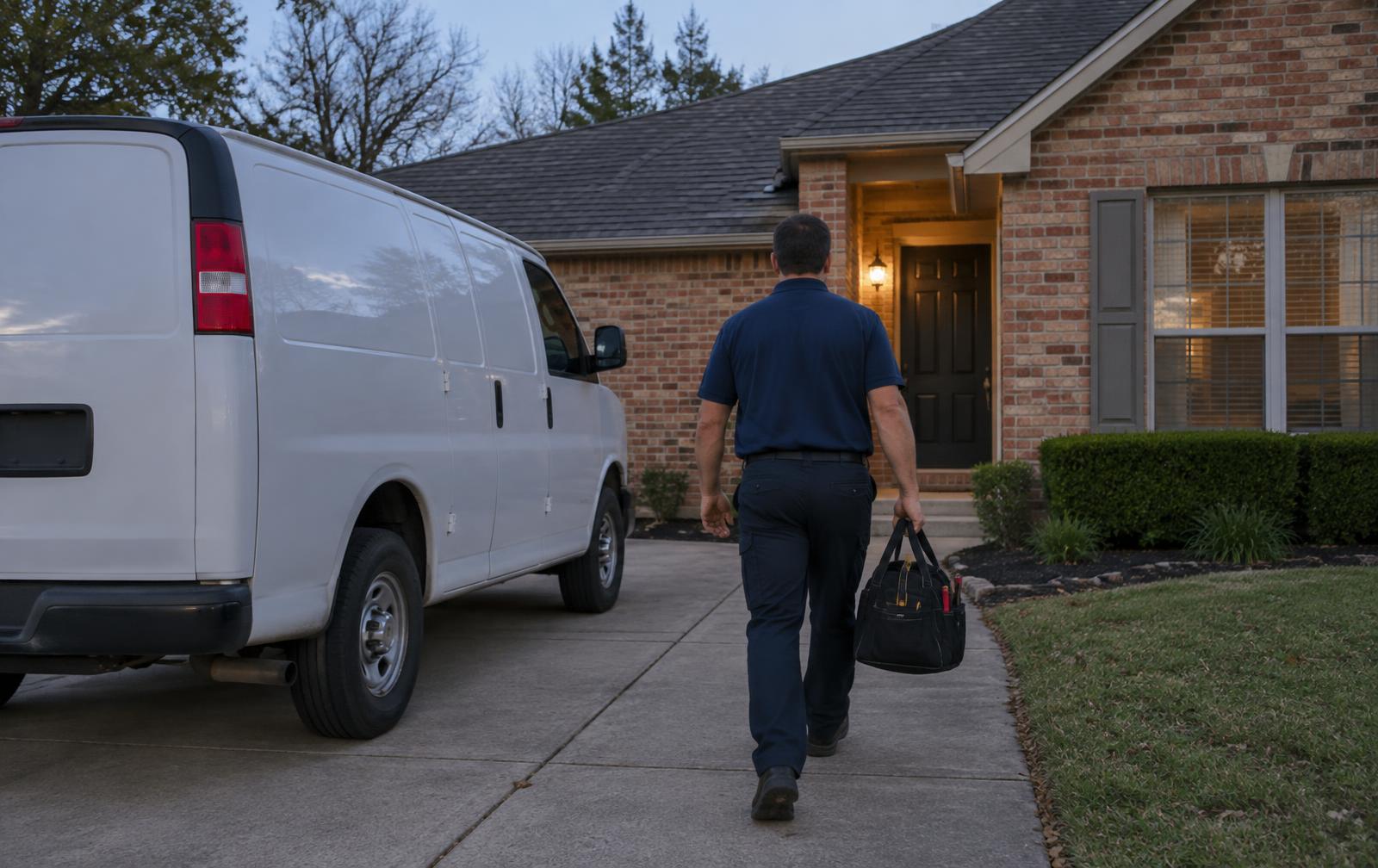
same-day, 7 days a week response across Coppell for burst pipes, heater failures, and main-line backups.
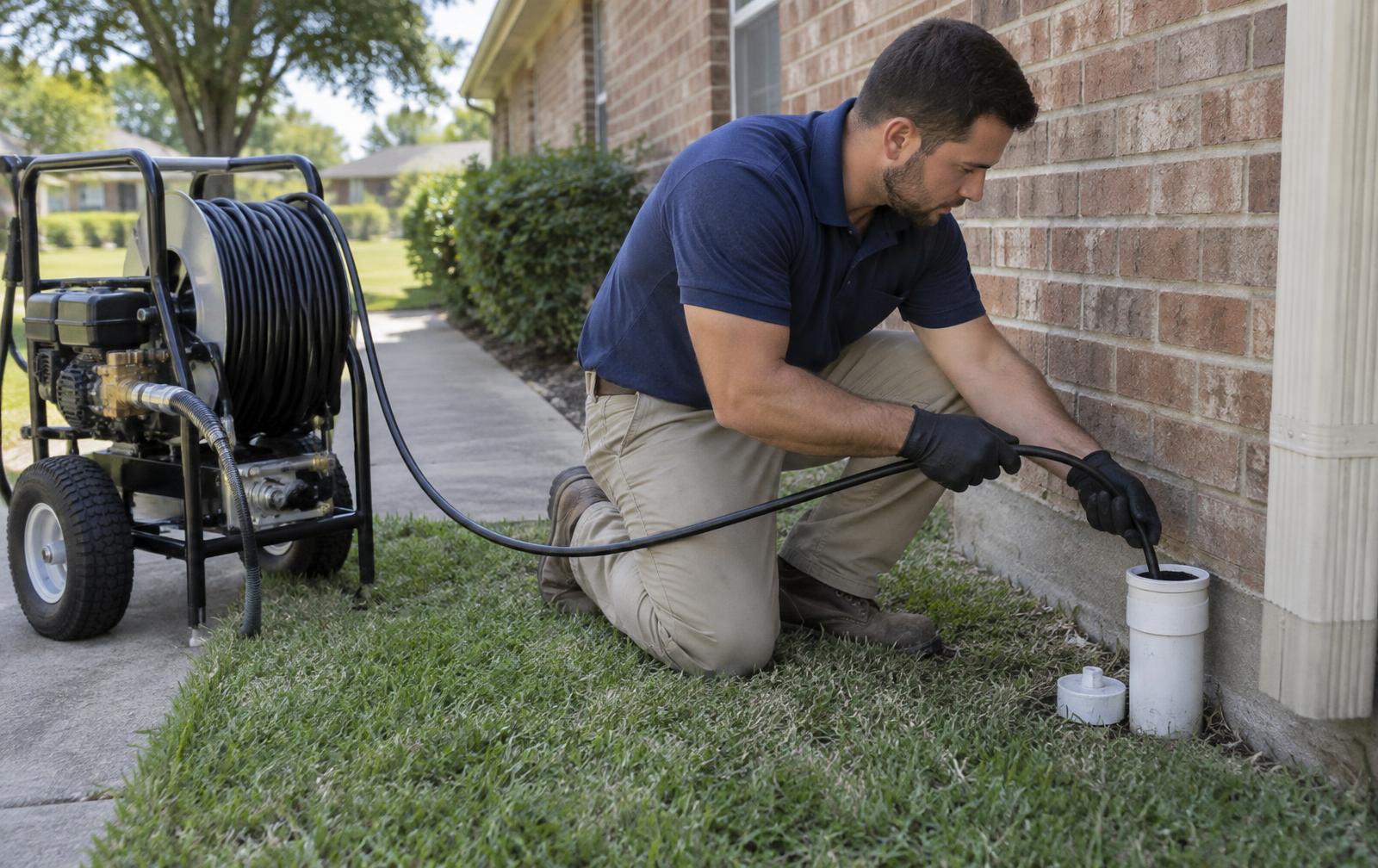
High-pressure cleaning that clears scale, grease, and roots from Coppell's lateral runs — full-diameter, lasting clean.
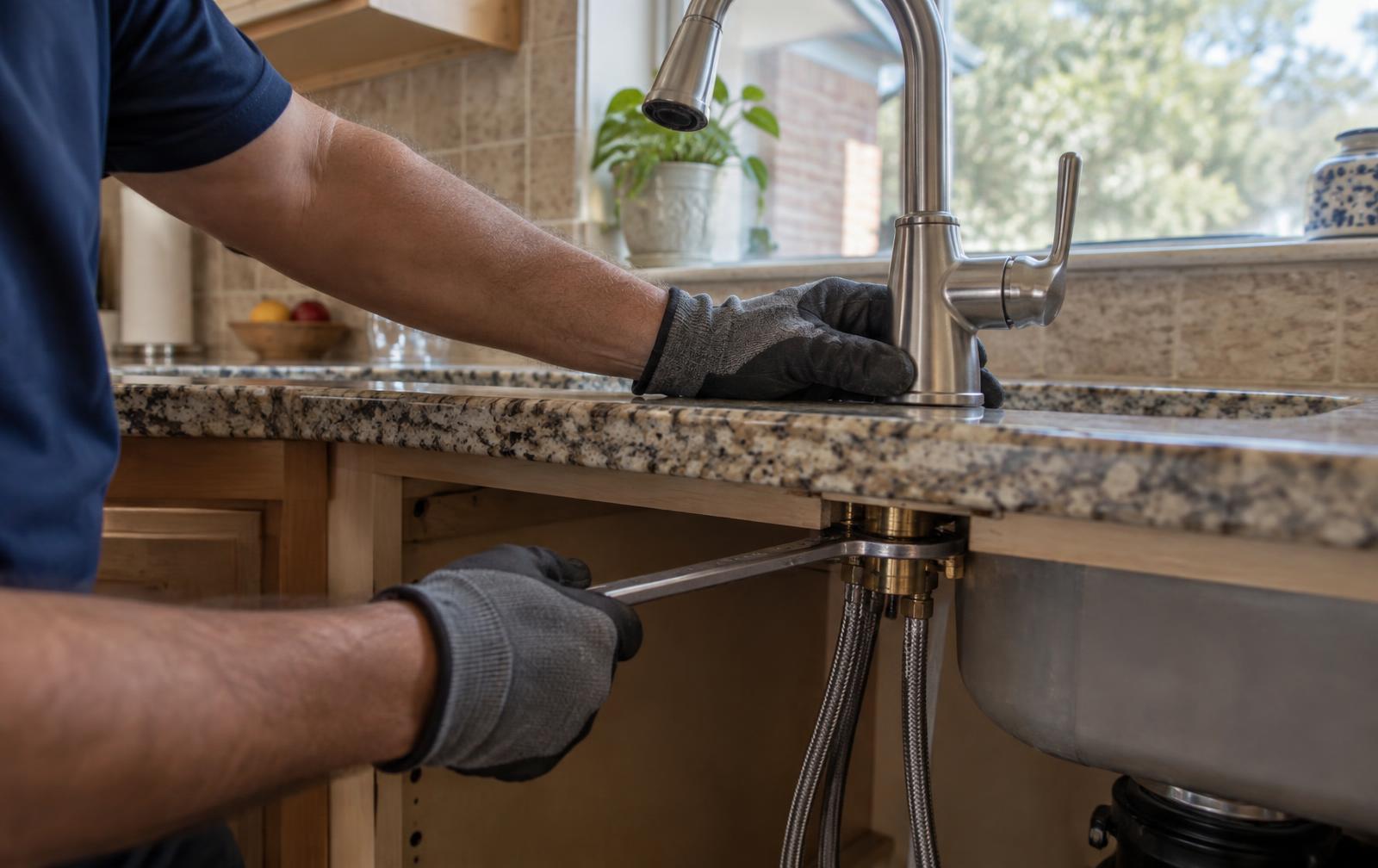
Cartridge, stem, and full-fixture replacement for Coppell kitchens and bathrooms — hard-water-ready parts stocked on the truck.
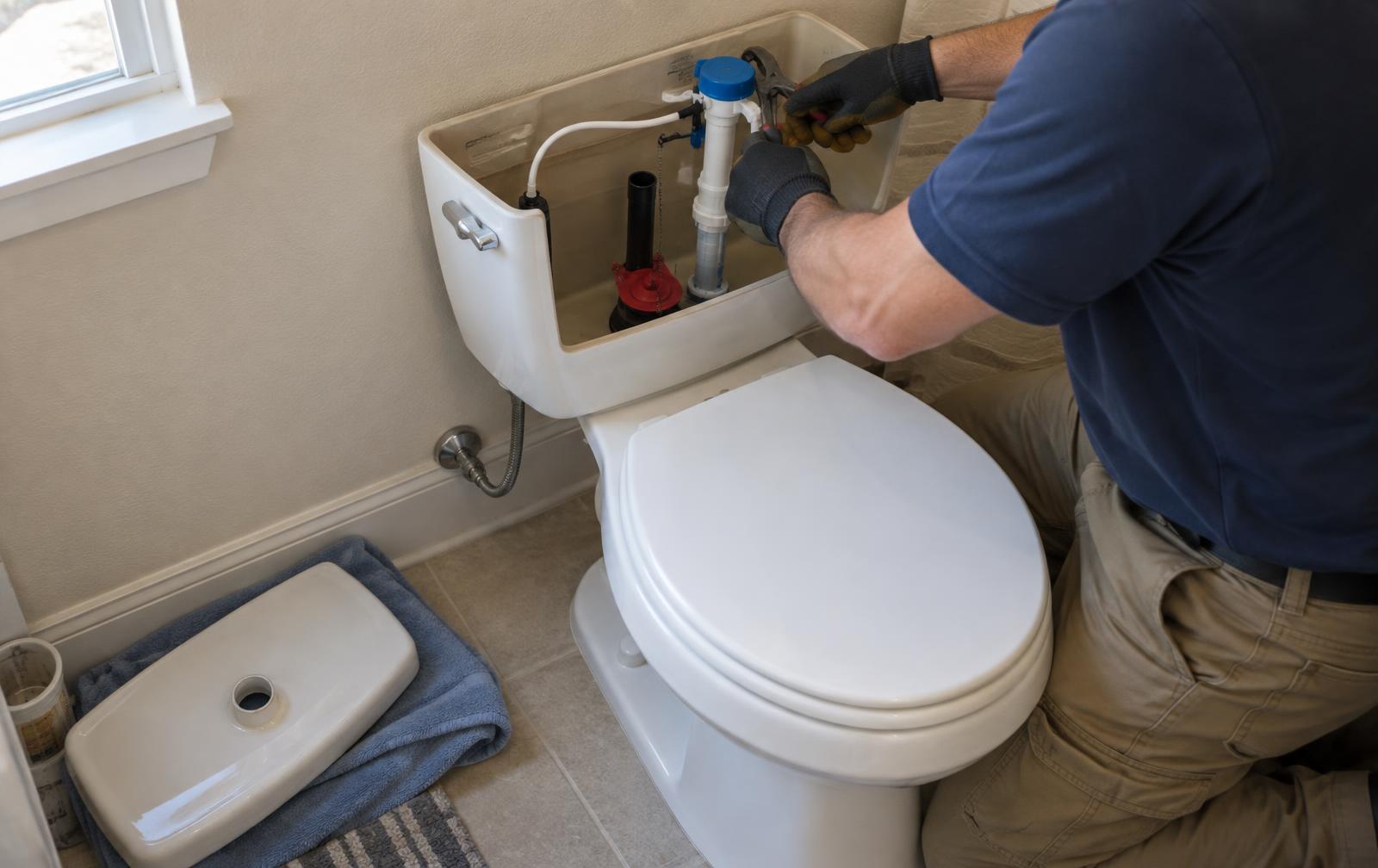
Rebuilds, wax-ring resets, flange repairs, and full replacements — the running toilets and rocking bowls in Coppell homes.
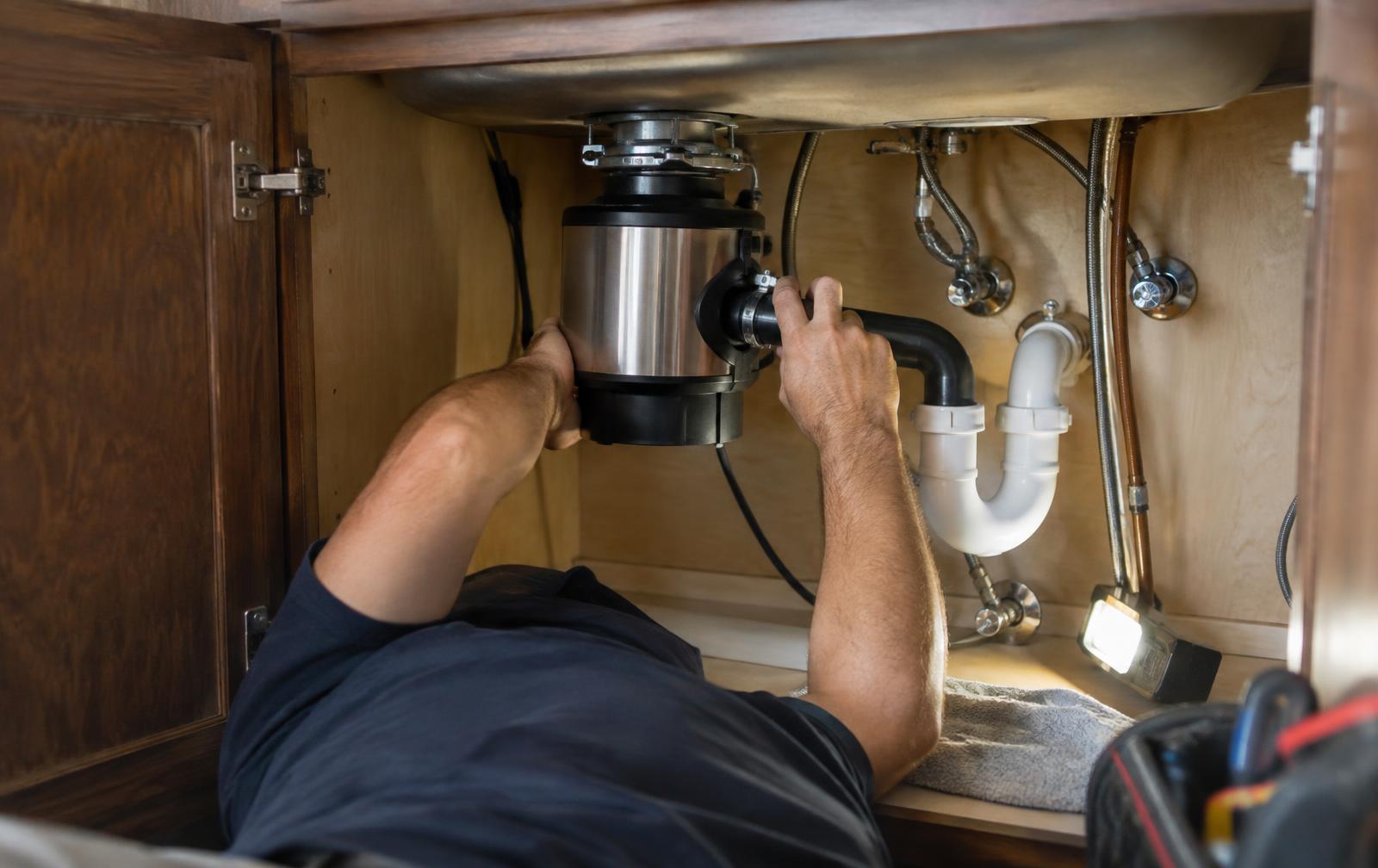
Jam clearing, leaking-unit swaps, and quiet 3/4 HP upgrades for Coppell kitchens — same-visit install.
Tankless Install or Service in Coppell?
Manufacturer-spec installation, documented annual service, and an honest read on whether tankless fits your household. Book now.