
Leak Detection in Coppell, TX
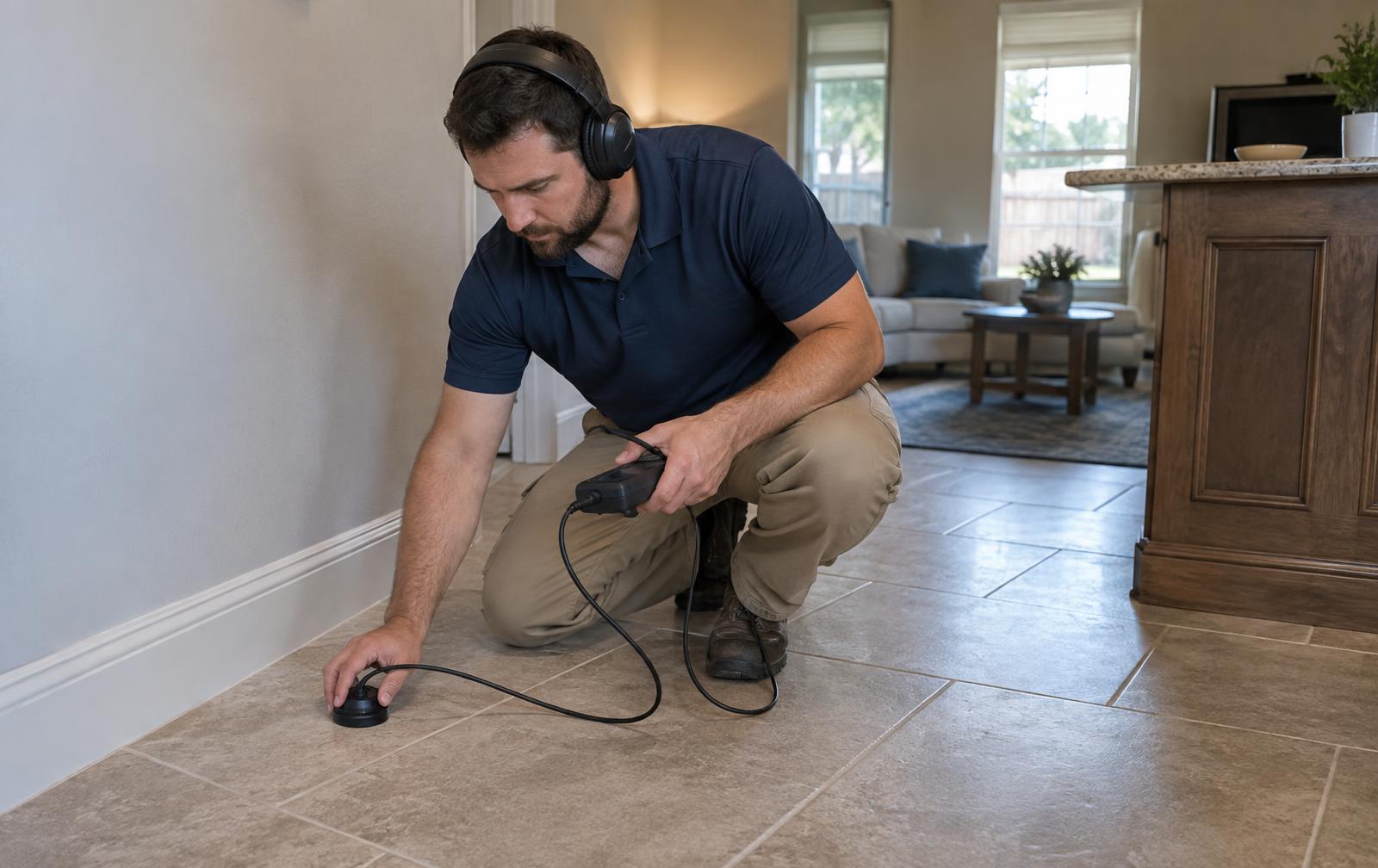
A water bill that climbed with nothing new running. A ceiling stain that keeps spreading. A meter dial that still turns with every fixture off. We track down hidden leaks in Coppell homes with acoustic, thermal, and pressure equipment, and we tell you exactly where the problem is before anything gets opened up.
A Confirmed Location Comes Before Any Repair Decision
Supply lines in Coppell run through a wide spread of construction eras, and that changes how a leak behaves before it is ever visible. The cottages and bungalows around Old Town Coppell date back to the 1920s and often still carry early copper or galvanized supply runs, while most of the city's housing stock — Woodhurst, Village at Cottonwood Creek, and the tract streets that filled in after DFW Airport opened in 1974 — went in on copper through the 1980s and 1990s. Newer custom builds in the northern part of the city are more likely to be PEX. Each material fails differently, so we ask about the build year before we ever open a toolbox.
Coppell's water arrives through the city utility on treated surface water bought wholesale from Dallas Water Utilities, and it is carried at a chlorine/chloramine residual the city actively manages to keep consistent across a large distribution system. That disinfectant works on copper from the inside over decades, and it is one of the reasons pinhole leaks show up in older copper runs here well before the pipe looks obviously worn. System pressure in Coppell also commonly runs above 80 psi, which stresses old solder joints and fittings that were never built for that load — it is also why the city requires a pressure-reducing valve and a matched expansion tank on water heater work here, a detail that matters just as much for a leaking supply line.
We do not open a wall or cut concrete on a guess. Acoustic listening, thermal imaging, and pressure isolation narrow the leak to a spot we can defend on a photo, and that is the only thing that decides where the drywall or the slab gets opened.
Signs of a Hidden Leak in Your Coppell Home
Any two of these together are reason enough to book a detection visit before the damage grows.
A hidden supply leak can run for weeks wasting a meaningful volume of water every day. If nothing new is running at the house and the bill still climbed, a leak is the first thing worth ruling out.
Shut off every fixture in the house, wait about fifteen minutes, and check the meter's low-flow indicator. Any movement at all points to a supply-side leak somewhere in the system.
Old water damage does not spread week to week. If a ceiling or wall stain is visibly larger than it used to be, water is still actively moving through the framing.
Moisture behind drywall develops a smell before it ever shows a visible stain. If one room smells different from the rest of the house, the source is usually close by.
A leak on the hot side of the line warms the material around it. Thermal imaging usually finds that source within a few minutes once we are on site.
A supply leak large enough to notice will pull pressure away from your fixtures. Paired with any sign above, it points squarely at a specific line worth tracing.
Acoustic, Thermal, or Pressure — Matched to What the Leak Needs
Every locate ends in a photo and a written description, not a guess.
- 1Confirm what kind of leak it is
We start by isolating supply from drain and hot from cold, closing valves in sequence while watching the meter. A good number of calls turn out to be a drain or fixture issue rather than a pressurized supply leak, which changes the whole plan.
- 2Pressurize the line and listen
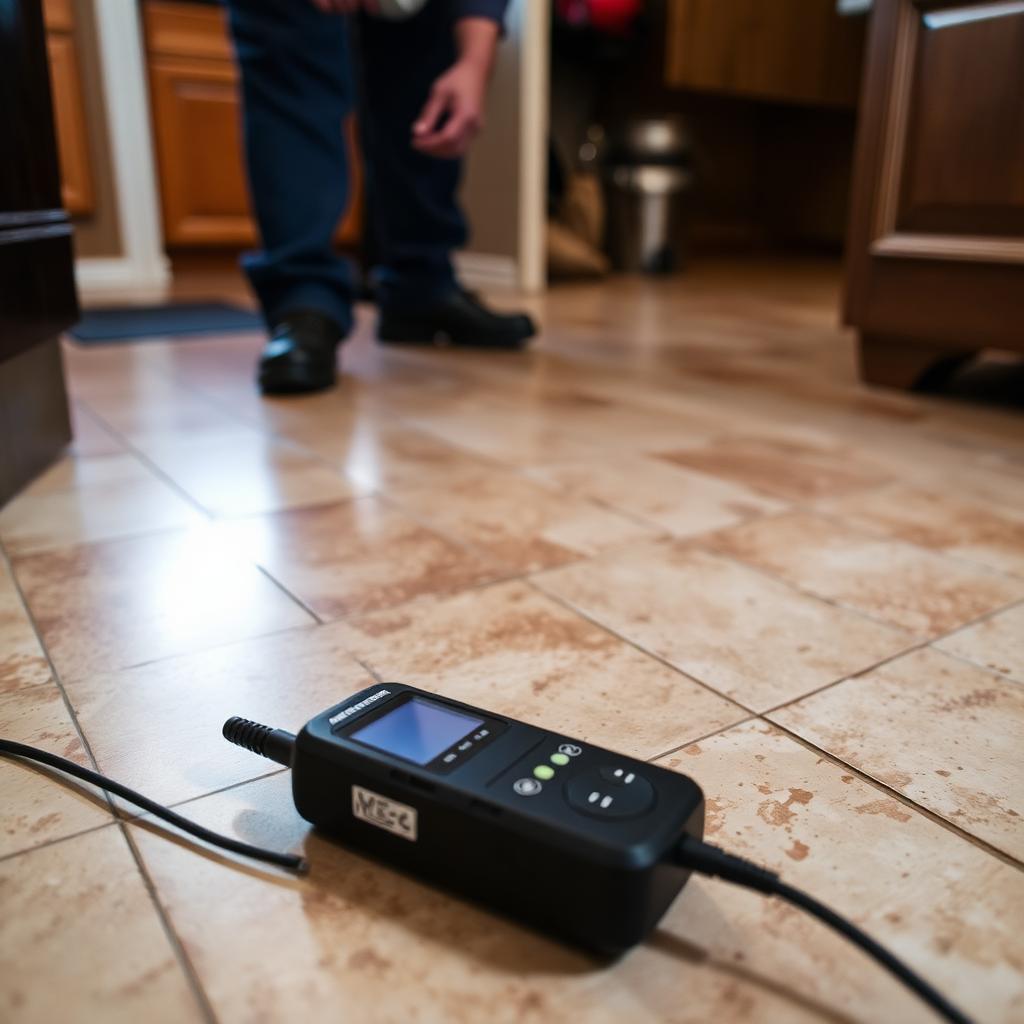
For a pressurized supply leak we hold the line steady and walk the run with ground microphones and wall probes. A pinhole leak makes a distinct hiss that narrows the location to inches, not feet.
- 3Read the walls and slab with thermal imaging
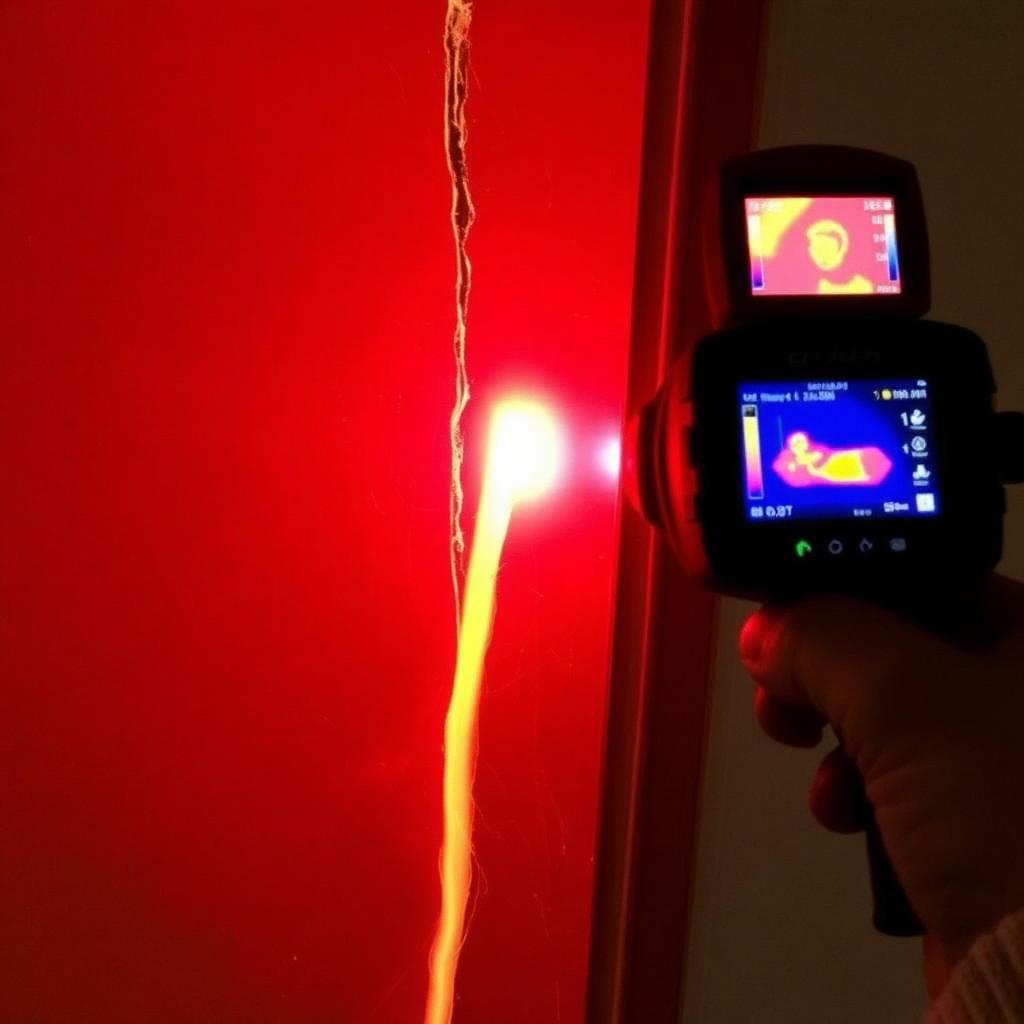
A hot-side leak heats the material around it enough for a thermal camera to see through drywall or tile. If the leak is on the cold side, we run the hot side briefly to create a contrast we can read.
- 4Bring in tracer gas for a stubborn locate
When the meter reading, the acoustic pass, and the thermal image all disagree, we introduce an inert tracer gas into the isolated line and sniff along its path. Gas escapes at the exact leak point, no exceptions.
- 5Hand you a written locate and a real quote
You get a marked photo showing the leak's location and approximate depth, a plain description of what we found, and a written repair quote — whether we do the repair, another plumber does, or your contractor handles it.
Where Leaks Tend to Show Up Across Coppell
Build era and pipe material still predict where we start looking.
The earliest surviving homes here date back to the 1920s, and many still run early copper or galvanized supply lines behind original plaster. Galvanized pipe corrodes from the inside and narrows over decades, which shows up first as a pressure drop and, eventually, as a pinhole at a joint.
Built around 1979, these brick tract homes are typically on copper supply that is now approaching its fifth decade. Coppell's elevated system pressure adds ongoing stress to old solder joints in homes of this age, which is a common failure point we check first.
This 1980s-to-early-1990s section was built out with copper supply lines under mature landscaping. Root growth near older service lines and slow copper wear both show up as slow, hard-to-see leaks rather than sudden failures.
Homes here date to the early-to-mid 1990s and were built as competitively priced two-story tract housing. Supply runs of this vintage are usually intact copper, but branch fittings near water heaters and hose bibs are worth an acoustic check first.
Homes near Grapevine Springs Park sit close to the expansive clay that runs along Grapevine Creek through the center of the city. Ground movement here can stress a supply joint enough to start a slow leak long before any wall damage is visible.
Homes along this stretch of the Denton Tap corridor date to the 1980s-1990s suburban build-out. On these lots we usually find copper supply lines that are original to the house, which makes an acoustic pass the fastest way to rule a leak in or out.
What Coppell Homeowners Say
A Marked Photo Before Any Cutting Starts
Every detection visit ends with a documented locate: a marked photo, a plain-language description of the leak, and a written repair quote. If the locate is anything less than certain, we say so before you spend a dollar on opening a wall or a slab.
We are licensed by the Texas State Board of Plumbing Examiners, insured, and family-owned, and every truck dispatches from our shop in The Colony. Same-day appointments are available seven days a week, 8 AM to 6 PM.
Straight Answers, No Sales Pitch
Our Other Plumbing Services in Coppell, TX
A hidden leak is often the first sign that a supply system is aging out. We also handle the follow-through work locally — slab reroutes, water heater service, and full re-pipes — with one call.
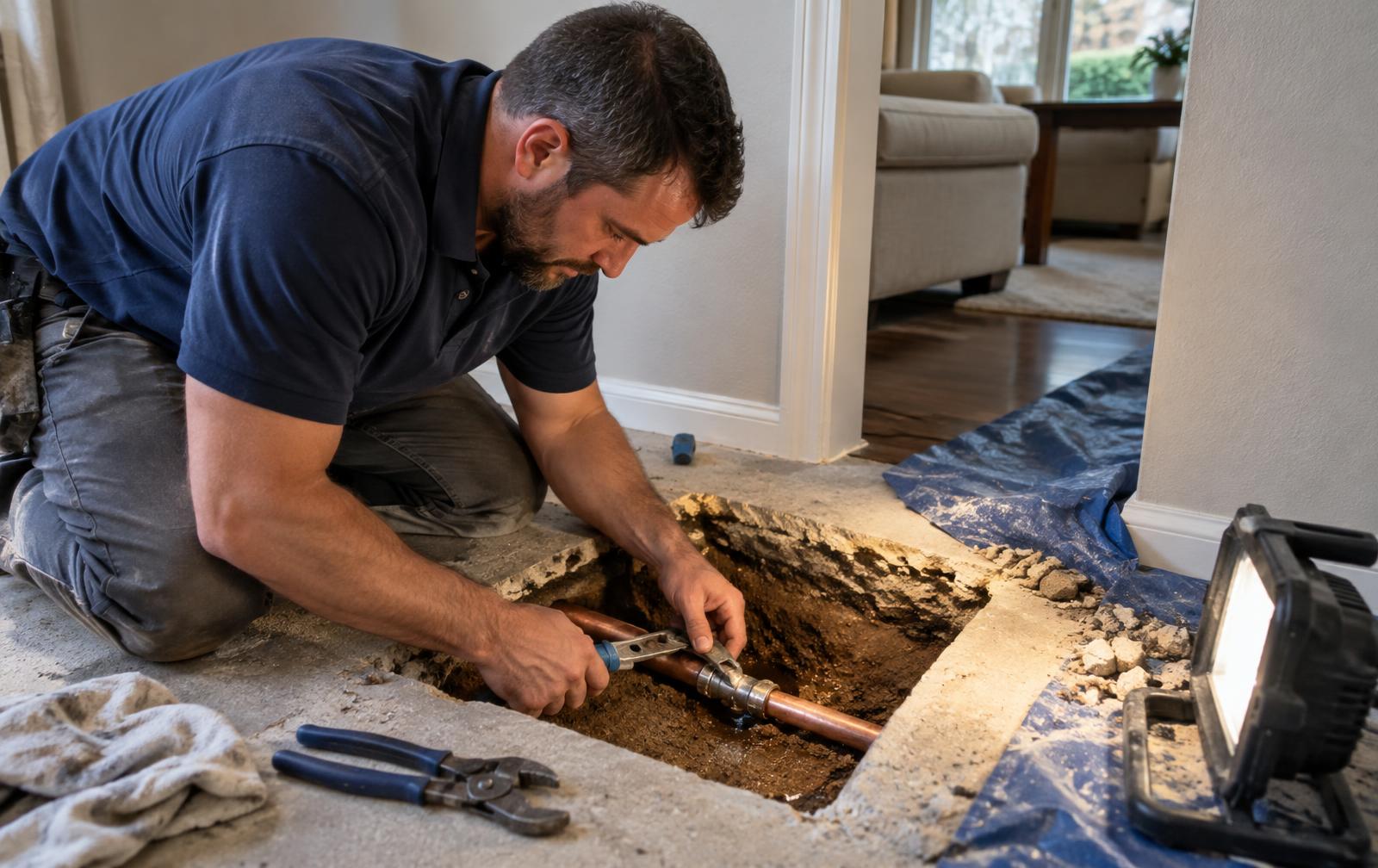
Electronic detection under Coppell slabs — reroute options that save your finished floors when possible.
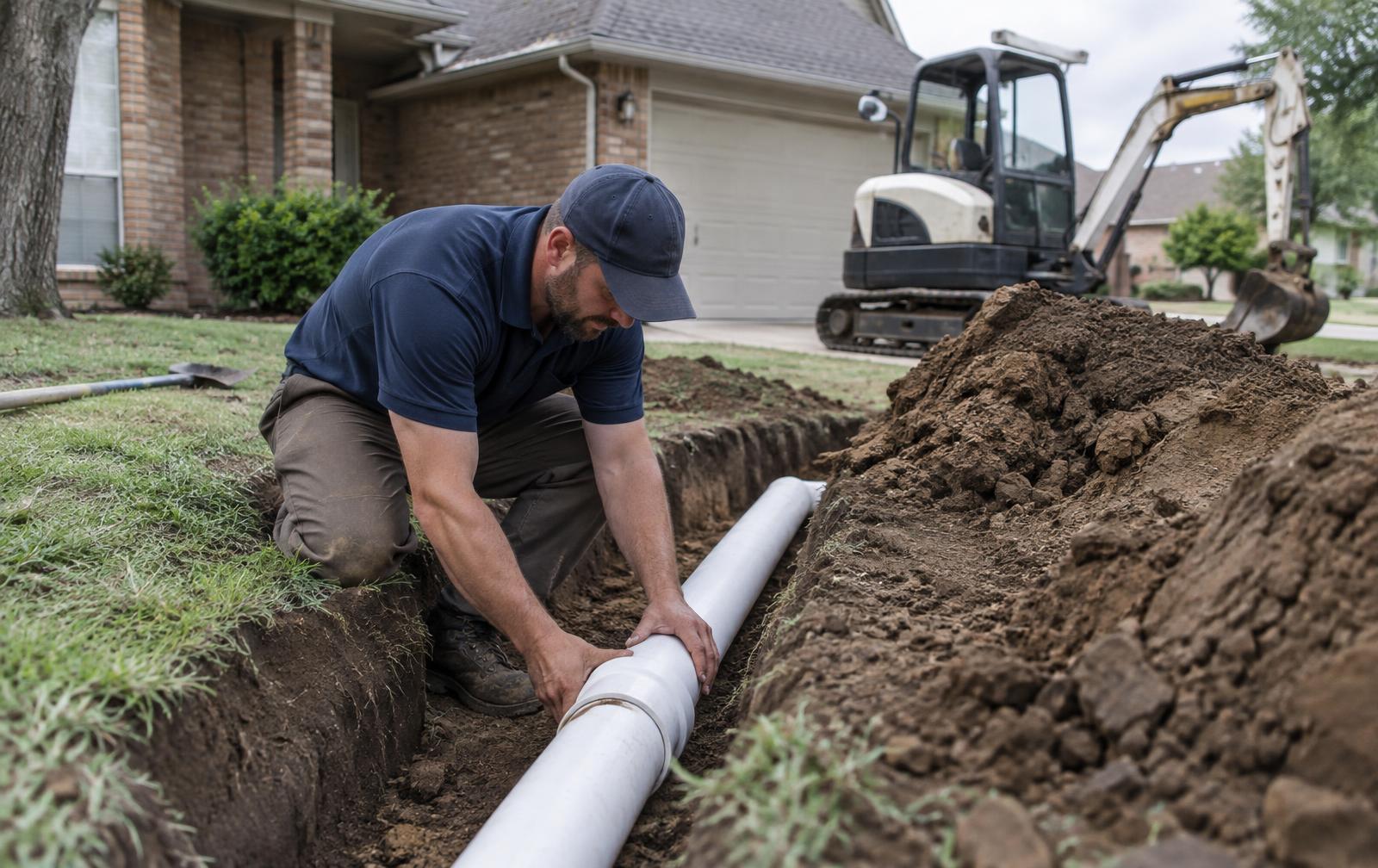
Trenchless replacement for the aging laterals across Coppell's older runs — camera first, quote in writing, minimal yard damage.

Licensed install, repair, and pressure-testing for Coppell homes — every line signed off to Texas code and Atmos requirements.

Full-clear service and camera confirmation for the drains under Coppell's neighborhoods.

Repair, flush, and replacement of tank units — including attic and garage heaters common to Coppell homes.
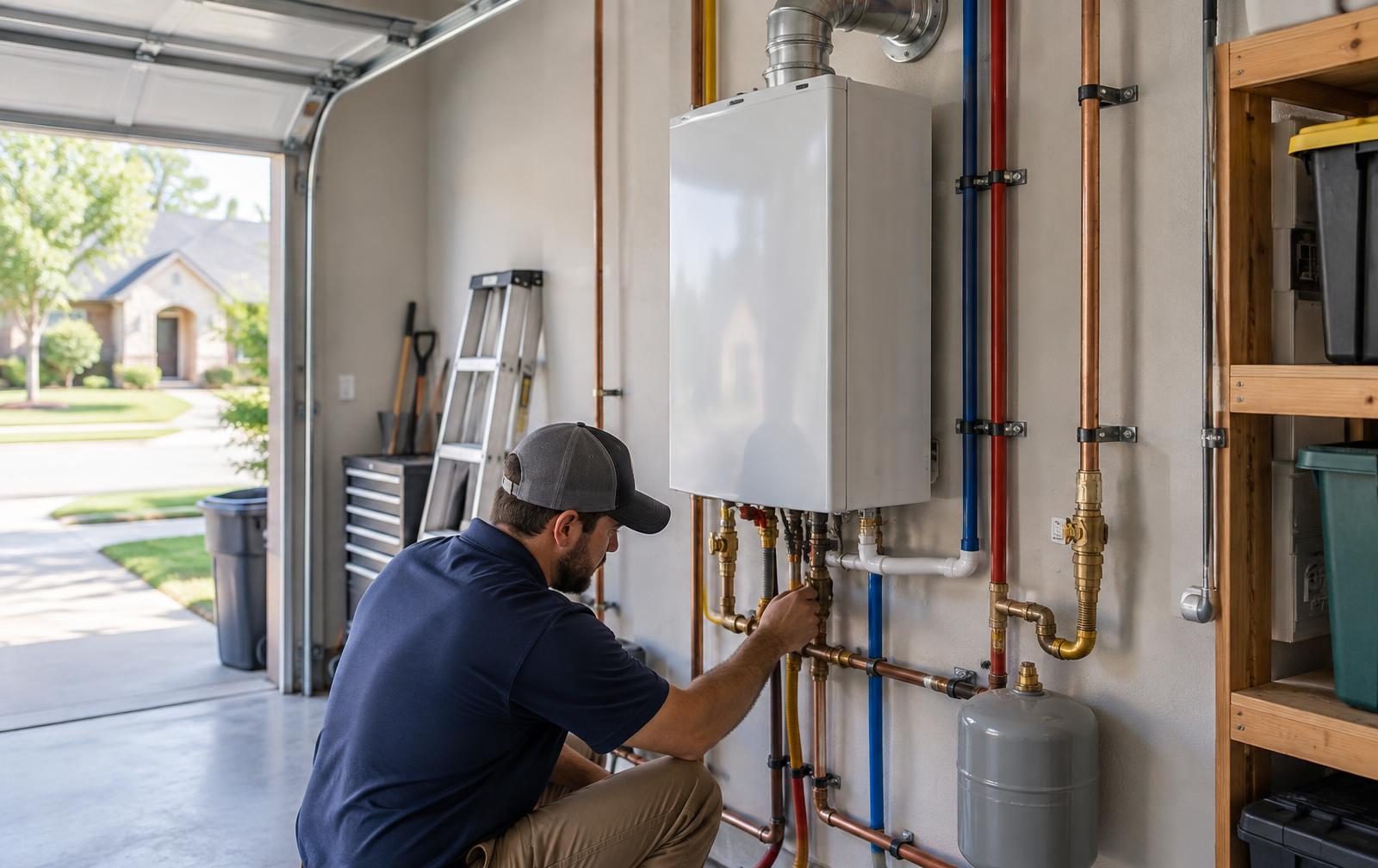
Install, service, and annual descaling — Coppell's hard tap water eats tankless heat exchangers without it.

same-day, 7 days a week response across Coppell for burst pipes, heater failures, and main-line backups.
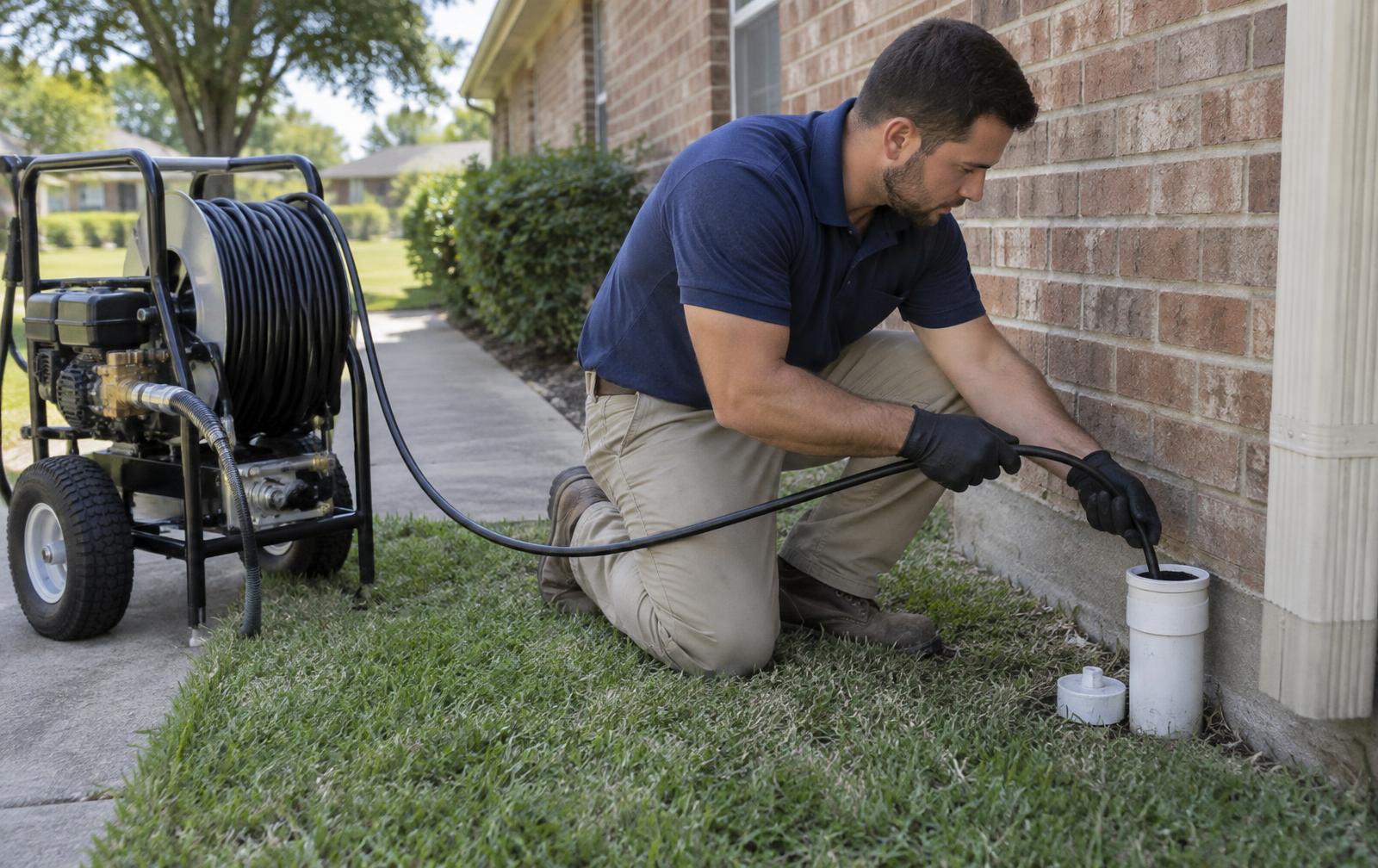
High-pressure cleaning that clears scale, grease, and roots from Coppell's lateral runs — full-diameter, lasting clean.
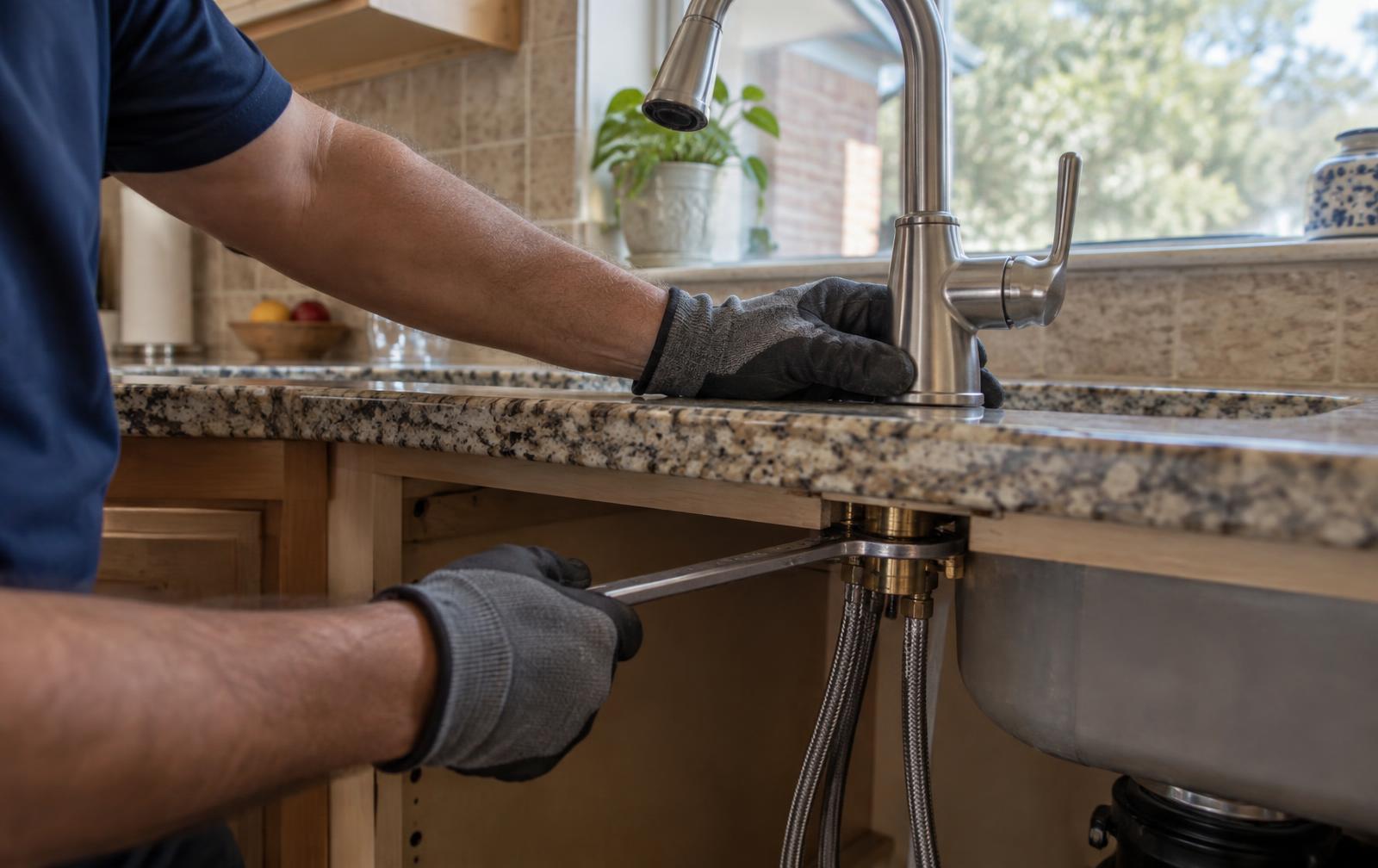
Cartridge, stem, and full-fixture replacement for Coppell kitchens and bathrooms — hard-water-ready parts stocked on the truck.
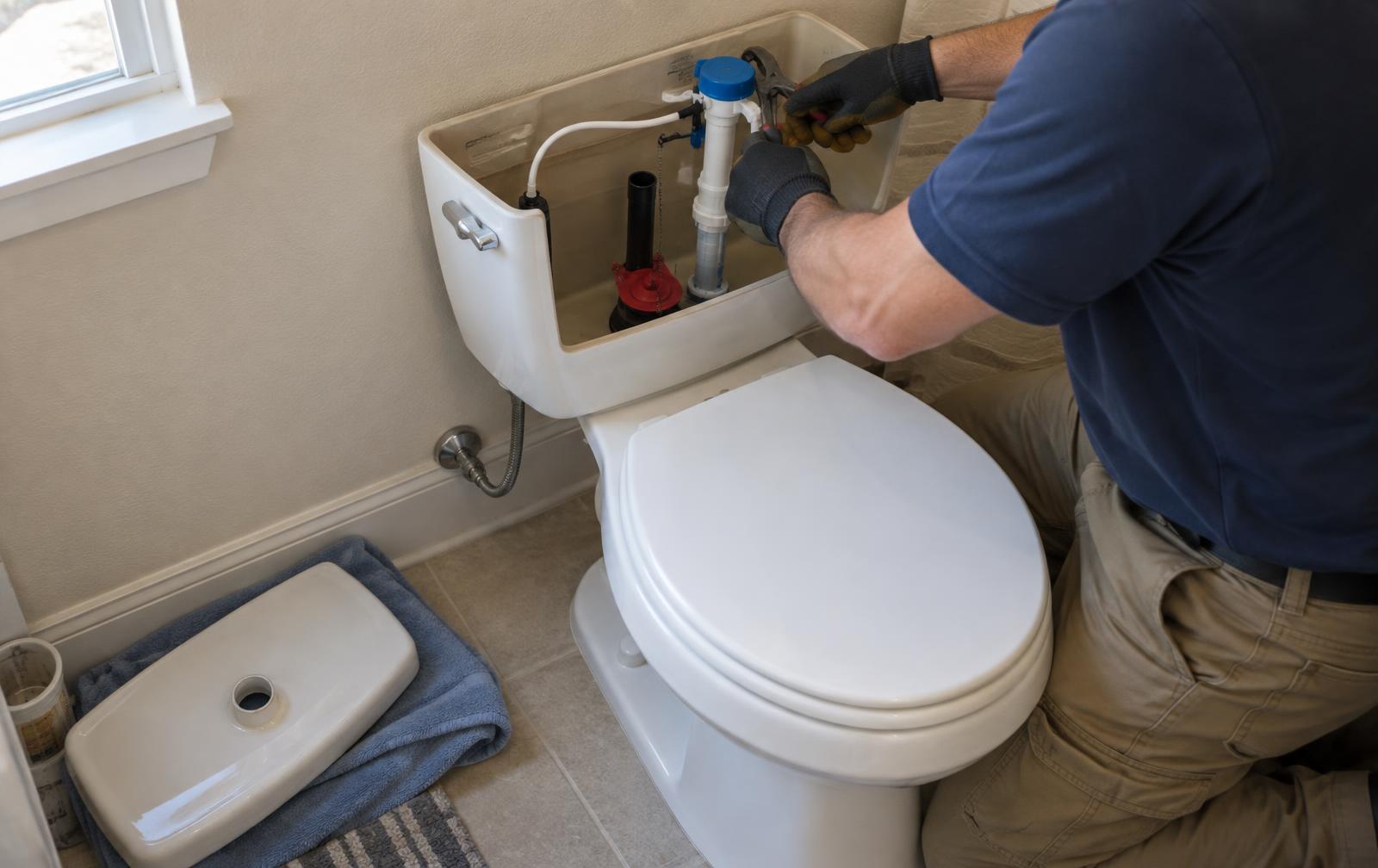
Rebuilds, wax-ring resets, flange repairs, and full replacements — the running toilets and rocking bowls in Coppell homes.
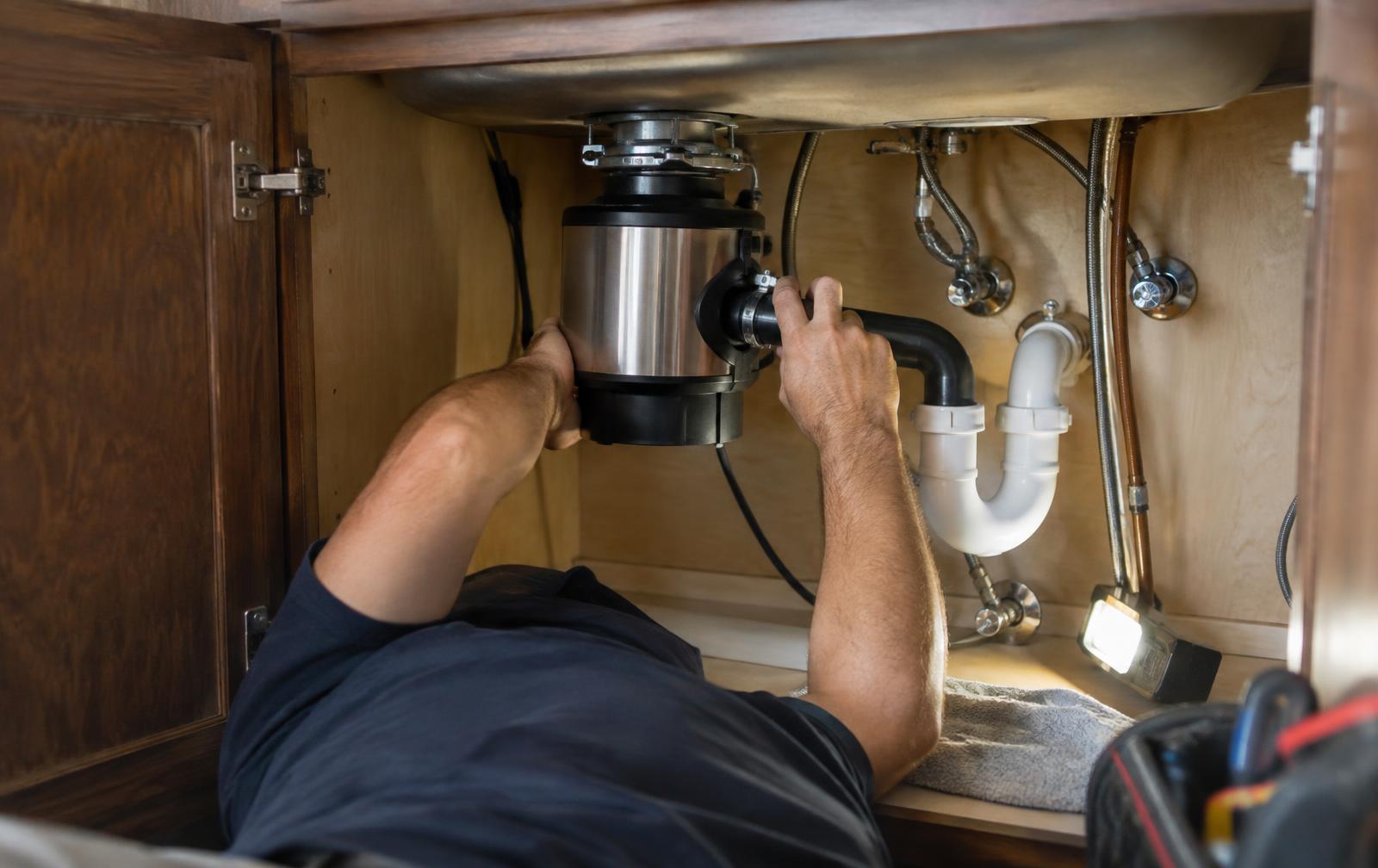
Jam clearing, leaking-unit swaps, and quiet 3/4 HP upgrades for Coppell kitchens — same-visit install.
Think You Have a Hidden Leak in Coppell?
Non-invasive detection, a documented locate, and a written repair price before we start.