
Slab Leak Repair in Allen, TX
One patch of tile stays wet no matter how often it's mopped. Part of the bedroom floor feels warmer than the hallway. The meter keeps spinning and the bill followed it up. Our crew locates leaks running under Allen concrete before anything gets demolished, and lays out the reroute-or-repair choice in plain terms instead of steering toward the pricier option.
Cut the Slab or Bypass It — That Decision Comes Before Any Tools Come Out
A large stretch of Allen's older ranch construction, concentrated along the U.S. 75 corridor that anchored the city's growth through the 1970s and 1980s, runs copper beneath slabs poured before post-tensioning was common practice. Add several decades of Blackland Prairie clay expanding and contracting beneath that concrete, plus the chloramine in Allen's daily water supply working on copper from the inside, and it's easy to see why this generation of house generates more slab leak calls than any other in the city.
Closer to Star Creek, the plumbing skews newer — PEX or fresher copper — which usually keeps a first slab leak to a single, isolated event rather than a sign of a whole system aging out at once. Getting the location right the first time still matters on any finished concrete floor, since a wrong guess means paying for restoration twice.
Neither situation calls for opening concrete on a hunch. It calls for someone with detection equipment who can mark a specific spot on the slab, then explain plainly whether cutting into the floor or running a new line overhead through the attic is the smarter move for that particular house.

Signs of a Slab Leak in Your Allen Home
The longer a slab leak runs unnoticed, the bigger the eventual repair.
Heat from a leaking hot-water line travels up through the concrete directly above it. Walking barefoot through the house in the early morning is often the easiest way to notice a patch that shouldn't be warm.
A slab leak the size of a pinhole can waste a meaningful amount of water every single day without a drop reaching the surface. An unexplained jump in usage is one of the more reliable early clues.
A leaking hot-side line under the slab forces the water heater to keep reheating to make up for what's escaping. A closet or utility space that runs warmer than usual, or a heater cycling more than it should, points that direction.
Both are what happens after moisture has been working its way up through a slab for a stretch of time. By the point these show up, the leak has typically been running for a while already.
Turn off every fixture, then listen near the floor or a nearby wall. A soft hiss or trickle with nothing running anywhere in the house is a strong sign water is moving somewhere it shouldn't be.
When hot water pressure drops noticeably while cold stays normal, a hot-side slab leak is a common explanation, and it's worth checking under the concrete before assuming a fixture problem.
Locate, Then Decide
Nothing about the slab changes until we can show you exactly where the problem is.
- 1Test the water heater's supply lines
Checking pressure separately on each side at the heater tells us right away which line is losing water, and roughly how much of the system a reroute would eventually need to cover.
- 2Narrow the location with sound and heat
Ground microphones sweep the floor while a thermal camera checks the walls and slab surface for a telltale warm trail. When the picture still isn't clear, an inert gas introduced into the isolated line and traced with a sniffer usually settles it.
- 3Explain both repair paths in plain terms
Cutting a small section of concrete to splice the exact failure point is generally the lower-cost route when the rest of the line still checks out fine. Running a new line overhead through the attic and retiring the slab section entirely tends to make more sense once the copper is old enough that a second failure is likely somewhere else on the same run.
- 4Complete whichever repair fits
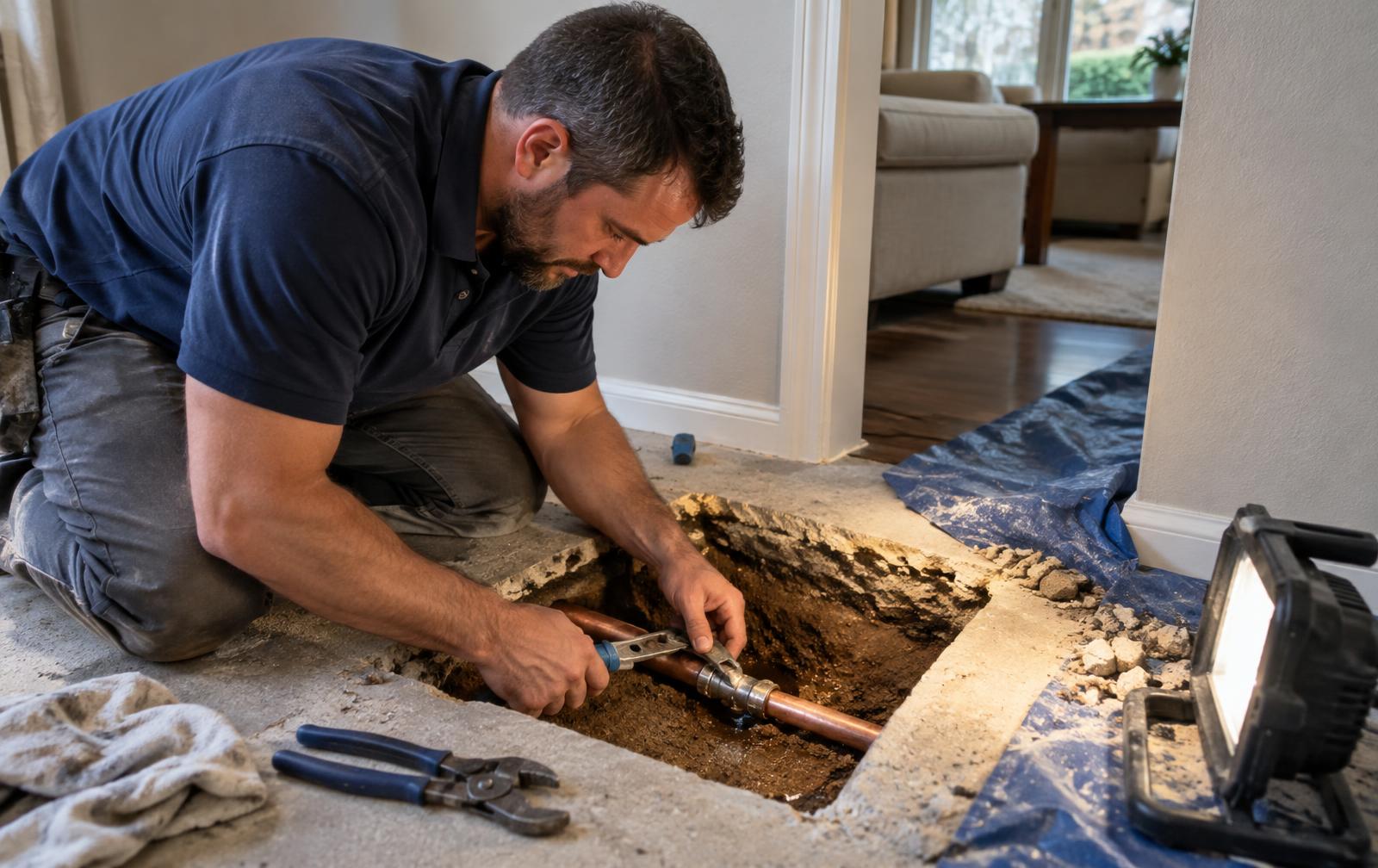
A concrete repair means a clean saw cut, an exposed splice, a new fitting, and a patched floor. An overhead reroute means new PEX run through the attic space, tied in above the fixtures, with the old slab section capped and abandoned for good.
- 5Confirm the fix under pressure
The finished line holds a set test pressure for roughly fifteen minutes while you watch the gauge with us. You keep photos from the detection step, the repair itself, and the pressure test as a record of exactly what was done.
A Concrete Cut or an Overhead Reroute — We Quote Both
Which one fits depends on the copper's age, how many fixtures share that line, and how much of the floor is finished.
A section of slab gets opened at the confirmed leak point, the bad section is spliced out, and the opening is patched closed. This works well when the surrounding copper still tests sound.
- Lower cost when the failure looks like an isolated event
- The original line stays in service exactly where it was
- Flooring and concrete finish work fall to your own restoration crew afterward
- Less appealing once the rest of the copper is clearly the same age
The failed slab section is abandoned entirely and a new PEX line runs overhead through the attic instead, tying back in above the fixtures it feeds.
- Removes that line from the concrete permanently
- Sidesteps copper that can't be inspected once it's buried again
- Units without attic access can often route through a soffit instead
- Higher cost upfront, cheaper across the years that follow
What We See in Each Part of Allen
The decade a house was built tends to predict both the leak and the better fix.
Most of this area was built from the 1970s through the 1990s, old enough that a first slab leak rarely stands alone. We tend to steer these conversations toward a full reroute rather than treat it as a single repair.
A similar building era to Twin Creeks, bordering Rowlett Creek in places, where seasonal ground moisture near the foundation can make an acoustic reading harder to trust on its own. Thermal imaging carries more of the confirmation here.
Construction runs newer, generally from 1999 forward. A concrete-cut repair is more often the practical answer since the copper hasn't had decades to age all at once.
The restored houses near St. Mary Drive represent the oldest surviving construction in the city, dating to the 1920s. A nearby private home of that vintage still running original plumbing is a strong argument for a full reroute over another round of spot repairs.
This corridor developed later in Allen's growth, generally after 1999, and construction there tends to already use PEX. A slab leak in this housing is less common, and when it happens, it's more often a fitting than corroded copper.
This stretch carries the bulk of Allen's 1970s-and-1980s ranch construction sitting directly over Blackland Prairie clay. Decades of that clay shifting beneath the slab is a large part of why this corridor produces more slab leak calls than newer parts of the city.
What Allen Homeowners Say

Fixed Right, Explained Honestly
Labor on every slab leak repair we complete is warrantied. If our own work fails, we come back and make it right at no cost to you. If we told you at quote time the rest of the copper was likely to fail next and it does, that's exactly why the reroute option was on the table in the first place.
Our plumbers are licensed through the Texas State Board of Plumbing Examiners, insured, and this is a family-owned business, with every truck dispatching out of our shop in The Colony. We book same-day appointments seven days a week, 8 AM to 6 PM.
Questions We Hear Before a Slab Leak Repair
Our Other Plumbing Services in Allen, TX
A slab leak often signals that the rest of the supply lines are the same age and heading the same direction. We're glad to talk through the sewer, water heater, or a full re-pipe in the same conversation — one local visit in Allen.
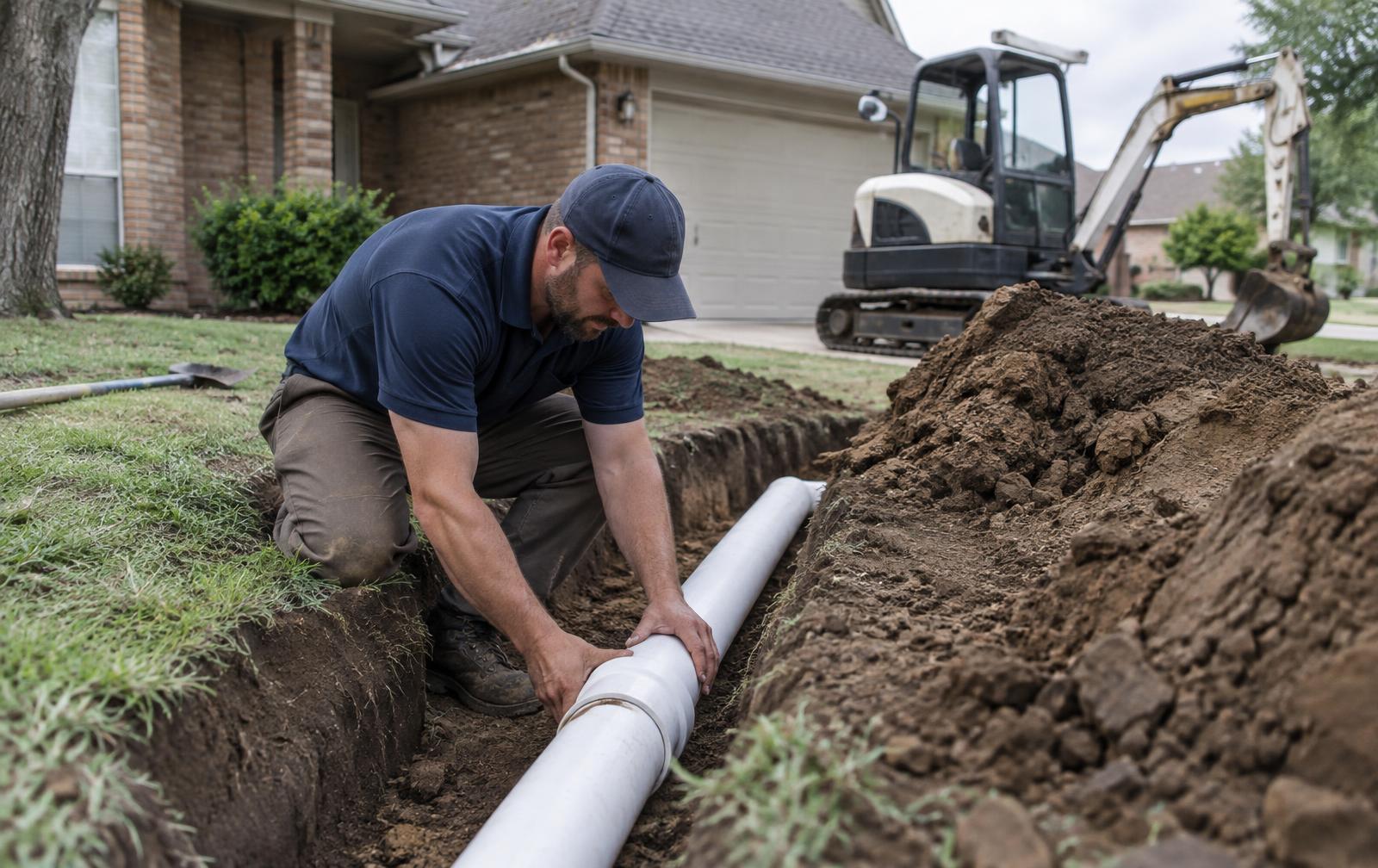
Trenchless replacement for the aging PVC and clay laterals across Allen's older Twin Creeks and Suncreek runs — camera first, quote in writing, minimal yard damage.
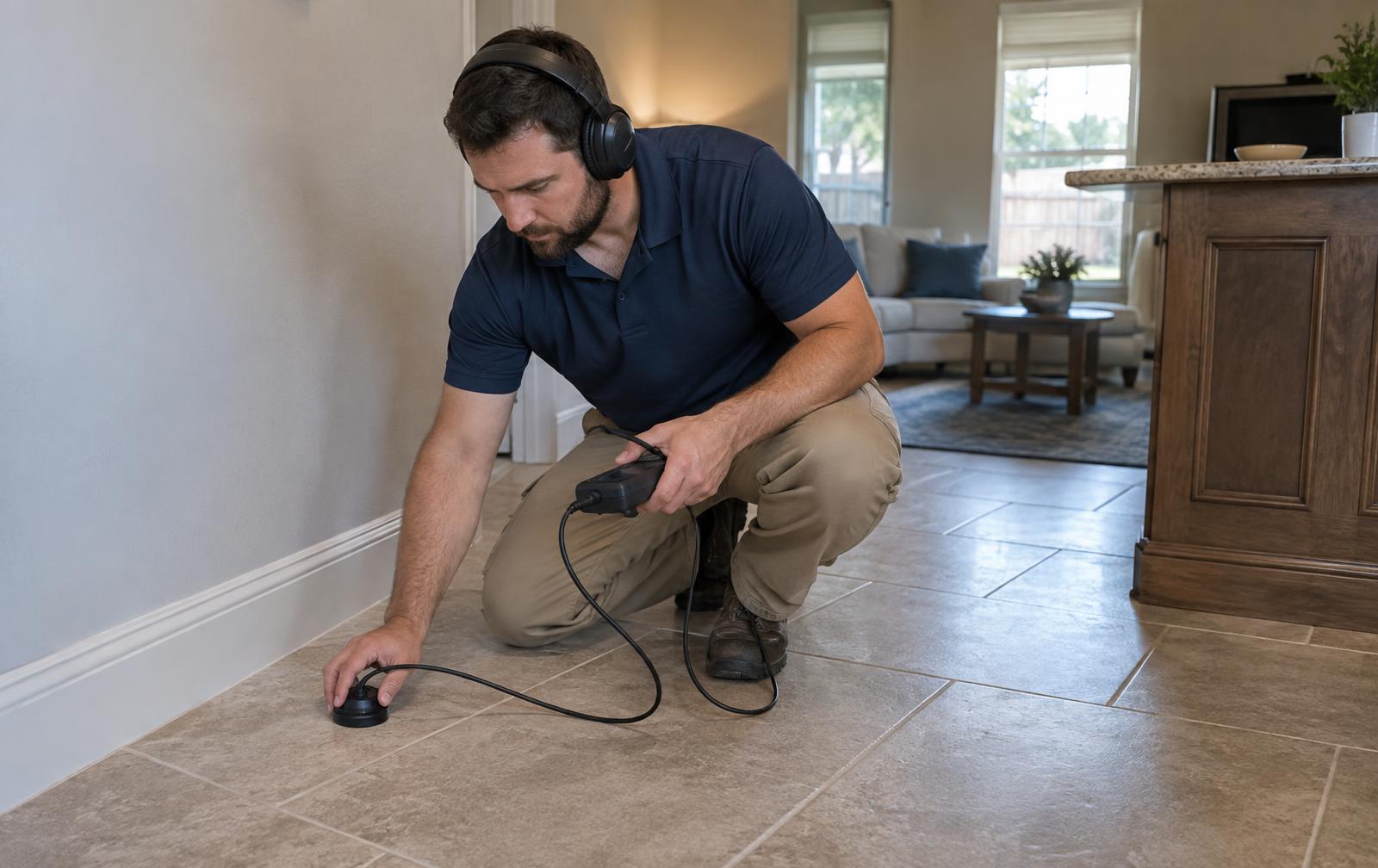
Acoustic, thermal, and pressure testing to pinpoint hidden leaks in Allen slab and wall lines without tearing into finishes.
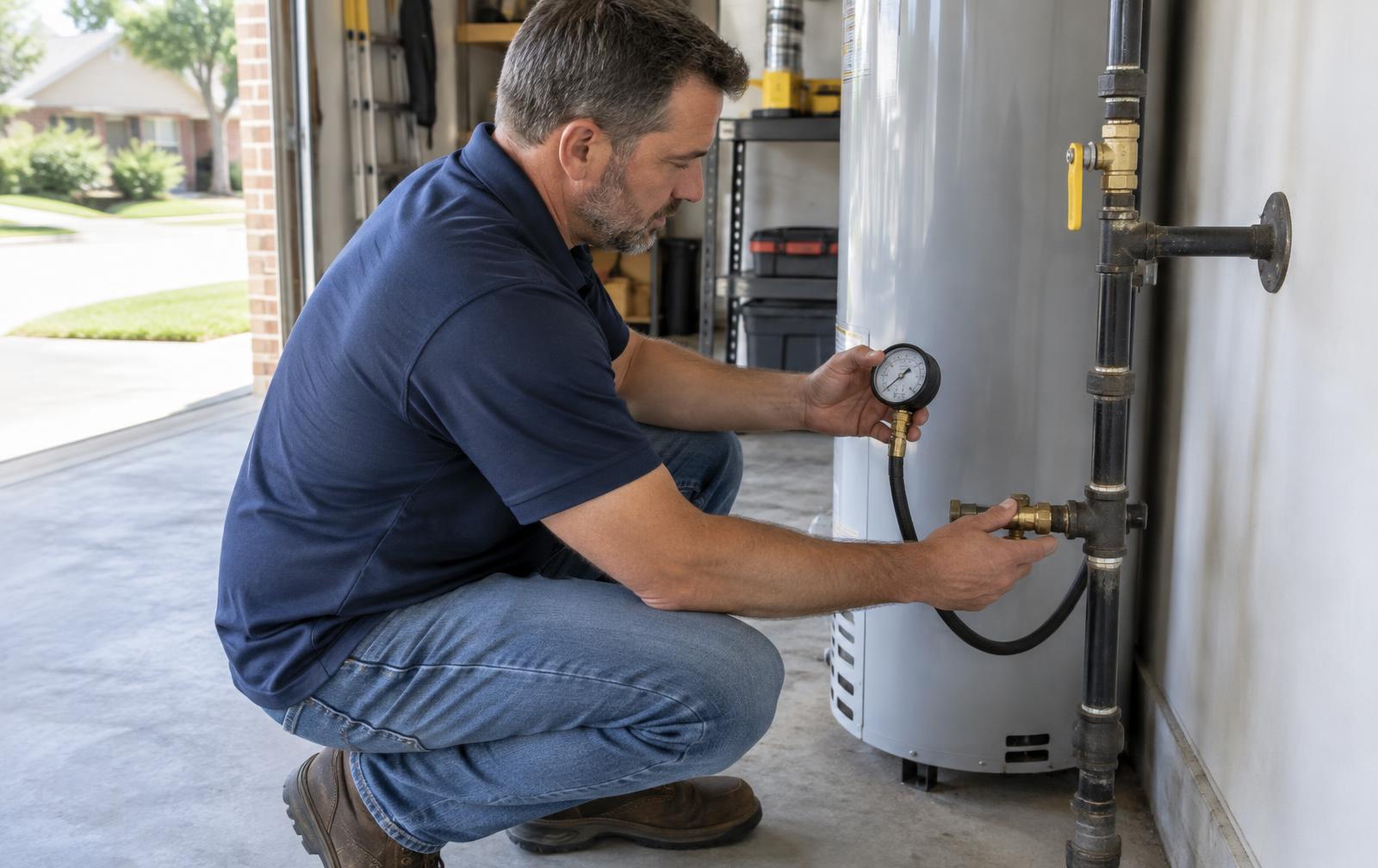
Licensed install, repair, and pressure-testing for Allen homes — every line signed off to Texas code and Atmos requirements.

Full-clear service and camera confirmation for the long PVC laterals under Allen's master-planned neighborhoods.
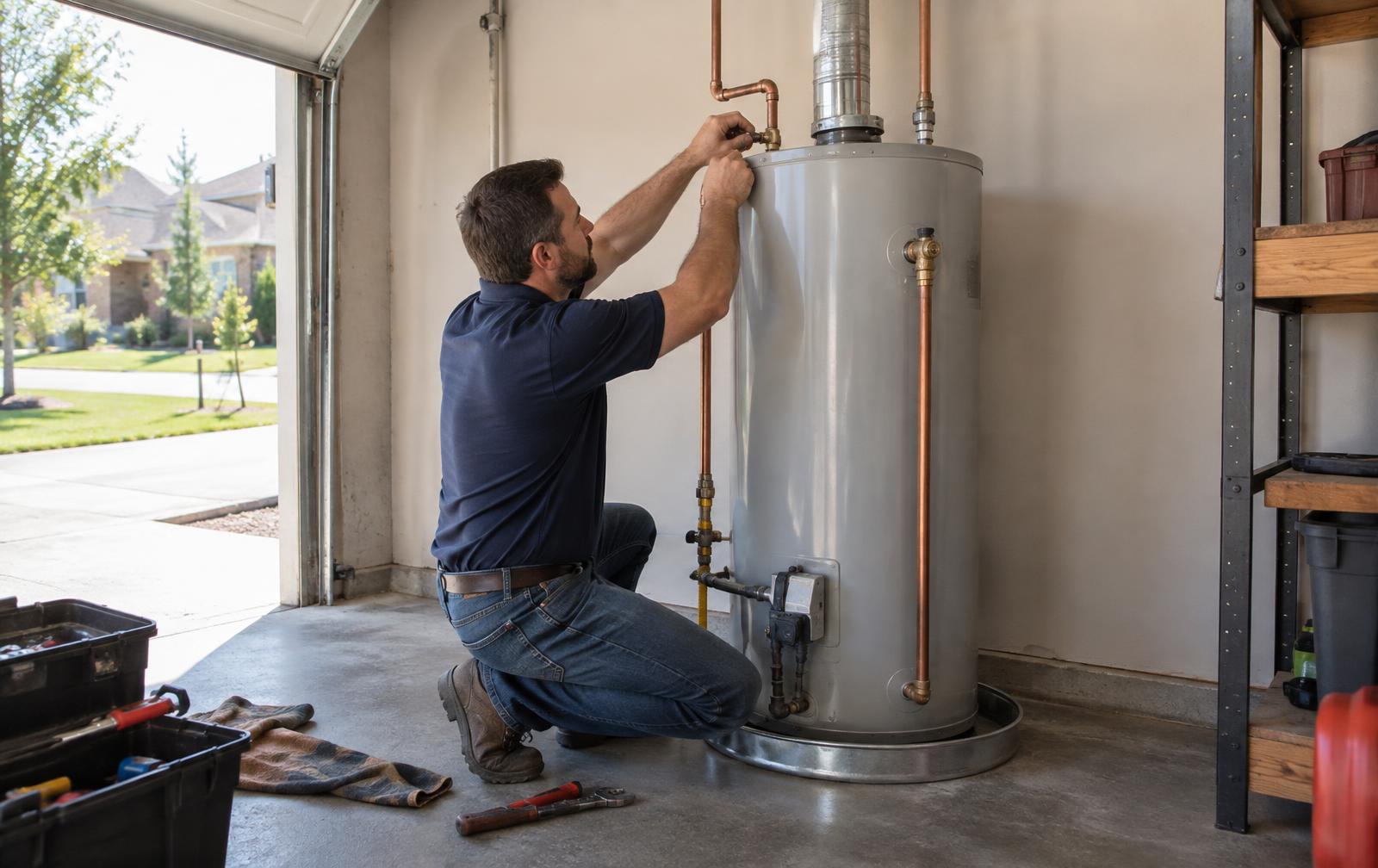
Repair, flush, and replacement of tank units — including the attic-mounted heaters common to Allen two-stories.
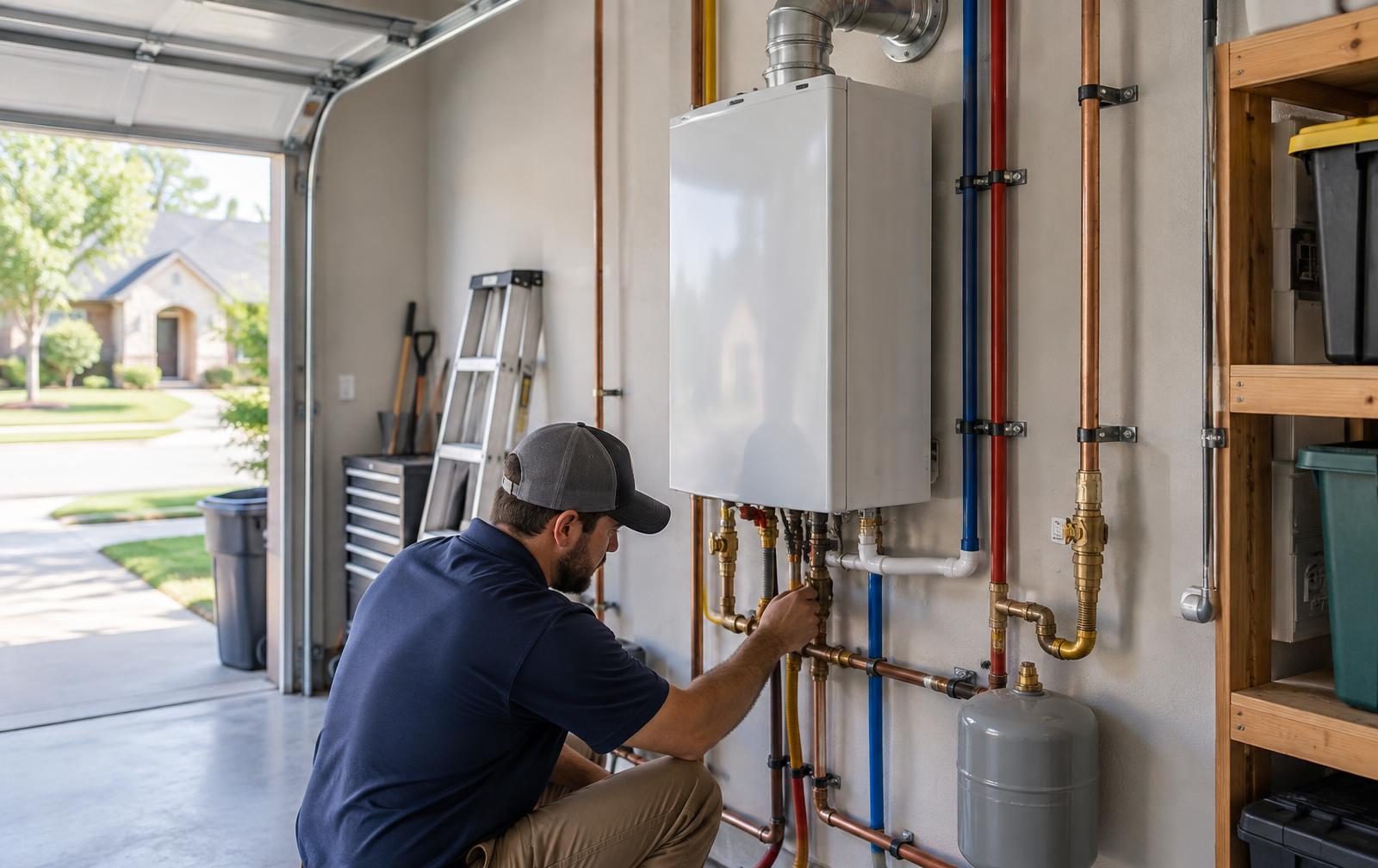
Install, service, and annual descaling — Allen's hard NTMWD water eats tankless heat exchangers without it.
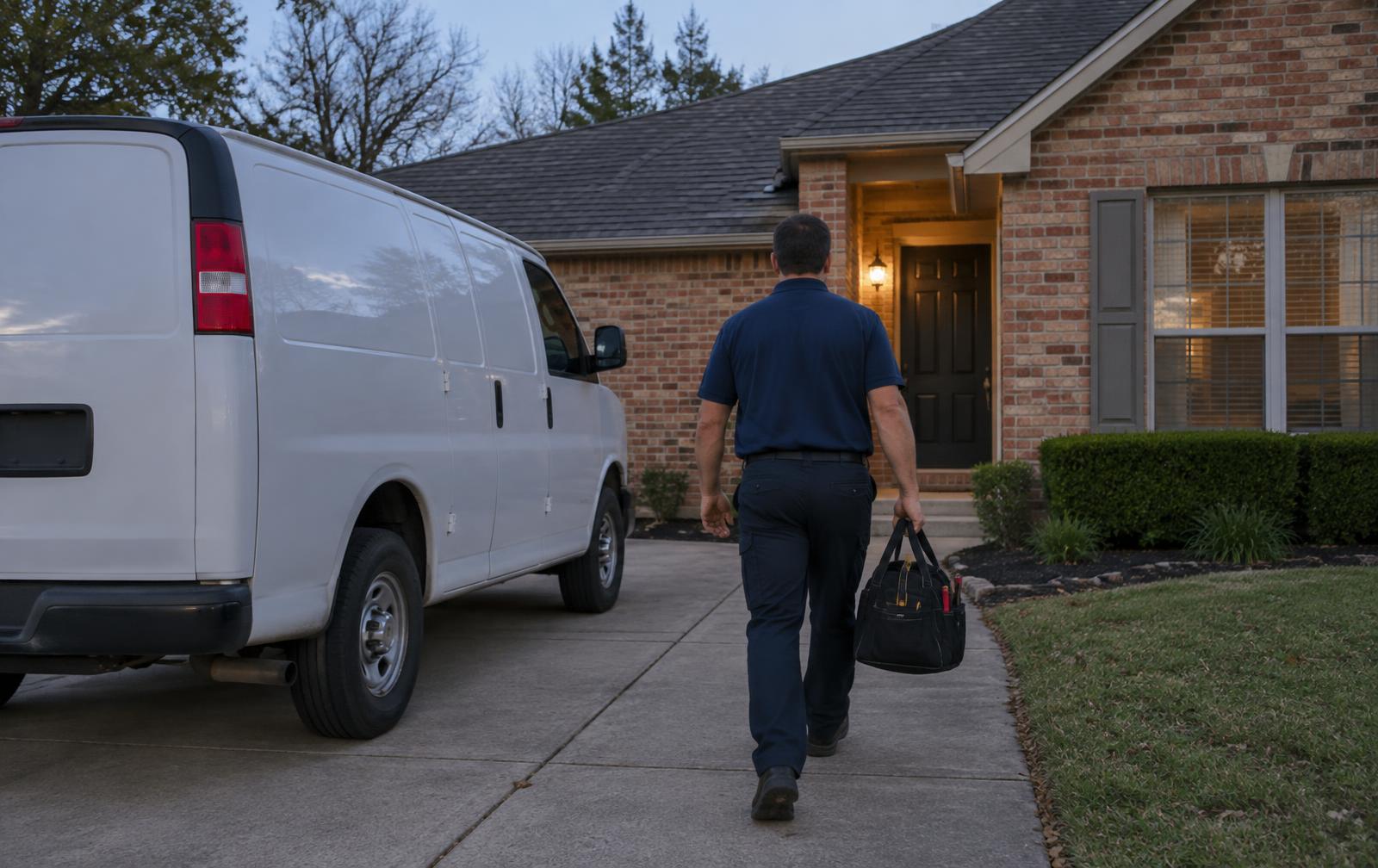
same-day, 7 days a week response across Allen for burst pipes, attic heater failures, and main-line backups.
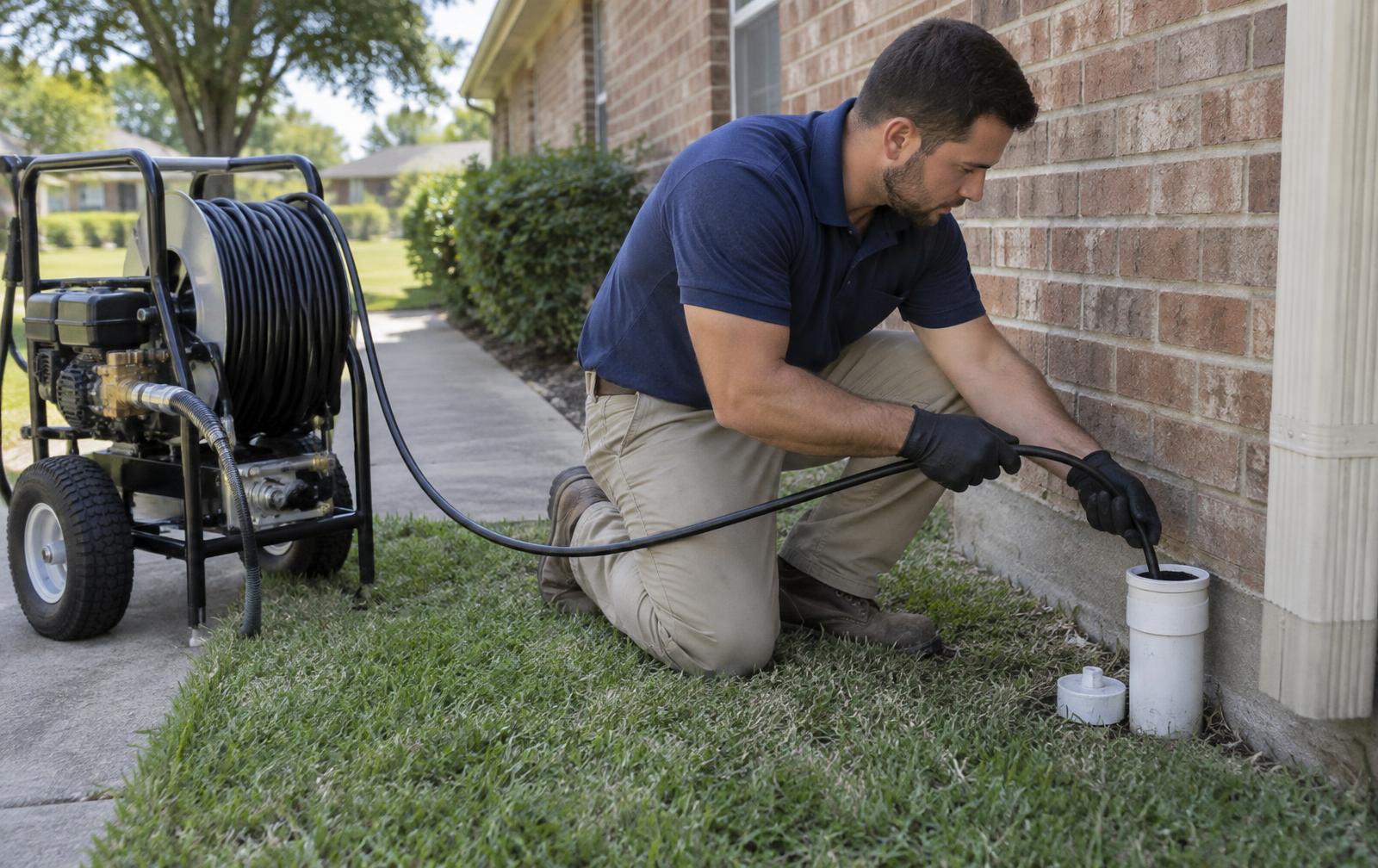
High-pressure cleaning that clears scale, grease, and roots from Allen's long PVC lateral runs — full-diameter, lasting clean.
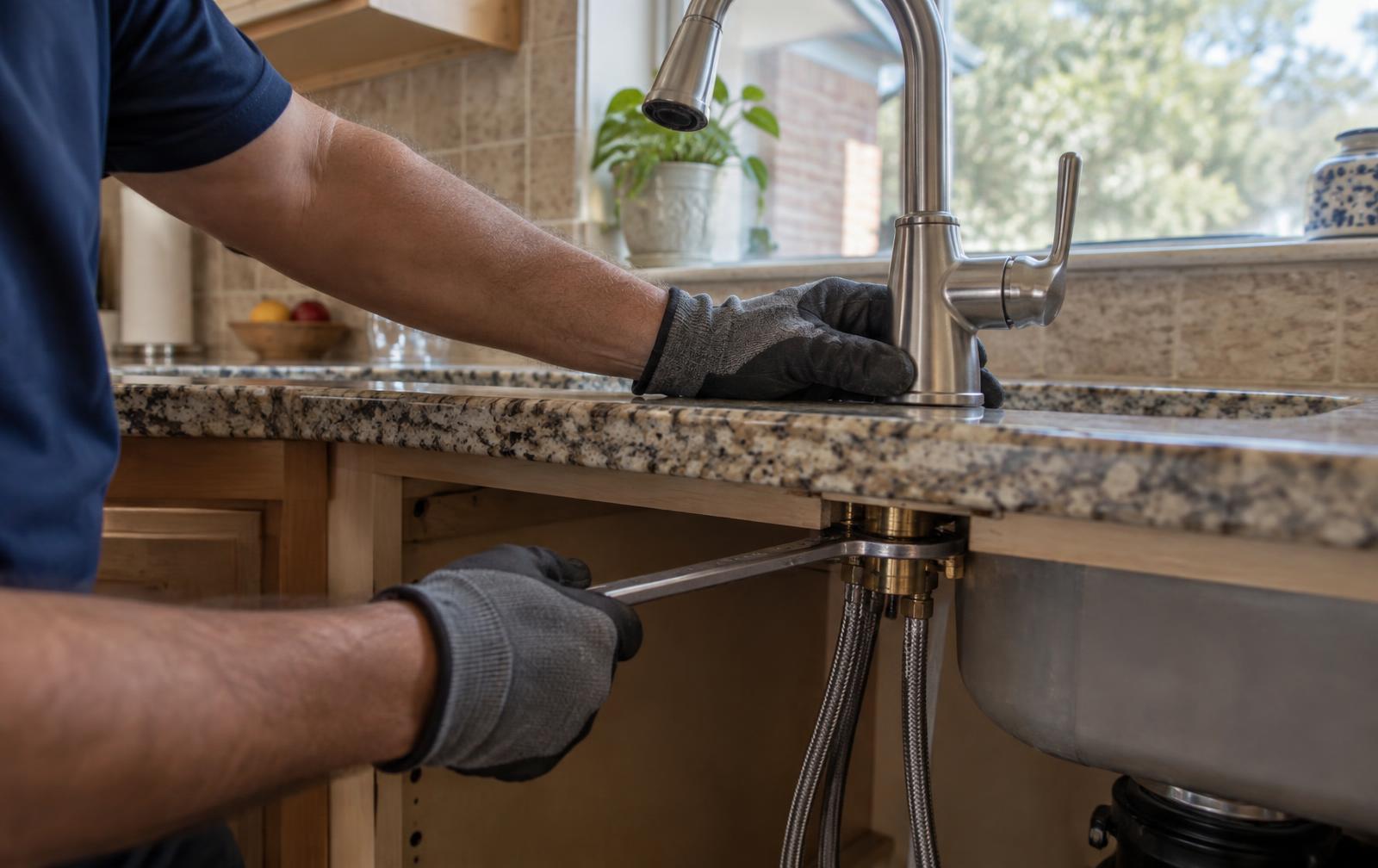
Cartridge, stem, and full-fixture replacement for Allen kitchens and bathrooms — hard-water-ready parts stocked on the truck.
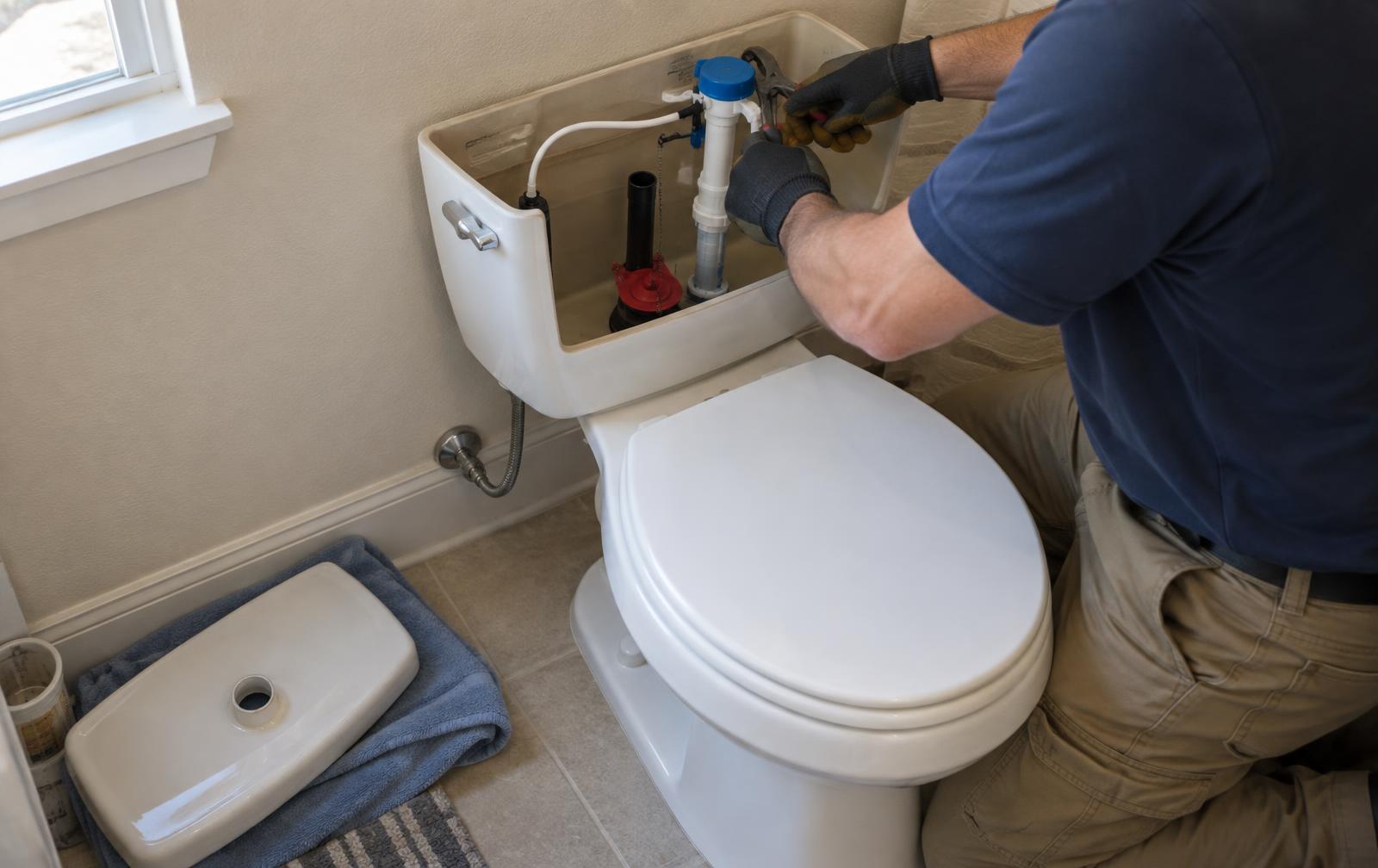
Rebuilds, wax-ring resets, flange repairs, and full replacements — the running toilets and rocking bowls in Allen homes.
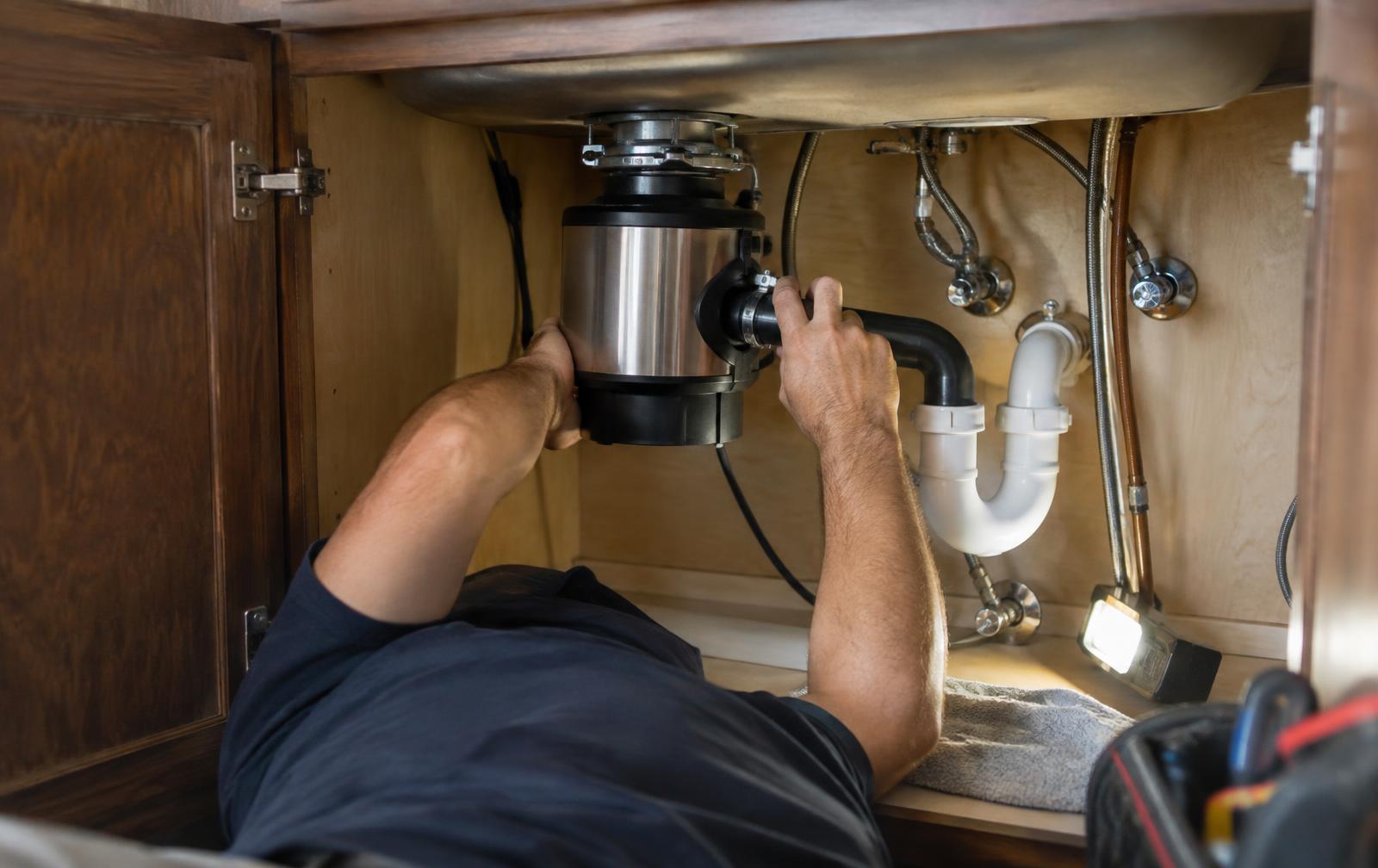
Jam clearing, leaking-unit swaps, and quiet 3/4 HP upgrades for Allen kitchens — same-visit install.
Slab Leak in Your Allen Home?
Electronic detection, a plain-spoken reroute-versus-repair comparison, and no cutting until we know exactly where the leak is. Book now.