
Sewer Line Replacement in Allen, TX
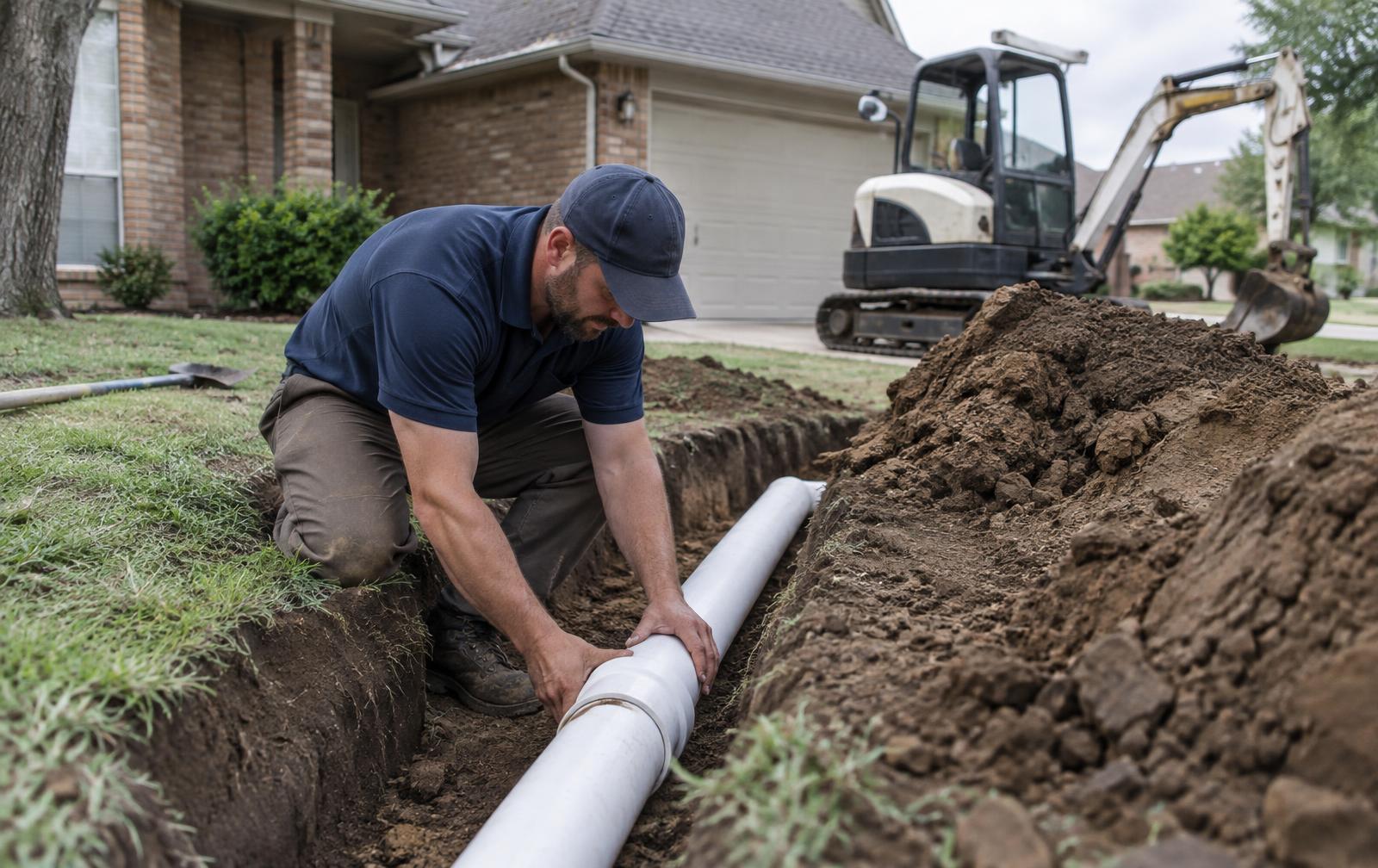
The same drain keeps backing up no matter how often it's cleared. A camera scope turns up a break, a sag holding standing water, or roots packing the pipe solid. We replace failing sewer laterals under Allen yards by digging, tunneling and trenching, keeping the work area as tight as the job allows even on the compact lots common across the city.
When the Line Itself Is the Problem, Not What's Clogging It
Much of Allen's housing filled in from the 1970s through the 1990s across Twin Creeks and Suncreek, and laterals from that era commonly run cast iron from the house out toward the property line, switching over to clay pipe on the older end of that range. Both materials are approaching or past a normal service life by now — cast iron scales down on the inside until barely any diameter is left, and clay joints shift enough over decades for roots to work their way through the gaps.
There's a point where clearing the line stops being the answer: the same fixture backs up on a repeating schedule no matter how recently a cable ran through it, a scope shows buildup a cutter can't get through or a low spot holding standing water, or part of the pipe has partially caved with paper stacking up behind it. Once you're past that point, cabling the line is just a recurring expense on a pipe that needs to come out.
We dig, tunnel and trench to replace the line, opening a path along the pipe's route or tunneling under driveways, slabs and landscaping where it makes sense, so less of the yard gets opened up. On the tighter lots around Star Creek and the greenbelt-adjacent yards near Rowlett Creek, that approach is how we keep the disturbed area as small as the job allows.
Signs Your Allen Sewer Line Needs Replacement
One of these calls for a camera scope. Several together usually mean the pipe itself is done.
A sound sewer line doesn't need repeat clearing. If the same fixture backs up on a predictable schedule despite a clean cabling job each time, the pipe is the actual problem.
A toilet backing up while the tub gurgles and the washer overflows points to a failure in the main line, not a clog in a single branch.
A lateral leaking underground effectively feeds the lawn above it. A recurring soggy spot or a stripe of noticeably greener grass tracking the sewer route is often the first clue you'll see from outside.
A collapsed or leaking run under the slab can wash soil out from under the foundation and let it settle. New cracks fanning out from a bathroom wall are worth pairing with a scope.
Gas reaching open air means a joint in the pipe or a vent has already failed. Cabling the line or swapping a trap won't fix that — the pipe itself needs attention.
If an earlier scope already flagged the line as something you'd need to deal with eventually, and the backups have started again since, eventually is now.
Look First With a Camera, Then Quote What's Actually Wrong
We don't price sewer work sight unseen. The footage tells us what's failing before anything goes on paper.
- 1Run the full length on camera
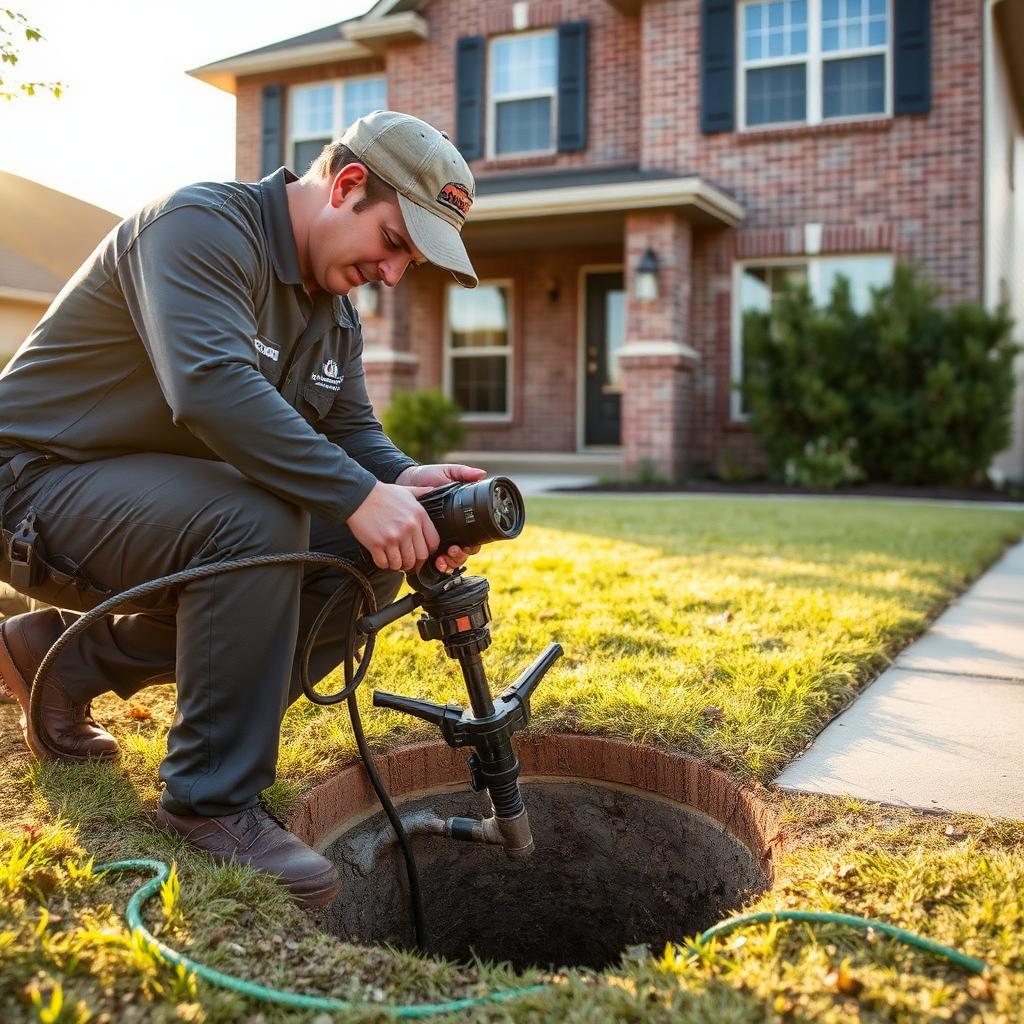
Starting at the cleanout, the camera travels all the way out to the city tap while we record it. You can watch alongside us as breaks, offsets, buildup, and root intrusion show up on the monitor. If the footage says a good cabling is all that's needed, that's what we'll tell you.
- 2Map depth and direction with a locating signal
A transmitter riding in the camera head lets us read the buried path's depth and turns from the surface above. That reading is what decides where we dig, tunnel or trench, and where any access points need to sit.
- 3Put the method and cost on paper before anything opens
The written scope spells out the replacement method, the digging, tunneling or trenching involved, where access points go, the pipe material and size, what yard restoration is covered, and the terms of the warranty. Nothing gets tacked on afterward that wasn't listed there.
- 4Handle the permit and any utility coordination
Sewer replacement work in Allen needs a permit, and it can mean working near gas lines that belong to Atmos Energy. We manage both pieces so paperwork isn't holding up your job.
- 5Finish the swap and scope it again
We dig, tunnel or trench to remove the old pipe and set the new line in its place. Either way, we run the camera through the finished line, check flow, and give you that footage to keep.
What Different Parts of Allen Tend to Need
Construction era largely decides the failure mode we find.
The oldest residential lots preserved near St. Mary Drive go back to the 1920s. Any private house of similar age nearby has likely had its original lateral swapped out at some point already, but where that hasn't happened, it's the strongest citywide candidate for genuinely old clay pipe.
Homes here mostly date from the 1970s into the 1990s, with cast iron laterals typical of that construction window. Those runs are commonly deep into internal scale by now, to the point where cabling can no longer restore usable flow.
Built in about the same window as Twin Creeks, this area sits near Rowlett Creek, and mature trees along that corridor are a repeat reason clay joints near the property line let roots through.
Construction here trends newer, generally 1999 and later, which typically means PVC rather than the cast iron or clay common on the older side of the city. Backups this fresh out are more often a single obstruction than a pipe that's actually failing.
Housing near this newer corridor reflects Allen's later growth, generally after 1999, and tends to run PVC laterals rather than the cast iron or clay found in the city's older sections, which means a full swap is less often necessary here.
The highway corridor tied to Allen's expansion through the 1970s and 1980s carries that same generation of cast-iron-to-clay laterals. Deep runs and established landscaping on these lots both tend to call for tunneling under the affected areas rather than open trenching the whole run.
What Allen Homeowners Say
A Camera Record and a Pulled Permit, Every Time
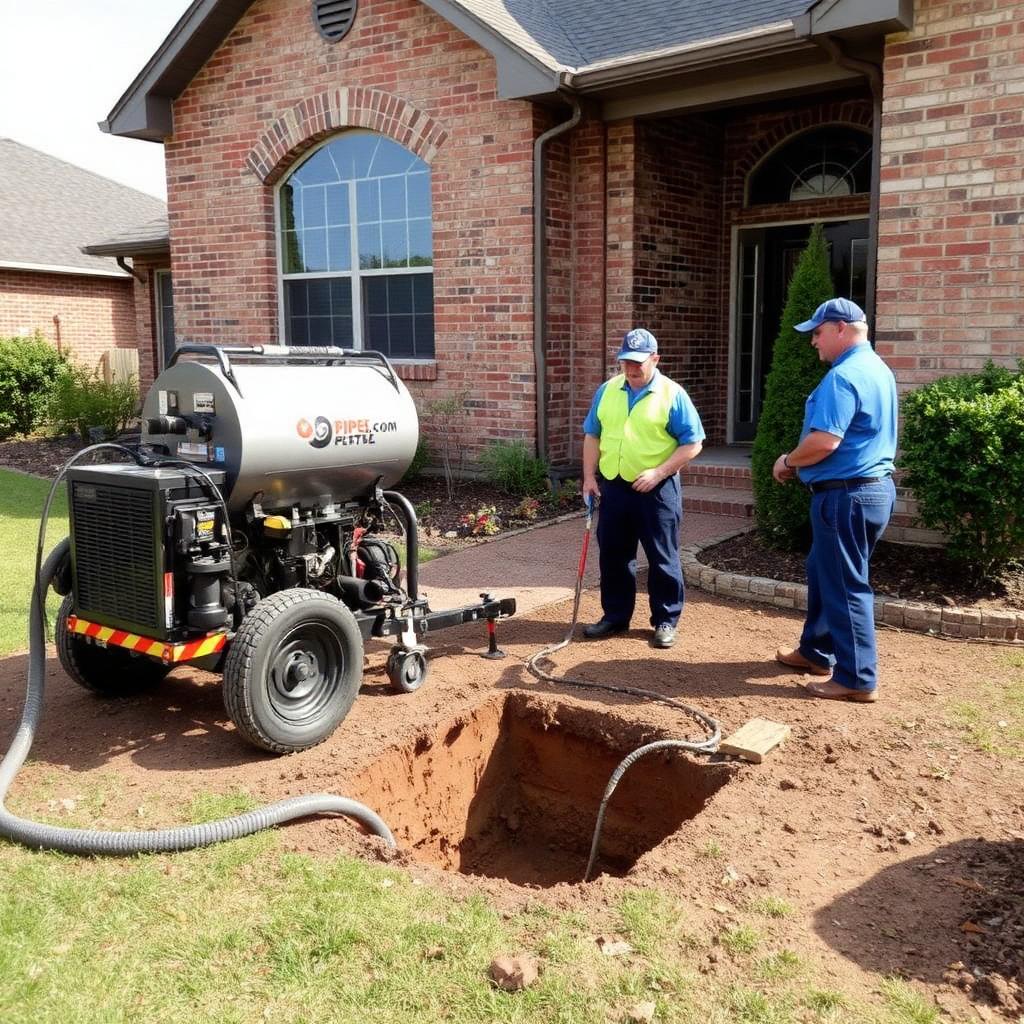
Every replacement job comes with the manufacturer's warranty on the pipe itself plus warrantied labor from our crew. You leave with the before video, the after video, a copy of the permit, and the manufacturer's paperwork bundled into one packet.
Our plumbers hold a license from the Texas State Board of Plumbing Examiners, carry insurance, and this is a family-owned operation dispatching every truck from our shop in The Colony. We deal directly with Allen's building department so scheduling the permit and inspection doesn't add extra time to your project.
Questions We Hear Before Replacing a Line
Our Other Plumbing Services in Allen, TX
A failing sewer line often shows up alongside other plumbing from the same era. If you'd like the rest of the system looked at while we're already there, we cover that in one local visit in Allen.
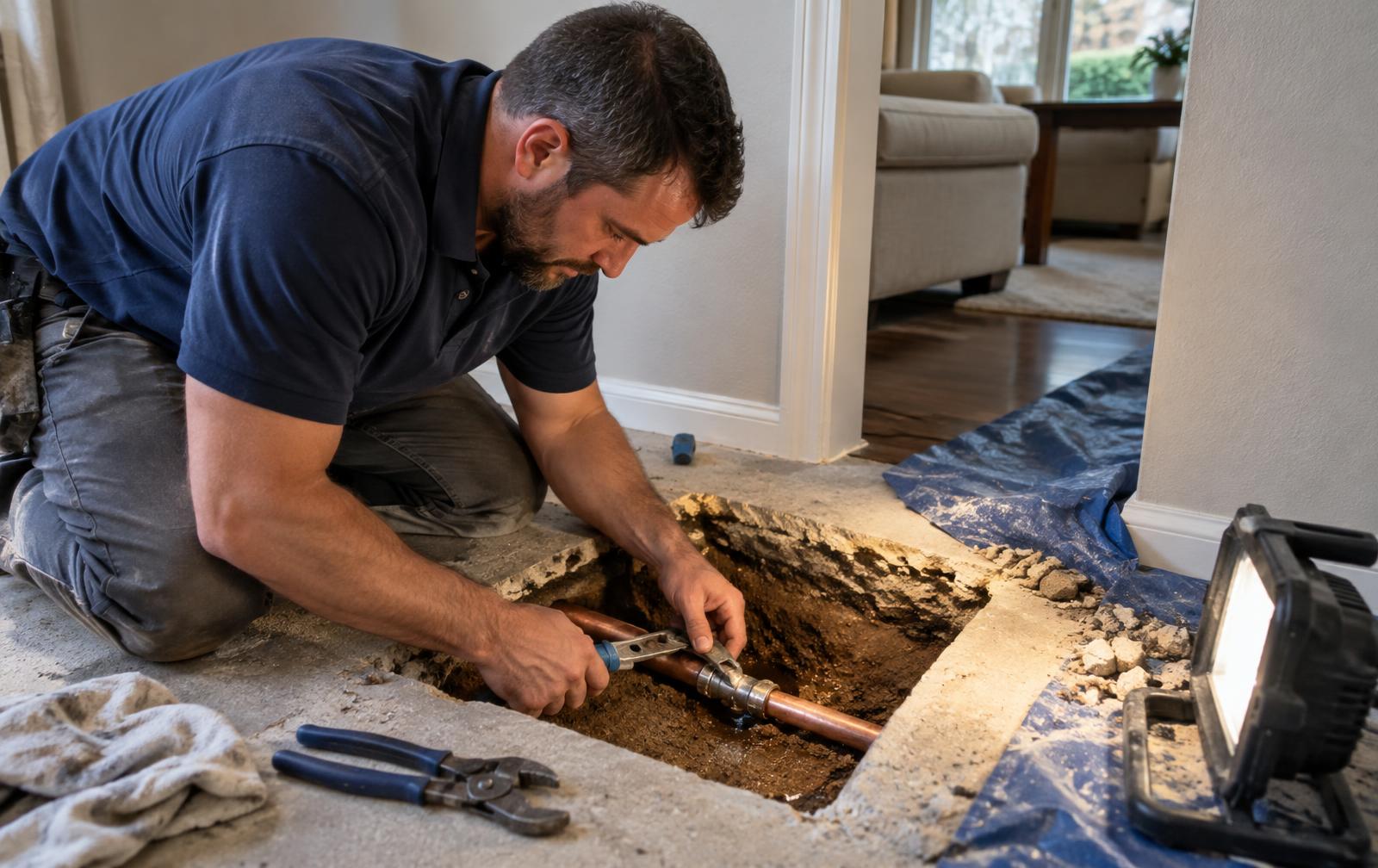
Electronic detection under Allen's post-tension slabs — reroute options that save your finished floors when possible.
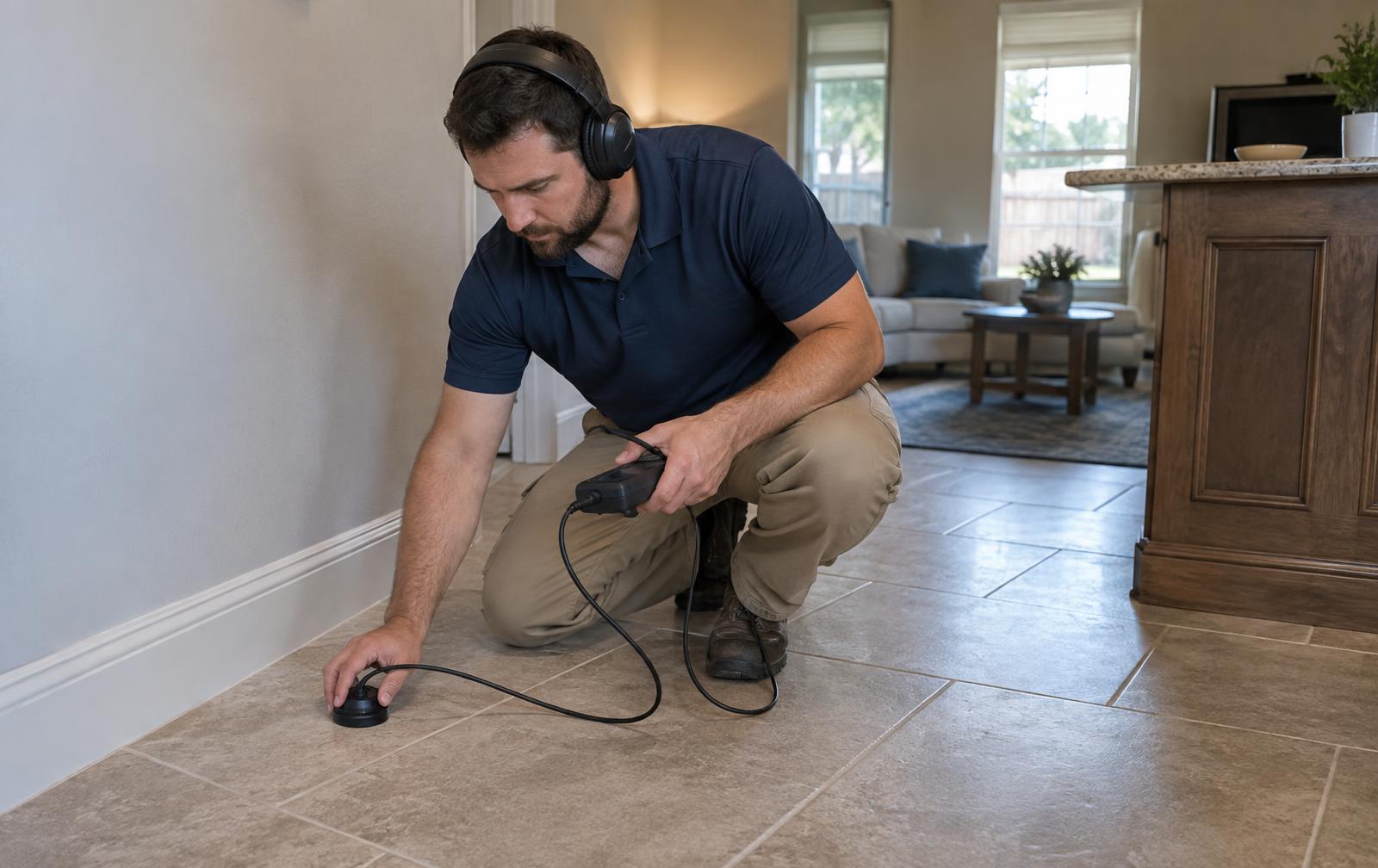
Acoustic, thermal, and pressure testing to pinpoint hidden leaks in Allen slab and wall lines without tearing into finishes.
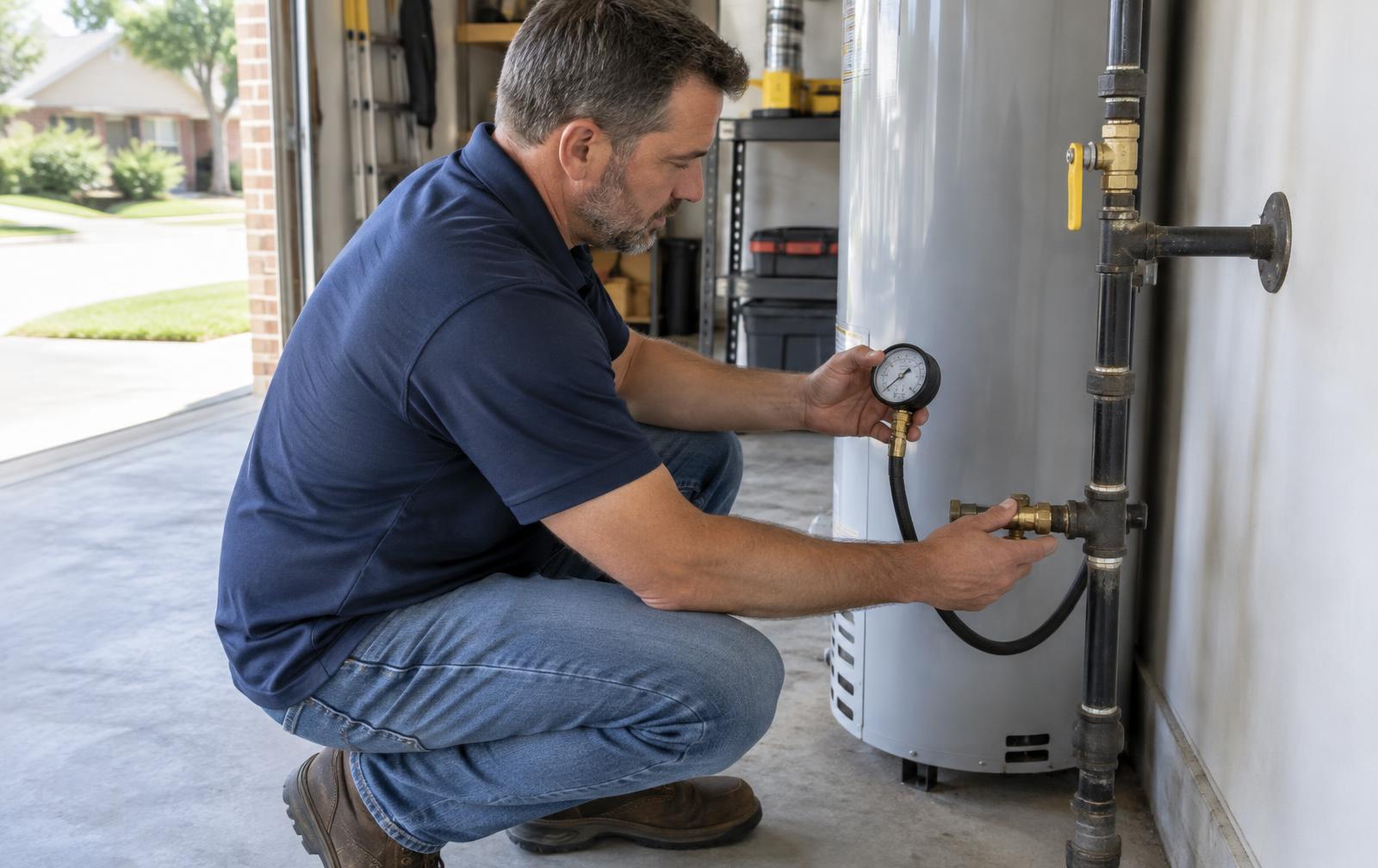
Licensed install, repair, and pressure-testing for Allen homes — every line signed off to Texas code and Atmos requirements.

Full-clear service and camera confirmation for the long PVC laterals under Allen's master-planned neighborhoods.
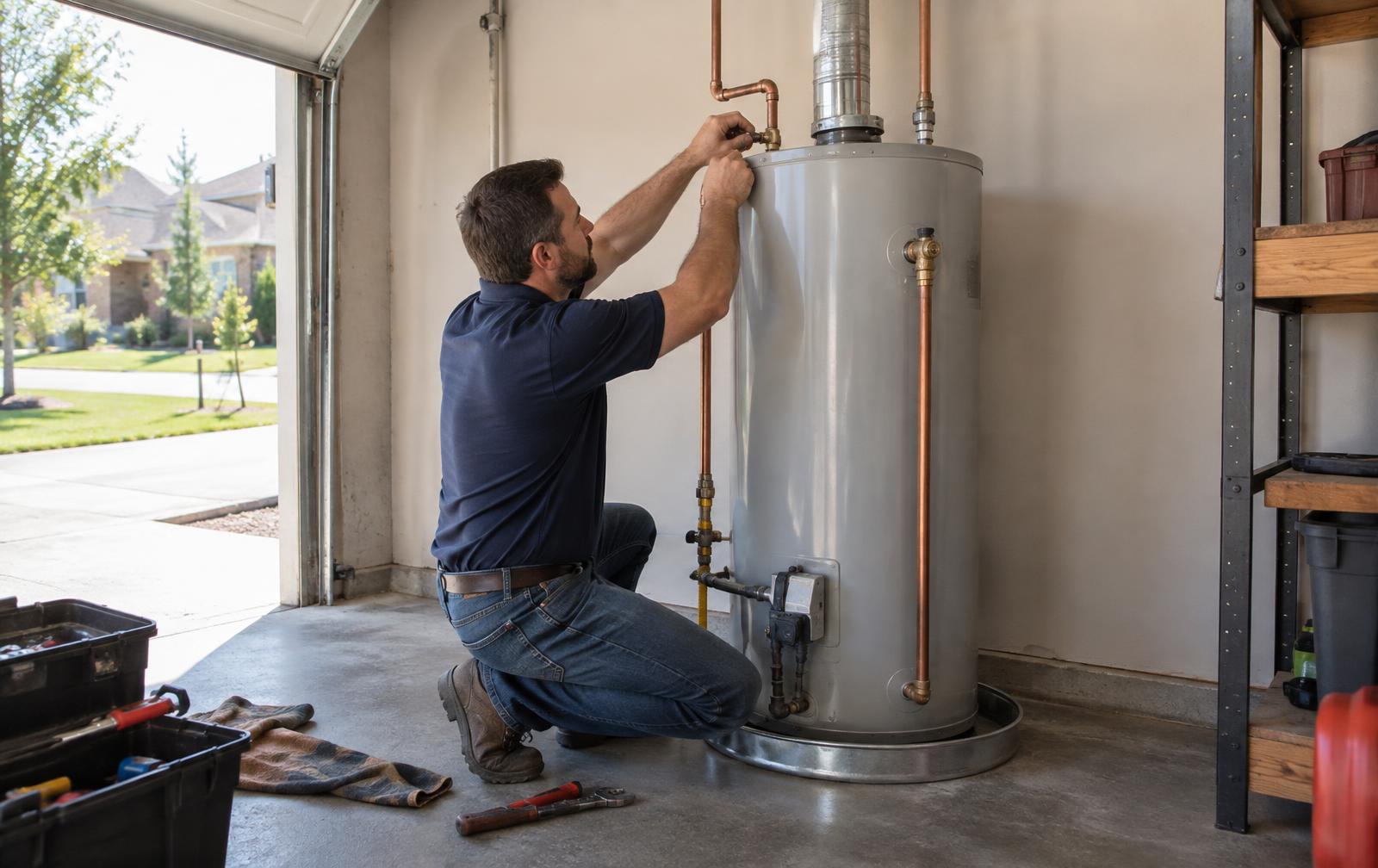
Repair, flush, and replacement of tank units — including the attic-mounted heaters common to Allen two-stories.
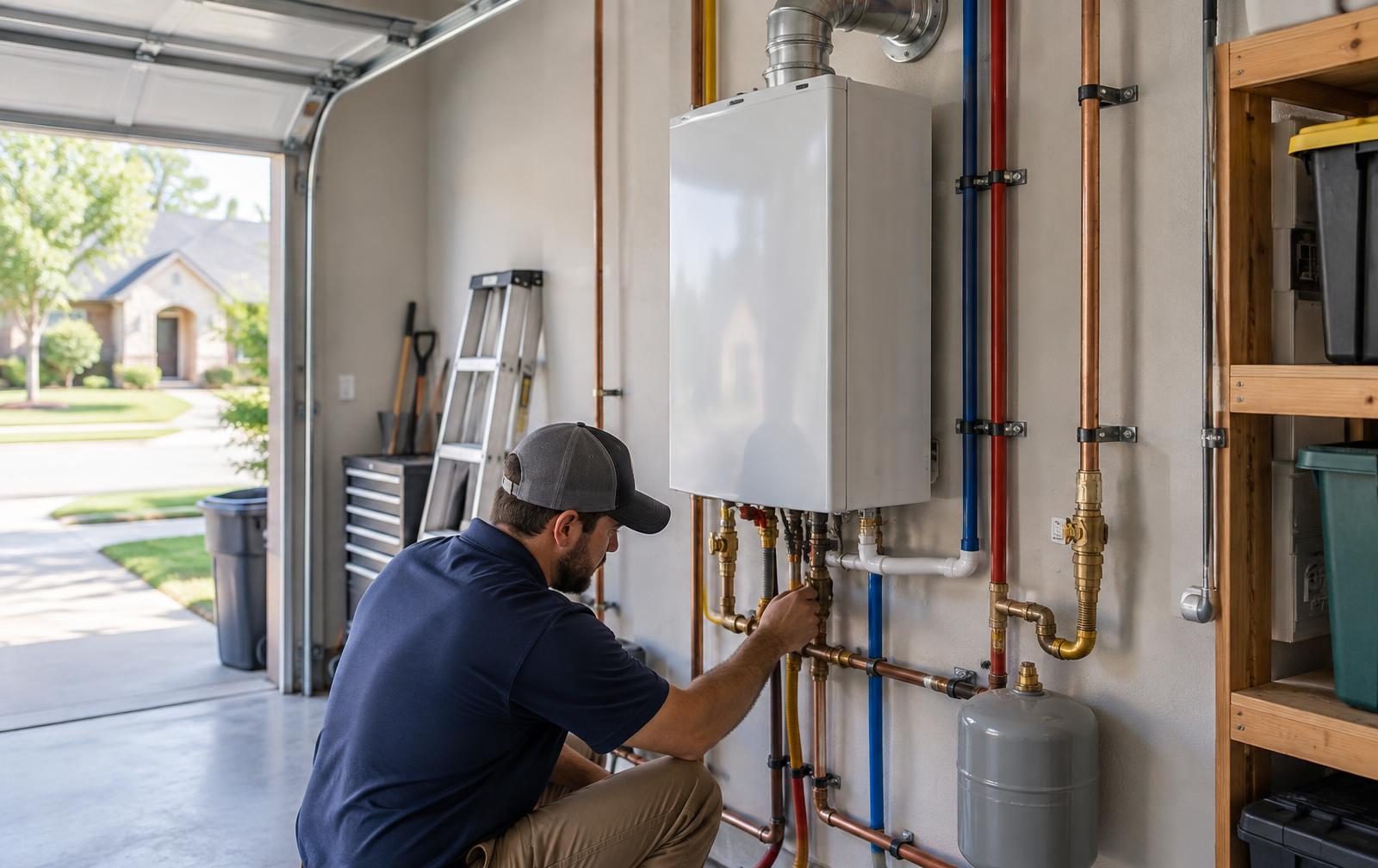
Install, service, and annual descaling — Allen's hard NTMWD water eats tankless heat exchangers without it.
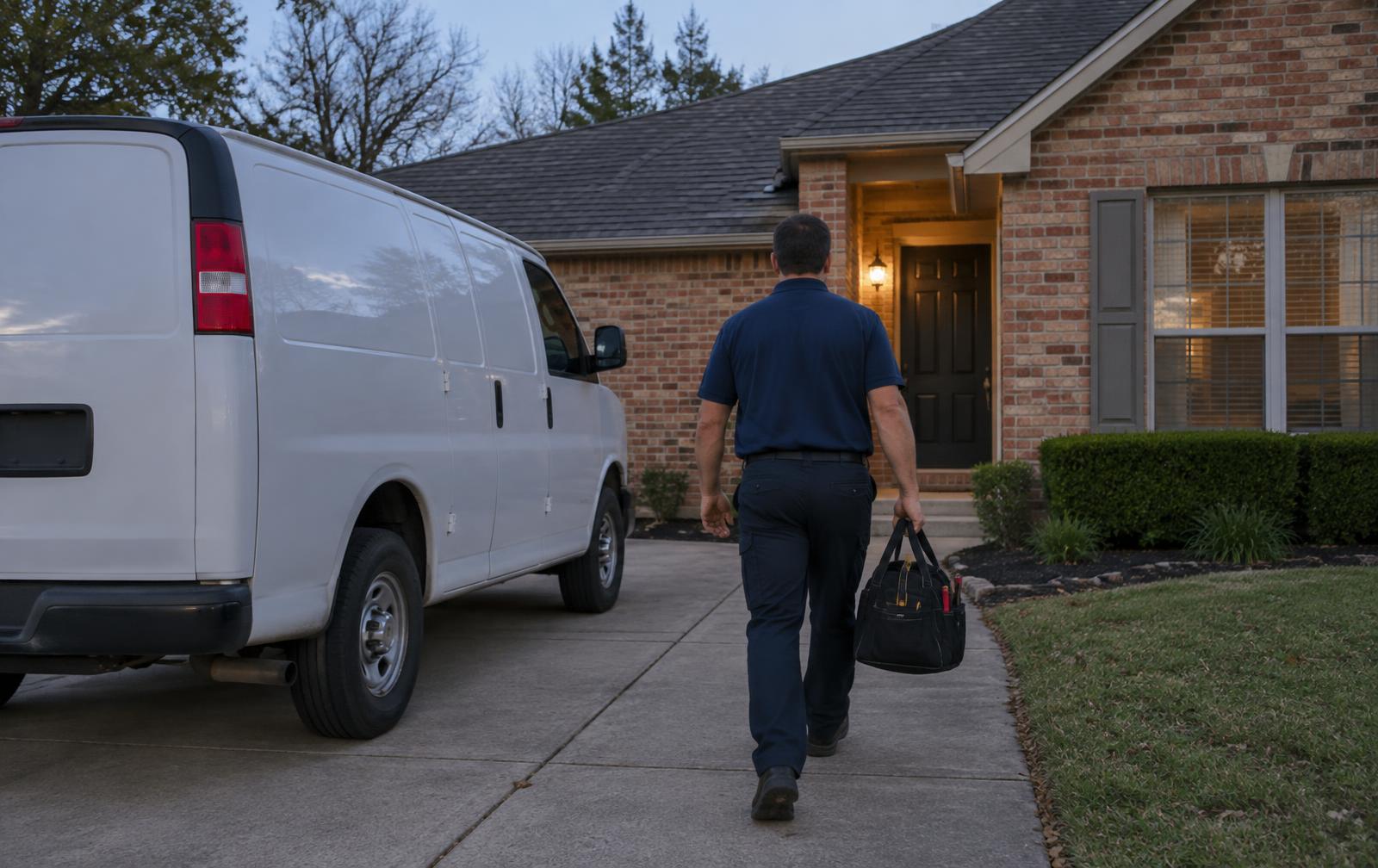
same-day, 7 days a week response across Allen for burst pipes, attic heater failures, and main-line backups.
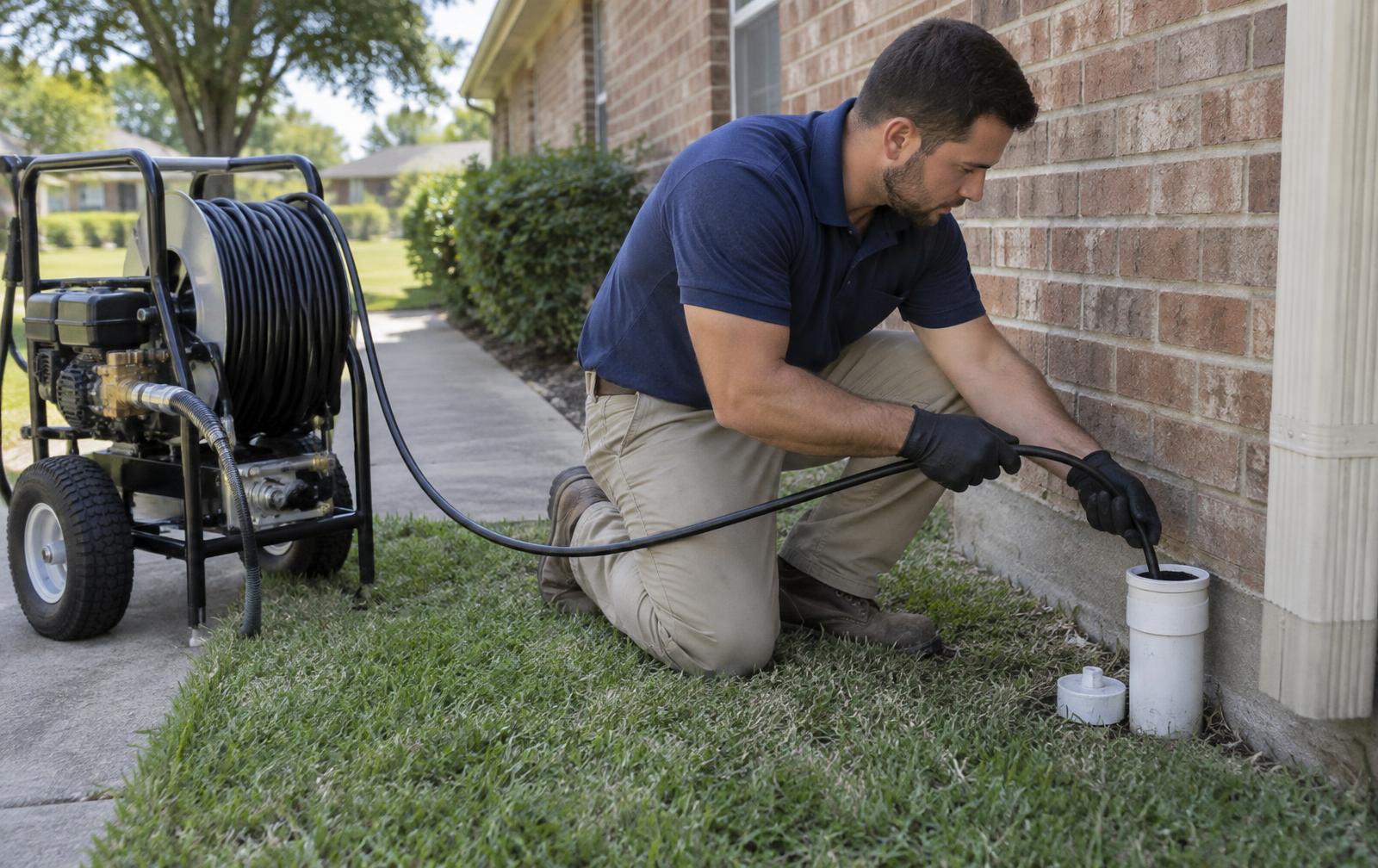
High-pressure cleaning that clears scale, grease, and roots from Allen's long PVC lateral runs — full-diameter, lasting clean.
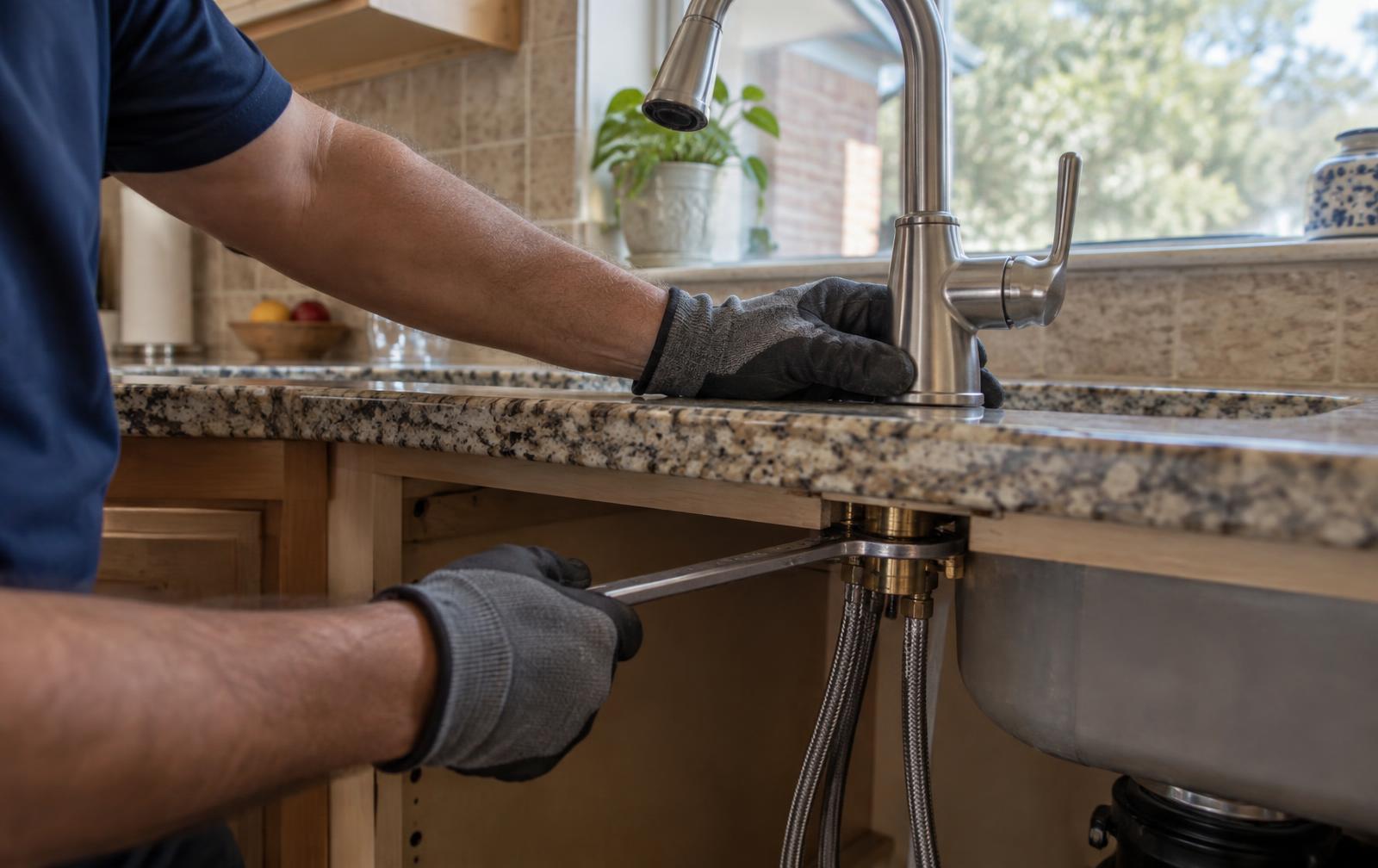
Cartridge, stem, and full-fixture replacement for Allen kitchens and bathrooms — hard-water-ready parts stocked on the truck.
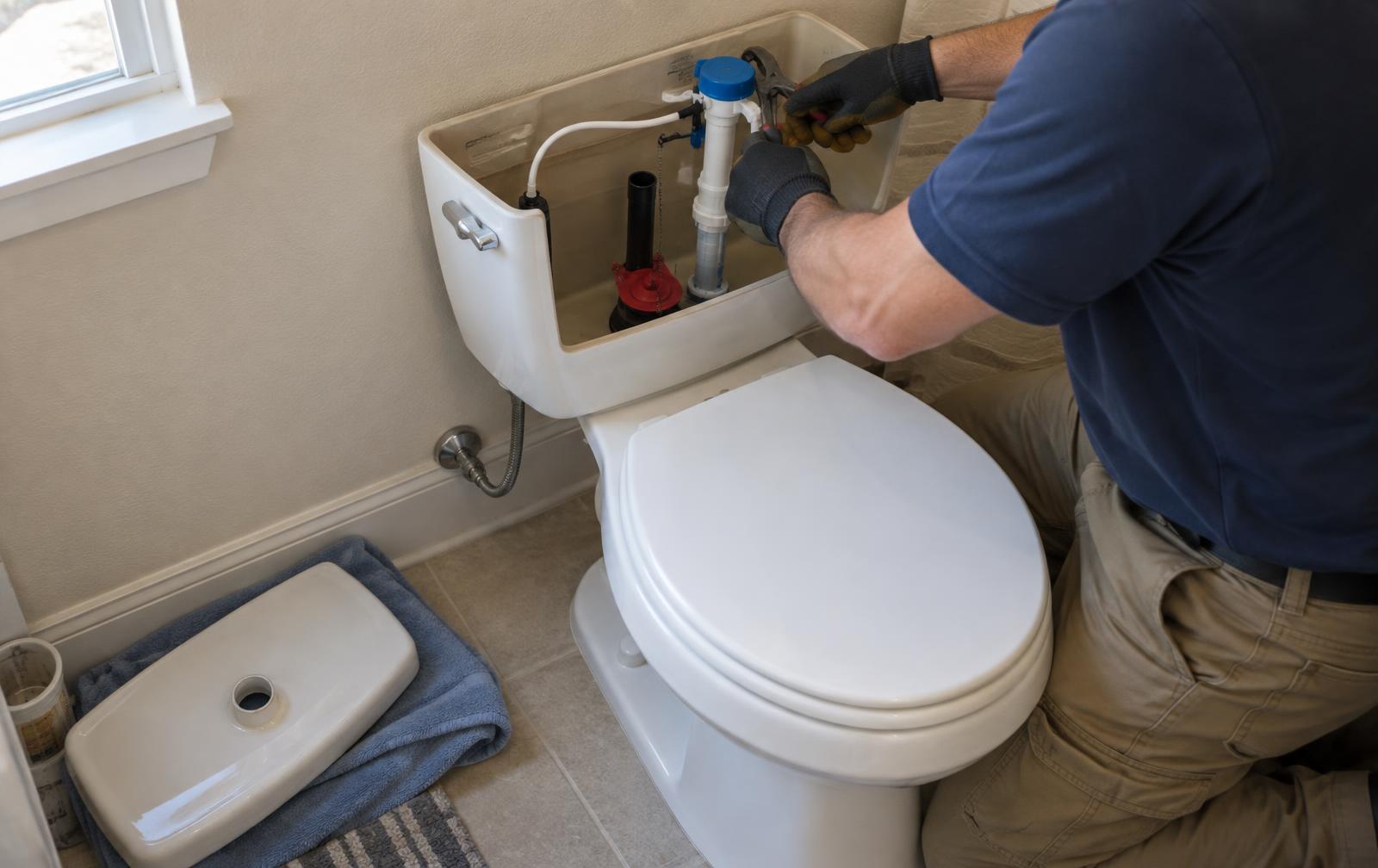
Rebuilds, wax-ring resets, flange repairs, and full replacements — the running toilets and rocking bowls in Allen homes.
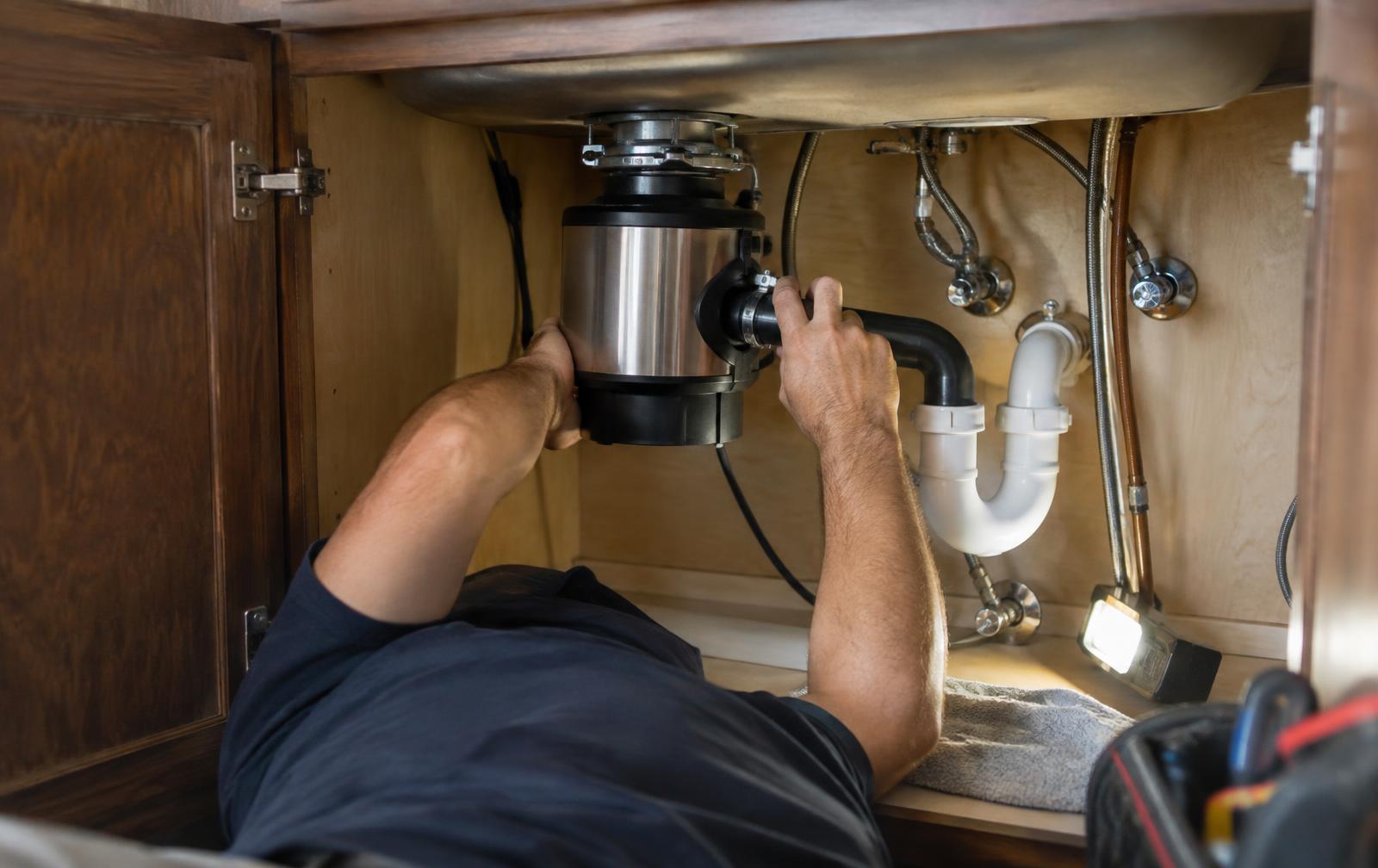
Jam clearing, leaking-unit swaps, and quiet 3/4 HP upgrades for Allen kitchens — same-visit install.
Failed Sewer Line in Your Allen Home?
Camera-first diagnosis, a written scope of the digging, tunneling or trenching involved, and a manufacturer warranty on the pipe. Schedule a scope today.