

Drain Cleaning in Allen, TX
One backed-up sink is annoying. A main line that keeps clogging every few weeks is a warning that a cable job alone never solved the problem. We open the pipe to its full width and follow it up with a camera so you can see what actually cleared.
Clay Soil, Older Pipe, and Why the Same Spot Clogs Twice
Allen sits on the Blackland Prairie, part of the same expansive, shrink-swell clay band that stretches across Collin County and gets blamed for a lot of the region's foundation movement. Under a buried drain, that clay swelling and shrinking with the seasons can nudge a pipe joint out of true over enough years. A line laid perfectly level in 1985 can end up with a low spot or a slightly separated joint today, and that low spot is where paper and grease start collecting.
That clay problem lands on top of Allen's construction timeline. The city's largest neighborhoods — Twin Creeks, Suncreek, and Star Creek — went up mostly between the 1970s and 1999, so a big share of the original cast iron and clay drain tile in those areas is now three to five decades old, well beyond the point where interior scale and root intrusion at a shifted joint start causing repeat backups.
A cable alone restores flow but does not tell you which of those two things you are dealing with. Running the full length of the pipe and putting a camera through it separates a simple clog from a pipe that actually needs repair, so you are not paying for the same visit twice.

Signs an Allen Drain Needs Attention
Drains usually warn you before a backup lands on the floor. Catching these early keeps the job small.
A single slow sink is almost always a local trap or branch issue. Two or three fixtures slowing down together points to a restriction further down the main, which is the more urgent situation.
Start the dishwasher and the kitchen sink glugs. Run a bath and a nearby toilet burps. That is displaced air hunting for an exit because the main line is partially restricted.
A persistent rotten-egg odor near a bathroom or laundry room often means a trap has lost its water seal because the line is siphoning past a partial blockage.
The tub rises when the toilet flushes, or the shower pushes water back through the floor drain. That is a main-line restriction finding the lowest point in the system, and it is worth a same-day call.
A house-wide slowdown that crept in over months usually means grease or mineral scale has narrowed the inside of the pipe rather than one discrete blockage. That calls for jetting rather than another cable pass.
A recurring wet or lush spot tracking the sewer line, particularly in our clay soils, usually points to a compromised pipe rather than a simple clog. Cabling will not fix that.
Diagnose the Line, Then Cable and Confirm
We treat a drain as finished only once the camera confirms the pipe is open, cleanout to fixture.
- 1Work out which section is blocked
Whether one fixture, several fixtures, or the whole house is affected tells us which cleanout to open before any equipment leaves the truck.
- 2Access through the correct cleanout
We go in through a proper cleanout rather than a toilet flange or a shower drain so debris stays out of the living space. Most Allen single-family homes have one at ground level in the front or side yard; townhome and condo-style units are often routed through a utility closet.
- 3Choose the cutter for what is actually in the pipe
A blade handles grease, a chain flail handles roots, and a wire brush or jetting nozzle handles scale on the pipe wall. Using the wrong tool on the wrong material either misses the blockage entirely or scores the pipe.
- 4Clear the entire diameter, not a channel
We keep working the cable through the whole run instead of stopping the moment water starts moving, then withdraw it slowly so loosened debris does not sit on the wall waiting to snag whatever goes down next.
- 5Run the camera to prove it
Every main-line job ends with a camera pass so you can see the pipe is genuinely open. If it shows a shifted joint, a crack, or roots we could not fully clear, we say so plainly and quote the repair rather than cabling the same spot again in a few months.
What Turns Up Where, Around Allen
Housing age and original construction largely predict what is actually clogging the line.
The relocated and restored bungalows and early farmhouses preserved near St. Mary Drive trace back to the 1920s. Any nearby private homes from that era predate plastic drain pipe entirely, so a full camera run, not just a cable clear, is the safer first move on original plumbing that old.
Twin Creeks was built up mainly from the 1970s through the 1990s. Cast iron drain stacks from that period are well beyond a typical service life, and the branch lines sized to that era's code often struggle with the volume a modern household actually sends down them.
Suncreek's single-family homes near Rowlett Creek also date largely from the 1970s through 1999. Decades of expansive clay movement this close to the creek is a common reason an otherwise sound drain develops a low spot that gathers debris in the same place every time.
Most Star Creek homes went in from 1999 forward, so the drain material underneath is typically PVC instead of cast iron. That resists scale far better, though the greenbelt lots along Rowlett Creek still see root intrusion at joints stressed by the same clay soil.
The corridor near U.S. 75 filled in fast as part of Allen's growth starting in the 1970s. Homes from that first development wave, whatever their drain material, are now old enough that a camera check is worth more than another round of cabling.
Building along SH 121 came later, generally tracking the same 1999-and-newer period as Star Creek. Newer pipe means fewer scale issues here, but a camera look is still worthwhile on any lot backing onto a drainage easement.
What Allen Homeowners Say

A Line You Can See Is a Line You Can Trust
A drain is not done in our book until the camera shows it clear. If the same spot backs up again shortly afterward, we return and take another look at no charge for that visit — and if the original footage already showed a compromised pipe, you heard about it and got a written repair quote at that first appointment.
Every truck rolls out of our shop in The Colony, and every job runs under our license with the Texas State Board of Plumbing Examiners. We're insured and family-owned, and we offer same-day service seven days a week, 8 AM to 6 PM.
Common Questions From Allen Homeowners
Our Other Plumbing Services in Allen, TX
A slow drain is often the first sign of something larger underneath it. We handle the rest of your Allen home's plumbing in the same visit if it turns out to be connected.
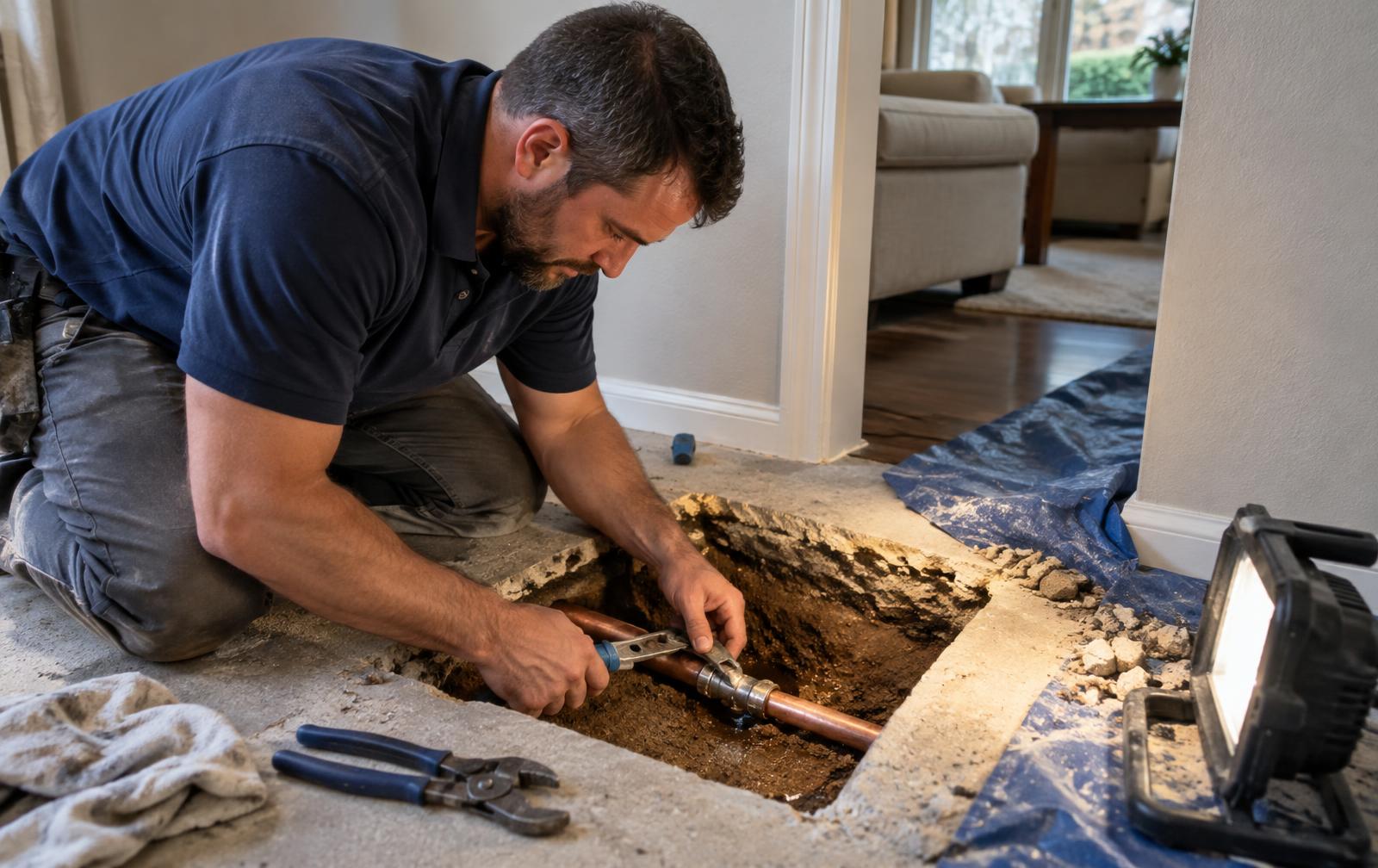
Electronic detection under Allen's post-tension slabs — reroute options that save your finished floors when possible.
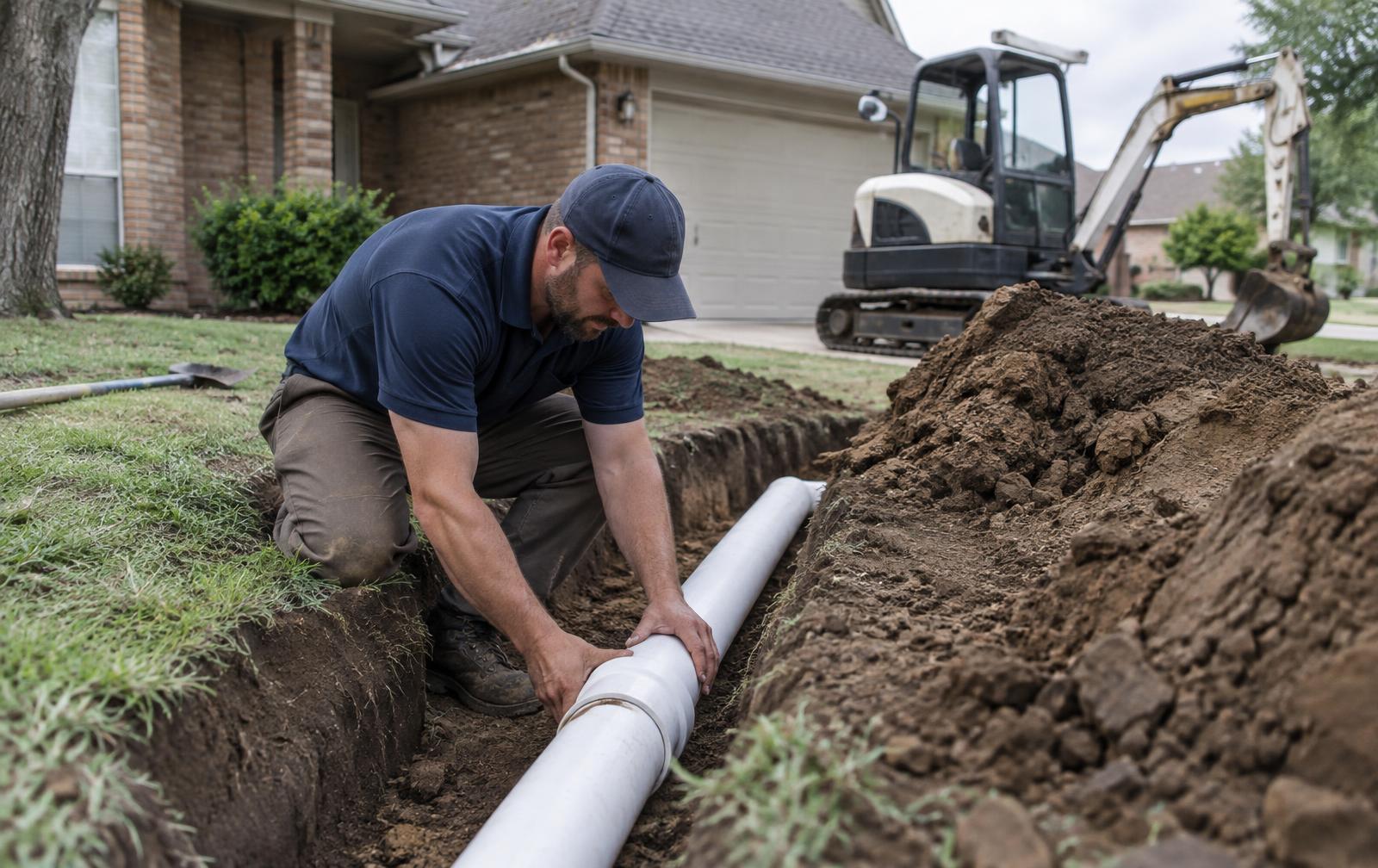
Trenchless replacement for the aging PVC and clay laterals across Allen's older Twin Creeks and Suncreek runs — camera first, quote in writing, minimal yard damage.
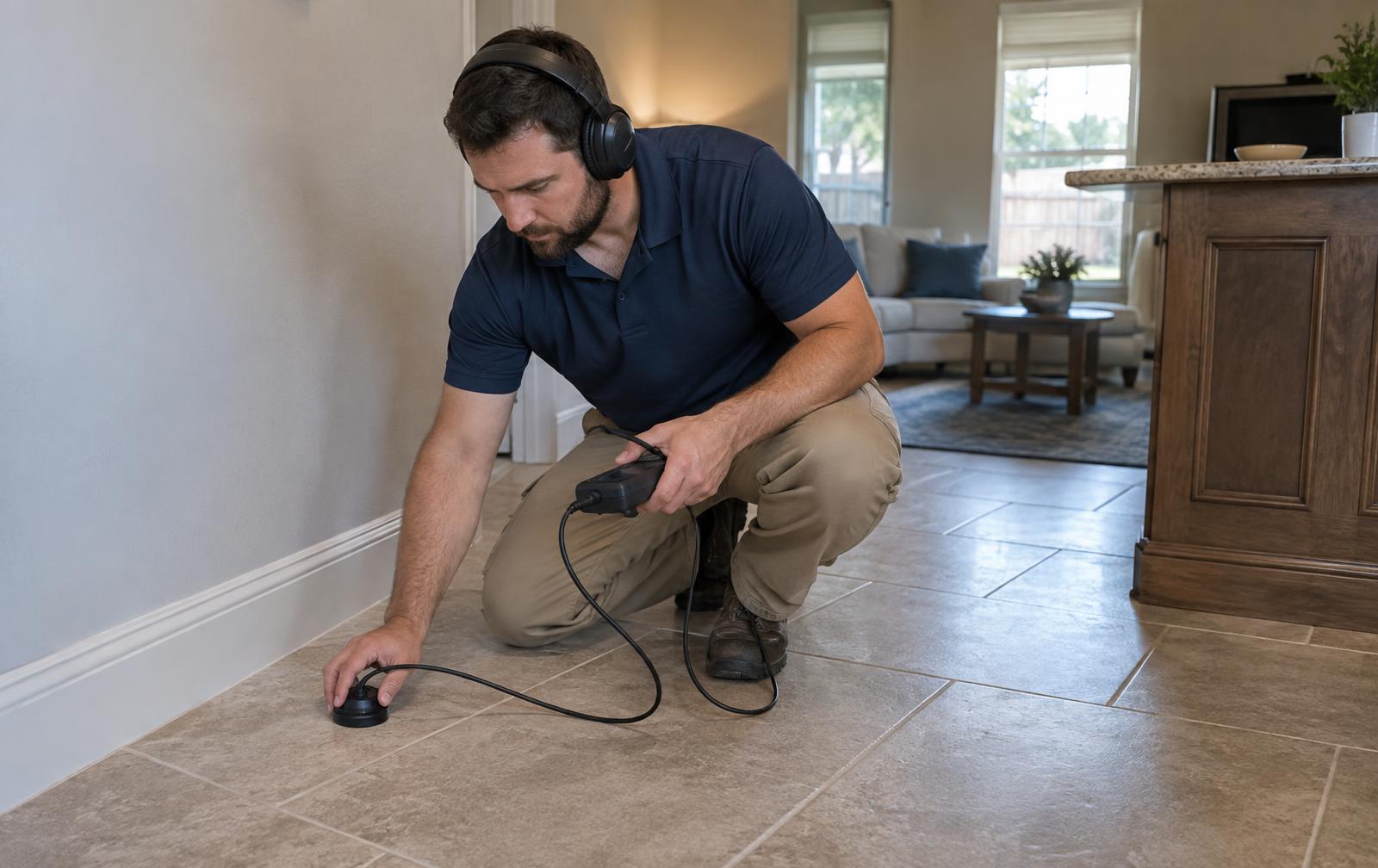
Acoustic, thermal, and pressure testing to pinpoint hidden leaks in Allen slab and wall lines without tearing into finishes.

Licensed install, repair, and pressure-testing for Allen homes — every line signed off to Texas code and Atmos requirements.

Repair, flush, and replacement of tank units — including the attic-mounted heaters common to Allen two-stories.
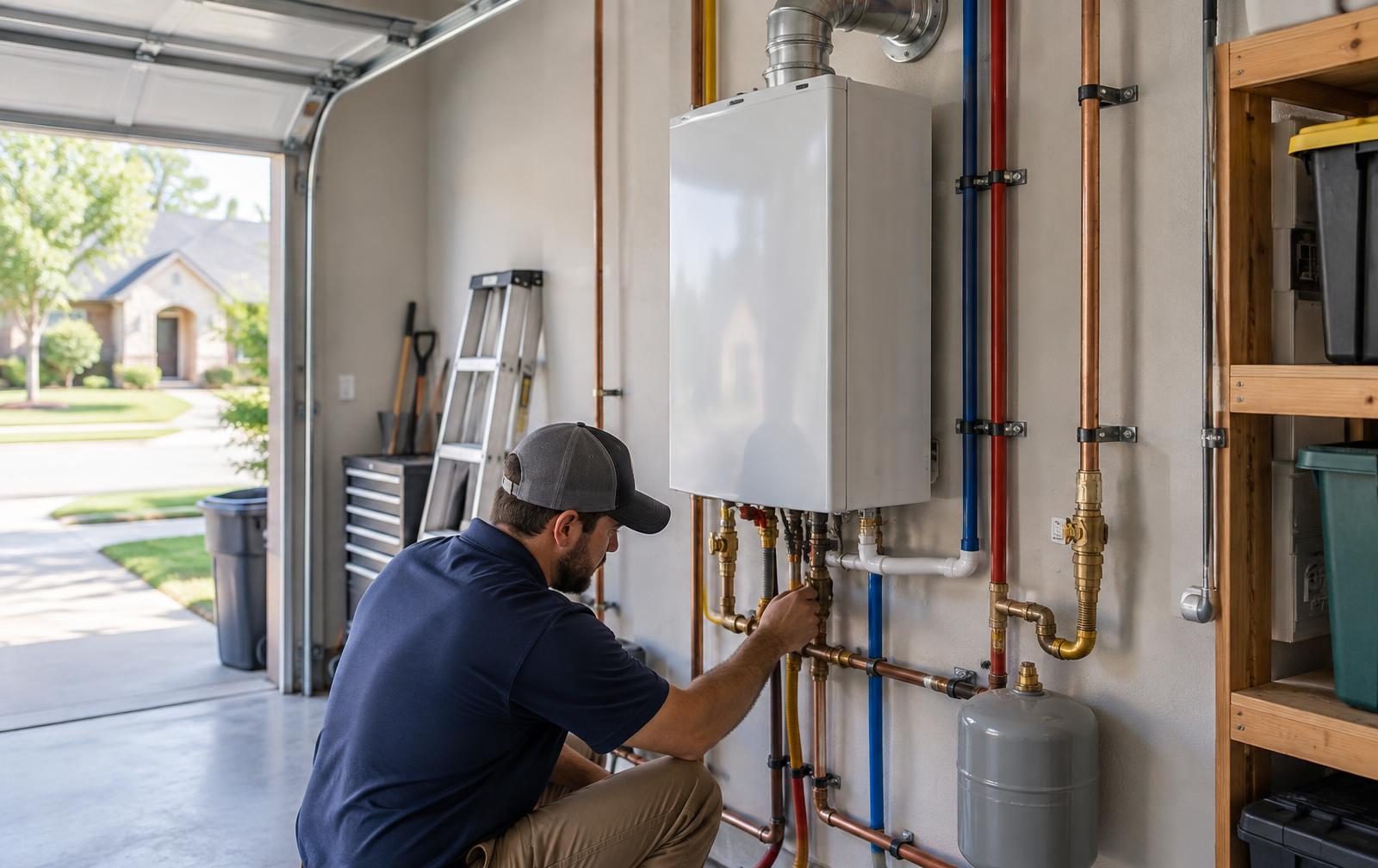
Install, service, and annual descaling — Allen's hard NTMWD water eats tankless heat exchangers without it.
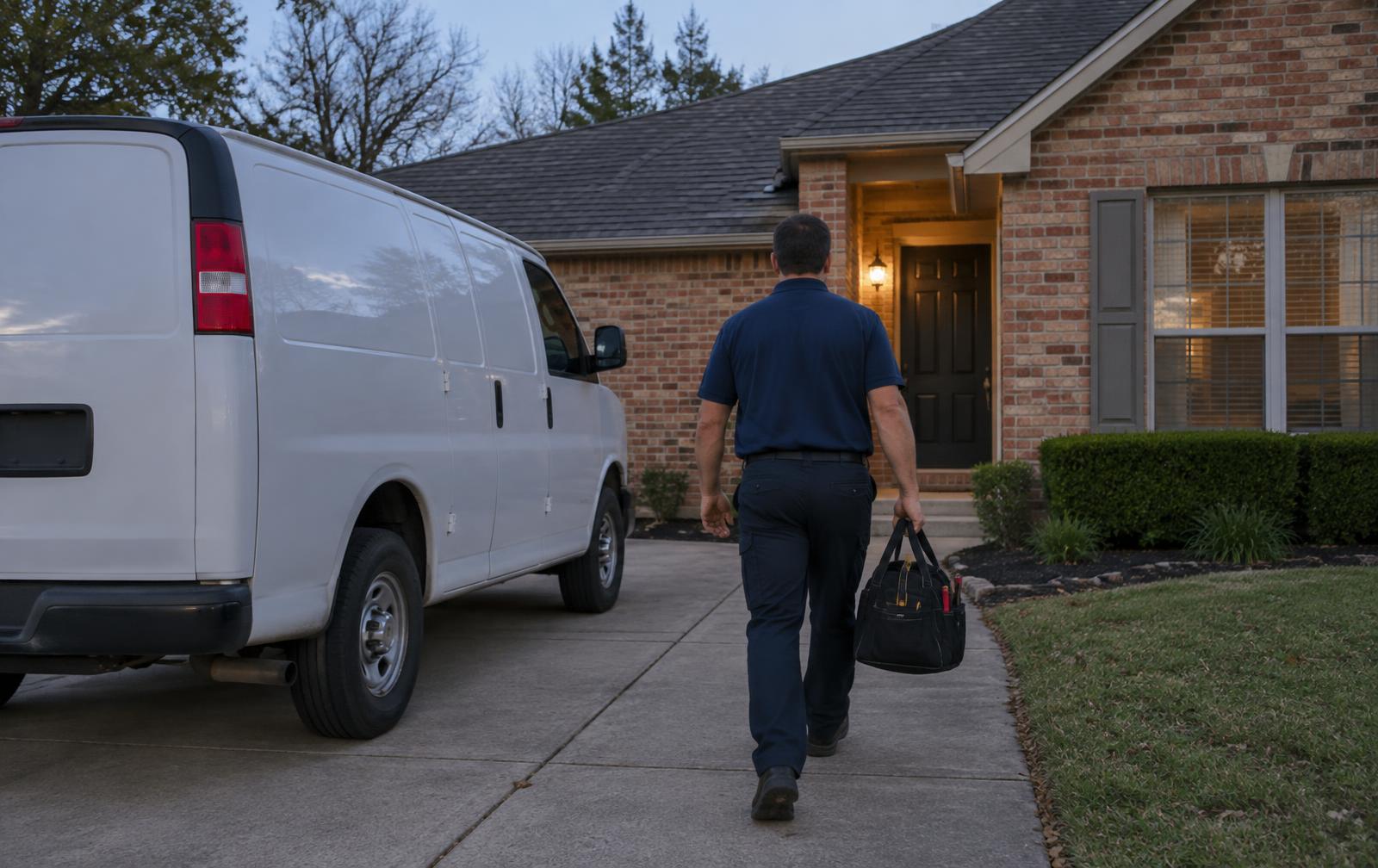
same-day, 7 days a week response across Allen for burst pipes, attic heater failures, and main-line backups.
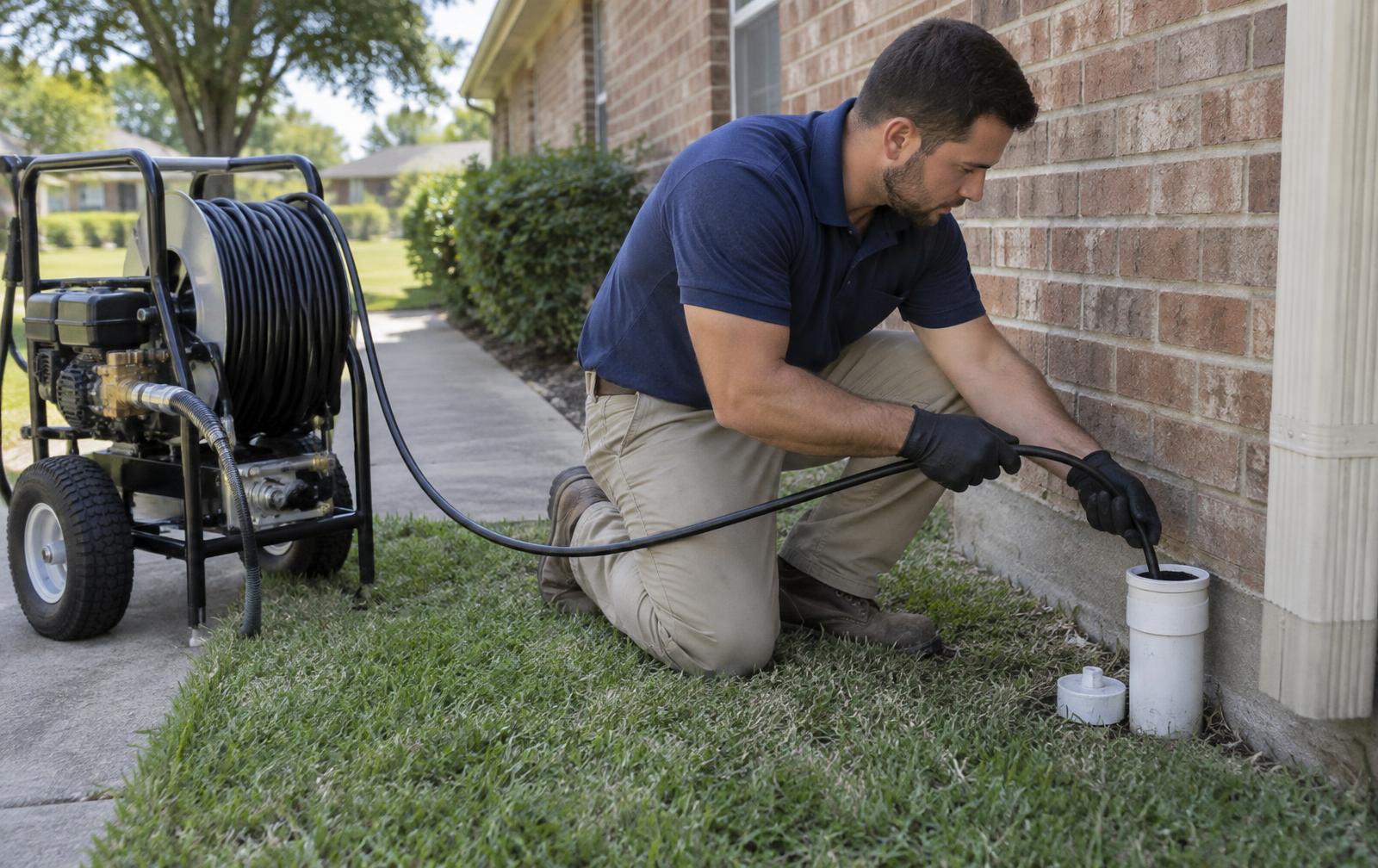
High-pressure cleaning that clears scale, grease, and roots from Allen's long PVC lateral runs — full-diameter, lasting clean.
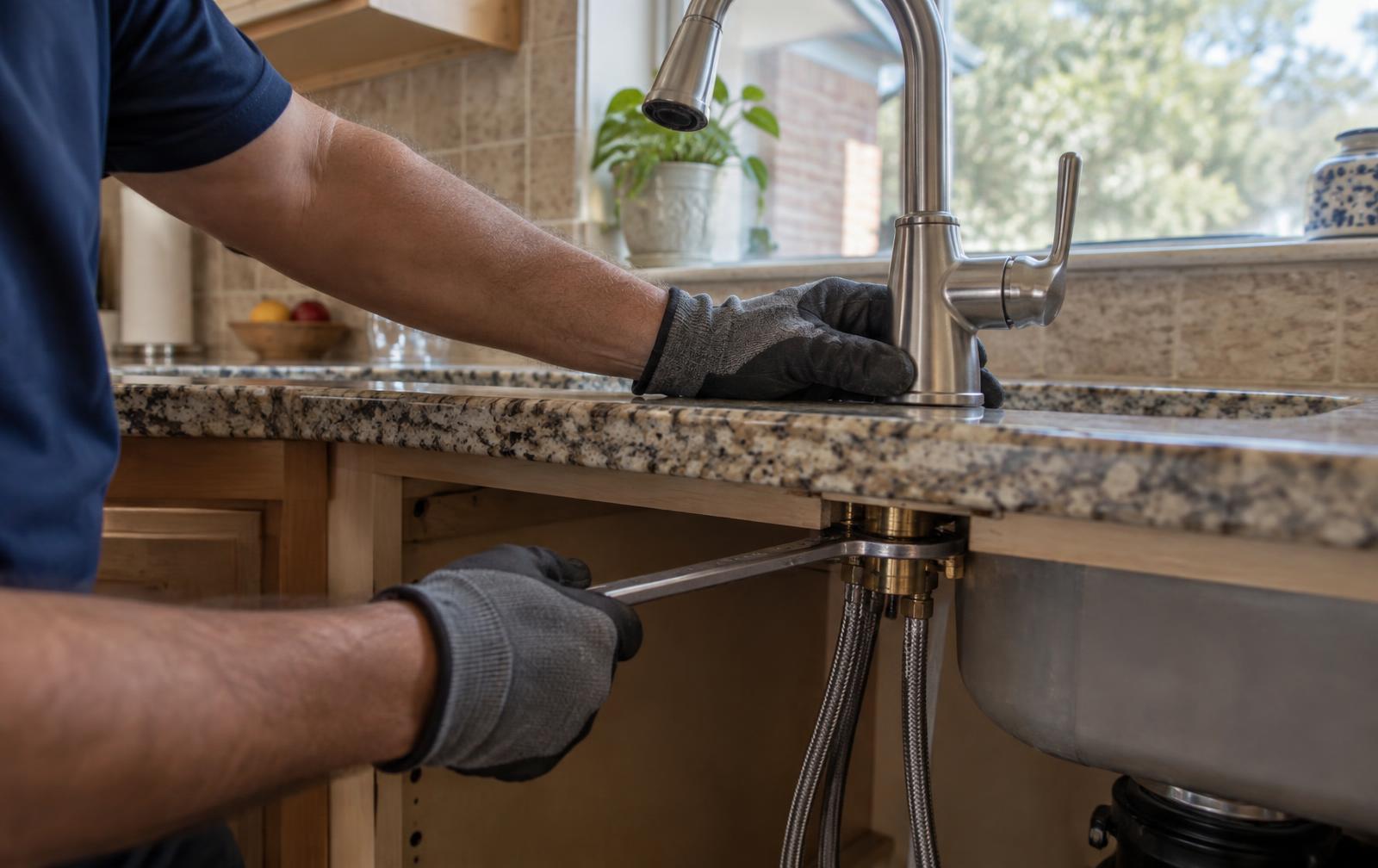
Cartridge, stem, and full-fixture replacement for Allen kitchens and bathrooms — hard-water-ready parts stocked on the truck.
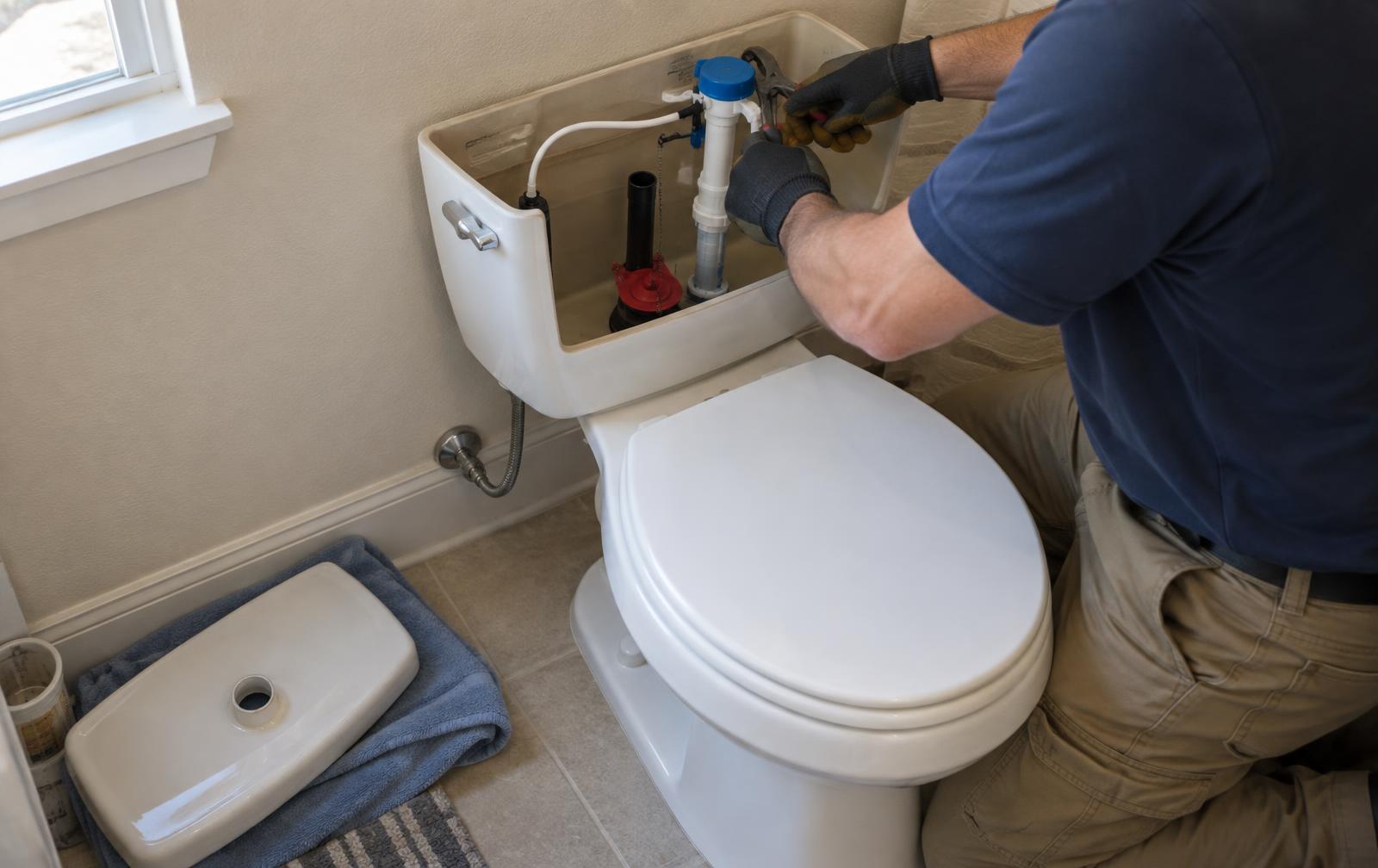
Rebuilds, wax-ring resets, flange repairs, and full replacements — the running toilets and rocking bowls in Allen homes.
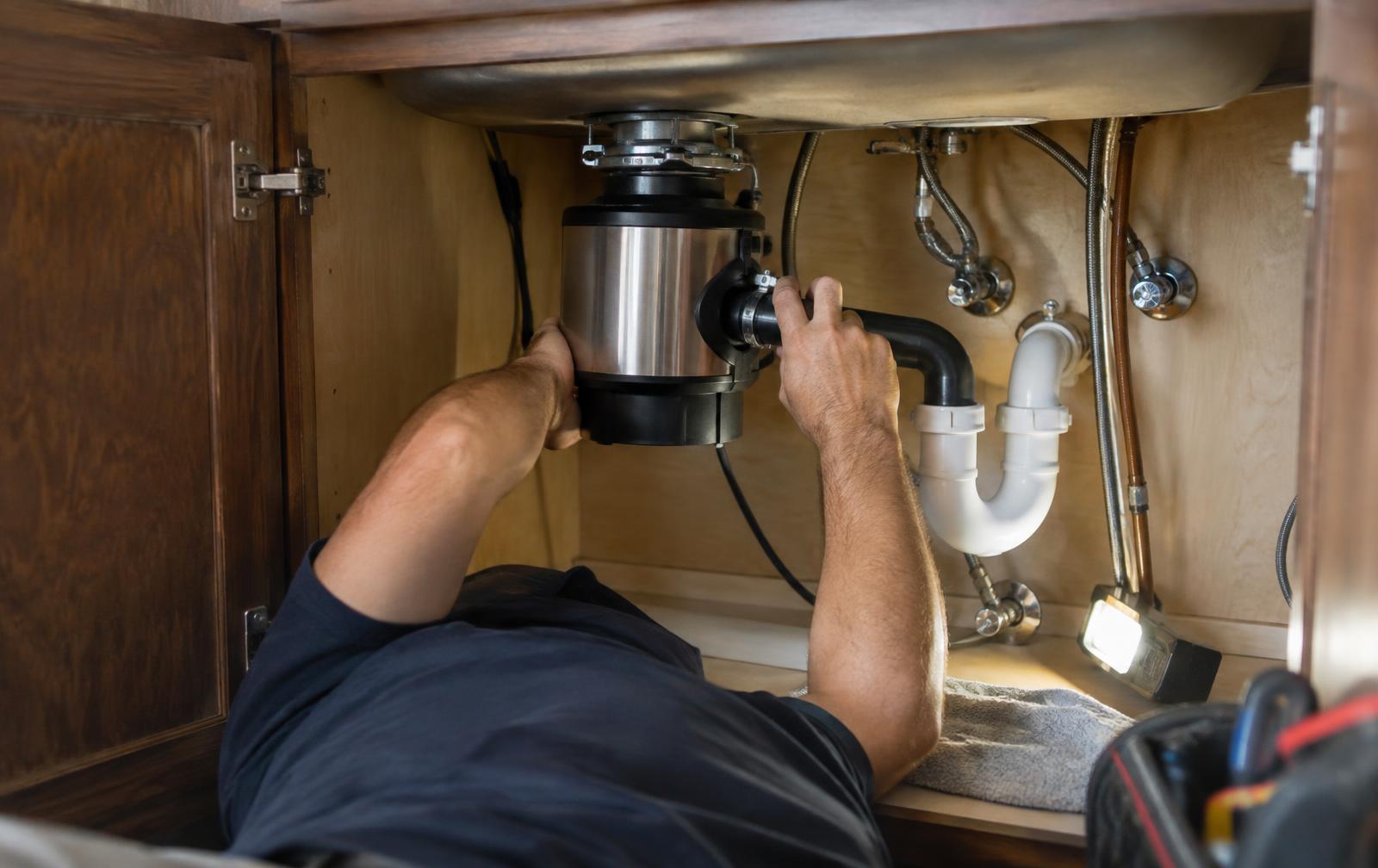
Jam clearing, leaking-unit swaps, and quiet 3/4 HP upgrades for Allen kitchens — same-visit install.
Dealing With a Backed-Up Drain in Allen?
We open the line fully and back it up with a camera. Call for a same-day window.