
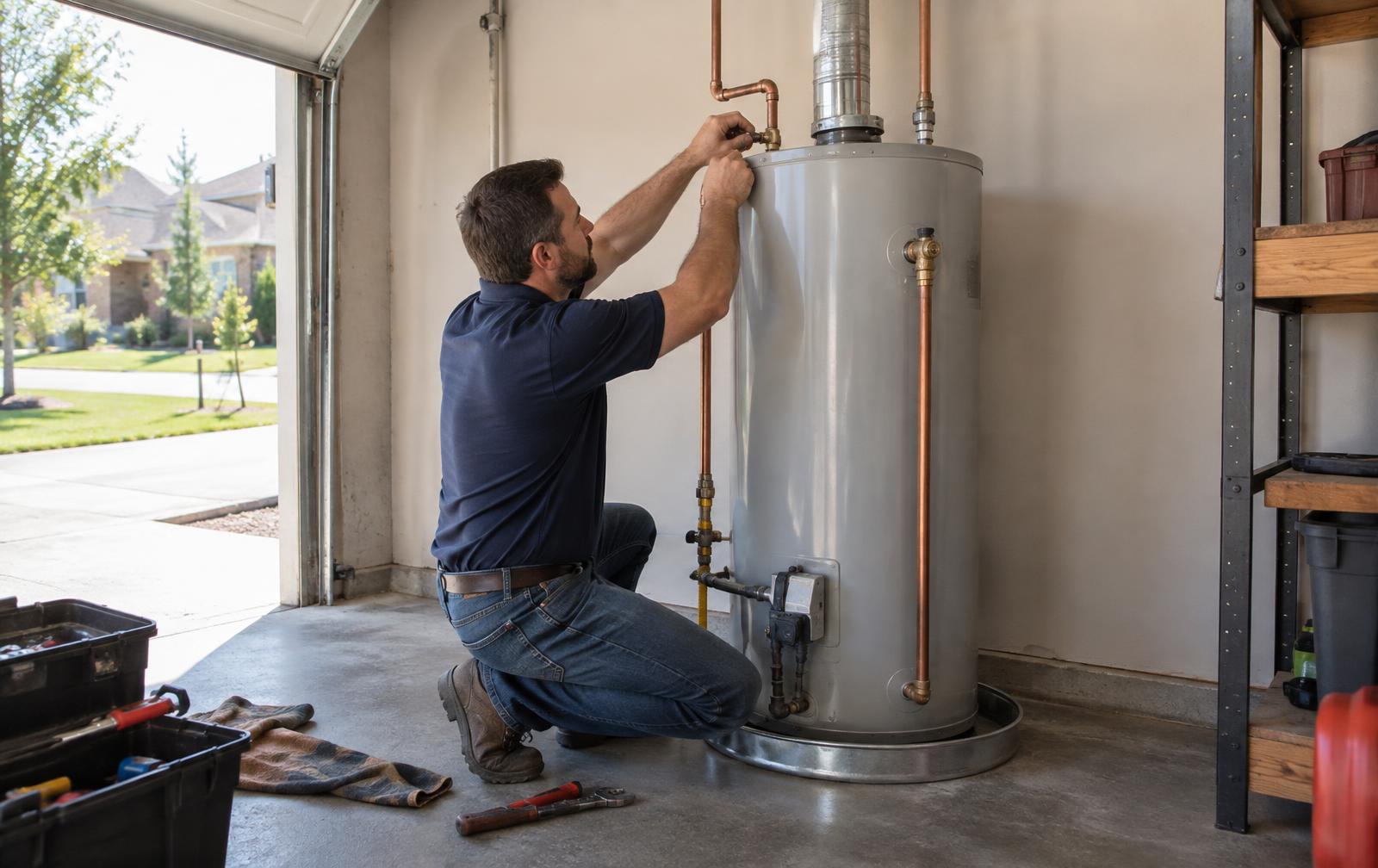
Water Heater Services in Highland Village, TX
Two people, two showers, and the second one turns cold fast. Water at the tap with a faint rust color to it. A damp ring showing up around the tank's base. A banging or rumbling sound coming from the closet that nobody remembers hearing before. Between repair and replacement, we tell you which one your unit actually calls for, across every Highland Village house and condo we visit.
Mineral Content in the City's Water Wears Down Anode Rods Faster
Highland Village publishes a hardness figure of roughly seven grains per gallon for its water supply. That's enough dissolved mineral to consume a sacrificial anode rod meaningfully quicker than you'd see in a soft-water region, and a spent anode is one of the more common reasons a tank starts failing before the number on its rating plate suggests it should. Layer on the fact that most of the city's housing, close to eighteen hundred homes by one local count, went up between 1984 and 2005, and there's a sizable pool of original or once-replaced units reaching the end of their run right now.
Gas comes through Atmos Energy for every residential customer in this city — there's no competing gas utility here the way there sometimes is one town over. Whenever we set a new tank, a properly sized expansion tank goes in for a closed system, a drain pan gets routed on any install inside a closet or above living space, and discharge piping follows code rather than whatever was easiest at the time of the last install. Cutting those corners might shave a little off the invoice, but it's usually the homeowner who pays for it later, through an insurance denial rather than us.
None of that means every call ends in a new tank, though. A thermocouple, a gas valve, a worn heating element, a tired anode, or plain sediment buildup are all things we fix in place on a unit that still has good years left. Replacement gets recommended only once the diagnostic actually points there.

What Tells You a Highland Village Water Heater Needs Help
A few of these point to a quick service call. Others mean the tank's days are numbered — either way, it's worth a look before it fails on its own timeline.
A second shower going cold, or a tub that never quite gets warm enough, might be a worn dip tube, a unit that was undersized for the household from the start, or sediment quietly stealing usable tank volume — three different repairs depending on which it is.
Sediment resting on the tank floor flashes into steam and pops audibly as the burner cycles. Flushing the tank early usually restores things; loud, persistent noise can mean the tank's closer to giving out.
Generally means the anode rod has given all it can and the tank's inner lining has begun corroding on its own. Catching this early with a fresh anode can buy real time; water that's gone noticeably brown usually means the tank is close to done.
A cracked tank shell is a one-way problem — no repair fixes it. Shut off both the water supply and the gas or power to the unit and get it looked at right away.
A struggling burner or heavy sediment forces the heater to run longer for the same output. A noticeable increase with nothing else changed at the house is a reasonable trigger for a diagnostic visit.
That valve opens when pressure or temperature climbs too high, or when it's simply worn out itself. Left alone, the next stage isn't a bigger drip — it's a ruptured tank.
Find Out What's Actually Wrong Before Anyone Talks Replacement
A unit worth saving gets saved. A unit that needs replacing gets brought fully up to code, not just swapped in place.
- 1Start with a real diagnostic
Age pulled from the serial number, sediment depth, anode wear, relief valve behavior, thermocouple or element response, and combustion quality on gas models all get checked before we say a word about repair or replacement.
- 2Fix what's fixable
A new thermocouple, gas valve, heating element, thermostat, dip tube, or anode rod, or simply flushing out accumulated sediment — common parts for the models we see most often are already on the truck.
- 3Bring a replacement fully current on code
Sizing matched to the household's actual draw, a closed-system expansion tank, a drain pan with proper discharge routing on any elevated or closeted install, correct relief-valve piping, dielectric fittings at the connections, and a seismic strap wherever the location requires one.
- 4Remove the old unit cleanly
The retired tank goes with us for recycling instead of getting hauled, dripping, across finished flooring. We leave the closet floor cleaner than we found it.
- 5Confirm performance and explain it
Combustion gets verified on gas units, recovery rate gets checked, the thermostat gets set where you want it, and we walk through the shutoff location and a reasonable flush schedule going forward.
Water Heater Patterns Across Highland Village
House age and where the tank sits both shape what a visit turns into.
Construction from 1992 through 2004 near the lake commonly still runs an original or a once-replaced heater, which puts a fair number of these units right at the point where a checkup makes more sense than waiting for a failure.
Larger, roughly quarter-acre 1990s lots here sometimes mean a longer supply run out to the heater's location, worth factoring in if recovery time or pressure seems slower than expected.
Some construction near the historic ranch land this area is named for dates to the 1970s, old enough that a prior heater install may predate current expansion-tank and drain-pan requirements entirely — bringing that up to today's code is routine on a replacement here.
A pocket of homes near the lake goes back to 1974, meaning the water heater has likely already been swapped once or twice, sometimes without picking up the code details a modern install includes.
Waterfront homes from the 1990s and 2000s occasionally tuck the heater into a garage or an exterior closet where temperature swings are bigger, which can affect how quickly the unit recovers.
Infill construction along this stretch spans a wide range of ages, so each unit gets checked on its own record rather than judged by what a neighboring house might need.
What Highland Village Homeowners Say

Fixed When It Should Be, Replaced When It Should Be
Every replacement carries the manufacturer's tank warranty plus warrantied labor on our end, and every repair comes with warrantied parts and labor too. A recommendation to replace is always based on what the diagnostic actually found — never on what happened to be loaded on the truck that day.
This is a family-owned operation, licensed by the Texas State Board of Plumbing Examiners and insured. Every truck comes out of our shop in The Colony, which runs about 20 to 25 minutes from a typical Highland Village address under normal traffic, and we take same-day calls for a total failure.
Straight Answers, No Sales Pitch
Our Other Plumbing Services in Highland Village, TX
A water heater on its way out often isn't the only aging fixture in the house. While a truck is already on-site in Highland Village, we're glad to check supply lines, drains, and gas connections too.
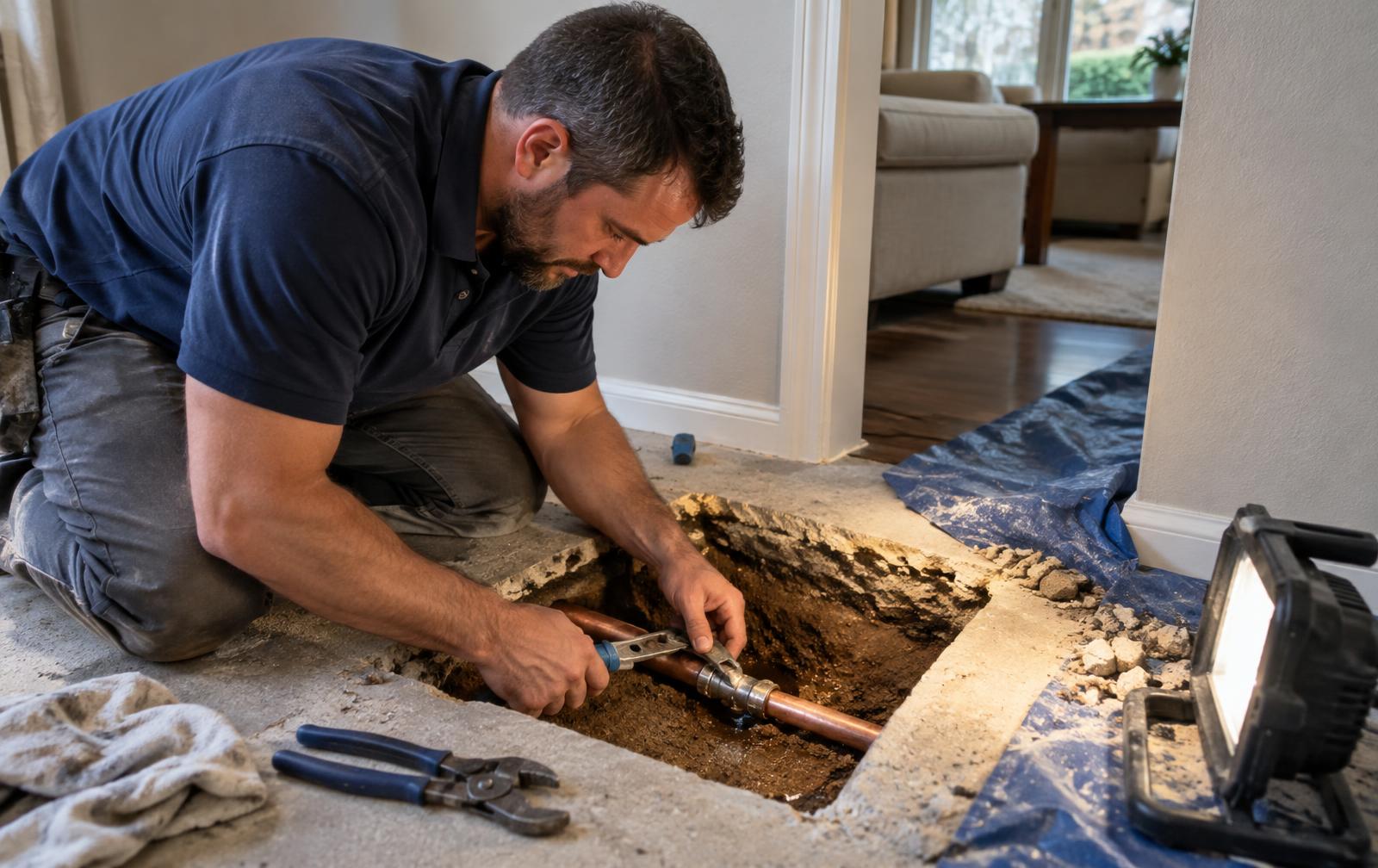
Electronic detection under Highland Village slabs — reroute options that save your finished floors when possible.
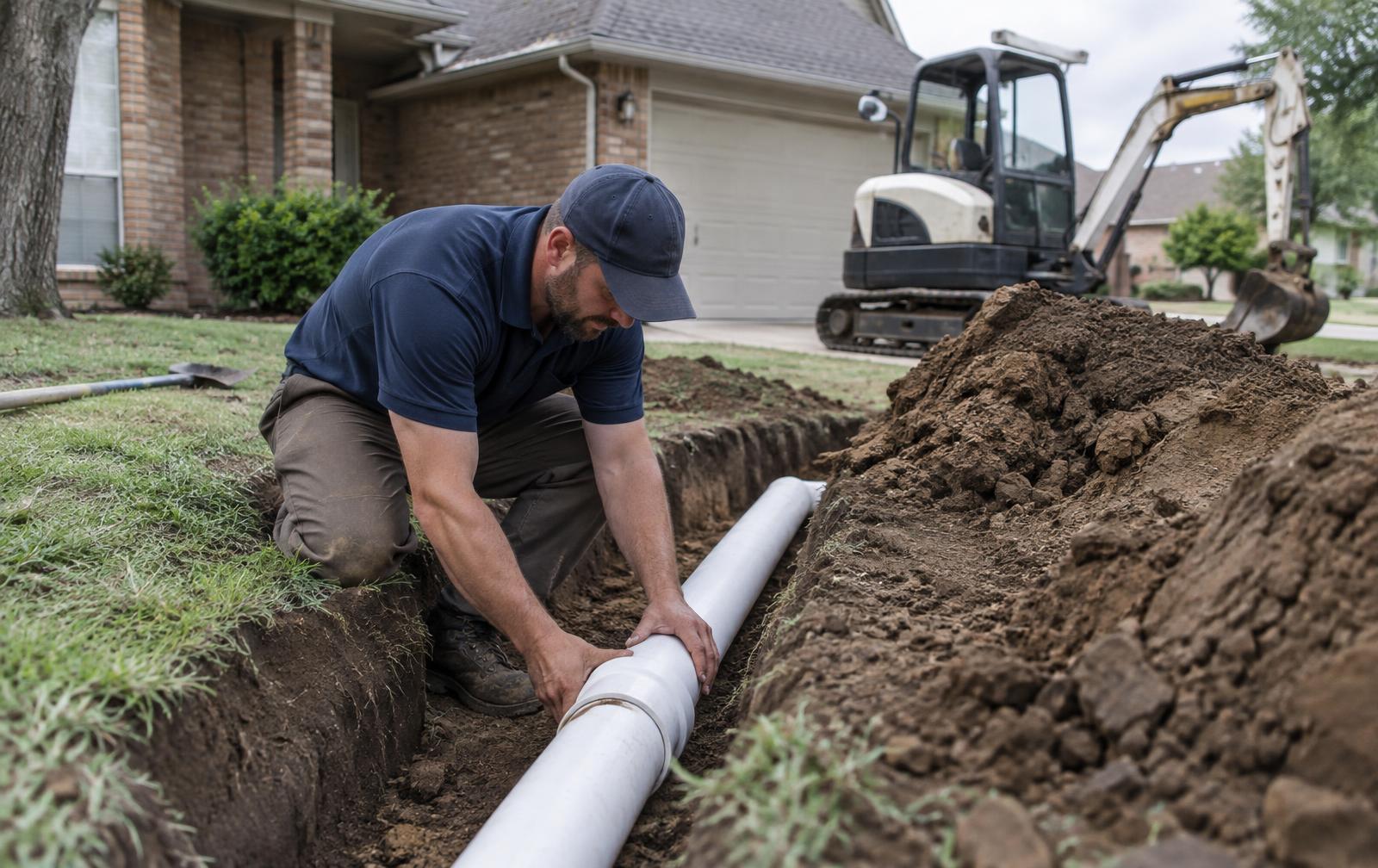
Trenchless replacement for the aging laterals across Highland Village's older runs — camera first, quote in writing, minimal yard damage.
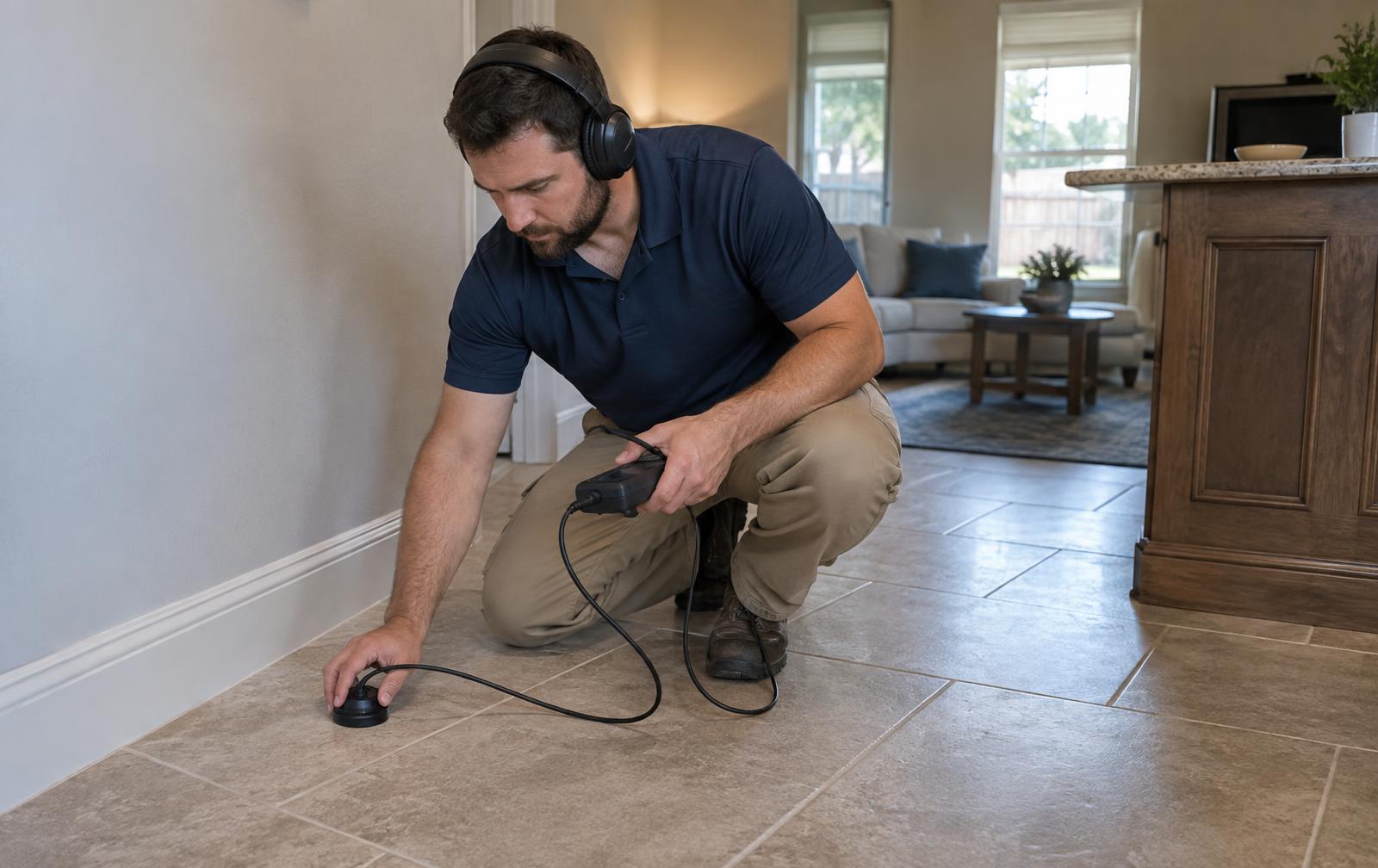
Acoustic, thermal, and pressure testing to pinpoint hidden leaks in Highland Village slab and wall lines without tearing into finishes.
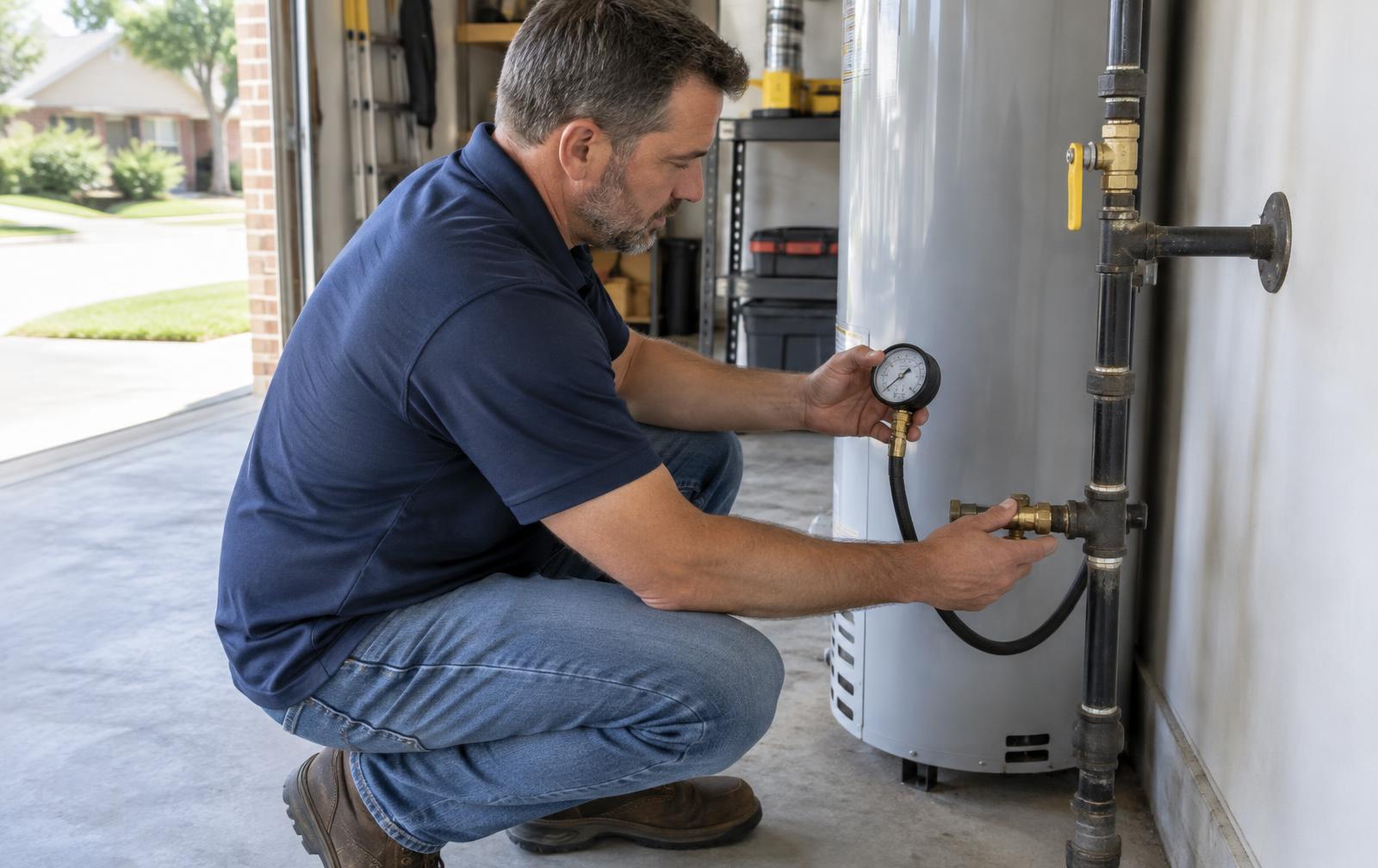
Licensed install, repair, and pressure-testing for Highland Village homes — every line signed off to Texas code and Atmos requirements.
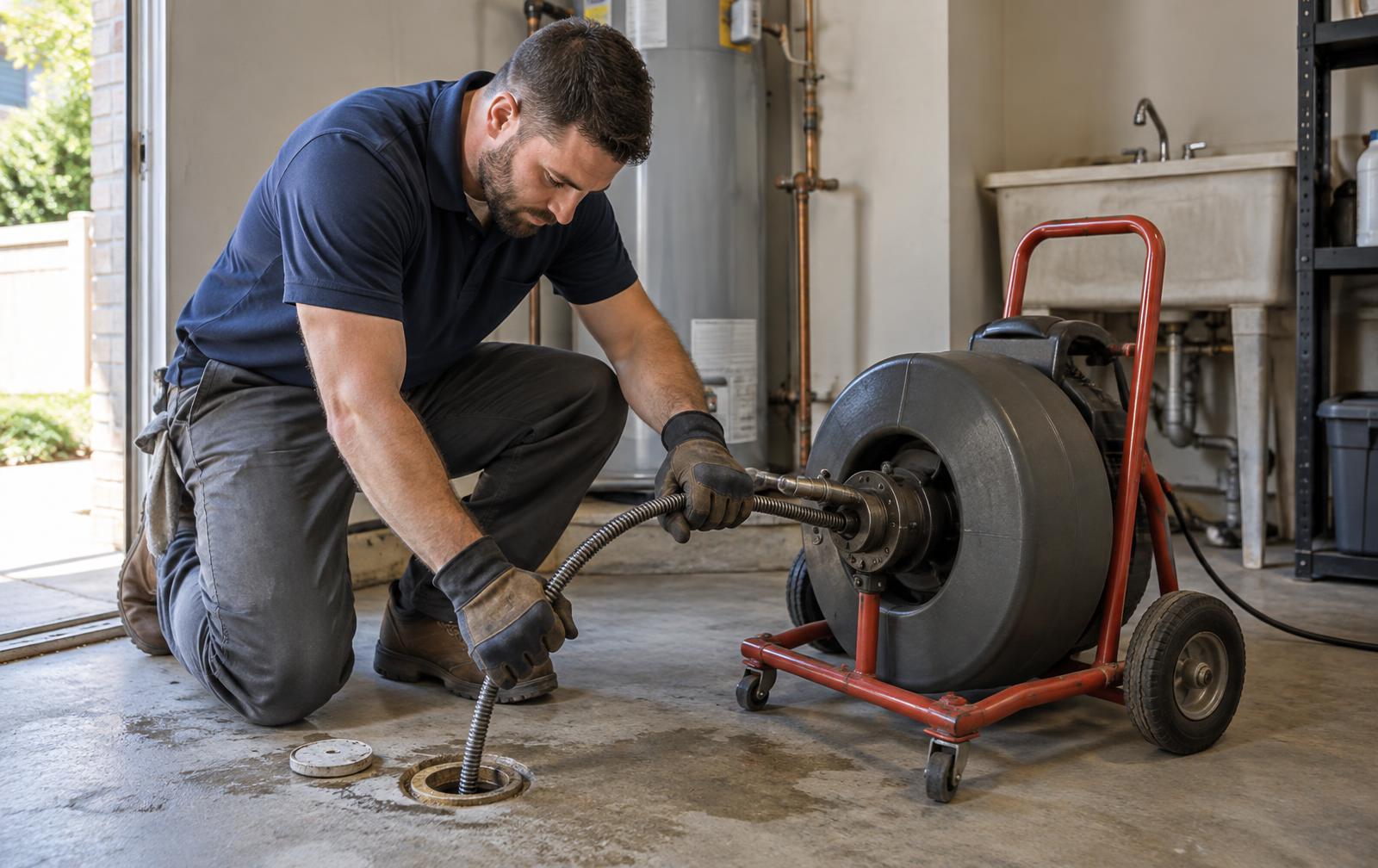
Full-clear service and camera confirmation for the drains under Highland Village's neighborhoods.
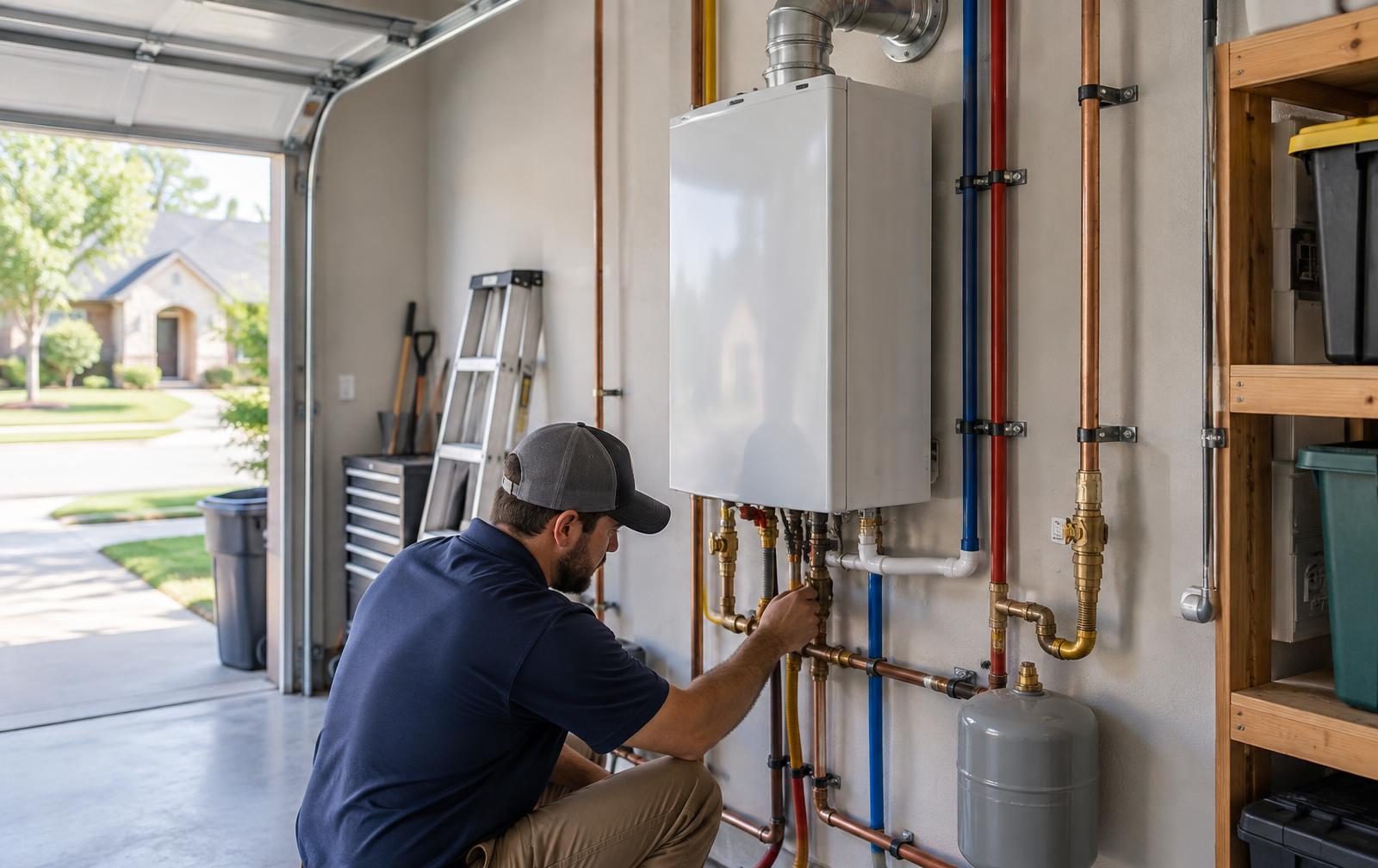
Install, service, and annual descaling — Highland Village's hard tap water eats tankless heat exchangers without it.
same-day, 7 days a week response across Highland Village for burst pipes, heater failures, and main-line backups.
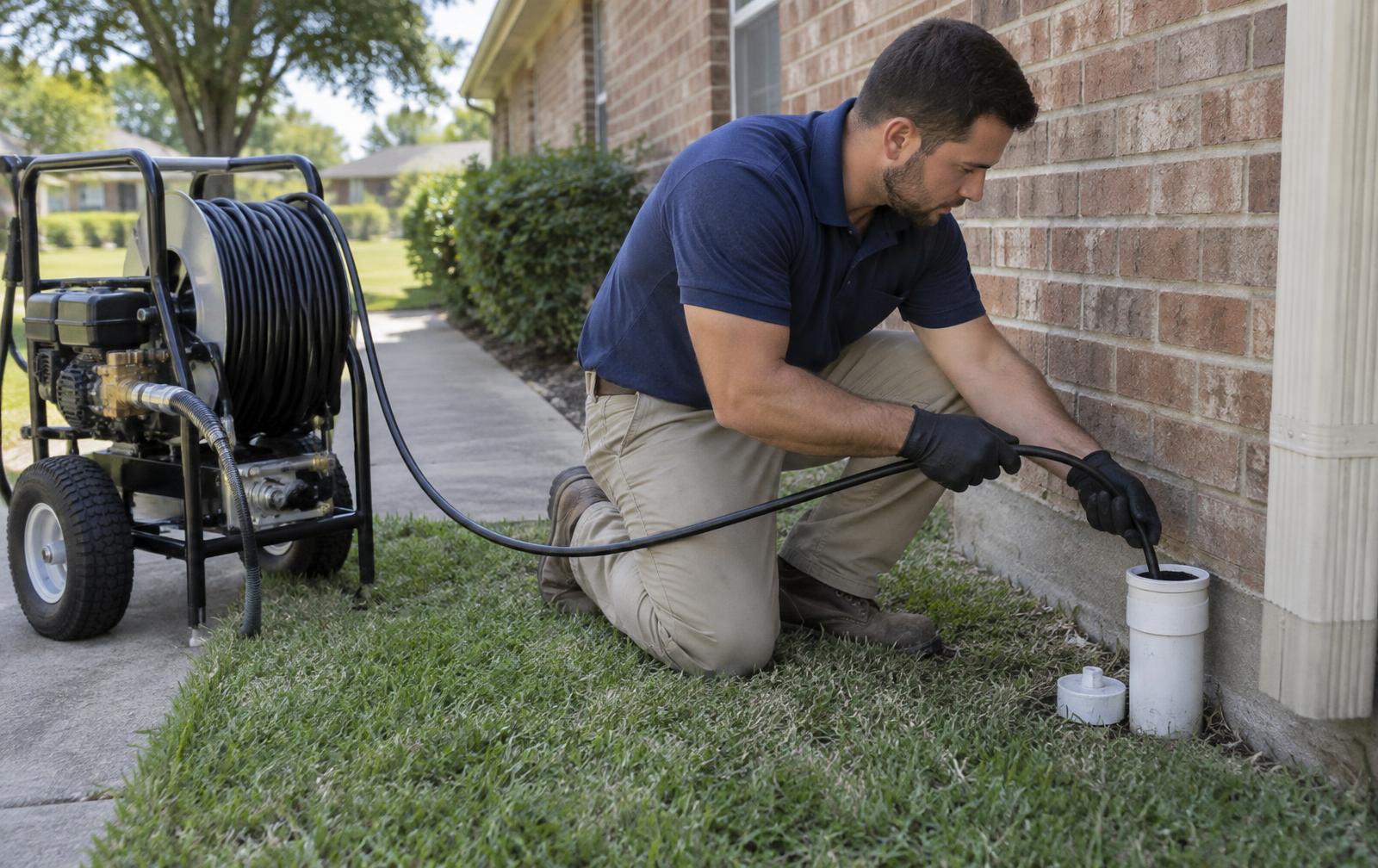
High-pressure cleaning that clears scale, grease, and roots from Highland Village's lateral runs — full-diameter, lasting clean.
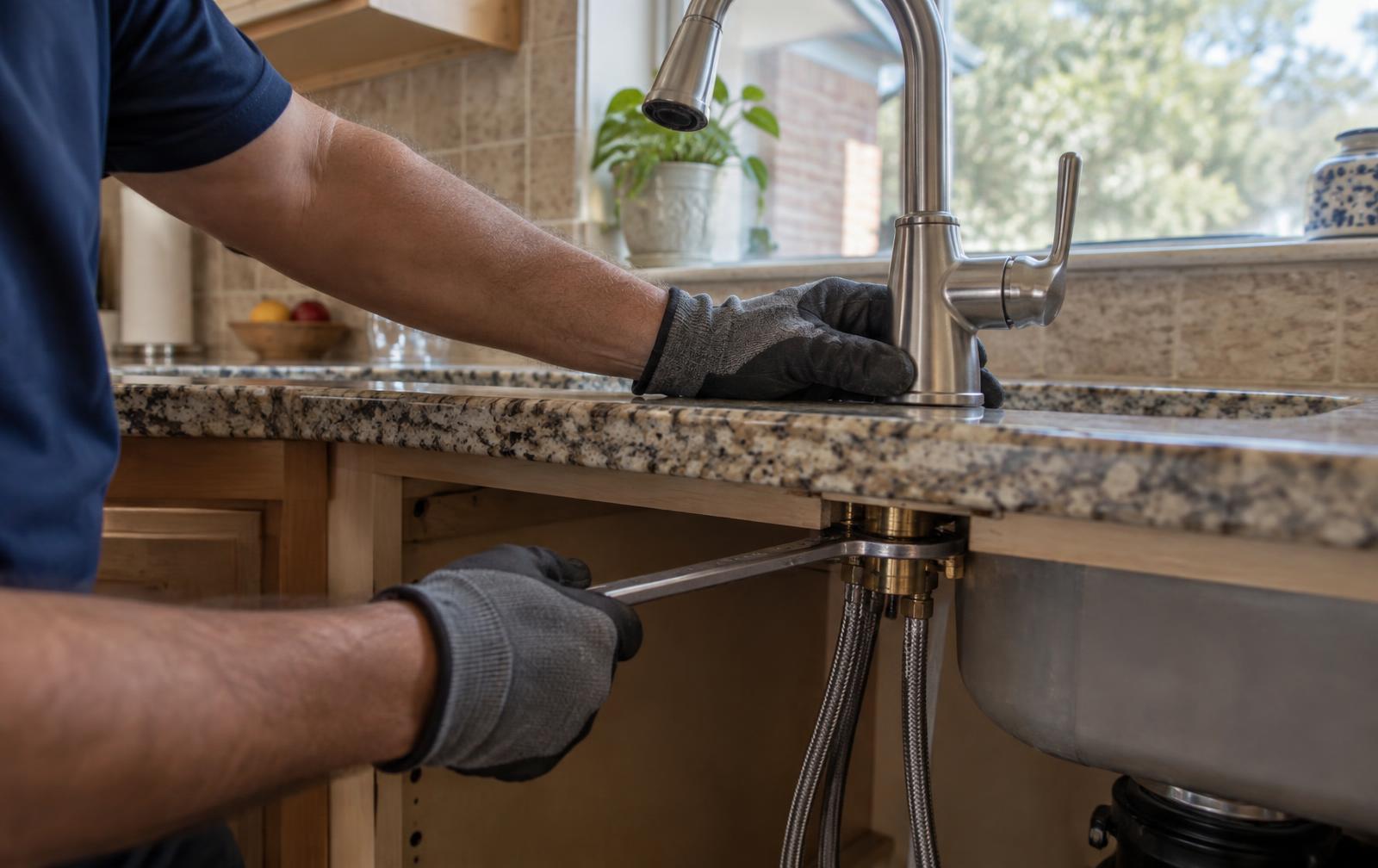
Cartridge, stem, and full-fixture replacement for Highland Village kitchens and bathrooms — hard-water-ready parts stocked on the truck.
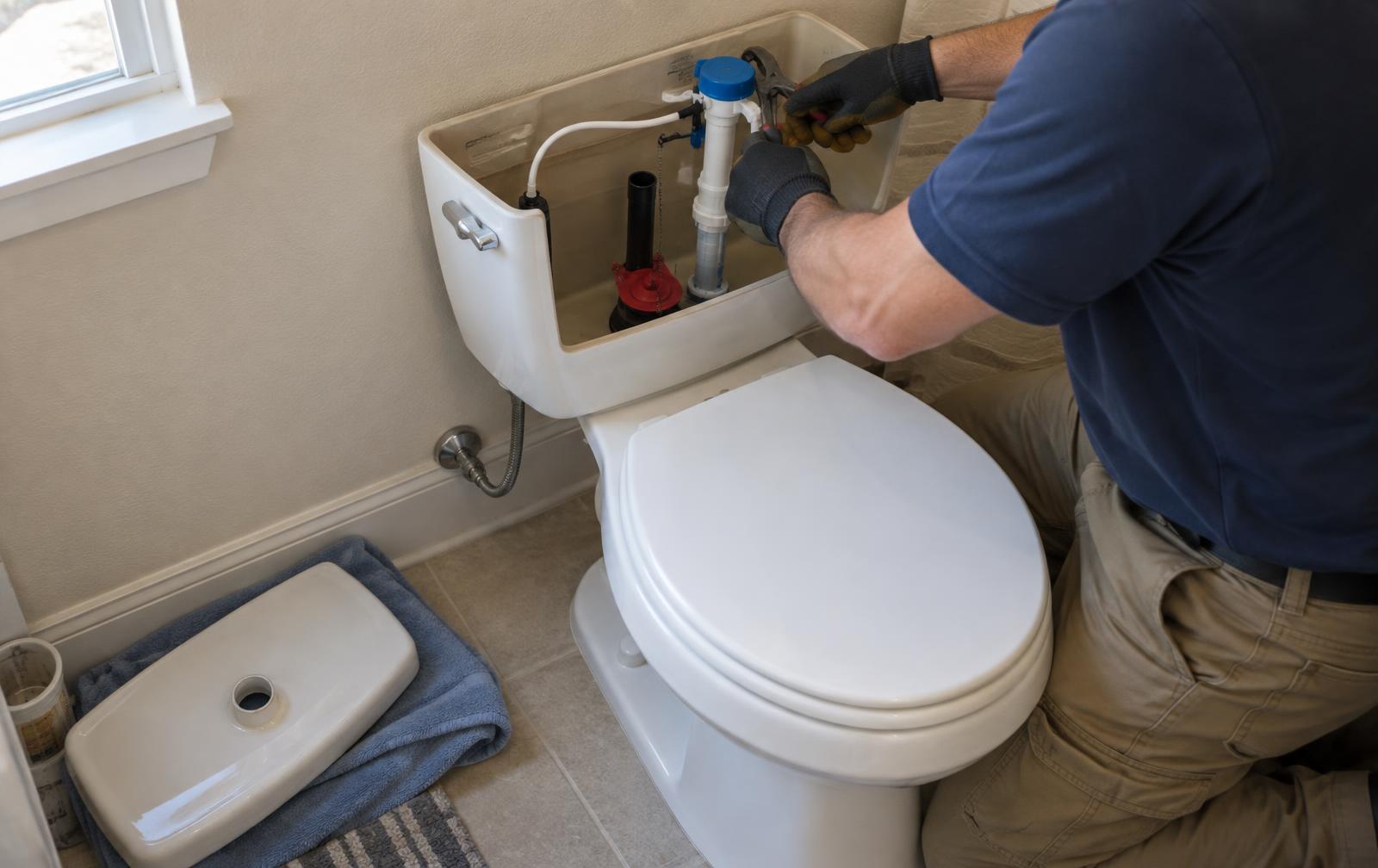
Rebuilds, wax-ring resets, flange repairs, and full replacements — the running toilets and rocking bowls in Highland Village homes.
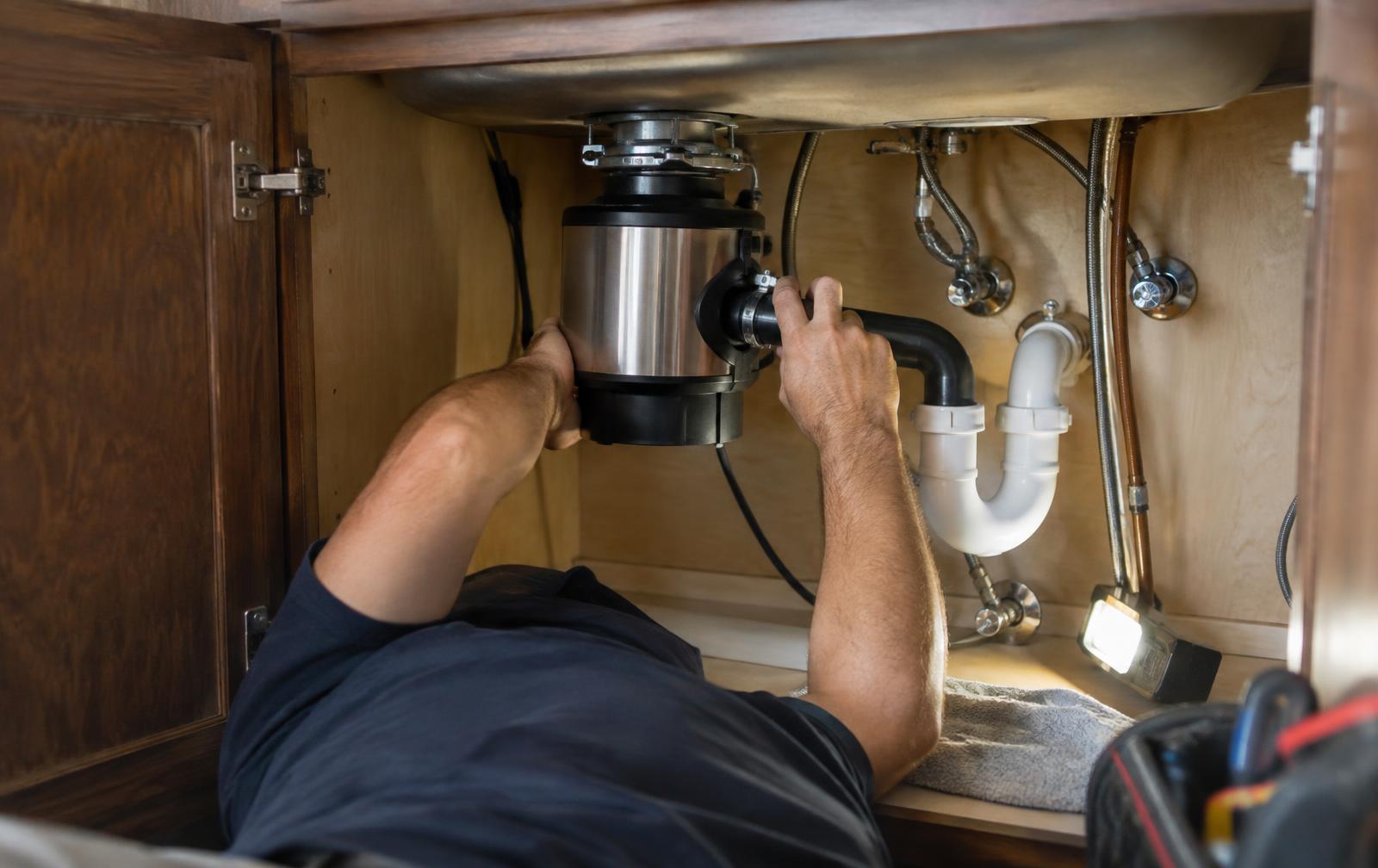
Jam clearing, leaking-unit swaps, and quiet 3/4 HP upgrades for Highland Village kitchens — same-visit install.
Dealing With a Water Heater Problem in Highland Village?
A real diagnostic, a code-correct replacement when that's the right call, and same-day help for total failures. Book now.