
Sewer Line Replacement in Highland Village, TX
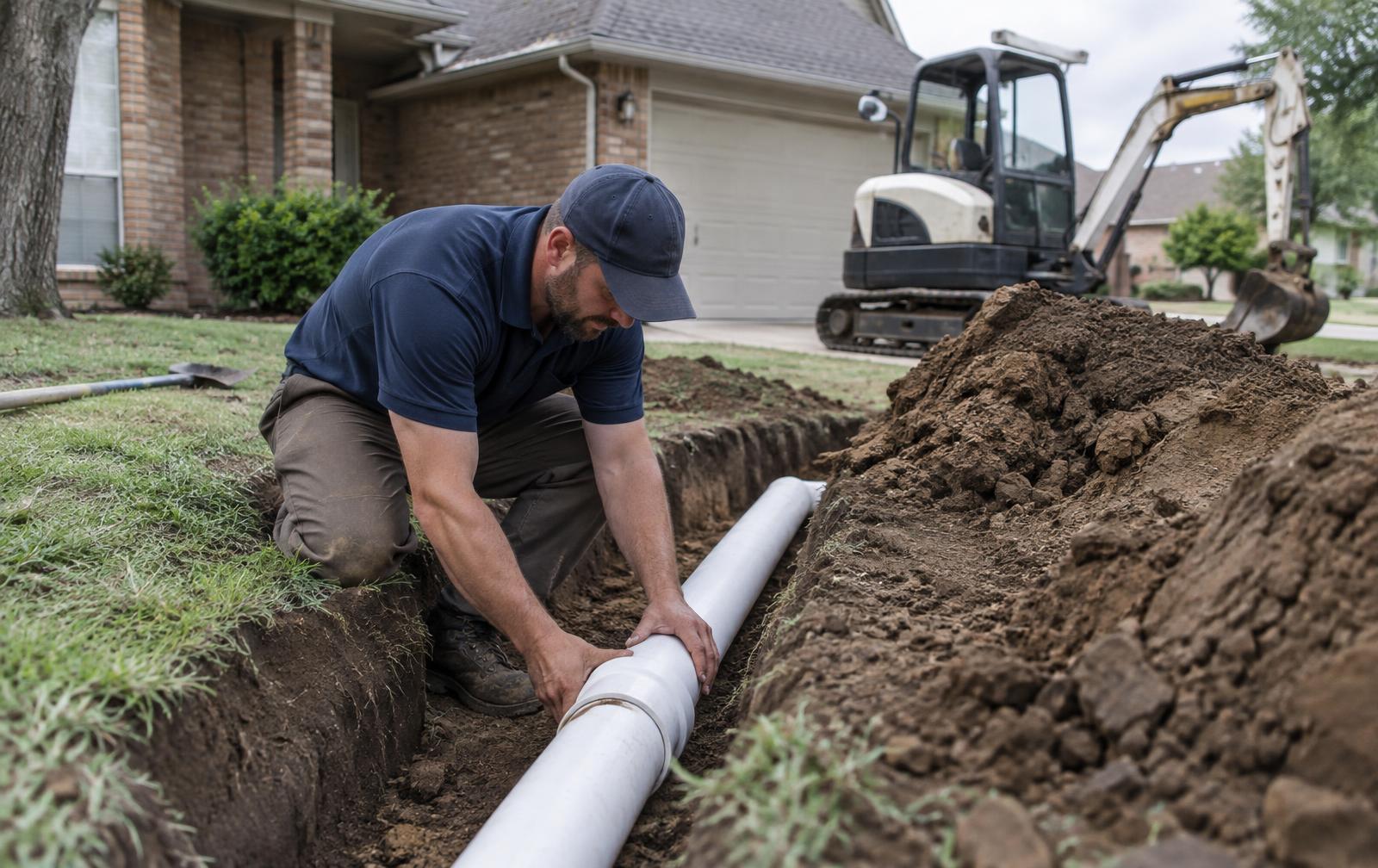
One drain clears for a couple of weeks and clogs again. A scope turns up an offset joint, a sagging belly, or roots choking the pipe solid. We swap out Highland Village sewer laterals using two small dig pits instead of a trench across the property — your grass, beds, and pavement mostly stay put.
It's the Tree Canopy, Not Clay, Doing the Damage
Highland Village isn't built on the flat blackland clay you'll find in much of North Texas — it sits on the rolling, wooded Eastern Cross Timbers belt, and the mature tree cover that makes the city's larger lots so desirable is also what finds its way into old sewer joints. On a scope, the pattern repeats: a pipe that was fine for decades until a root found one seam and pried it open.
Age compounds the problem. The city's densest, best-documented growth ran from 1984 through 2005, and a handful of lake-adjacent streets, including parts of the Lakeland Dr area, hold houses dating to 1974. Half a century is plenty of time for cast iron to scale down to a narrow channel and for clay bell-and-spigot joints to open just enough for a root hair to squeeze in and thrive. Once that's the diagnosis, cabling the line every month isn't maintenance — it's paying rent on a pipe that needs to come out.
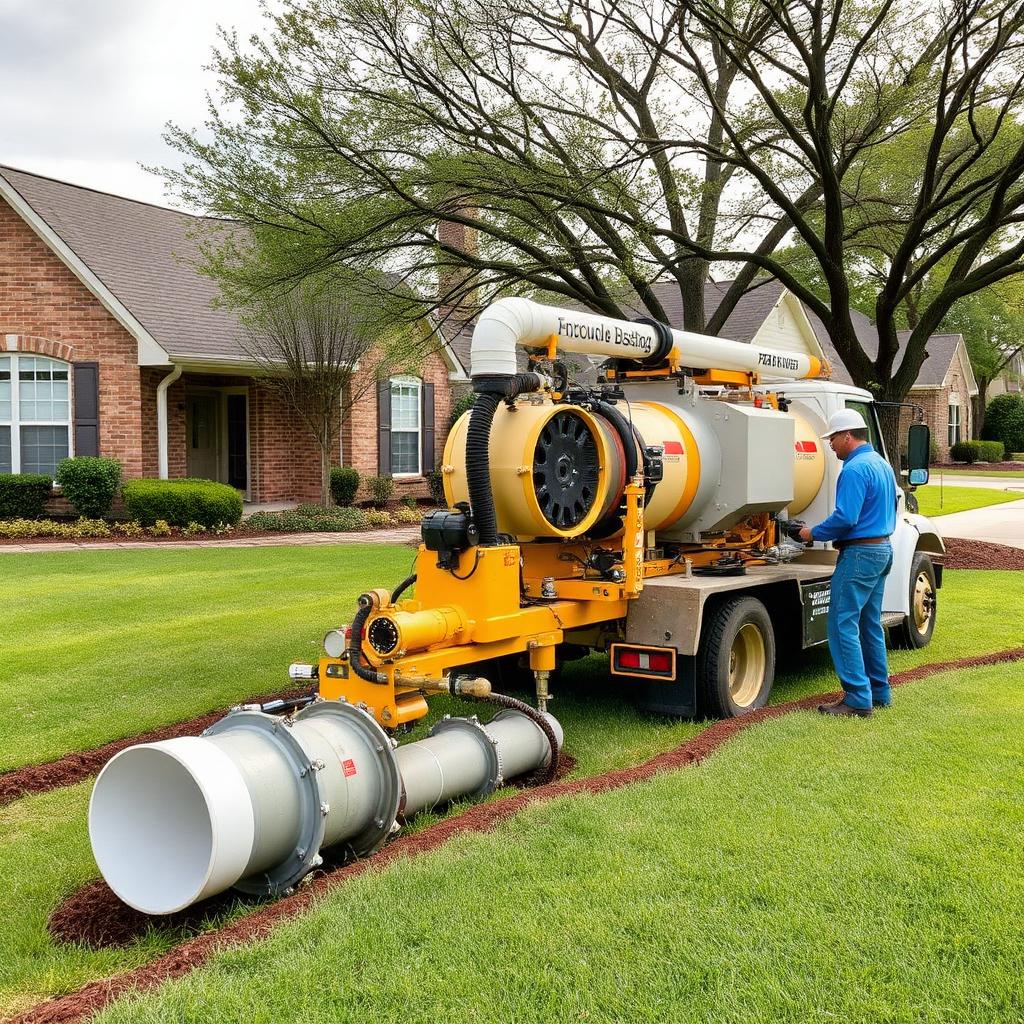
Pipe bursting and cured-in-place lining both let us do that work through a pair of small pits rather than a trench spanning the yard. On the tighter, tree-covered lots common in this city's older streets, that's often the only realistic way to get the job done without losing landscaping that took thirty years to grow.

When a Highland Village Sewer Line Is Done, Not Just Clogged
One sign warrants a scope. Two or more together usually mean the pipe, not the clog, is the issue.
A sound line doesn't need a cable run every few weeks. A predictable, recurring backup at the same drain despite recent clearing points at the pipe itself.
A toilet burping, a tub draining slow, and a washer backing up at the same time is a main-line symptom, not an isolated branch clog.
A leaking lateral effectively irrigates and feeds the ground above it. A patch of grass that stays soggy or grows greener than the rest of the yard is a common outdoor tell.
Washed-out soil under a failed lateral can let the slab settle unevenly. Fresh cracks radiating from a bathroom are worth pairing with a camera scope.
Gas reaching open air usually means a joint or vent has actually opened up. That calls for repair or replacement, not another cabling visit.
If an earlier camera run showed heavy scale, root mass, or a low spot holding standing water, and the same backup has already returned once, the line is past the point where cabling holds.
See It on Camera Before We Price Anything
No phone quotes for sewer work. We scope, we confirm the failure, and we price the method that fits your specific lot.
- 1Run the full-length scope
Entering through the cleanout, the camera travels the entire lateral to the city connection while recording. You're welcome to sit in on the review with us as offsets, scale, and root mass get called out in real time. If the pipe checks out and cabling would genuinely solve it, we say that instead of upselling a replacement.
- 2Track depth and direction with a beacon
A locating beacon built into the camera head lets us map how deep the pipe runs and where it turns. That reading decides between pipe bursting and a cured-in-place liner, and it sets where the two access pits land.
- 3Put the whole scope in writing
The written quote spells out the method, footage, pit placement, pipe material and diameter, and what the yard restoration covers. If it isn't listed on that page, it doesn't get added once we start.
- 4Pull the city permit, loop in Atmos where needed
A plumbing permit is required for sewer lateral replacement here, and where the route runs near a gas line we coordinate directly with Atmos Energy. We manage that paperwork with the city so you don't have to make the calls.
- 5Install, then verify with a second scope
Bursting draws new HDPE pipe through the old one while splitting it outward; lining cures a new pipe skin inside the existing shell. Either way, we run the camera again on the finished line, check flow under a full fill, and give you that footage to keep.
Tree Cover and Build Year Decide the Diagnosis
Two variables explain most of what shows up on a Highland Village sewer scope.
Lake-area construction from roughly 1992 to 2004 sits under the same dense, mature canopy found across much of the city, and root intrusion at aging joints is a frequent finding on a scope in this stretch.
Larger, quarter-acre-plus 1990s lots here mean a longer lateral between house and street, so a scope typically has more footage to cover before it reaches whatever's actually wrong.
Construction stretching back to the 1970s near the old ranch land this area is named for puts original clay or cast-iron joints well past their working life, and that's usually what a scope confirms.
A cluster of homes here dates to 1974, among the oldest laterals in Highland Village, set on roughly 0.4-acre lots with landscaping mature enough to have worked into old joints undisturbed for decades.
Waterfront construction from the 1990s and 2000s often runs its lateral toward lower ground near the water, so mapping the exact grade matters before choosing bursting over lining.
This stretch fills in with smaller infill construction added after the city's main 1980s-to-2000s growth wave, so lateral age swings from house to house and each scope gets read on its own, not by what the neighbors had done.
What Highland Village Homeowners Say
A Pulled Permit, a Camera Record, and a Method You Understood in Advance
Every trenchless job closes out with the before-and-after camera footage, a copy of the pulled permit, and the manufacturer's warranty paperwork on the new pipe, delivered as one packet. We carry the Texas State Board of Plumbing Examiners license, we're insured, and this is a family-owned operation.
Every truck rolls out of our shop address in The Colony, roughly 20 to 25 minutes from a typical Highland Village address under normal traffic. We deal directly with the city's building department to keep the permit and inspection moving, and we're available same-day, seven days a week, 8 AM to 6 PM.
Straight Answers, No Sales Pitch
Our Other Plumbing Services in Highland Village, TX
A failed lateral often isn't the only aging system in the house. While the crew is already on-site, we're glad to look at the water heater, the supply lines, or anything else worth a second opinion.
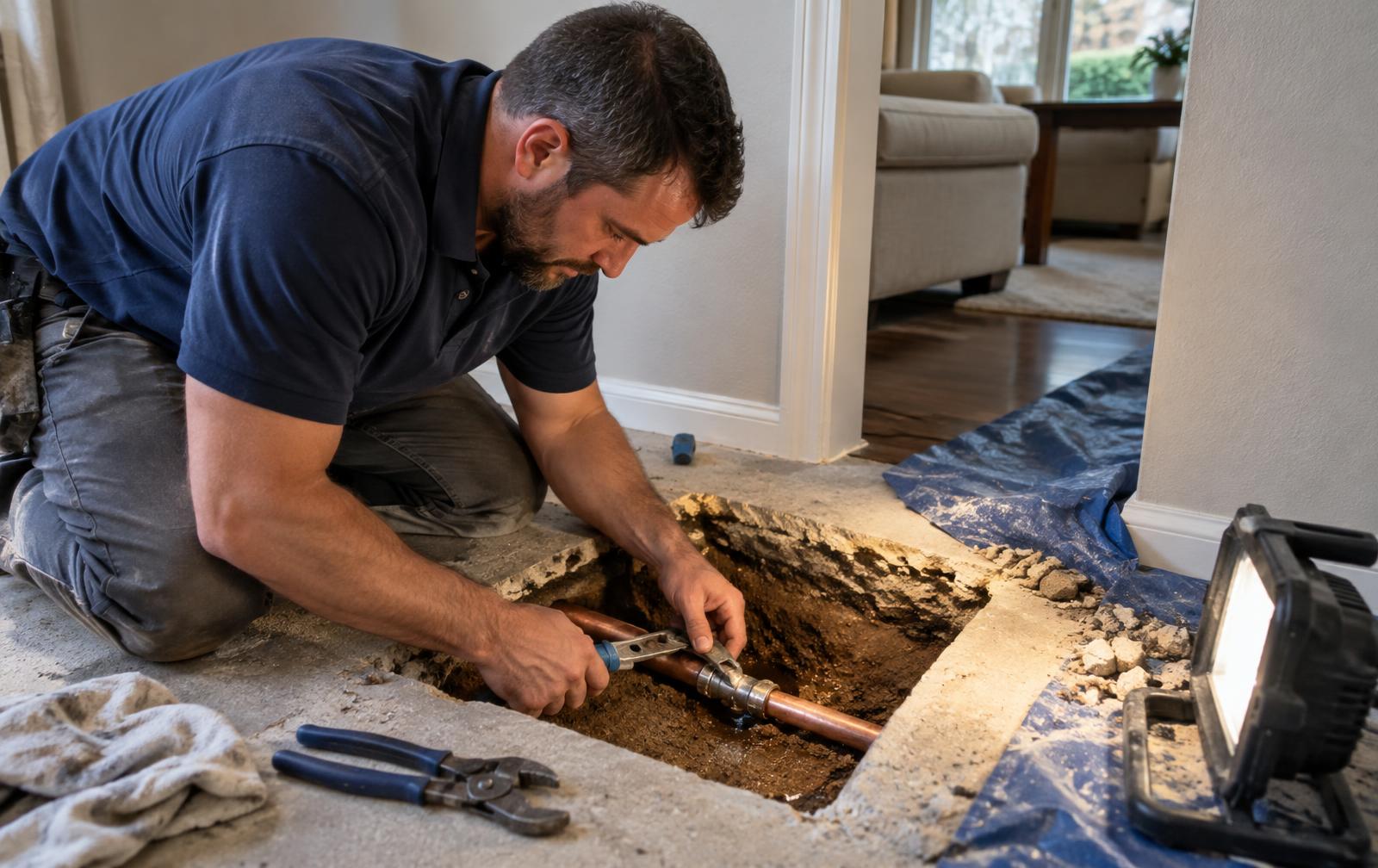
Electronic detection under Highland Village slabs — reroute options that save your finished floors when possible.

Acoustic, thermal, and pressure testing to pinpoint hidden leaks in Highland Village slab and wall lines without tearing into finishes.

Licensed install, repair, and pressure-testing for Highland Village homes — every line signed off to Texas code and Atmos requirements.

Full-clear service and camera confirmation for the drains under Highland Village's neighborhoods.

Repair, flush, and replacement of tank units — including attic and garage heaters common to Highland Village homes.

Install, service, and annual descaling — Highland Village's hard tap water eats tankless heat exchangers without it.
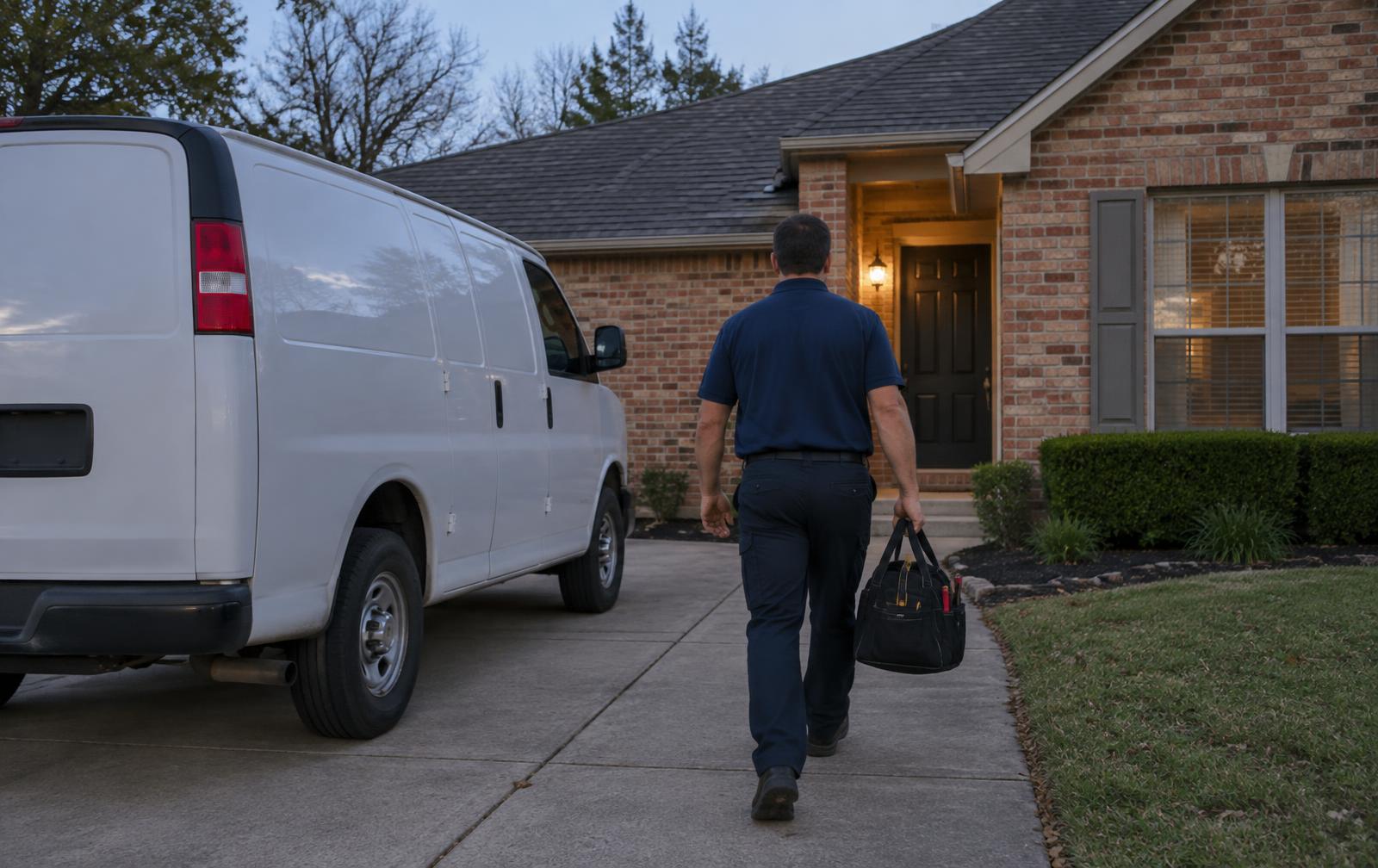
same-day, 7 days a week response across Highland Village for burst pipes, heater failures, and main-line backups.
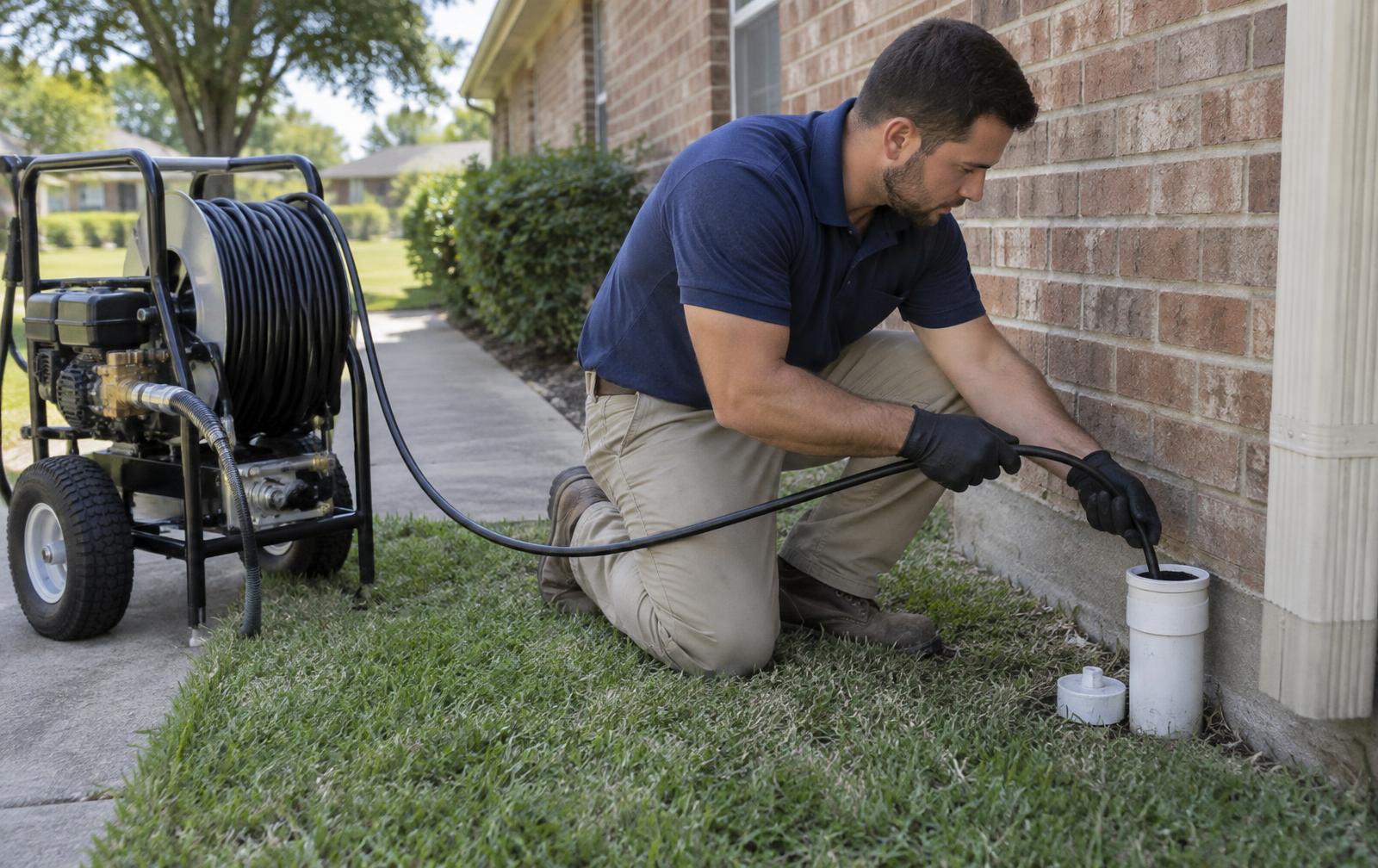
High-pressure cleaning that clears scale, grease, and roots from Highland Village's lateral runs — full-diameter, lasting clean.
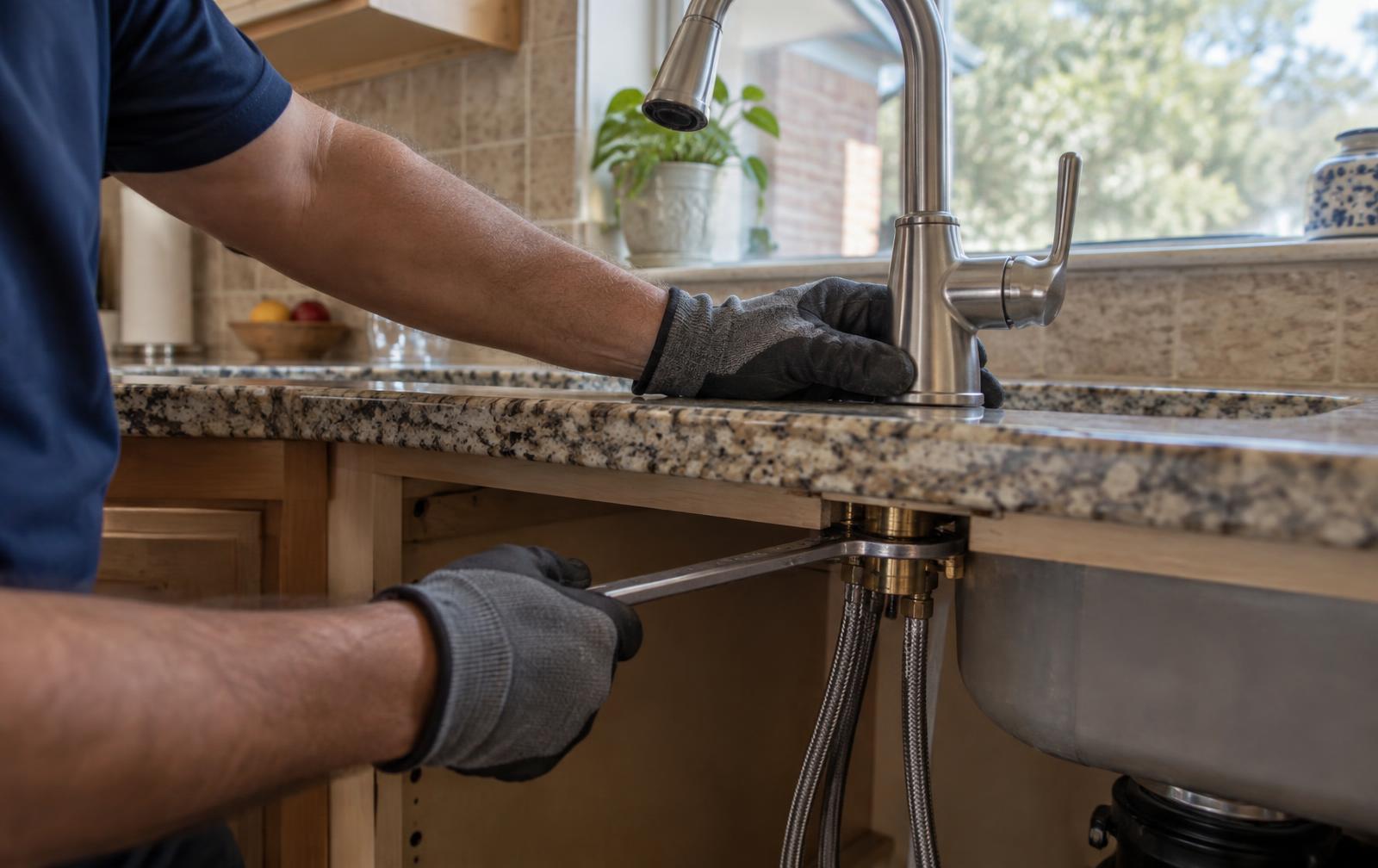
Cartridge, stem, and full-fixture replacement for Highland Village kitchens and bathrooms — hard-water-ready parts stocked on the truck.
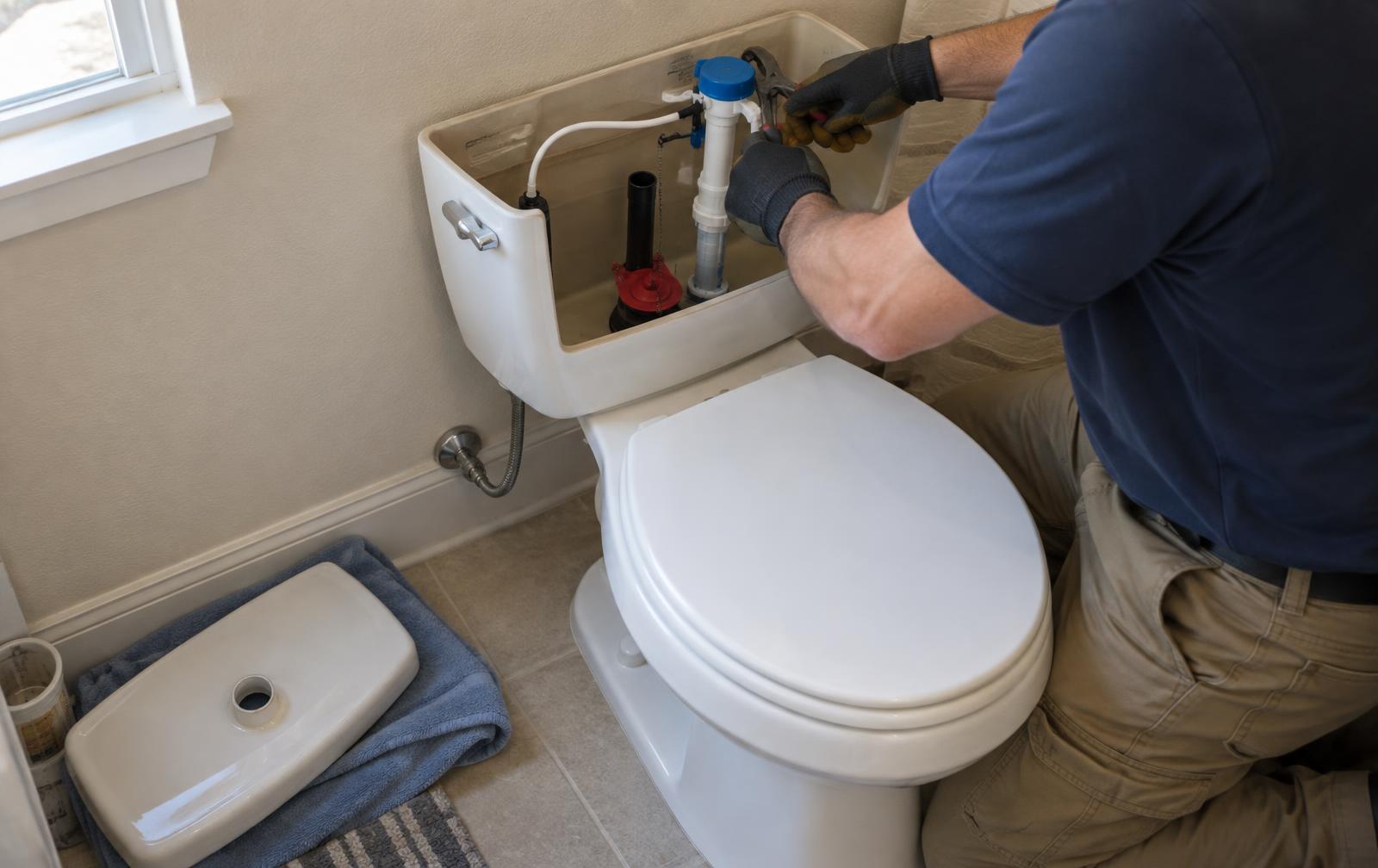
Rebuilds, wax-ring resets, flange repairs, and full replacements — the running toilets and rocking bowls in Highland Village homes.
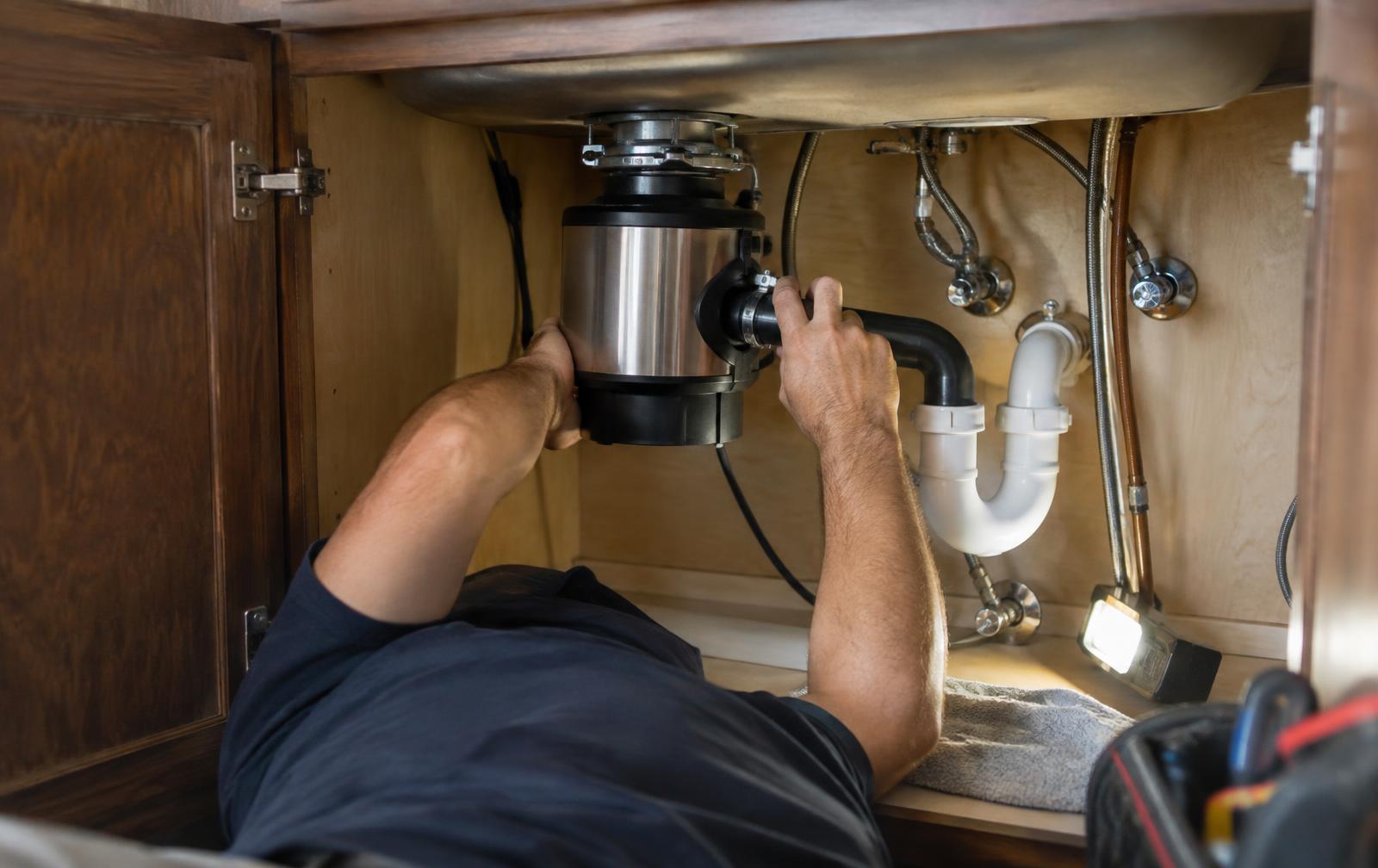
Jam clearing, leaking-unit swaps, and quiet 3/4 HP upgrades for Highland Village kitchens — same-visit install.
Dealing With a Failing Sewer Line in Highland Village?
A camera scope first, a written trenchless quote, and a permit we handle start to finish. Get a scope on the books.