
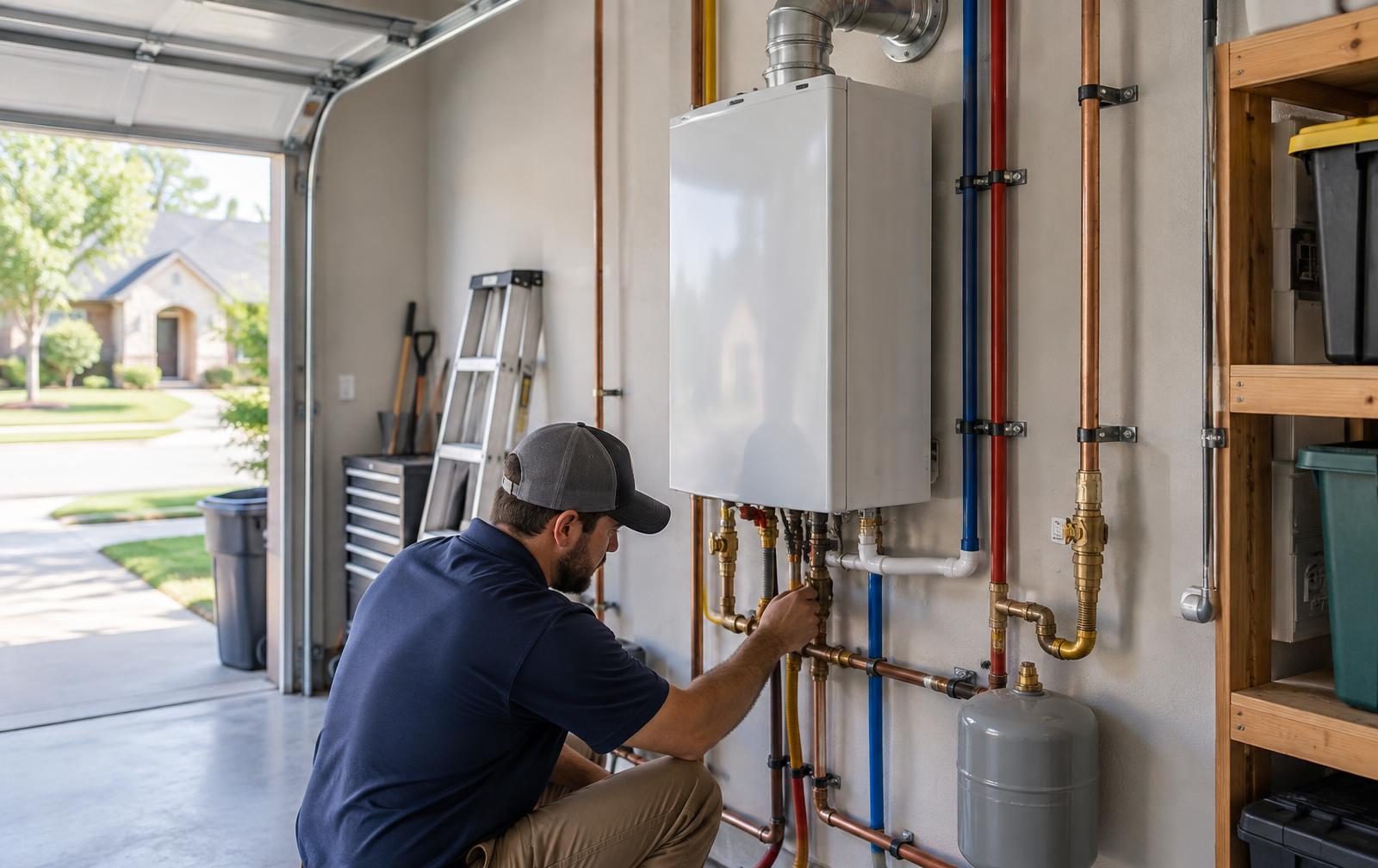
Tankless Water Heater Services in Carrollton, TX
Maybe you're weighing a switch away from a tank, dealing with a unit under warranty that's throwing codes, or just overdue for the descale a tankless heater needs every year out here. Whatever brought you to this page, we size the equipment and the gas line to match your house, not a generic spec sheet.
Two Local Factors Determine How Long Tankless Lasts
Water hardness across Carrollton's system generally lands somewhere between roughly six and a half and nine and a half grains per gallon, depending on which part of town you're on. That's enough mineral content to build scale inside a heat exchanger noticeably faster than a soft-water region would, which is why most manufacturers tie their long warranty terms to proof of a descale every twelve months.
Gas supply is the piece homeowners rarely think about until it becomes a problem. Atmos Energy serves nearly every house in the city, and plenty of older homes were plumbed with a half-inch gas line sized for a standard tank. A larger tankless unit pulling full BTU at start-up frequently needs that line bumped up to three-quarter inch, and we check for that before we ever quote a number.
One more local detail worth knowing up front: the city's Building Inspection Department treats a tankless installation the same as any other water heater replacement, meaning a permit is part of the process rather than something we skip.

Signs Your Tankless Heater Needs a Look
A tankless unit rarely fails without warning first. These are the warnings worth acting on.
Codes vary by brand and each one narrows down to a specific system — ignition, water flow, temperature sensing, or scale. We look up your exact model before guessing at a fix.
That's the classic symptom of a heat exchanger losing internal diameter to scale. It's rarely urgent on its own, but it's a clear sign a descale is overdue.
This has a few possible causes — a partially scaled flow sensor, a recirculation loop that's undersized for the house, or a modulation quirk in the unit itself — and each one calls for a different fix.
Usually this traces to either an undersized unit for the household's peak demand, or a gas line that can't feed full BTU at the same time. We check the gas line diameter first, since that's the more common culprit in older Carrollton homes.
Given the hardness of the water here, that's very likely the reason for any of the symptoms above, and it's also the most common way we see a manufacturer warranty get denied on a claim.
That's typically steam escaping through mineral deposits built up on the heat exchanger. Left long enough, it turns from a cleaning job into permanent exchanger damage.
Correct Sizing Up Front, Then a Yearly Visit
Most tankless problems trace back to a shortcut taken at install. We don't take those shortcuts.
- 1Work out actual peak demand
We look at how many fixtures could realistically run together in your house and size against Carrollton's cold incoming groundwater temperature, which pushes the needed temperature rise higher than a generic online calculator usually accounts for.
- 2Confirm the gas line can keep up
A bigger unit at full fire needs more gas volume than most older half-inch lines can deliver. If yours can't, upgrading it to three-quarter inch happens as part of the same visit rather than as a surprise change order later.
- 3Vent exactly to the manufacturer's listing
Material, pitch, clearance from windows and doors, and termination height all have to match what the manufacturer specifies for that model. Skipping any of it is a fast way to void coverage and, worse, risk a backdraft.
- 4Build in easy future service
Dedicated shutoff valves on both supply lines mean a future descale is a simple connect-and-flush instead of a bigger teardown. On condensing models we also add a neutralizer so acidic condensate doesn't eat into the drain piping over time.
- 5Return every year to descale and inspect
A mild acid solution circulates through the exchanger long enough to dissolve the buildup, then flushes clean. While the unit's open, we check the burner assembly, ignition components, and flow sensor, and we log the visit for your warranty file.
How Tankless Installs Differ Around Carrollton
Where the unit goes, and what's already feeding it, changes from one part of the city to another.
This HOA-governed section was completed in two builder phases by 2004, and its more modern gas layouts usually mean the venting path is the main design question, not a full gas line rebuild.
First residents moved into this master-planned community in 1998, and it's still adding custom and estate homes today. Larger houses with several bathrooms running together push us toward sizing generously rather than for a single-bath household.
Two-story tract homes built here in the early 1980s near Josey Ranch Lake Park commonly keep their water heater in the garage, and that's usually where we also find the half-inch gas line that needs upsizing.
This 1960s and 1970s section was originally plumbed and gas-fitted for a standard tank from day one, so a gas line upgrade is close to standard practice whenever a homeowner here switches to tankless.
Development in this golf-course-adjacent community started in 1985 and continued afterward, producing a mix of single-family homes and some condo or apartment product, which means vent routing has to be worked out case by case.
Built mostly in the early-to-mid 1980s, these garage-installed water heaters typically sit behind gas lines that were never intended for a large-BTU appliance and usually need upgrading during the conversion.
What Carrollton Homeowners Say

A Documented Install Is What Keeps Coverage Valid
We log the model and serial number, the gas and vent configuration, and the shutoff valve installation at the time of your install, and we log each descaling visit the same way afterward. That paper trail is exactly what a manufacturer asks to see if a warranty claim ever comes up.
We're licensed by the Texas State Board of Plumbing Examiners, insured, and family-owned, and every truck comes from our shop in The Colony. A unit that's stopped producing hot water gets same-day attention; routine annual service can be scheduled ahead of time.
Honest Answers to the Questions We Get Most
Our Other Plumbing Services in Carrollton, TX
A tankless conversion often surfaces a gas line that needs upgrading at the same time. We handle both in a single visit with a single quote, right here in Carrollton.
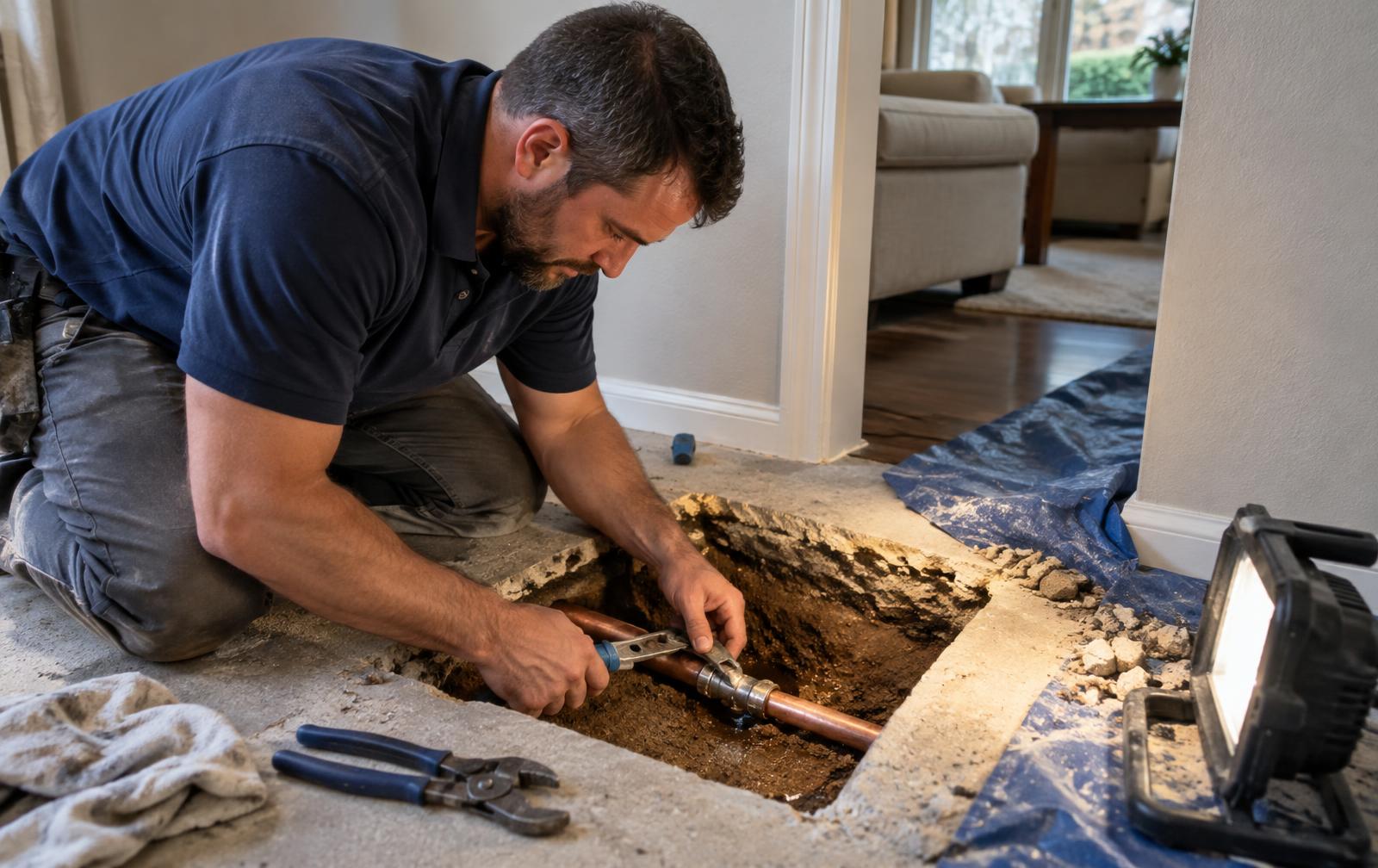
Electronic detection under Carrollton slabs — reroute options that save your finished floors when possible.
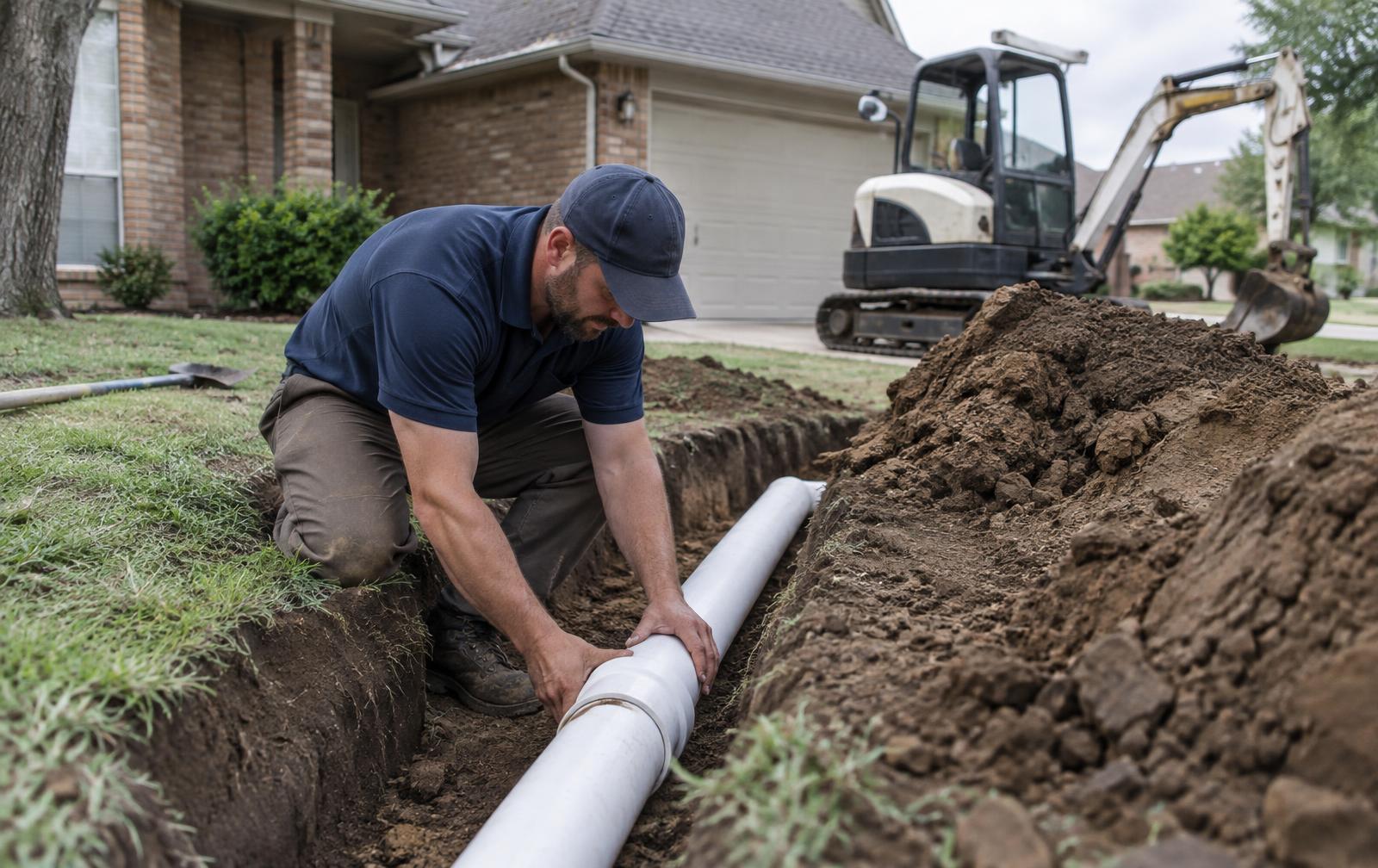
Trenchless replacement for the aging laterals across Carrollton's older runs — camera first, quote in writing, minimal yard damage.
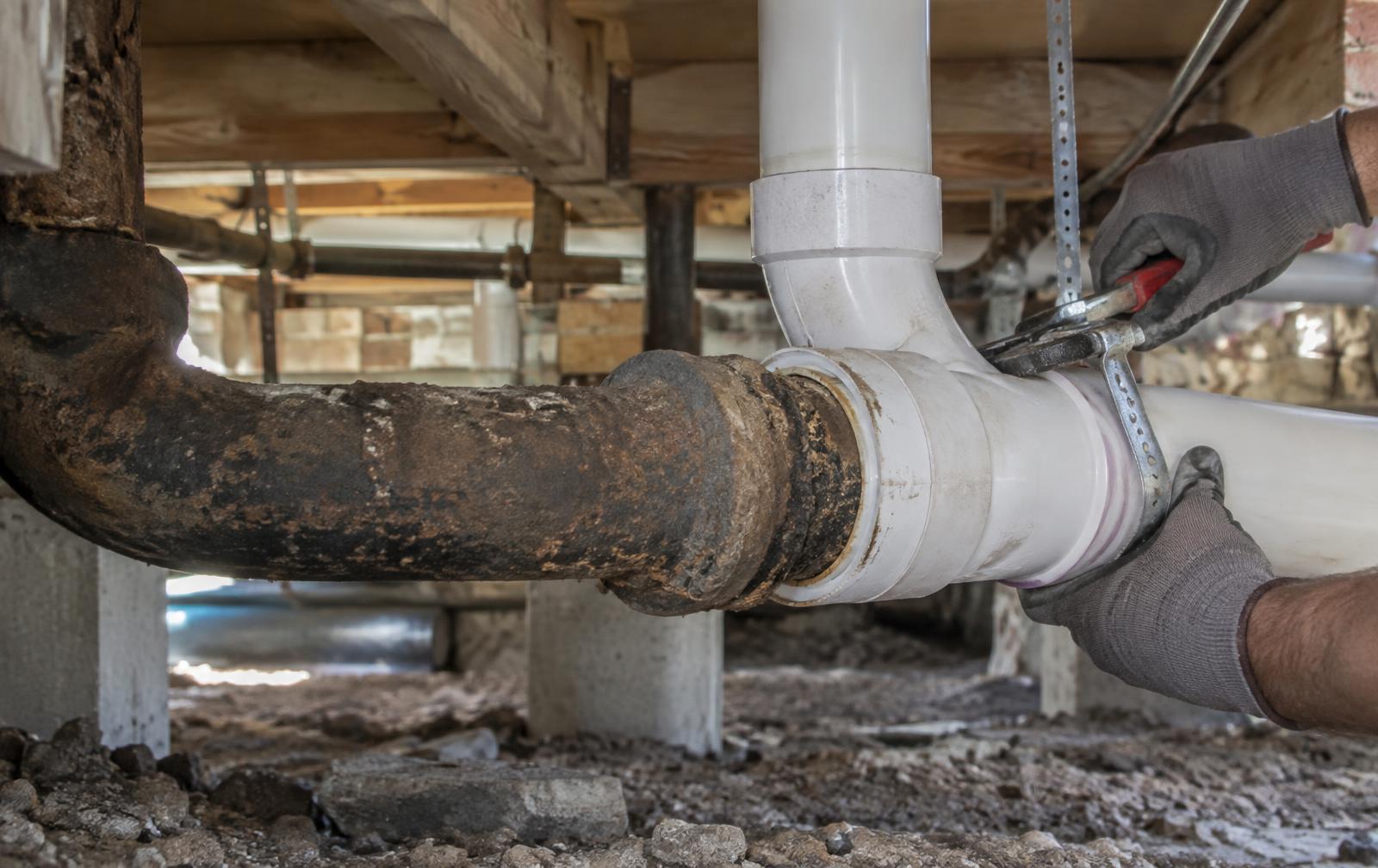
Camera inspection and PVC replacement for the aging cast iron drain lines in older Carrollton homes, with a written quote first.
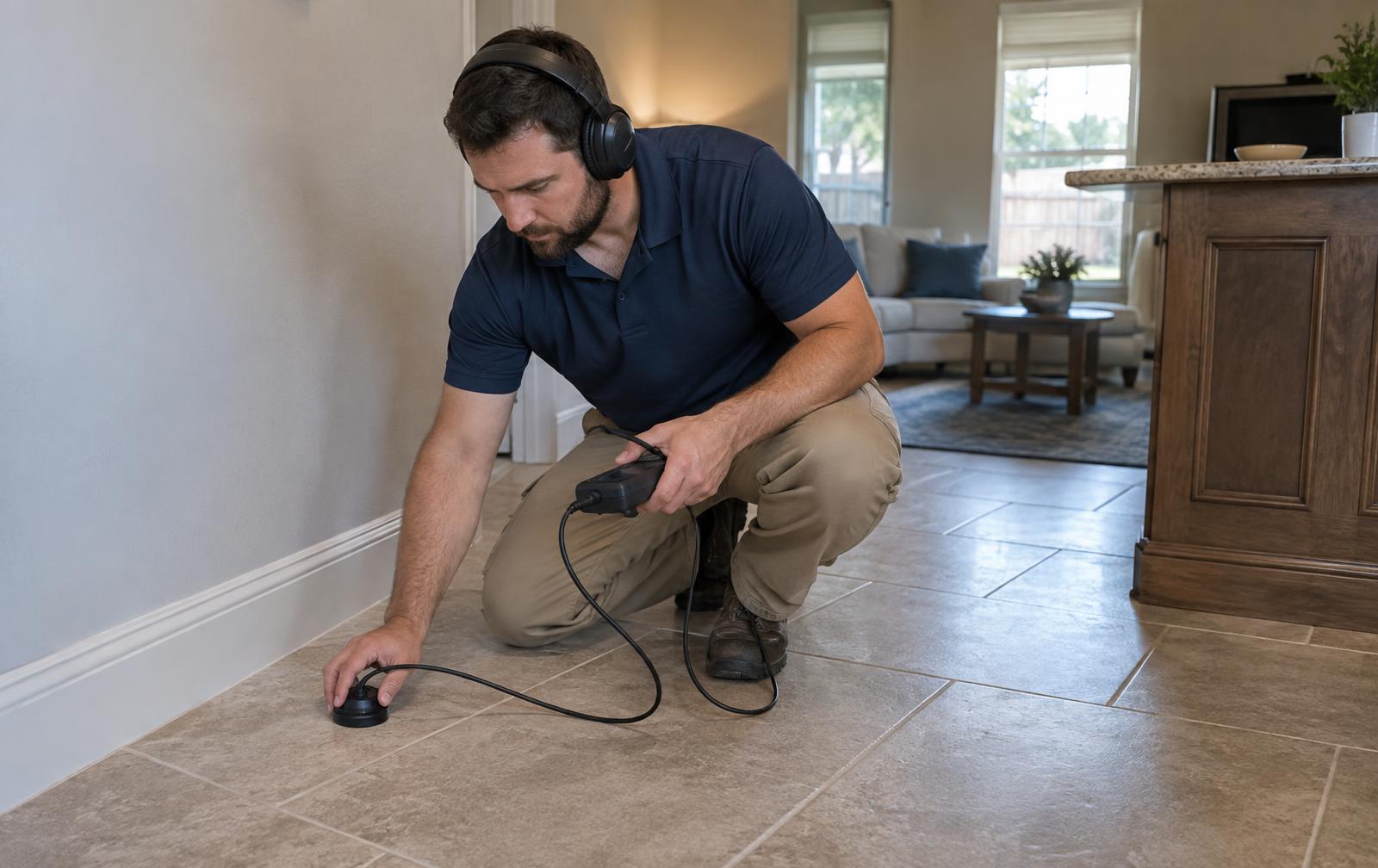
Acoustic, thermal, and pressure testing to pinpoint hidden leaks in Carrollton slab and wall lines without tearing into finishes.
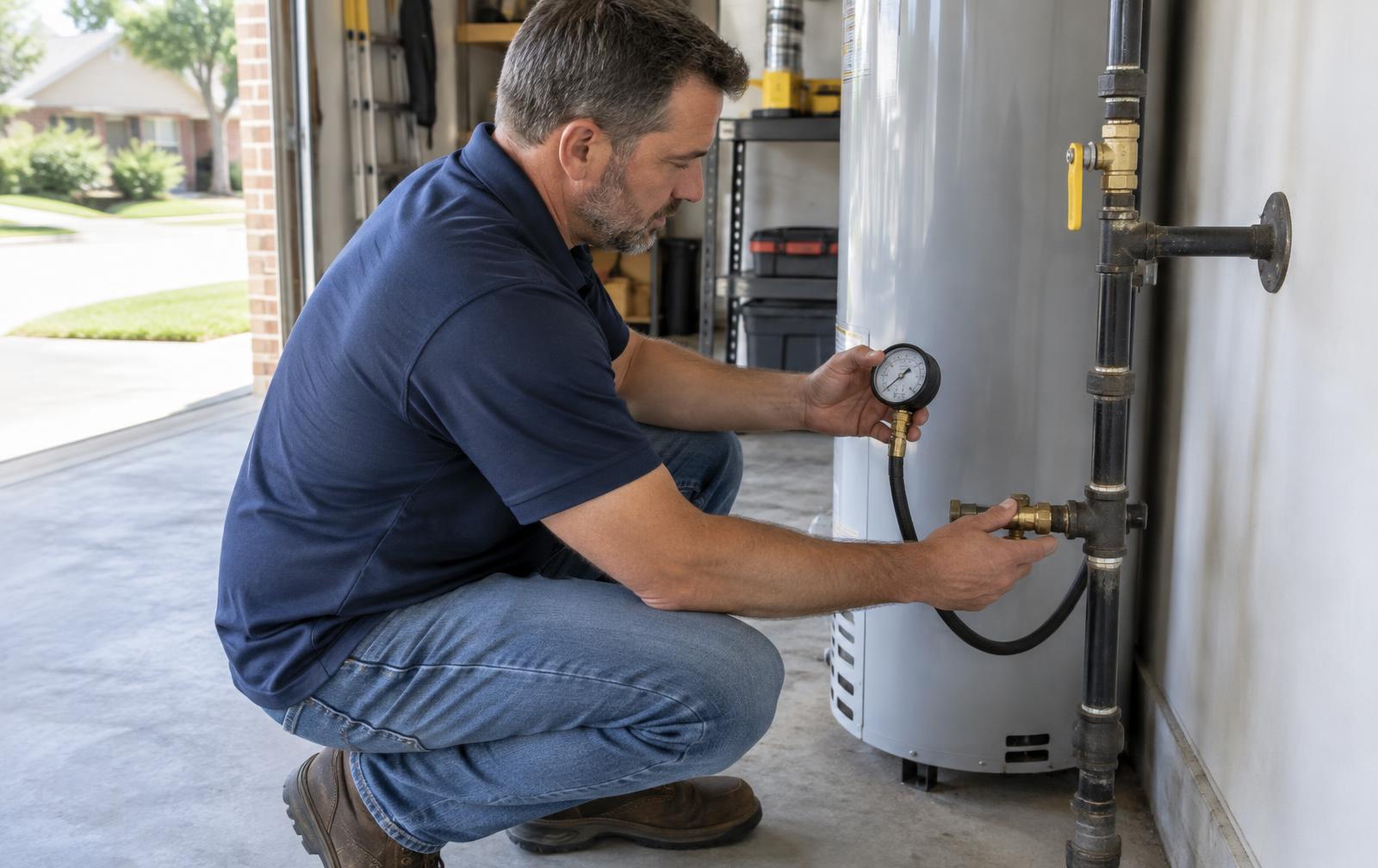
Licensed install, repair, and pressure-testing for Carrollton homes — every line signed off to Texas code and Atmos requirements.
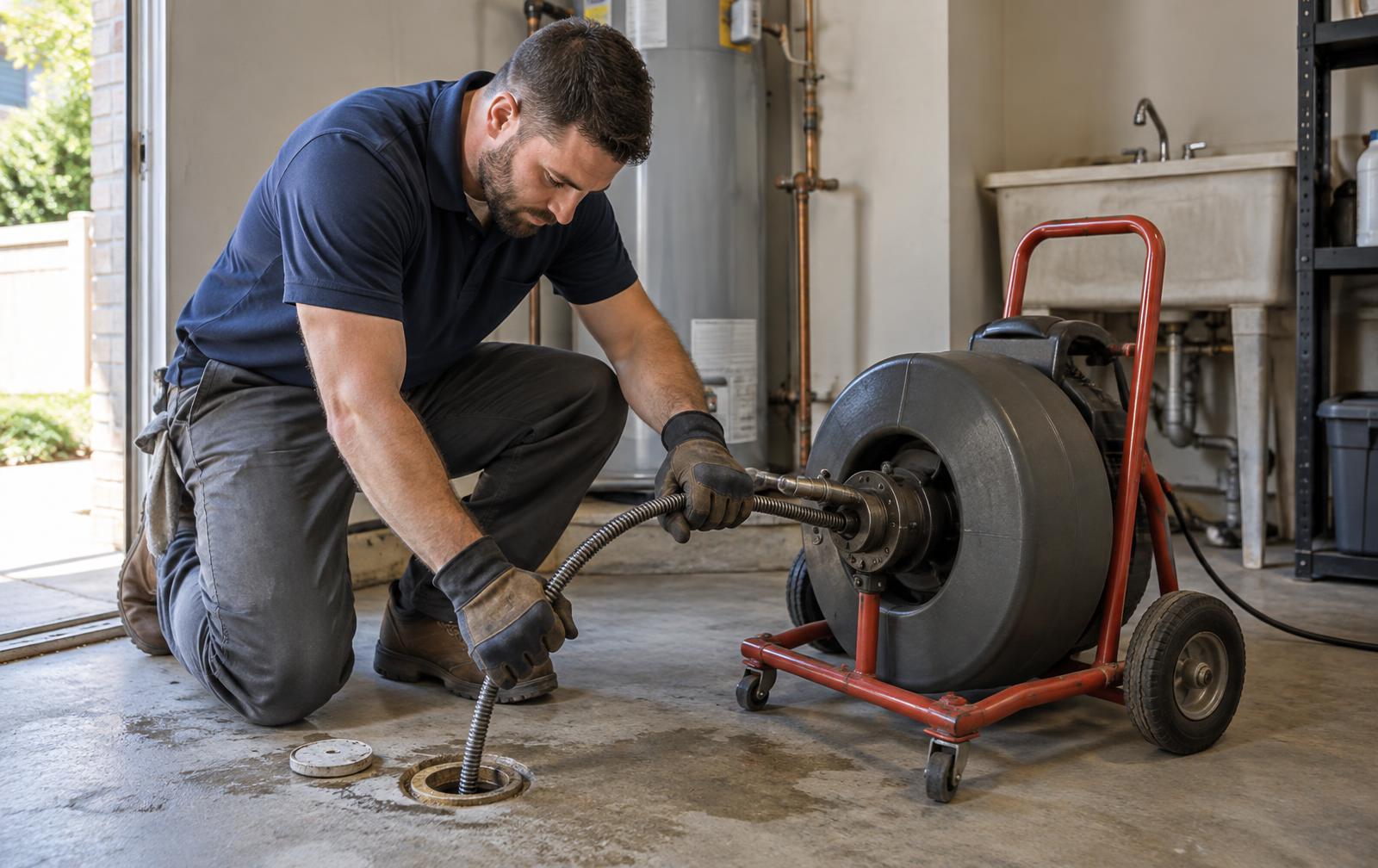
Full-clear service and camera confirmation for the drains under Carrollton's neighborhoods.
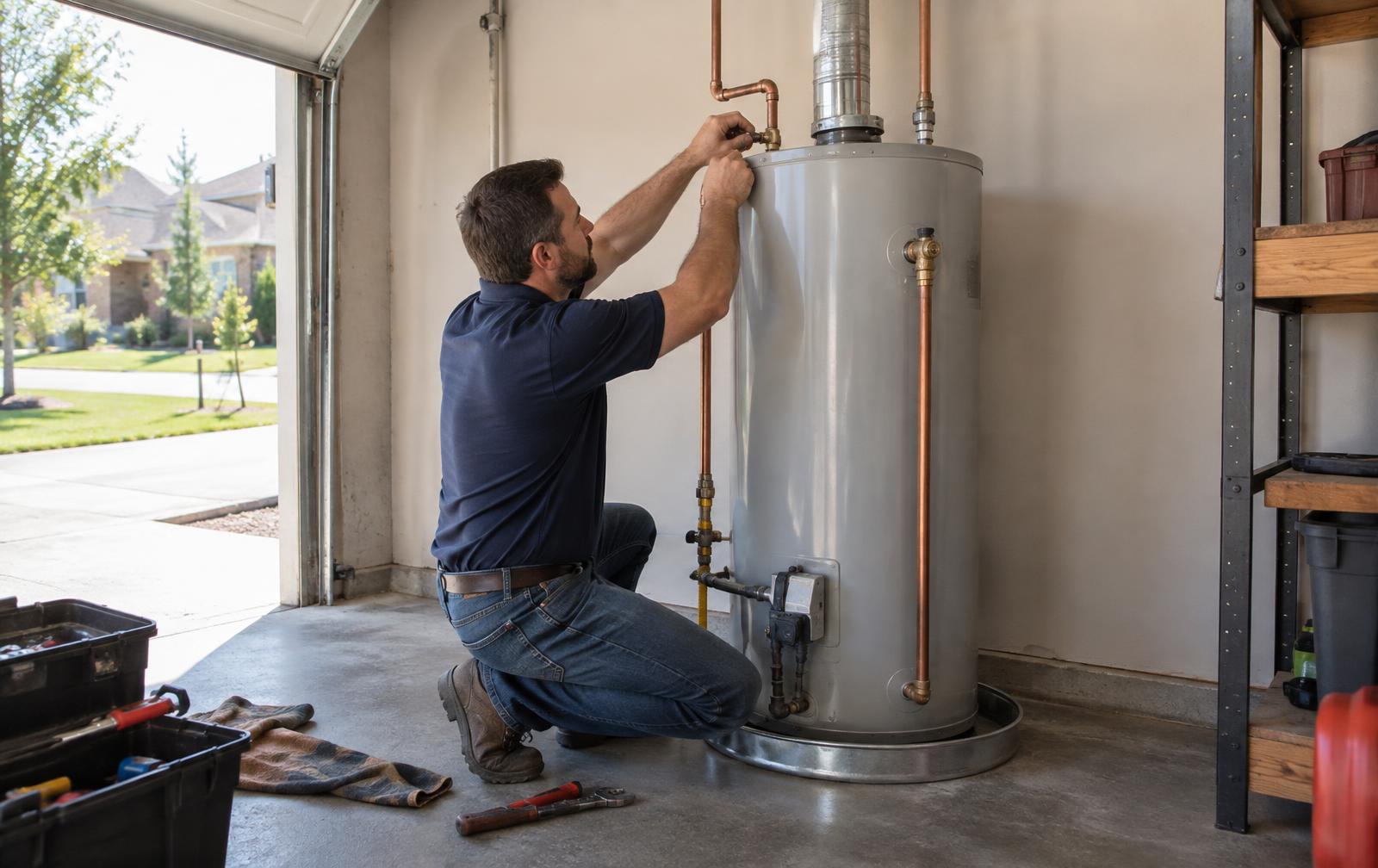
Repair, flush, and replacement of tank units — including attic and garage heaters common to Carrollton homes.
same-day, 7 days a week response across Carrollton for burst pipes, heater failures, and main-line backups.
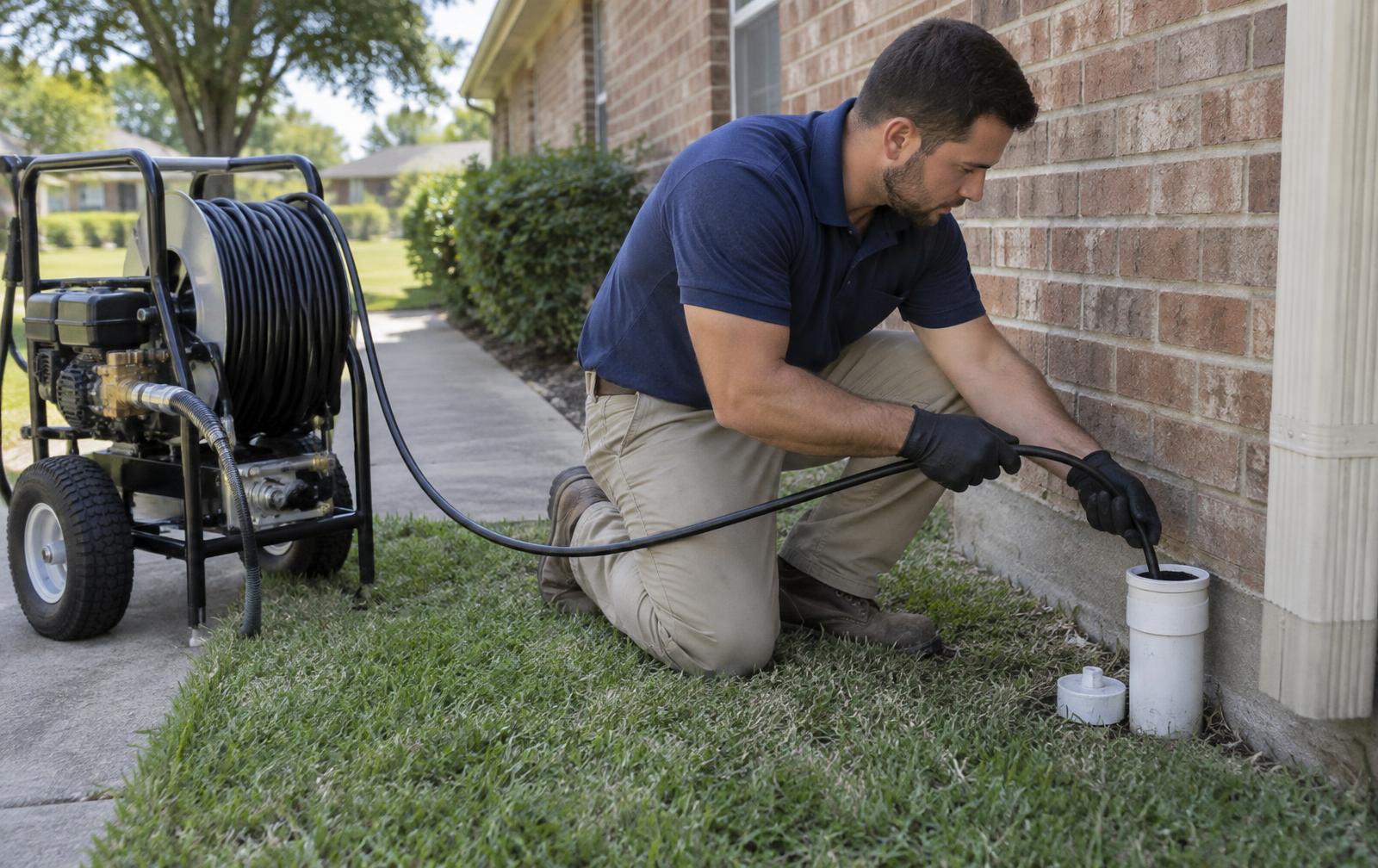
High-pressure cleaning that clears scale, grease, and roots from Carrollton's lateral runs — full-diameter, lasting clean.
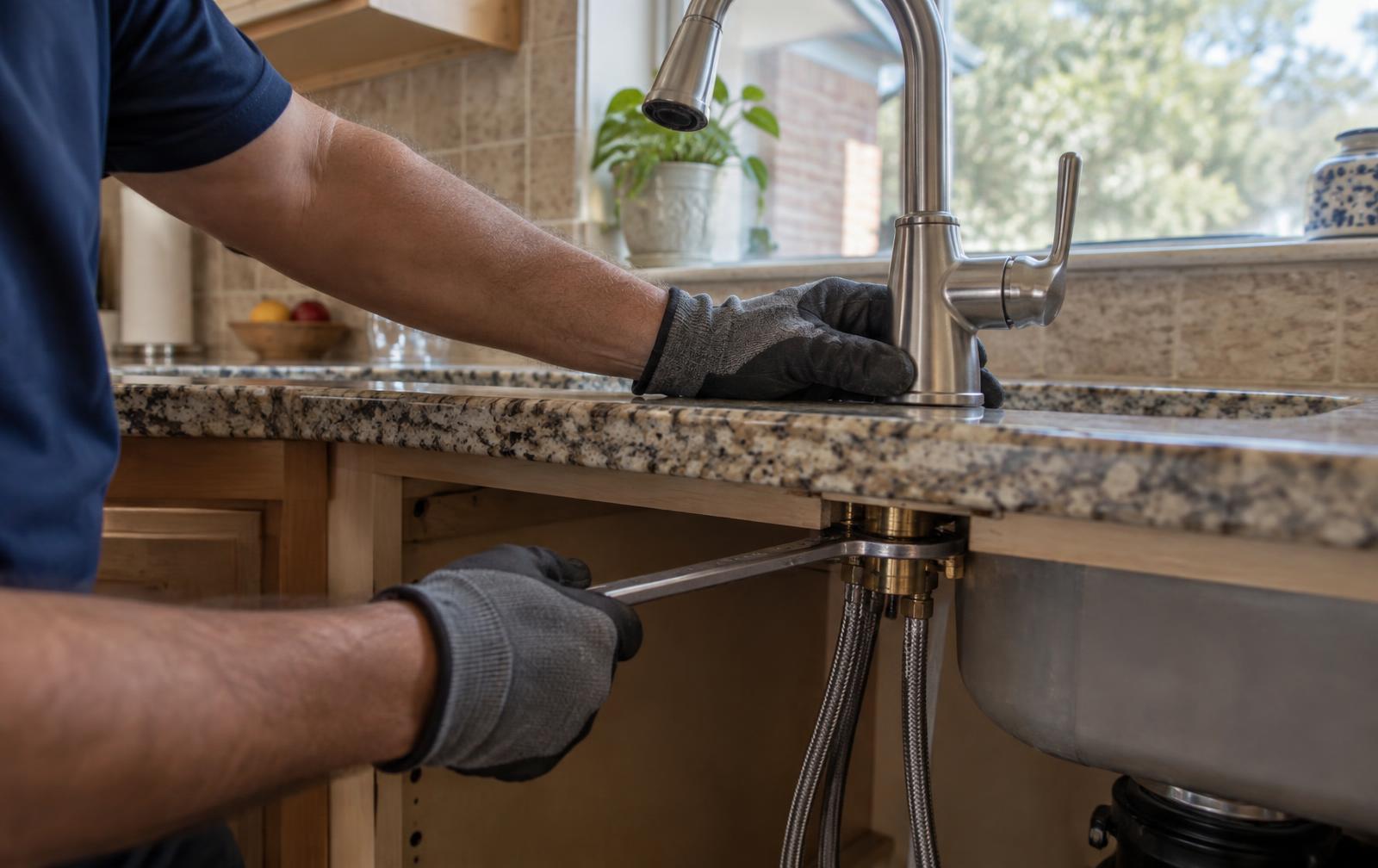
Cartridge, stem, and full-fixture replacement for Carrollton kitchens and bathrooms — hard-water-ready parts stocked on the truck.
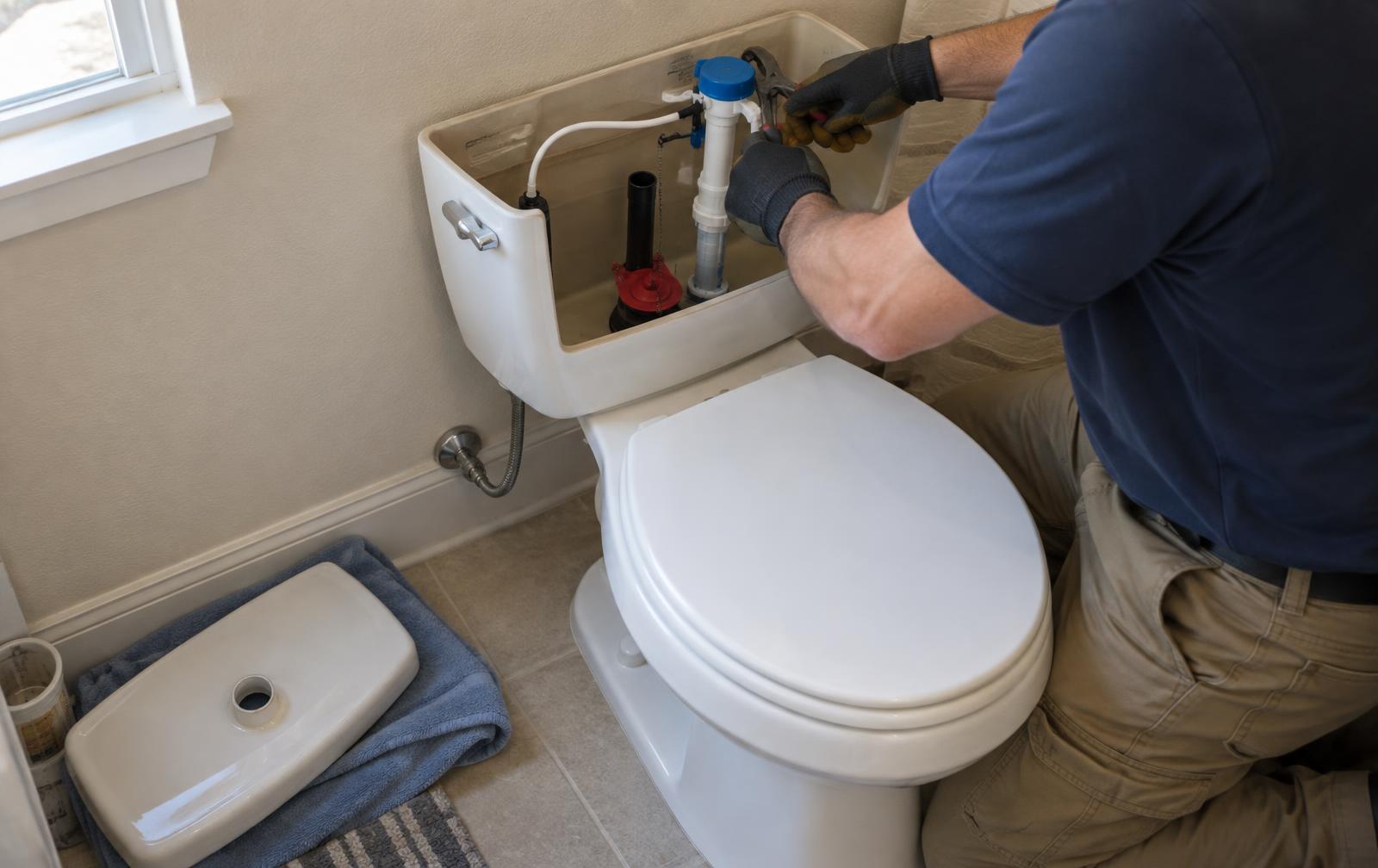
Rebuilds, wax-ring resets, flange repairs, and full replacements — the running toilets and rocking bowls in Carrollton homes.
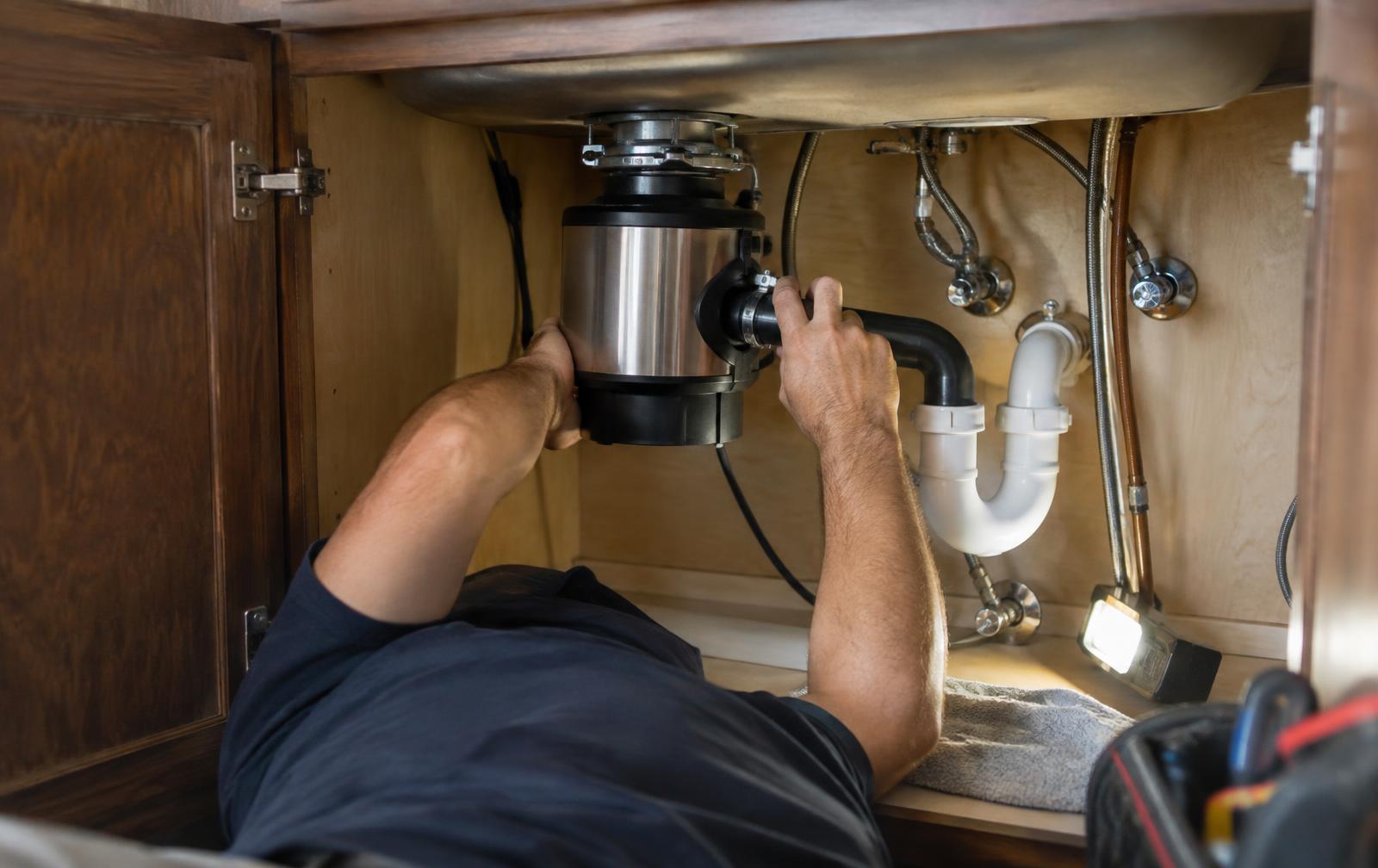
Jam clearing, leaking-unit swaps, and quiet 3/4 HP upgrades for Carrollton kitchens — same-visit install.
Considering Tankless in Your Carrollton Home?
Correct sizing, correct venting, and a service schedule that actually protects your warranty. Get it scheduled today.