

Garbage Disposal Repair & Installation in Carrollton, TX
A motor that buzzes but never spins up. A puddle spreading under the cabinet floor near the unit. A reset switch that pops back out no matter how many times you press it in. Our crew handles Carrollton disposal calls from a simple jam to a full motor swap, quoting the number before anything comes loose.
On Most Carrollton Calls, the Disposal Itself Is the Culprit
The bulk of the disposal calls we run turn out to be nothing more than a stuck impeller — a hex wrench worked into the bottom port frees it, the safety switch clicks back into place, and the sink is back in business inside a few minutes. A smaller portion of calls involve a housing that has split open on the underside, and that always means swapping the unit, not patching it. The remainder are branch-drain problems masquerading as a disposal issue, where the actual clog sits just past the trap. Working out which category applies comes before we ever talk price.
A unit weeping from underneath gets swapped outright, since a corroded metal shell cannot be sealed back up — and Carrollton's water gives that corrosion a head start. The city does not treat its own supply; it buys finished water wholesale from Dallas Water Utilities, and by the time it reaches a kitchen tap it still tests moderately hard to hard. If a unit is actively wet underneath, switch it off rather than keep using it — moisture reaching the motor windings turns a routine swap into a soaked cabinet.
When homeowners ask about upgrading, we usually steer them toward a higher-torque motor than whatever entry-level unit the builder installed originally. The added power chews through stringy scraps that stall a weaker motor and runs with noticeably less vibration. Every install we do also includes a new mounting ring, a fresh discharge elbow, and a look at the trap underneath, since a callback for a leak on a connection we never touched helps nobody.
Signs Your Carrollton Disposal Needs Service
Some of what follows is fixed in minutes. Some means the motor is done for good. We will tell you honestly which applies once we take a look.
That is almost always a stuck impeller, and the safety switch has usually already tripped on its own. Clearing it with a hex wrench from beneath the sink is the fastest repair we make.
That signals a split in the internal shell, and there is no patching that. Power the unit down and get it looked at rather than continuing to run it.
That is more often a worn gasket at the mounting ring than a failed unit, and it can usually be resealed from above without swapping anything out.
Something is either lodged in the grinding chamber, or the motor itself is aging and drawing more current than it should. We try clearing it first; if the switch keeps popping, the motor has reached the end of the road.
Usually a hard object has dropped into the chamber — flatware, glass, a small bone. Cut power immediately and leave it off until someone can check inside; continued running can chip the blades.
This is commonly the branch line beneath the unit rather than the unit itself. Snaking that branch and clearing the trap usually restores full flow.
Diagnose, Fix What Can Be Fixed, Swap What Can't
You get an honest read the moment we look at it, not a reflexive sales pitch for new equipment.
- 1Run a quick test on the actual complaint
A stuck impeller, a leak, and a slow drain all need different treatment. A brief hands-on check tells us which is happening, and the price follows from that answer.
- 2Clear a jam if that is the issue
Hex wrench from below, reset the safety switch, run it clean to confirm — most kitchens are working again well inside half an hour.
- 3Swap the unit if the shell has failed
We keep several motor sizes on the truck for a same-visit replacement, along with a new mounting ring, discharge elbow, sealant, and a check of the air gap on septic properties.
- 4Confirm the branch line and trap are clear
Any replacement includes checking the drain below for slow flow. If a snake run is needed there too, we take care of it in the same stop.
- 5Test-run and tidy up
Cold water running through it, a dry-hand check on every fitting, a wipe-down under the sink, and a quick rundown of the safety switch and wrench port before we head out.
How Build Era Shows Up in Carrollton Kitchens
What the builder installed originally still predicts today's service call.
The bulk of Rosemeade went up between 1977 and 1990, and its kitchens often still run an original, underpowered disposal well past a sensible service life — a motor upgrade is a frequent recommendation on these calls.
Dating to the 1960s and 1970s, Woodlake's compact kitchens sometimes feed older branch drains, so a disposal visit here often turns into checking the line downstream as well as the unit itself.
Building ran mainly from the late 1970s into the late 1980s, including some larger estate lots, and original builder-grade units from that stretch are a common reason for a service call today.
Development started around 1983, and tract-home disposals from that era are frequently at the point where the shell itself, rather than the switch or blades, is what has given out.
Homes here date to roughly 1983 near the lake park, and the two-story layouts typical of that period often still carry their original entry-level unit — a common upgrade candidate.
Completed in phases through 2004, Homestead's kitchens arrived with more capable disposals already fitted, so calls here tend to trace back to one specific failure rather than a wholesale replacement.
What Carrollton Homeowners Say
Disposal Work Finished in One Visit
Several motor sizes ride on every truck, alongside mounting rings, discharge elbows, hardware, sealant, and dishwasher inlet plugs — enough that most Carrollton disposal calls, jam or full swap, wrap up in a single stop.
Every install carries warrantied labor on top of whatever the manufacturer covers for the unit itself. Our license comes from the Texas State Board of Plumbing Examiners, we are insured, and the shop is family run, dispatching out of The Colony — roughly 15 to 20 minutes from most Carrollton addresses under normal traffic.
Straight Answers, No Sales Pitch
Our Other Plumbing Services in Carrollton, TX
Swapping a disposal often reveals a corroding trap or a sluggish branch line right next to it. We handle both together, on one invoice.

Electronic detection under Carrollton slabs — reroute options that save your finished floors when possible.

Trenchless replacement for the aging laterals across Carrollton's older runs — camera first, quote in writing, minimal yard damage.
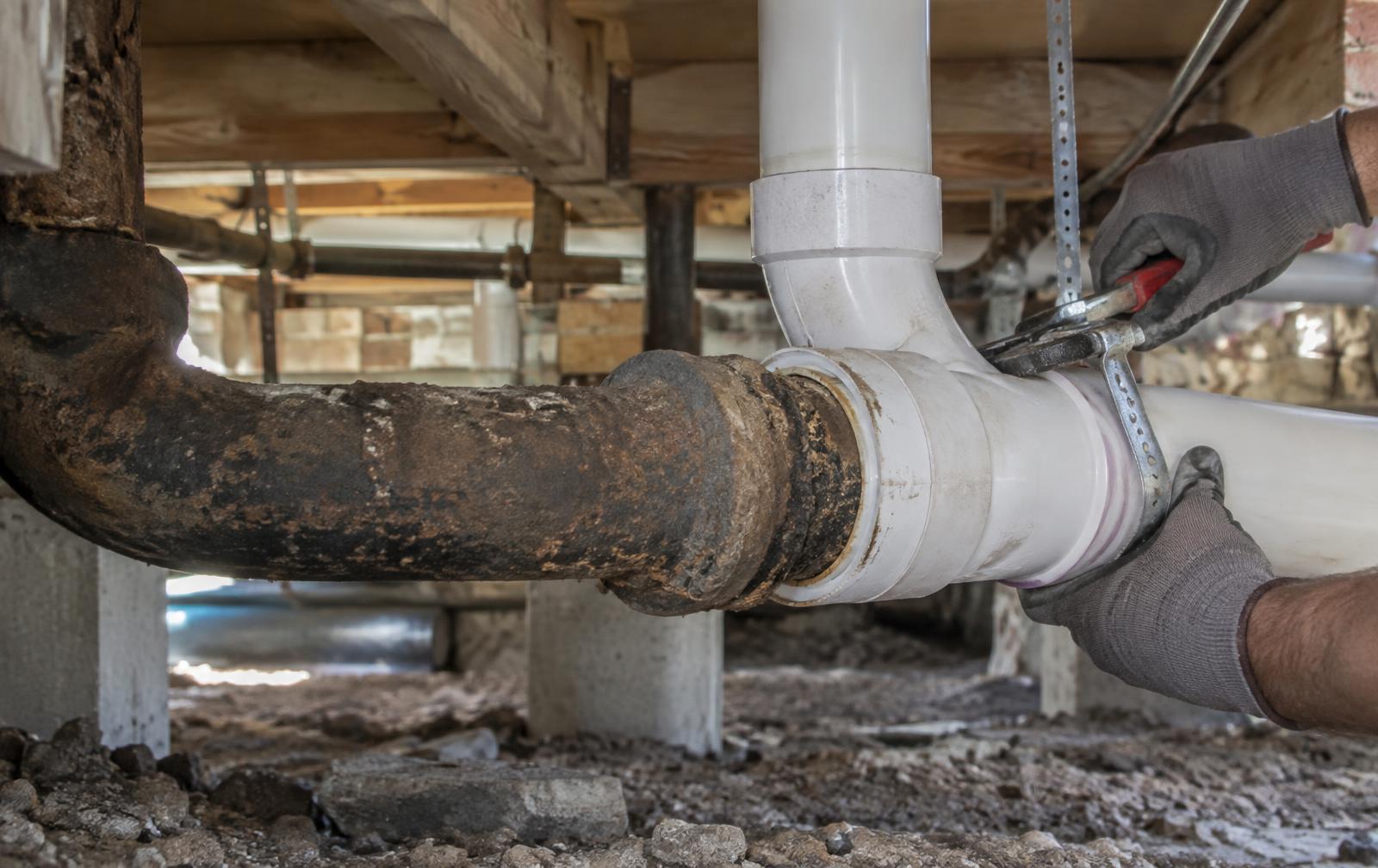
Camera inspection and PVC replacement for the aging cast iron drain lines in older Carrollton homes, with a written quote first.

Acoustic, thermal, and pressure testing to pinpoint hidden leaks in Carrollton slab and wall lines without tearing into finishes.

Licensed install, repair, and pressure-testing for Carrollton homes — every line signed off to Texas code and Atmos requirements.

Full-clear service and camera confirmation for the drains under Carrollton's neighborhoods.

Repair, flush, and replacement of tank units — including attic and garage heaters common to Carrollton homes.

Install, service, and annual descaling — Carrollton's hard tap water eats tankless heat exchangers without it.

same-day, 7 days a week response across Carrollton for burst pipes, heater failures, and main-line backups.

High-pressure cleaning that clears scale, grease, and roots from Carrollton's lateral runs — full-diameter, lasting clean.

Cartridge, stem, and full-fixture replacement for Carrollton kitchens and bathrooms — hard-water-ready parts stocked on the truck.

Rebuilds, wax-ring resets, flange repairs, and full replacements — the running toilets and rocking bowls in Carrollton homes.
Need Disposal Work Done in Carrollton?
Jam clear, leak repair, or a stronger motor upgrade — hardware already on the truck and the job wrapped in one stop.