

Hydro Jetting in Carrollton, TX
A line you have had cabled three times this year for the same complaint. A pipe that looks blocked on camera even after the water starts moving again. We bring a trailer-mounted jetter to Carrollton homes for exactly that situation — the tool that actually scrubs the pipe interior rather than punching a hole through whatever is sitting in it.
Root Growth at the Lateral Tie-In Is the Recurring Problem Here
City policy in Carrollton makes the stretch of sewer line running from a house out past its connection with the municipal main the homeowner's responsibility to keep clear, even the section that technically sits inside the public right-of-way. That lateral run is exactly where we spend most of our jetting time, because it is also where roots find their way in through aging joints — and a cutter blade chops through a root mass without touching the fine hair roots left clinging to the pipe wall, which regrow within a season and bring the same call back.
The city grew explosively during the 1970s — the population roughly tripled in that decade alone — and a large share of what got built then still carries its original drain and sewer piping today. Cast iron installed during that boom has had fifty-plus years to accumulate a mineral crust on the inside, quietly shrinking the usable opening of the pipe long before anyone notices a slowdown at the sink. A cable clears whatever is currently stuck in that narrowed space; it leaves the crust itself untouched, which is why the same complaint tends to resurface within a matter of weeks.
Pressurized water solves both problems at once. Directed backward through a rotating nozzle as the hose is pulled out of the line, it strips the mineral crust off cast iron and flushes out the fine root growth a blade cannot reach, leaving the pipe closer to the diameter it had on day one. We scope the line with a camera before we start and again once we finish, so the difference is something you can see rather than take our word for.

When a Carrollton Sewer Needs the Jetter, Not Another Cable Run
A lot of clogs respond fine to a standard cable. These particular situations usually do not.
Repeated trouble at one location, despite multiple cable visits, usually means whatever is coating the pipe wall keeps regenerating the blockage. Scrubbing the wall itself is the only way to break that pattern.
A pipe in good shape reads smooth and consistent on camera. A rough, uneven texture running the length of the line means buildup has taken hold, and jetting is what removes it.
Cutting through a root ball leaves behind fine root hairs that a blade cannot fully reach. Left alone they thicken back into a full blockage within months; flushing the line clears that leftover growth out.
If a line was just cabled and still drains slowly, the true problem is probably the reduced width of the pipe itself rather than anything sitting loose inside it.
Households that cook heavily at home build up a grease coating faster than the line can clear on its own. A routine flush on a schedule heads off a surprise backup later.
Given how much of Carrollton's housing dates to the 1970s boom, a periodic flush on an aging line — even one that seems fine — buys real time before a full replacement becomes necessary.
Look Inside First, Then Match the Approach to the Pipe
Nothing about jetting is generic — the right nozzle and pressure setting depend entirely on what the camera finds.
- 1Send a camera through before anything else
We need to see whether we are dealing with root growth, mineral crust, grease, or some mix of the three, and we need a clear before-picture for comparison. This step also flags a pipe that is already cracked, since forcing water through a broken section pushes debris straight out the gap instead of clearing it.
- 2Select the head and pressure for what's actually there
Root growth calls for a cutting head first. Grease responds to a penetrating nozzle. Mineral crust on cast iron needs a wider scouring head running at higher pressure than we would ever use on older or more brittle piping.
- 3Feed the hose past the trouble spot, then work it back
The nozzle travels the full distance first, then does the actual scrubbing as it is retrieved. That keeps loosened material moving toward the cleanout instead of getting shoved further down the line.
- 4Go back through again if the first pass wasn't enough
Thick crust or a dense root mass sometimes takes two or three trips through with a larger head each time. That is factored into the price we quote up front, not billed separately if it turns out to be needed.
- 5Confirm the result with a second camera run
A closing scope shows the pipe clean from end to end, and we walk you through the before-and-after side by side. If scrubbing uncovers a structural crack that was hiding under the buildup, we say so plainly and price the repair separately — jetting on its own cannot fix a pipe that has physically failed.
Where the Jetter Earns Its Keep Around Carrollton
The build era of a section of the city drives what is actually inside the pipe.
Woodlake went up mostly in the 1960s and 1970s, and its flat, older lots carry some of the longest-serving cast iron mains in the city — often the most dramatic before-and-after difference we photograph on a scope run.
Rosemeade filled in mainly between 1977 and 1990, and its brick homes typically feed copper or early PVC branch lines into an older shared trunk line. Grease settling right at that junction is a recurring reason we get called out here.
Built largely from the late 1970s through the late 1980s, including a few larger lots, High Country's original sewer runs commonly show the kind of interior crust that a flush is specifically designed to remove.
Construction here started around 1983, and lines running near mature trees on these lots are a frequent source of root intrusion at the yard-side connection — a case where cutting first and flushing second is the right combination.
Homes here date to roughly 1983 near the lake park, and the longer branch runs typical of that layout can make one coated section look like a full main-line problem until a camera traces the actual location.
A handful of the oldest cottages near the original square predate 1900, and lines that age are often worth a preventive flush even with no active complaint, simply given how long buildup has had to accumulate.
What Carrollton Homeowners Say

Proof, Not Just a Promise That It's Clear
Every job leaves you with camera footage from before the work started and after it wrapped, so you can judge the result yourself rather than take it on faith. If the opening scope shows a pipe that is already broken, we stop right there and tell you — running pressurized water through a cracked section just pushes debris out through the break instead of clearing anything.
We are licensed by the Texas State Board of Plumbing Examiners, insured, and family-owned, and we bring a fully trailer-mounted jetting rig out of our shop in The Colony — roughly 15 to 20 minutes from most Carrollton addresses under normal traffic, with same-day scheduling available when a backup has already returned once.
Straight Answers, No Sales Pitch
Our Other Plumbing Services in Carrollton, TX
Jetting sits between a basic cable clear and a full pipe replacement. When the camera shows a line that has actually failed structurally, we handle that replacement locally as well.

Electronic detection under Carrollton slabs — reroute options that save your finished floors when possible.

Trenchless replacement for the aging laterals across Carrollton's older runs — camera first, quote in writing, minimal yard damage.
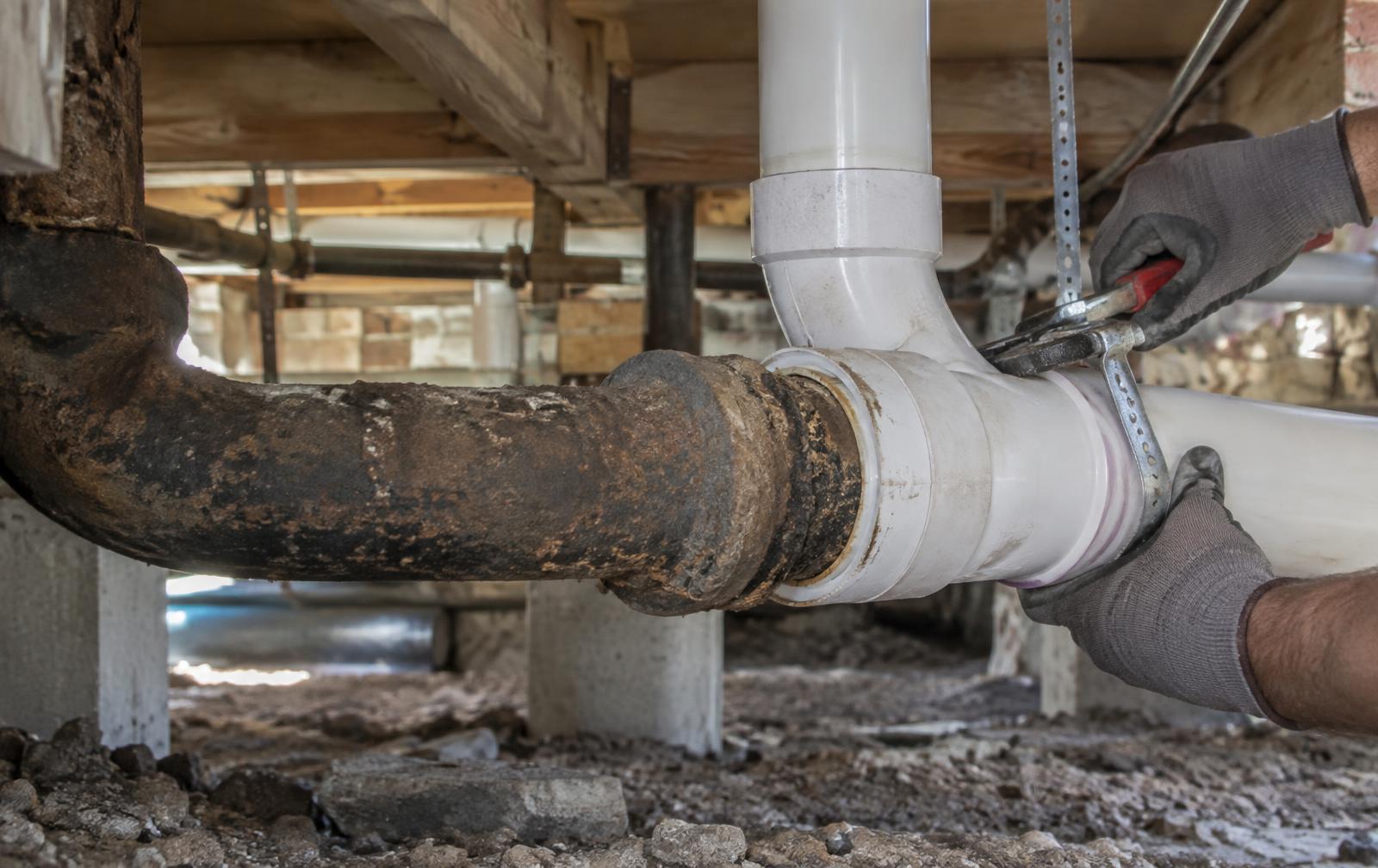
Camera inspection and PVC replacement for the aging cast iron drain lines in older Carrollton homes, with a written quote first.

Acoustic, thermal, and pressure testing to pinpoint hidden leaks in Carrollton slab and wall lines without tearing into finishes.

Licensed install, repair, and pressure-testing for Carrollton homes — every line signed off to Texas code and Atmos requirements.

Full-clear service and camera confirmation for the drains under Carrollton's neighborhoods.

Repair, flush, and replacement of tank units — including attic and garage heaters common to Carrollton homes.

Install, service, and annual descaling — Carrollton's hard tap water eats tankless heat exchangers without it.

same-day, 7 days a week response across Carrollton for burst pipes, heater failures, and main-line backups.

Cartridge, stem, and full-fixture replacement for Carrollton kitchens and bathrooms — hard-water-ready parts stocked on the truck.

Rebuilds, wax-ring resets, flange repairs, and full replacements — the running toilets and rocking bowls in Carrollton homes.

Jam clearing, leaking-unit swaps, and quiet 3/4 HP upgrades for Carrollton kitchens — same-visit install.
Same Sewer Backup Happening Again in Carrollton?
Full-diameter jetting with camera proof before and after. Call and we will get the line back to its real capacity.