
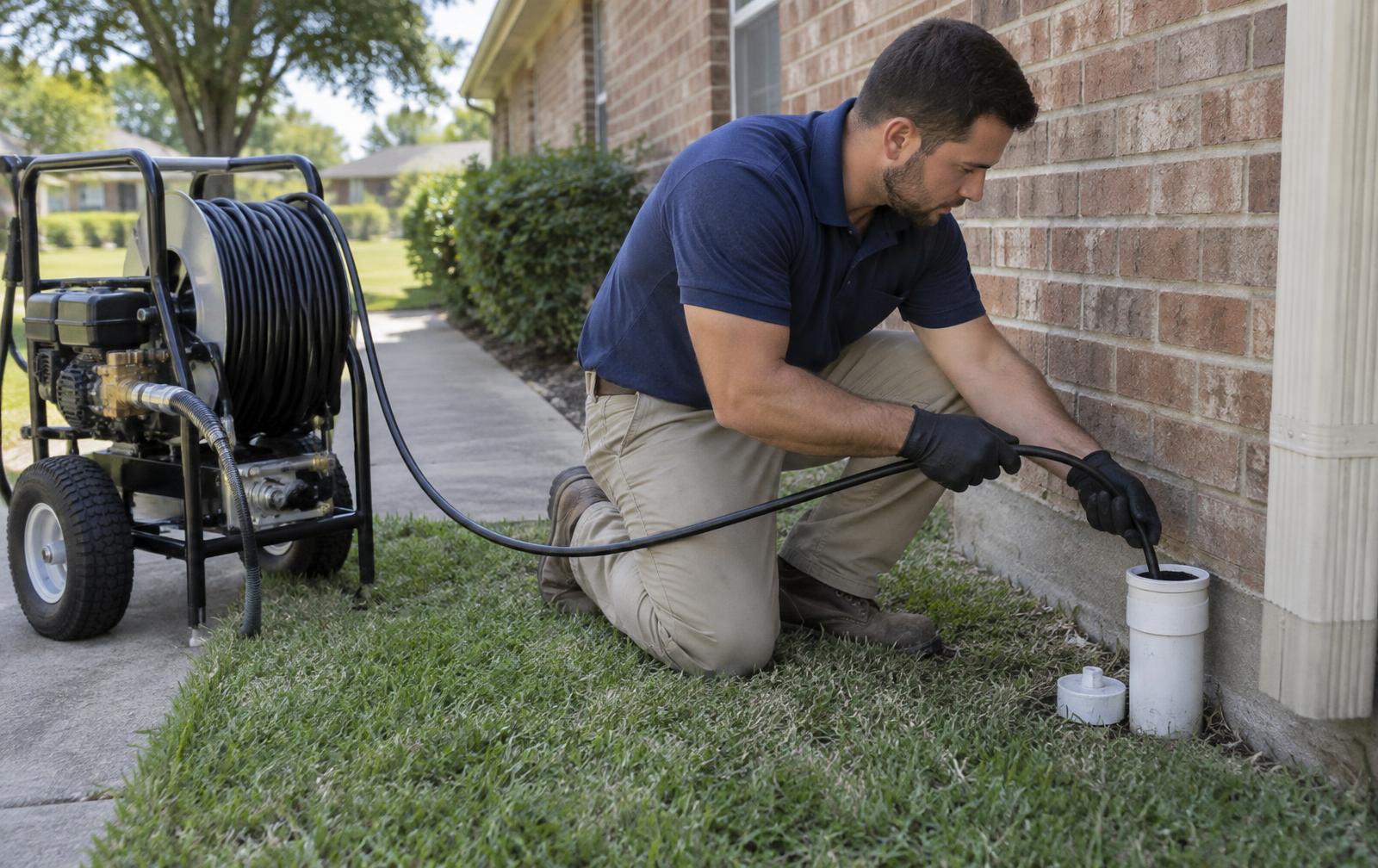
Hydro Jetting in Lewisville, TX
Since March 2013, the sewer lateral running from a Lewisville house out to the city main has been the homeowner's responsibility, not the city's — so when that line clogs on the same schedule year after year, the fix has to actually last. That's the case for a pressurized cleaning instead of another cable pass.
One Tool Punches a Hole. The Other Strips the Pipe Bare.
Picture the inside of an old sewer pipe like a straw that's been sitting half-full of syrup for years. Run a cable through it and you carve a tunnel through the syrup — water flows again, but the coating along the walls is untouched and starts closing the tunnel back up almost immediately. A jetting rig solves a different problem: it fires water at several thousand pounds of pressure through a nozzle built to fire backward, which strips that coating off the pipe wall itself rather than just tunneling through it.
This isn't an academic distinction in Lewisville. Old Town's original housing stock, and a good share of the ranch homes built during the city's 1960s-through-1990s growth years, still run on cast iron laterals that are now decades old. Cast iron corrodes from the inside as it ages, and a pipe that started life at four inches across can lose more than half its usable width to interior buildup over that much time. A cable clears whatever's soft enough to punch through in that narrowed space. It does nothing for the buildup causing the narrowing in the first place.
We bring the jetting trailer out to those older cast iron laterals around downtown, to root-choked lines on the mature, tree-lined lots near Serendipity Village and Chase Oaks, and to the longer runs out to the street common on the older lakeside lots in Lakeland Terrace and Lakewood North. Every visit starts and ends with a camera, so the improvement isn't something you have to take on faith.

When a Lewisville Sewer Line Needs More Than a Cable
Some clogs are one-and-done with a cable. These situations tend to keep coming back until the pipe wall itself gets addressed.
A line that's been cabled several times this year for the identical backup usually has a coated wall a cable simply can't touch. That's the pattern that calls for jetting instead of another repeat visit.
A pipe in good shape looks smooth on camera. A rough, layered interior along the length of the run means jetting is the tool that actually removes it.
A chain flail chops a root mass into pieces, but the fine hair roots left behind regrow fast. Jetting flushes that leftover debris out and buys considerably more time before it returns.
If drainage is still slow after cabling and nothing new is causing it, the pipe has likely narrowed from buildup rather than a fresh obstruction — which only a scouring pass corrects.
Heavy home cooking coats a line faster than average use. Scheduling a jetting pass every so often costs a lot less than an emergency call after the line finally gives out.
A line that's been in the ground for decades can benefit from a scouring pass even with no active complaint yet, buying real time before replacement becomes necessary.
See It First, Match the Tool, Confirm the Result
Every line gets a different combination of nozzle and pressure — nothing here is one-size-fits-all.
- 1Look before touching anything
A camera goes down the line first so we know exactly what's inside — grease, scale, roots, or a mix — and so there's real footage to compare against once the work is done. This step also flags a pipe that's already cracked, which shouldn't be jetted at all, since pressure can force debris straight through a break.
- 2Choose gear that fits the material
Different attachments handle different problems: a chisel head for scale, a chain flail ahead of the jet for heavy roots, a penetrating nozzle for grease. The pressure setting itself also changes by pipe type, running higher on cast iron than it would on older or more fragile material.
- 3Work the hose from the far end back
The nozzle travels past the clog first, then the jet fires as the hose is pulled back out, so loosened material gets driven forward toward the cleanout instead of getting stranded somewhere mid-line.
- 4Go back through again if one pass isn't enough
Thick scale or a heavily rooted line sometimes takes a second or third pass with a bigger nozzle. That's already factored into the price quoted up front.
- 5Confirm it with another look
A closing camera pass shows the pipe clean along its full length, and you can watch the two videos side by side. If that second look turns up structural damage hiding under the old buildup, we'll say so plainly and price the repair separately — jetting only cleans; it can't rebuild a pipe that's physically failed.
Why the Right Neighborhood Detail Matters Here
Pipe age and lot layout both shape how a jetting job actually goes.
This is the city's original core, built out starting in the 1920s around its incorporation. A lot of the cottages and bungalows here still run on their original cast iron laterals, which is exactly the pipe age where a scouring pass earns its keep over another round of cabling.
These 1970s-to-1990s ranch homes sit on mature lots with established trees, and that combination is a reliable setup for root intrusion that keeps returning after a simple cut-and-clear.
Built out mainly in 1996 and 1997, this subdivision's original drain lines are old enough now that gradual scale narrowing is a realistic explanation for weak flow, even without a specific object stuck in the line.
Construction here started in 1998 and hasn't stopped, and while the newer phases run younger pipe overall, heavier landscaping and irrigation nearby still make a scouring pass worthwhile in some sections.
One of the city's older, more affordable pockets near the lake, where a longer-than-average lateral out to the street on aging pipe makes this area a common candidate for jetting over another cable visit.
Close in age and location to Lakeland Terrace, near the lake with mature trees nearby — a combination that tends to favor root intrusion in older laterals.
What Lewisville Homeowners Say

Proof on Video, Not Just a Promise
Every job is documented with footage from before the work starts and again once it's finished, so you can see exactly what changed. If the earlier camera pass turns up a pipe that's already broken, we stop right there instead of running the jet through it — forcing pressure through a crack just pushes debris out the opening and makes the damage worse. Pricing is set in writing before the equipment ever starts, and if the same line acts up again soon after, get in touch so we can take another look.
Licensing runs through the Texas State Board of Plumbing Examiners, we carry insurance, and the trailer-mounted jetting rig rides out of our shop in The Colony — equipment a lot of residential outfits working this area simply don't carry. Repeat backups get same-day attention when we can fit them in.
Straight Answers, No Sales Pitch
Our Other Plumbing Services in Lewisville, TX
Jetting often lands between a routine cable clear and a full pipe replacement. When the camera shows a line that's actually failing structurally, we handle that replacement too, without bringing in another company.
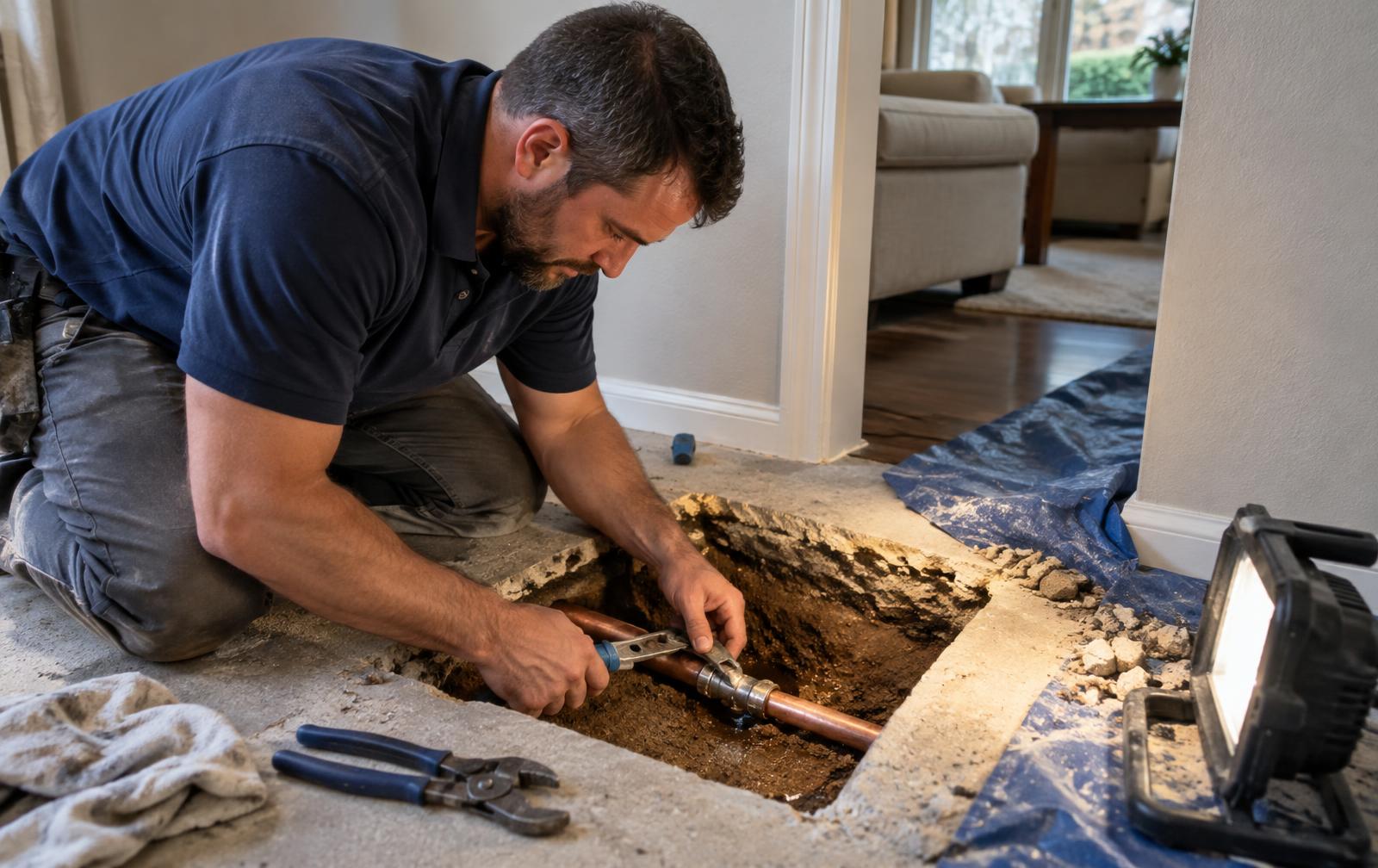
Electronic detection under Lewisville slabs — reroute options that save your finished floors when possible.
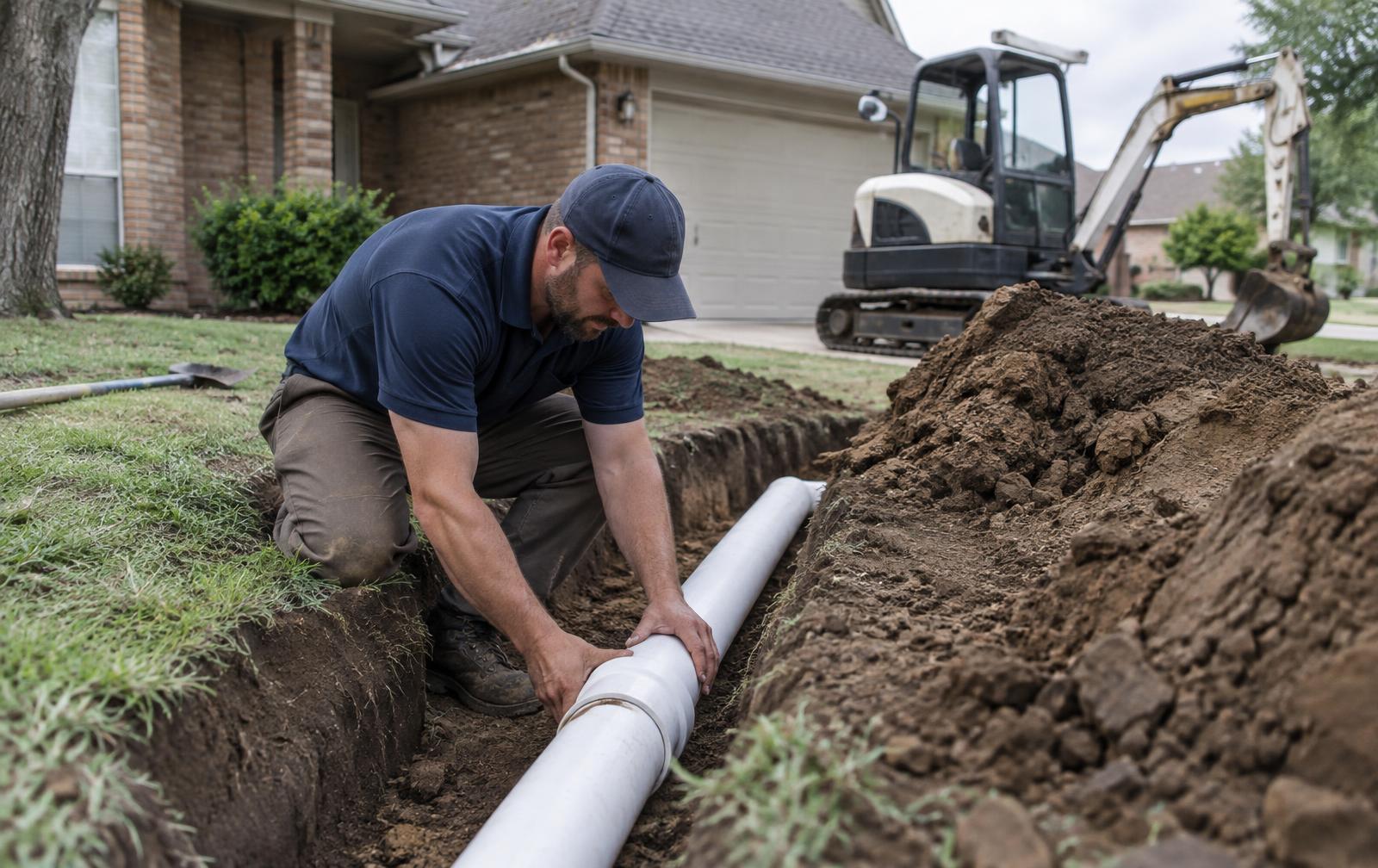
Trenchless replacement for the aging laterals across Lewisville's older runs — camera first, quote in writing, minimal yard damage.
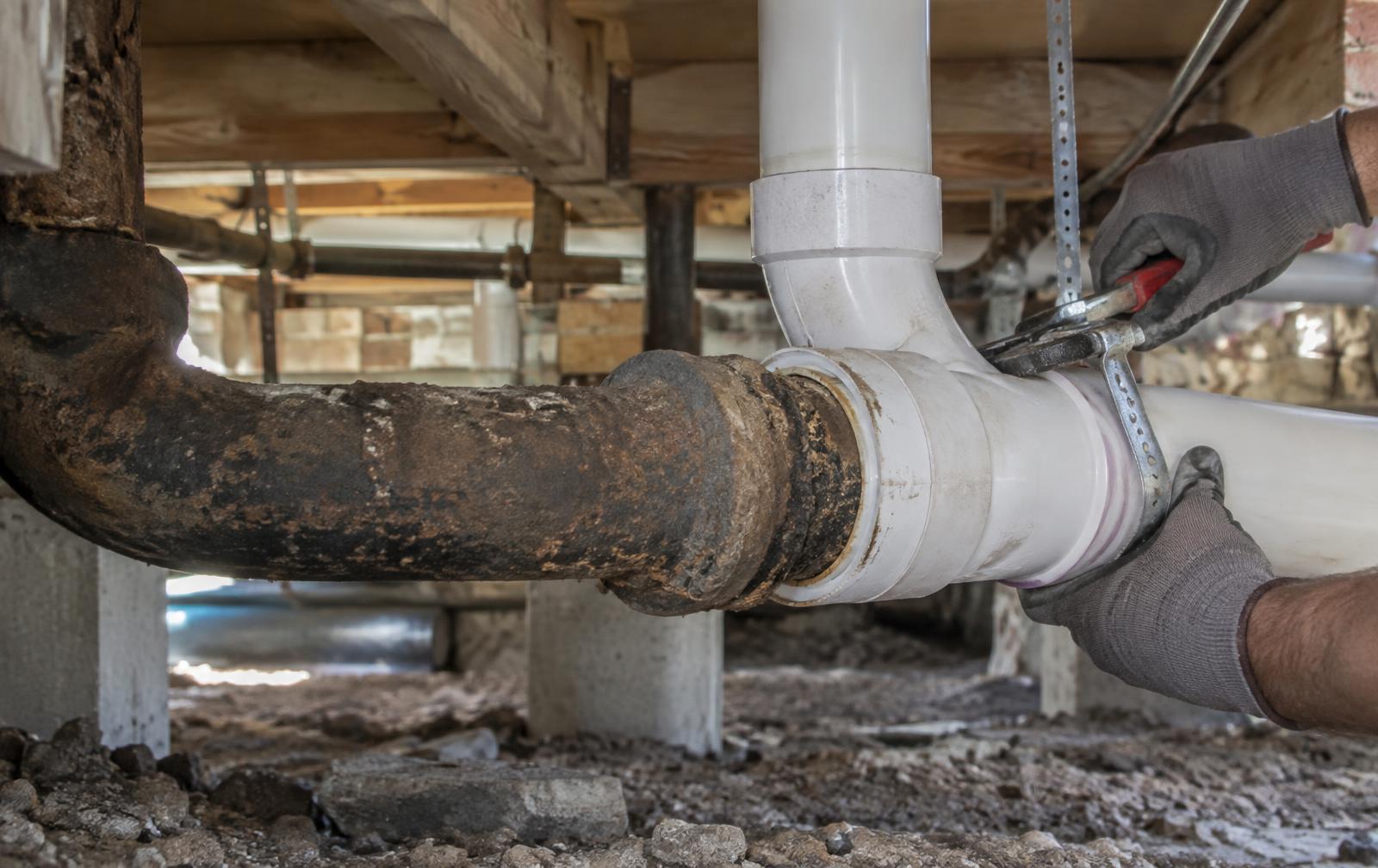
Camera inspection and PVC replacement for the aging cast iron drain lines in older Lewisville homes, with a written quote first.
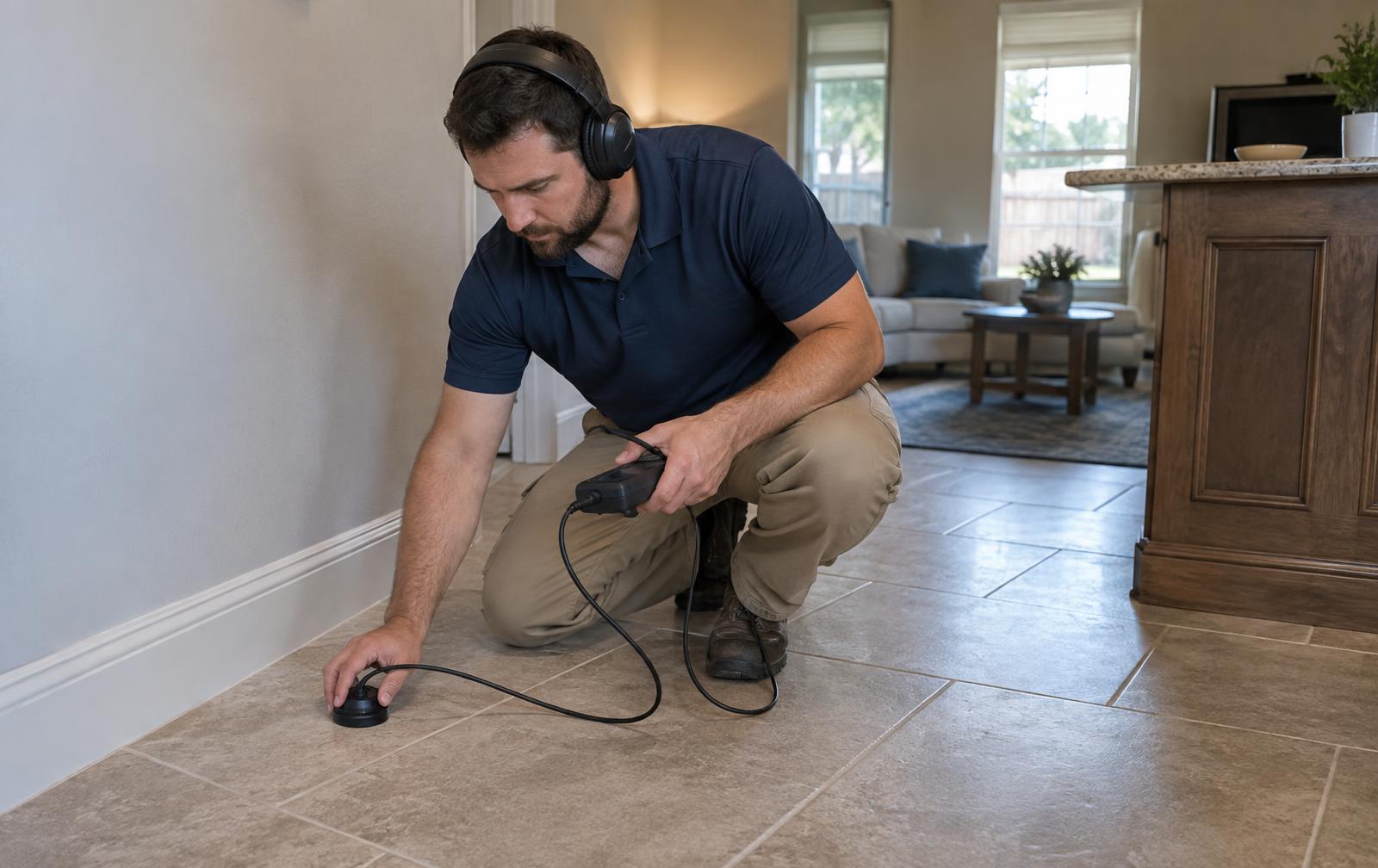
Acoustic, thermal, and pressure testing to pinpoint hidden leaks in Lewisville slab and wall lines without tearing into finishes.
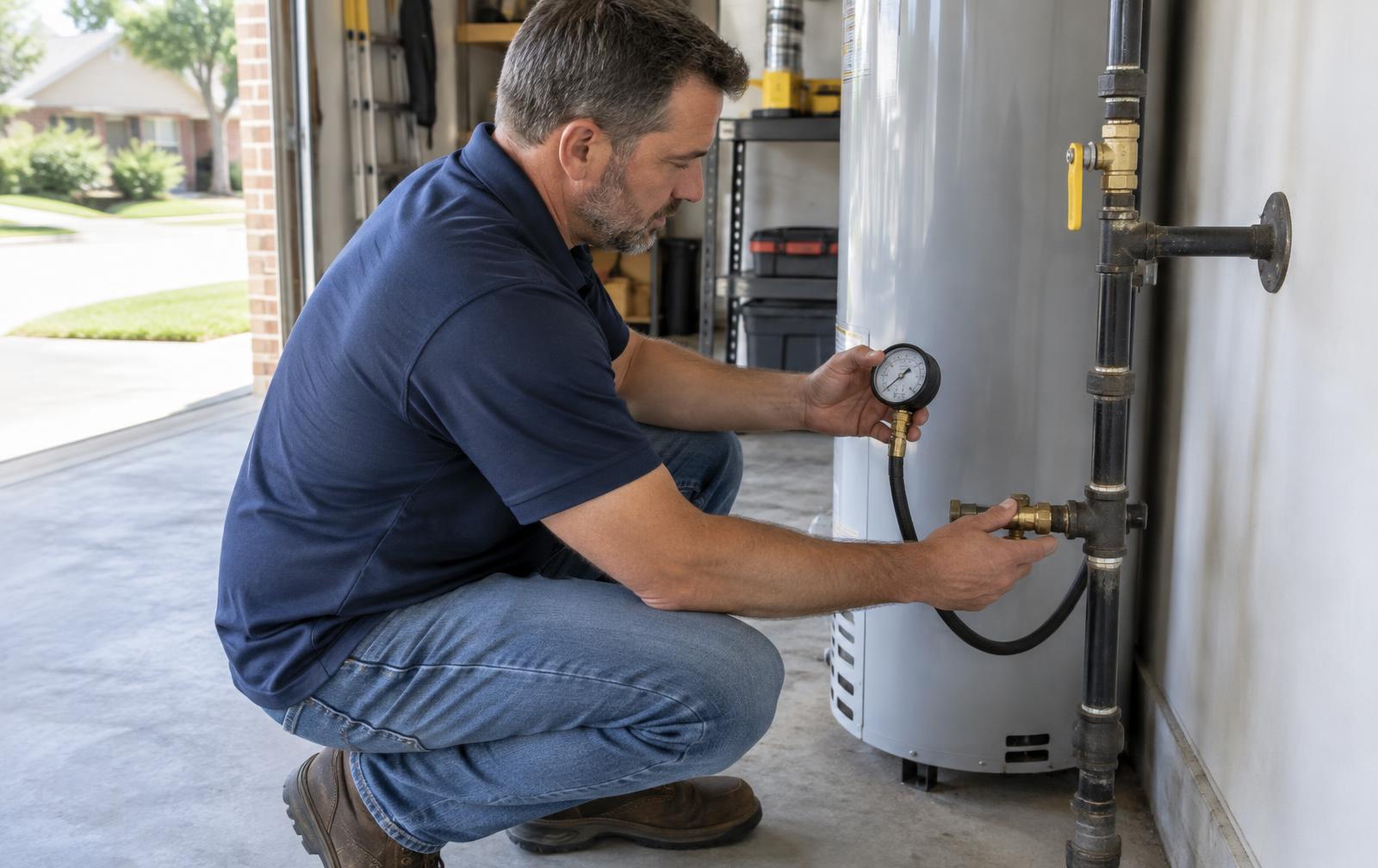
Licensed install, repair, and pressure-testing for Lewisville homes — every line signed off to Texas code and Atmos requirements.
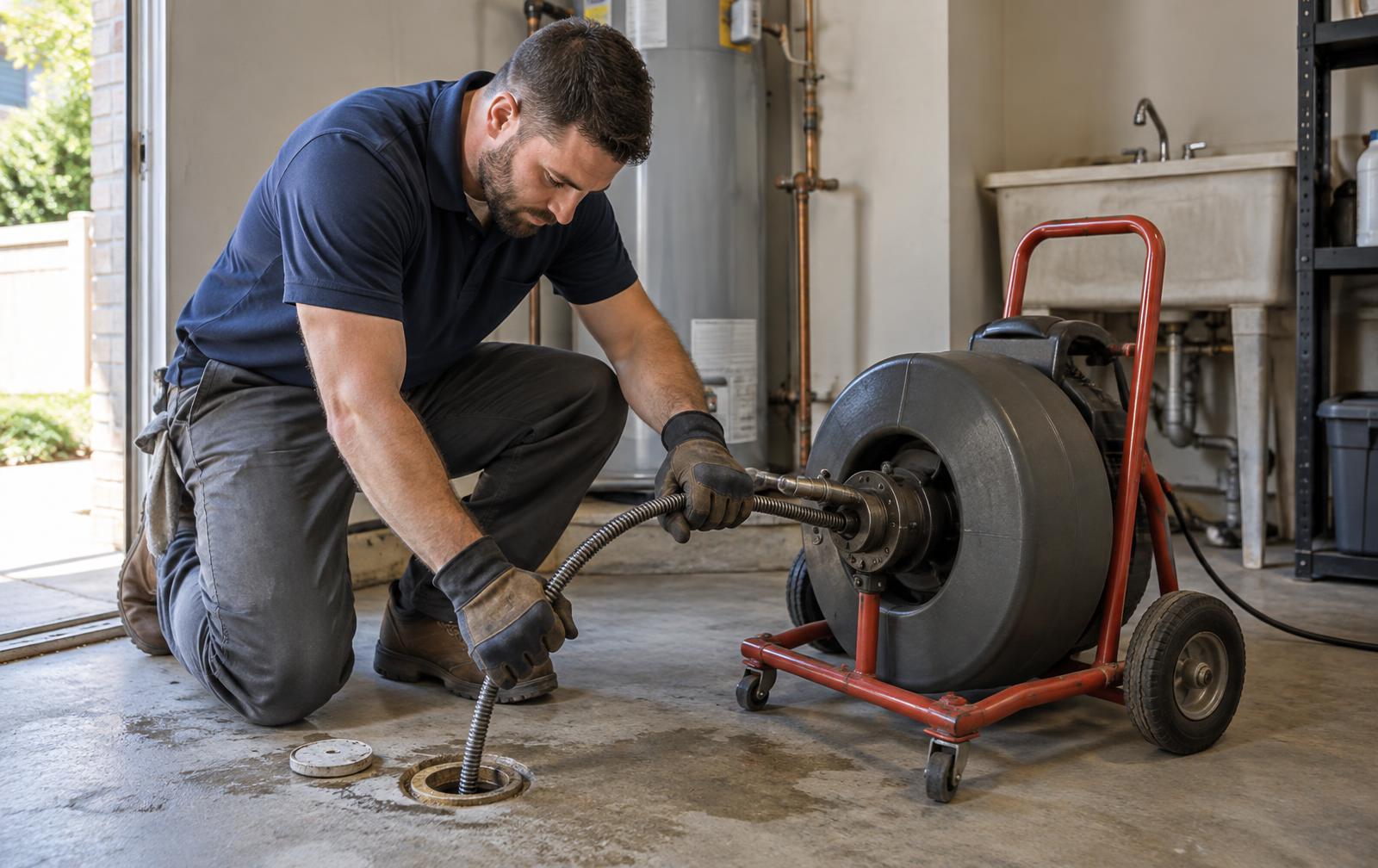
Full-clear service and camera confirmation for the drains under Lewisville's neighborhoods.
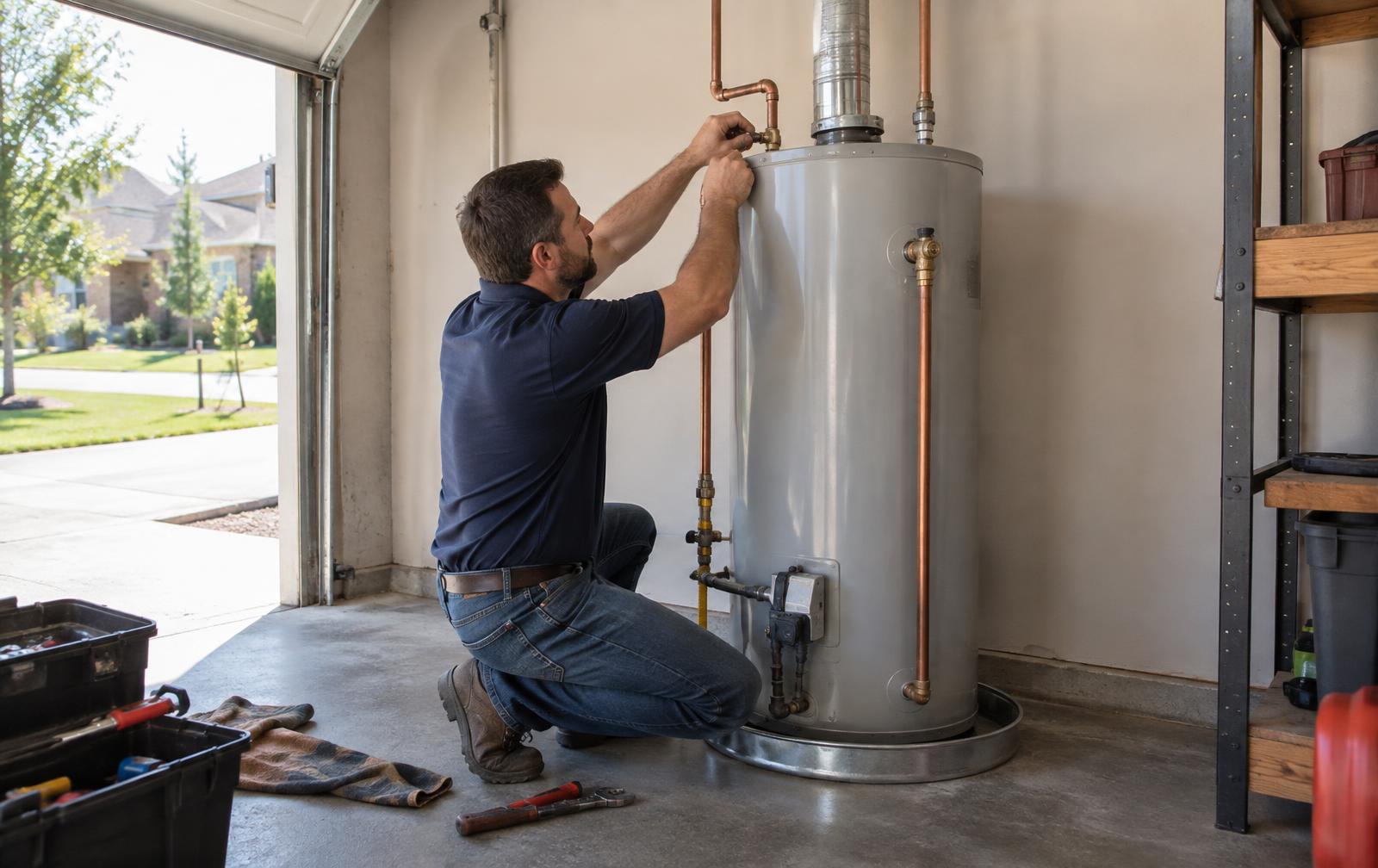
Repair, flush, and replacement of tank units — including attic and garage heaters common to Lewisville homes.
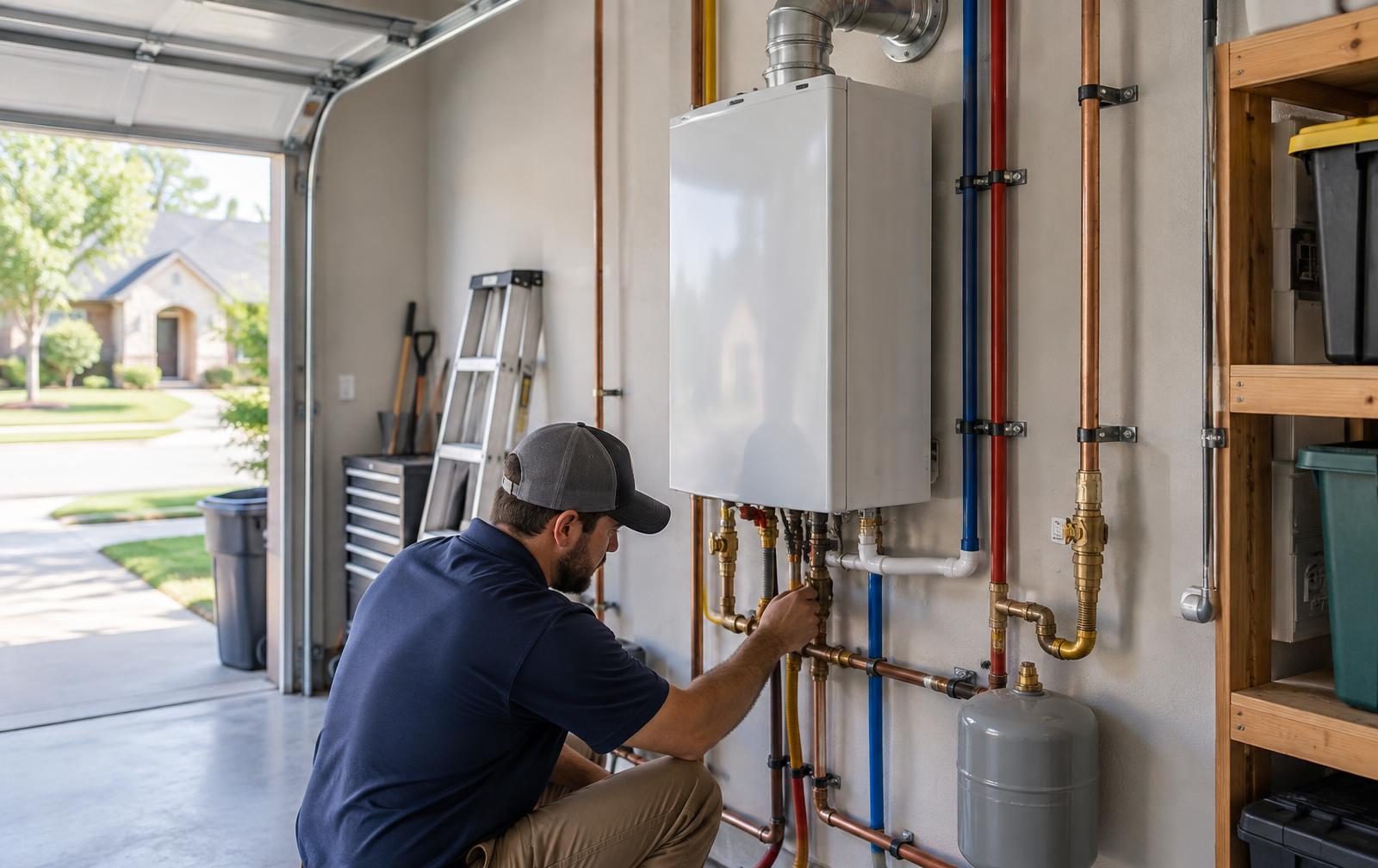
Install, service, and annual descaling — Lewisville's hard tap water eats tankless heat exchangers without it.
same-day, 7 days a week response across Lewisville for burst pipes, heater failures, and main-line backups.
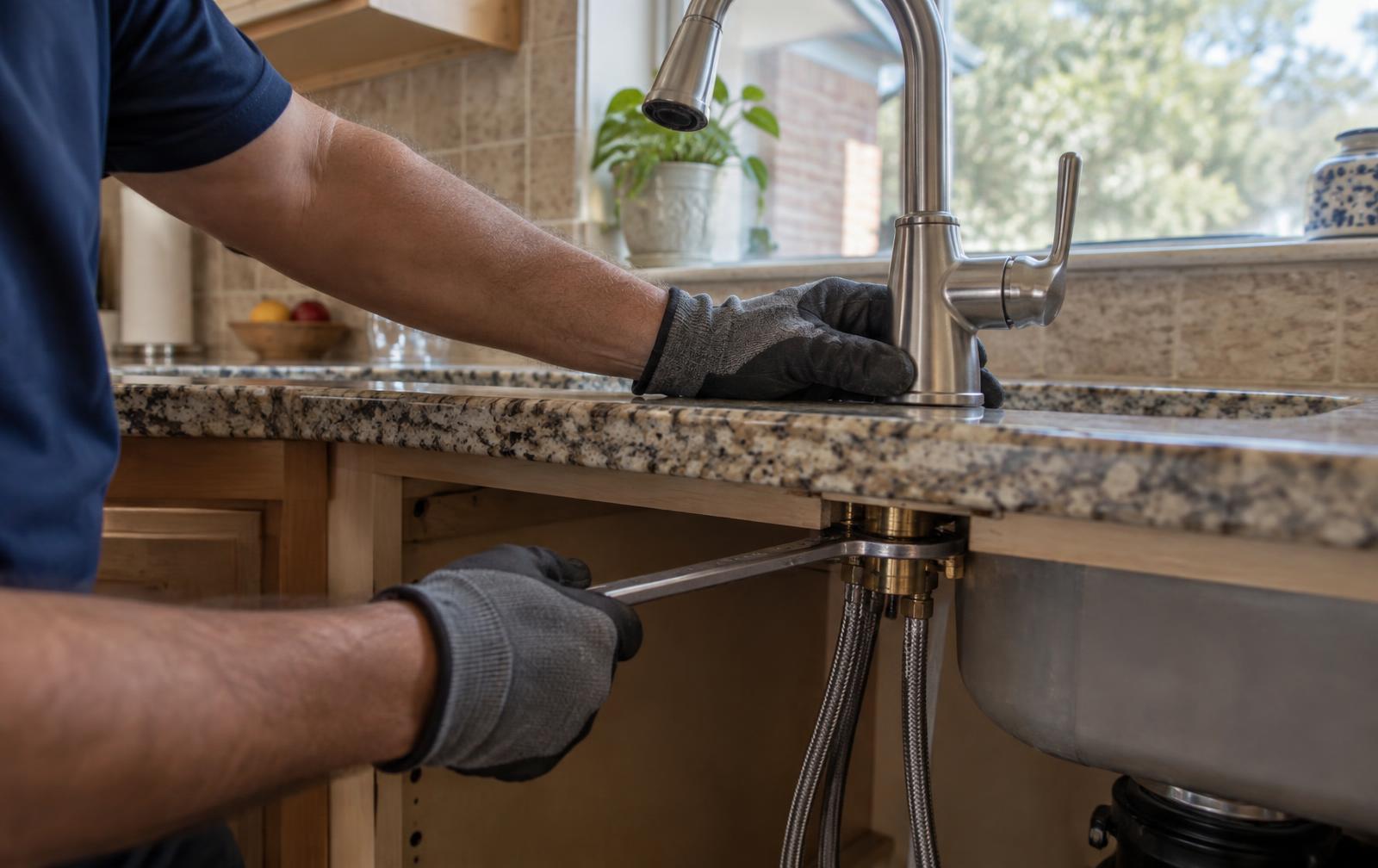
Cartridge, stem, and full-fixture replacement for Lewisville kitchens and bathrooms — hard-water-ready parts stocked on the truck.
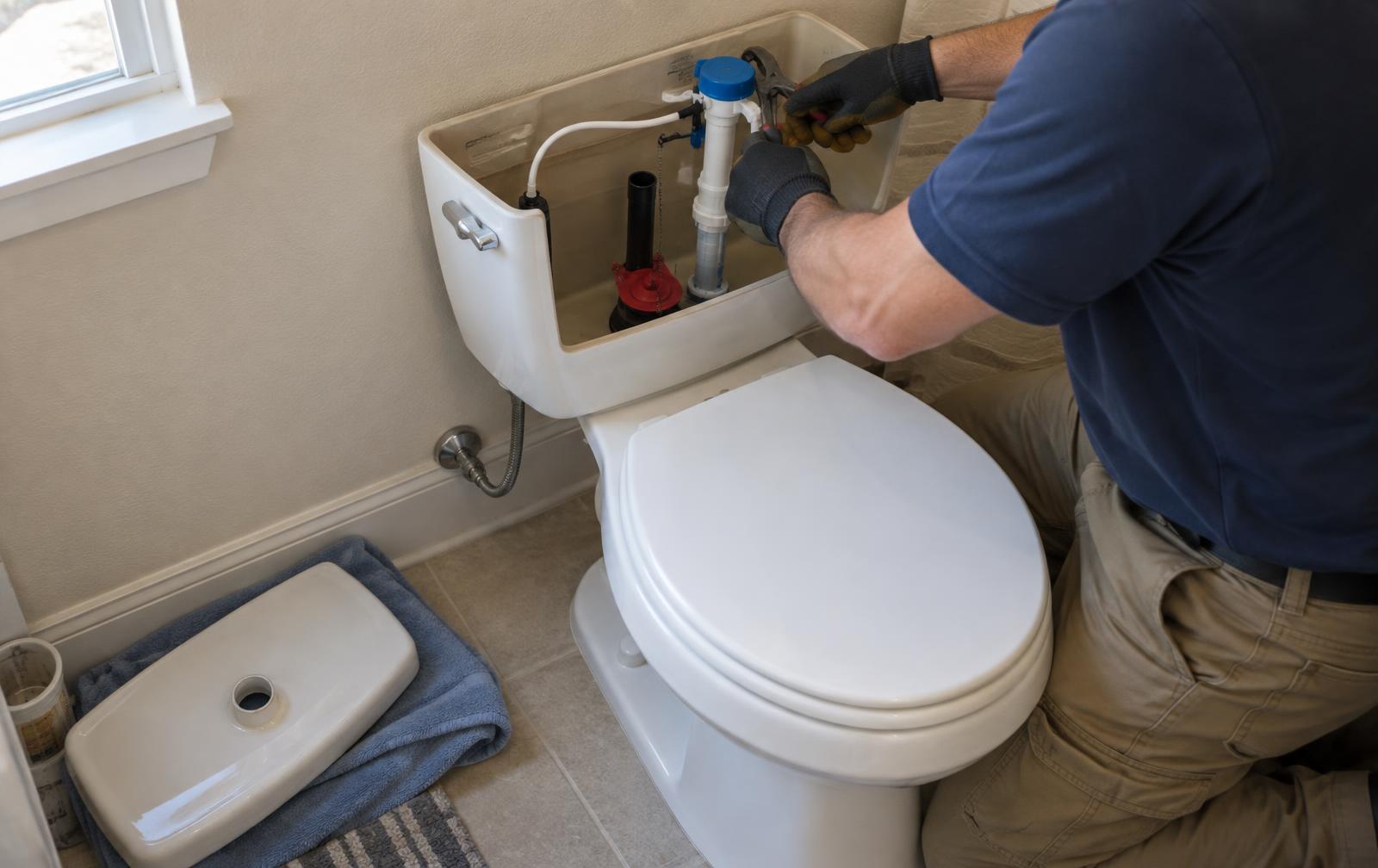
Rebuilds, wax-ring resets, flange repairs, and full replacements — the running toilets and rocking bowls in Lewisville homes.
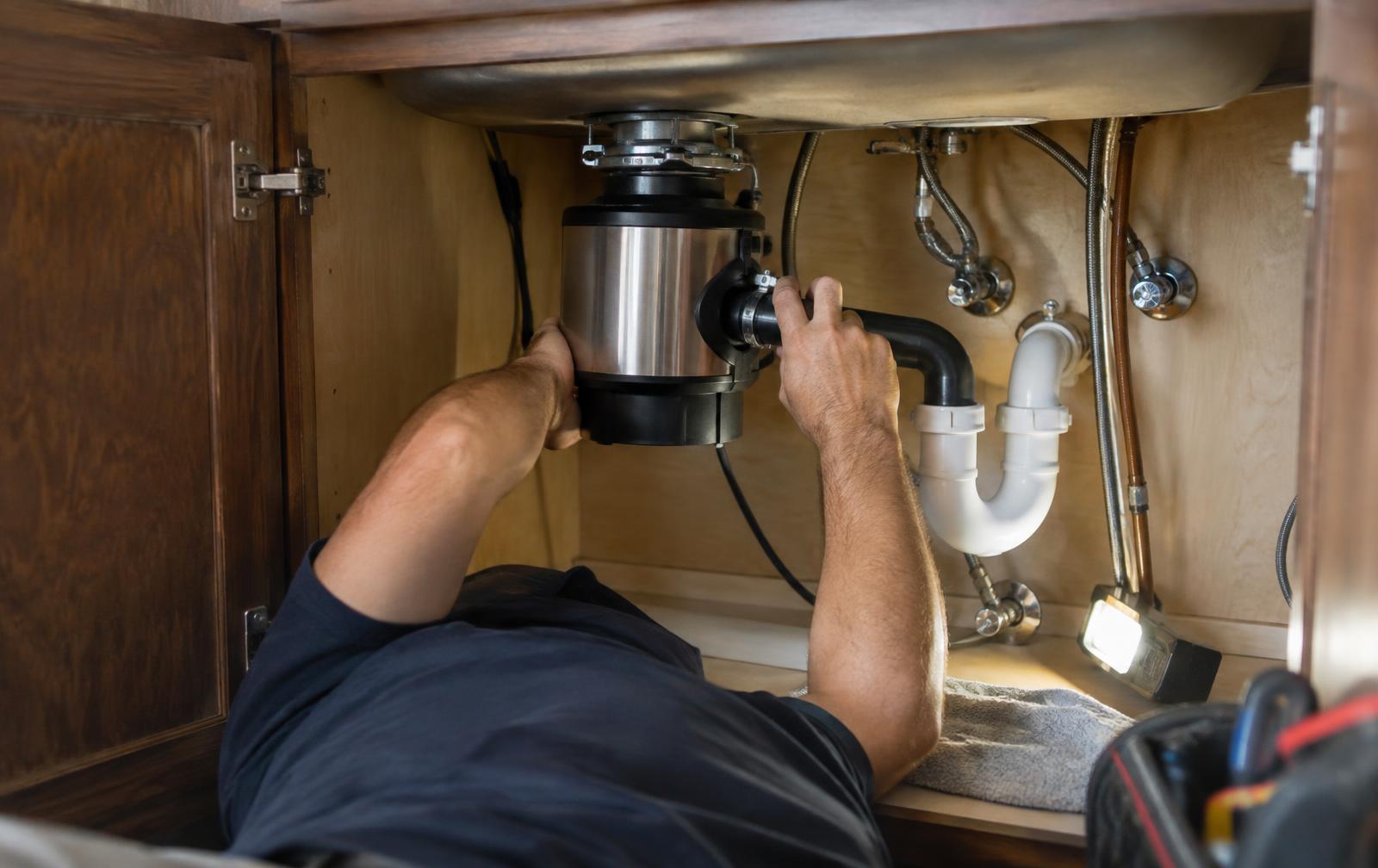
Jam clearing, leaking-unit swaps, and quiet 3/4 HP upgrades for Lewisville kitchens — same-visit install.
Same Sewer Backup Keeps Returning in Lewisville?
A full scouring pass with camera proof on both ends. Get it handled instead of scheduled again.