

Emergency Plumbing in Lewisville, TX
A supply line splitting somewhere under the slab. Sewage rising back up through the toilet. A water heater emptying itself onto the closet floor. We take these calls the day they happen, every day the phone rings, from a shop close enough that most of Lewisville is a short drive away.
What Matters Isn't the Slogan — It's Who Actually Shows Up
A lot of advertising promises constant coverage and then hands the call to a dispatcher hunting down whichever truck happens to be open, occasionally a considerable distance away. Being based in The Colony changes that math for Lewisville specifically — the drive itself runs roughly 10 to 15 minutes under ordinary conditions, and whoever picks up the phone is a licensed plumber, not a call router, so the shutoff instructions start before a truck has even left the lot.
Three kinds of emergencies tend to show up in Lewisville. Frozen supply lines splitting during a hard freeze, particularly in Old Town's early-1900s-to-1940s homes, many built on pier-and-beam foundations before slab construction became standard, where original piping often runs exposed along exterior walls. A slab leak that's been a slow trickle for weeks and abruptly turns into a running stream. And sewage backing up through a low fixture, typically traced to the original cast iron stacks still in service in the city's older sections.
Water heater ruptures round out the list. A tank that lets go overnight can leave fifty-plus gallons pooled on a closet floor by sunrise, sometimes soaking through to the room below. Getting the water and power shut down safely comes first; a clear written account of what actually happened comes right after, since most homeowners end up filing an insurance claim once the immediate mess is under control.

What Counts as an Emergency in a Lewisville Home
Every item below gets a same-day response. A handful of things people worry about aren't actually urgent, and we'll say so honestly rather than pad the visit.
Whatever the source, close the main valve first and call second. We're already moving by the time you hang up.
If it's rising in a toilet, tub, or shower, stop running any fixture in the house right away. This one moves straight to the front of the schedule.
Contact your gas utility first for the emergency meter shutoff. Once that's done and the home is confirmed safe, we come out to pressure-test and repair.
That almost always means the tank has cracked internally. Cut water, and gas or power, to the unit, then get us on the phone before it spreads further.
First confirm the meter's on and the main valve is fully open. If both check out and water's still missing everywhere, the line feeding the house itself may have failed.
A pinhole that's progressed to a steady stream causes damage quickly. Shut the cold-side valve at the water heater to isolate it, then call.
Stop the Bleeding, Then Find Out Why It Happened
Priority one is limiting damage. Priority two is understanding the cause. Priority three is the lasting fix.
- 1You reach a plumber, not a script
Whoever answers walks you through shutoff steps specific to what's happening right then — main valve, water heater isolation, gas meter, whatever fits. That guidance starts before anyone's even in a truck.
- 2The truck that shows up is already equipped
Stocked for burst-pipe repair, sewer clearing, and water heater swaps, so the visit itself finishes the job rather than turning into a second trip for parts we didn't have.
- 3We ask why, not just what
Beyond stopping the active problem, we'll camera the drain or pressure-test the supply line to understand the underlying cause. A burst on old copper pipe rarely happens just once, and we'll tell you plainly if a full reroute beats another patch.
- 4Pressure doesn't go back on until it's safe
We won't restore water to a system that still has an unresolved failure somewhere in it — a hidden leak soaking framing quietly does more damage than the obvious one that got you to call. The affected section gets capped or fixed first.
- 5You walk away with a paper trail
Photos of the failure, photos of the completed repair, and a written summary of what happened — everything typically requested for a homeowners insurance claim, handed over as one packet.
Housing Age Tells Us What's Likely Failing
Before we even pull up, the vintage of the home usually points to the kind of emergency waiting inside.
This is the oldest section of the city, tracing back to its 1920s incorporation. Homes here often still carry original supply piping along exterior walls, which is exactly where a hard freeze tends to cause the first split.
These ranch homes went up mostly from the 1970s through the 1990s and frequently run on cast iron stacks that are now decades deep into their service life — a setup that lines up with the sewage-backup calls we treat as urgent.
Built out mainly in 1996 and 1997 under more modern plumbing codes, so a sudden pipe failure here is more often a fitting or valve reaching the end of its normal run than an issue with the pipe material itself.
This master-planned community broke ground in 1998 and keeps expanding, and its newer sections lean heavily on PEX manifolds — when something fails, it's more likely at a connection point or an exterior hose bib than a mid-line split.
An older, value-priced neighborhood near Lake Lewisville with housing stock that skews older overall, where a slab leak progressing quickly into a real flow is a realistic urgent call.
Similar age to Lakeland Terrace and just as close to the lake. Aging water heaters in homes this old are a common source of the tank-failure calls we prioritize.
What Lewisville Homeowners Say

Proximity Is the Whole Reason We're Fast
Our shop sits in The Colony, and under normal traffic that keeps most Lewisville homes roughly 10 to 15 minutes out. A hard freeze or a major storm stretches that window for every crew working the area, and rather than promise a number we can't hit, we'll tell you honestly what's realistic that day.
We hold our license through the Texas State Board of Plumbing Examiners, we're insured, and the business is family-owned — the phone gets answered directly for same-day calls, 7 days a week, 8 AM to 6 PM. When something's urgent, calling gets you moving faster than filling out a form online.
Straight Answers, No Sales Pitch
Our Other Plumbing Services in Lewisville, TX
An urgent call often uncovers a larger issue underneath it — an aging main, a compromised sewer line, pressure running too high for the system. We handle that follow-up work too, right here in Lewisville.

Electronic detection under Lewisville slabs — reroute options that save your finished floors when possible.

Trenchless replacement for the aging laterals across Lewisville's older runs — camera first, quote in writing, minimal yard damage.
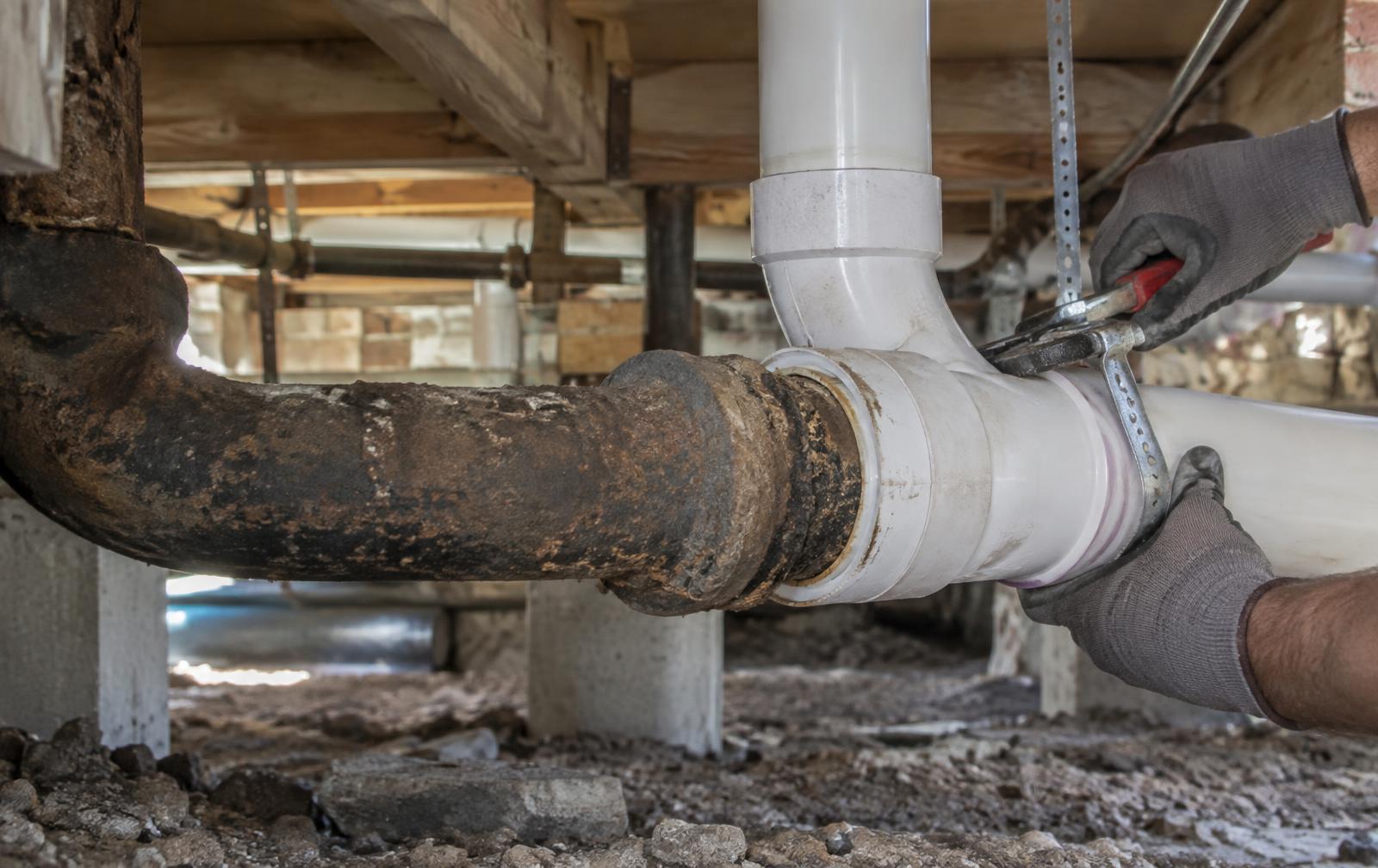
Camera inspection and PVC replacement for the aging cast iron drain lines in older Lewisville homes, with a written quote first.

Acoustic, thermal, and pressure testing to pinpoint hidden leaks in Lewisville slab and wall lines without tearing into finishes.

Licensed install, repair, and pressure-testing for Lewisville homes — every line signed off to Texas code and Atmos requirements.

Full-clear service and camera confirmation for the drains under Lewisville's neighborhoods.

Repair, flush, and replacement of tank units — including attic and garage heaters common to Lewisville homes.

Install, service, and annual descaling — Lewisville's hard tap water eats tankless heat exchangers without it.

High-pressure cleaning that clears scale, grease, and roots from Lewisville's lateral runs — full-diameter, lasting clean.

Cartridge, stem, and full-fixture replacement for Lewisville kitchens and bathrooms — hard-water-ready parts stocked on the truck.

Rebuilds, wax-ring resets, flange repairs, and full replacements — the running toilets and rocking bowls in Lewisville homes.

Jam clearing, leaking-unit swaps, and quiet 3/4 HP upgrades for Lewisville kitchens — same-visit install.
Dealing With a Plumbing Emergency in Lewisville Right Now?
Call and reach a licensed plumber directly, with a realistic arrival estimate from the first minute.