

Gas Line Services in Lewisville, TX
An odor you keep noticing near the kitchen. A new range that needs its own supply run. A meter your utility won't reconnect without a passing test. Whatever the reason, gas piping in a Lewisville home goes through the same steps: locate, correct, test, permit, and inspect.
The Permit and the Test Aren't Optional Extras
Texas rules put residential gas piping in the hands of licensed plumbers only, and neither Atmos Energy nor CoServ Gas — the two providers splitting coverage across Lewisville — will reconnect a meter without documented proof that the system passed a pressure test. Skip that step on a range or dryer hookup and the shortcut usually surfaces later, the next time a utility technician happens to be on the property, sometimes with the whole system getting shut down until it's brought current.
Which utility serves a given address in Lewisville depends on the block, but the code requirements don't change either way. What does change is what's actually in the walls: the ranch-style houses closer to Old Town and the historic downtown core tend to still carry the black-iron piping they were built with, and decades of the area's clay soil shifting can work those old joints loose over time. Newer construction in places like Castle Hills more often runs flexible corrugated tubing instead — a fine system, but only when the grounding bond was done correctly the first time.
Whatever brought you to this page — tracking down a leak, extending a line to a new appliance, adding an outdoor run for a grill or generator, or fixing a system a utility technician already flagged — the work gets permitted where the city requires it, pressure-tested before anything is charged, and inspected before we consider it finished. You keep a copy of that paperwork, and the utility keeps one too.

Signals a Lewisville Gas System Needs Attention
Any one of these is reason enough to shut off gas at the meter and call. Skip the flashlight-and-lighter investigation.
Natural gas has no scent on its own — what you're picking up is added specifically so it's noticeable. Get out of the house, place the call from outside, and avoid switches or engines until the meter is confirmed off.
Audible escaping gas at a range, furnace, or water heater fitting means an active leak right there. Close that appliance's own valve first, and shut the meter if the sound keeps going.
A slow underground leak can run up usage for weeks without anyone noticing. If a winter bill spikes with no change in how the thermostat's been set, a pressure test is worth scheduling.
A leaking underground line often kills the lawn directly above it in a narrow, distinct path — something we watch for especially along runs feeding an outdoor pool heater or generator.
When pressure drops somewhere upstream, pilots and burners across the house can starve at once. One stubborn pilot might just be that pilot; several failing together points further back in the system.
If a utility crew shut the meter and tagged it, leave the tag where it is. A licensed pressure test, and whatever repair it calls for, has to happen before the system can go back into legal service.
Locate the Problem, Build It Right, Prove It Holds
Nothing gets called finished until it's pressure-tested and documented, and no new line goes in without a permit first.
- 1Track down the leak, or plan the new route
On a leak call, the system gets pressurized with air and every joint gets checked with an electronic sensor and soap solution until nothing's missed. On a new install, we map the shortest code-legal path and size the pipe to what the appliance actually demands.
- 2Get the permit before any pipe goes in
New gas lines, and most repairs of real size, require a plumbing permit from the City of Lewisville's Building Services office under its adopted plumbing and fuel gas codes. That paperwork is on us, not something you have to chase down yourself.
- 3Build with materials that hold up to inspection
Black iron or properly bonded corrugated tubing indoors, polyethylene with a code-correct riser outdoors, sediment traps sized right at each appliance, and thread sealant rated specifically for gas.
- 4Prove the system holds pressure
Every finished line sits under air pressure for the required time while the gauge is watched — by you too, if you'd like to see it. A steady reading means the gas can go back on; any drop means we're finding the leak before you're billed for it.
- 5Coordinate the inspection and the reconnect
We book the city inspection, walk the inspector through the work, and if the utility had the meter off, we handle getting it turned back on. You come away with the signed inspection card plus the test results.
Reading a Gas System by the Neighborhood It's In
The decade a house went up is usually the best clue to what's actually running behind the wall.
Dating to the city's 1920s incorporation era, this downtown core still holds original black-iron gas piping in a lot of its cottages and bungalows. Repeated ground movement in clay-heavy soil over that many decades is exactly what loosens old joints, so this is where a leak locate usually starts.
These 1970s-through-1990s ranch homes frequently mix untouched original black iron with sections replaced along the way, so we trace the entire run rather than guess at a single material.
Homes here went up mainly in 1996 and 1997, more likely with flexible tubing from day one. That system holds up well over time, but roughly thirty years in is a reasonable point to confirm the original grounding bond is still intact.
This master-planned community broke ground in 1998 and keeps expanding, with townhomes commonly built around flexible gas tubing — solid when installed correctly, and something we check closely on the community's earlier sections.
One of Lewisville's older, value-priced areas near the lake, where original piping in older single-family homes is a common reason behind a leak-locate call.
Sharing a similar age and lakeside location with Lakeland Terrace, this area sees its share of hissing-connector and odor complaints tied to fittings that have simply been in the ground a long time.
What Lewisville Homeowners Say

Nothing Gets Called Done Without Paper to Back It Up
Every gas job leaves you holding the pulled permit, the pressure test results, and the city's inspection sign-off. If the utility had shut the meter down, we handle getting it reconnected before we pack up, so what you're left with is a record that holds up whenever the home sells, gets appraised for insurance, or needs service down the line.
We carry licensing through the Texas State Board of Plumbing Examiners, we're insured, and every truck runs out of The Colony — Lewisville is core coverage for us, with room for same-day work on a confirmed active leak.
Straight Answers, No Sales Pitch
Our Other Plumbing Services in Lewisville, TX
Gas work often overlaps with a water heater swap or a tankless conversion. We can knock both out in one visit here in Lewisville.

Electronic detection under Lewisville slabs — reroute options that save your finished floors when possible.

Trenchless replacement for the aging laterals across Lewisville's older runs — camera first, quote in writing, minimal yard damage.
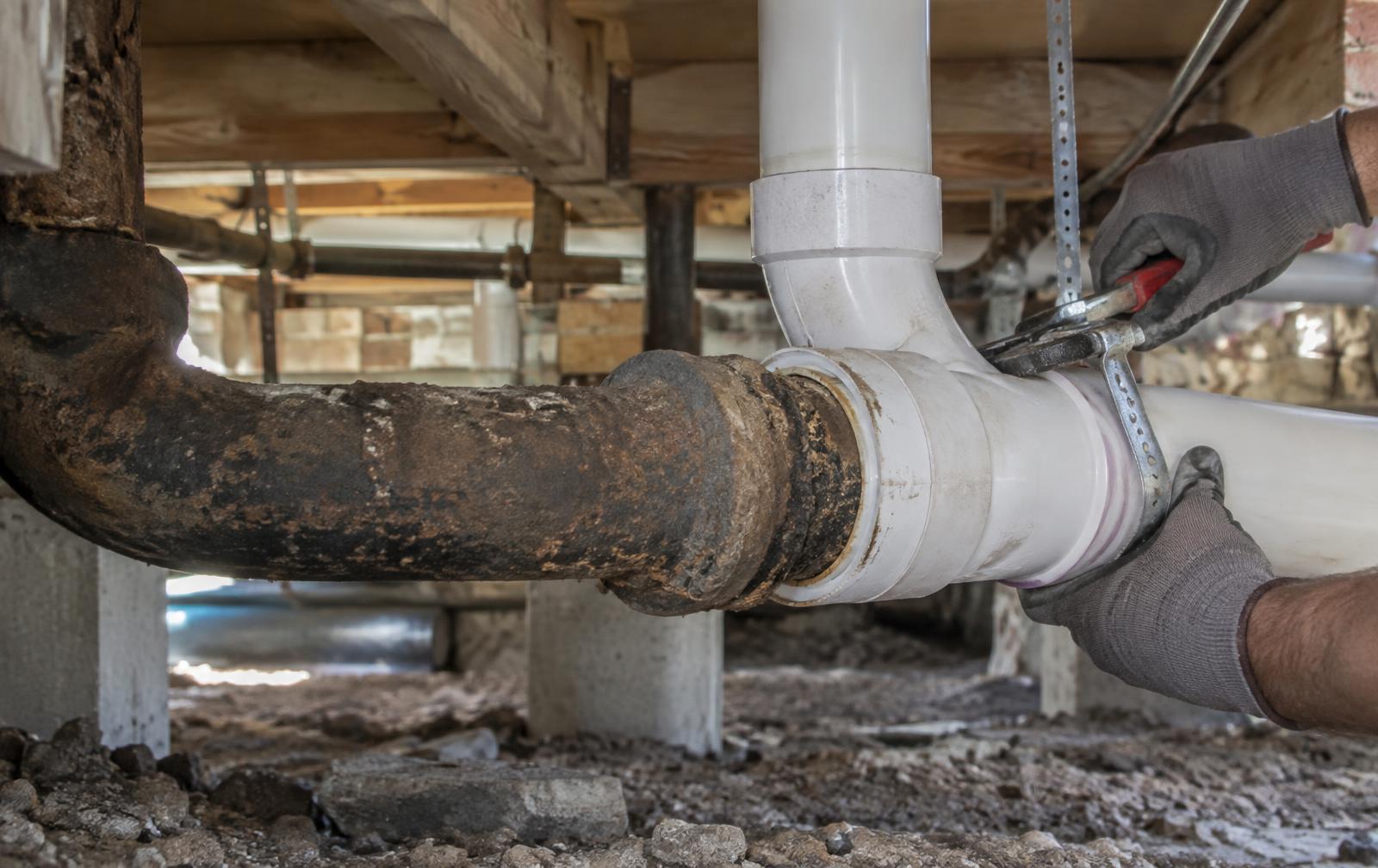
Camera inspection and PVC replacement for the aging cast iron drain lines in older Lewisville homes, with a written quote first.

Acoustic, thermal, and pressure testing to pinpoint hidden leaks in Lewisville slab and wall lines without tearing into finishes.

Full-clear service and camera confirmation for the drains under Lewisville's neighborhoods.

Repair, flush, and replacement of tank units — including attic and garage heaters common to Lewisville homes.

Install, service, and annual descaling — Lewisville's hard tap water eats tankless heat exchangers without it.

same-day, 7 days a week response across Lewisville for burst pipes, heater failures, and main-line backups.

High-pressure cleaning that clears scale, grease, and roots from Lewisville's lateral runs — full-diameter, lasting clean.

Cartridge, stem, and full-fixture replacement for Lewisville kitchens and bathrooms — hard-water-ready parts stocked on the truck.

Rebuilds, wax-ring resets, flange repairs, and full replacements — the running toilets and rocking bowls in Lewisville homes.

Jam clearing, leaking-unit swaps, and quiet 3/4 HP upgrades for Lewisville kitchens — same-visit install.
Gas Line Trouble at Your Lewisville Home?
Licensed, permitted, pressure-tested, and signed off before we call it finished. Ask about a leak locate or a new install.