
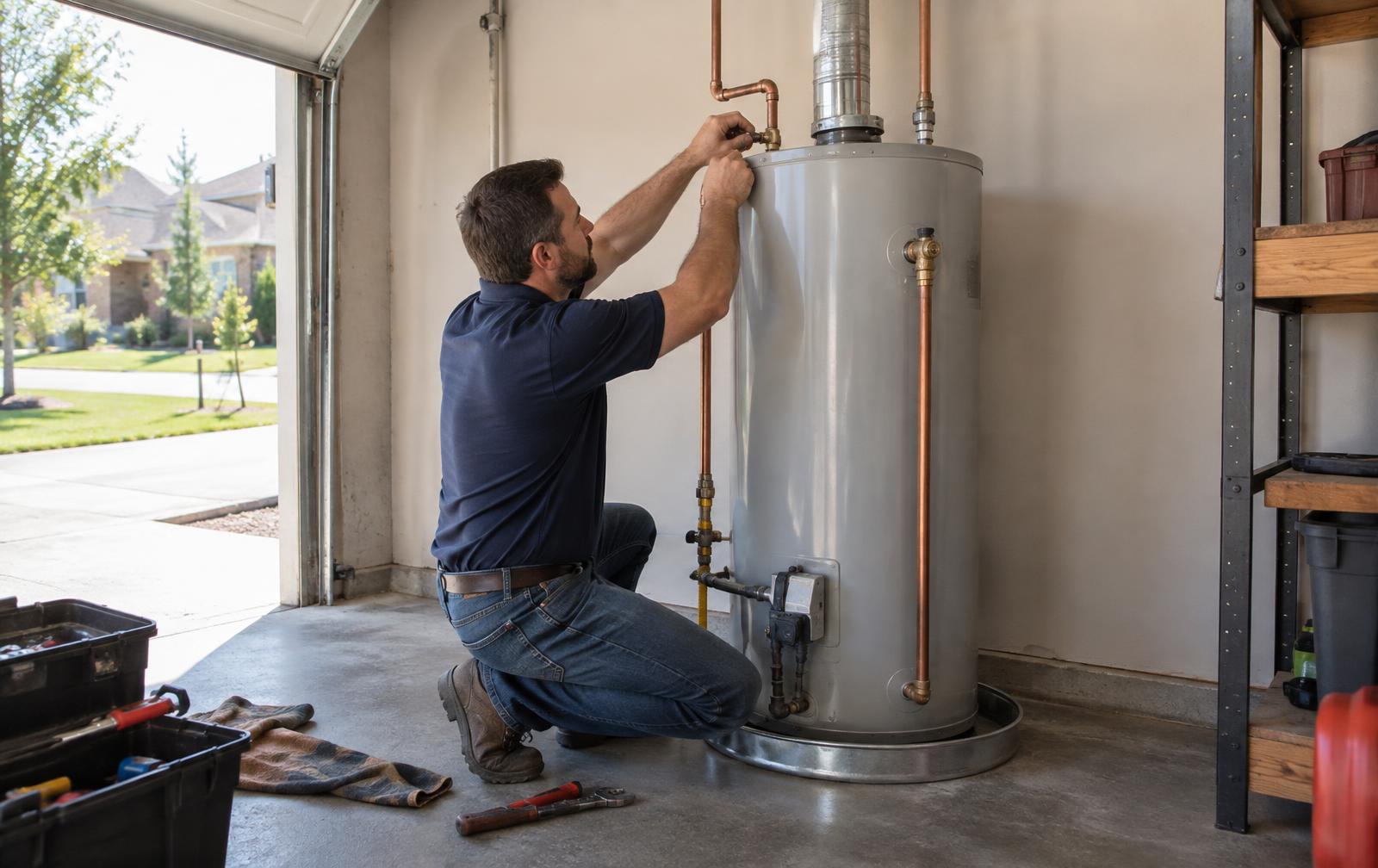
Water Heater Services in Farmers Branch, TX
Cold showers when you least expect them. Water that comes out with a rust-colored tint. A wet ring spreading around the base of the tank. A closet that pops and rumbles for no obvious reason. Our crew diagnoses, services, and replaces water heaters throughout Farmers Branch, moving fast when a unit has stopped working entirely.
What Goes Into the Job Depends on the House — and the Permit
No two water heater jobs in Farmers Branch look quite the same. Older ranches from the Valwood-era buildout typically give us straightforward closet access. Newer builds around Mercer Crossing usually arrive with tighter mechanical rooms already designed to current code. And the water flowing through this system — delivered by Dallas Water Utilities at around 150 mg/L hardness — chews through anode rods noticeably faster than soft water would, which is a big part of why tanks here sometimes give out well ahead of schedule.
One rule applies everywhere in the city, though: the Building Inspection Department requires a permit before a water heater gets replaced, with the one exception being a genuine emergency repair, where that paperwork can follow after the fact. That permit is simply part of how we run the job, not a separate step you have to manage yourself.
Every unit we put in gets a properly matched expansion tank, a code-compliant drain pan anywhere the heater sits in a closet or over living space, and discharge routing for the relief valve done the way code actually requires. Cutting any of those corners might look cheaper on day one, but it gets expensive fast the moment something fails. And when the old tank still has good years left — maybe just a bad thermocouple, valve, or heating element — we'll say so plainly instead of pushing a new tank you don't need yet.

What a Farmers Branch Water Heater Is Trying to Tell You
A few of these mean a quick repair. A few mean it's time to replace. Every one of them deserves a phone call.
Can't finish a second shower, or a bath never quite reaches full temperature. Might be a bad dip tube, a tank that was undersized from the start, or sediment eating away at usable capacity — three different problems, three different repairs.
Sediment resting on the tank bottom overheats and sends steam popping through it. A flush usually quiets that down if it's overdue. If the sound has gotten louder or more constant, the tank may already be near the end.
The anode rod protecting the tank has likely worn out, and corrosion is starting on the tank itself. Swapping the anode in time can add years back; if the discoloration is heavy, replacement is probably closer than repair.
A tank that has actually cracked cannot be patched — that's a replace-now situation. Cut the water supply and the gas or electric power to it right away and call us.
Buildup inside the tank or a burner on its way out forces the unit to work harder for the same result. If nothing else changed at home and the bill still went up noticeably, it's worth having someone take a look.
That's a response to pressure running too high, a temperature setting that's too aggressive, or a valve that has simply worn out. Left unaddressed for long enough, the failure mode gets much worse than a drip.
An Honest Look First, Then Work Done to Code
A heater with life left gets repaired. A replacement comes with every code item it should have had the first time, not just a new tank in the old spot.
- 1Look at the whole picture before quoting
Age off the serial number, how much sediment has built up, anode condition, whether the relief valve is behaving, and combustion quality on gas units — all of it gets checked before we say a word about price or which path makes sense.
- 2Fix what's actually broken, nothing more
A new thermocouple, valve, element, thermostat, dip tube, or anode, or simply flushing out accumulated sediment — whichever it is, parts for common models ride with us so most repairs happen the same visit.
- 3Bring the new install fully up to code
Sized correctly for the household's actual usage, an expansion tank where the system calls for one, a drain pan with real drainage on any closet unit, relief-valve discharge routed properly, dielectric fittings at the connections, and strapping wherever seismic bracing is required.
- 4Take care of the permit and the mess
We pull whatever permit the city requires as a normal part of the job. The old tank goes out with us for recycling instead of getting dragged through your home, and we leave the closet cleaner than we found it.
- 5Confirm it all works before we leave
Gas units get a combustion check, we watch the recovery rate, dial in the temperature setting you prefer, and point out where the shutoff is along with roughly when the tank should get flushed again.
What Farmers Branch Water Heater Closets Tend to Need
The kind of house usually predicts the kind of install, and the install predicts how the unit eventually fails.
The oldest part of the city, next to Farmers Branch Historical Park, often has an easy-access garage or utility-closet setup, but the venting from decades back doesn't always meet current standards — we bring that current whenever we swap a unit here.
Built between 1955 and 1962, homes in this area commonly keep their tank in an upstairs interior closet above finished space, which is exactly why a properly routed drain pan matters so much — a leak without one becomes damage to the ceiling below.
Finished in 2022 along the waterfront, this newer mixed-use development tends to have compact mechanical closets with limited headroom, often steering the choice toward a short, low-profile tank or a tankless setup instead.
Sharing the same mid-century Valwood-era construction, homes along this stretch generally have the identical interior-closet arrangement, and bringing an older install's venting and pan up to today's standard is routine work here.
In these mid-century tract homes near the city parks, plenty of tanks are old enough that swapping one out ahead of a failure makes more sense than waiting for an emergency call after water has already gotten loose.
Recent single-family and multi-family construction on this corridor generally already meets current placement and venting standards, so most visits here are routine maintenance rather than code catch-up work.
What Farmers Branch Homeowners Say

Fixed When It Can Be, Replaced Correctly When It Can't
Tank replacements come with the manufacturer's coverage on the tank itself, plus warrantied labor on our end. Repairs carry warrantied parts and labor too. When we say replace instead of repair, it's because what we found on the unit backs that up — not because a new tank happened to be sitting in the truck.
We're insured, family-owned, and hold our license through the Texas State Board of Plumbing Examiners, running every truck out of our shop in The Colony. Farmers Branch sits roughly 20 to 30 minutes from there under normal traffic, and a total failure typically gets a truck out the same day.
Straight Answers, No Sales Pitch
Our Other Plumbing Services in Farmers Branch, TX
A water heater on its way out often has company — other plumbing from the same era showing similar wear. We'll check leaks, drains, and gas line condition while we're already there.
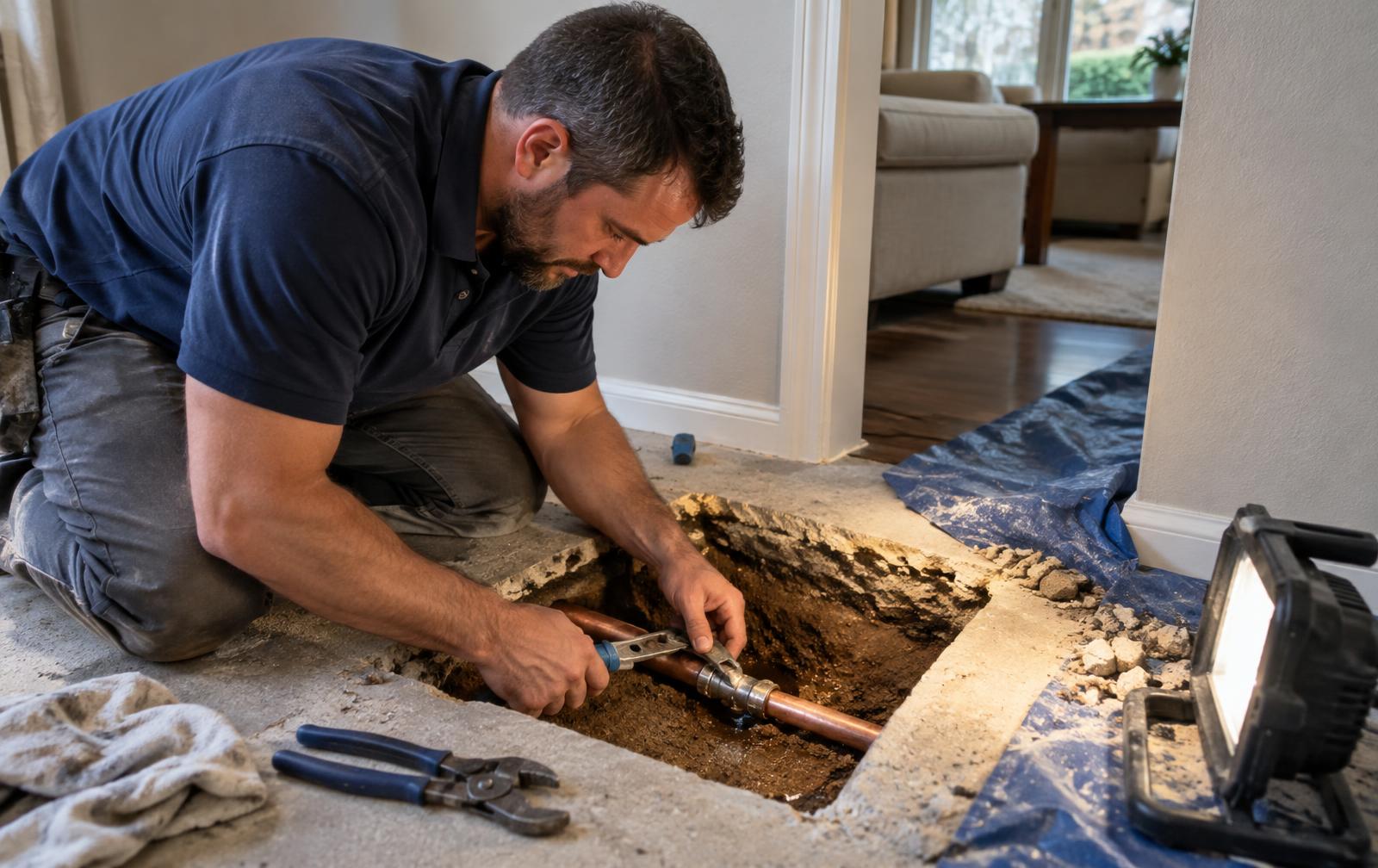
Electronic detection under Farmers Branch slabs — reroute options that save your finished floors when possible.
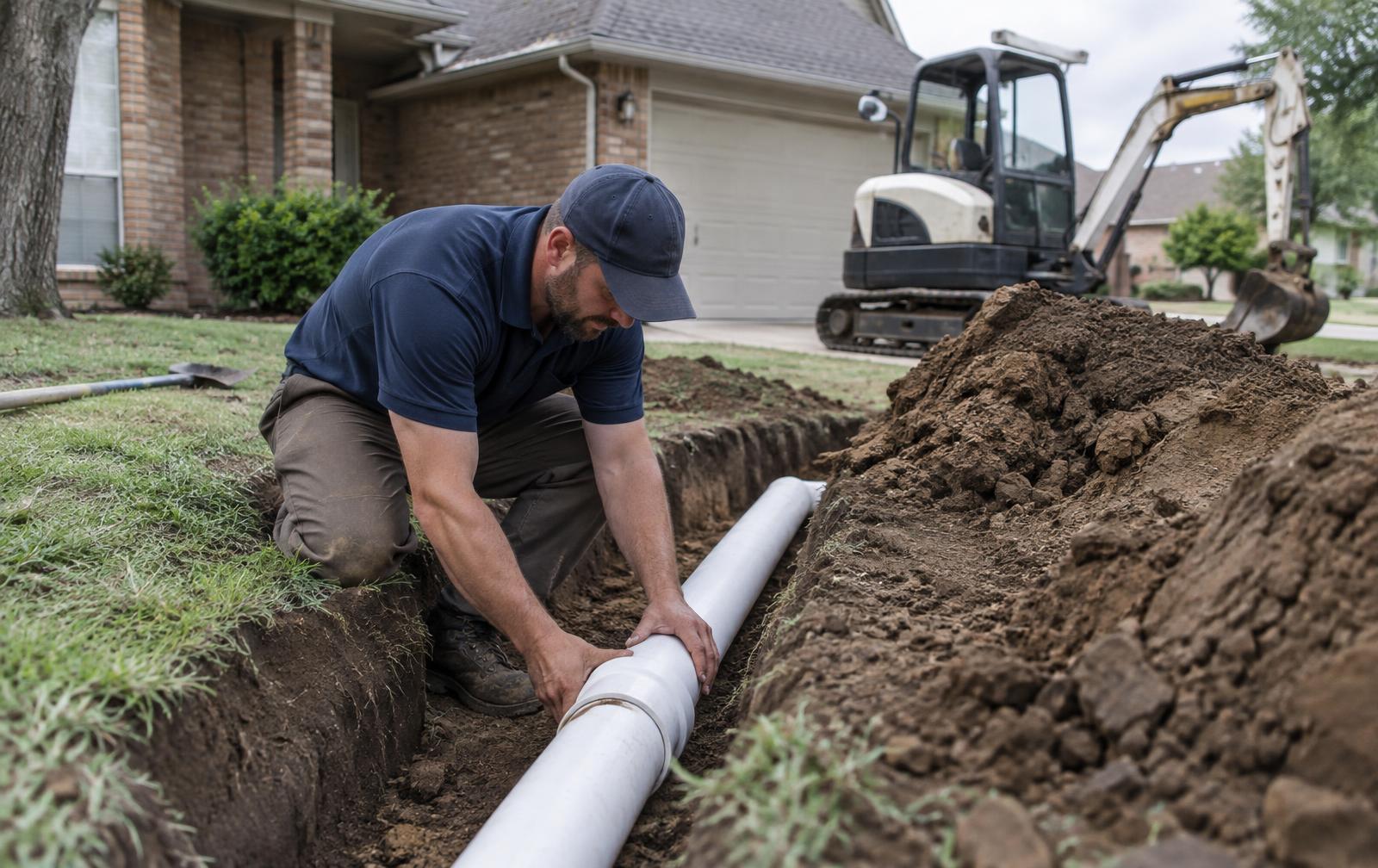
Trenchless replacement for the aging laterals across Farmers Branch's older runs — camera first, quote in writing, minimal yard damage.
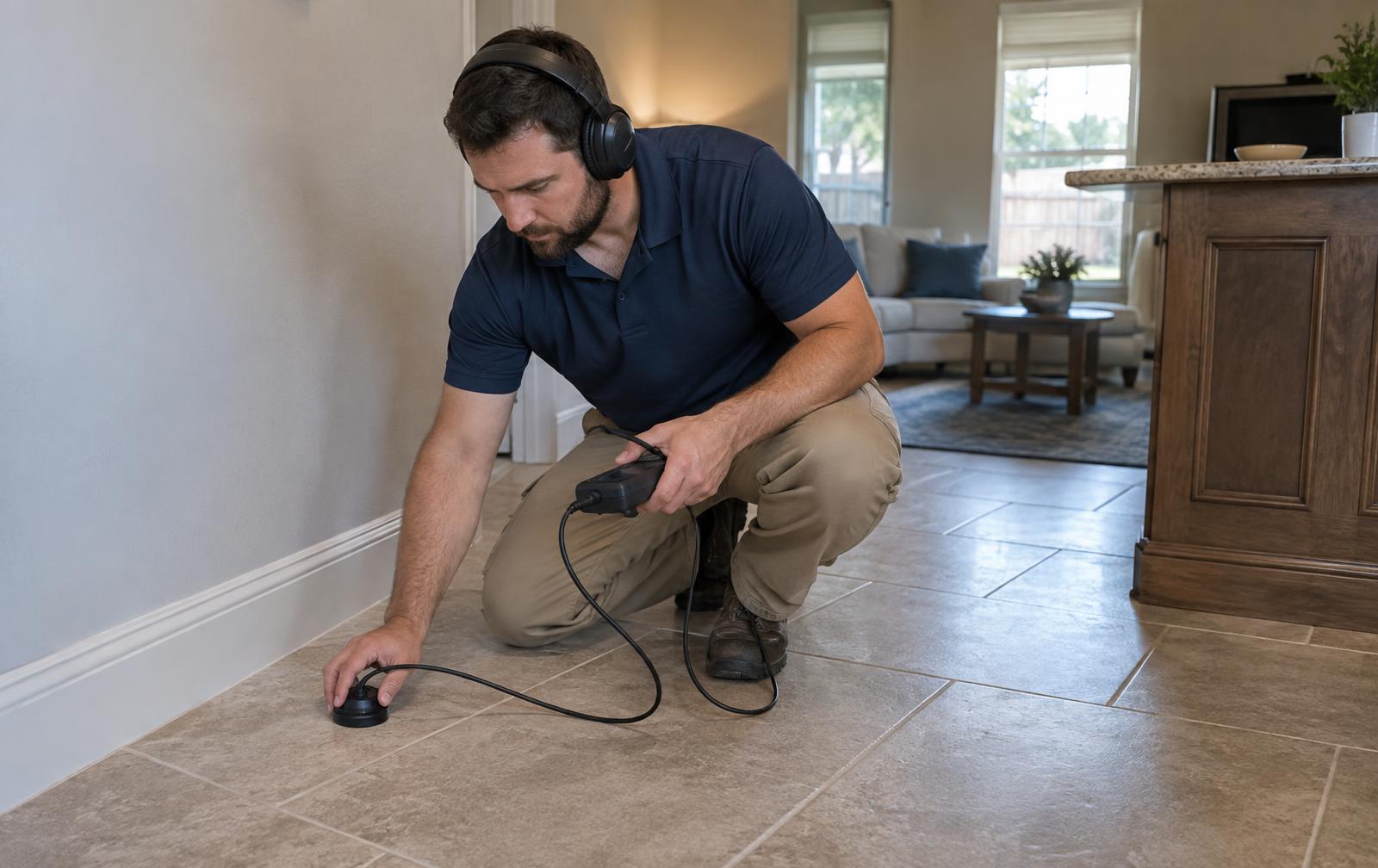
Acoustic, thermal, and pressure testing to pinpoint hidden leaks in Farmers Branch slab and wall lines without tearing into finishes.
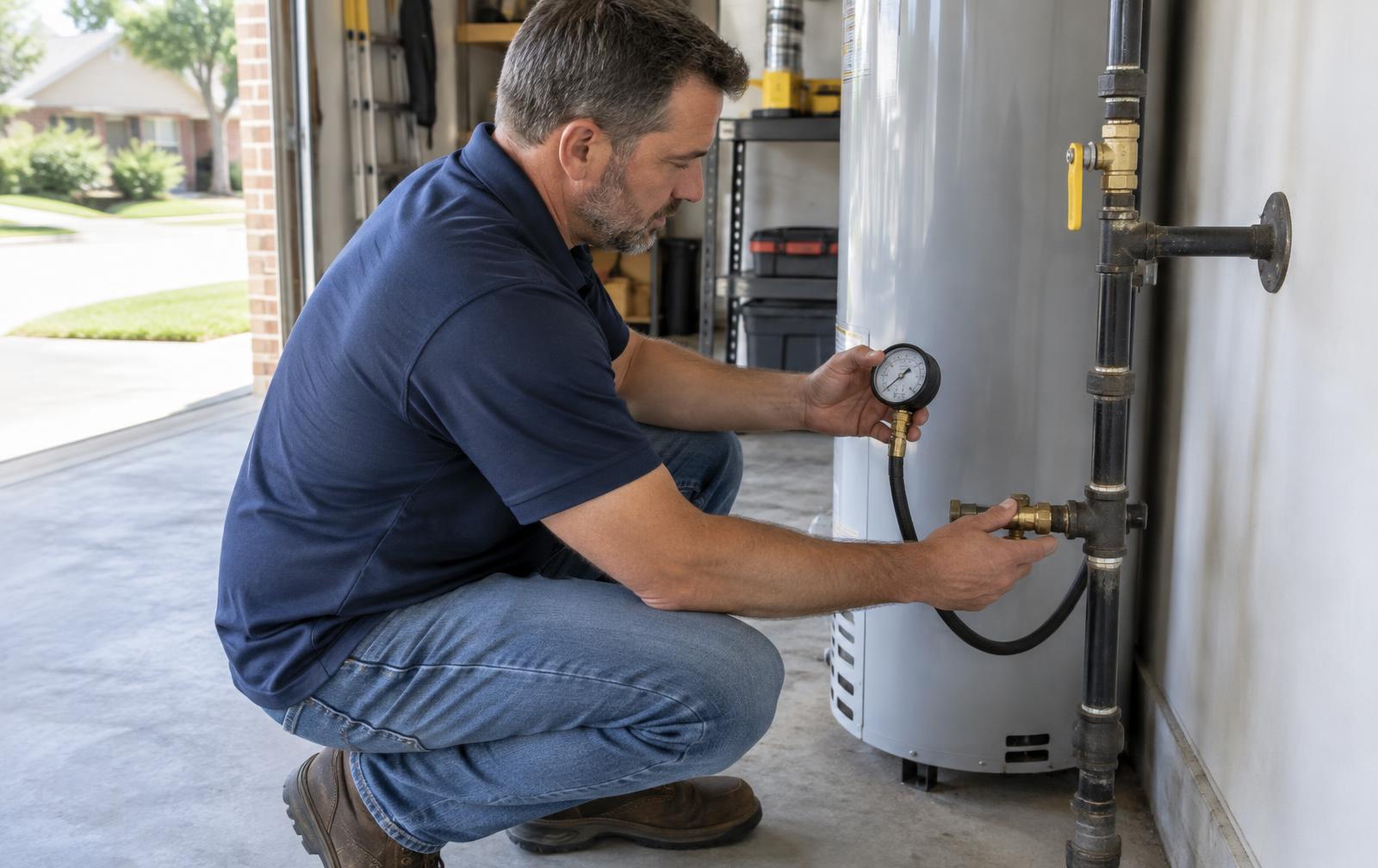
Licensed install, repair, and pressure-testing for Farmers Branch homes — every line signed off to Texas code and Atmos requirements.
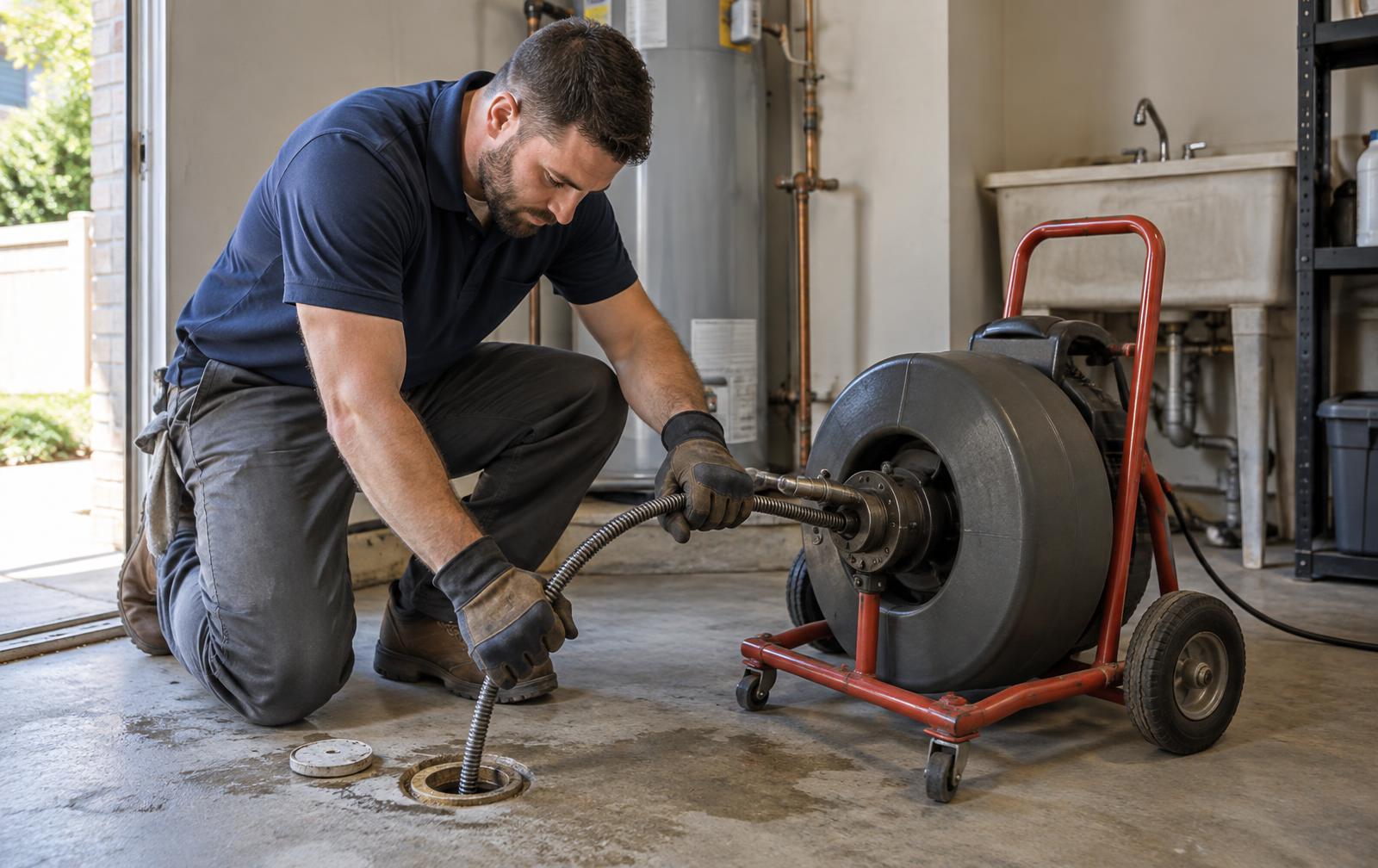
Full-clear service and camera confirmation for the drains under Farmers Branch's neighborhoods.
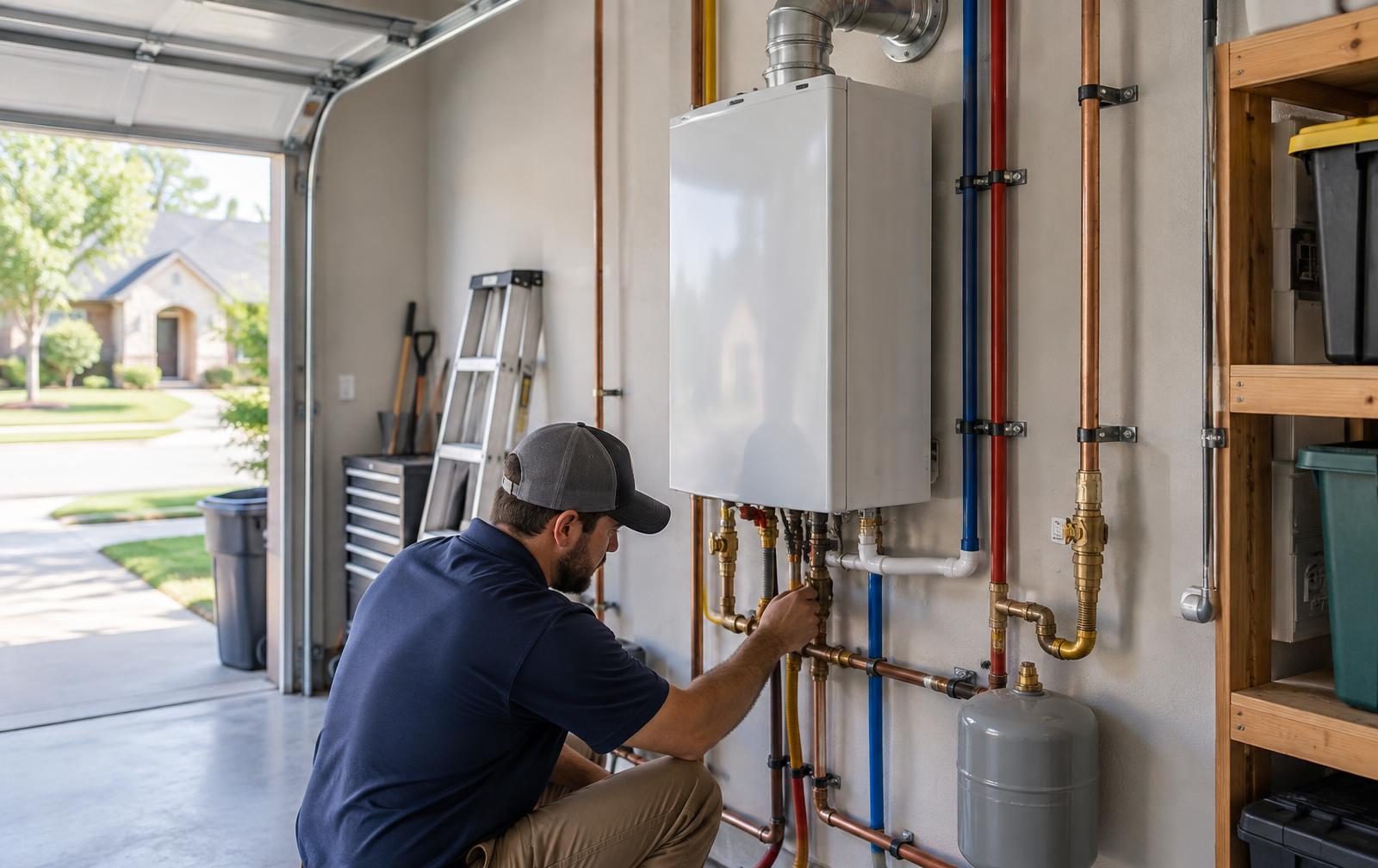
Install, service, and annual descaling — Farmers Branch's hard tap water eats tankless heat exchangers without it.
same-day, 7 days a week response across Farmers Branch for burst pipes, heater failures, and main-line backups.
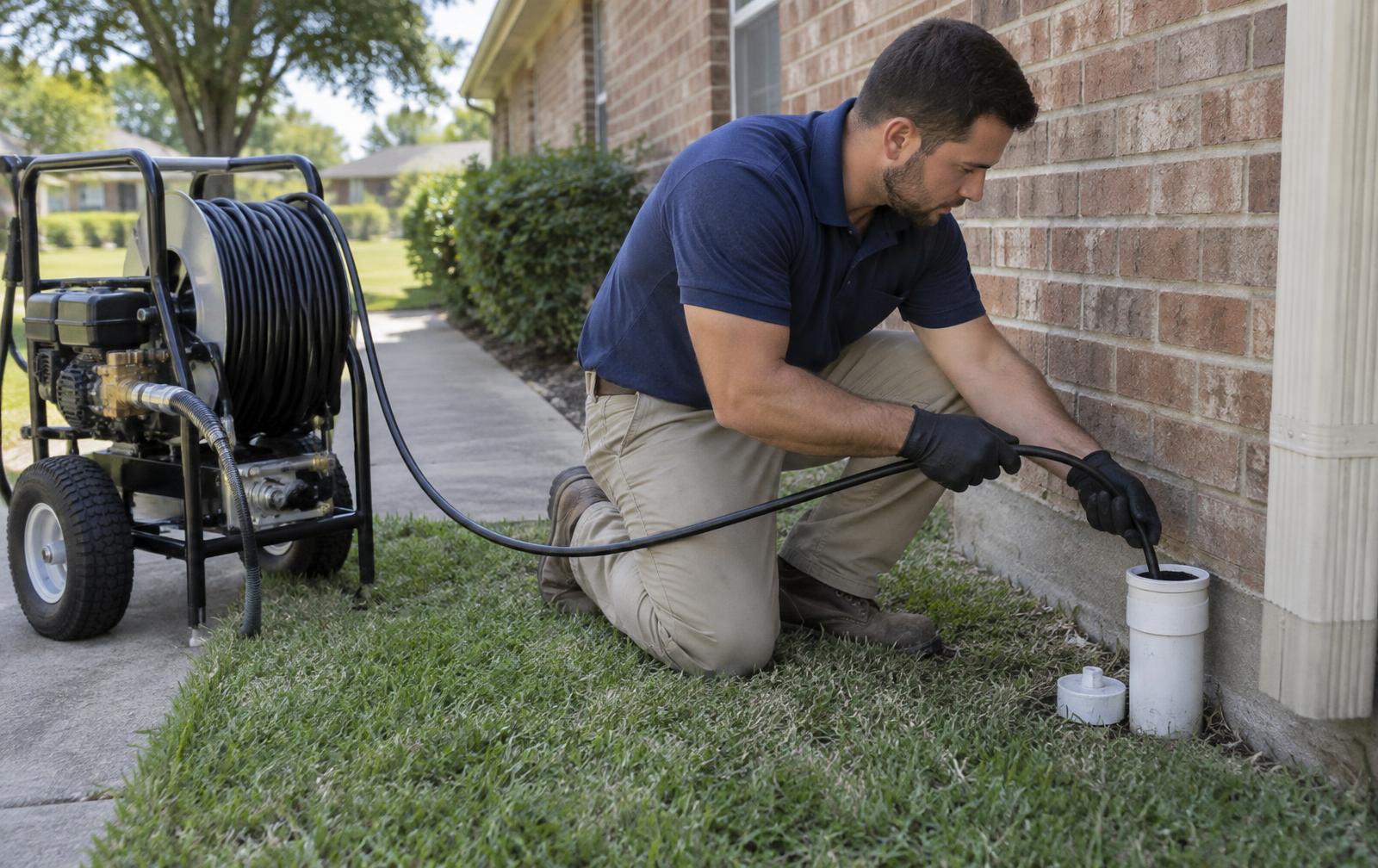
High-pressure cleaning that clears scale, grease, and roots from Farmers Branch's lateral runs — full-diameter, lasting clean.
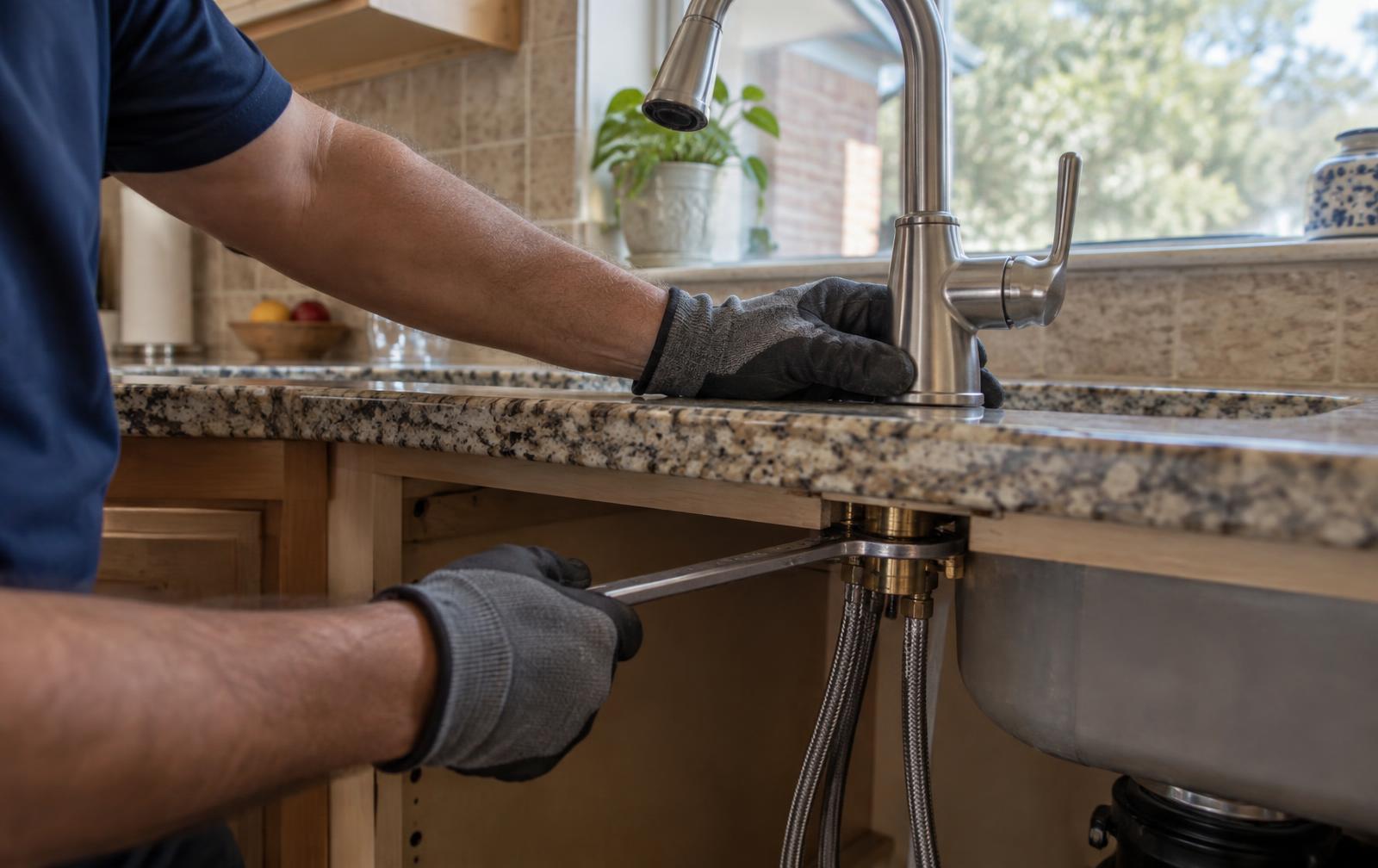
Cartridge, stem, and full-fixture replacement for Farmers Branch kitchens and bathrooms — hard-water-ready parts stocked on the truck.
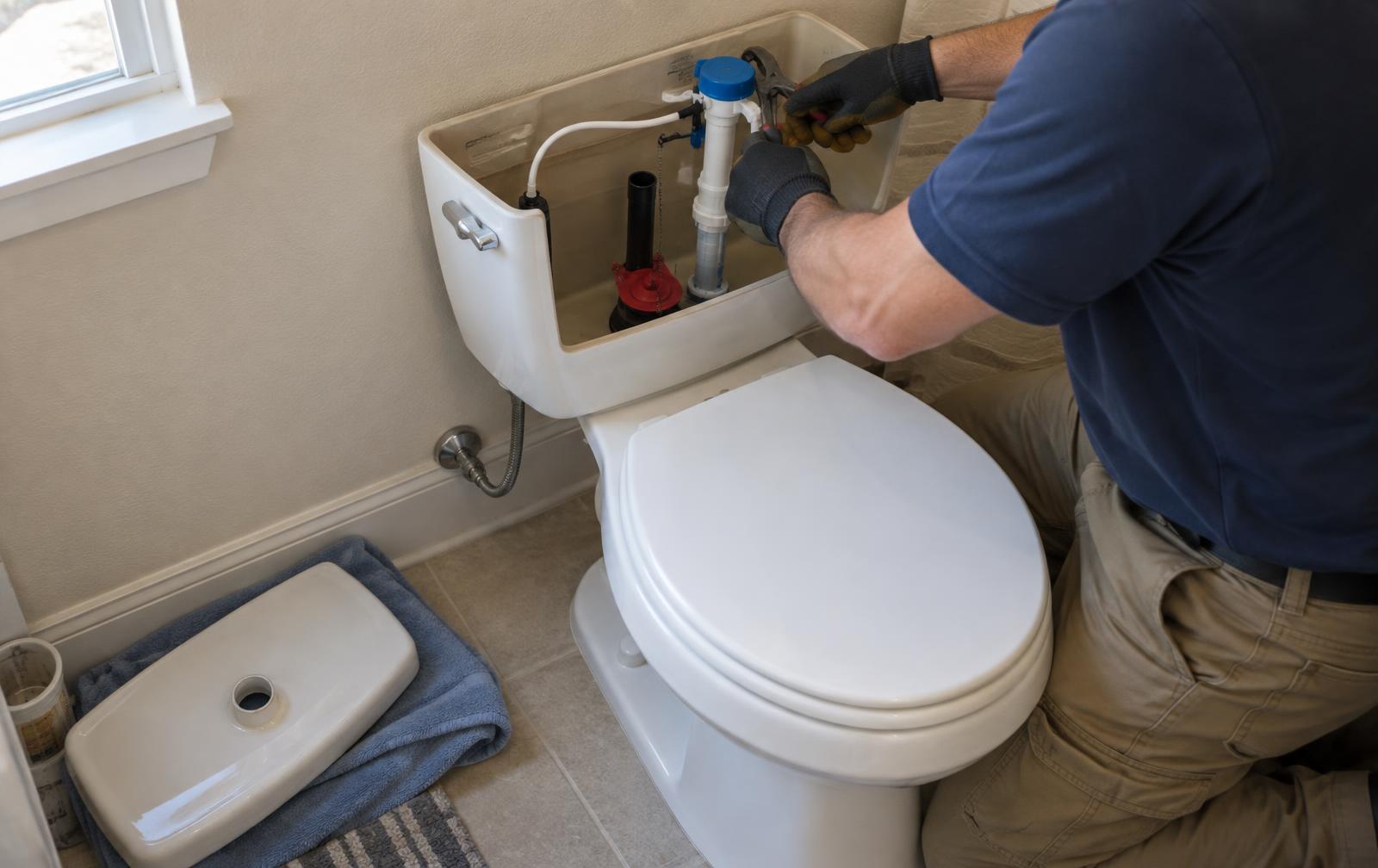
Rebuilds, wax-ring resets, flange repairs, and full replacements — the running toilets and rocking bowls in Farmers Branch homes.
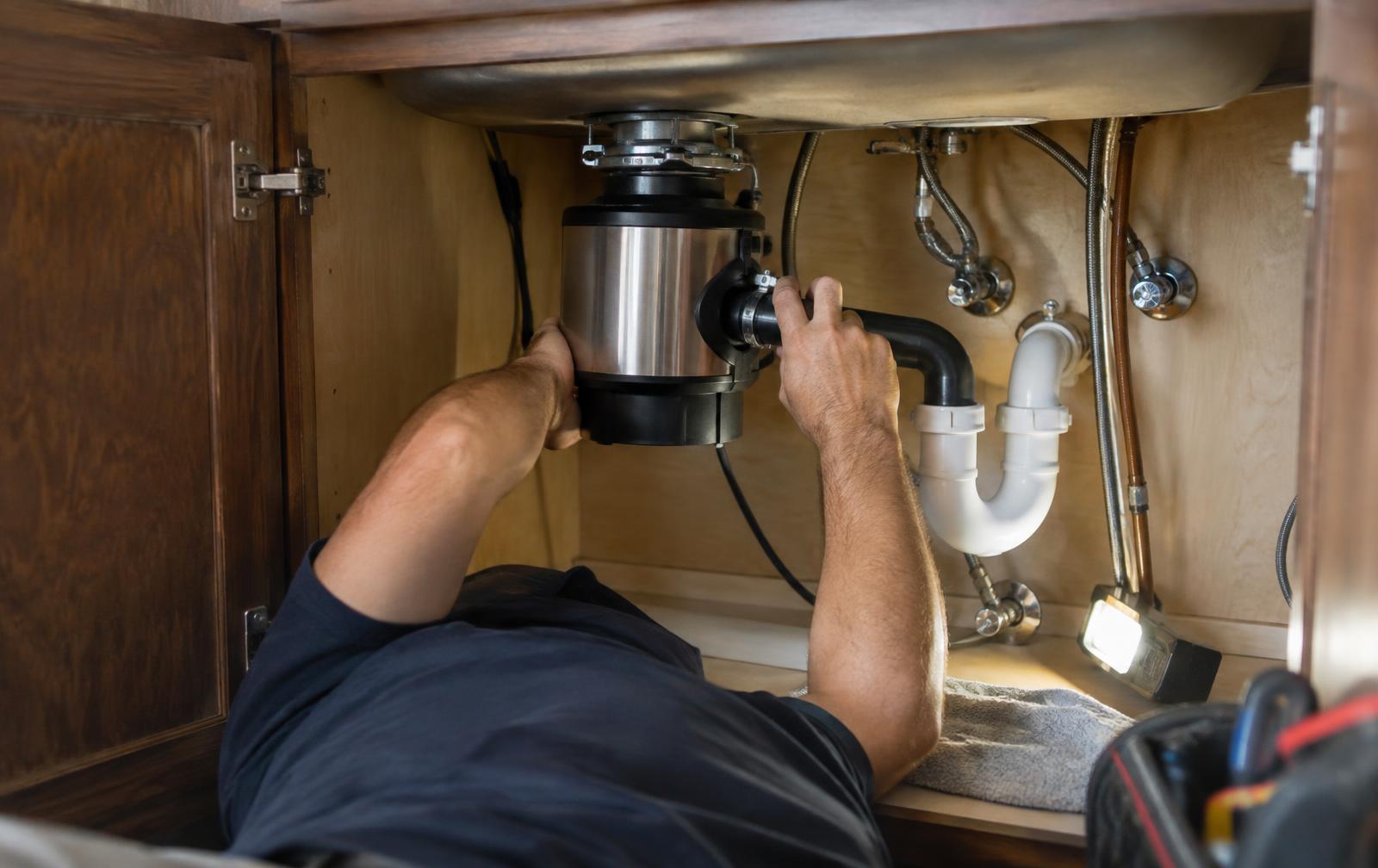
Jam clearing, leaking-unit swaps, and quiet 3/4 HP upgrades for Farmers Branch kitchens — same-visit install.
Water Heater Trouble in Your Farmers Branch Home?
Honest diagnostics, code-compliant replacement, same-day response for failures. Schedule now.