
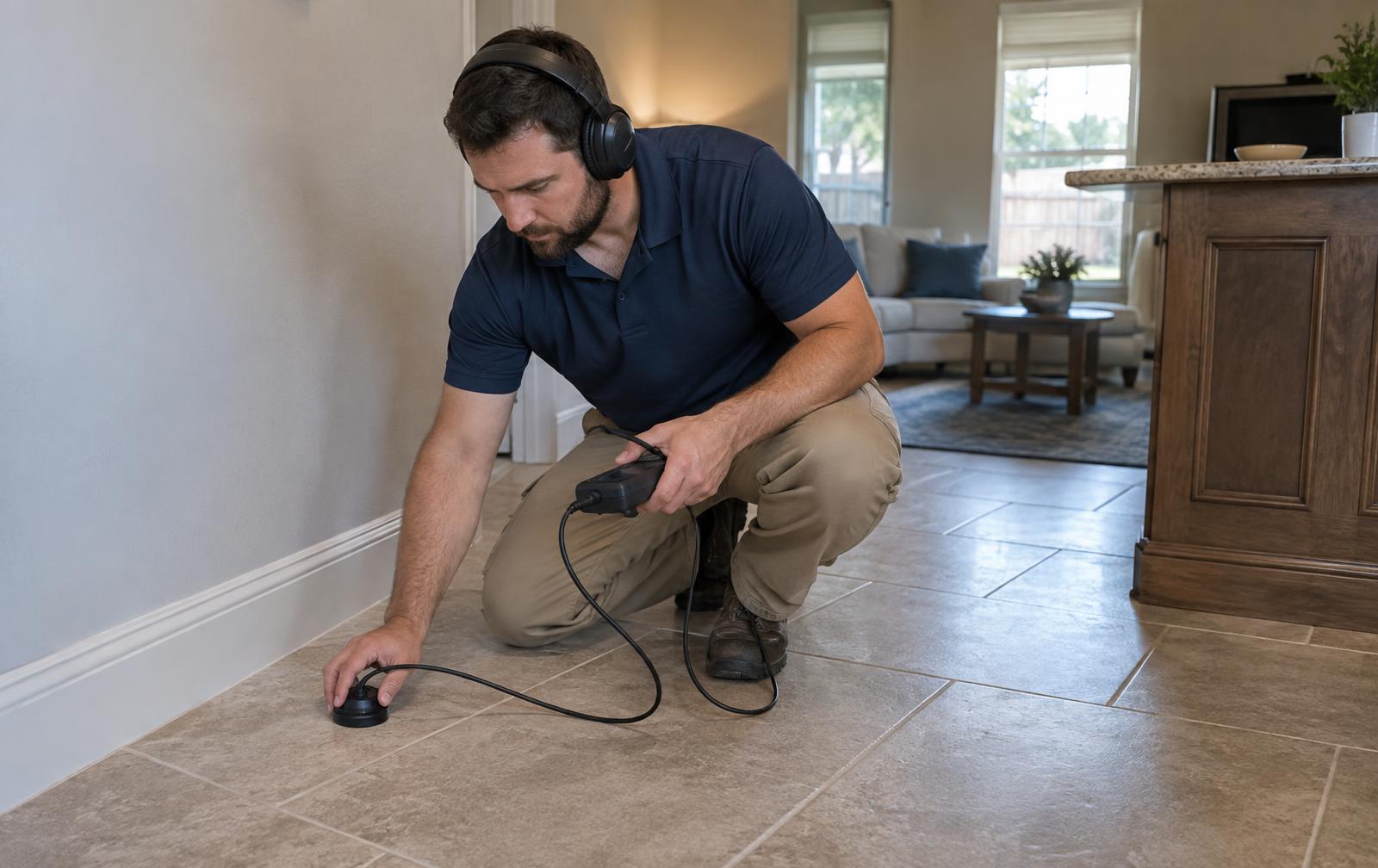
Leak Detection in Farmers Branch, TX
The bill went up, but nothing at the house is different. There's a patch on the drywall that will not dry out. The meter dial keeps ticking even with every faucet closed. Our crew narrows hidden leaks down to a single spot in Farmers Branch homes using acoustic gear, thermal cameras, and pressure isolation, so nobody swings a hammer until we know precisely where the water is going.
Different Decades of Farmers Branch Plumbing, Different Leak Habits
Two building waves shaped Farmers Branch, and each behaves differently under a leak locator. The Valwood corridor west of Josey Lane filled in between 1955 and 1962, a stretch that includes some of the Palm Springs-styled model homes that made the area notable. Copper from that period runs under slab floors or inside the original wall cavities, and it is old enough now that a combined acoustic-and-thermal pass on the finished floor is usually where we begin.
The Mercer Crossing and Mercer Boardwalk corridor near I-635 tells a different story — construction there dates from 2017 onward, so PEX and PVC dominate, along with shared risers feeding the multi-family buildings. On those jobs we start with pressure isolation at the individual unit shut-off, because until we do that test we cannot say whether the leak belongs to that unit or to a stack it shares with a neighbor.
Regardless of the decade, we will not cut drywall or concrete on a hunch. A locate needs to hold up as a marked photo with a stated depth before any opening happens — that is what separates an actual detection visit from someone hoping the first hole lands in the right place.

What a Hidden Leak Looks Like in a Farmers Branch Home
These six come up constantly across Farmers Branch calls. Spot two together and it is worth booking a visit.
A pressurized line can lose a meaningful amount of water daily without a drop ever hitting the floor. No new sprinkler zone, no new fixture, just a higher bill — that combination alone is worth checking.
Close every fixture in the house, give it about fifteen minutes, then check the meter's small low-flow indicator. Any motion there means water is escaping somewhere between the meter and your taps.
Old damage from a past repair holds its shape. A mark that keeps getting visibly larger over time is being fed by something still running, usually higher up along the framing than where it first appears.
Trapped moisture behind a wall develops an odor long before it ever becomes visible. When the smell is limited to a single room, the source is generally close to that room.
A leak on the hot-water side heats whatever surrounds it. Our thermal camera usually flags a hot-line leak within a couple of minutes of arriving.
A leak large enough to notice will also pull down household pressure or shorten a shower. Combined with anything above, it points us toward a specific line before we even open the truck.
Acoustic, Thermal, or Pressure — Chosen for the House, Not a Checklist
Every locate ends in a photo you keep, not a spoken guess.
- 1Rule out the easy answers first
Closing valves in sequence while watching the meter tells us quickly whether we are dealing with a supply leak, a drain issue, or a bad fixture. A leaking trap connection is one common answer that needs no acoustic search at all.
- 2Hold pressure and listen along the run
On a pressurized supply line, we bring it up to roughly 65 PSI and move ground microphones and wall probes along its path. A pinhole failure makes a sharp, high-pitched hiss that narrows the search to inches.
- 3Let the thermal camera read the wall or slab
Heat from a hot-side leak spreads into the surrounding material, and the camera shows that trail even through tile or drywall. On a cold-side leak, we run hot water longer beforehand to build a contrast worth reading.
- 4Add tracer gas on the difficult ones
When the meter reading is ambiguous and both acoustic and thermal come back quiet, we push inert tracer gas into the isolated section and sniff along it. The gas rises exactly at the failure point.
- 5Deliver a marked photo and a written quote
You walk away with a photo showing the leak, an estimated depth, plain-language notes on what kind of leak it is, and a written repair quote — whether we handle the repair, another plumber does, or your own contractor takes it from there.
Where Leaks Tend to Turn Up Across Farmers Branch
Build era and construction style tell us most of what to expect before we ring the doorbell.
Built between 1955 and 1962, including several of the Palm Springs-styled model homes from the era. Original copper set into the slab or run through interior walls is now past sixty years old, which is why an acoustic-and-thermal pass on the finished floor is typically our starting point here.
Ranch-style homes from the same mid-century wave sit along Valley View Lane, generally with copper poured directly into the original slab. A warm patch showing up on the tile in one of these homes usually points us straight to a thermal scan before anything else.
New single-family and multi-family construction has filled this corner near I-635 and I-35E from 2017 onward, so PEX and PVC are the norm rather than the exception. Shared risers in the multi-family buildings mean we lean on unit-level pressure isolation before we touch acoustic gear.
This section filled in during the broader mid-century-through-1970s build-out that shaped most of Farmers Branch, putting its supply lines in a similar age bracket. A meter that keeps ticking with every fixture closed is the first thing we look at in these tract homes.
The original town core, next to Farmers Branch Historical Park, predates the suburban expansion of the 1950s and 60s, so the plumbing here can be older than almost anywhere else in the city. A wall mark that keeps spreading in one of these homes usually means the leak has been running longer than it appears.
The tract homes near these city parks date to the same mid-century wave as most of Farmers Branch. A musty smell confined to a single room in one of these houses is a useful early clue, since moisture here typically has not traveled far from its source yet.
What Farmers Branch Homeowners Say

A Marked Photo Comes Before Any Cutting
Every visit closes out with a documented locate — a photo with the leak marked, plain-language notes on the type of leak, and a written repair quote. If the leak cannot be pinned down on the first visit, we keep working the problem with you rather than closing the file.
We're licensed through the Texas State Board of Plumbing Examiners, insured, and family-owned, and every truck rolls out of our shop in The Colony. Farmers Branch runs about 20 to 30 minutes from there under normal traffic, and most detection visits get scheduled the same day you call.
Straight Answers, No Sales Pitch
Our Other Plumbing Services in Farmers Branch, TX
A hidden leak is frequently the first sign of an aging supply system. We also handle what tends to follow — slab reroutes, water heater work, full repipes — in one local visit.
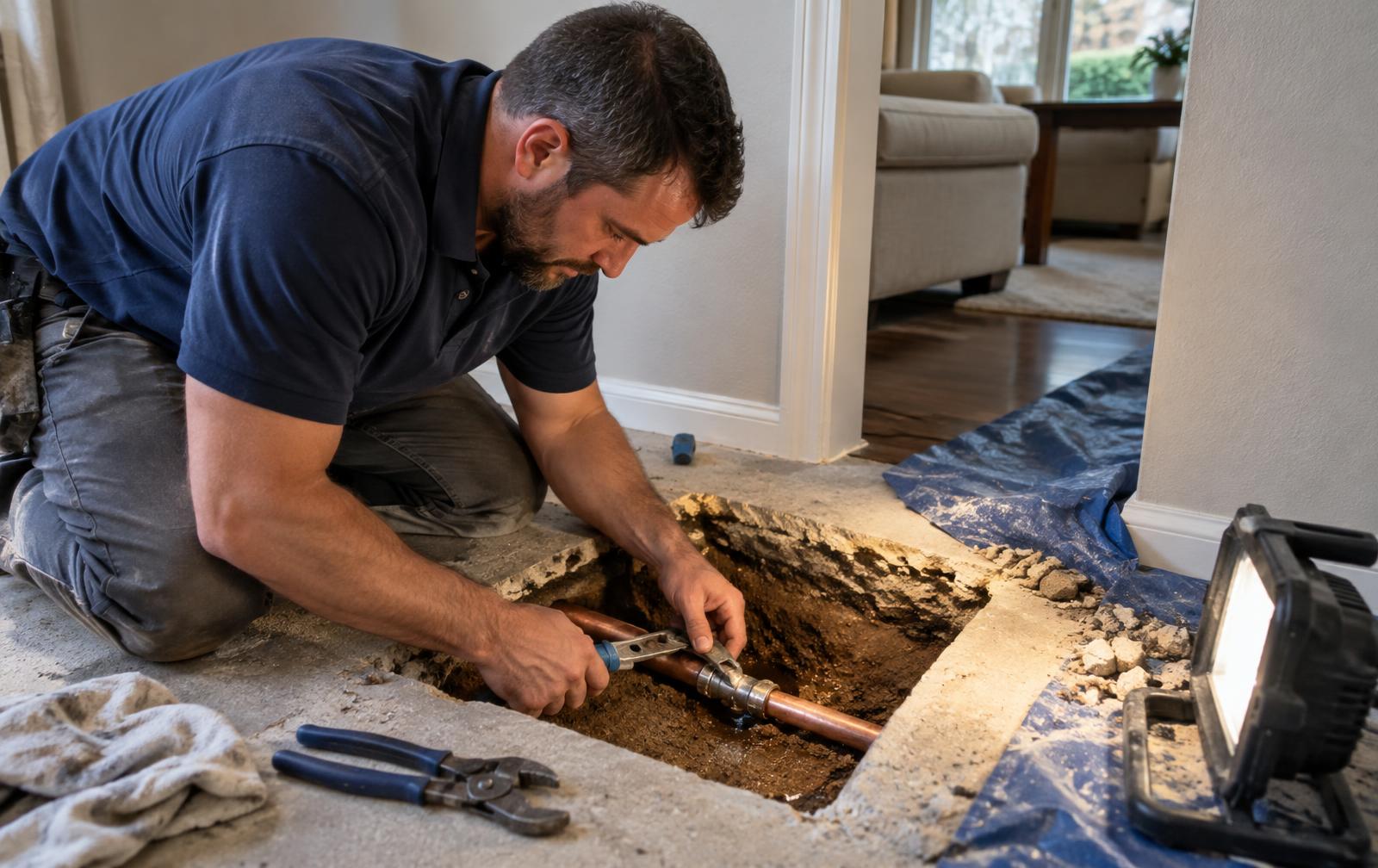
Electronic detection under Farmers Branch slabs — reroute options that save your finished floors when possible.
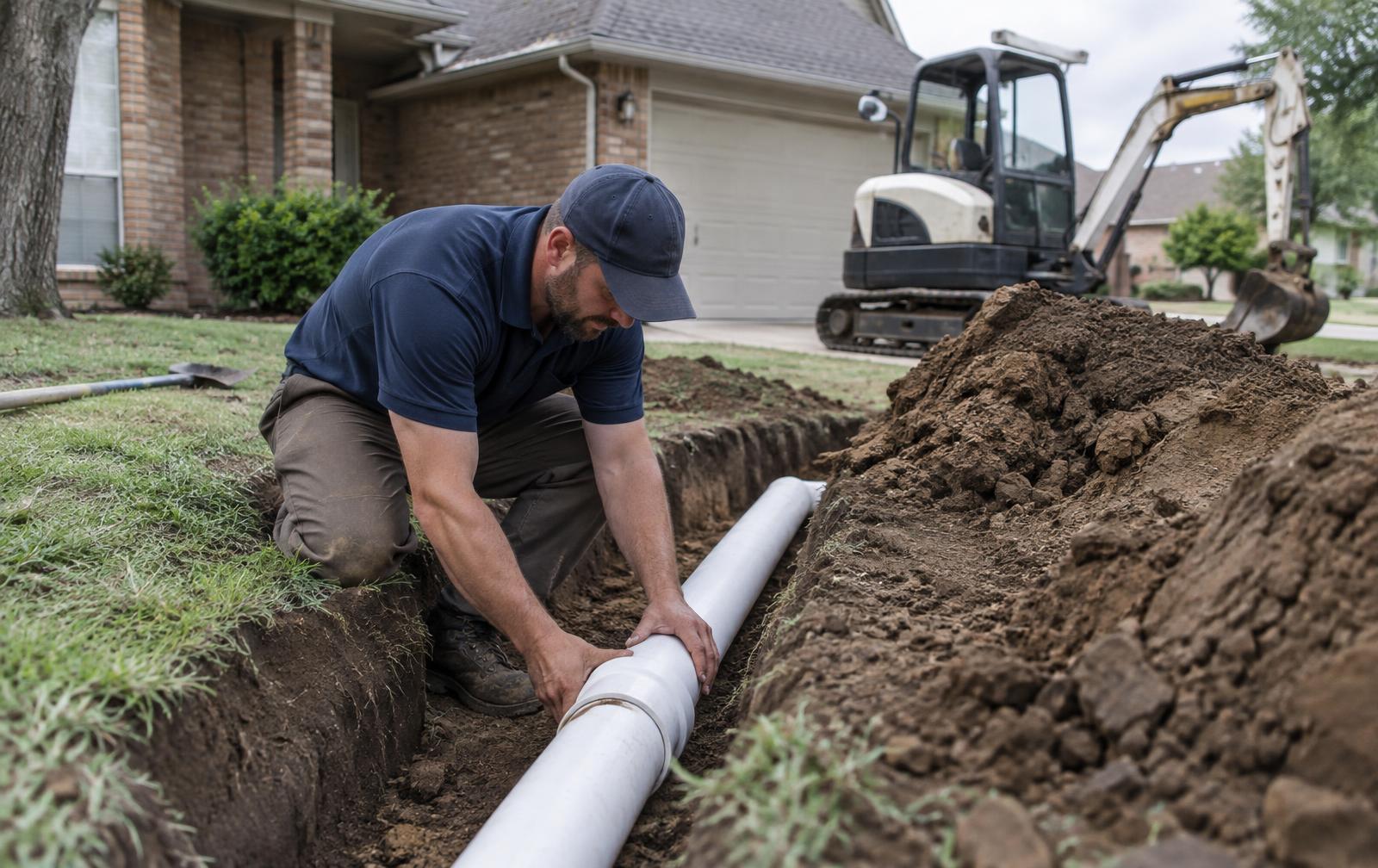
Trenchless replacement for the aging laterals across Farmers Branch's older runs — camera first, quote in writing, minimal yard damage.
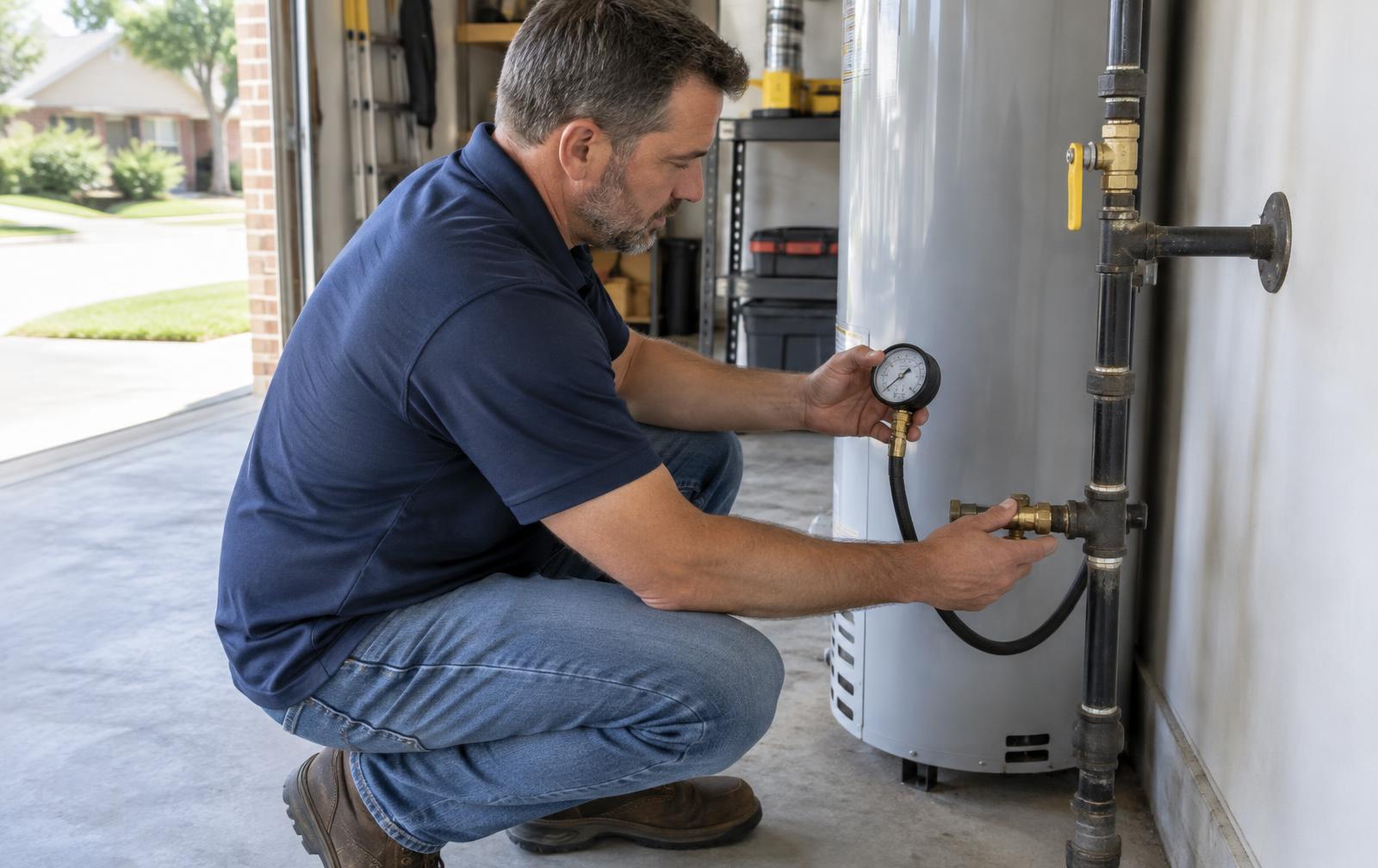
Licensed install, repair, and pressure-testing for Farmers Branch homes — every line signed off to Texas code and Atmos requirements.
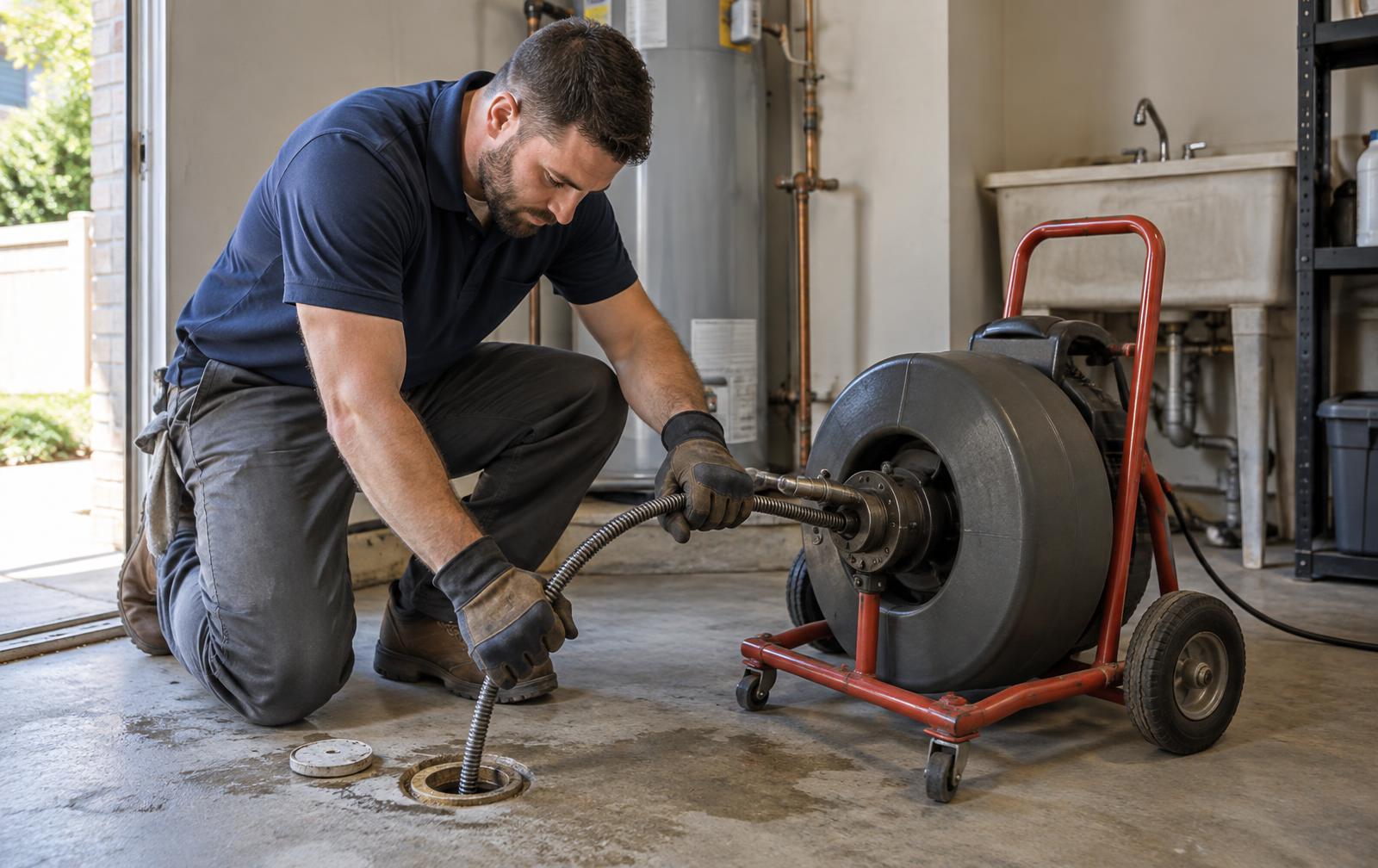
Full-clear service and camera confirmation for the drains under Farmers Branch's neighborhoods.
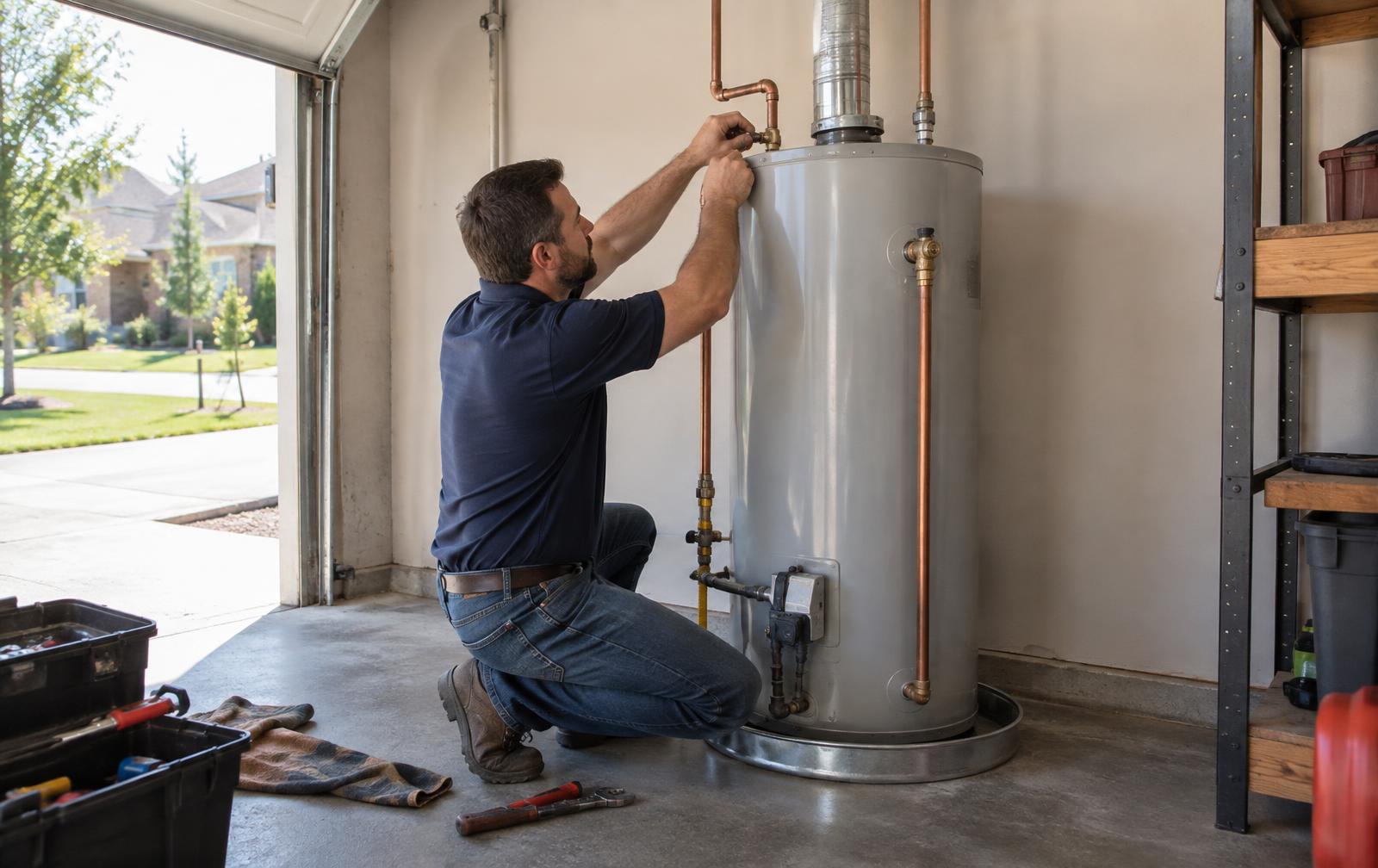
Repair, flush, and replacement of tank units — including attic and garage heaters common to Farmers Branch homes.
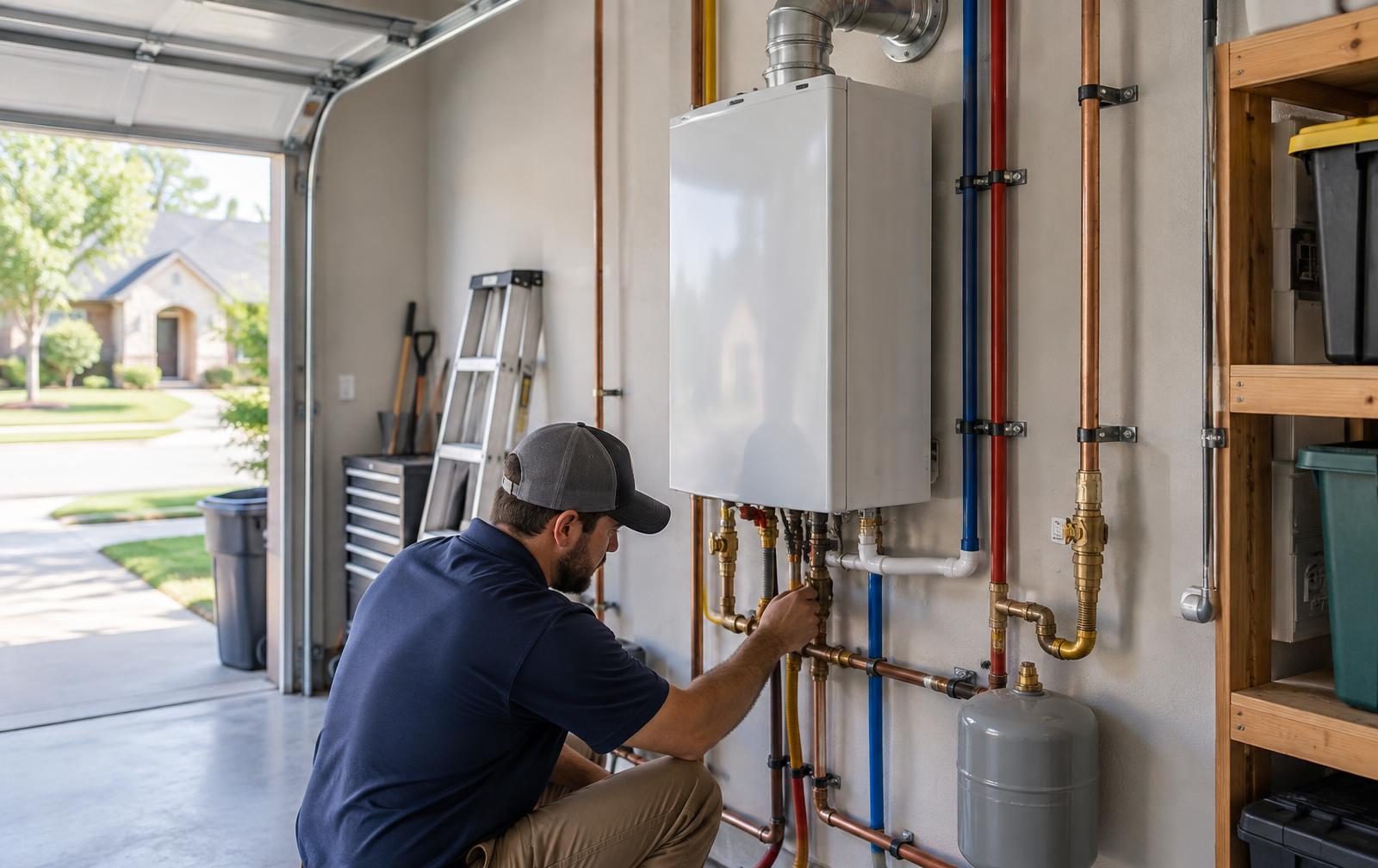
Install, service, and annual descaling — Farmers Branch's hard tap water eats tankless heat exchangers without it.
same-day, 7 days a week response across Farmers Branch for burst pipes, heater failures, and main-line backups.
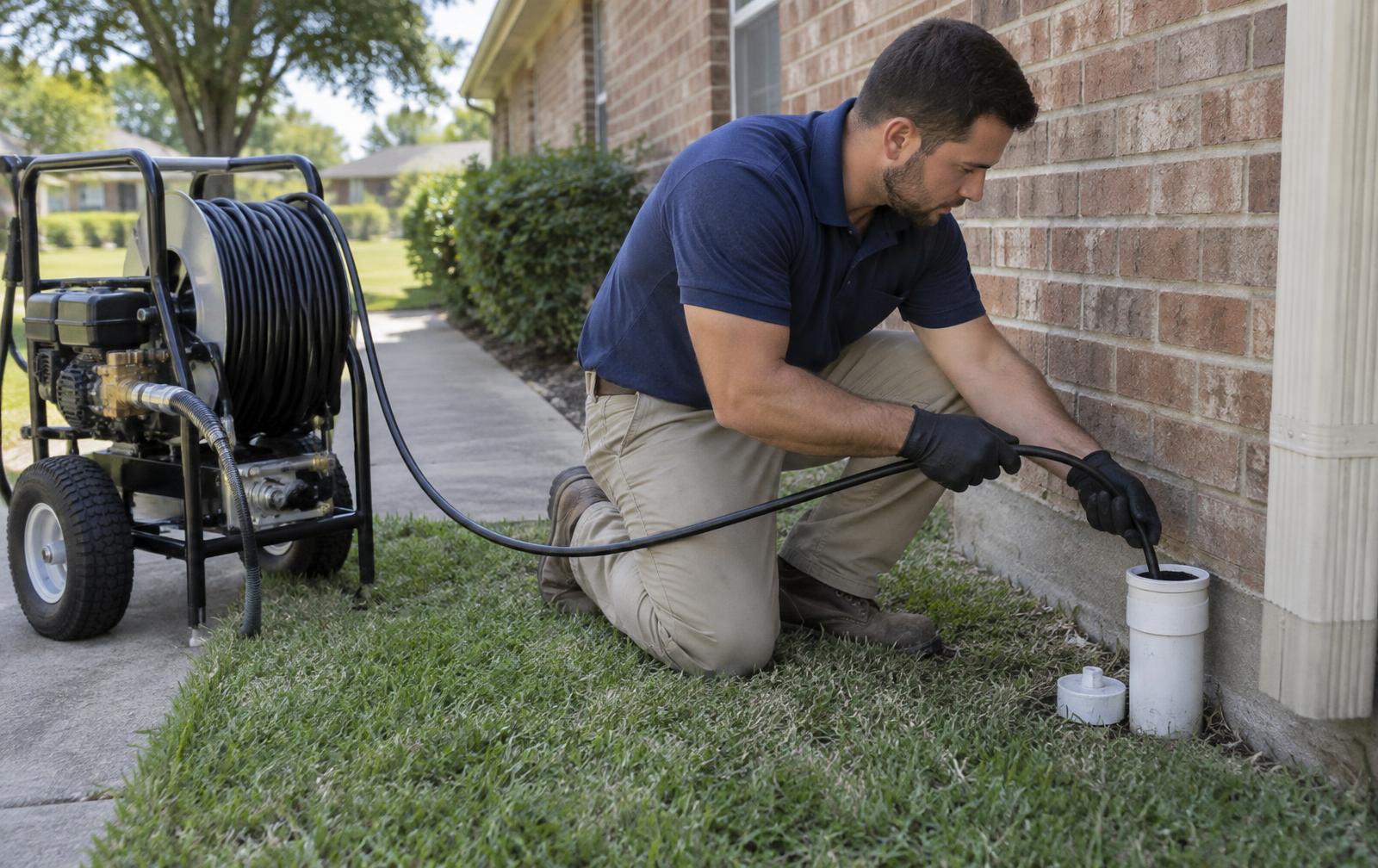
High-pressure cleaning that clears scale, grease, and roots from Farmers Branch's lateral runs — full-diameter, lasting clean.
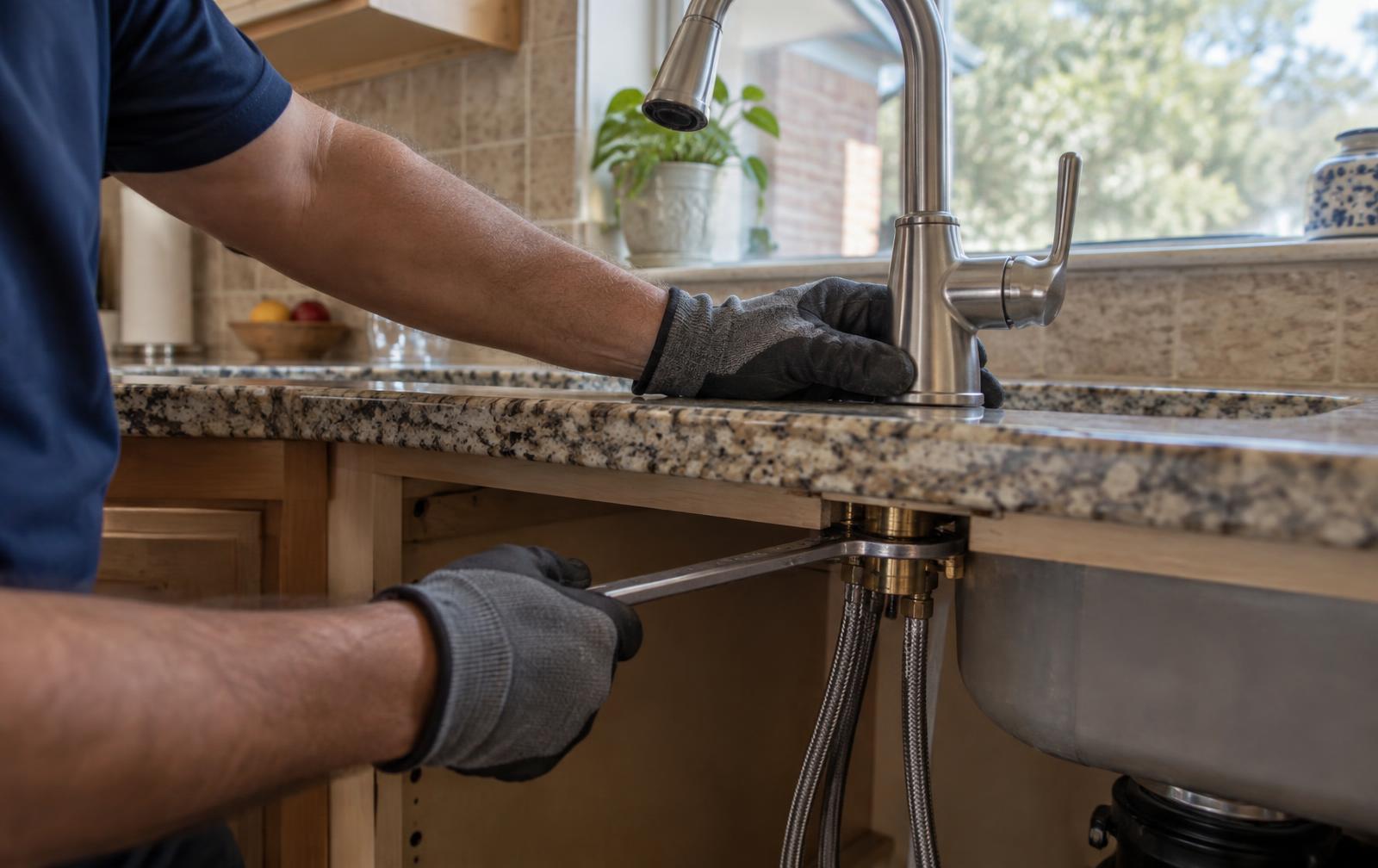
Cartridge, stem, and full-fixture replacement for Farmers Branch kitchens and bathrooms — hard-water-ready parts stocked on the truck.
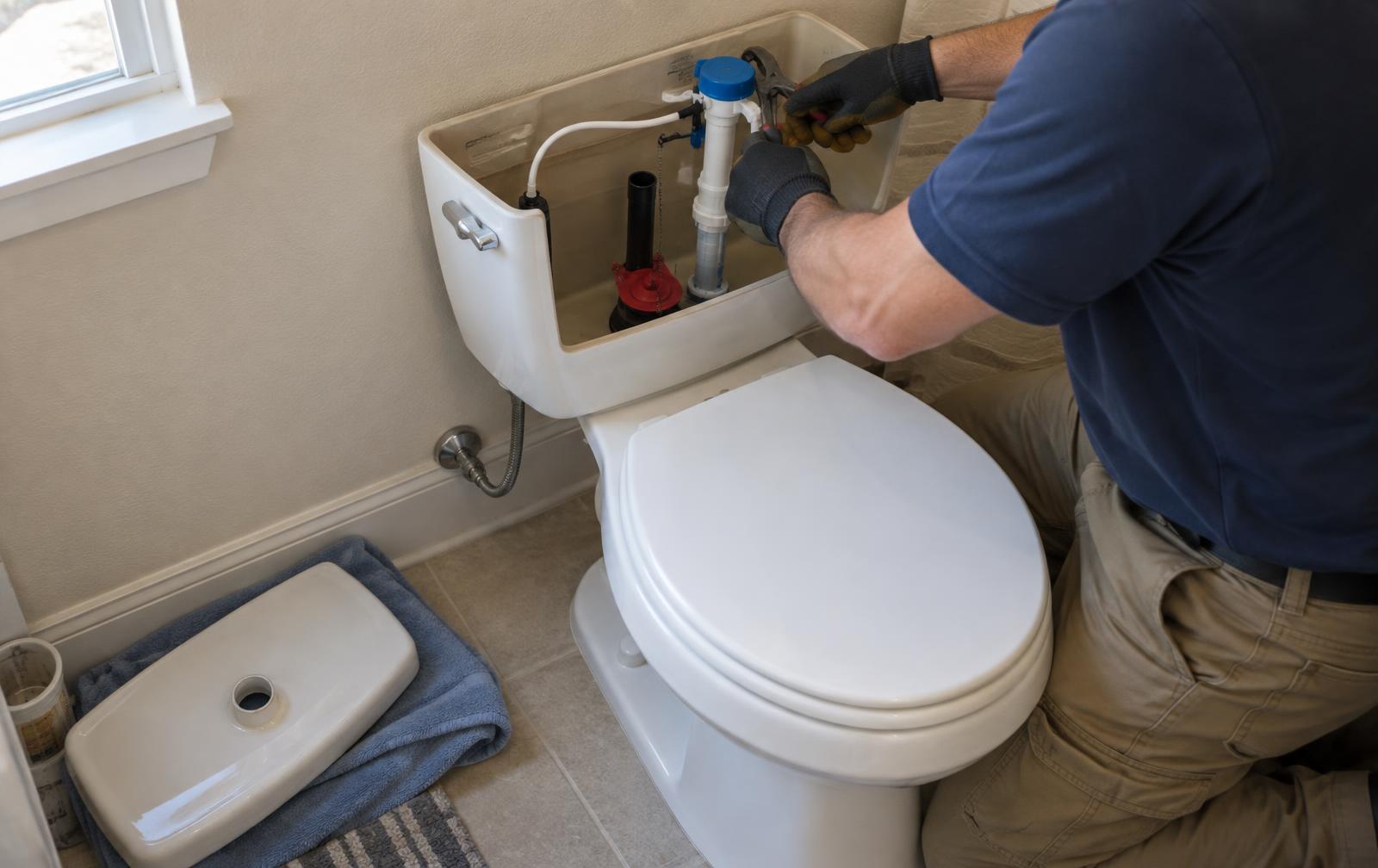
Rebuilds, wax-ring resets, flange repairs, and full replacements — the running toilets and rocking bowls in Farmers Branch homes.
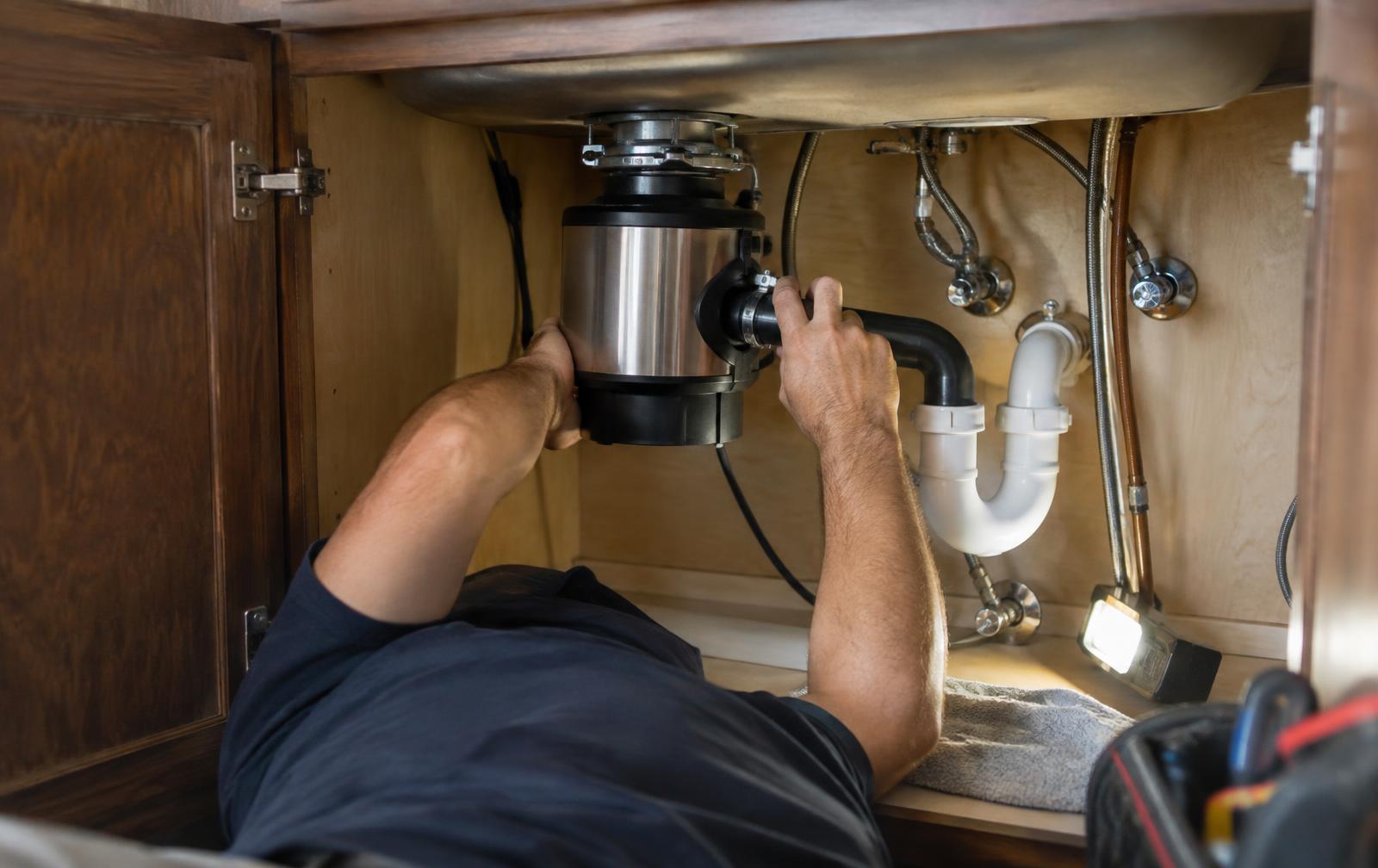
Jam clearing, leaking-unit swaps, and quiet 3/4 HP upgrades for Farmers Branch kitchens — same-visit install.
Notice a Hidden Leak in Your Farmers Branch Home?
Non-invasive detection, a documented locate, and an honest repair quote. Schedule your same-day visit.