
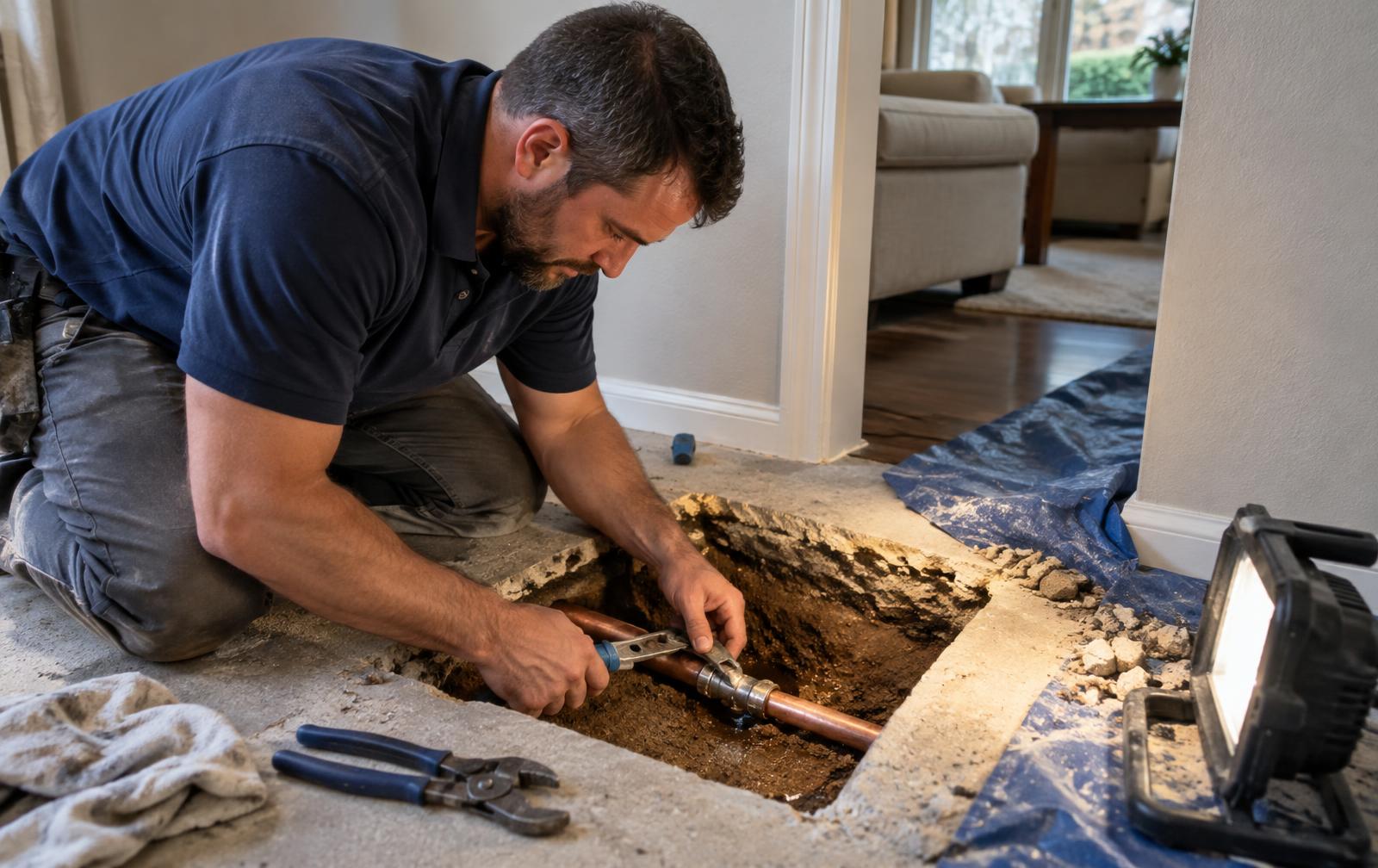
Slab Leak Repair in Farmers Branch, TX
A patch of tile that never quite dries. One section of bedroom floor noticeably warmer than the rest. A water bill that climbed even though nothing new is plugged in or running. Before any concrete comes up in a Farmers Branch home or condo, we mark exactly where the leak sits and lay out your options in plain terms.
Concrete Cut or Overhead Bypass — That's the Real Decision
Much of Farmers Branch's older stock dates back to the Valwood-era growth of the 1950s and 60s, and those homes typically have copper embedded straight into slabs that predate today's post-tensioning standards. Blackland Prairie clay has been heaving under that concrete for six decades, and the city's chloraminated water supply has spent just as long working on copper from the inside. Put those two together and it explains why slab leaks turn up regularly in the city's original neighborhoods.
Mercer Crossing and Mercer Boardwalk are a different story. Construction there is recent, on modern copper or PEX, but finished concrete floors and shared party walls mean tear-out is genuinely expensive to redo. Getting the exact spot right matters even more in that setting, because an inaccurate guess on a finished floor turns a small job into a large restoration bill.
In either setting, the first call shouldn't go to somebody already carrying a jackhammer. It should go to someone carrying acoustic and thermal gear who can mark the leak within a few inches, then talk through whether cutting the slab or bypassing it overhead actually fits your house.

How a Slab Leak Shows Up in a Farmers Branch Home
A slab leak can run quietly for weeks. Finding it early keeps things simple; missing it usually costs you flooring and a mold cleanup on top of the plumbing.
A hot-side slab leak radiates heat up through the concrete above it. Walk the house barefoot early in the day and an oddly warm patch of tile or wood floor is usually your best clue.
A slab pinhole leak can quietly waste a lot of water every single day. When a Farmers Branch bill climbs and nothing new was added to the house, a hidden slab leak belongs near the top of the suspect list.
Losing water on the hot side means the heater has to keep refiring to replace what's escaping. A closet that feels warmer than usual, or a burner that seems to run constantly, is worth paying attention to.
Long-term moisture under the slab breaks down grout and pushes hardwood up along its seams. Both point to a leak that has already been active for some time.
Turn off every fixture, kneel near the floor or an interior wall, and listen closely. A quiet hiss or running sound usually means water is moving somewhere beneath the concrete.
A hot-side slab leak can pull down pressure and shorten a shower noticeably. When the cold side seems fine but hot water feels thin, look under the slab before anywhere else.
Pinpoint First, Choose the Fix Second
Nothing gets cut until we know exactly where the problem is and whether cutting even makes sense.
- 1Figure out hot side or cold side
A quick pressure check at the water heater tells us which line has actually failed. That single answer shapes everything after it, including whether a bypass would touch one line or two.
- 2Narrow the spot down
Ground microphones, a thermal camera pointed at the floor and walls, and a hydrogen sniffer on the isolated line work together to shrink the search area to roughly a dinner-plate-sized circle.
- 3Explain the tradeoffs plainly
One option is a small cut in the concrete right over the failure, a new splice, and a patch — usually the cheaper path when the rest of the copper still has life left. The other is running a fresh line overhead through the attic and leaving the old slab run capped off and unused — often the smarter move when the rest of the copper is the same age as what just failed.
- 4Do the agreed-upon work
For the concrete option, we cut cleanly, expose the pipe, join in a new fitting or sweat a solid joint, and patch the opening. For the overhead option, new PEX-A travels through the attic, connects in above the fixtures it serves, and the old line gets capped where it sits.
- 5Prove it holds and hand you the record
The finished line gets pressure-tested at 100 PSI for fifteen minutes while you watch the gauge with us. You keep photos from before, during, and after, so there's a record of exactly what changed.
Cut the Concrete or Go Over the Top — We Quote Both
No single answer fits every house. It comes down to the copper's age, how many bathrooms tie into that particular line, and how much of your slab floor is already finished.
A focused cut exposes the exact failure point, a new fitting closes the gap, and the concrete gets patched back over. Good fit for one isolated failure on a line that still has plenty of service life ahead of it.
- Lower cost for a single, isolated failure
- Keeps the plumbing routed exactly where it always was
- Concrete patching and finish flooring fall to your restoration crew
- Less sensible if the surrounding copper shares the same age
The failed section under the slab gets capped and left alone, while a new line runs overhead through the attic, connecting in above each fixture it feeds. Makes the most sense when today's failure is likely the first of several still coming.
- Ends concrete cutting on that supply run for good
- Skips past copper you can no longer inspect or trust
- No attic to work with, no problem — soffits can carry the line instead
- Higher cost today, cheaper across the years that follow
How the Fix Tends to Differ Across Farmers Branch
The year a house went up changes what a slab leak actually means for the repair.
This stretch went up between 1955 and 1962, and original slab copper is still common in these homes. A leak found here is often a preview of others to come, which is usually why a full overhead reroute gets brought up instead of a string of separate patches.
Sharing the same mid-century construction as the rest of the Valwood area, homes along this stretch tend to carry the identical original-copper setup, and a single confirmed leak here often opens the reroute conversation early.
Sitting near Farmers Branch Historical Park, this is the oldest section of the city and can hold the longest-serving copper still in the ground. A confirmed leak in one of these homes is a strong argument for talking through a full overhead conversion rather than chasing one patch at a time.
Built during the same mid-century wave, this subdivision sits on ground that has been shifting for decades, and that ongoing movement tends to stress copper joints throughout the house, not only at the one spot currently leaking.
New slabs and newer copper or PEX make this corridor a much simpler case — an isolated concrete patch is usually the right call rather than a whole-house conversation.
Part of the broader mid-century-through-1970s buildout that shaped much of the city, these tract homes generally follow the same aging-copper pattern found across Farmers Branch's older sections, so we confirm the build year before recommending either path.
What Farmers Branch Homeowners Say

Getting the Slab Leak Right the First Time
Whether it's a concrete patch or a full overhead conversion, our workmanship on every Farmers Branch slab leak job is warrantied. If something we installed fails, our workmanship warranty covers the return trip and the correction. If a separate leak later shows up elsewhere on the same aging copper, that's the exact scenario we described upfront, and the reason a reroute may have come up in the first conversation.
We're insured, family-owned, and hold our license through the Texas State Board of Plumbing Examiners. Every truck comes from our shop in The Colony, roughly 20 to 30 minutes from Farmers Branch under normal traffic, and an active leak usually gets a truck out that same day.
Straight Answers, No Sales Pitch
Our Other Plumbing Services in Farmers Branch, TX
A slab leak is often a sign of aging supply lines throughout the rest of the house. We also cover the sewer, the water heater, and the full re-pipe conversation — one visit, one local crew in Farmers Branch.
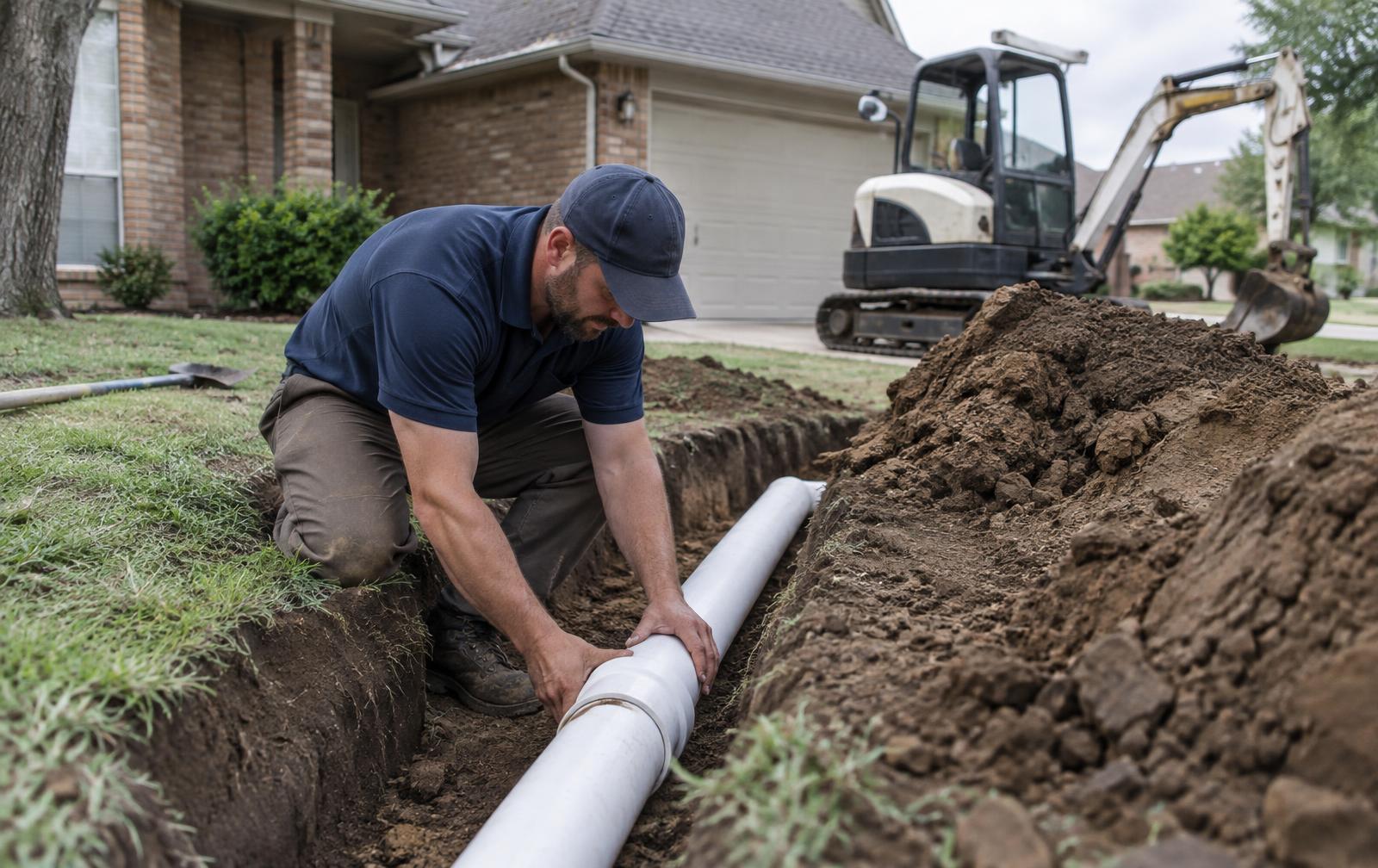
Trenchless replacement for the aging laterals across Farmers Branch's older runs — camera first, quote in writing, minimal yard damage.
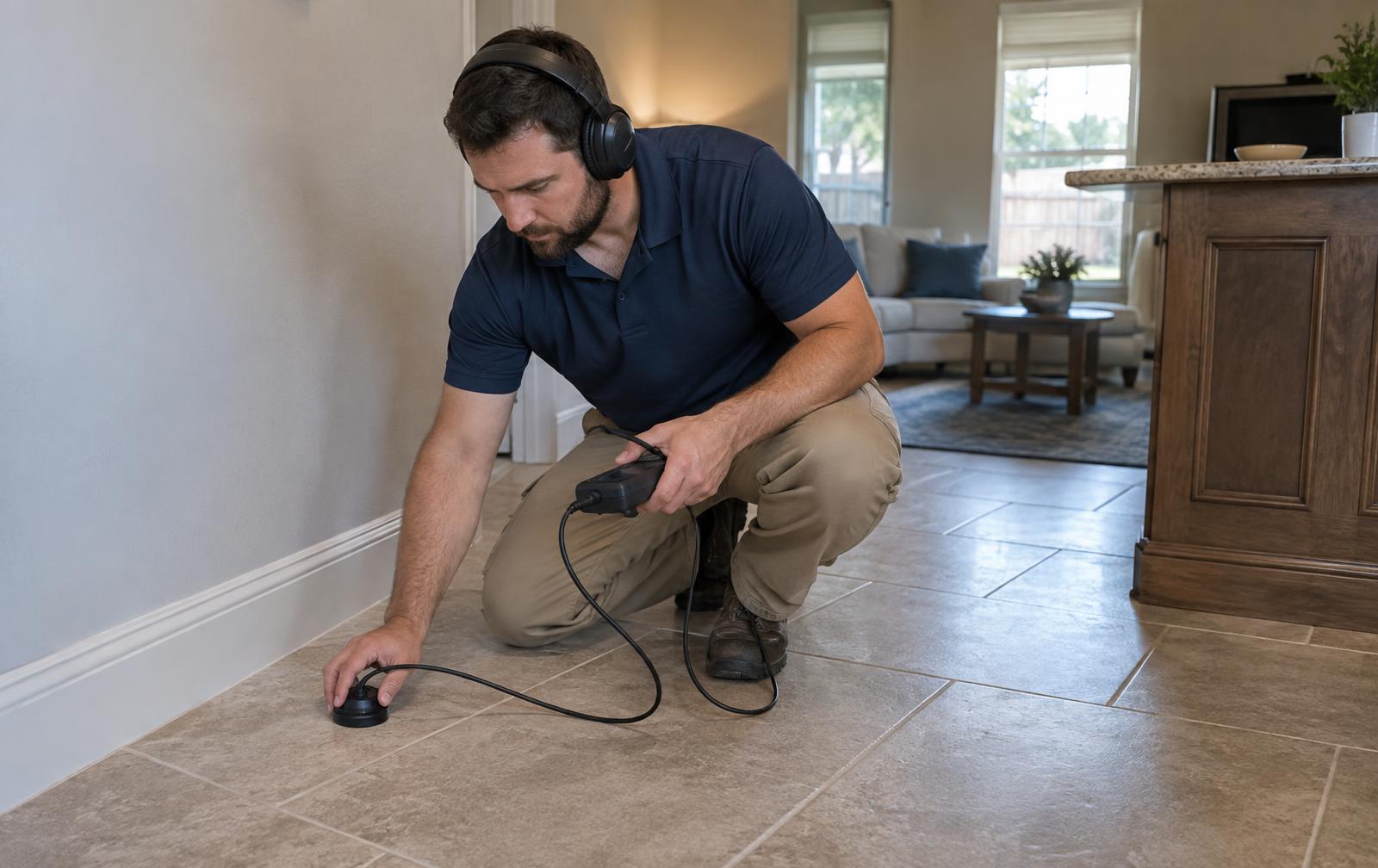
Acoustic, thermal, and pressure testing to pinpoint hidden leaks in Farmers Branch slab and wall lines without tearing into finishes.
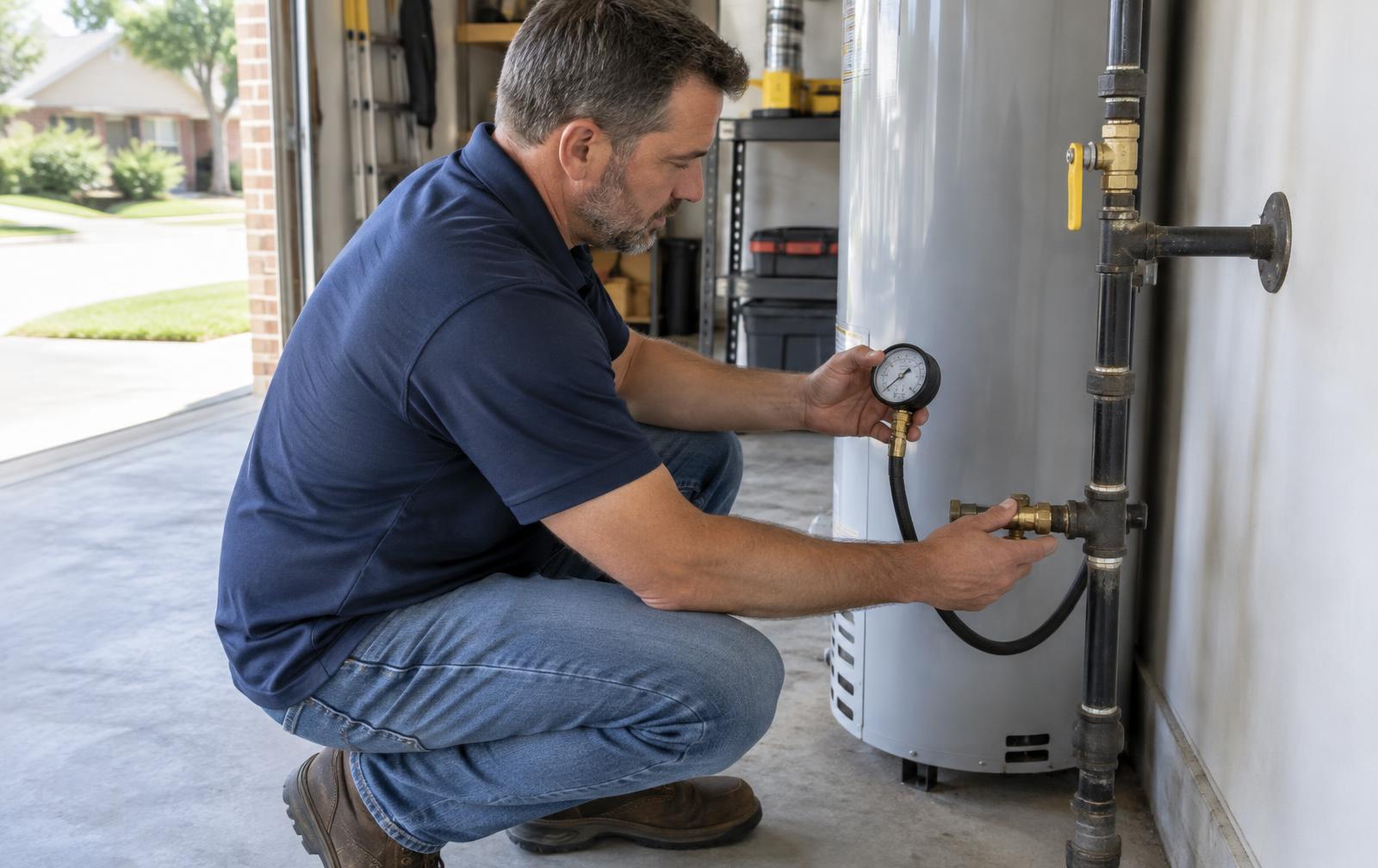
Licensed install, repair, and pressure-testing for Farmers Branch homes — every line signed off to Texas code and Atmos requirements.

Full-clear service and camera confirmation for the drains under Farmers Branch's neighborhoods.
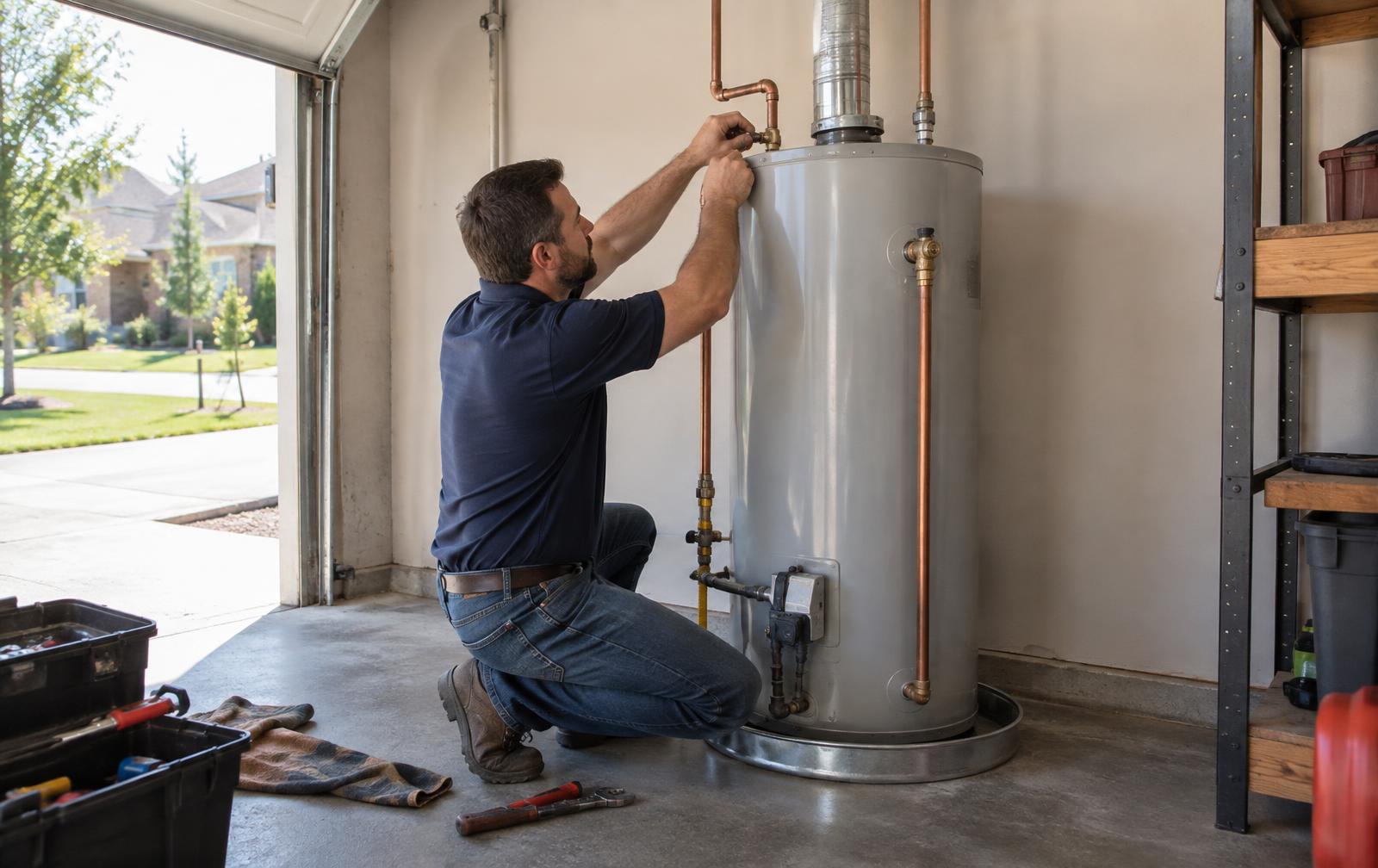
Repair, flush, and replacement of tank units — including attic and garage heaters common to Farmers Branch homes.
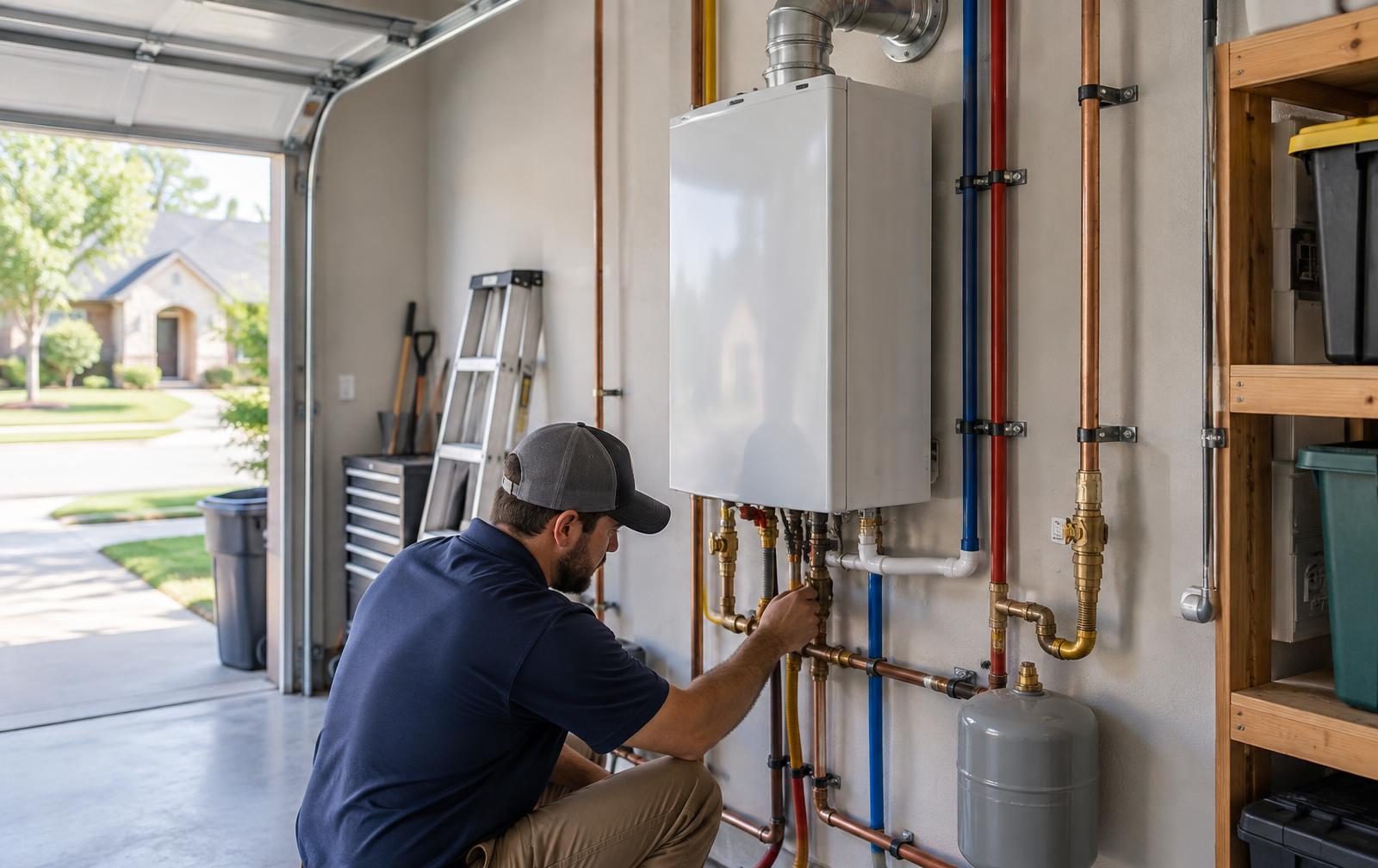
Install, service, and annual descaling — Farmers Branch's hard tap water eats tankless heat exchangers without it.
same-day, 7 days a week response across Farmers Branch for burst pipes, heater failures, and main-line backups.
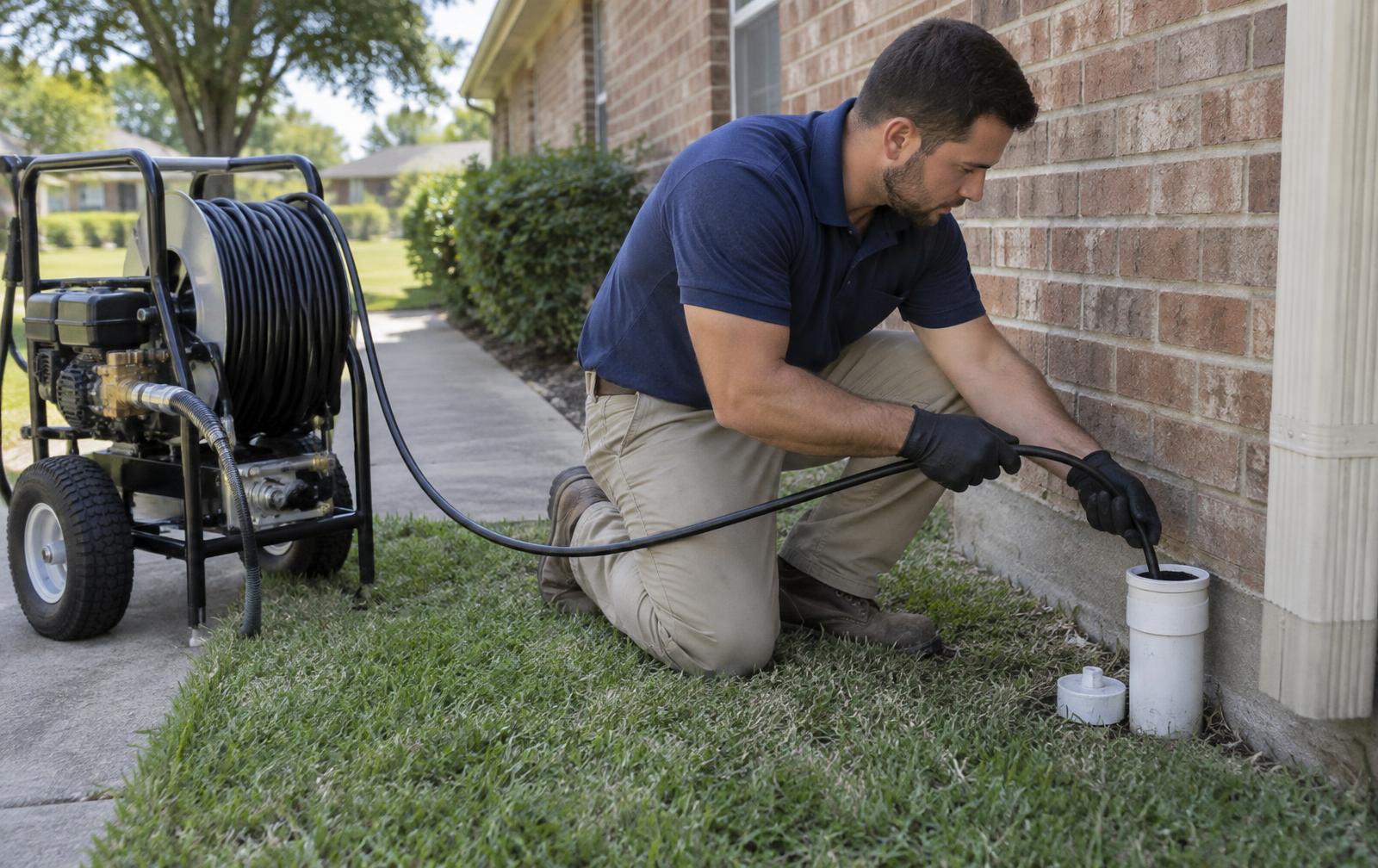
High-pressure cleaning that clears scale, grease, and roots from Farmers Branch's lateral runs — full-diameter, lasting clean.
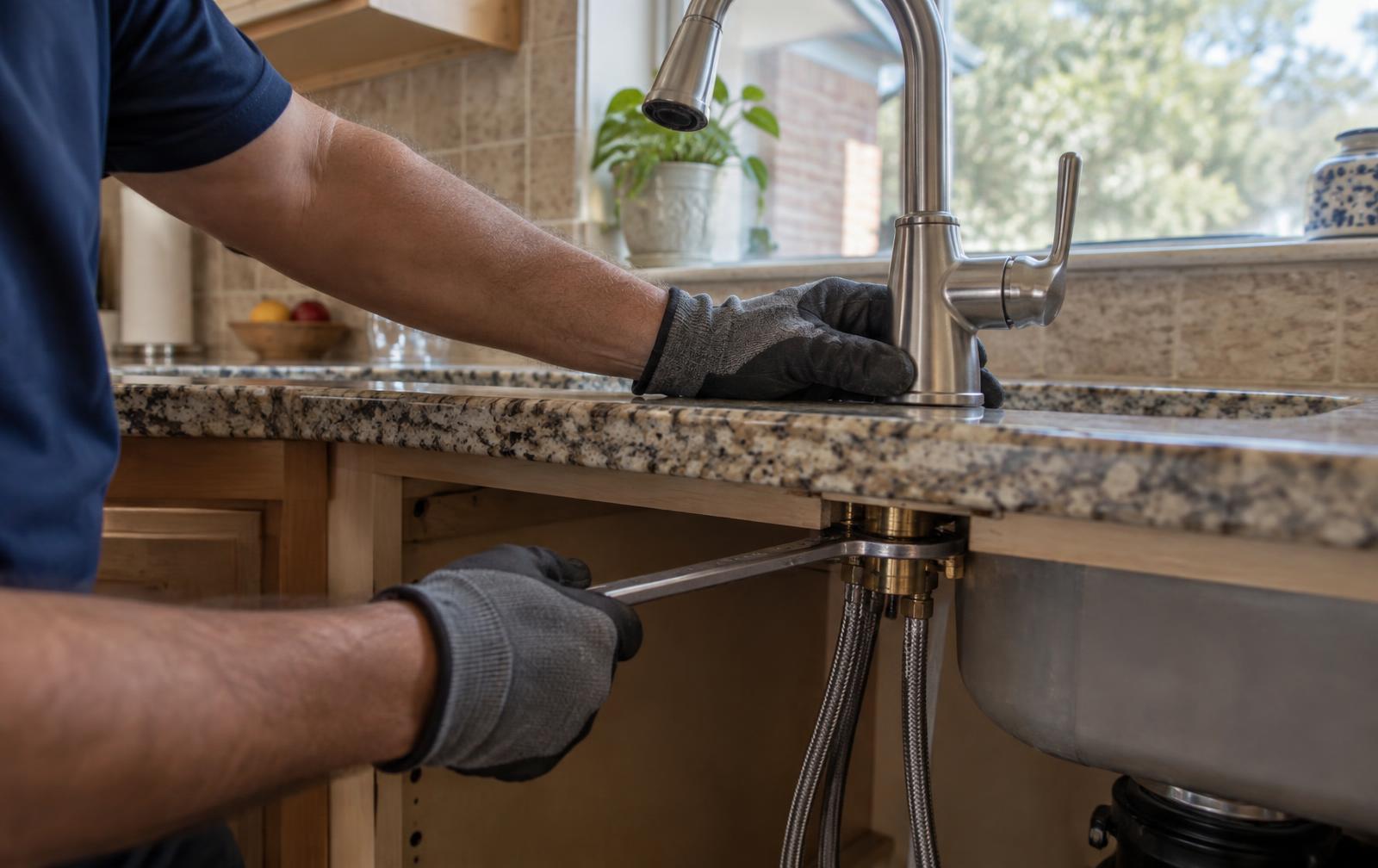
Cartridge, stem, and full-fixture replacement for Farmers Branch kitchens and bathrooms — hard-water-ready parts stocked on the truck.
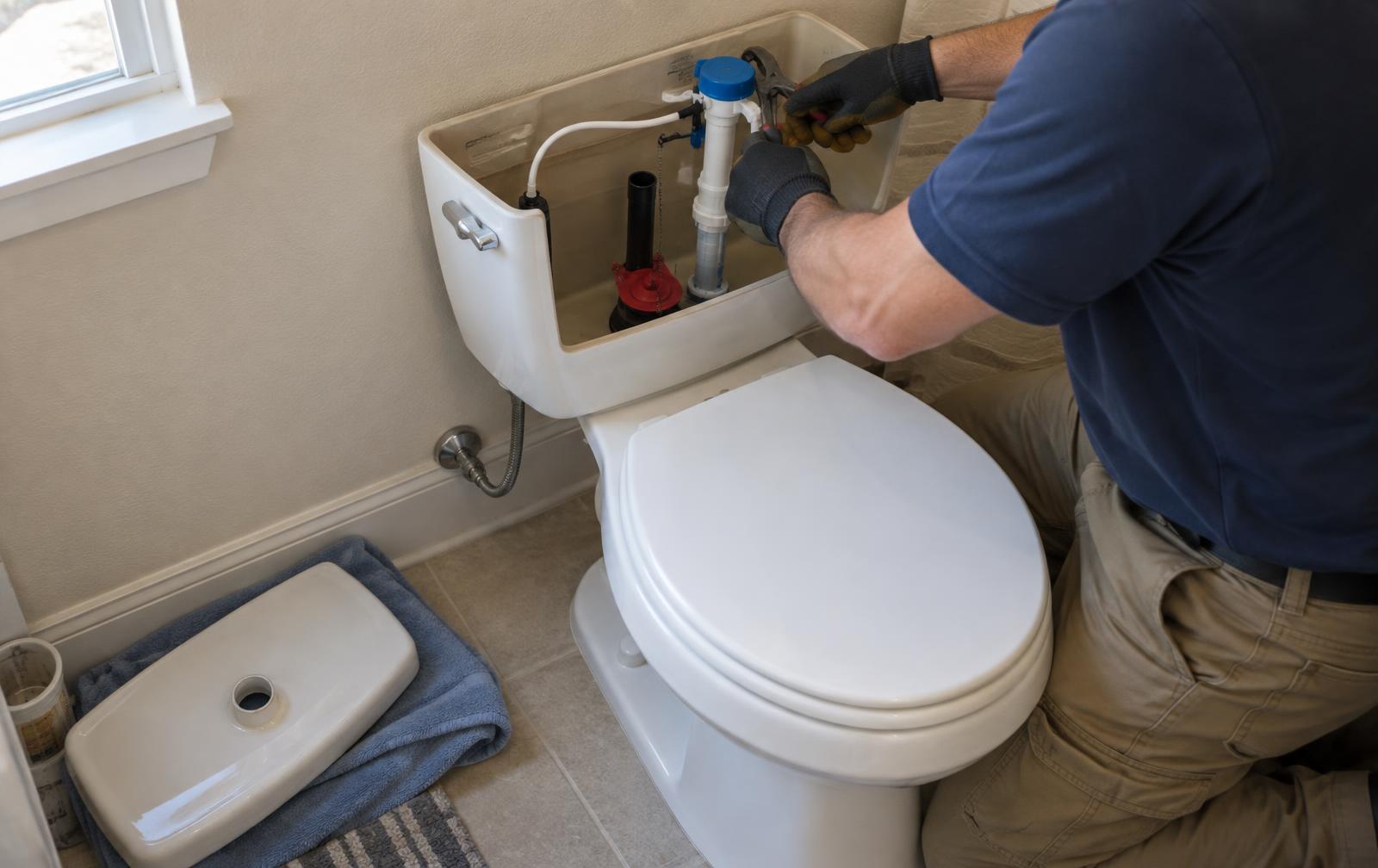
Rebuilds, wax-ring resets, flange repairs, and full replacements — the running toilets and rocking bowls in Farmers Branch homes.
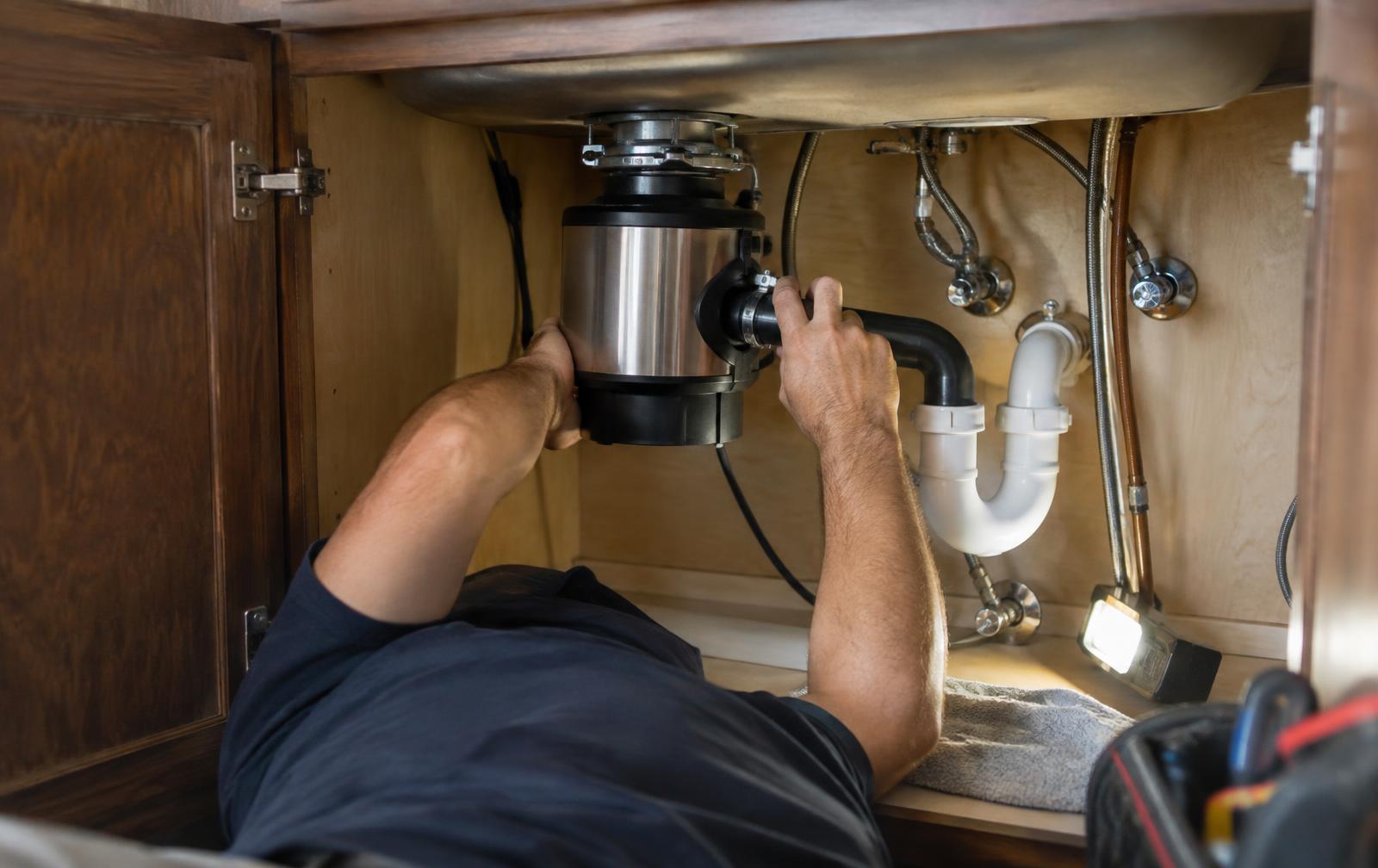
Jam clearing, leaking-unit swaps, and quiet 3/4 HP upgrades for Farmers Branch kitchens — same-visit install.
Spotted a Possible Slab Leak in Farmers Branch?
Electronic detection, a straight comparison between patching and rerouting, and nothing cut until we're sure. Get on the schedule.