
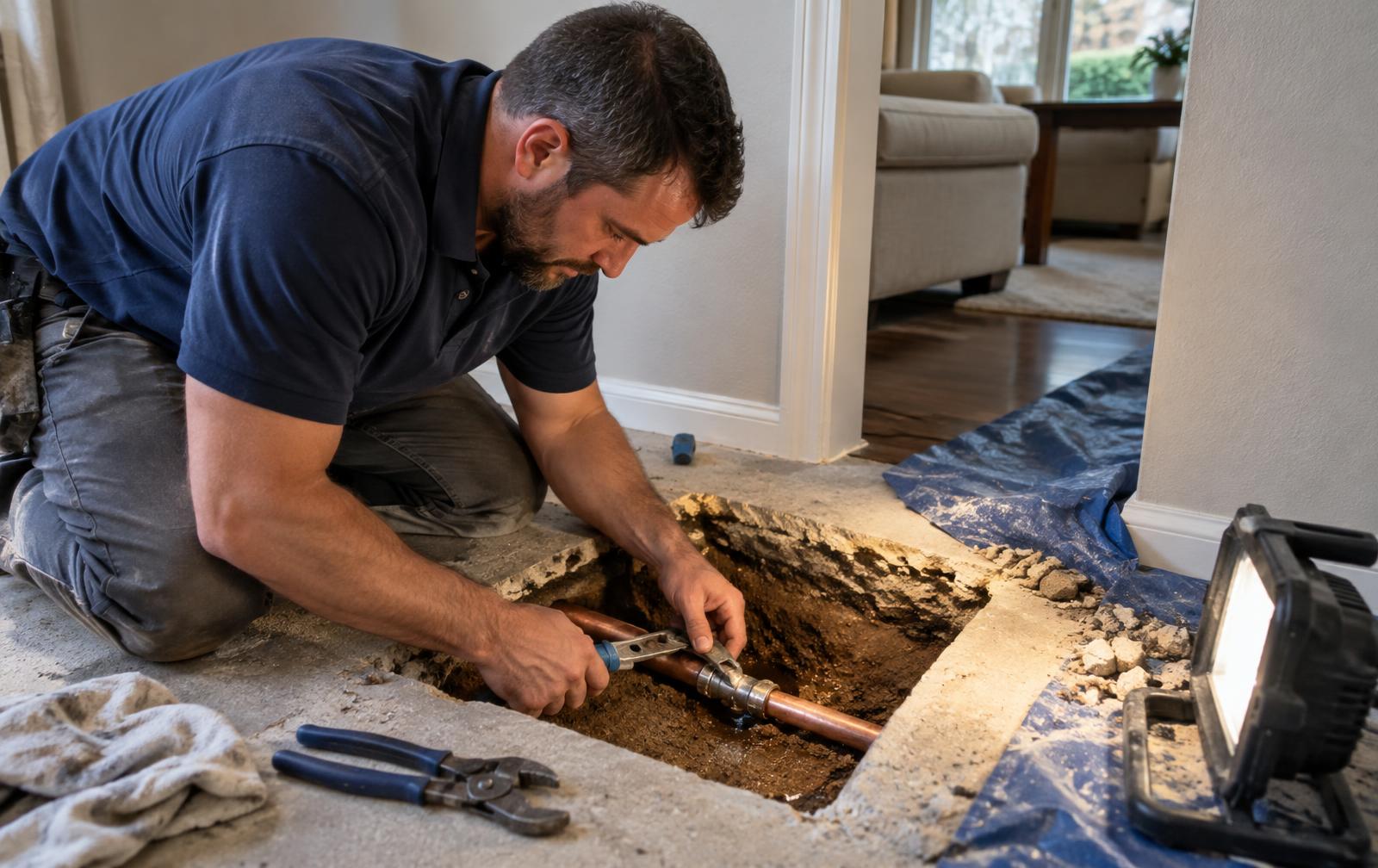
Slab Leak Repair in Addison, TX
Tile that's oddly warm underfoot. Carpet that's damp for no obvious reason. A utility bill that climbed with nothing new plugged in. In Addison condos, townhomes, and houses alike, we pin down slab leaks before concrete gets cut, and we lay out repair versus reroute honestly, not as an upsell.
First Decide What To Do — Not Where To Swing The Hammer
Addison has run out of room to grow — 4.4 square miles, fully developed, sitting entirely on Blackland Prairie clay, the same expansive soil found across Dallas County. That ground swells during wet stretches and pulls back when it's dry, and every foundation poured on it, regardless of decade, absorbs that cycle year after year. Copper running underneath doesn't get a break from it either. The town's building department treats slab leak repair as its own distinct permit line item, separate from ordinary plumbing work, which tells you it's a known, recurring category of job here.
Condo living at Addison Circle and the newer buildings inside Vitruvian Park raise the stakes differently than the town's handful of detached-home streets: there's less exposed slab and a lot more finished flooring sitting on top of it, so a wrong guess about where the leak sits gets expensive fast, well beyond the actual pipe repair.
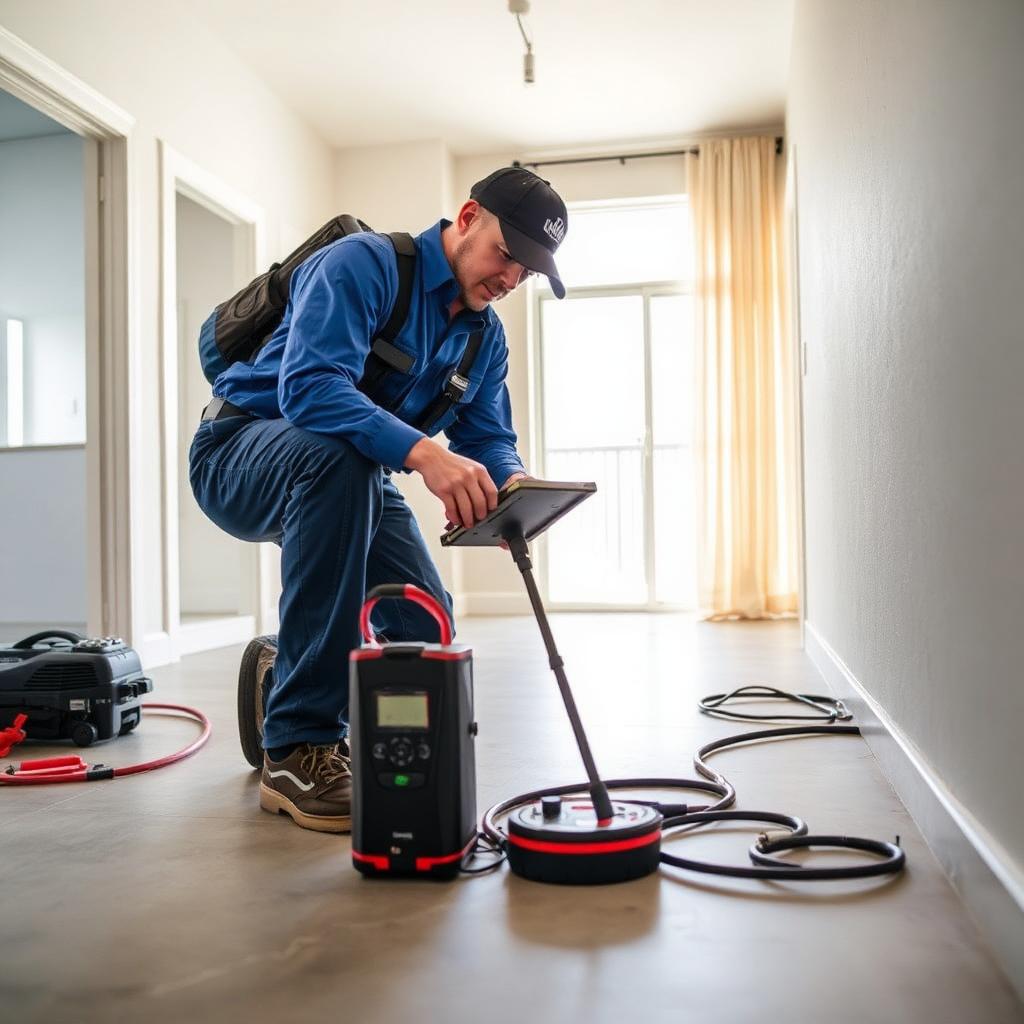
The move that saves money either way is skipping straight to demolition. Locate the leak electronically to within a few inches first, then compare a small concrete opening against running a fresh line overhead and abandoning the buried one for good — and let the homeowner make that call with real numbers in front of them.
Signs Of A Slab Leak In Your Addison Home
A slab leak can go unnoticed for a long stretch. Finding it early keeps the fix small.
Hot water escaping beneath the slab heats the concrete right above it. A barefoot walk through the house some morning can turn up a patch of tile or engineered wood that's warmer than everywhere else.
A small slab leak can drain gallons continuously with zero visible trace. When an Addison water bill jumps with no new appliance or irrigation added, this is the first thing worth ruling out.
A leak on the hot-side line forces the heater to refire more often just to keep pace. A utility closet that's running warmer than normal, or a heater you can hear working overtime, is a strong indicator.
Months of moisture pressing up from below eventually cracks tile grout and lifts hardwood at the seams. Both point to a leak that's already been running a while before it became visible.
Turn off every tap in the home, kneel down near a slab or interior wall, and listen. A soft hissing or trickling sound with nothing running is water traveling somewhere it isn't supposed to.
A hot-line leak under the slab often shows up first as a weaker shower or one that can't hold heat, while the cold side keeps performing normally.
Pinpoint It, Then Decide Together
Nothing about the slab gets opened until we can show you exactly where the failure is.
- 1Split hot from cold
We isolate and pressure-test each line separately at the water heater. That single check tells us which supply is failing and whether a future reroute, if you choose one, needs to replace one line or two.
- 2Narrow it down with sound and thermal readings
Ground microphones pick up vibration through the slab, a thermal camera checks the floor and adjoining walls for temperature differences, and a hydrogen sniffer covers what the first two tools miss. Between them the leak usually lands in a small, provable spot.
- 3Explain the two real choices
One option is a small, contained cut in the concrete right at the failure — typically the cheaper path when the surrounding pipe is otherwise sound. The other is bypassing the slab line completely with a new overhead run, which makes more sense once the rest of that copper is aging out too.
- 4Complete whichever path you choose
For a targeted repair, we cut cleanly, expose the bad section, splice in new pipe, and patch the opening. For a reroute, we run new PEX-A tubing through the attic, connect it above the fixtures it serves, and permanently cap the old slab section in place.
- 5Confirm it holds and hand over records
The finished line gets pressure tested while you're standing there watching the gauge. You walk away with photos from before, during, and after the repair, so there's a record of exactly what was done and why.
A Small Concrete Cut Or A New Line Overhead — We Price Both
Neither option is universally correct. It comes down to how old the existing copper is, how many fixtures depend on that one run, and how much finished flooring sits above the slab.
A contained opening in the slab exposes the failed section, we splice in a new fitting, and the concrete gets patched closed. Works best when everything else on that supply line is still in solid shape.
- Smallest possible disturbance for a first, isolated failure
- Keeps the original pipe path exactly as it was
- Flooring and concrete finish work belong to your restoration crew
- A weaker choice if the surrounding copper shares the same age as the part that failed
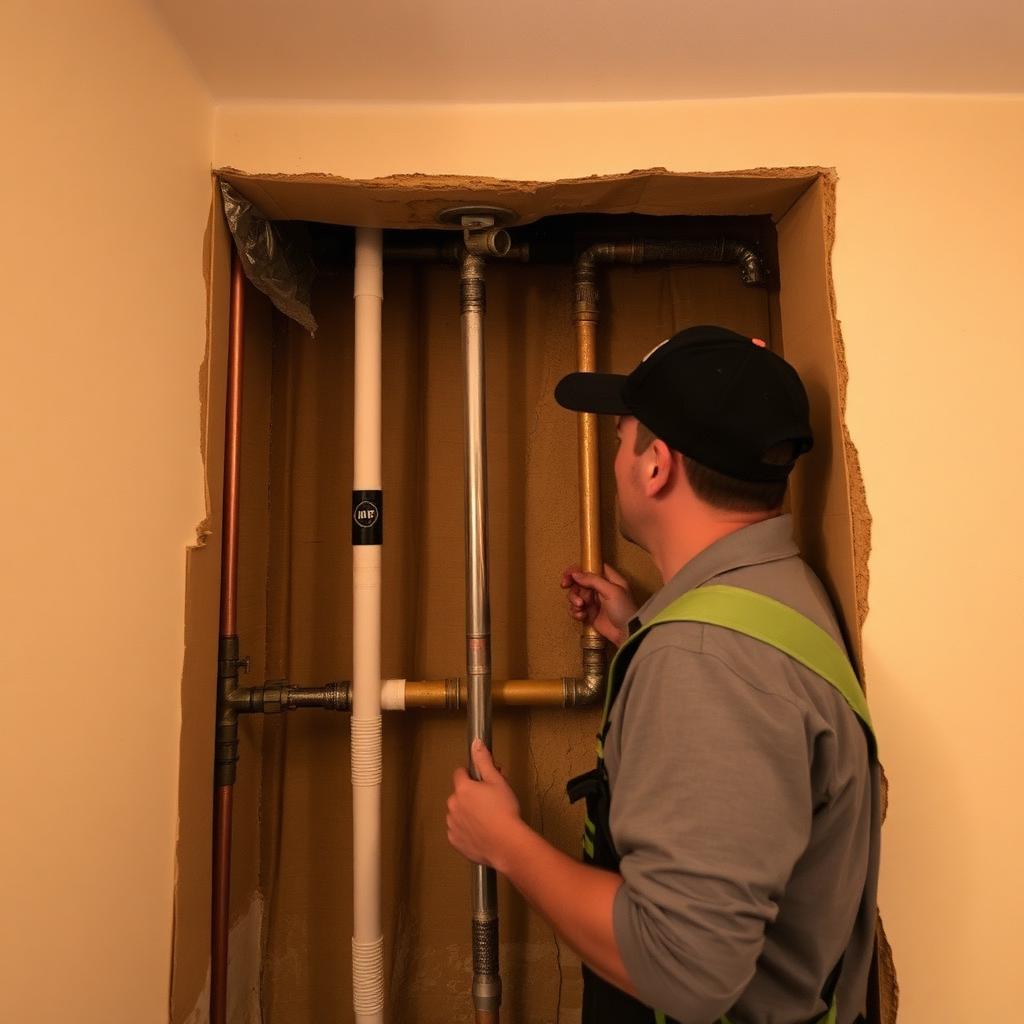
The failed slab section stays capped and buried while a new PEX-A line travels through the attic instead, tying in above the fixtures it feeds. Makes sense when this failure looks like an early warning rather than a one-off.
- Removes that line from future concrete-cutting entirely
- Bypasses buried copper you can no longer inspect anyway
- Units without attic space can often be routed through a soffit
- Higher initial cost, lower cost across the following years
What Turns Up Under Different Parts Of Addison
Build era and construction type both point to what's likely happening underground.
These mid-rise condos sit on engineered slab construction dating to the late 1990s and early 2000s. Failures here tend to show up at an original rough-in solder joint rather than mid-run, and the building's slab type generally makes a clean, contained cut more predictable.
Development here ran through the 2010s on ground that used to hold older apartment stock, so supply lines are young enough that a slab leak is uncommon — when it happens, it's almost always at a fitting, not general pipe corrosion.
This pocket of detached single-family homes near the airport follows the more conventional slab-plumbing layout found across North Texas, and the age of the copper is what tips the decision between a targeted repair and a full reroute.
Built around 1990 on larger third-to-two-thirds-acre lots, these custom homes are old enough that one confirmed slab leak often signals the rest of the supply system is entering the same window, which tends to push the conversation toward a reroute.
Homes and duplexes typical of the early 1980s have absorbed four decades of clay movement against the original copper. Finding one leak in this stretch is usually a reason to check the rest of the line rather than assume it's an isolated event.
The 1970s and 80s garden-style buildings still standing outside the Vitruvian Park footprint hold some of the oldest supply lines left in Addison, and a full reroute frequently ends up the more sensible long-term call for a property manager tired of repeat visits.
What Addison Homeowners Say
One Fix, Fully Documented
Slab leak repairs we complete in Addison carry warrantied labor. If our own workmanship fails, we correct it at no cost to you. If a different section of the same aging copper fails down the road, that's exactly the risk we described at quote time, which is the reason we brought up a reroute in the first place.
We hold a Texas State Board of Plumbing Examiners license, carry insurance, and operate as a family business running trucks out of The Colony — plan on roughly 20 to 30 minutes to a typical Addison address under normal traffic, quicker if water is visibly pooling.
Straight Answers, No Sales Pitch
Our Other Plumbing Services in Addison, TX
Finding one slab leak is often a sign the rest of a home's supply system is the same age. We also take care of sewer lines, water heaters, and full re-pipes for Addison properties.
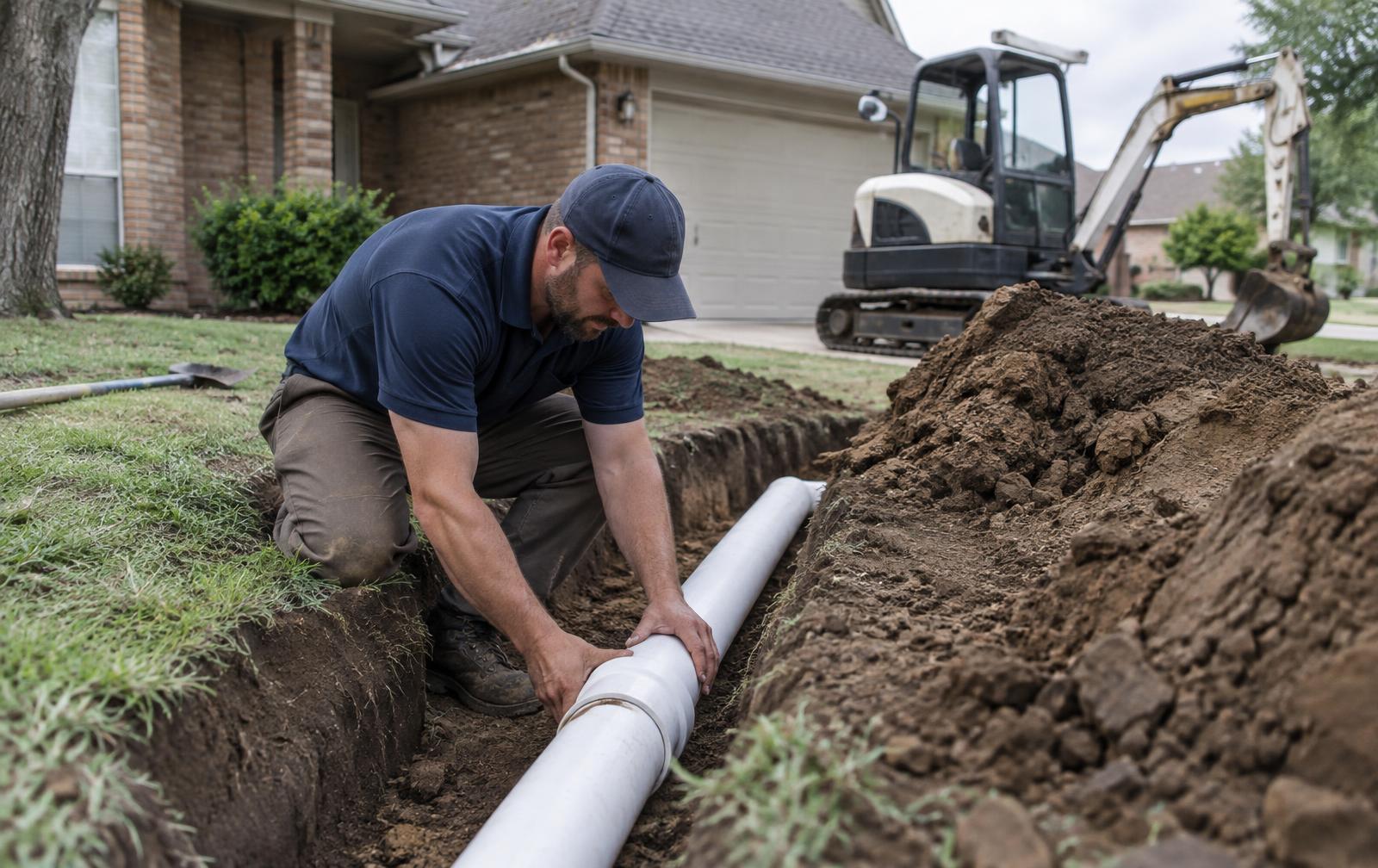
Trenchless replacement for the cast iron laterals under Addison's 1970s and 80s builds — camera first, quote in writing, minimal yard damage.
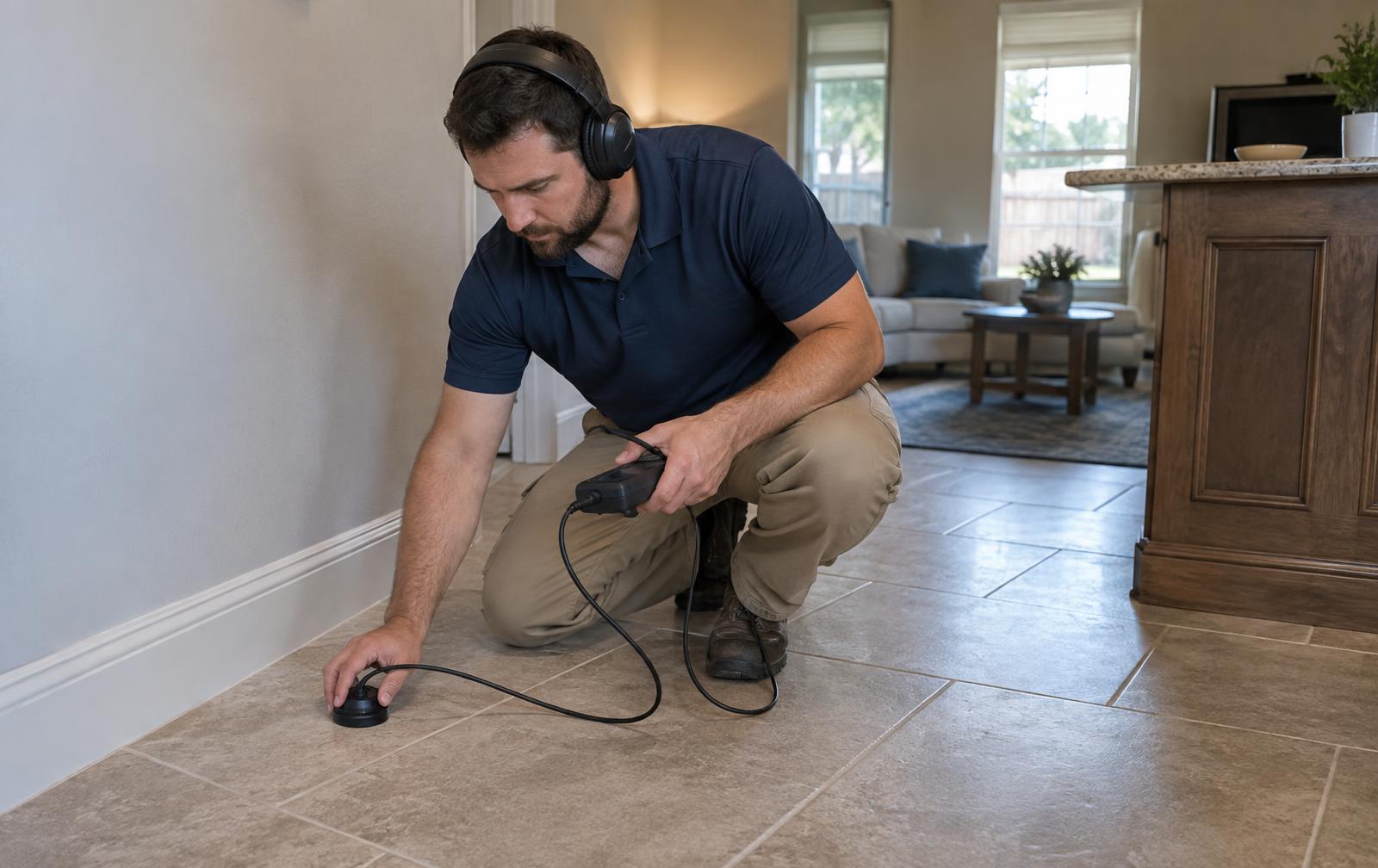
Acoustic, thermal, and pressure testing to pinpoint hidden leaks in Addison slab, wall, and shared-stack lines without tearing into finishes.
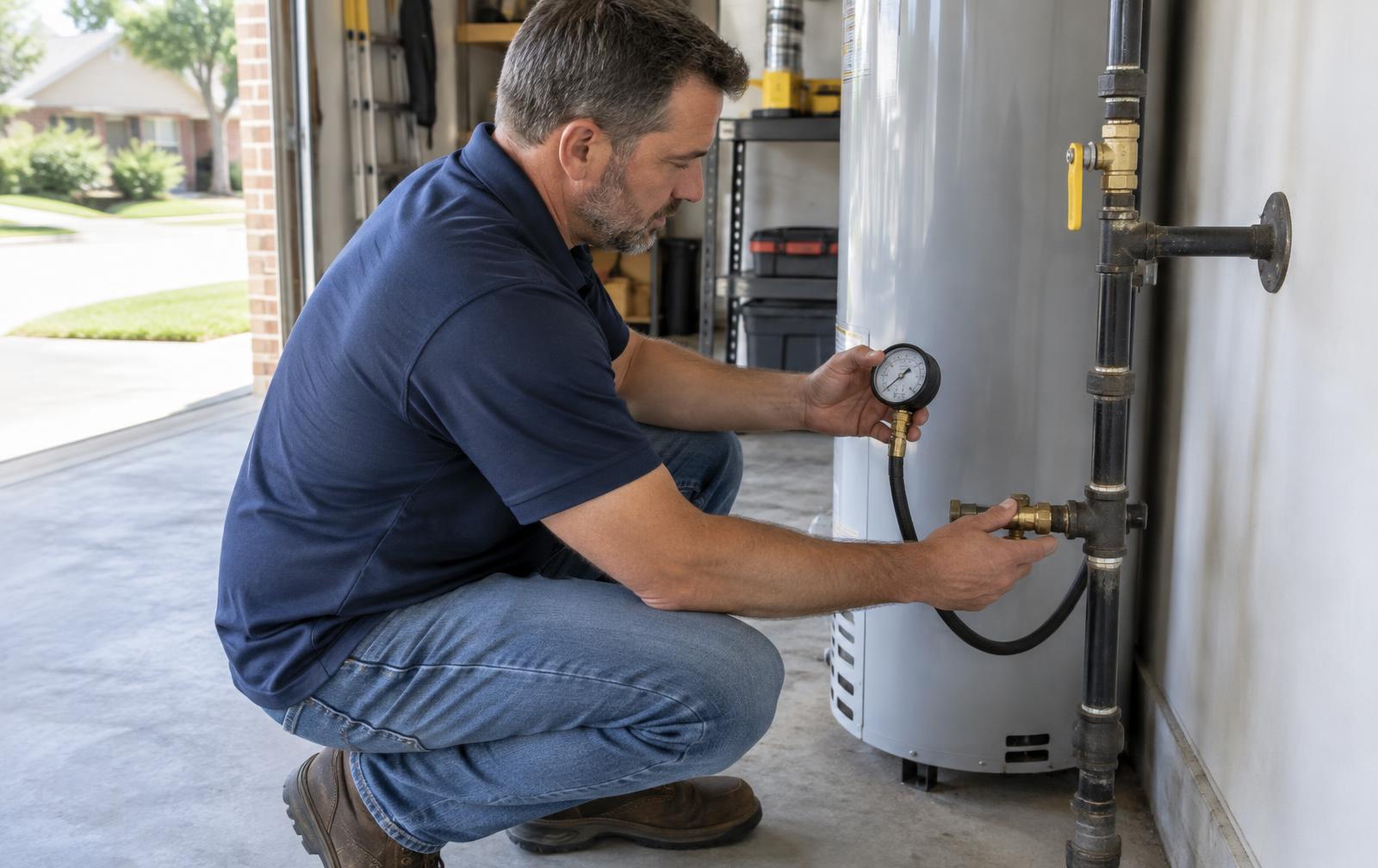
Licensed install, repair, and pressure-testing for Addison homes and townhomes — every line signed off to Texas code and Atmos requirements.

Full-clear service and camera confirmation for the aging cast iron drains under Addison's mid-century ranches and condo blocks.
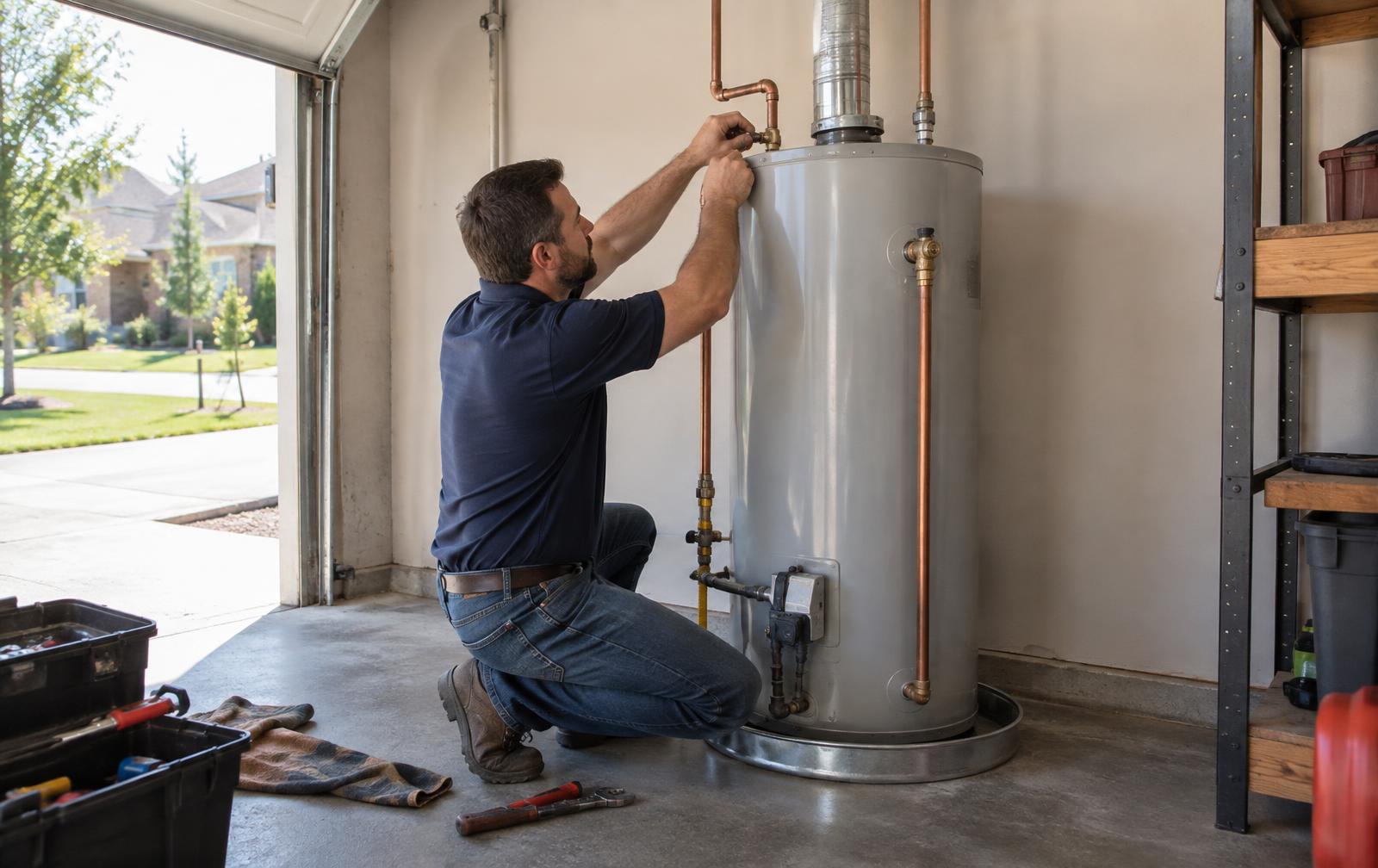
Repair, flush, and replacement of tank units — including the closet-tucked heaters common to Addison townhomes and Circle-area condos.
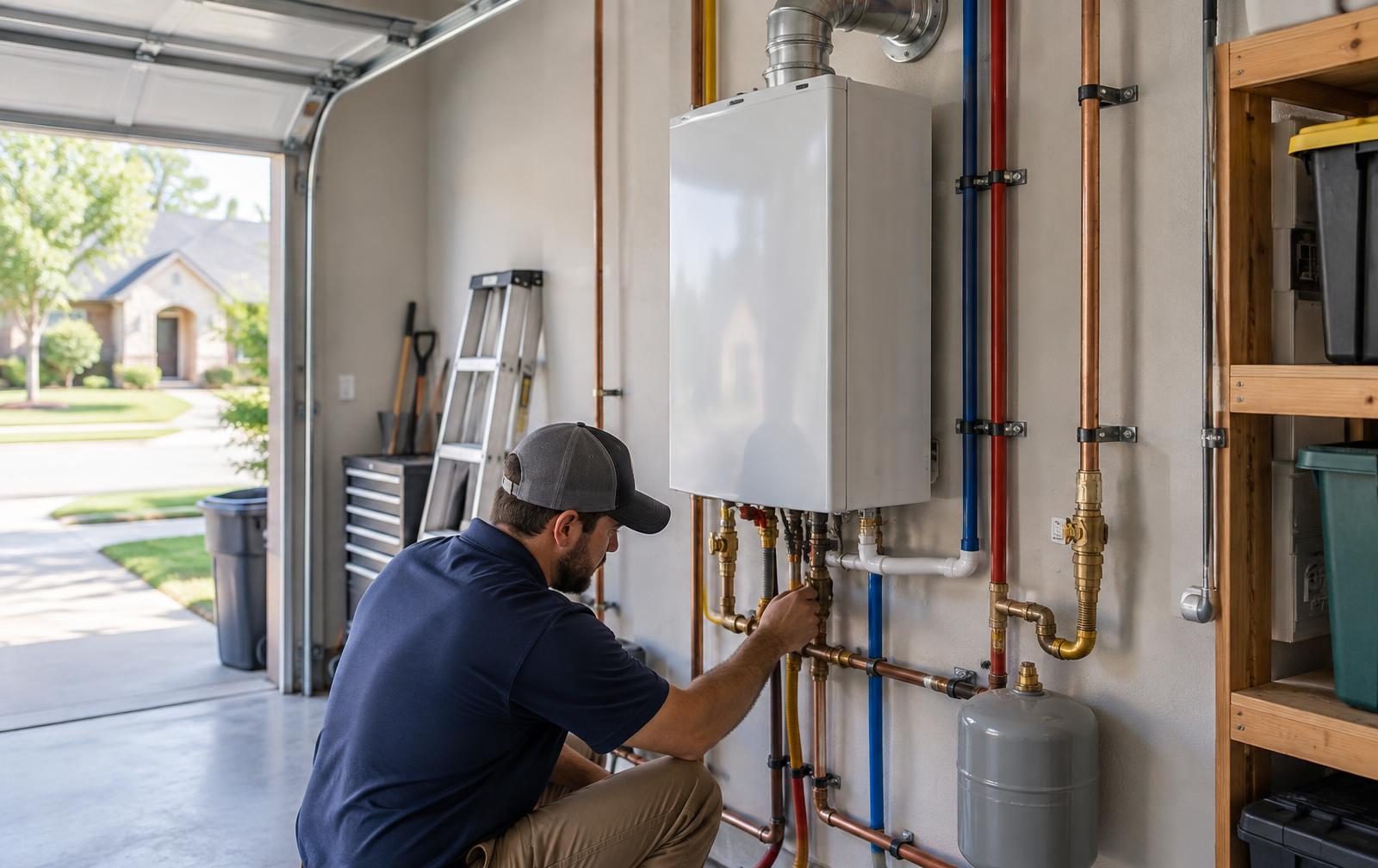
Install, service, and annual descaling — Addison's hard tap water eats tankless heat exchangers without it.
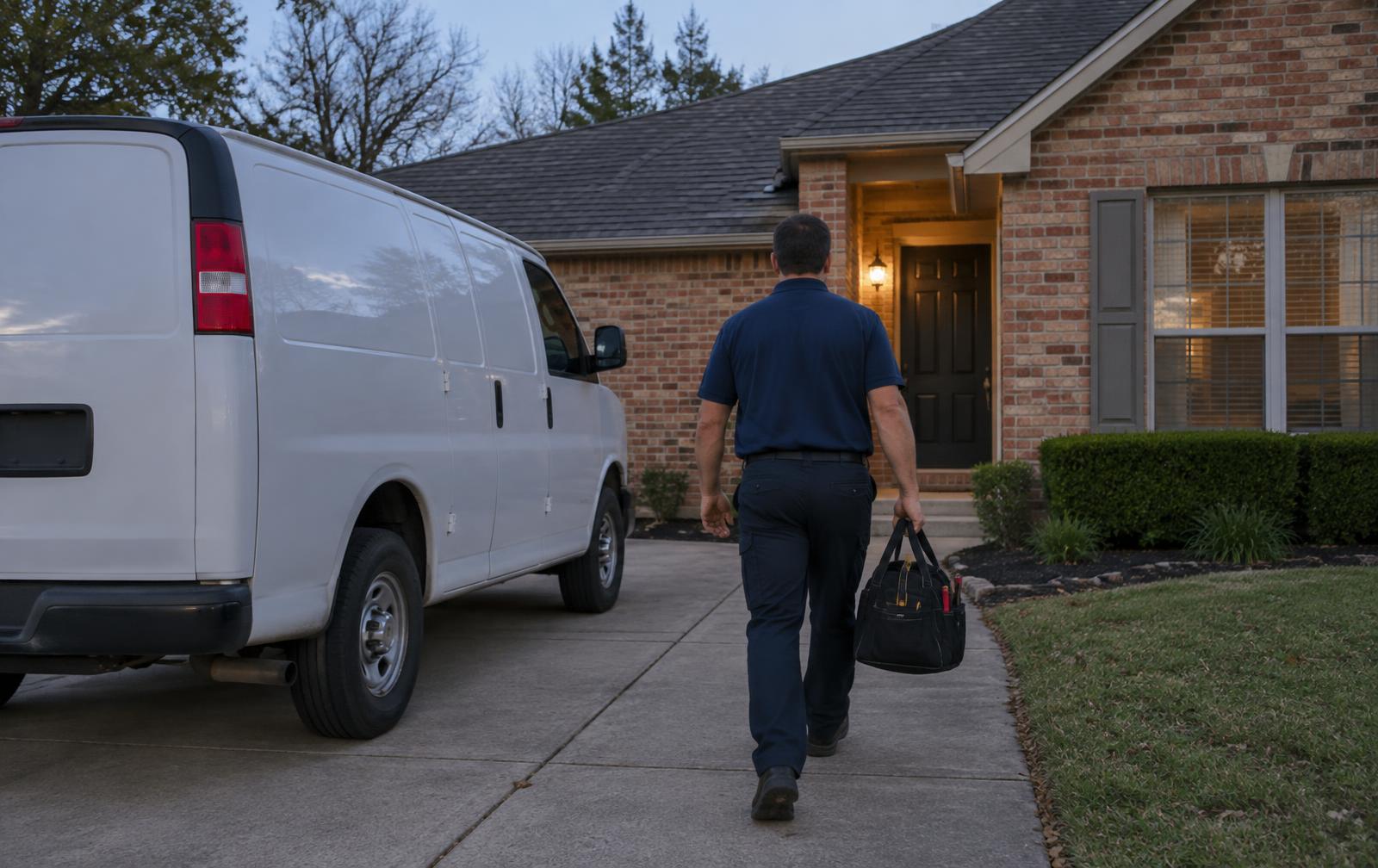
same-day, 7 days a week response across Addison for burst pipes, condo stack backups, and failed heaters.
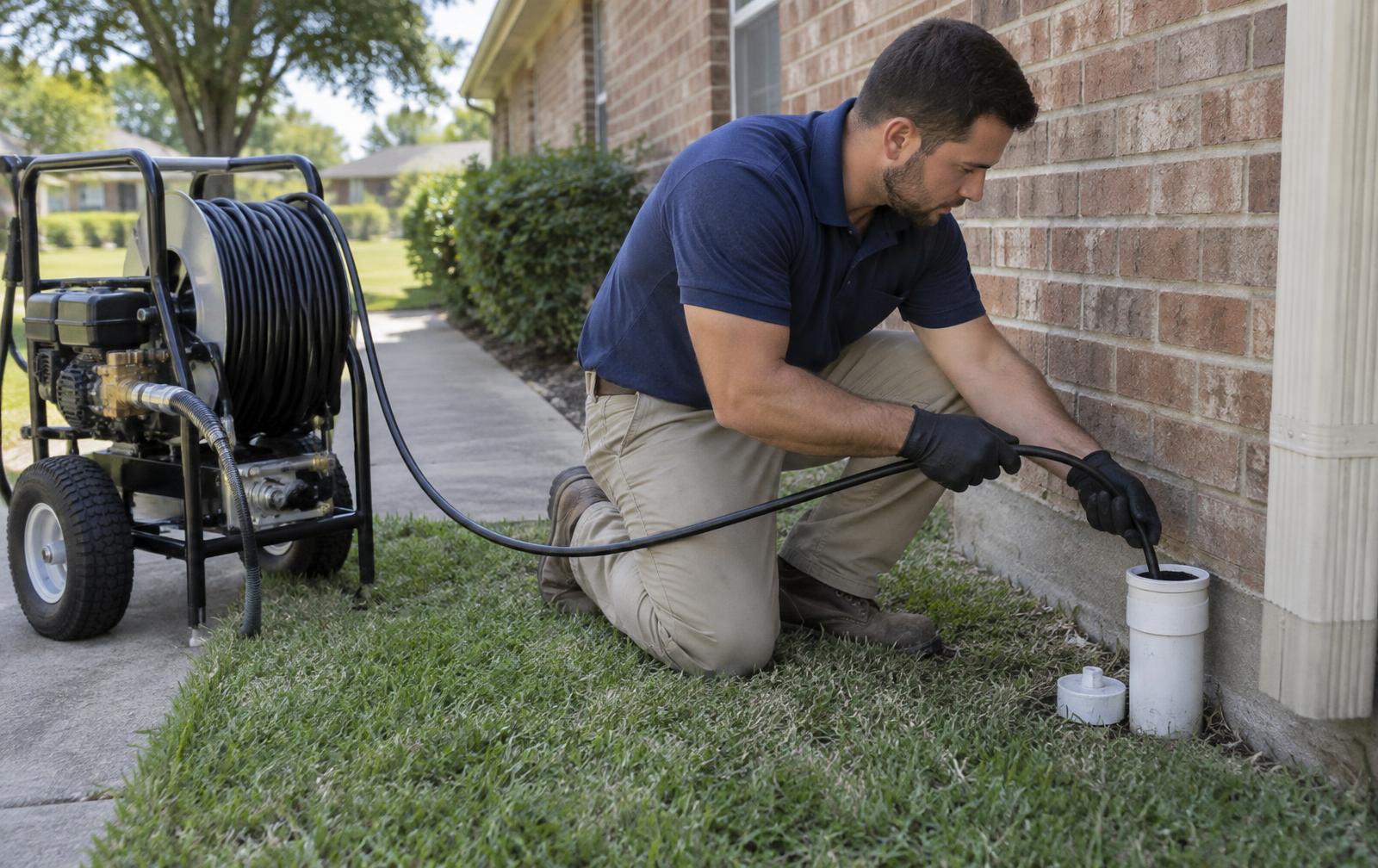
High-pressure cleaning that clears scale, grease, and roots from the cast iron mains under Addison's older stock — full-diameter, lasting clean.
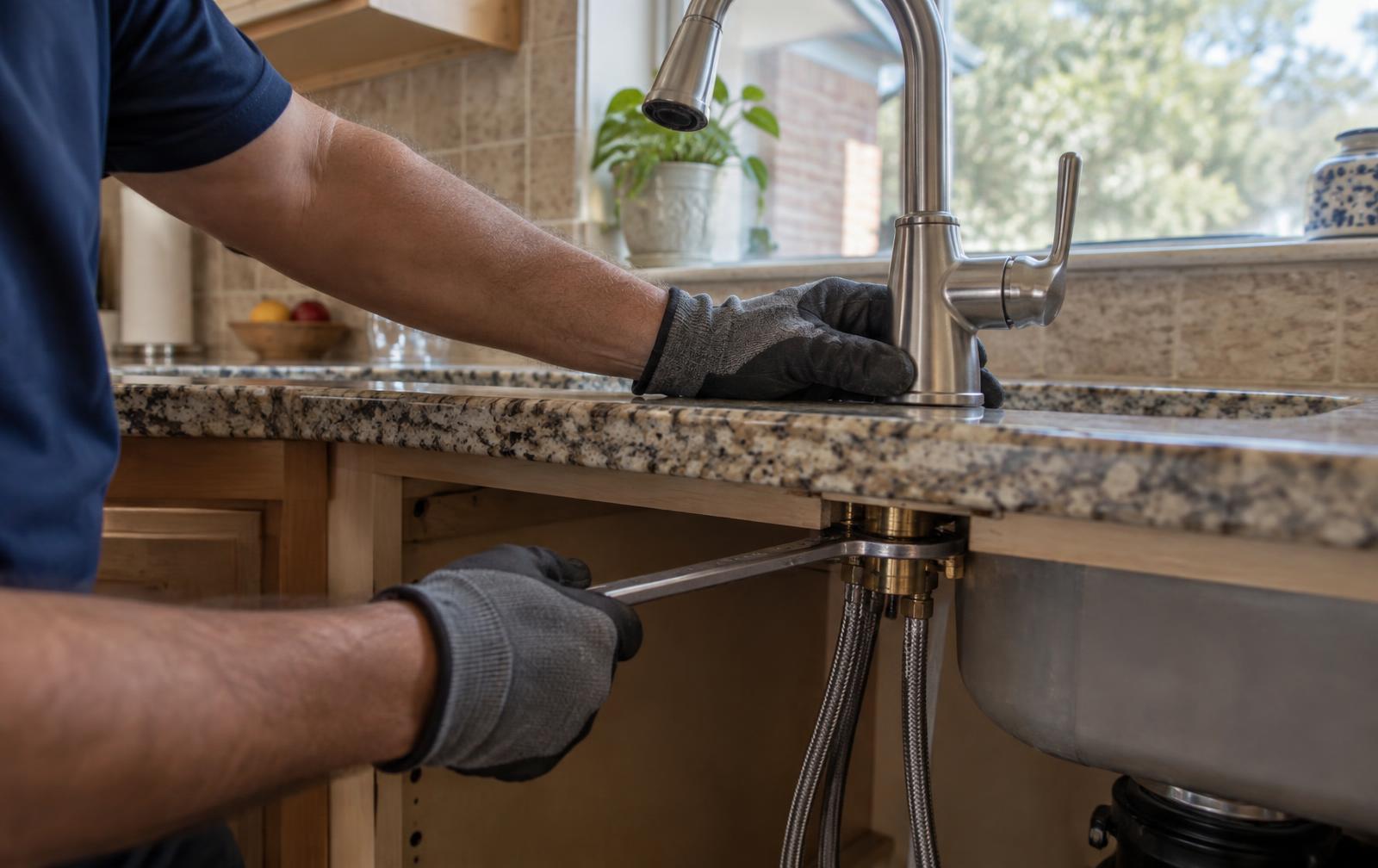
Cartridge, stem, and full-fixture replacement for Addison kitchens and bathrooms — hard-water-ready parts stocked on the truck.
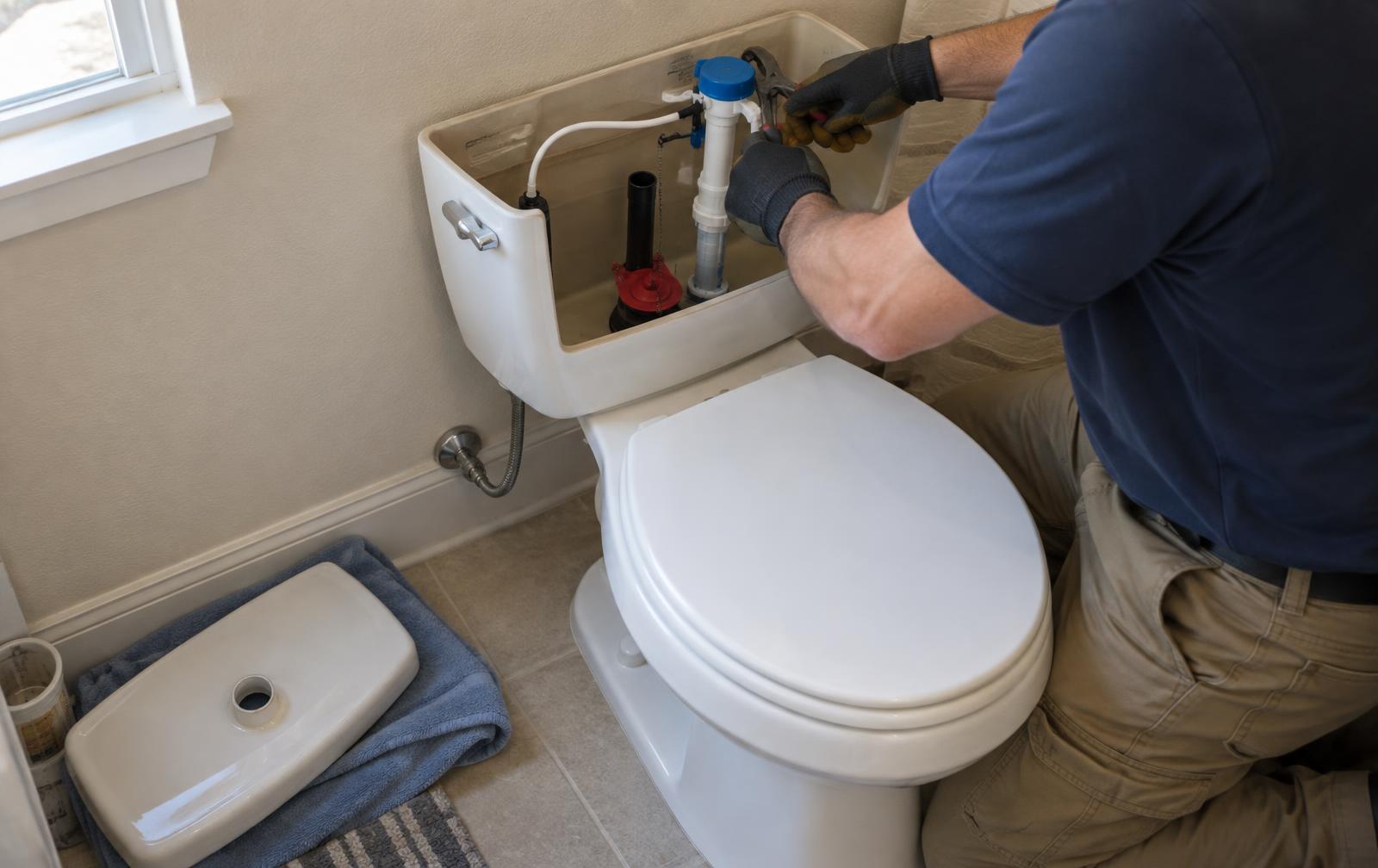
Rebuilds, wax-ring resets, flange repairs, and full replacements — the running toilets and rocking bowls in Addison homes.
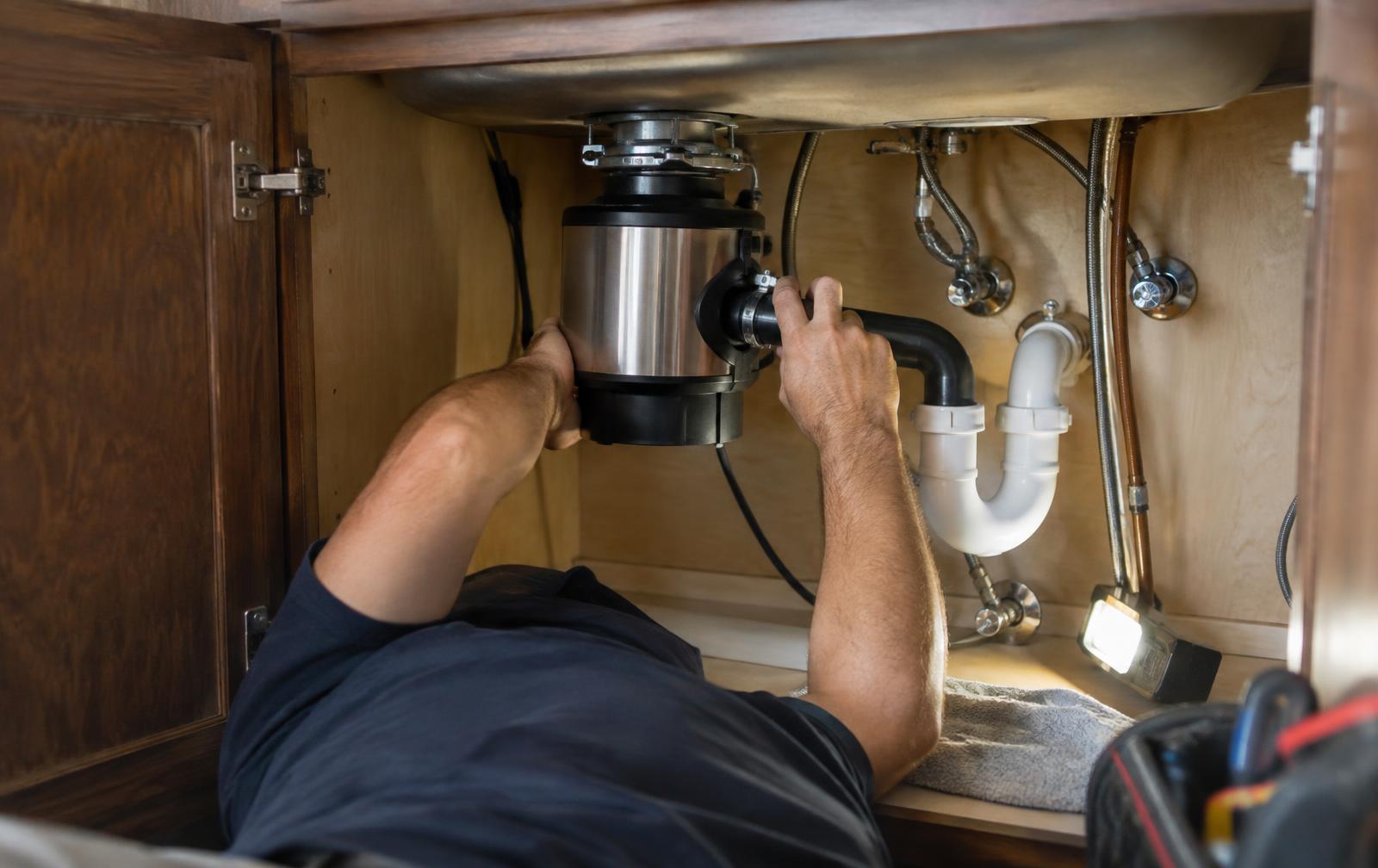
Jam clearing, leaking-unit swaps, and quiet 3/4 HP upgrades for Addison kitchens — same-visit install.
Dealing With A Slab Leak In Addison?
Electronic detection, a fair comparison of repair against reroute, and no concrete opened until we know exactly where the leak is.