
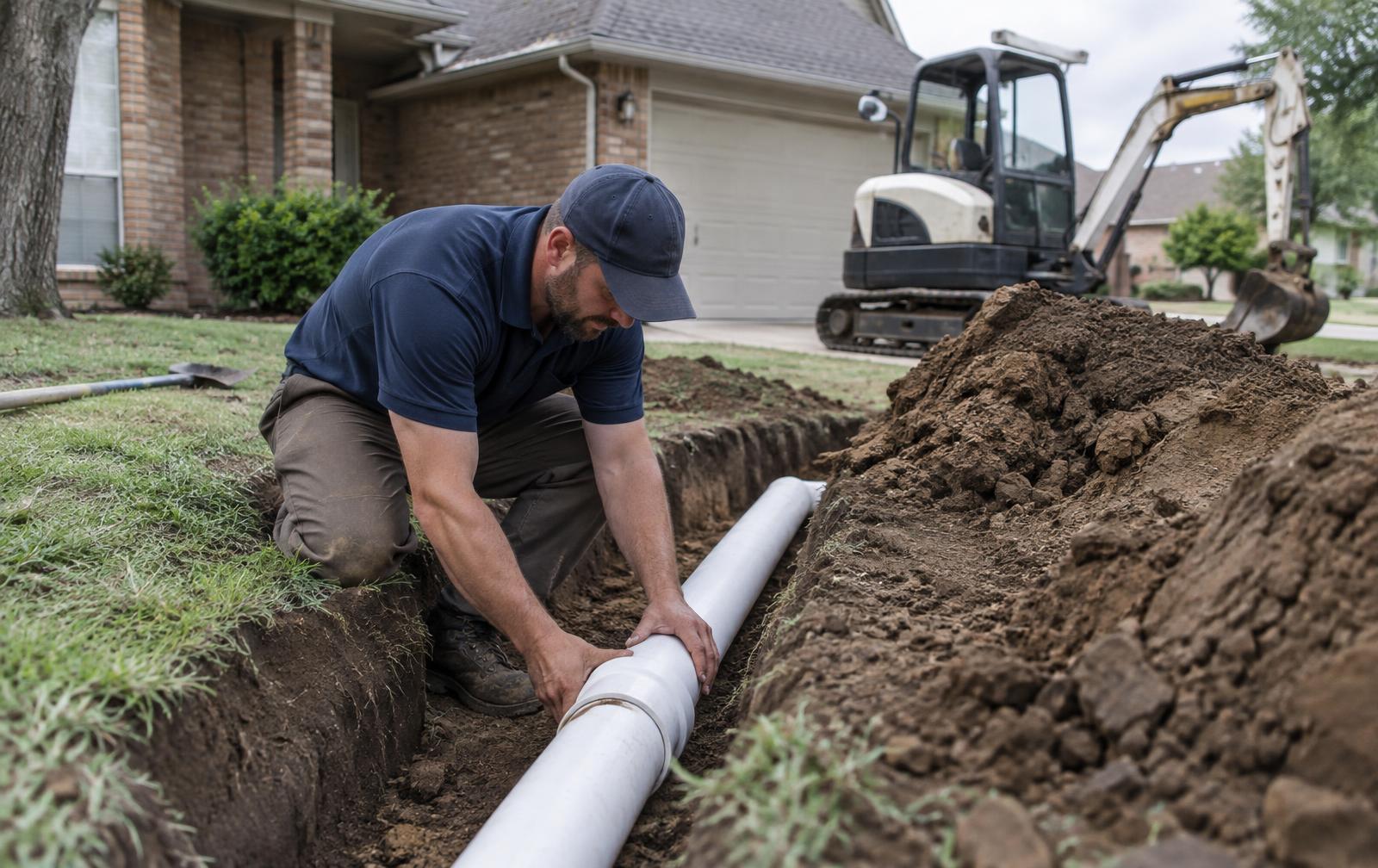
Sewer Line Replacement in Addison, TX
A toilet that gurgles on a schedule no amount of cabling breaks. Camera footage that shows a caved section or roots choking the pipe. Another rooter bill for a fix that stopped sticking. We replace Addison sewer laterals without opening the whole yard, using trenchless methods wherever the property allows it.
Cabling Buys Time. It Doesn't Fix A Broken Pipe.
Addison is a small town — 4.4 square miles, completely built out, with no undeveloped ground left to add. All of it sits on Blackland Prairie clay, the heavy black soil that runs under most of Dallas County and swells and contracts hard enough season to season to stress a rigid pipe underground over the decades. It's telling that the town's own permitting system treats slab leak repair and sanitary sewer relay as their own distinct categories in the building portal, rather than filing them under generic plumbing repair — the town expects these jobs.
You'll recognize the point where a rooter call stops helping: a fixture keeps clogging on a repeating interval no matter how recently it was cabled, a camera pass turns up a sunken low spot holding water or scale a cutter can't get through, or a stretch of pipe has actually caved and paper is piling up against it. Past that point, calling for another cable job is throwing money at a symptom.
Pipe bursting and cured-in-place lining both let us swap the pipe without digging a trench down the length of the property. That matters on Addison's compact lots and even more in the shared grounds around the town's townhome and condo communities, where a long open trench would mean tearing out landscaping that isn't cheap or easy to restore.

Signs Your Addison Sewer Line Needs Replacement, Not Cleaning
Any single sign here is worth a camera look. Two or more together usually means the pipe is done.
A healthy sewer run shouldn't need cabling every few weeks. A drain that keeps backing up on a repeating interval, no matter how clean the last cable pass was, has a structural problem underneath it.
A toilet, a tub, and a washing machine all backing up at once is a signature of the main line failing, not a clog stuck in one branch.
Sewage leaking underground effectively irrigates the ground above the line. A soggy spot or a stripe of noticeably greener grass tracing the pipe's route is frequently the first outward clue.
When a sewer line under the slab collapses or leaks, it erodes the soil holding up the foundation above it. New cracks branching out near a bathroom deserve a camera check.
That smell means an actual joint or vent break, not a clog. No amount of rodding closes a broken seam — it has to be repaired or the section replaced.
If a plumber previously noted scale, roots, or a sagging section on camera, and the same backup you called about then has returned, the pipe was telling you the truth the first time.
See The Pipe First. Match The Method To What's Actually Wrong.
Sewer replacement never gets priced sight unseen — we look at the line, then write the quote.
- 1Scope the full run on camera
Starting at the cleanout, we push a camera all the way to the city connection and record the entire pass live. You see exactly what we see — a crack, an offset joint, a root mass — instead of taking our word for it. If cleaning genuinely solves it, that's what we'll quote.
- 2Locate depth and turns with a beacon
A transmitter built into the camera head lets us trace the buried route and its depth from the surface. That reading tells us whether bursting or lining is the better fit and exactly where any access pits belong.
- 3Write the scope down before anyone digs
The proposal names the method chosen, the linear footage, the access pit locations, the pipe's size and material, what restoration is included, and how the warranty works — no surprises added once the job is underway.
- 4Secure the permit and check for nearby utilities
The Town of Addison requires a permit for sewer relay work, and since Atmos Energy's gas lines often run near the same trench path, we confirm locates before anything gets disturbed.
- 5Install the line, then verify it on camera
Bursting drags a new HDPE pipe through the old one, forcing the old material outward as it goes; lining cures a fresh pipe wall inside the existing shell. Either way, we run the camera through the finished line and send you that footage for your own file.
What We Typically Find Across Addison
The building's age and how it was constructed shape what fails first.
Laterals here tie into shared building mains dating to the late 1990s and early 2000s, so an individual condo rarely needs its own full replacement — when the shared main does fail, it's an association-level project we coordinate directly with the HOA.
This redevelopment replaced older 1970s and 80s apartment infrastructure with newer construction through the 2010s, so sewer runs under these buildings are recent enough that camera work here is mostly precautionary rather than a replacement call.
As one of the town's few detached single-family pockets, homes here own an individual lateral rather than a shared main, which makes them the more conventional candidate for a full trenchless swap when age catches up to the pipe.
Built around 1990 on generous lots of a third to two-thirds of an acre, these larger homes give us more room to work with for pipe bursting's pull-back path than a tighter subdivision would.
Homes and duplexes from the early 1980s on this same expansive clay have had four decades for joints to shift and roots to find their way in — this is where we most often confirm root intrusion on the initial camera pass.
The garden-style buildings still standing from the 1970s and 80s, outside the Vitruvian Park footprint, carry some of the town's oldest sewer infrastructure, and a coordinated multi-building replacement is often more practical here than tackling one unit at a time.
What Addison Homeowners Say

Footage, A Pulled Permit, And Paperwork You Keep
Every trenchless job comes with warrantied labor on our end and the manufacturer's own warranty on the pipe material. You leave with the before footage, the after footage, a copy of the permit we filed, and the manufacturer's paperwork, all handed over together.
We're licensed through the Texas State Board of Plumbing Examiners, insured, and family-run, dispatching out of our shop in The Colony. We coordinate the permit and inspection with Addison's Building Safety division directly so the paperwork doesn't stall your project.
Straight Answers, No Sales Pitch
Our Other Plumbing Services in Addison, TX
A sewer failure often points to other aging plumbing under the same roof. We also handle water heaters, leak detection, and slab work for Addison properties from the same local shop.
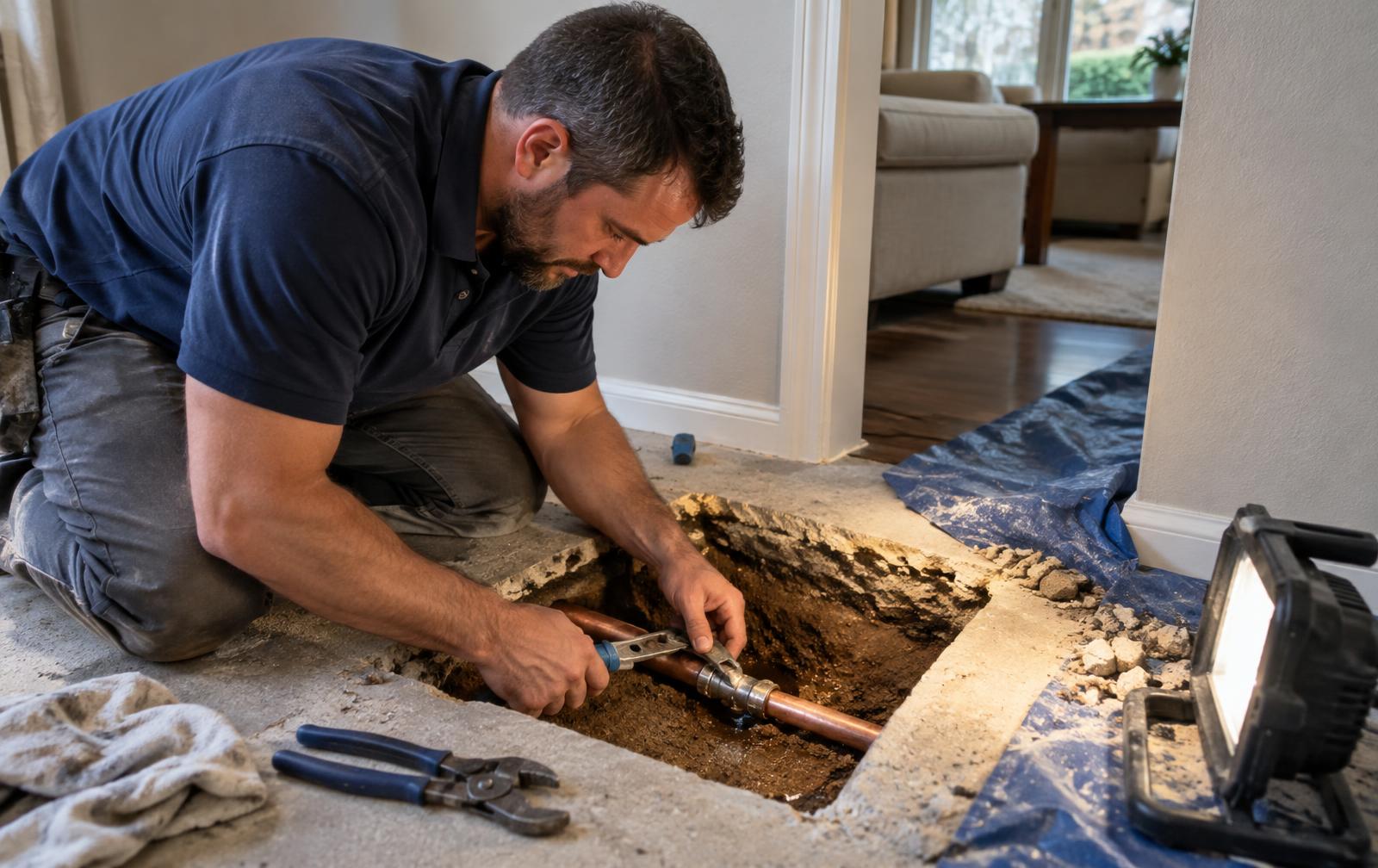
Electronic detection under condo and townhome slabs — reroute options that save your finished floors when possible.
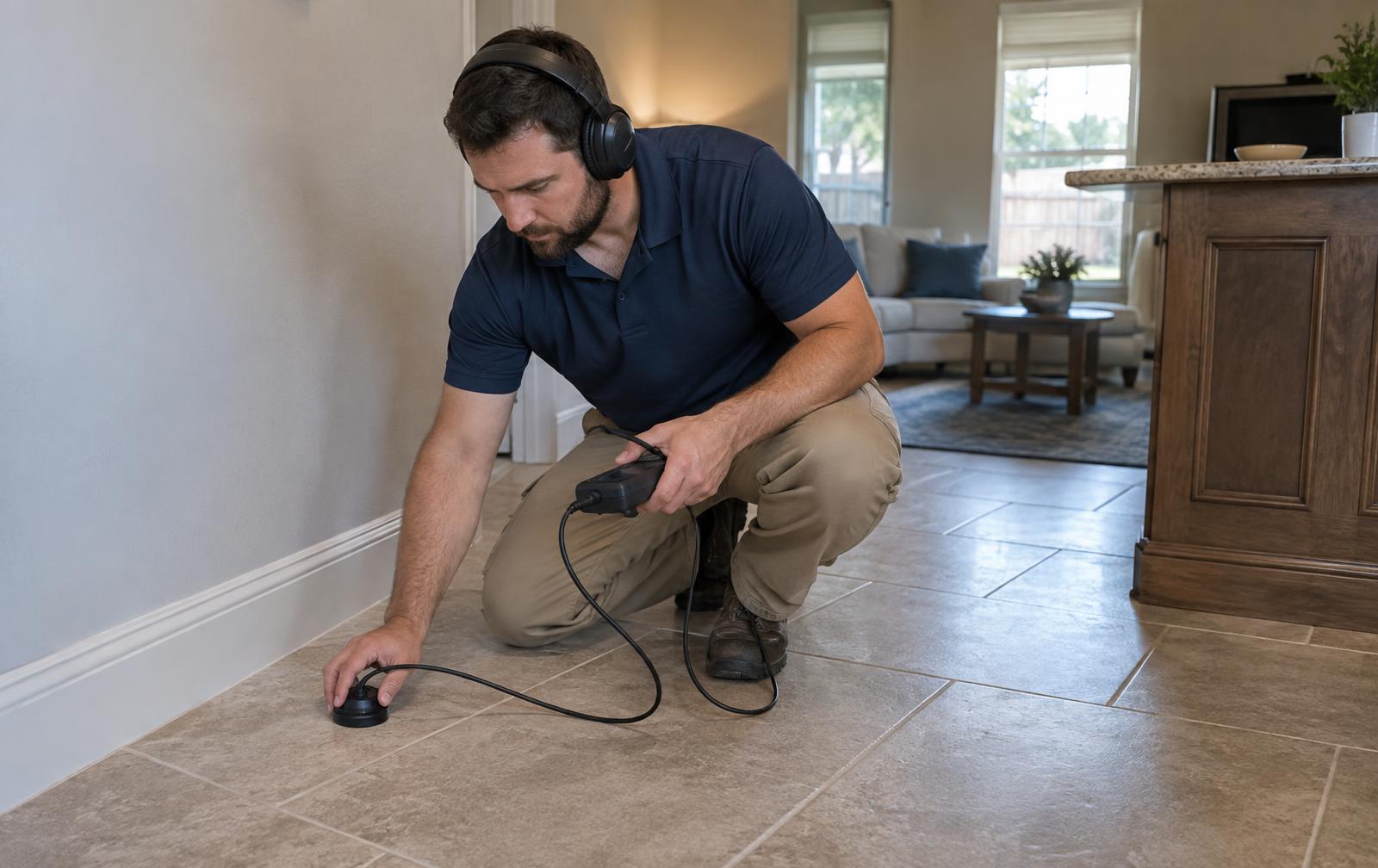
Acoustic, thermal, and pressure testing to pinpoint hidden leaks in Addison slab, wall, and shared-stack lines without tearing into finishes.
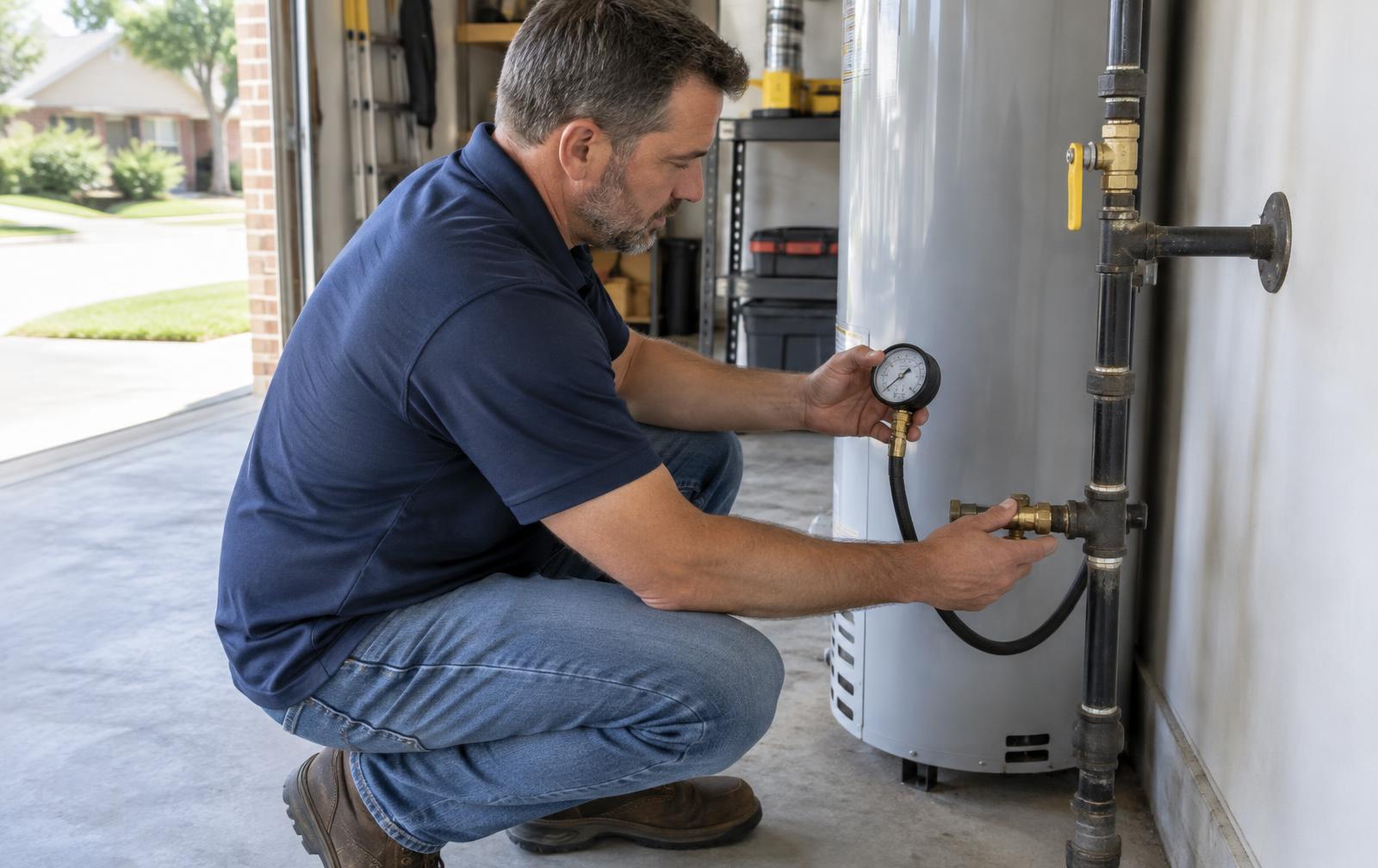
Licensed install, repair, and pressure-testing for Addison homes and townhomes — every line signed off to Texas code and Atmos requirements.
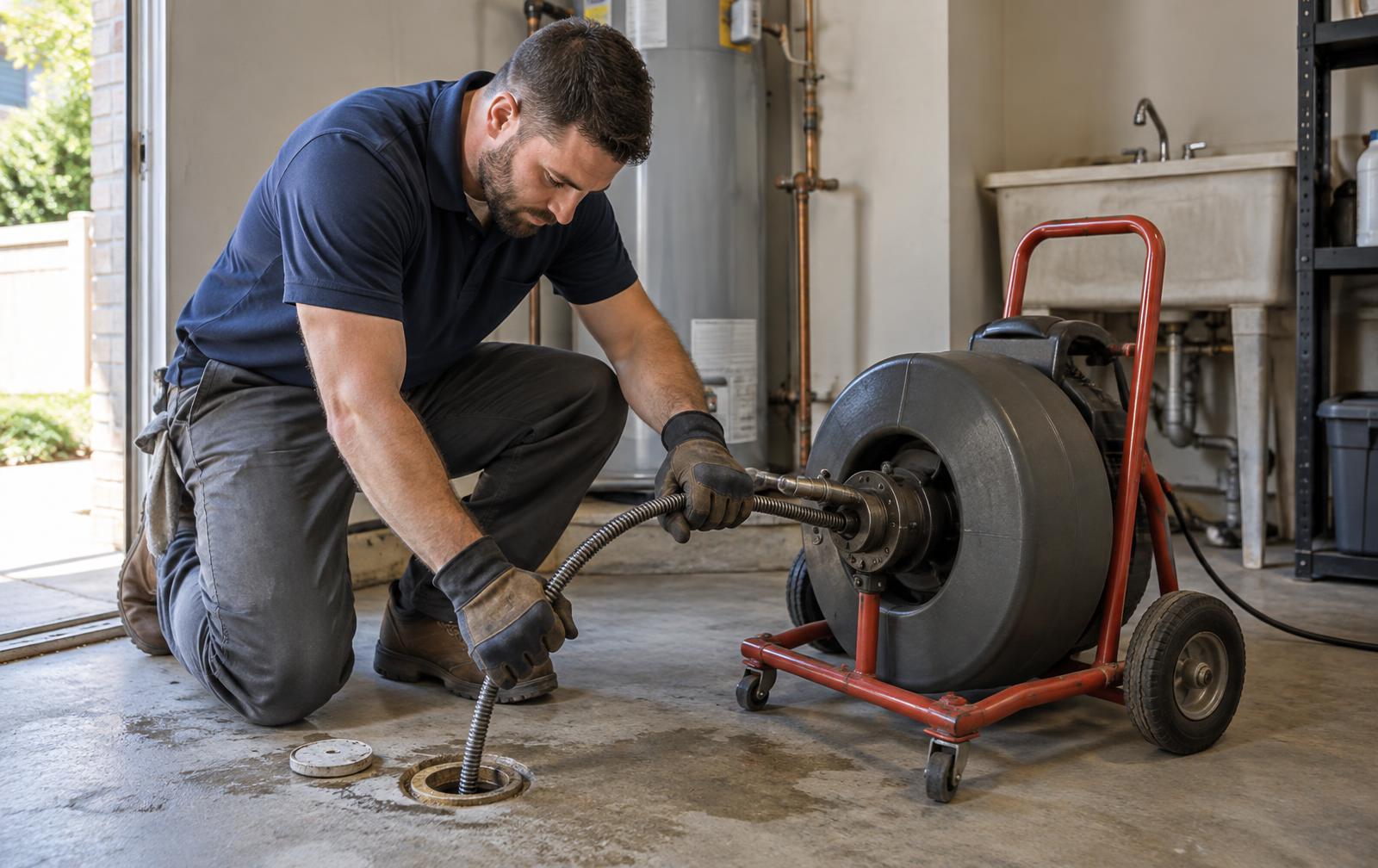
Full-clear service and camera confirmation for the aging cast iron drains under Addison's mid-century ranches and condo blocks.
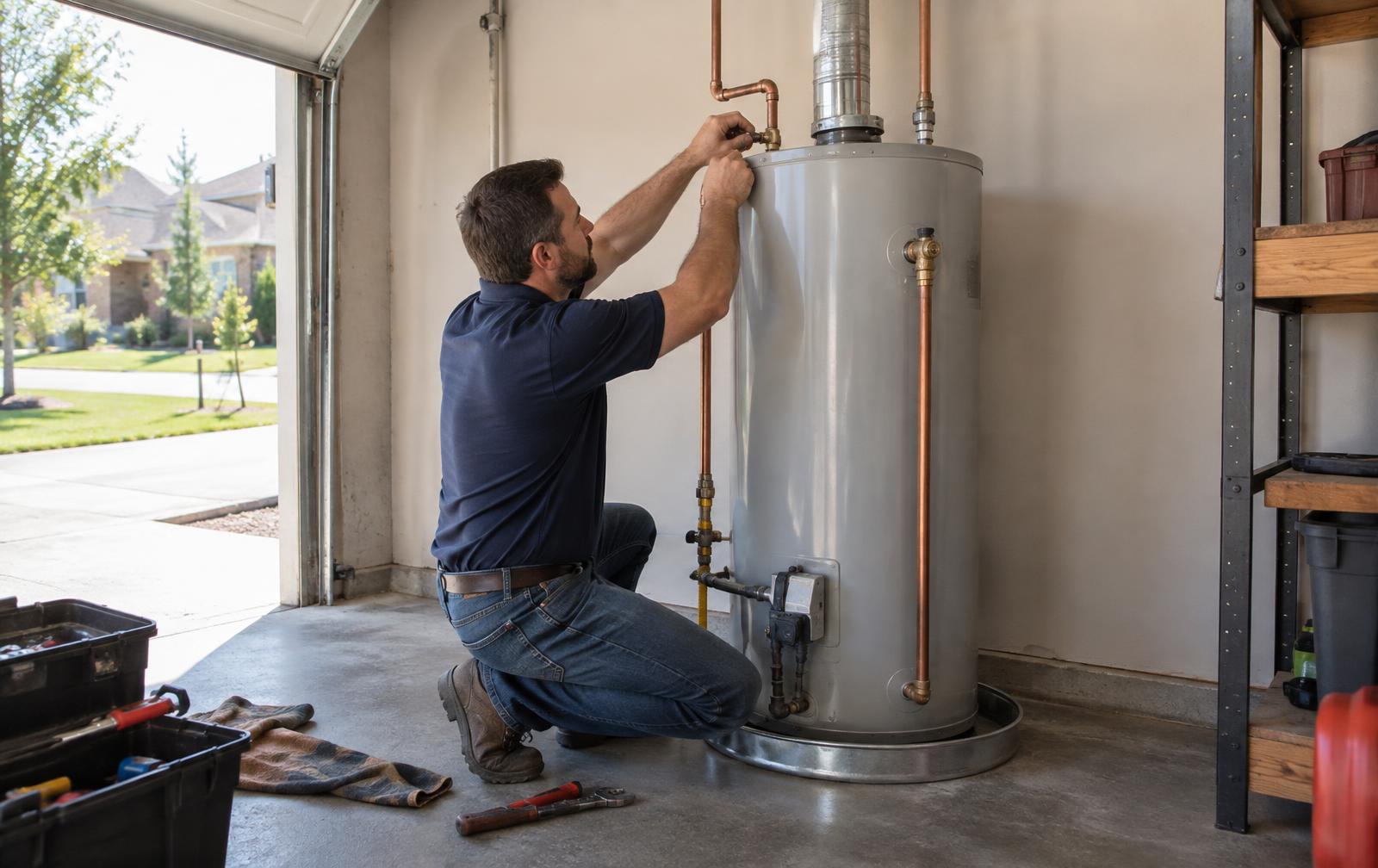
Repair, flush, and replacement of tank units — including the closet-tucked heaters common to Addison townhomes and Circle-area condos.
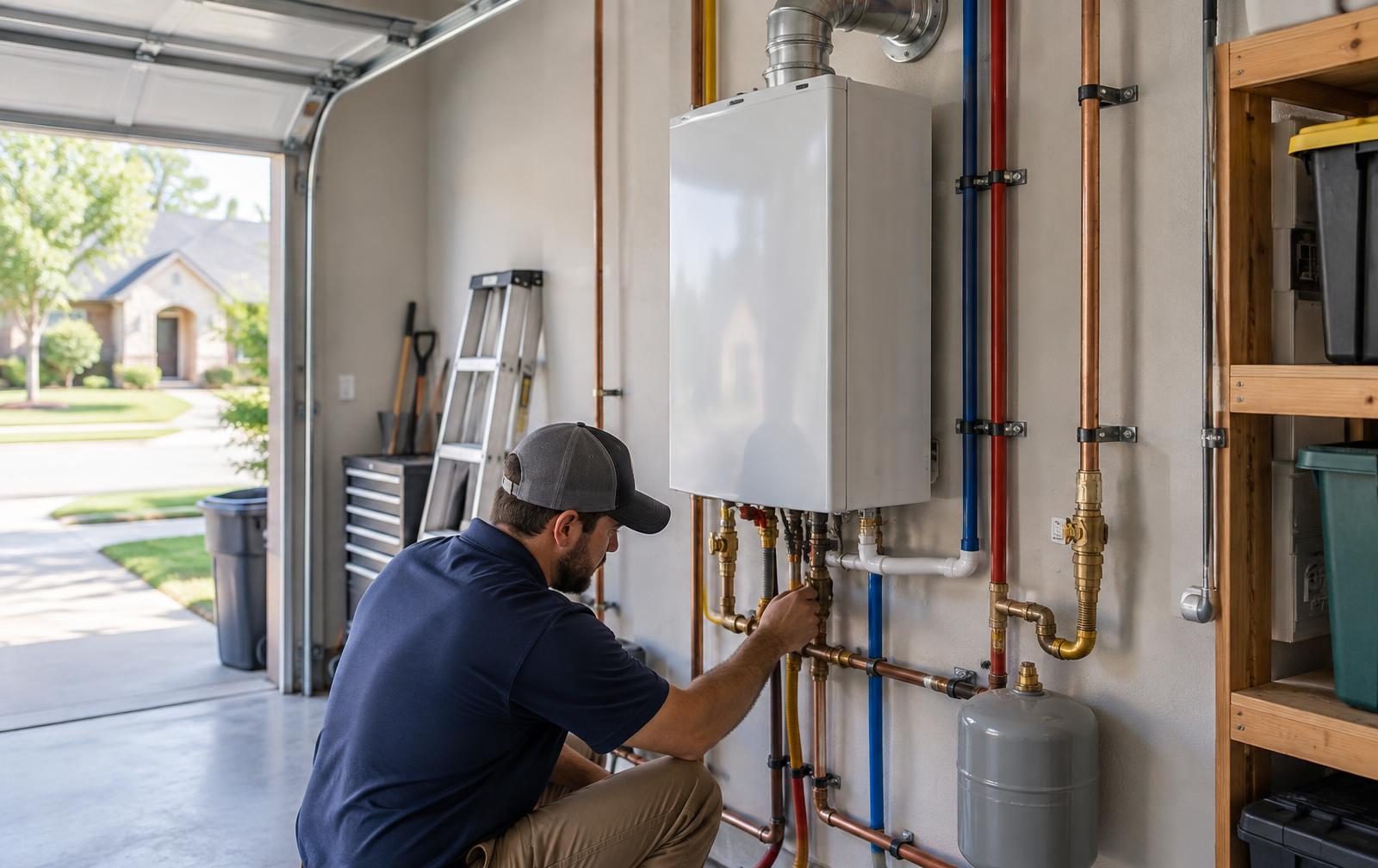
Install, service, and annual descaling — Addison's hard tap water eats tankless heat exchangers without it.
same-day, 7 days a week response across Addison for burst pipes, condo stack backups, and failed heaters.
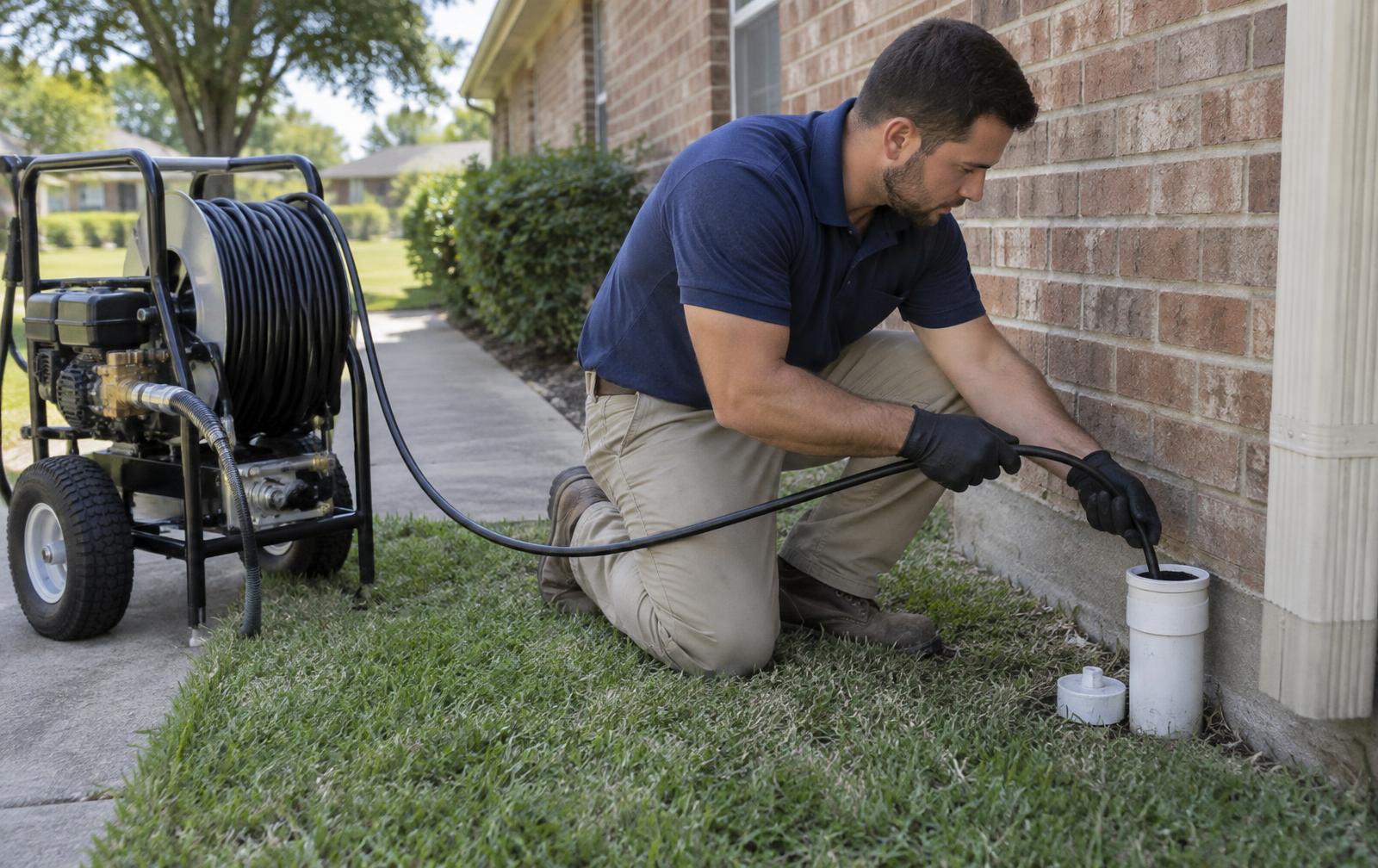
High-pressure cleaning that clears scale, grease, and roots from the cast iron mains under Addison's older stock — full-diameter, lasting clean.
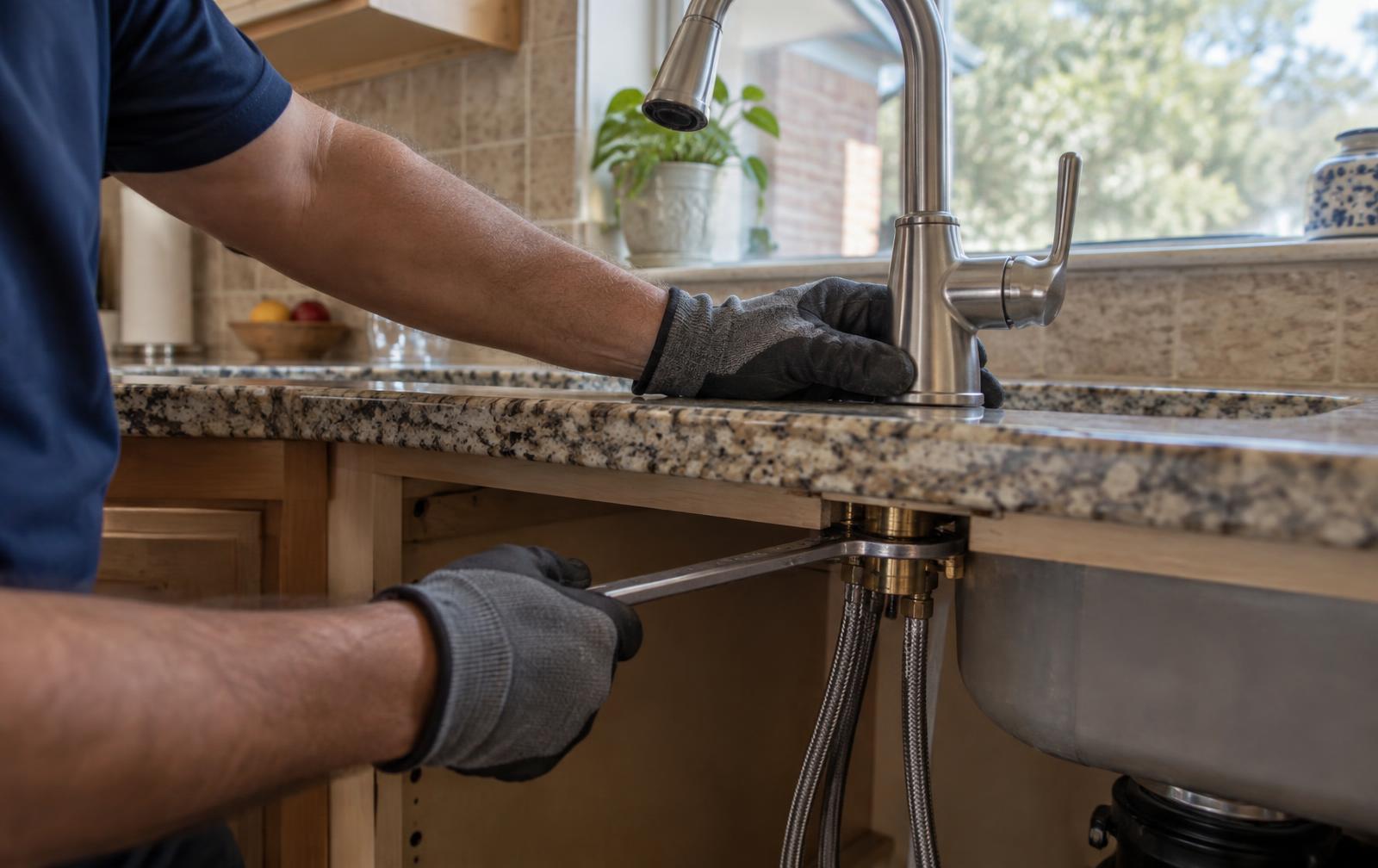
Cartridge, stem, and full-fixture replacement for Addison kitchens and bathrooms — hard-water-ready parts stocked on the truck.
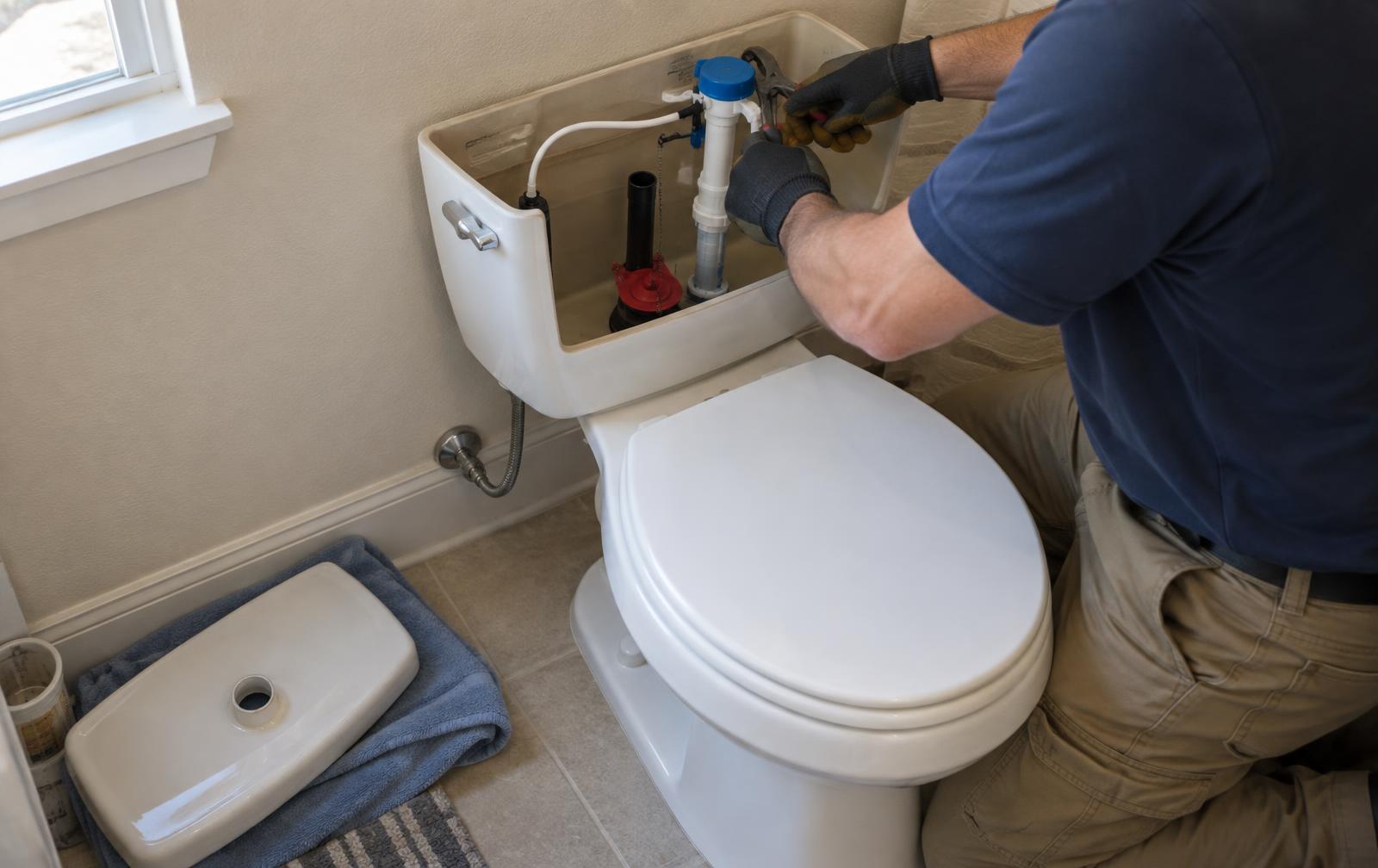
Rebuilds, wax-ring resets, flange repairs, and full replacements — the running toilets and rocking bowls in Addison homes.
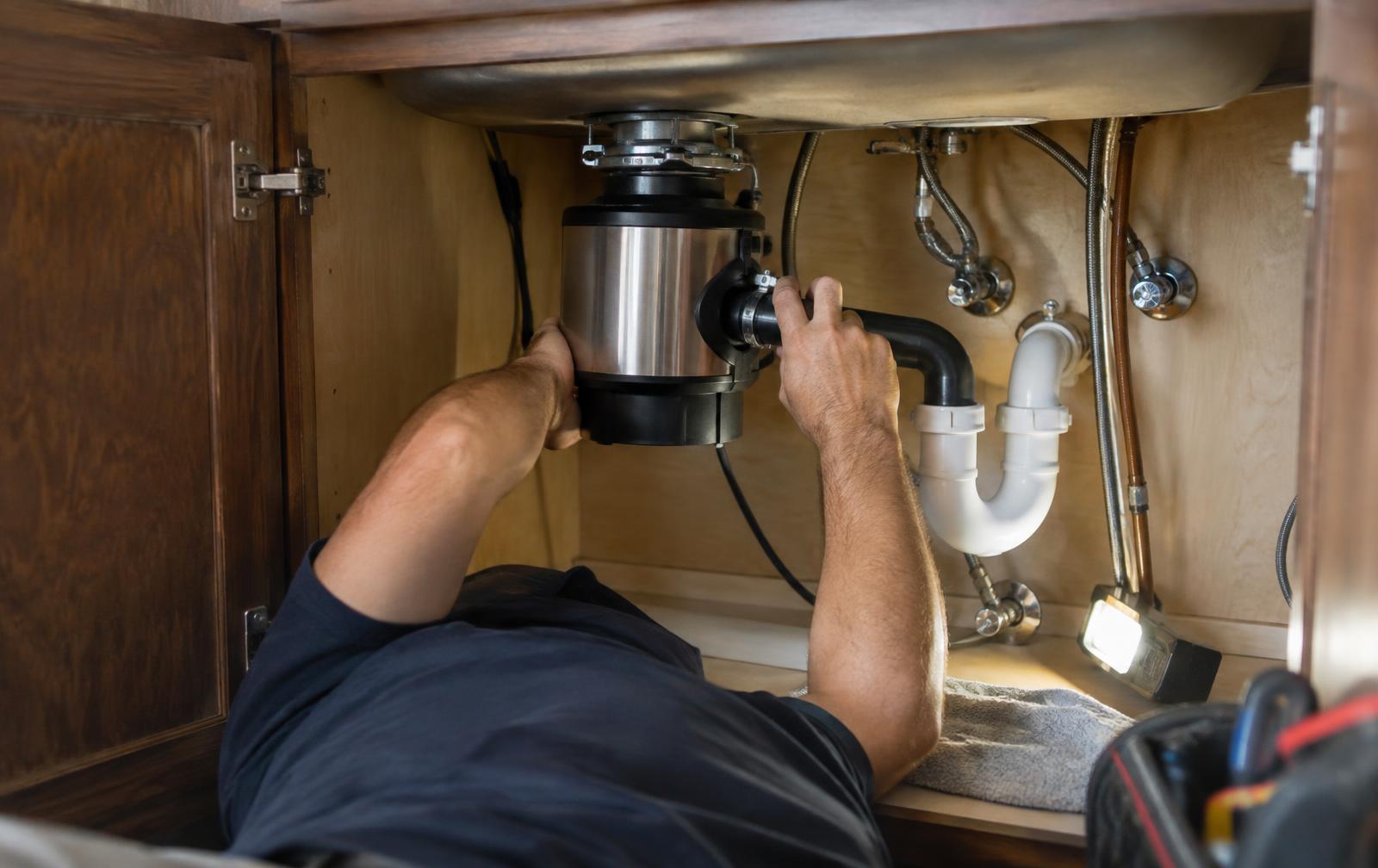
Jam clearing, leaking-unit swaps, and quiet 3/4 HP upgrades for Addison kitchens — same-visit install.
Sewer Backing Up At Your Addison Property?
A camera diagnosis first, a written trenchless quote, and the manufacturer's warranty on the new pipe. Schedule a scope today.