
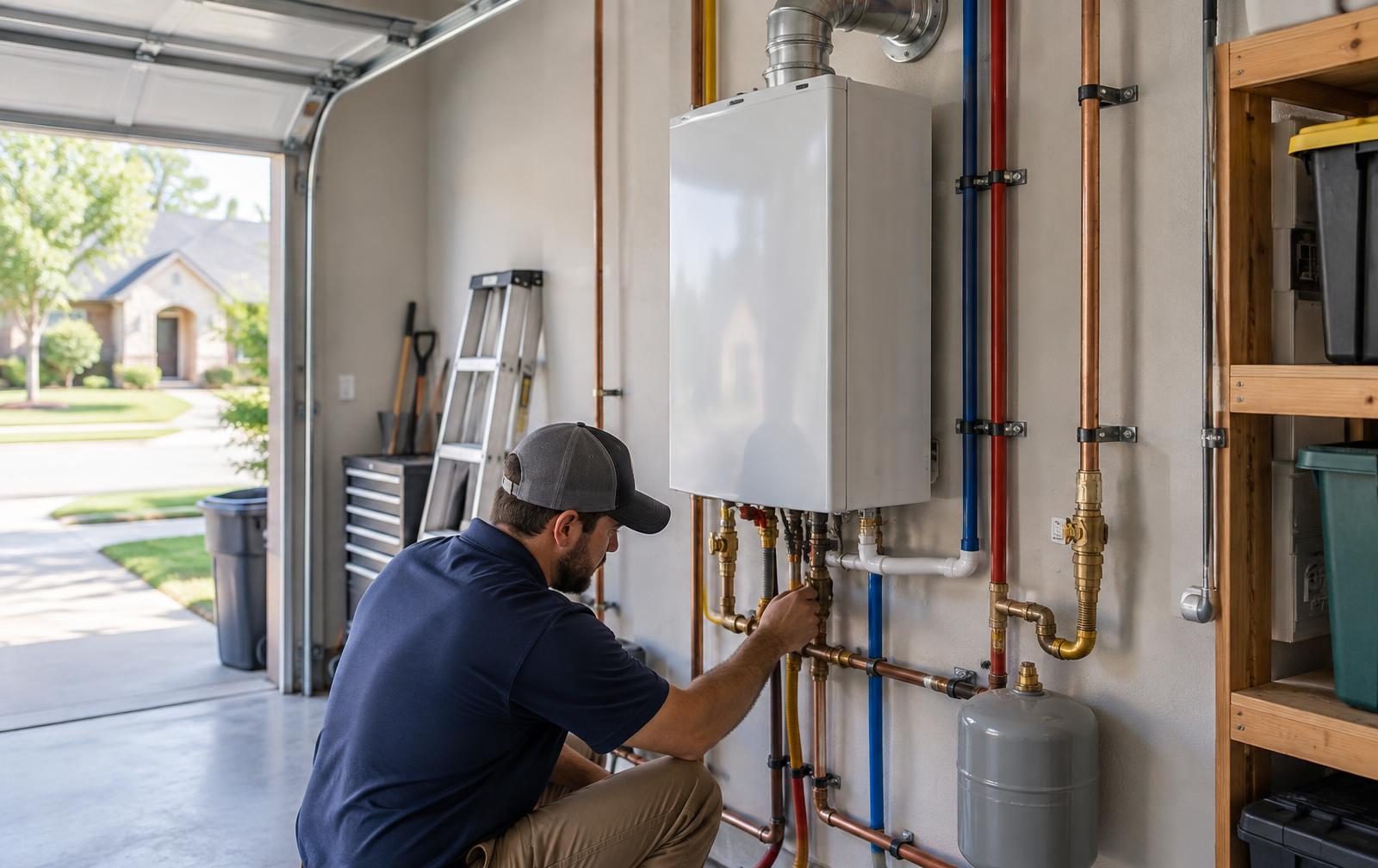
Tankless Water Heater Services in Flower Mound, TX
A brand-new install, a warranty repair, or the yearly flush a tankless unit needs to survive Flower Mound water. We size the gas line correctly, vent to the manufacturer's spec, and keep the paperwork current so a warranty claim never gets denied over a corner we cut.
The Unit Only Lasts If the Install and the Upkeep Both Hold Up
A tankless heater fits Flower Mound living well \u2014 continuous hot water, a smaller footprint than a tank, and a service life that can beat a tank's by a wide margin if it is actually maintained. Water hardness through Town of Flower Mound Public Works runs in the moderately hard range, and mineral scale builds inside a heat exchanger faster in that kind of water than in soft water. A unit several years into a long manufacturer warranty can already show heavy scale if the yearly flush never happened \u2014 most manufacturers require documented annual descaling to keep that warranty valid, and skipping it is the single fastest way to void it.
The install itself carries just as much weight. Manufacturer specs call for particular vent materials and clearances, a gas line sized to the unit's BTU draw, a condensate neutralizer on higher-efficiency models, and dedicated isolation valves so future service does not turn into a bigger plumbing job. Flower Mound is served by two separate gas providers depending on which part of town a house sits in \u2014 Atmos Energy across most of the town, CoServ Gas in a smaller pocket \u2014 and confirming which one serves a given address matters before sizing or scheduling any gas work, since the Town itself only bills water and wastewater.
We install to the full manufacturer specification every time \u2014 correct vent, correct gas sizing, correct valves, correct condensate handling \u2014 and everything gets documented for the warranty file. Annual service afterward is what actually gets a unit to the long service life it was sold on.

Signs Your Flower Mound Tankless Unit Needs Attention
A tankless heater usually signals trouble well before it actually fails. Ignoring the signal is what puts the warranty at risk.
Each code corresponds to something specific \u2014 combustion, flow rate, temperature, or scale buildup. We look up the code for your exact make and model before quoting anything.
Scale collecting on the heat exchanger restricts flow over time. If filling a tub takes noticeably longer than it used to, a descale is usually the fix.
That brief cold-hot-cold pattern can trace to a scale-restricted flow sensor, an undersized recirculation setup, or a flow modulation issue \u2014 each one calls for a different repair.
Either the unit is undersized for how the house actually uses hot water, or the gas line cannot deliver peak BTU demand. We check gas line diameter first, since older gas lines here are sometimes undersized for a large-capacity unit.
In this water, annual descaling is not optional upkeep \u2014 it is what keeps the manufacturer warranty enforceable in the first place.
That sound is flash steam escaping through scale buildup on the heat exchanger. A prompt descale usually stops it before the exchanger takes lasting damage.
Sized Correctly, Vented Correctly, Descaled Every Year
The install determines the first decade. The annual service determines the second.
- 1Size the unit to real household demand
We total the fixtures likely to run at once and calculate the flow rate needed against incoming water temperature \u2014 incoming water temperature here runs cold enough in winter that the temperature rise required is bigger than a lot of quick online calculators assume. The gas line gets sized to match, which typically means three-quarter-inch supply for a large-capacity unit.
- 2Vent exactly to the manufacturer's spec
Material, pitch, termination clearance, and concentric kits for tight spaces all follow the manufacturer's documentation model by model. Undersized vent runs or the wrong material are the two most common corner-cuts we see, and either one can void the warranty or cause backdraft.
- 3Add isolation valves and condensate handling
Full-port valves on both hot and cold sides turn a future descale into a short connection job instead of a plumbing project. High-efficiency condensing models also get a condensate neutralizer to keep acidic condensate away from drain lines.
- 4Run the annual descale and inspection together
We isolate at the valves, circulate a food-grade descaling solution through the exchanger, flush it clean, and restart. While we are in there we also check the burner, flame rod, flow sensor, condensate trap, and vent terminations, and document all of it for the warranty record.
- 5Repair with manufacturer parts and procedure
Flame rod, ignitor, gas valve, flow sensor, or controller \u2014 whatever failed gets replaced with the correct part for that make and model. We service Rinnai, Navien, Rheem, Bosch, Noritz, and AO Smith tankless units across Flower Mound.
Where Tankless Setups Work Best Across Flower Mound
Where the unit sits, and what kind of home it sits in, both shape the install.
These late-1990s golf-course homes have enough exterior wall space for a straightforward mounted unit, but a hard winter freeze is a real risk for an outdoor install, so line insulation and freeze-protection settings get checked at install and at every annual visit.
Custom homes on acre-plus lots here often support a household size that genuinely benefits from tankless \u2014 several simultaneous hot-water draws across a bigger floor plan is exactly the situation tankless solves best.
With build years ranging from the 1930s through the 1980s along this road, the gas supply size varies a lot house to house, and confirming pipe diameter is one of the first things we check before quoting an install.
New construction built after 2016 sometimes already has a tankless unit from the builder, though isolation valves are not always included \u2014 retrofitting proper service valves is often the first job we do on these newer homes.
Townhome and condo units in this mixed-use development often have limited mechanical space, so a compact wall-hung tankless unit with a concentric vent kit is usually the cleanest fit for the footprint.
These large custom homes on two-acre-minimum lots sit outside Town sewer service, and many were built with generous gas service to begin with, which usually means less gas-line upgrade work than older homes elsewhere in town.
What Flower Mound Homeowners Say

Protected by Paperwork, Not Just a Good Install
Every installation gets documented for warranty registration \u2014 model, serial number, gas configuration, vent configuration, and isolation valve setup. Every annual descale gets logged with a date. That documentation is what keeps a long manufacturer warranty enforceable instead of denied on a technicality years later.
Our license is with the Texas State Board of Plumbing Examiners, and we run this as an insured, family-owned shop out of The Colony. Same-day service covers a unit that has stopped producing hot water; annual maintenance visits get scheduled ahead of time.
Straight Answers, No Sales Pitch
Our Other Plumbing Services in Flower Mound, TX
A tankless install often pairs with upgrading the gas line feeding it. We handle both in the same visit, with one quote, anywhere in Flower Mound.
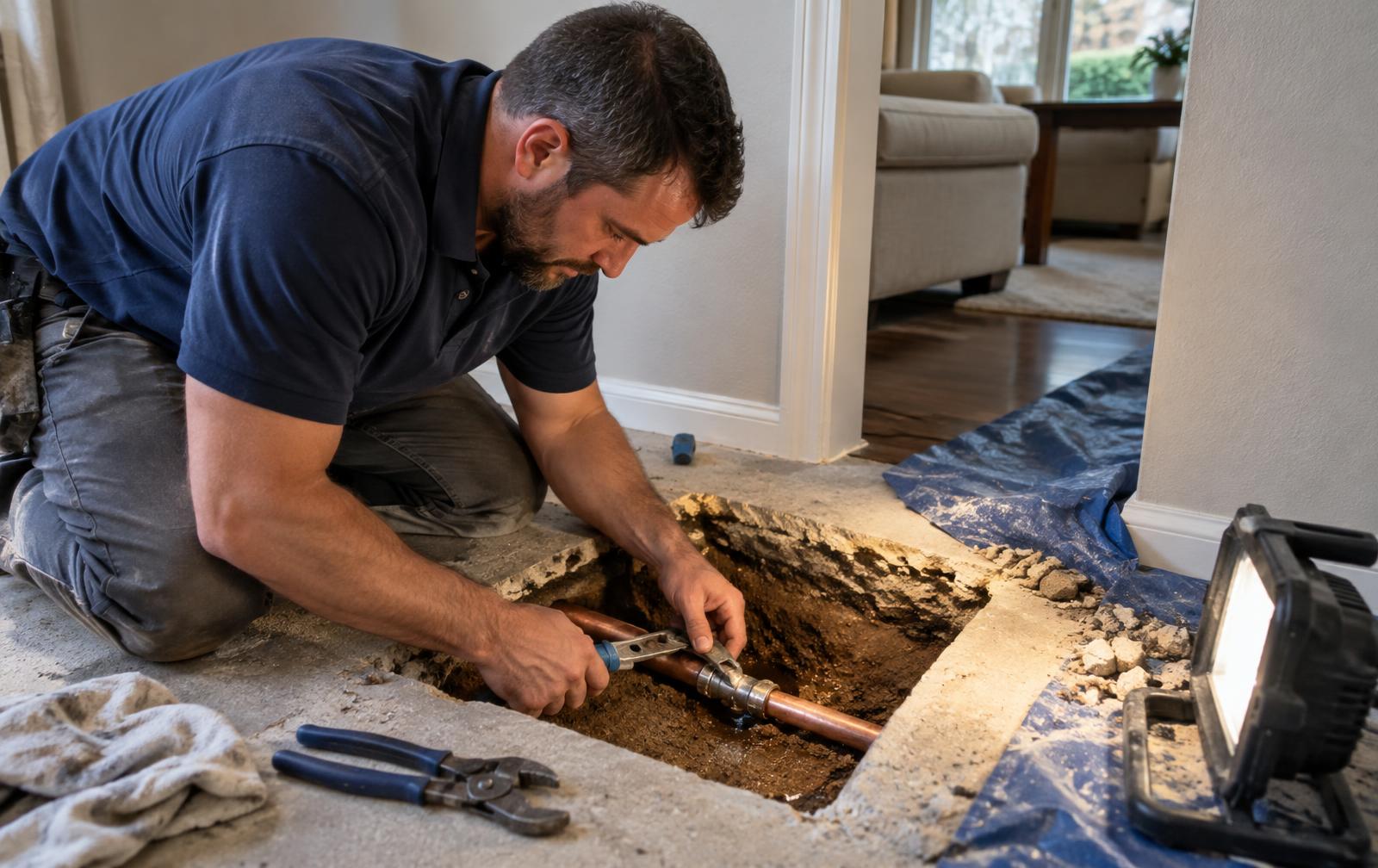
Electronic detection under Flower Mound slabs — reroute options that save your finished floors when possible.
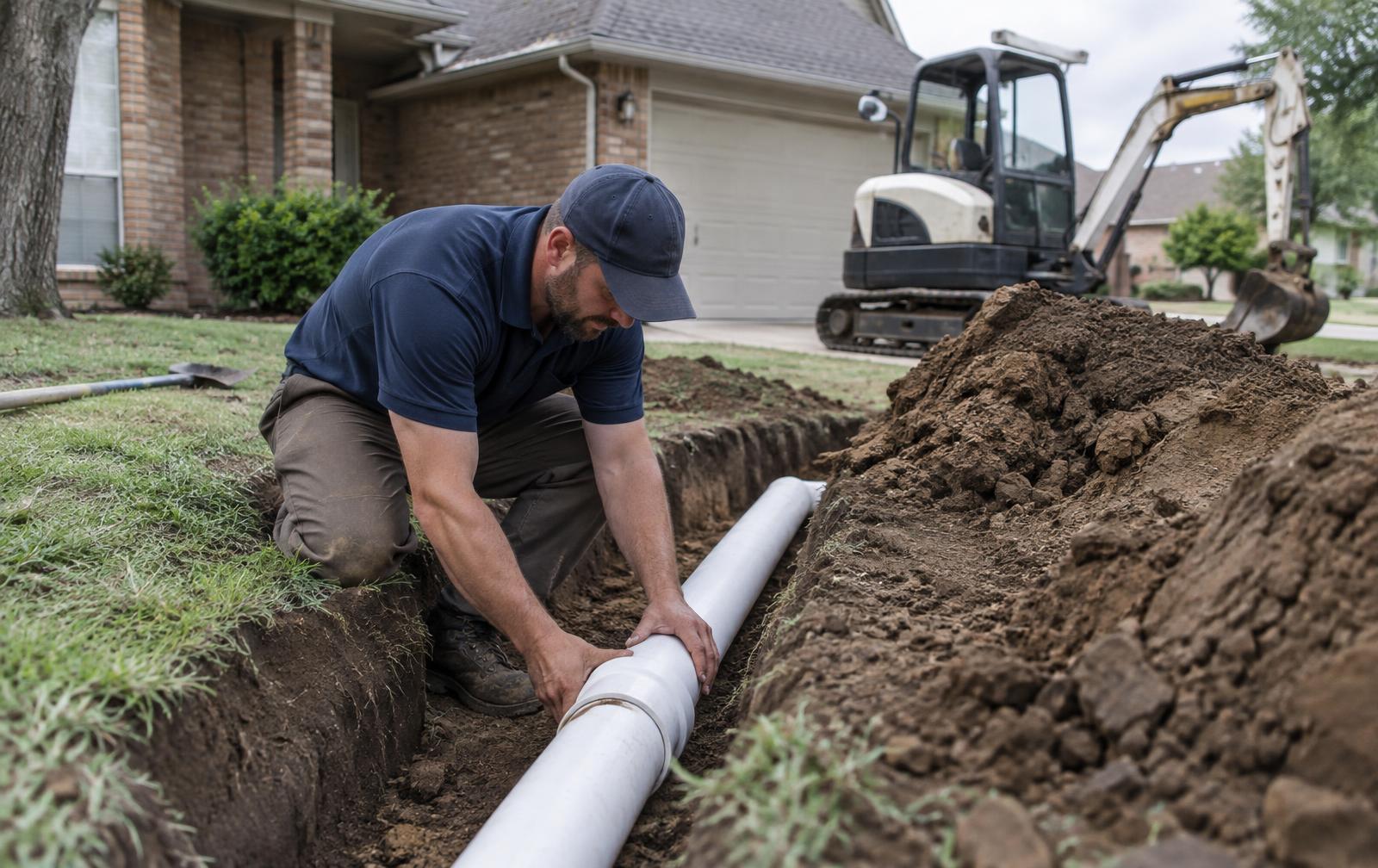
Trenchless replacement for the aging laterals across Flower Mound's older runs — camera first, quote in writing, minimal yard damage.
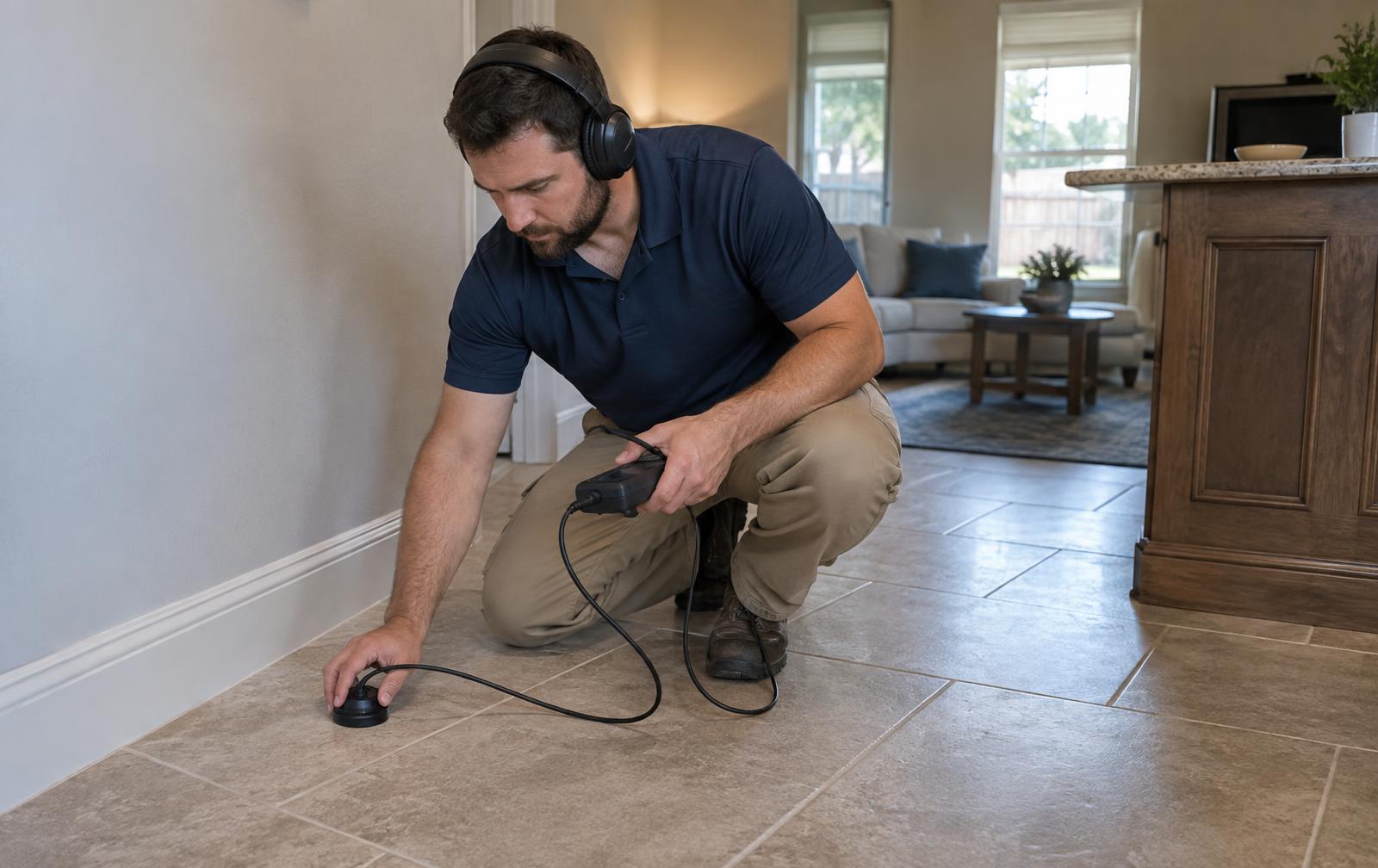
Acoustic, thermal, and pressure testing to pinpoint hidden leaks in Flower Mound slab and wall lines without tearing into finishes.
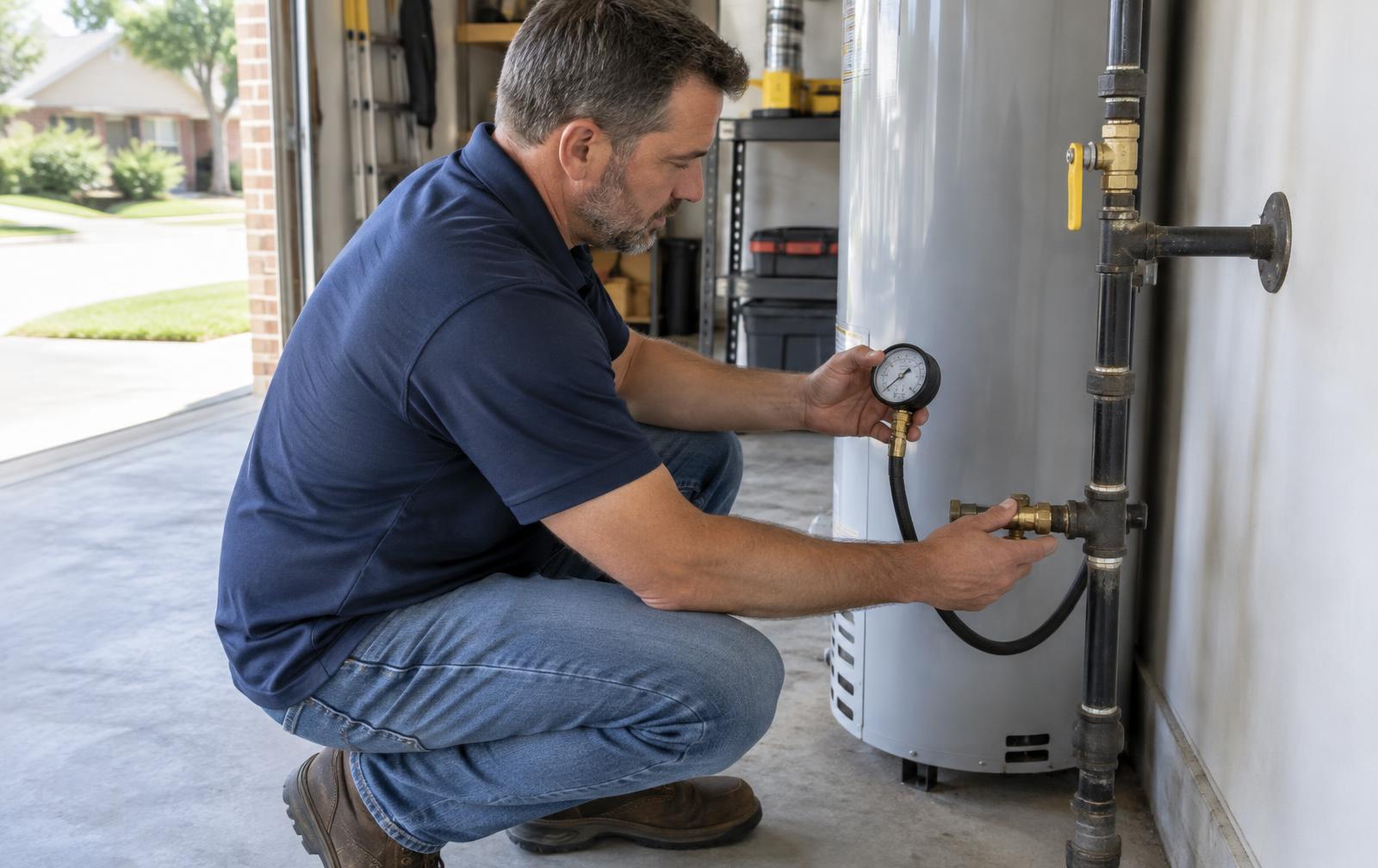
Licensed install, repair, and pressure-testing for Flower Mound homes — every line signed off to Texas code and Atmos requirements.
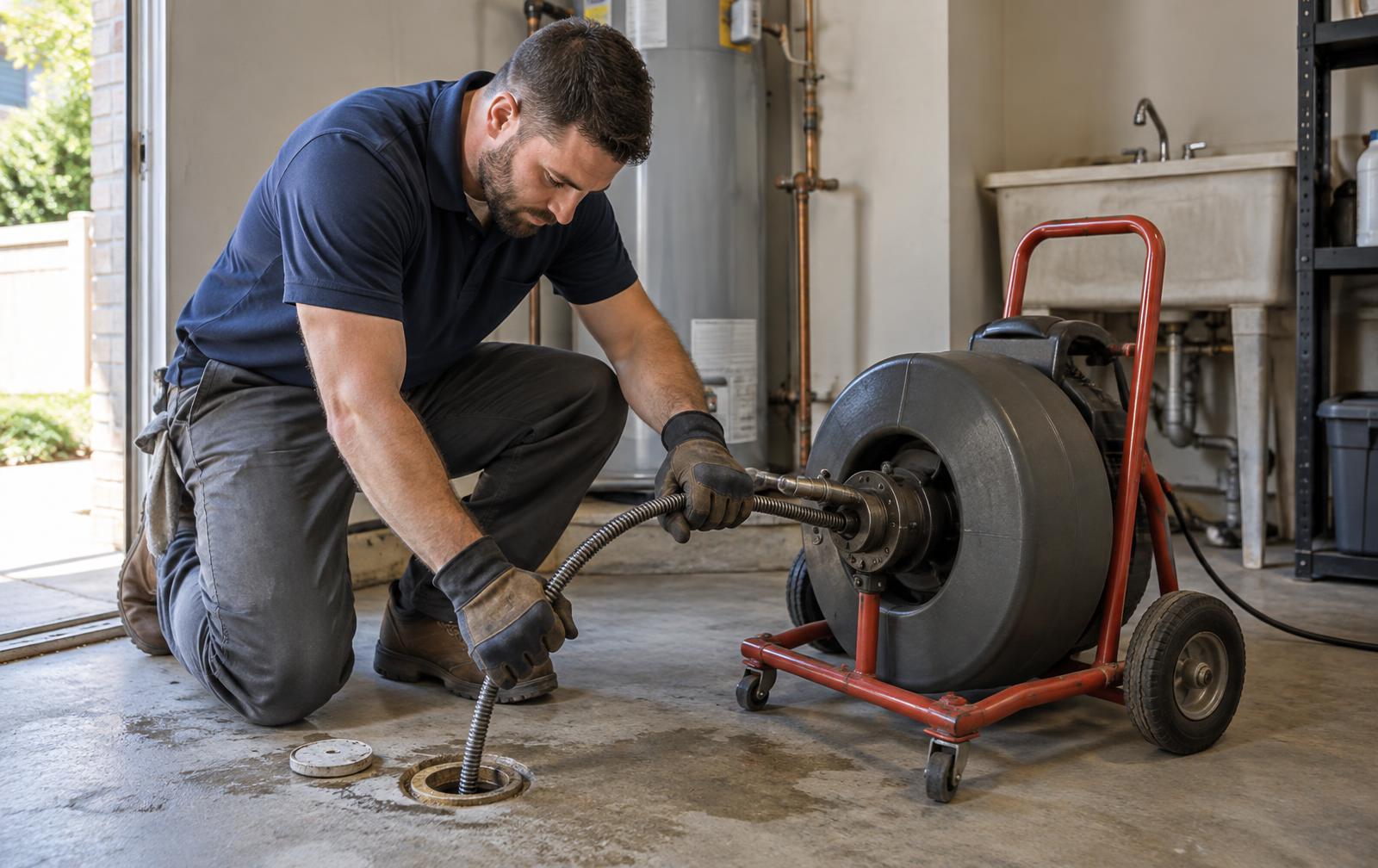
Full-clear service and camera confirmation for the drains under Flower Mound's neighborhoods.
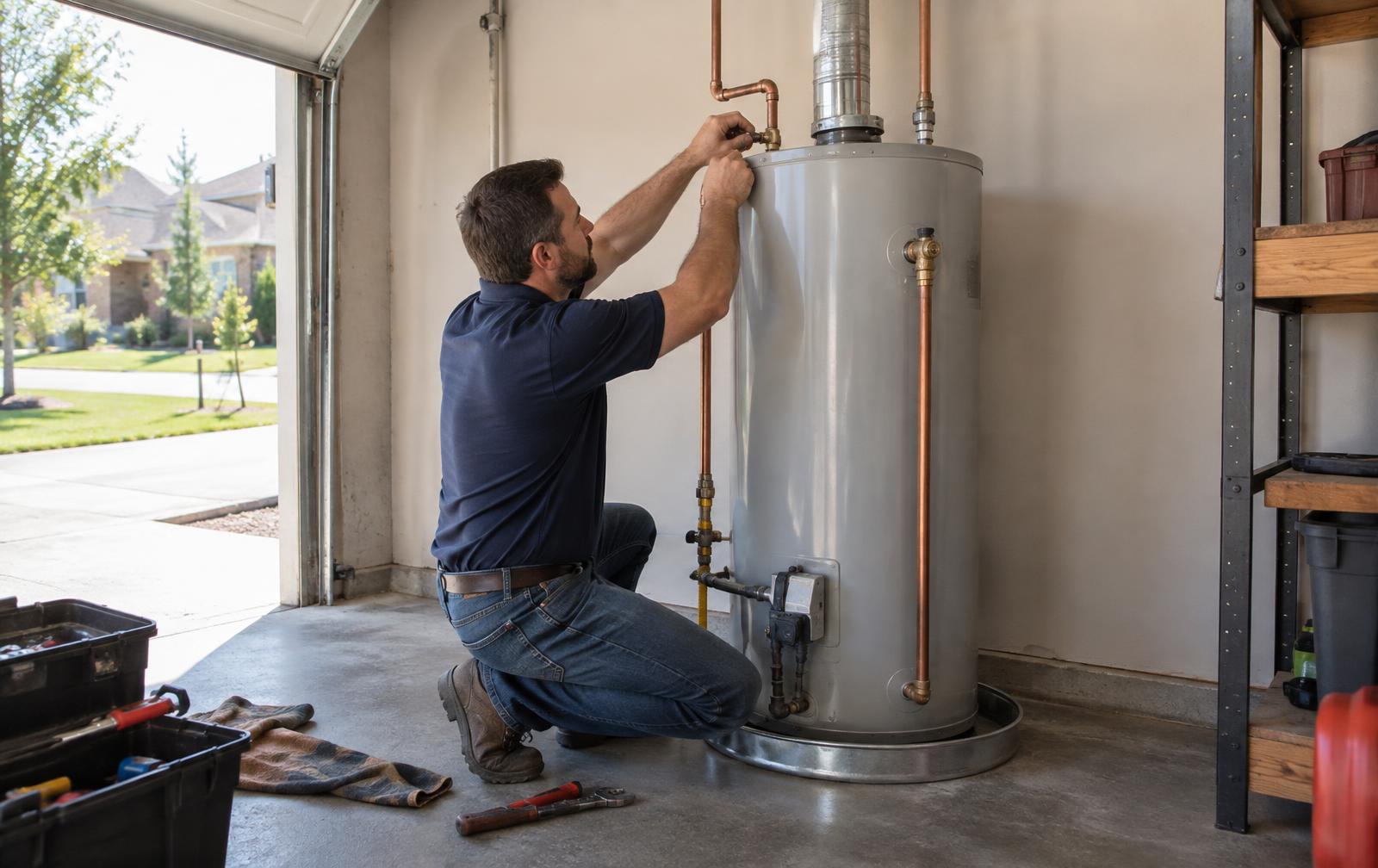
Repair, flush, and replacement of tank units — including attic and garage heaters common to Flower Mound homes.
same-day, 7 days a week response across Flower Mound for burst pipes, heater failures, and main-line backups.
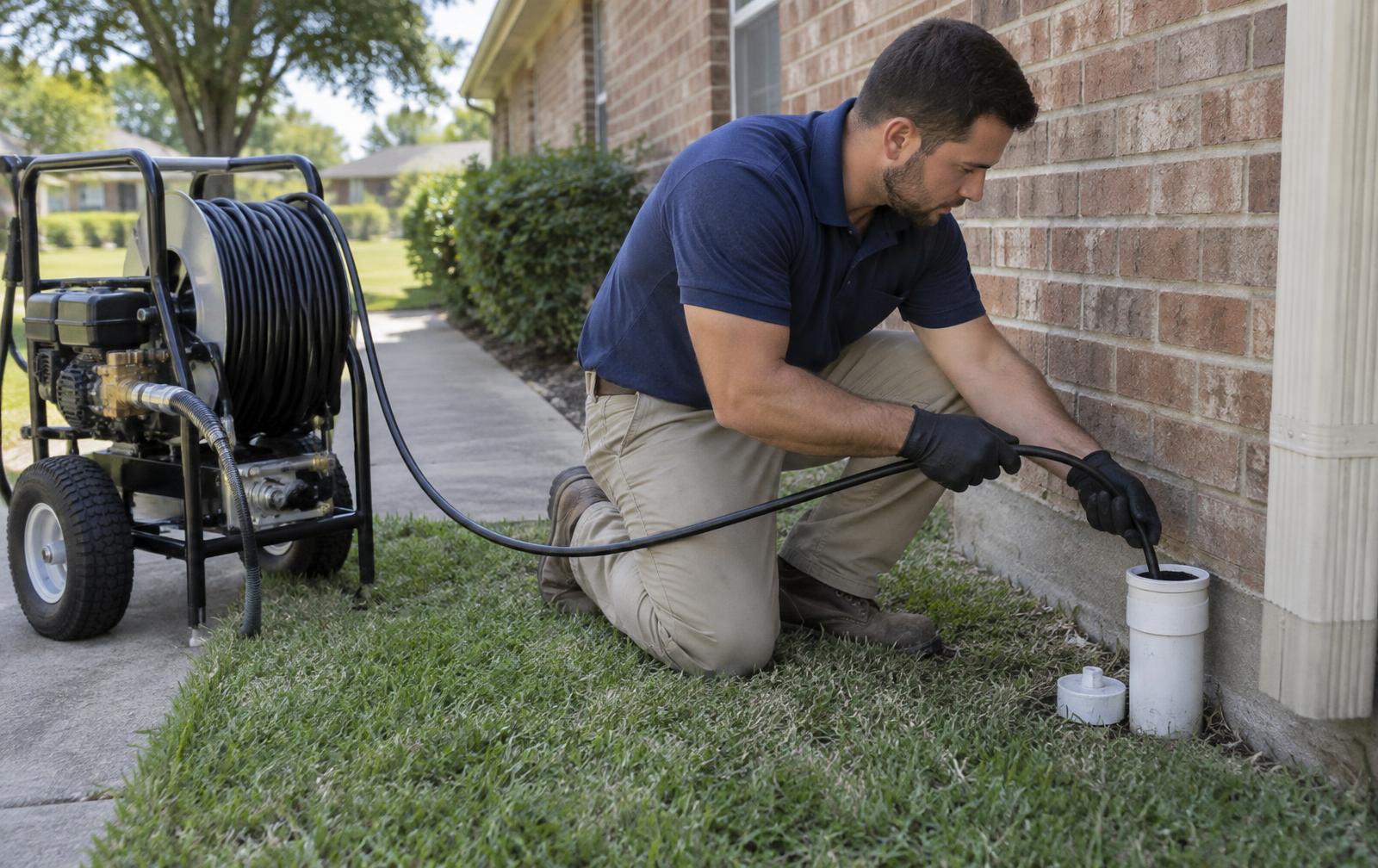
High-pressure cleaning that clears scale, grease, and roots from Flower Mound's lateral runs — full-diameter, lasting clean.
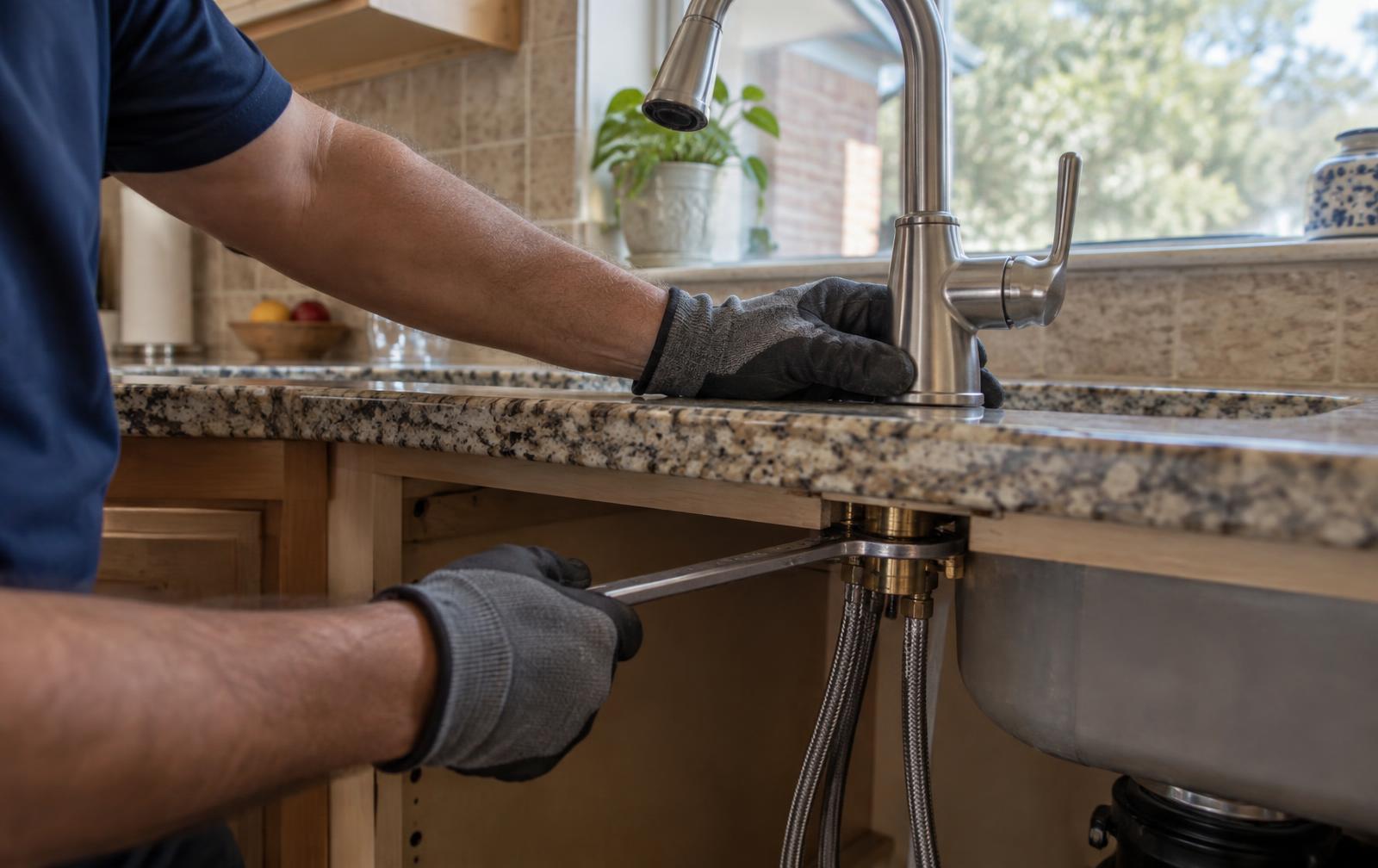
Cartridge, stem, and full-fixture replacement for Flower Mound kitchens and bathrooms — hard-water-ready parts stocked on the truck.
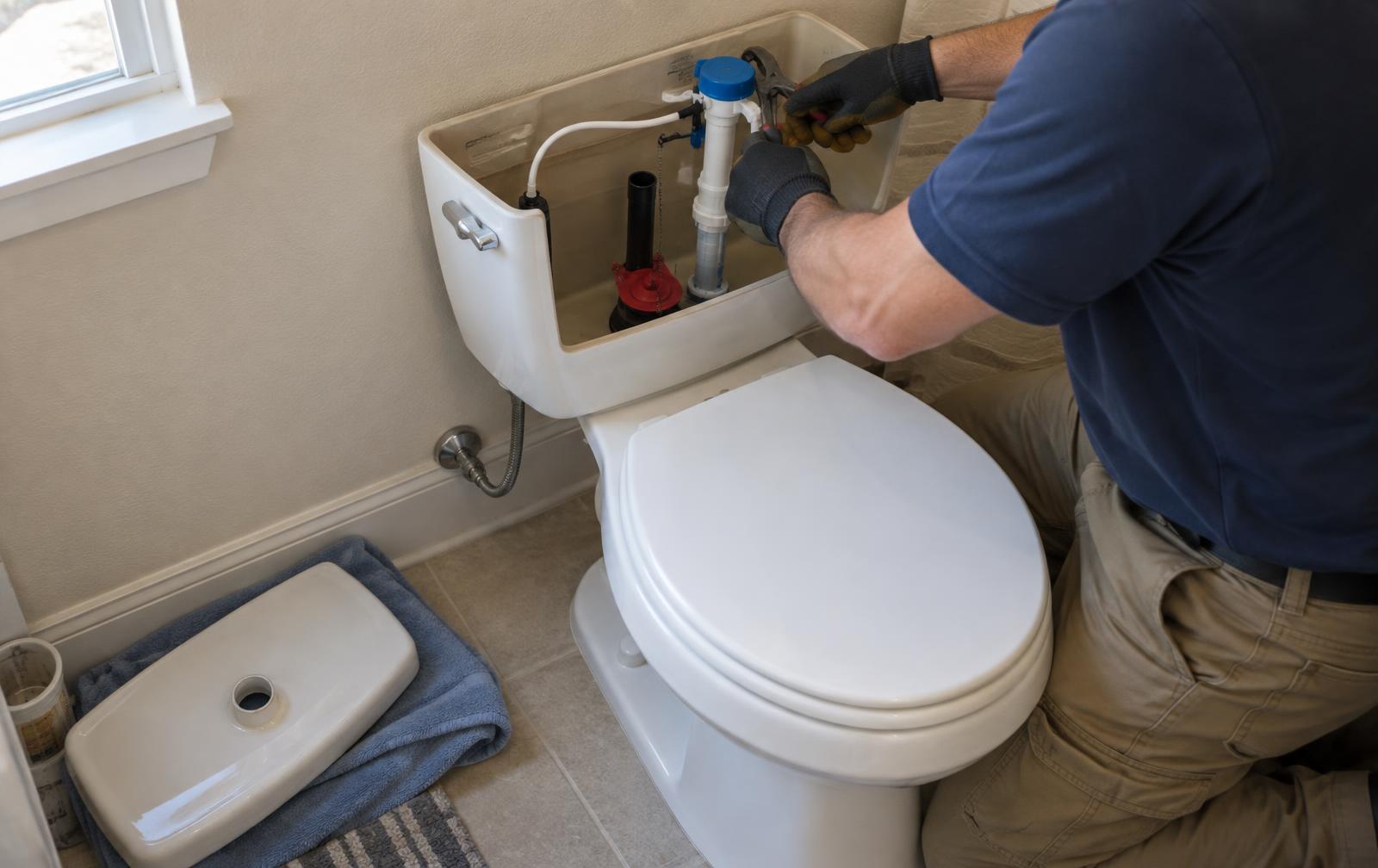
Rebuilds, wax-ring resets, flange repairs, and full replacements — the running toilets and rocking bowls in Flower Mound homes.
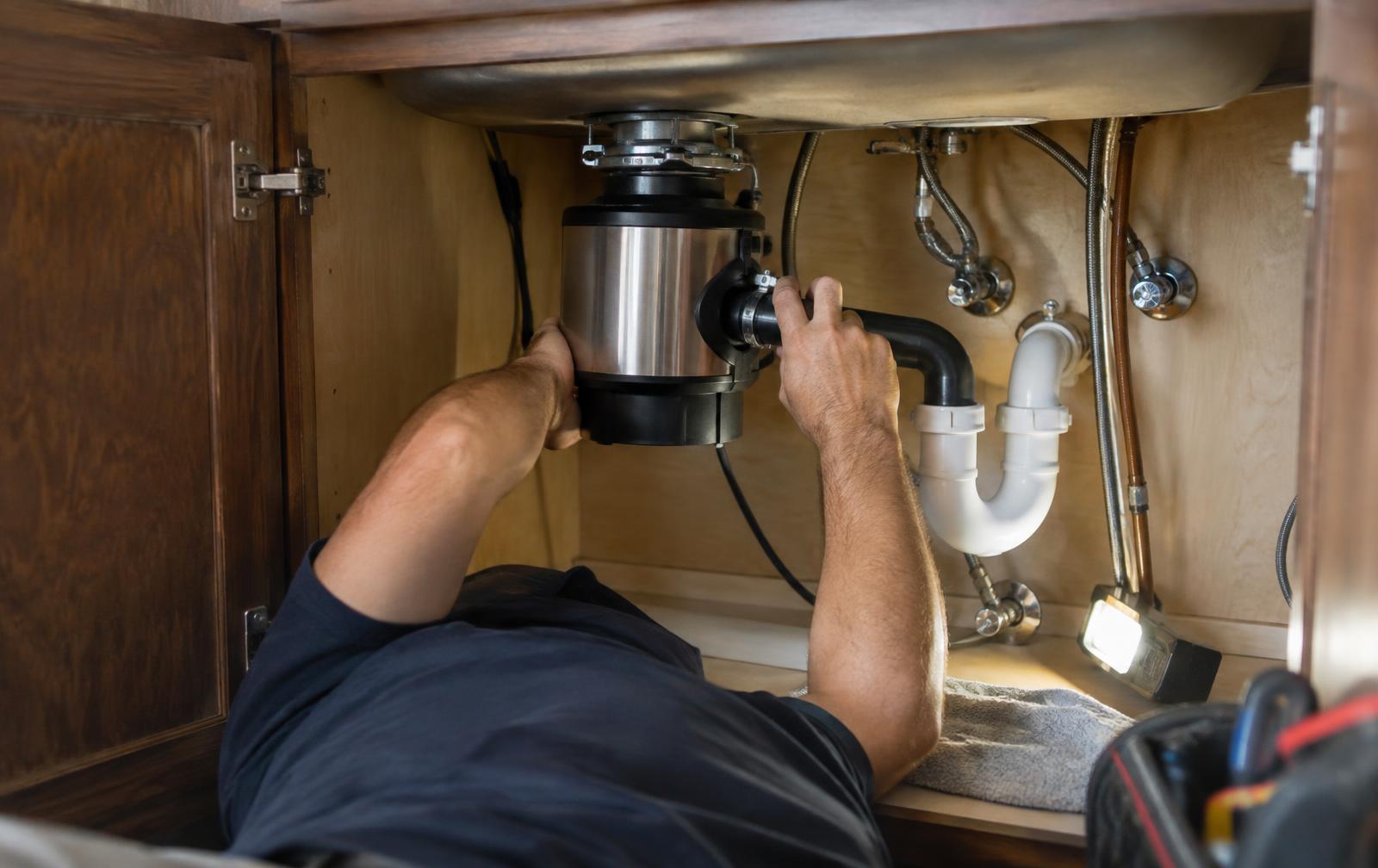
Jam clearing, leaking-unit swaps, and quiet 3/4 HP upgrades for Flower Mound kitchens — same-visit install.
Need Tankless Install or Service in Flower Mound?
Manufacturer-spec installation, documented annual service, and a warranty that stays valid. Get on the schedule.