
Drain Cleaning in Flower Mound, TX
A tub that drains a little slower each time you use it. A toilet that gurgles when the washer empties. A backup rising at the lowest fixture in the house. We open the line fully and confirm it on camera, instead of stopping the second water starts moving again.
A Cable That Gets Water Moving Isn't the Same as a Clear Pipe
Flower Mound sits on two different soil belts — sandy loam over expansive clay through the Eastern Cross Timbers on the western and central side of town, and heavier Blackland Prairie clay as you move east. Both shift with the seasons, and that movement nudges sewer laterals out of grade over the years. A quick cable pass can push through a clog without ever showing you whether the pipe itself has settled or cracked underneath it.
The vintage of the house matters just as much as the dirt under it. Peters Colony carries a real mix of construction dates, from lots platted in the 1930s through infill built decades later, so a service call there might turn up older cast iron on one property and a modern PVC lateral next door. We don't guess based on the street — we run a camera and look.
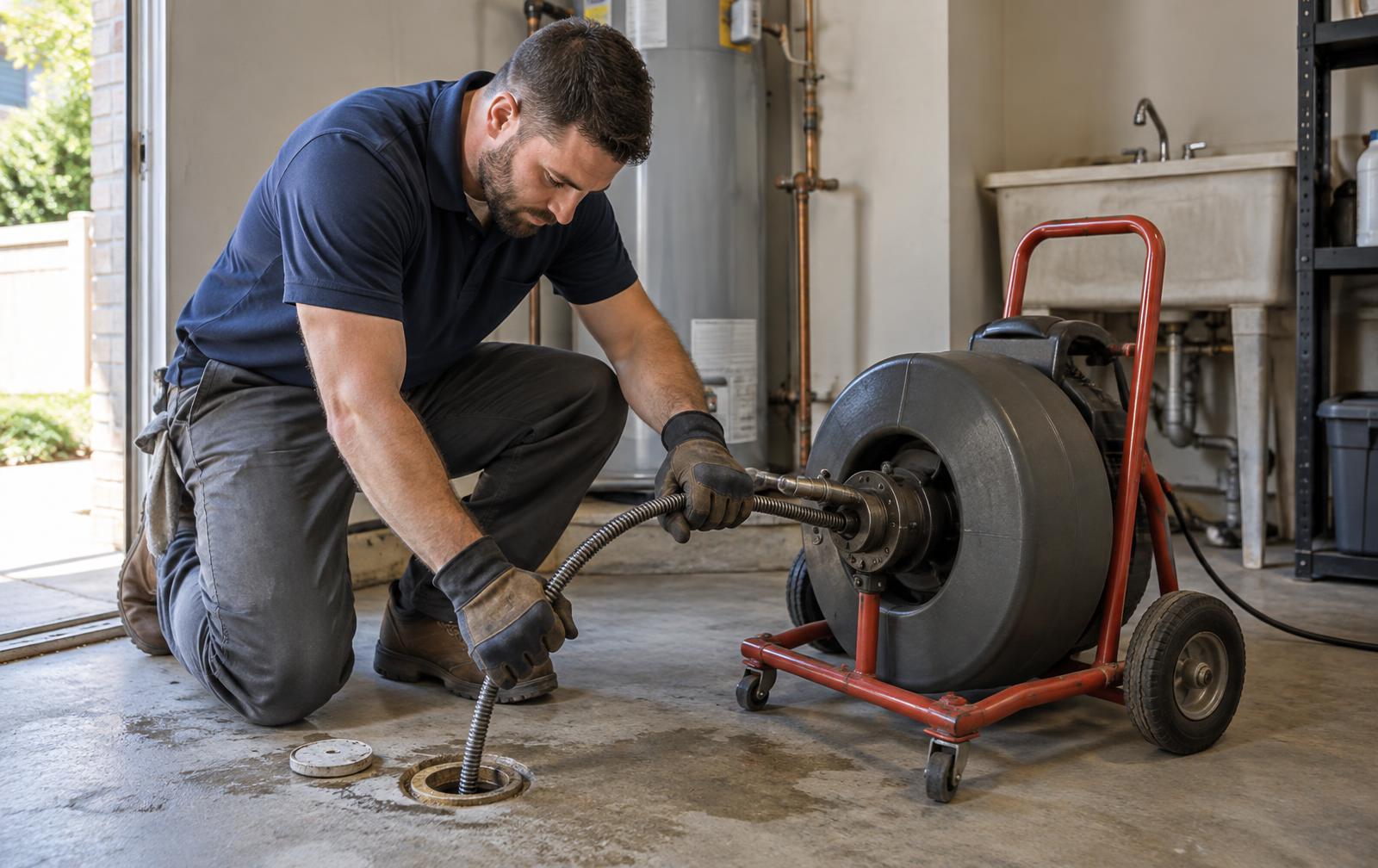
Our standard is to work the cable or jetter the full length of the run, from the cleanout to the city tap, then confirm with a camera pass before calling the job finished. If that camera shows a belly, an offset joint, or a section that's lost its pitch, a repeat cabling won't hold and we say so instead of quietly rebooking you.

What a Failing Drain Looks Like Before It Backs Up
A drain rarely fails without warning first. Here's what those warnings look like in a Flower Mound home.
The tub fills partway when you flush, or the dishwasher pushes water up into the sink. That's a main-line restriction pushing flow to the lowest open drain — worth a call before it reaches the toilet.
The bathroom sink gurgles when the washing machine drains. Air is finding a shortcut through the trap because the main line is partly blocked downstream.
A single sluggish sink is usually a branch problem. Two or three fixtures slowing down together points to the shared line further downstream, and that's a bigger job.
A recurring wet spot or a stripe of greener grass tracking the path of the sewer line is a sign the pipe itself is leaking underground — no amount of cabling fixes that; it needs to be repaired.
A gradual house-wide slowdown usually means scale or grease has been building on the pipe wall for a while. Jetting restores the original diameter; cabling alone just punches a channel through it.
That smell often means a trap has been siphoned dry because the main line is drawing air past it — a symptom of a partial blockage, not a bad wax ring.
Diagnose the Line, Match the Tool, Confirm on Camera
The job isn't done because water is moving. It's done when the camera shows a clear pipe.
- 1Figure out which line is actually affected
One slow drain, several slow drains, and a house-wide backup point to different sections of pipe. We ask which fixtures are involved before deciding which cleanout to open.
- 2Open the correct cleanout
We work through a proper cleanout rather than a toilet flange or shower drain, so debris stays out of the house. Most Flower Mound ranch-style homes have one at ground level near the front or side yard; townhomes and condos often have theirs in a utility closet.
- 3Pick the tool for what's actually in the pipe
A chain flail for roots, a knife-style blade for grease, a wire brush or jetter head for scale. Using the wrong cutter on the wrong blockage either misses the clog or scores a pipe that didn't need it.
- 4Clear the full run, not just a channel
We work the whole diameter from the cleanout to the connection point, then pull back slowly so loosened debris doesn't just resettle for the next flush.
- 5Camera the line to confirm it's actually clear
Every main-line call ends with a camera pass. If we see an offset joint, a belly, root intrusion we couldn't fully remove, or scale from an old cast iron run, we show you the footage and quote the repair honestly rather than rebooking a cable job that won't hold.
What We Typically Find, Street by Street
Lot size, build date, and soil belt all change what's likely clogging the line.
This golf-course community's homes date to the late 1990s and later, most on HOA-governed lots with fairly standard PVC drain runs. Paper products and wipes at the branch tie-in are the usual culprit, and a cable job with a camera pass is usually enough to clear it.
These 1990s custom homes sit on one to one-and-a-half acre lots, which means longer runs between the house and the city tap than a standard subdivision. Longer lateral length gives roots and settling soil more pipe to affect, so we camera the full run rather than assuming the first clog is the only issue.
Lots here range from 1930s originals to later infill, so drain material varies house to house — some runs are still old cast iron, others rebuilt in PVC. We don't assume the vintage; we camera first and pick the cutter to match what's actually down there.
Built from 2016 onward with a median construction year around 2018, these homes have modern PVC drains that clear quickly and rarely show the scale buildup older cast iron does. A blockage there is more often something dropped down a fixture than a failing pipe.
The newer townhomes and condos in this mixed-use development share more vertical stack plumbing than a detached home does, so a slow drain in one unit can trace back to a shared branch. We check the stack, not just the fixture, before calling it done.
These two-acre-minimum custom lots in western Flower Mound aren't on Town sewer service, so drain work here is really about the private system between the house and the septic field, not a municipal lateral — a different diagnostic path from the rest of town.
What Flower Mound Homeowners Say

We Clear the Full Line and Show You the Camera Footage
If a camera pass shows the pipe itself has a defect rather than a simple clog, we say so on the spot instead of quietly rebooking another cable job that won't hold.
We're licensed by the Texas State Board of Plumbing Examiners, insured, and family-owned, dispatching every Flower Mound call from our shop in The Colony. Under normal traffic that's about 20 to 30 minutes to most addresses in town, and we offer same-day service seven days a week, 8 AM to 6 PM.
Questions We Get Before a Drain Call
Our Other Plumbing Services in Flower Mound, TX
A slow drain in a Flower Mound home is often connected to a bigger issue further down the line. One call covers the diagnosis and whatever follows from it.
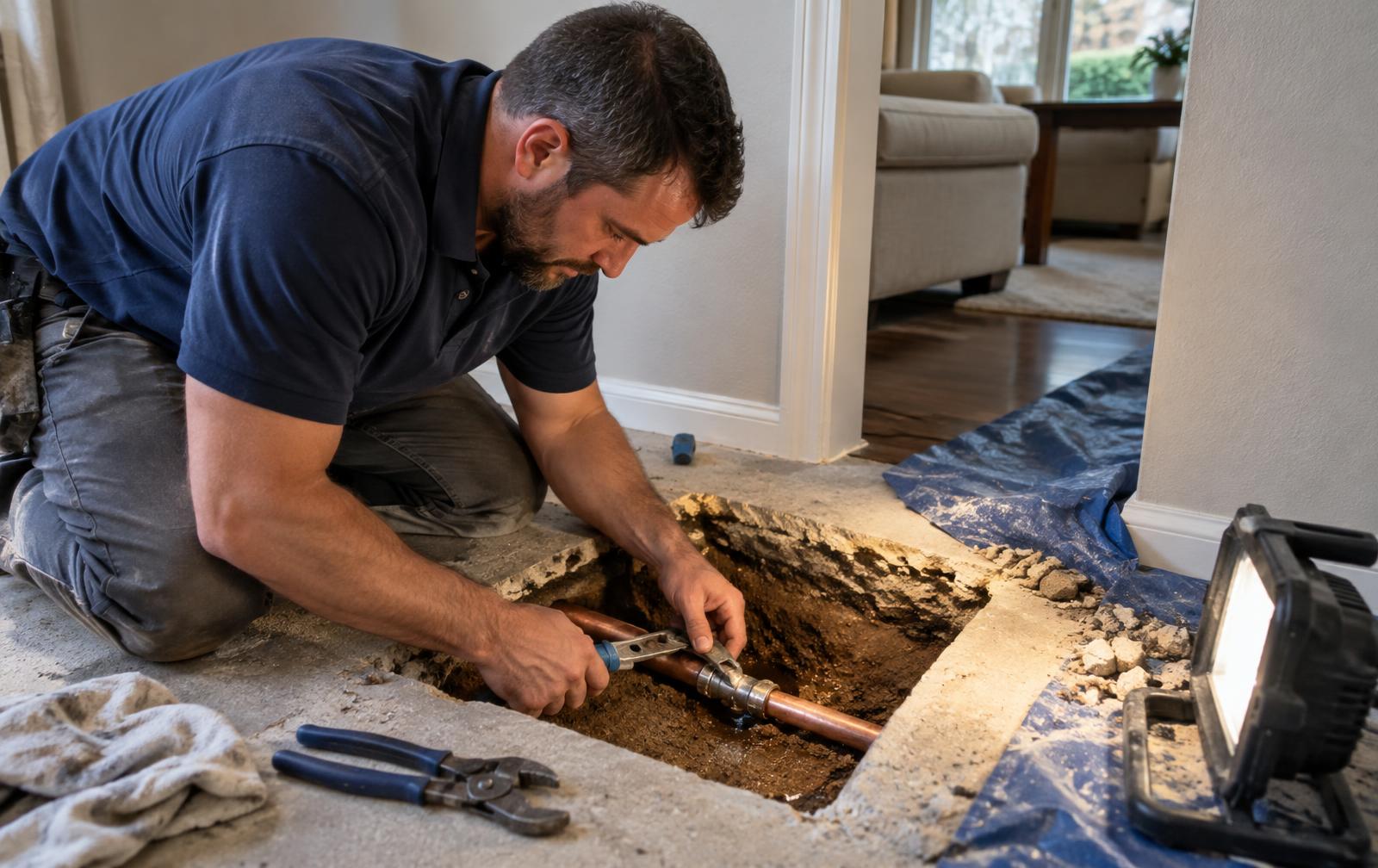
Electronic detection under Flower Mound slabs — reroute options that save your finished floors when possible.
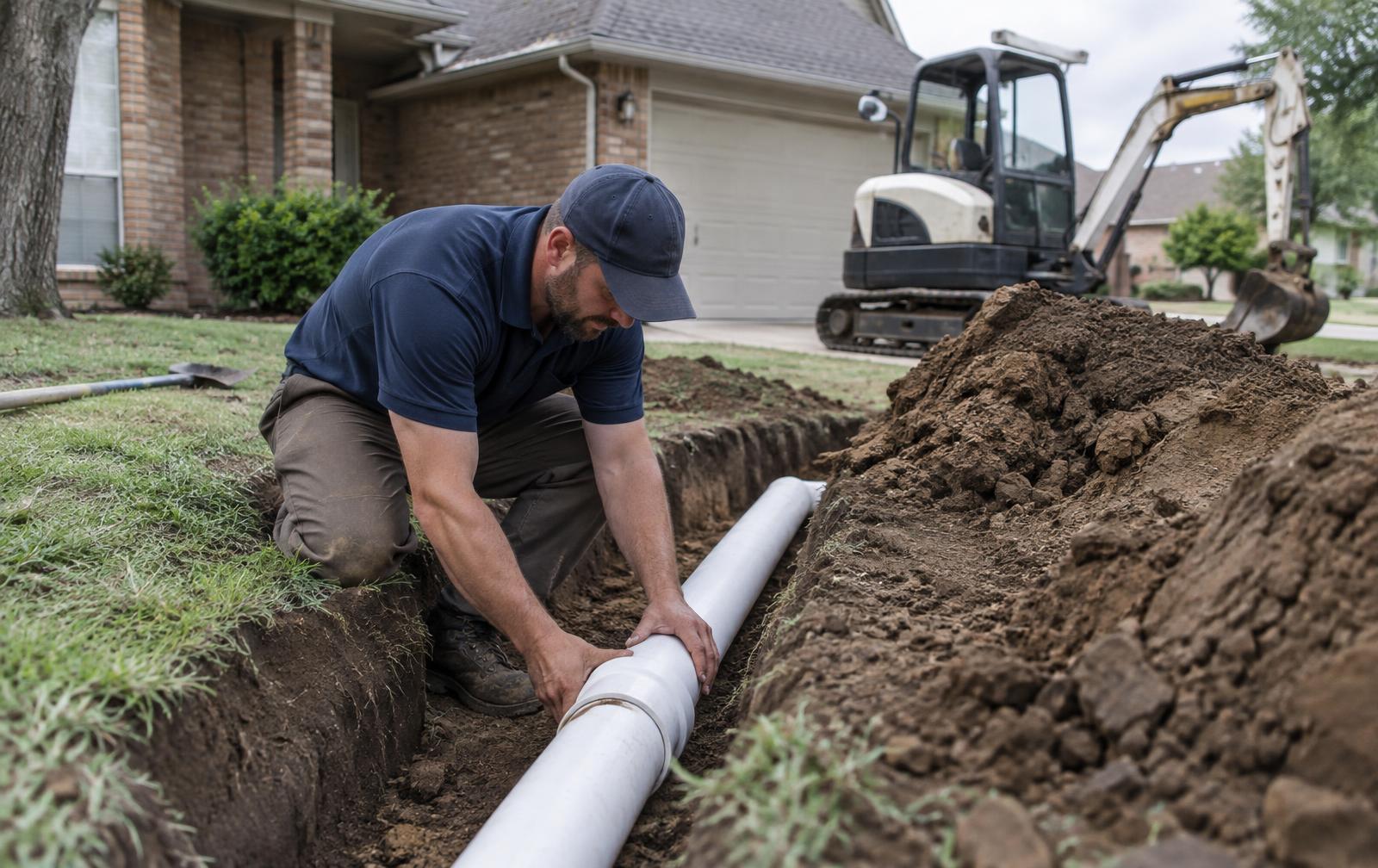
Trenchless replacement for the aging laterals across Flower Mound's older runs — camera first, quote in writing, minimal yard damage.
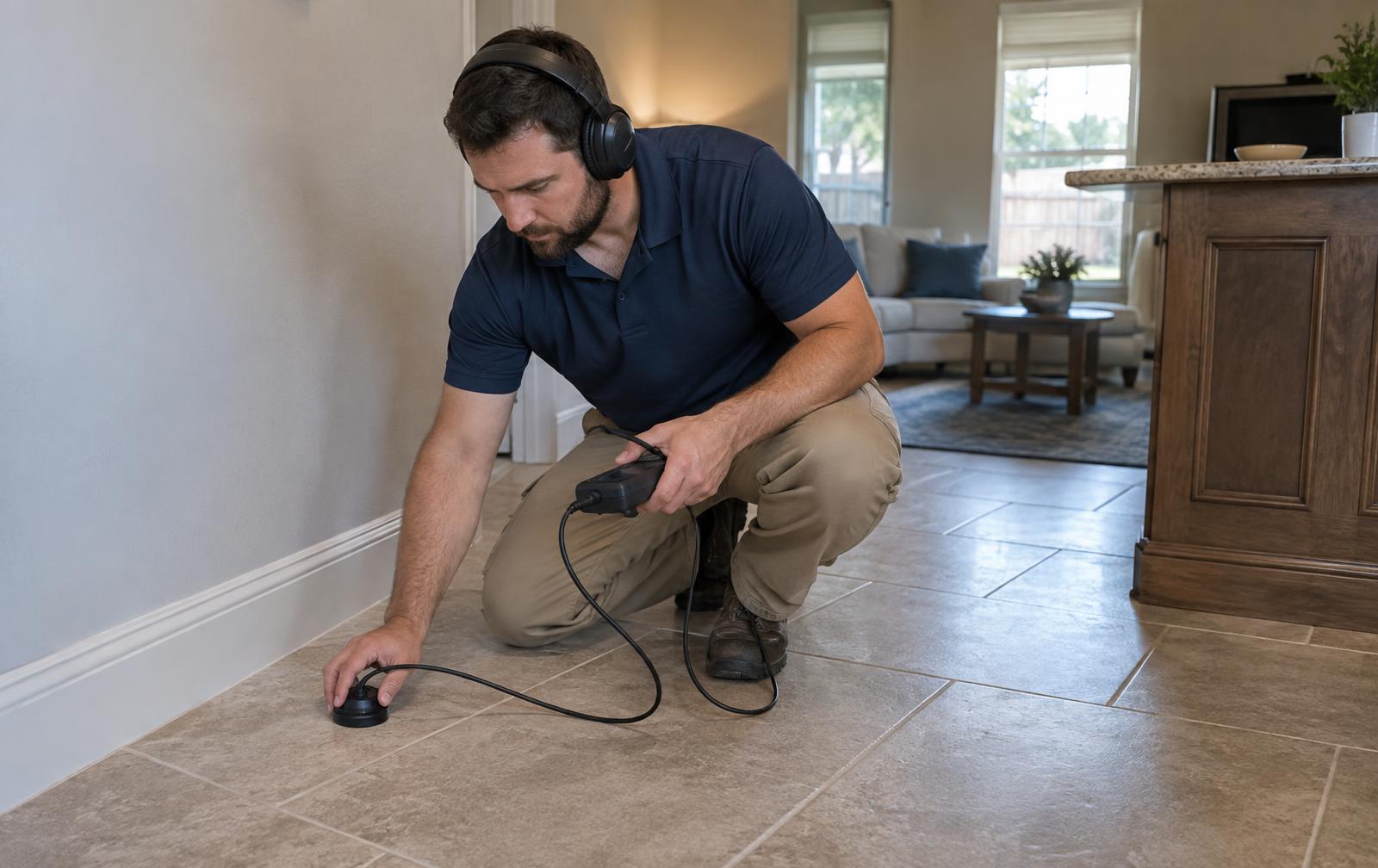
Acoustic, thermal, and pressure testing to pinpoint hidden leaks in Flower Mound slab and wall lines without tearing into finishes.

Licensed install, repair, and pressure-testing for Flower Mound homes — every line signed off to Texas code and Atmos requirements.

Repair, flush, and replacement of tank units — including attic and garage heaters common to Flower Mound homes.
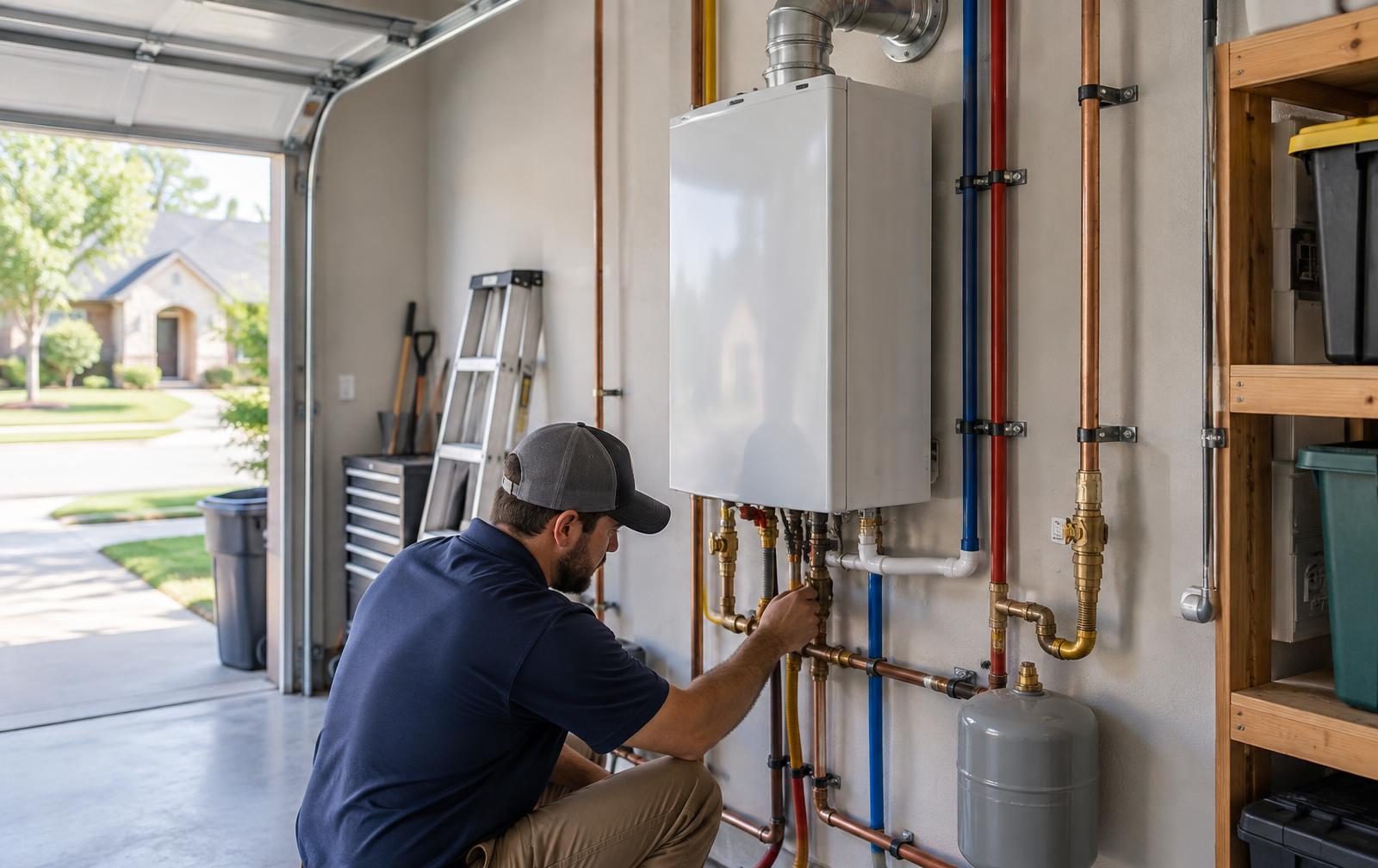
Install, service, and annual descaling — Flower Mound's hard tap water eats tankless heat exchangers without it.
same-day, 7 days a week response across Flower Mound for burst pipes, heater failures, and main-line backups.
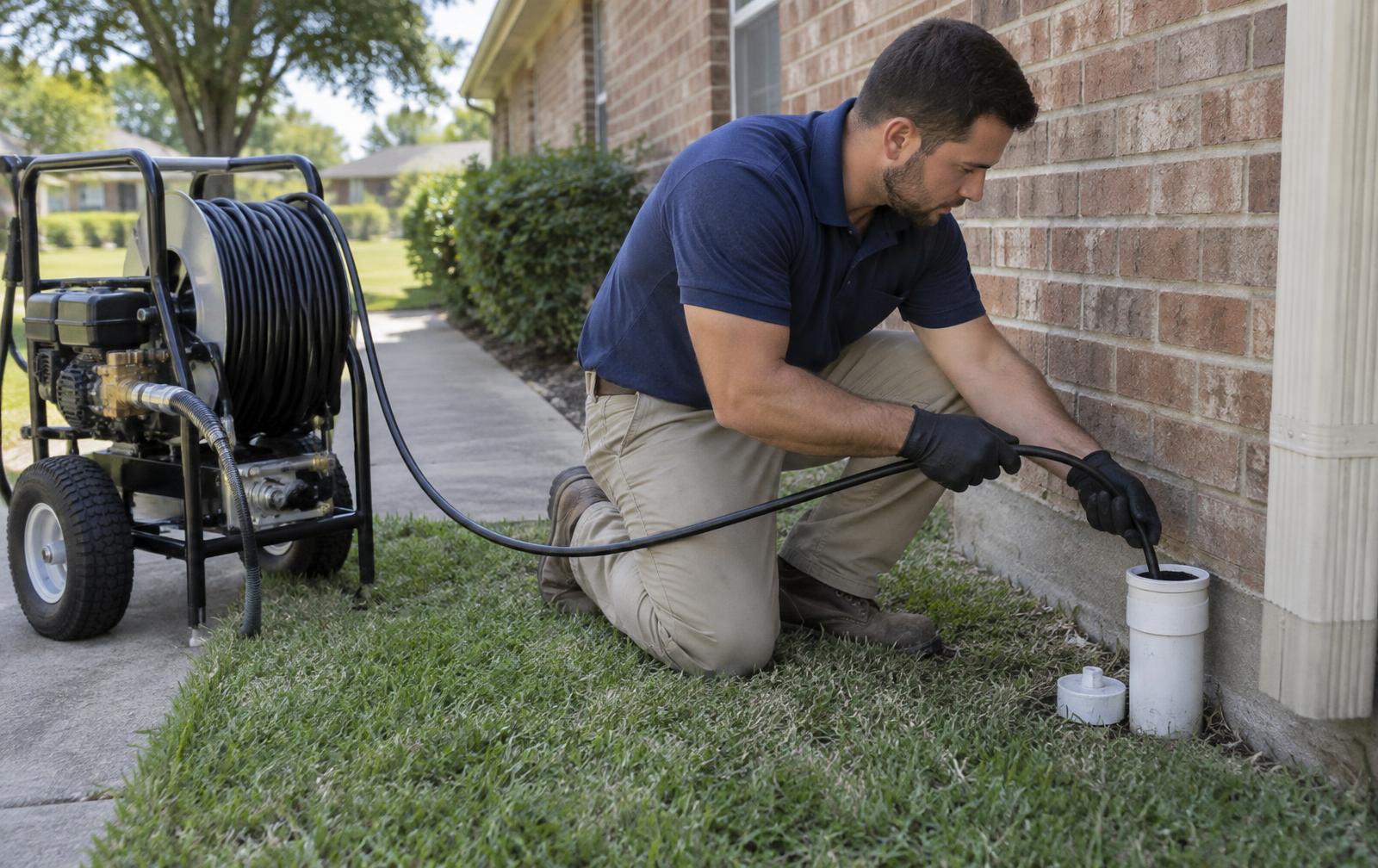
High-pressure cleaning that clears scale, grease, and roots from Flower Mound's lateral runs — full-diameter, lasting clean.
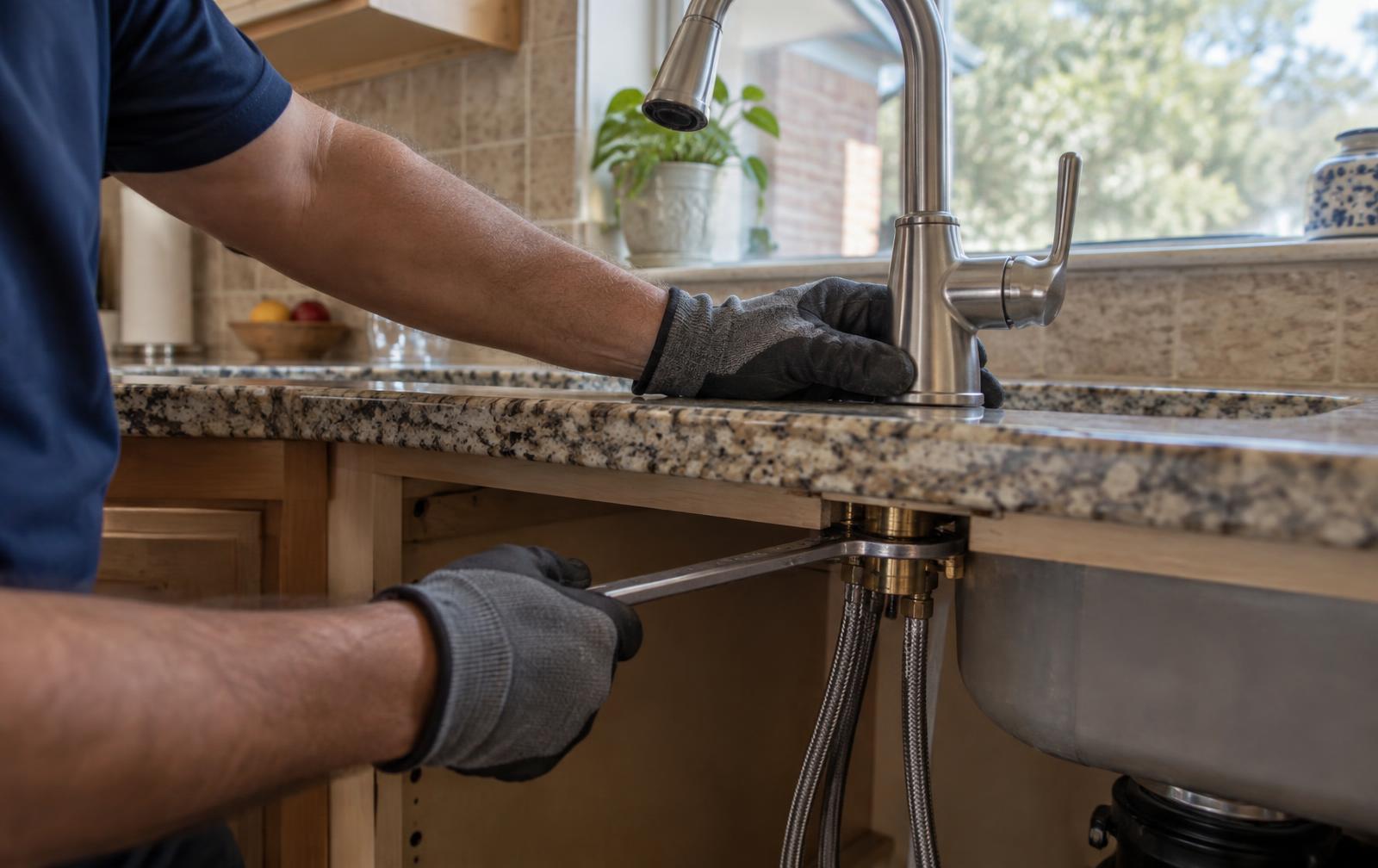
Cartridge, stem, and full-fixture replacement for Flower Mound kitchens and bathrooms — hard-water-ready parts stocked on the truck.
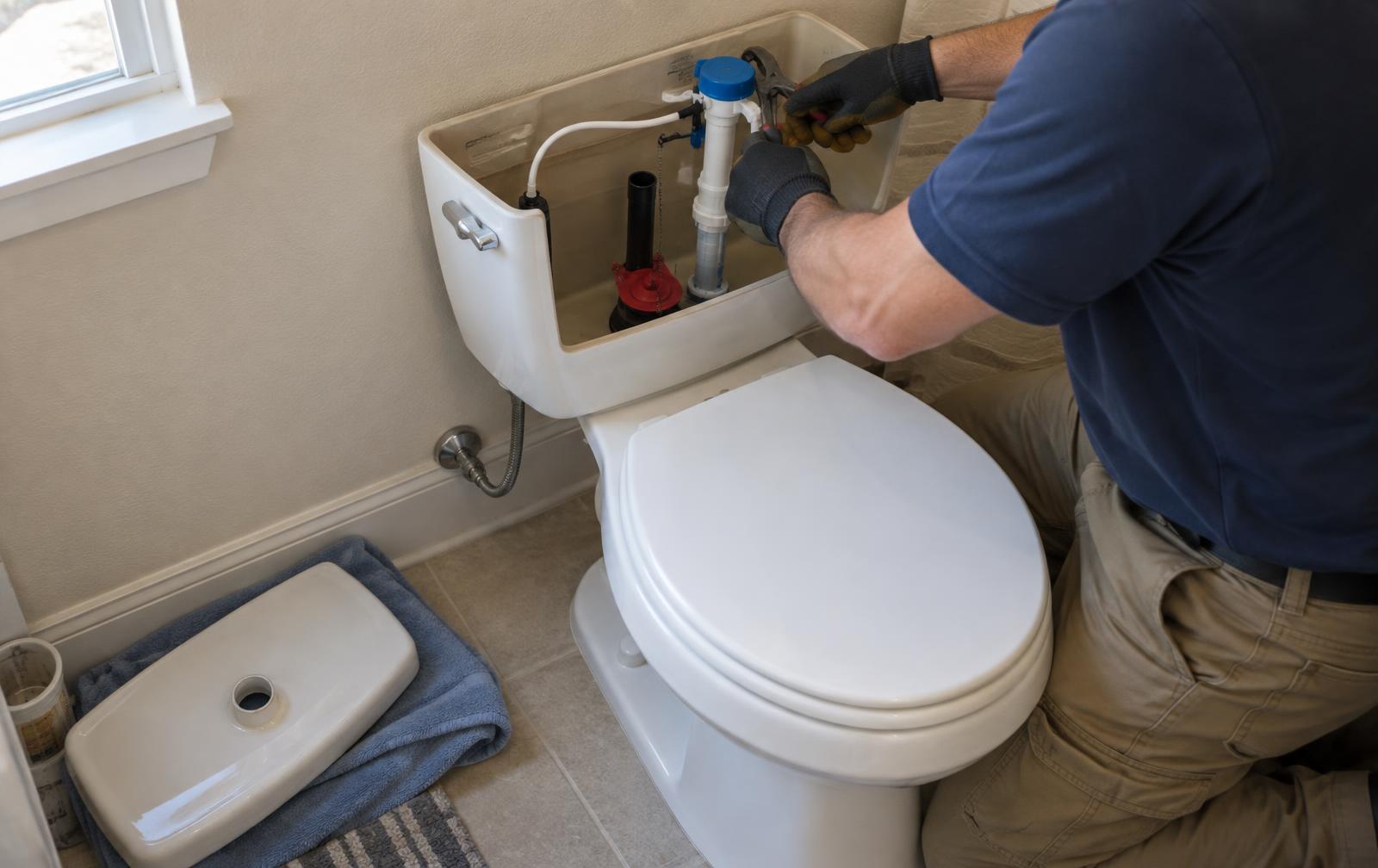
Rebuilds, wax-ring resets, flange repairs, and full replacements — the running toilets and rocking bowls in Flower Mound homes.
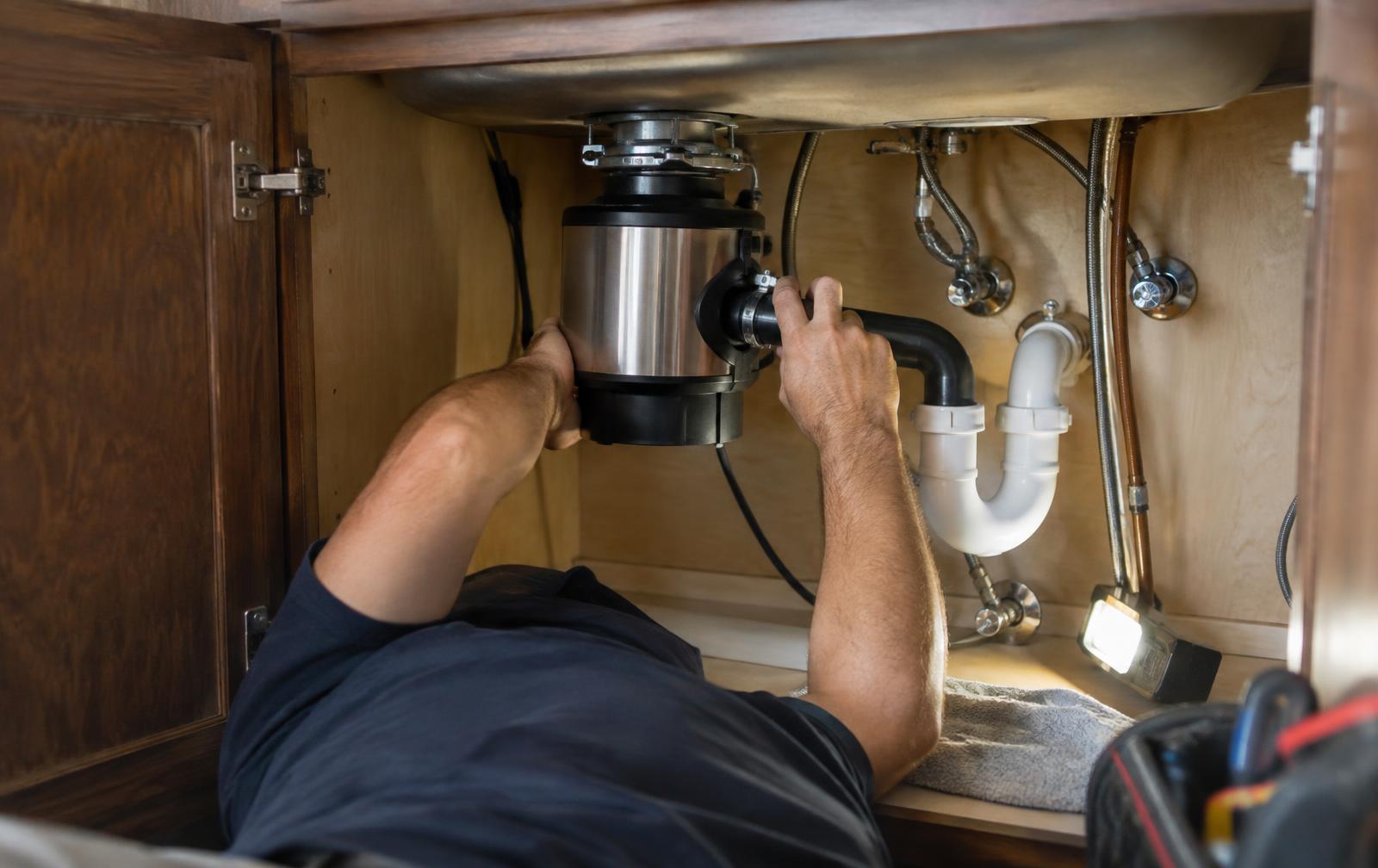
Jam clearing, leaking-unit swaps, and quiet 3/4 HP upgrades for Flower Mound kitchens — same-visit install.
Dealing With a Slow or Backed-Up Drain in Flower Mound?
Full-line clearing and a camera pass to prove it. Call and we'll get a truck headed your way.