
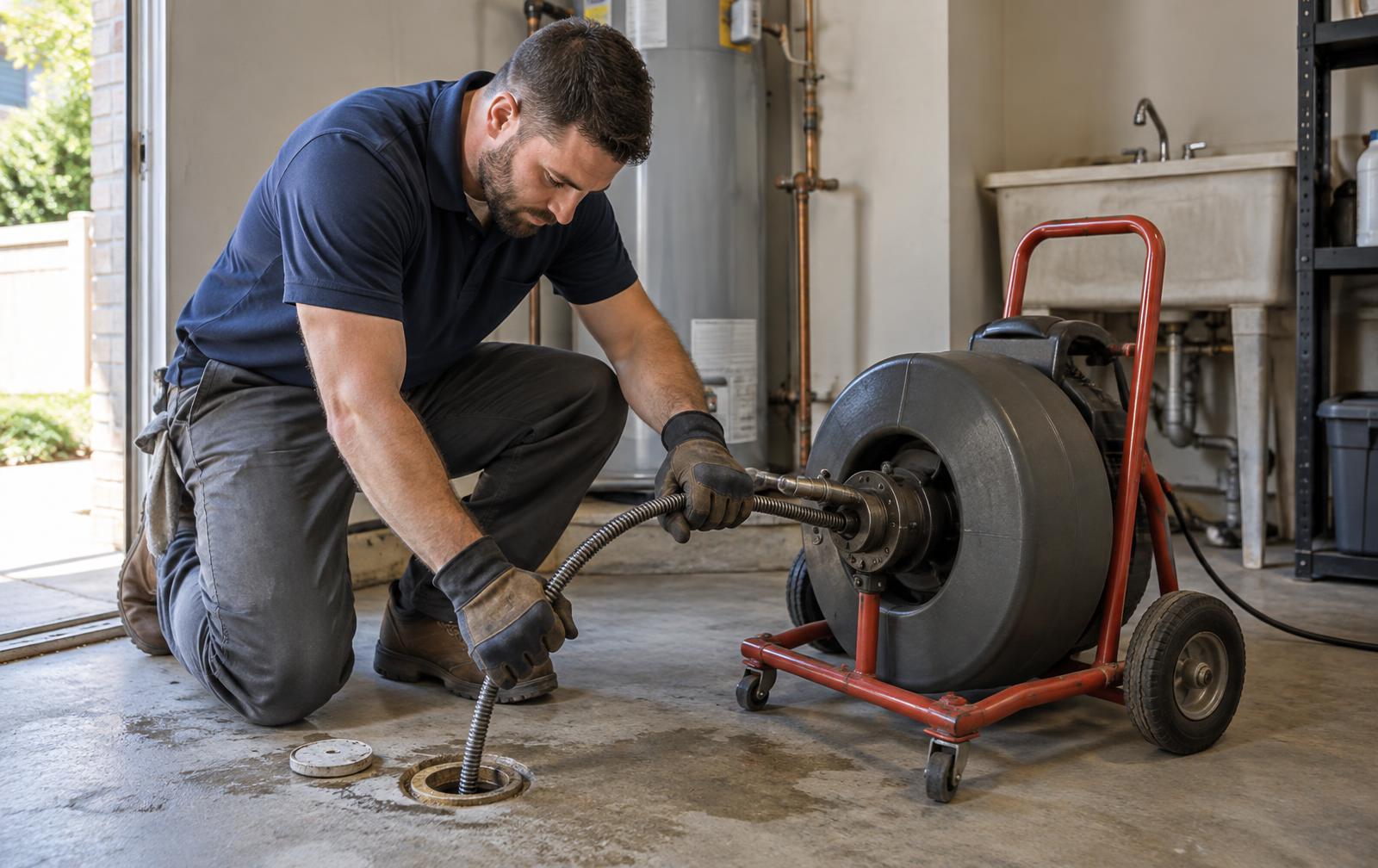
Drain Cleaning in Richardson, TX
A shower that gurgles when the toilet flushes. A kitchen sink that pools instead of draining. A backup rising at the lowest tub in the house. We open the line all the way through and check it with a camera before we call it finished, instead of stopping the moment water starts moving again.
Older Richardson Homes Need More Than a Cable Run
Richardson's core neighborhoods went up fast during the postwar boom, and a lot of that construction — think Heights Park homes from the 1940s through the 1960s — still runs on the original cast iron drain lines. Cast iron corrodes from the inside as it ages, and the rough interior surface catches paper and grease at the same joint every time. Pushing a cable through just re-opens a channel in that buildup; it does not remove it, so the same spot backs up again within a few weeks.
Underneath all of that, Richardson sits on Blackland Prairie clay, the dark, expansive soil that shrinks and swells hard with rain and drought cycles across North Texas. That movement shifts yard lines out of alignment at the joints, which is exactly where roots find an opening and paper snags. A cable can chop through a root mass in that gap, but it will not tell you the joint has separated.
So we treat every call as two questions: what is actually blocking the line, and is the pipe itself still sound. We size the cutter to the material in the pipe — cast iron scale, root intrusion, or a simple soap-and-hair clog in a newer PVC branch — and we finish every main-line call with a camera pass so you see the inside of your own pipe before we pack up.
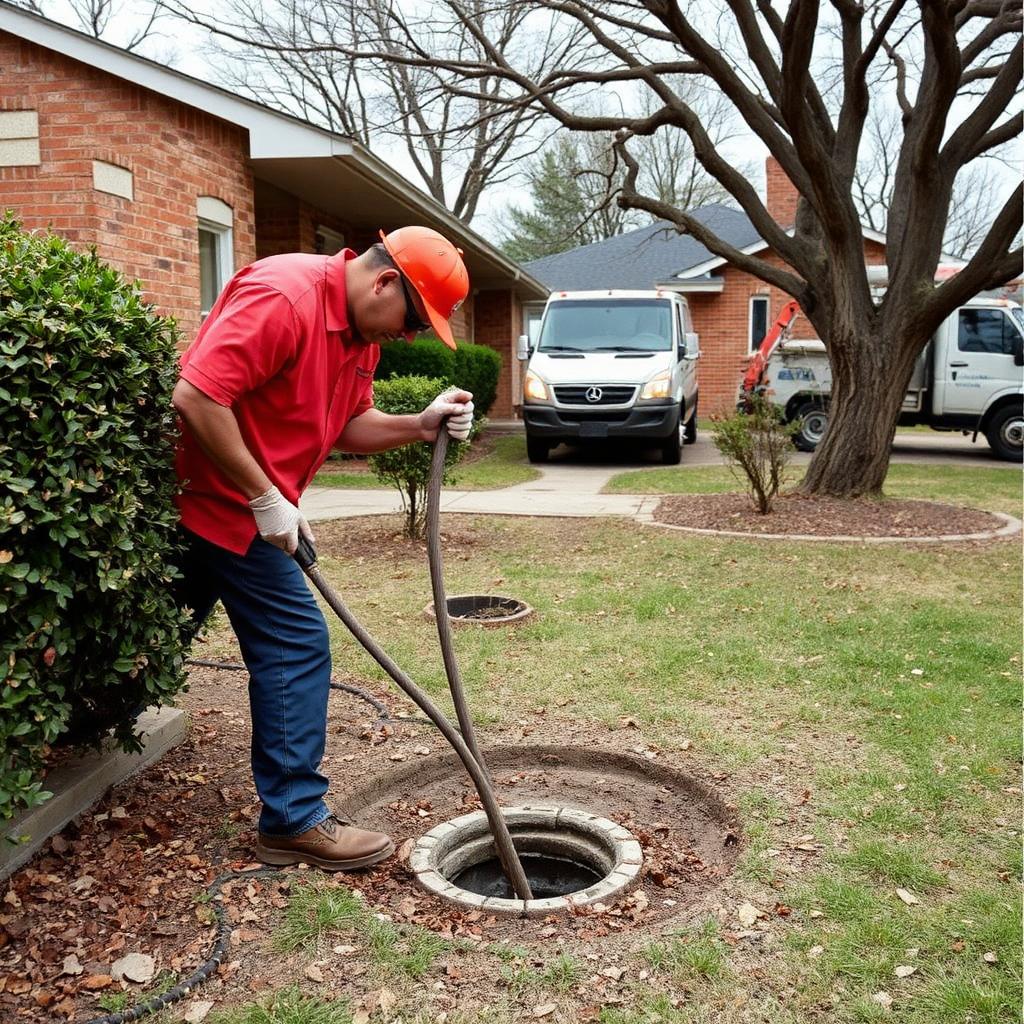
What a Richardson Drain Tells You Before It Fails
A blocked line almost always gives warning first. Acting on these early keeps the job small.
A single slow sink is usually just that branch. When two or more fixtures slow down together, the shared line downstream is narrowing and the job gets more urgent.
Flip on the shower and the toilet burbles, or run the washing machine and the tub bubbles. Air is finding a shortcut through the vent system because the main run is partly blocked.
A trap that has lost its water seal lets sewer gas into the room. That usually points to a partial blockage siphoning air through the trap rather than a bad wax ring.
The tub fills when someone flushes, or the dishwasher backs up through the kitchen sink. That is the main line pushing water to the lowest point it can reach — worth a call before it reaches the floor.
A gradual, whole-house slowdown over months usually means scale or grease has been narrowing the pipe wall for a while. This is the pattern that calls for a full scouring rather than another cable pass.
A patch of lawn that stays soggier or greener than the rest, tracking the route of the sewer line, usually means the pipe is leaking underground. Cleaning will not close that gap — it needs to be inspected and repaired.
Match the Tool to What's Actually in the Pipe
We do not consider a drain finished until we have looked at the inside of it.
- 1Narrow down which line is affected
One slow fixture, several slow fixtures, or a full backup at the lowest drain each point to a different section of pipe. A short set of questions tells us which cleanout to open before any equipment comes off the truck.
- 2Open the correct cleanout
We work through a proper cleanout rather than a toilet flange or a shower drain, so nothing gets tracked into the house. Most Richardson ranches from the Heights Park era have a cleanout at ground level along the side or front yard; newer condos and townhomes usually keep one inside a utility closet instead.
- 3Choose the right cutter for the blockage
Grease calls for a blade head. Root intrusion calls for a chain flail. Scale on old cast iron calls for a wire brush or a full jetting pass. Using the wrong head either fails to clear the line or scores the pipe wall unnecessarily.
- 4Run the full length, not just to the clog
We work the cable or jetter the entire distance between cleanout and the point of connection, then bring it back slowly so we are not leaving loose debris hanging where the next bit of paper can catch.
- 5Confirm with a camera before we leave
A camera pass at the end shows the pipe clear from end to end. If it shows a cracked joint, a belly, or root growth we could not fully remove, we say so on the spot and quote the repair honestly rather than sending you a bill for a cleaning that will not hold.
What We Typically Find Around Richardson
The era a section of Richardson was built in tends to predict what is inside its drain lines.
Homes from the 1940s through the 1960s in this part of town commonly still run on their original cast iron drains, and cast iron of that age is prone to interior scale that narrows the pipe over the decades — a cable pass moves water again, but a wire brush or jetting pass is usually what actually holds.
Construction here runs from mid-century into later infill near the university, so drain age varies block by block; the older sections still on cast iron benefit from a camera check before assuming a clog is a one-time event.
Homes tied to the 1960s-era park development in this area tend to have mature landscaping close to the yard line, and root intrusion at aging joints is the more likely repeat offender here than a kitchen clog.
The older, more modest housing stock in this part of west Richardson often kept its original branch drains through several remodels, so an under-sink clog can be masking a smaller-diameter run than a newer kitchen would have.
The mix of older single-family lots and newer infill near campus means we treat every call here as its own case — checking the drain material with a camera rather than assuming the newest-looking house has newer pipe.
Properties along this corridor span several building eras, and where older sections meet Blackland Prairie clay, yard-line joints are more likely to have shifted enough to catch roots and debris.
What Richardson Homeowners Say
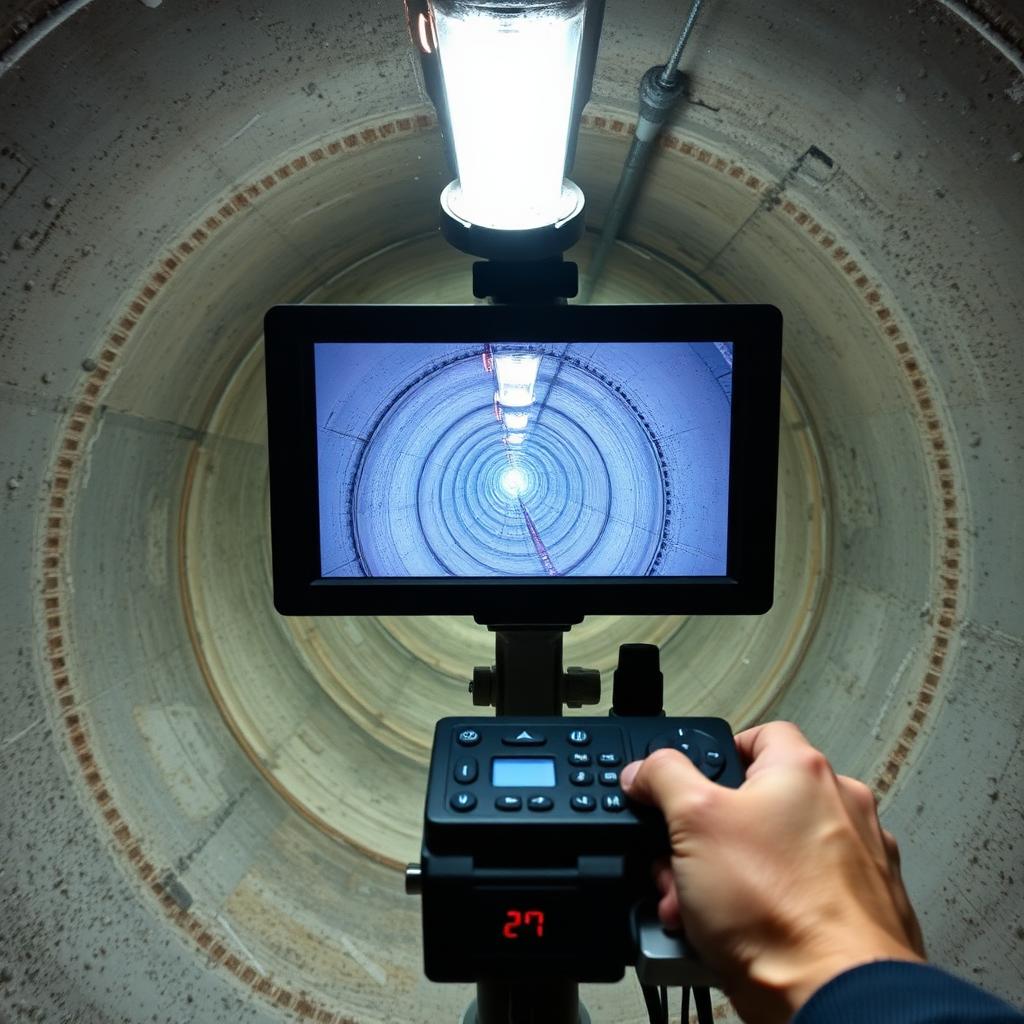
We Open the Line, Not Just the Clog
If the same spot backs up again shortly after we clear it, we come back and re-clear it at no charge — unless the camera already showed you a pipe problem that cleaning alone would not solve, in which case we told you that at the first visit and quoted the repair honestly.
We are licensed by the Texas State Board of Plumbing Examiners, insured, and family-owned, dispatching out of our shop in The Colony. Most Richardson addresses are about 30 to 40 minutes from our shop under normal traffic, and we offer same-day service seven days a week between 8 AM and 6 PM.
Straight Answers, No Sales Pitch
Our Other Plumbing Services in Richardson, TX
A slow drain is sometimes the first sign of something bigger. We handle the rest of it too, in one visit, from a shop just down the road in The Colony.
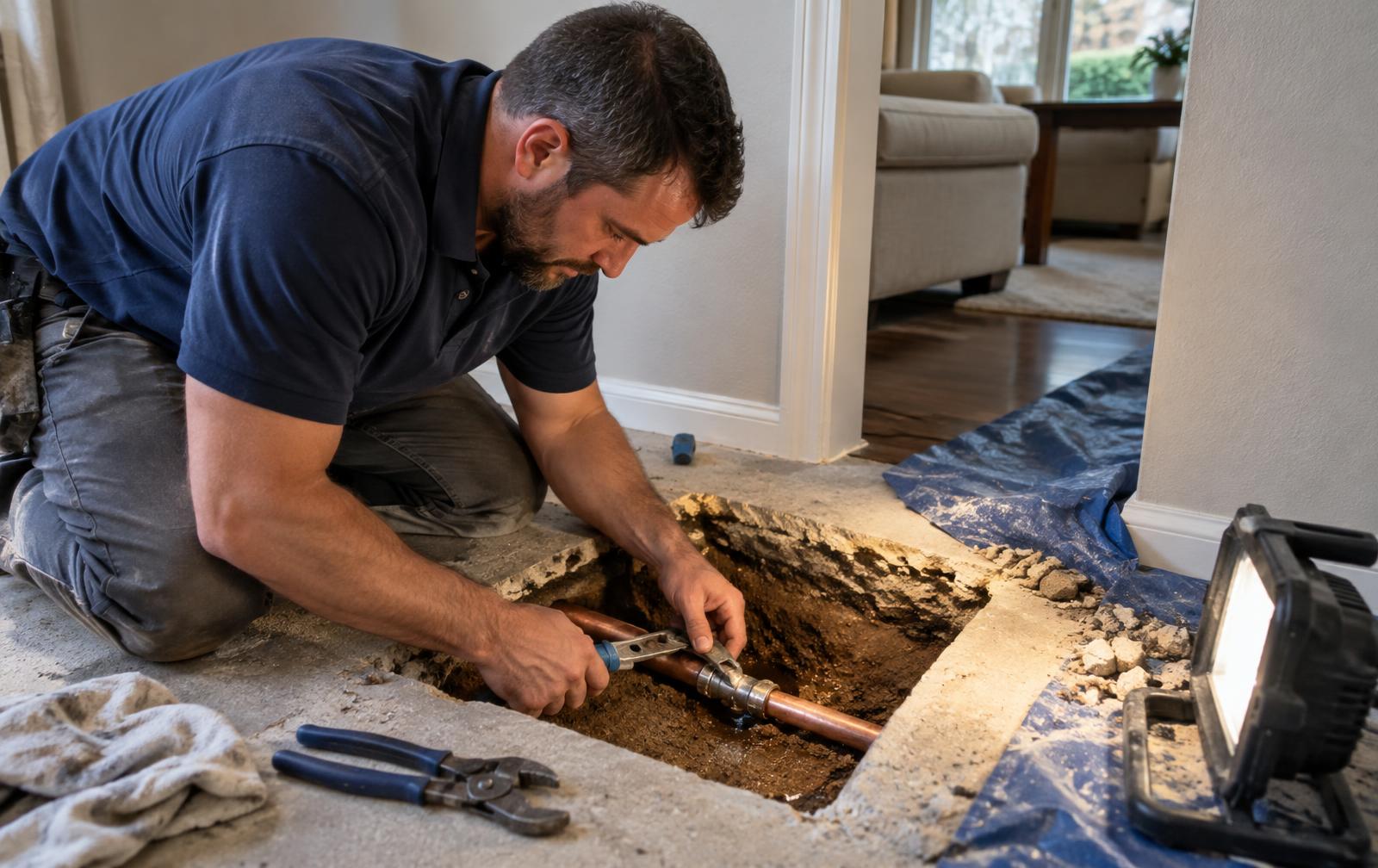
Electronic detection under Richardson slabs — reroute options that save your finished floors when possible.
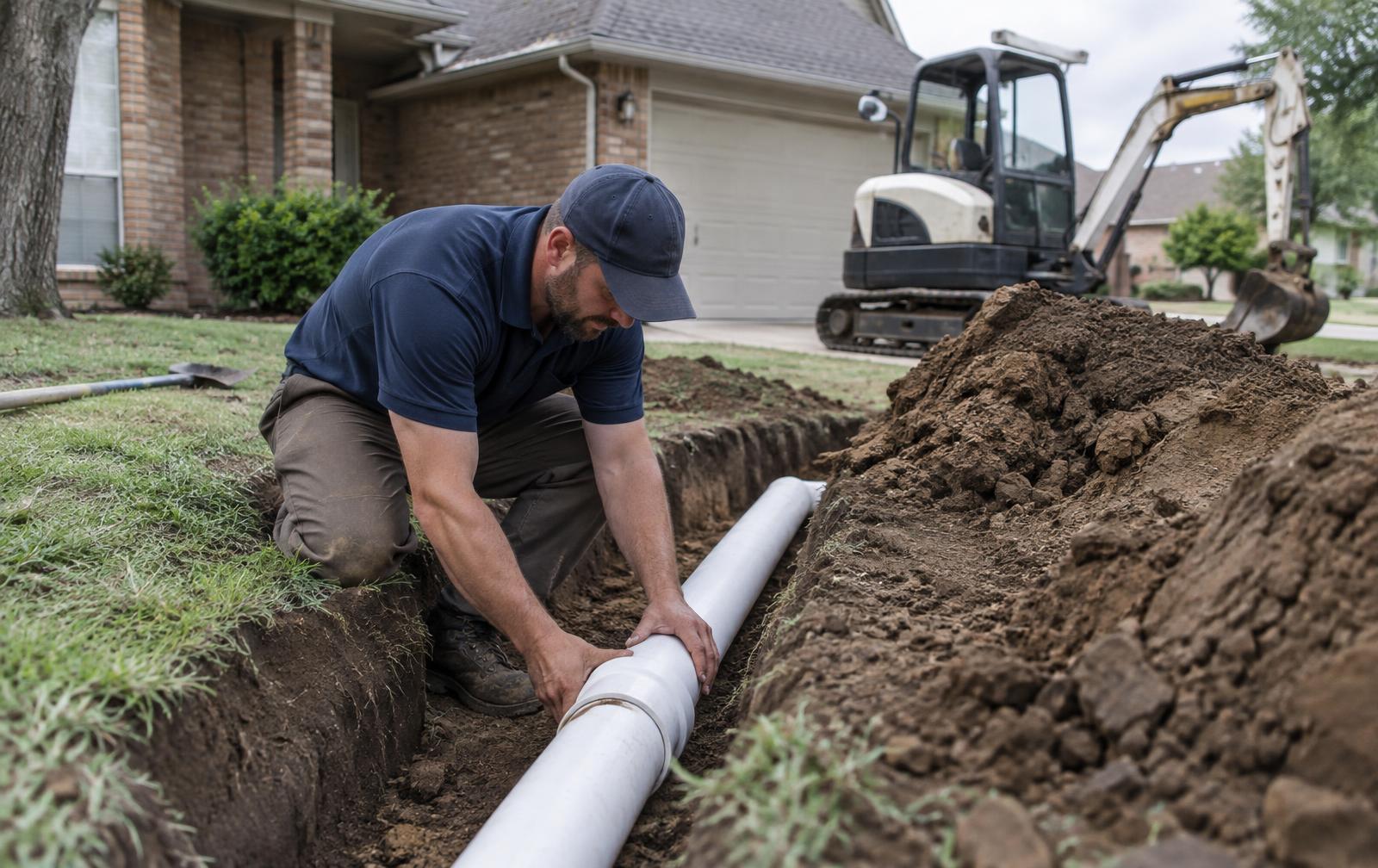
Trenchless replacement for the aging laterals across Richardson's older runs — camera first, quote in writing, minimal yard damage.
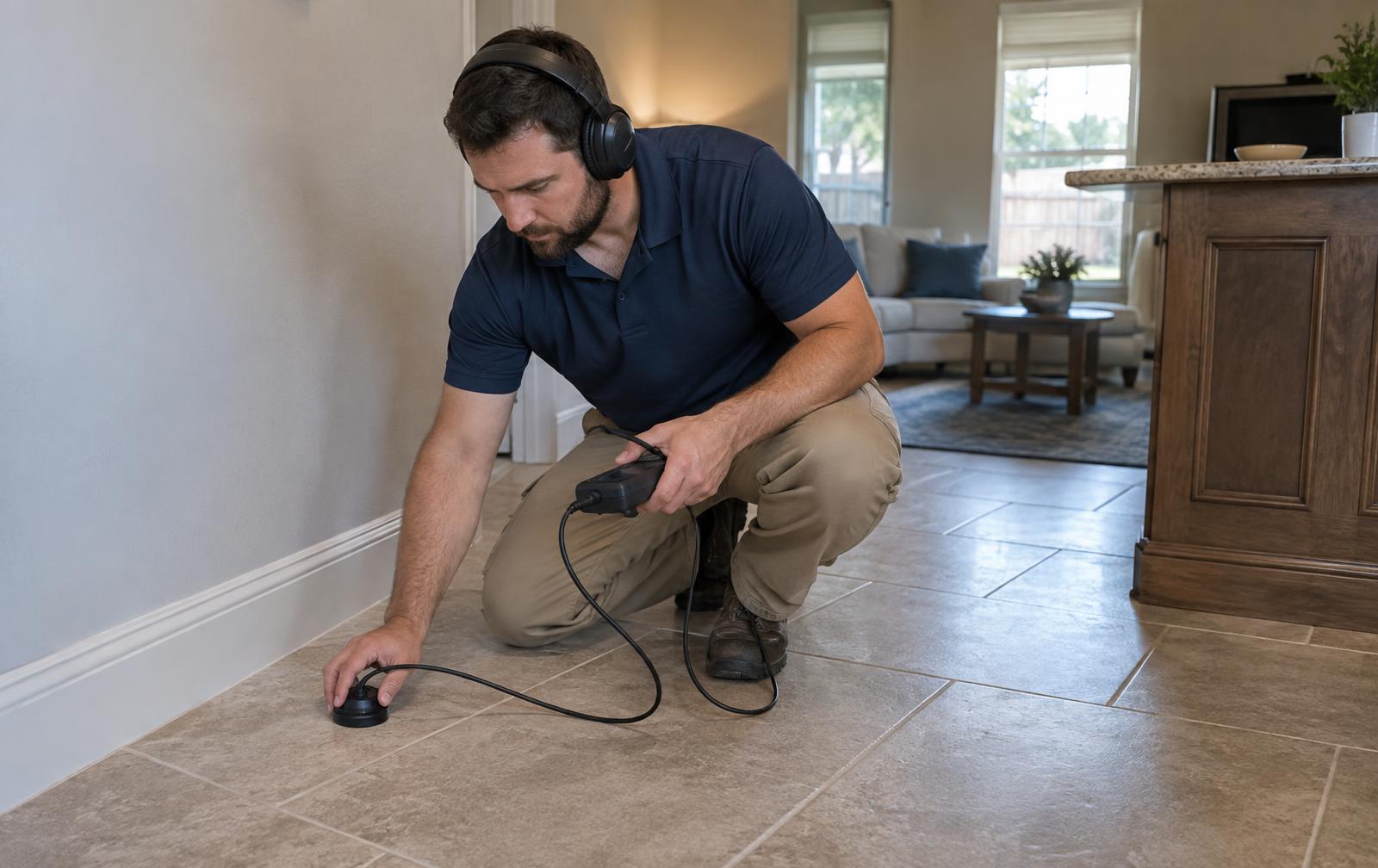
Acoustic, thermal, and pressure testing to pinpoint hidden leaks in Richardson slab and wall lines without tearing into finishes.
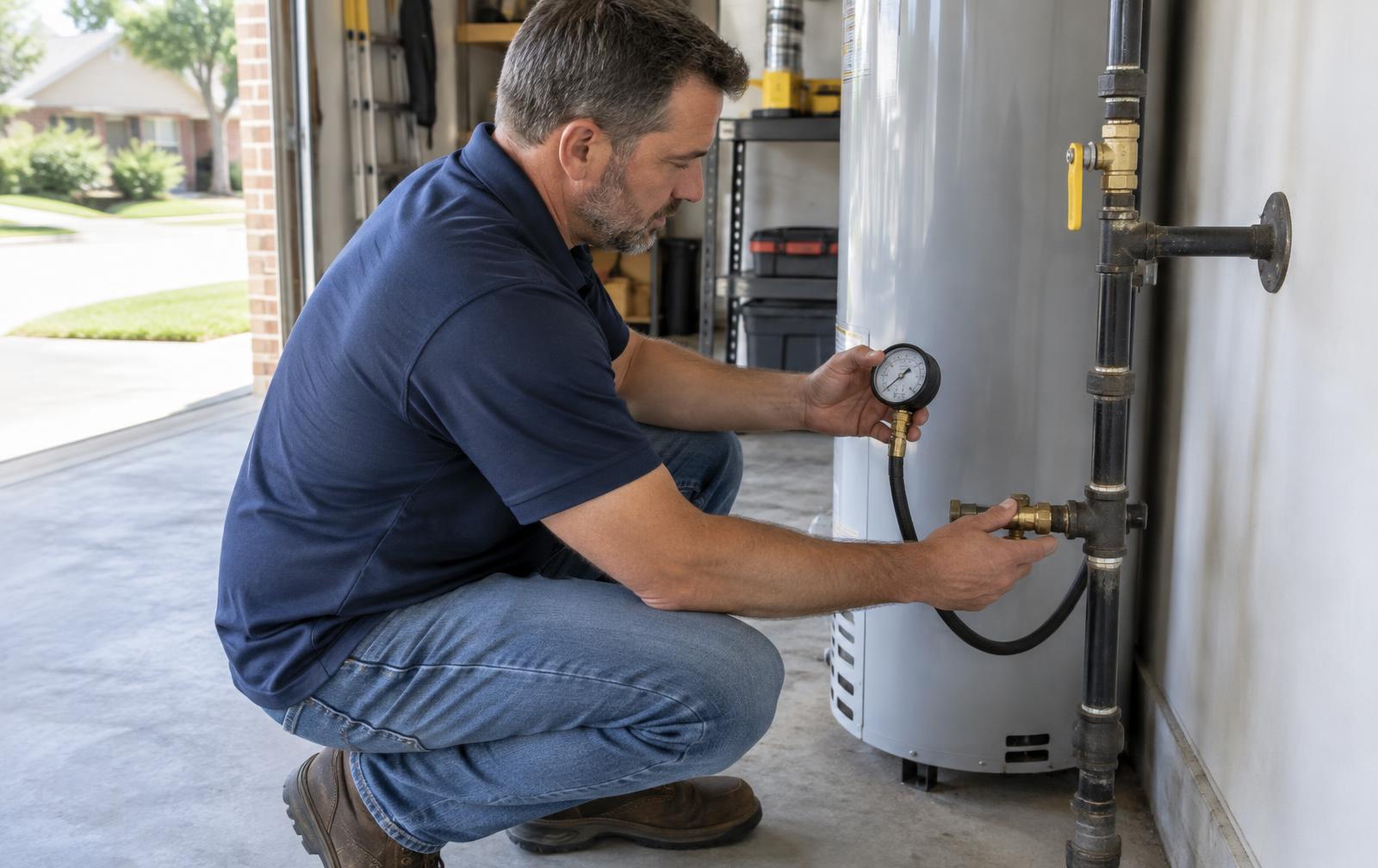
Licensed install, repair, and pressure-testing for Richardson homes — every line signed off to Texas code and Atmos requirements.
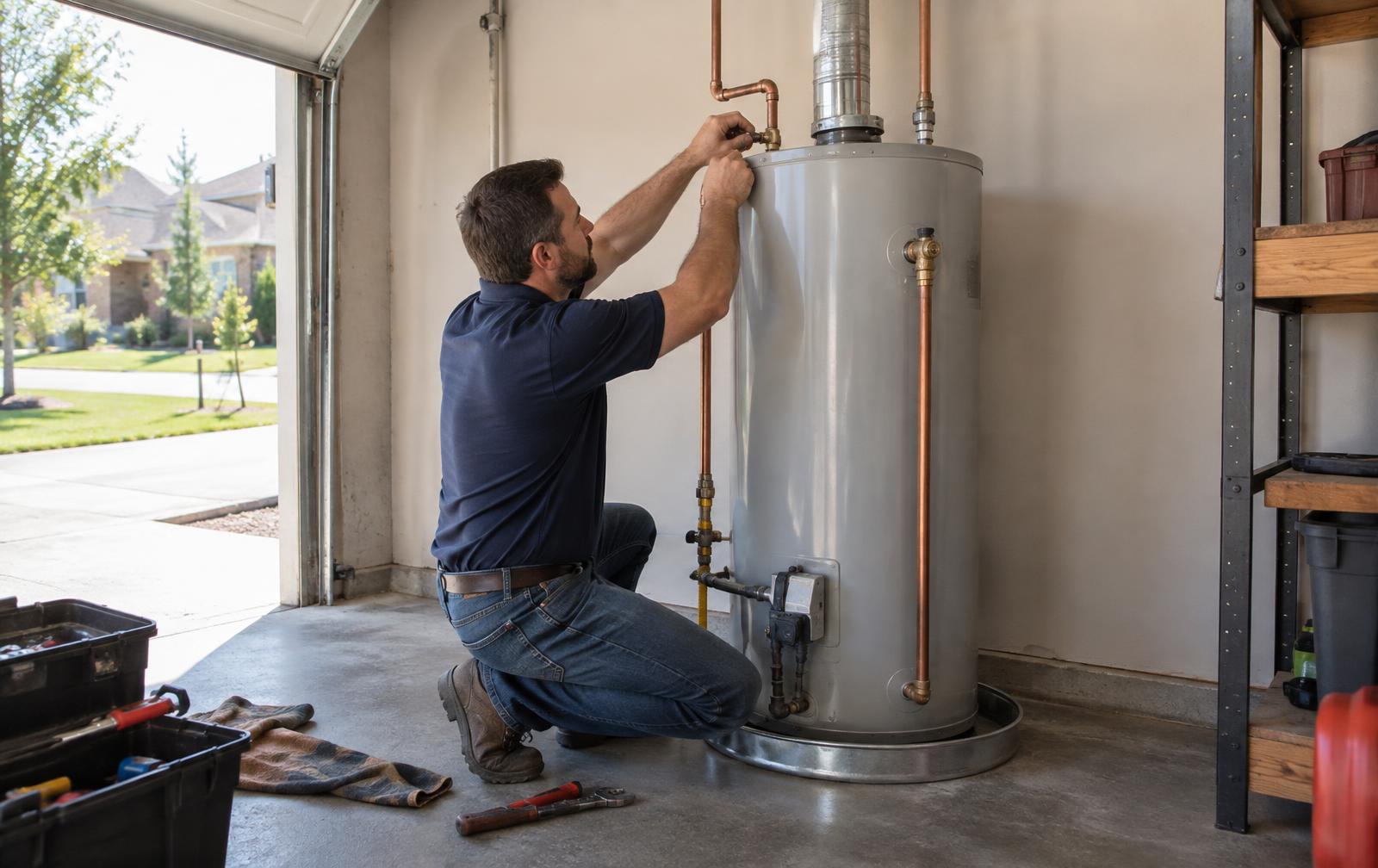
Repair, flush, and replacement of tank units — including attic and garage heaters common to Richardson homes.
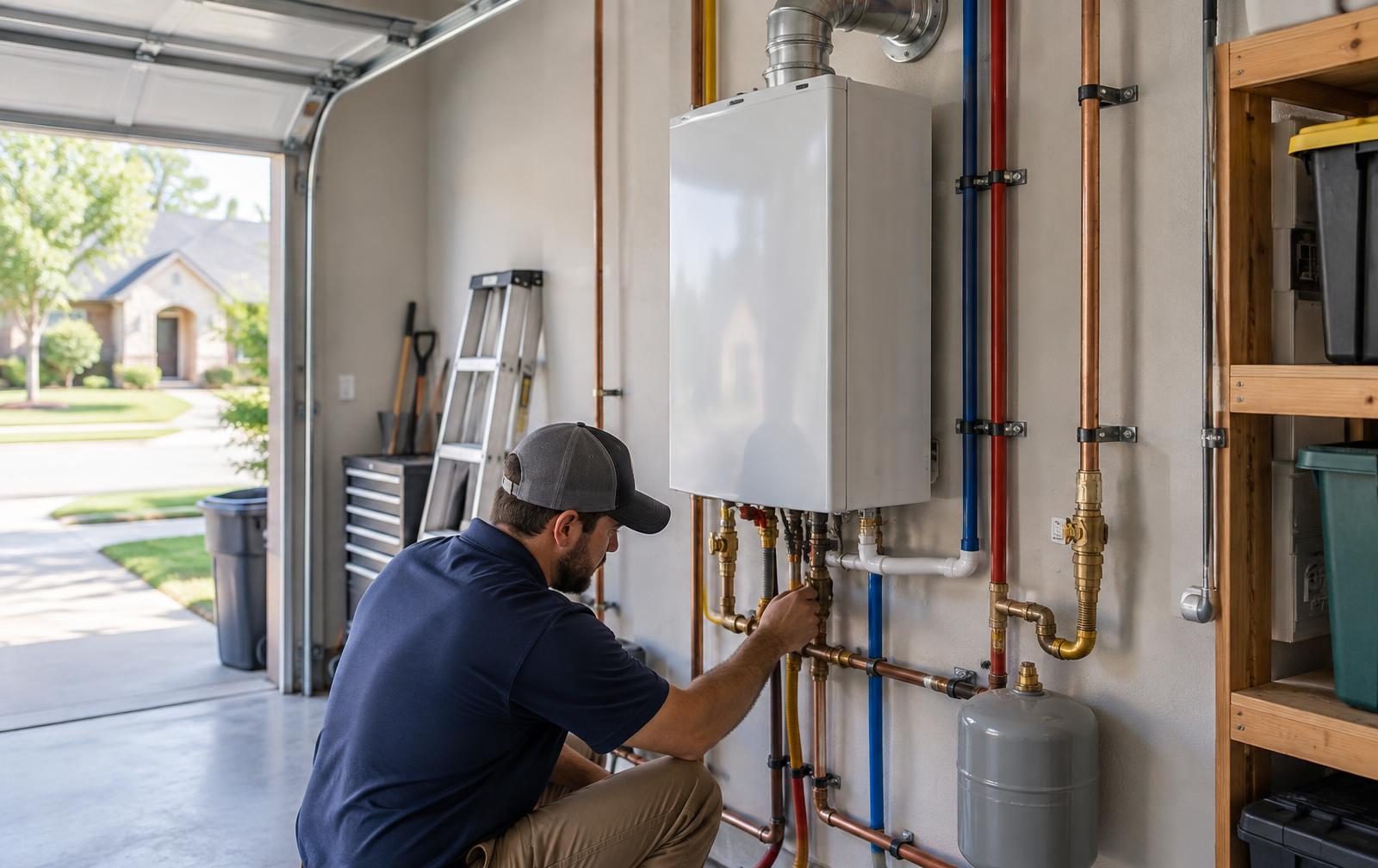
Install, service, and annual descaling — Richardson's hard tap water eats tankless heat exchangers without it.
same-day, 7 days a week response across Richardson for burst pipes, heater failures, and main-line backups.
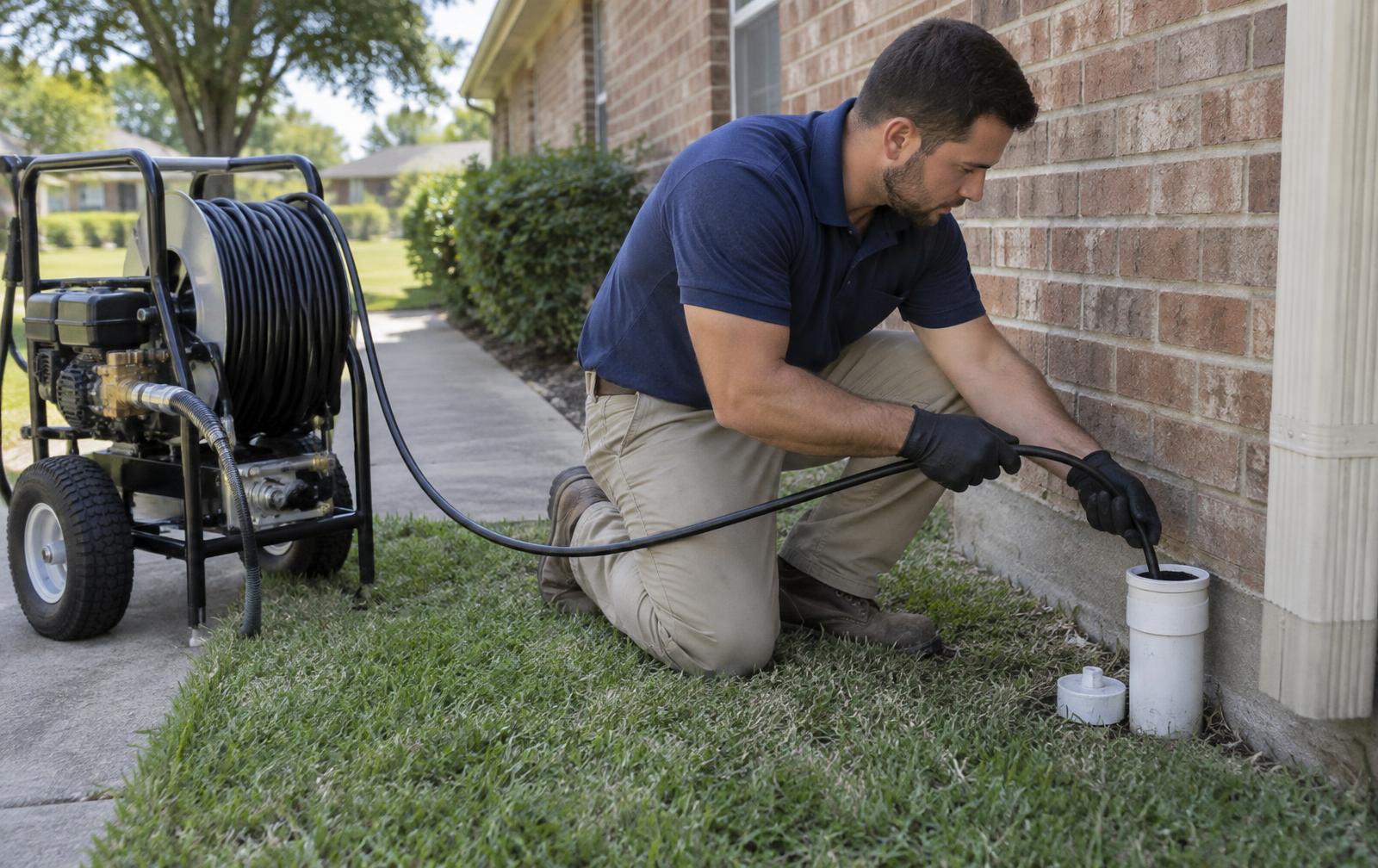
High-pressure cleaning that clears scale, grease, and roots from Richardson's lateral runs — full-diameter, lasting clean.
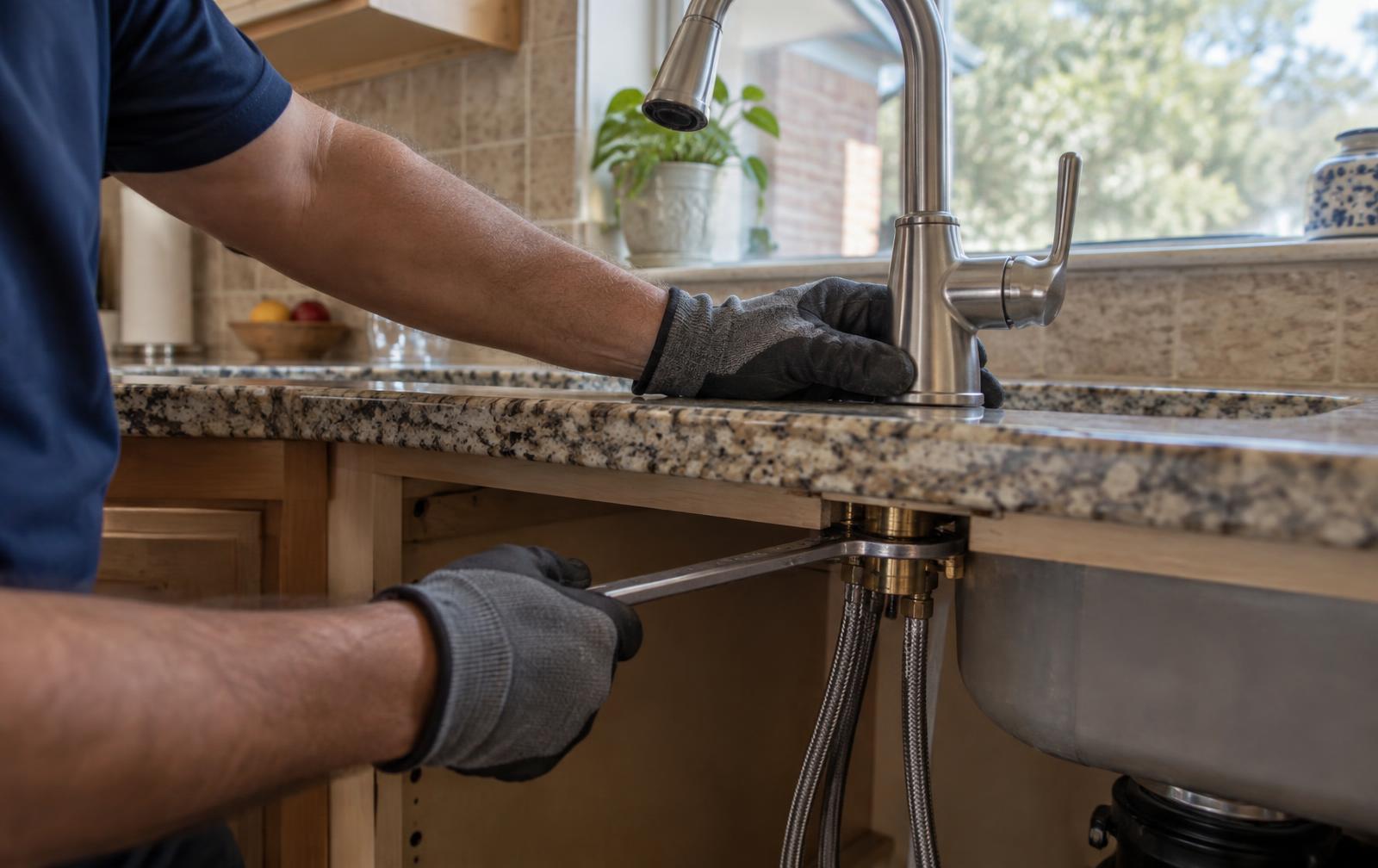
Cartridge, stem, and full-fixture replacement for Richardson kitchens and bathrooms — hard-water-ready parts stocked on the truck.
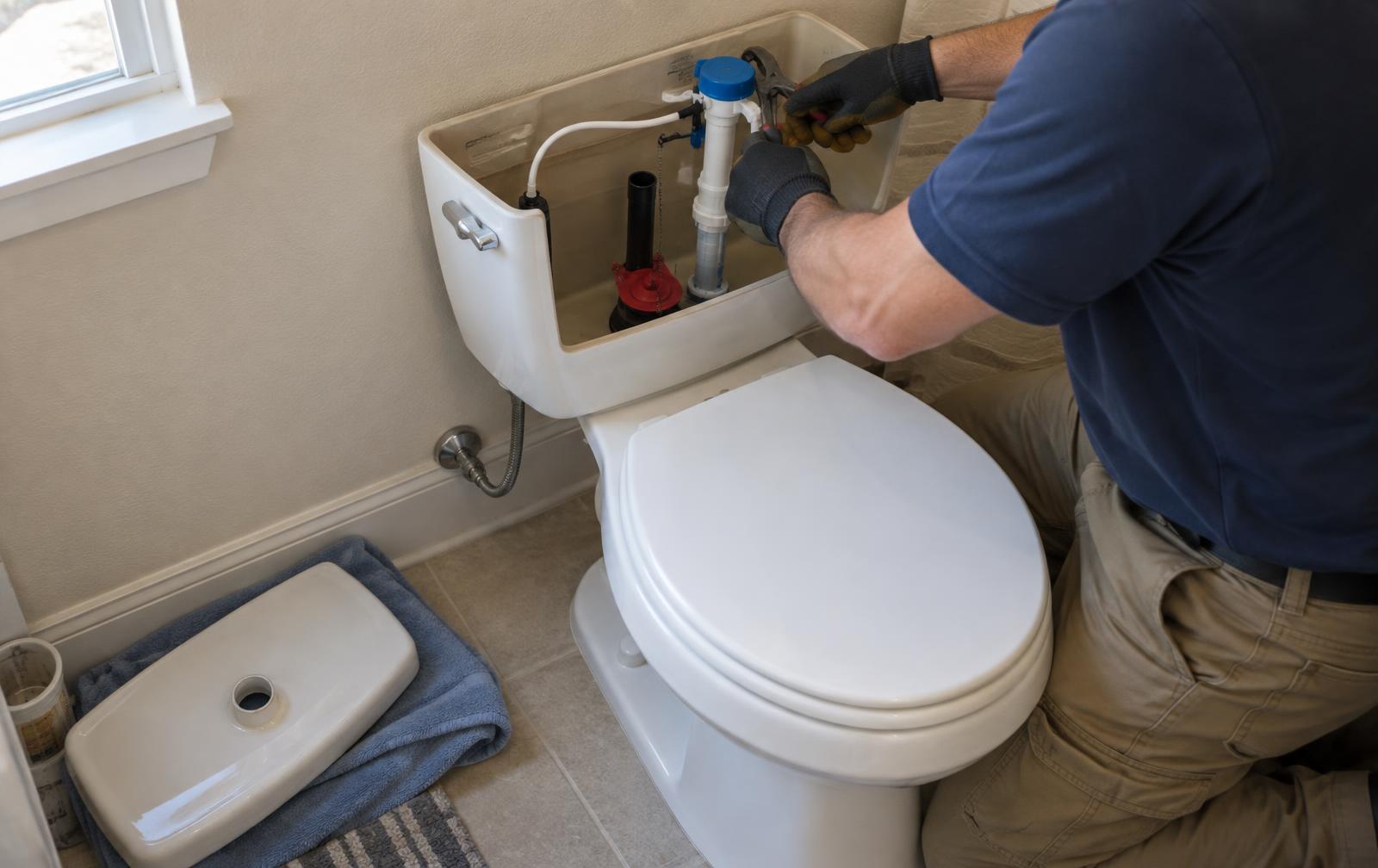
Rebuilds, wax-ring resets, flange repairs, and full replacements — the running toilets and rocking bowls in Richardson homes.
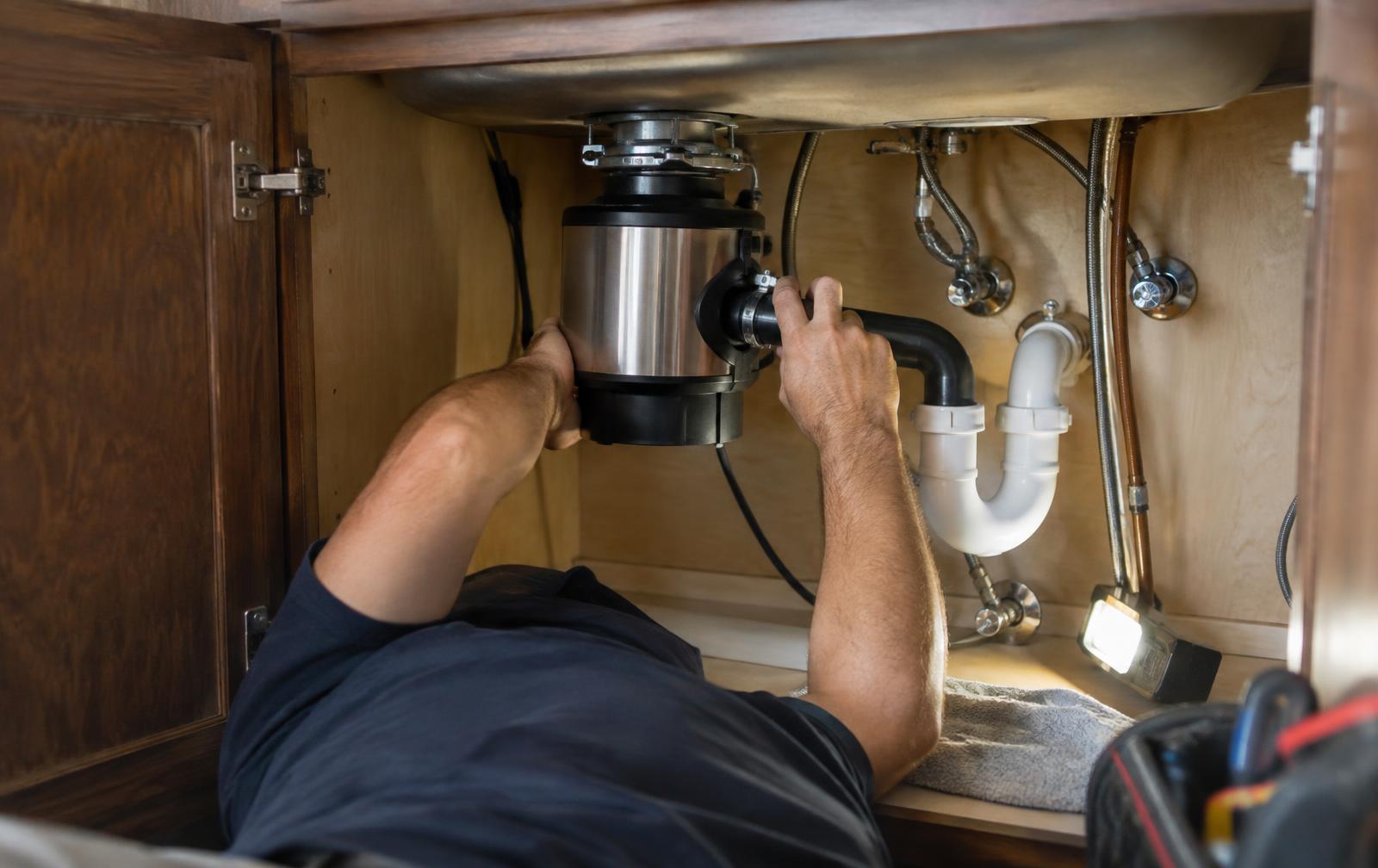
Jam clearing, leaking-unit swaps, and quiet 3/4 HP upgrades for Richardson kitchens — same-visit install.
Drain Backing Up at Your Richardson Home?
Same-day service, seven days a week, with a camera pass to prove the line is clear. Call now for an honest arrival window.