
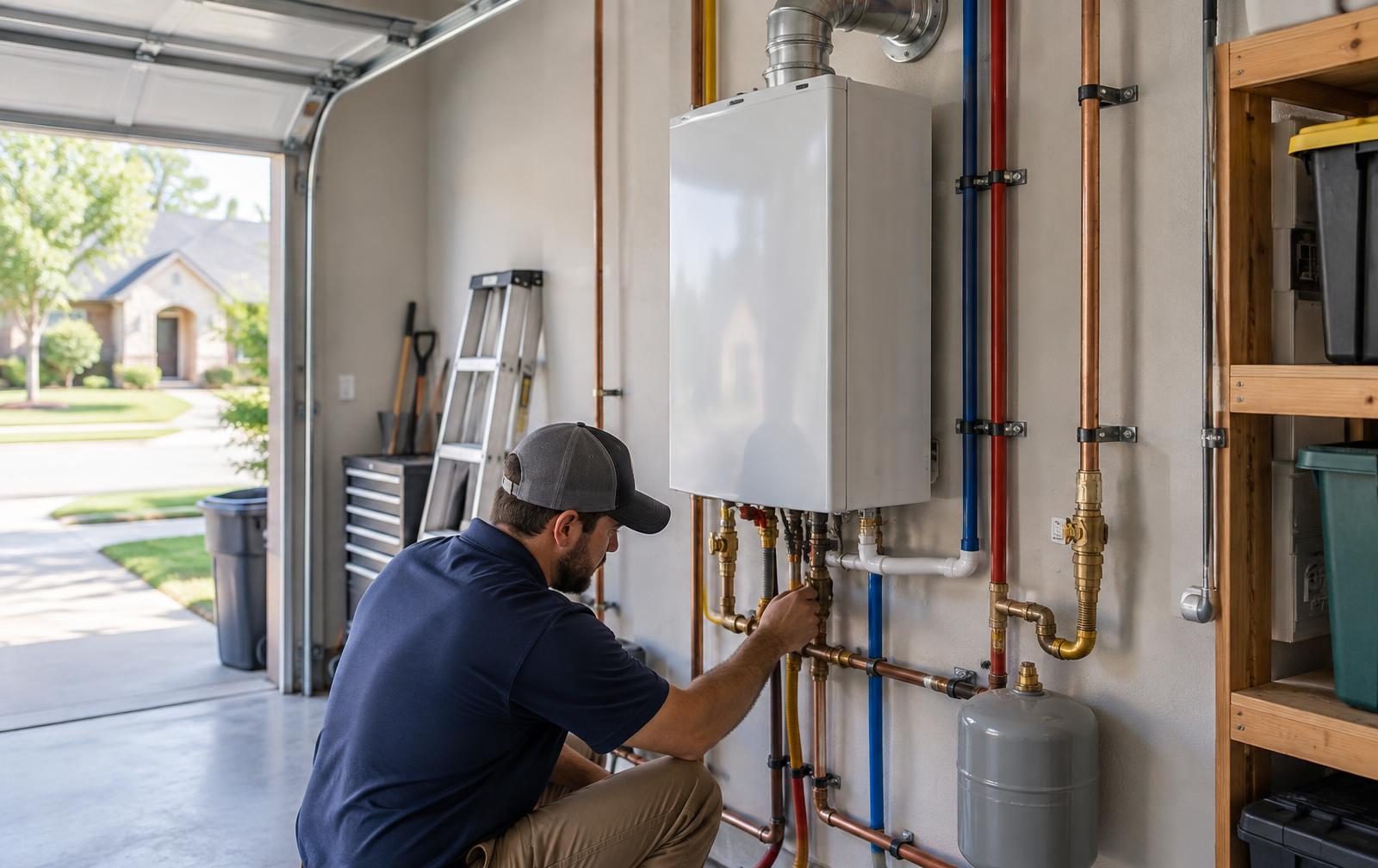
Tankless Water Heater Services in Lake Dallas, TX
A tankless unit is only as good as what's behind the wall — proper gas sizing, the right vent kit, and someone showing up every year to clear out mineral buildup. Skip any one of those and the ten- or twenty-year lifespan the box promises turns into a callback in year three.
What Actually Makes a Tankless Unit Last This Far From Downtown
Plenty of Lake Dallas households switch to tankless for good reason — a wall-mounted unit instead of a closet-eating tank, and hot water that doesn't quit mid-shower. What trips people up is the water itself. Testing on the local utility system puts it in the moderately hard range, and that mineral load coats the inside of a heat exchanger year after year until flow drops off. Skipping that yearly flush is a common reason a unit falls short of the lifespan the box promises.
Getting the unit hung on the wall correctly matters just as much as keeping it clean afterward. Vent pipe has to match what the specific model calls for, gas piping has to be sized for the BTU the unit can actually pull at full fire, and a condensing model needs somewhere for its acidic runoff to go before it hits your drain. A house built decades back around a standard tank often has gas piping sized for that smaller draw, not for a tankless unit demanding several times the flow.
Our approach is to install to the manufacturer's own numbers — vent, gas, shutoffs, drainage — write all of it down, and show up once a year afterward to flush the exchanger so the unit actually reaches the service life it was sold on.
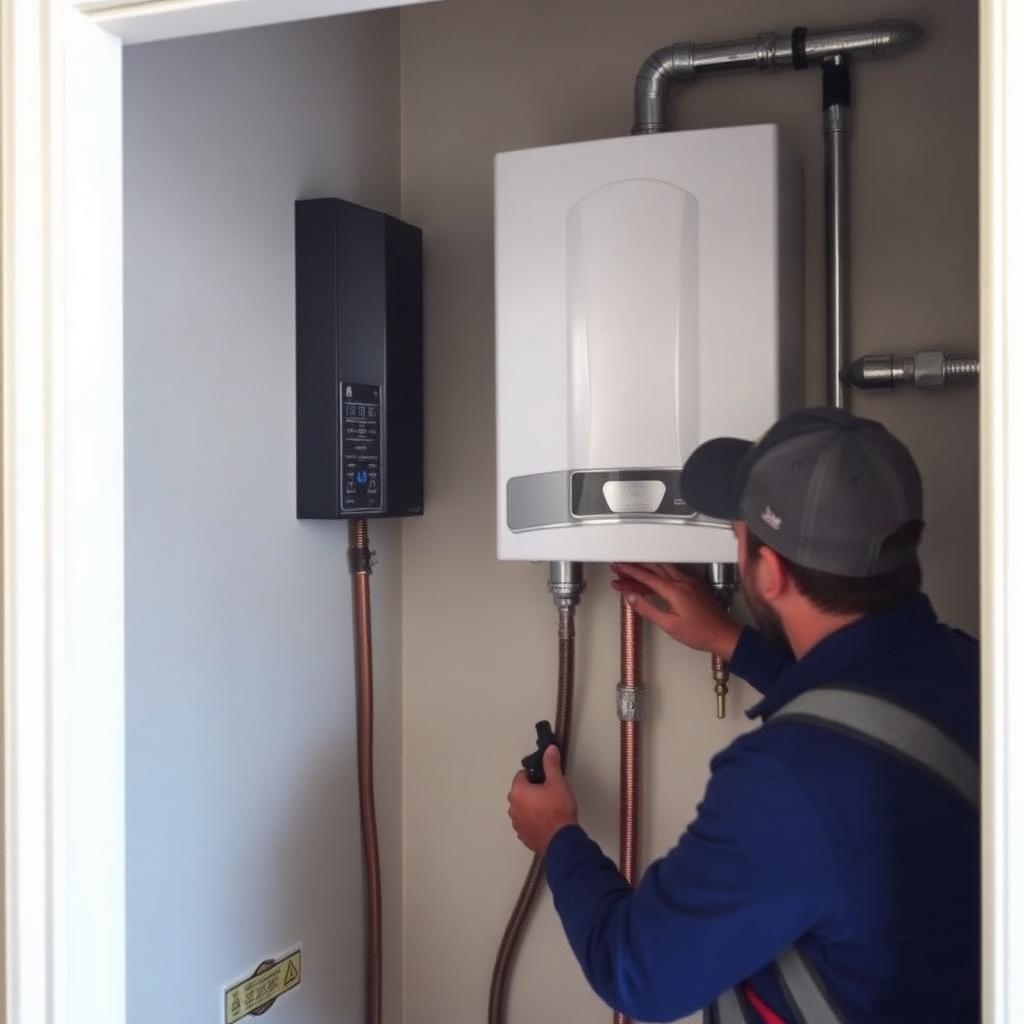
Trouble Signs on a Lake Dallas Tankless Unit
A struggling unit almost always gives warning before it quits outright.
Every code maps to something concrete on that model — a flame problem, a flow problem, a temperature reading out of range. We look it up for your exact unit before guessing at a repair.
Mineral buildup narrows the passage water travels through inside the exchanger. When a tub that used to fill quickly now drags, that's usually the culprit.
That quick cold-hot-cold flicker can come from a flow sensor partly blocked with scale, a recirculation loop that's too small, or the unit's own modulation struggling — each has its own fix.
Either the unit was undersized for how the house actually uses hot water, or the gas line feeding it can't keep pace at peak draw. We check the pipe diameter before anything else.
In this area's water, that yearly flush isn't optional housekeeping — most manufacturers tie the warranty itself to proof the service happened on schedule.
That's steam snapping through mineral deposits stuck to the exchanger wall. Left alone long enough, it stops being a noise problem and starts being permanent damage.
The Setup Decides the First Decade, Upkeep Decides the Rest
Two different jobs, same goal: get the full lifespan out of the unit.
- 1Work backward from real usage
We tally which fixtures might run together and how cold the groundwater tends to run locally, since a colder starting temperature means the unit has to work harder to hit the same output. That figure decides the unit size and how large the gas branch needs to be.
- 2Match the vent kit exactly
Whatever material and configuration the manufacturer specifies for that model — PVC, CPVC, or stainless — is what goes in, with the clearances and termination point they call for. Cutting this corner is the fastest way to void a warranty and risk exhaust drifting back inside.
- 3Build in easy future service
Shutoff valves on both the hot and cold connections turn next year's flush into a short visit instead of a teardown. On a condensing unit, a neutralizer handles the acidic drainage before it reaches your pipes.
- 4Do the yearly flush right
We close the shutoffs, circulate a cleaning solution through the exchanger, rinse it out, and bring the unit back online. While it's open we also check the burner, sensor, and drain line, and put the date on file.
- 5Repair with the parts the manufacturer designed for it
Ignitors, flame sensors, flow sensors, gas valves, and control boards are all things we keep on hand or can get quickly. We work on most major tankless brands sold around here.
Why a Tankless Job Looks Different Across Lake Dallas
The house's age tells us almost as much as the brand we're installing.
Houses and cottages from this original part of town frequently have a narrower gas branch feeding the water heater spot, sized decades ago for a standard tank rather than a high-output tankless unit, so upsizing that run is often part of the quote.
Ages of construction vary enough in this single-family area that we check the actual gas line on site before promising a unit size, rather than assuming it can handle a large tankless as-is.
With no reliable build date on file for this subdivision, every quote here includes a walk of the existing gas and vent path instead of borrowing an estimate from a nearby house.
Units mounted outside on shoreline lots deal with more humidity than an inland install, so we pay closer attention to corrosion at vent joints and connection points, both going in and at every yearly visit.
Gas service along this stretch spans a wide range of decades, so we confirm meter capacity and branch size for the specific address instead of guessing from the road it sits on.
Construction close to this corridor tends to already carry gas piping sized for higher-output appliances, which can cut the job down to venting and valve work alone.
What Lake Dallas Homeowners Say
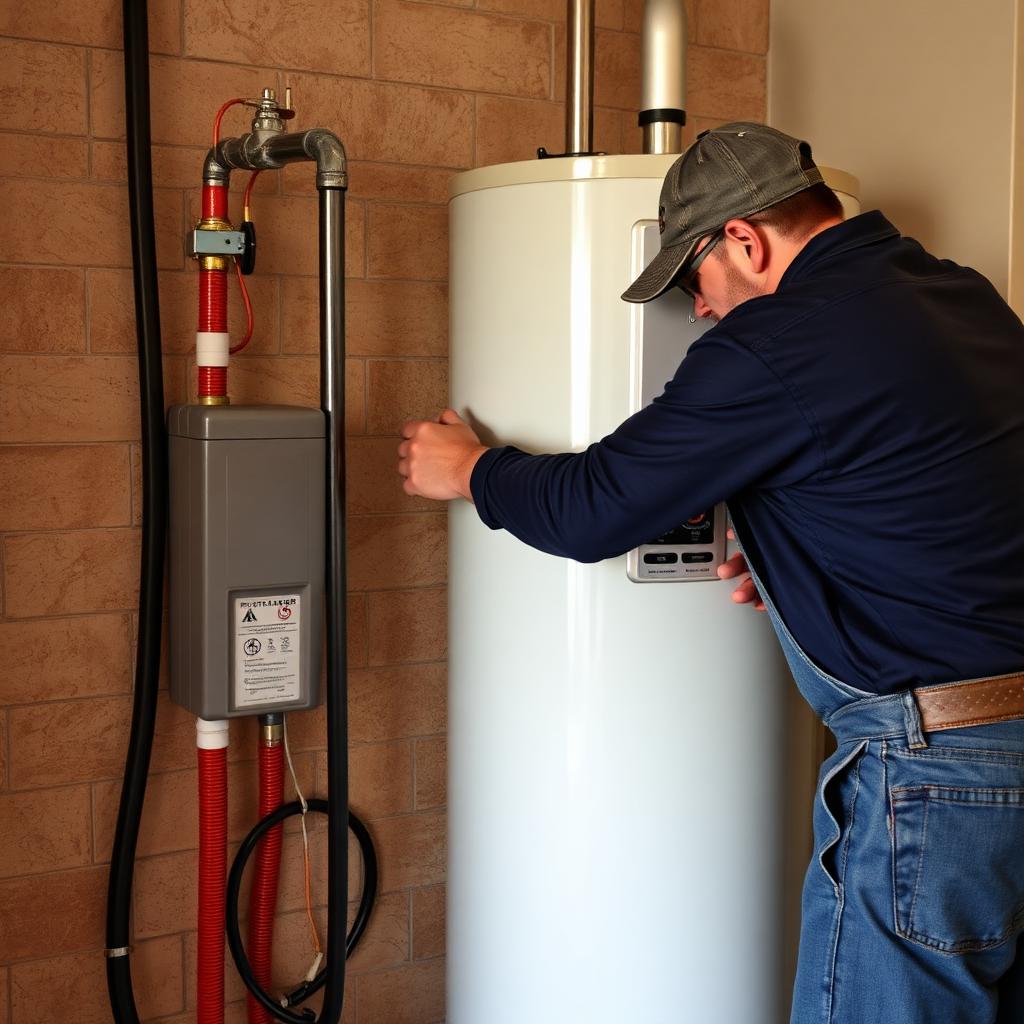
Every Visit Goes on Record
We log the model, serial number, gas setup, vent configuration, and valve work at install, and we date-stamp every flush that follows. That paper trail is what keeps a long manufacturer warranty intact instead of getting denied a few years down the road.
We're licensed through the Texas State Board of Plumbing Examiners, insured, and family-owned, running trucks out of our shop in The Colony. A unit that's stopped making hot water gets same-day attention; a scheduled flush goes on whatever day works for you.
Straight Answers, No Sales Pitch
Our Other Plumbing Services in Lake Dallas, TX
A tankless swap often uncovers a gas line that needs upsizing anyway. We handle both jobs together on the same visit around Lake Dallas.
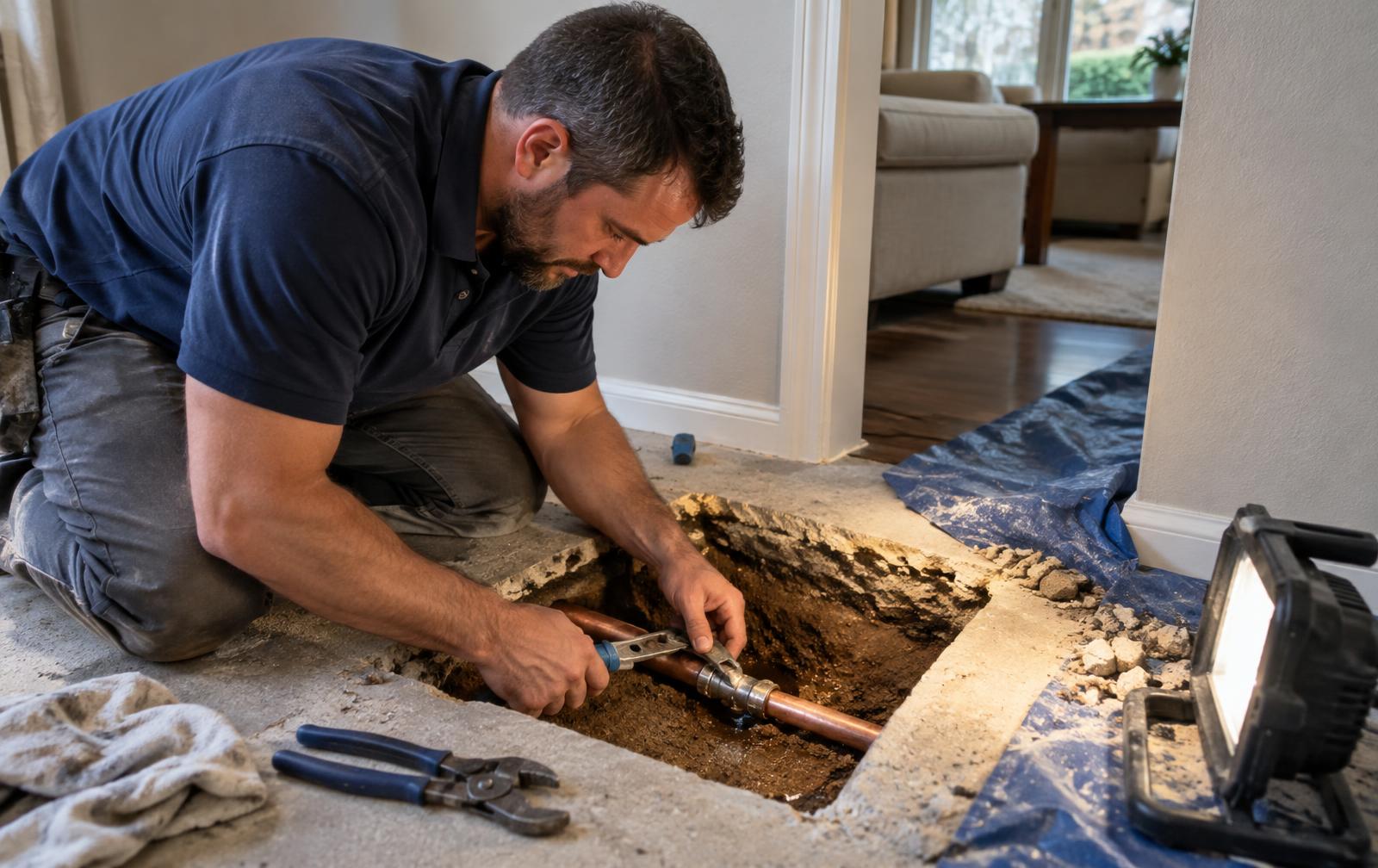
Electronic detection under Lake Dallas slabs — reroute options that save your finished floors when possible.
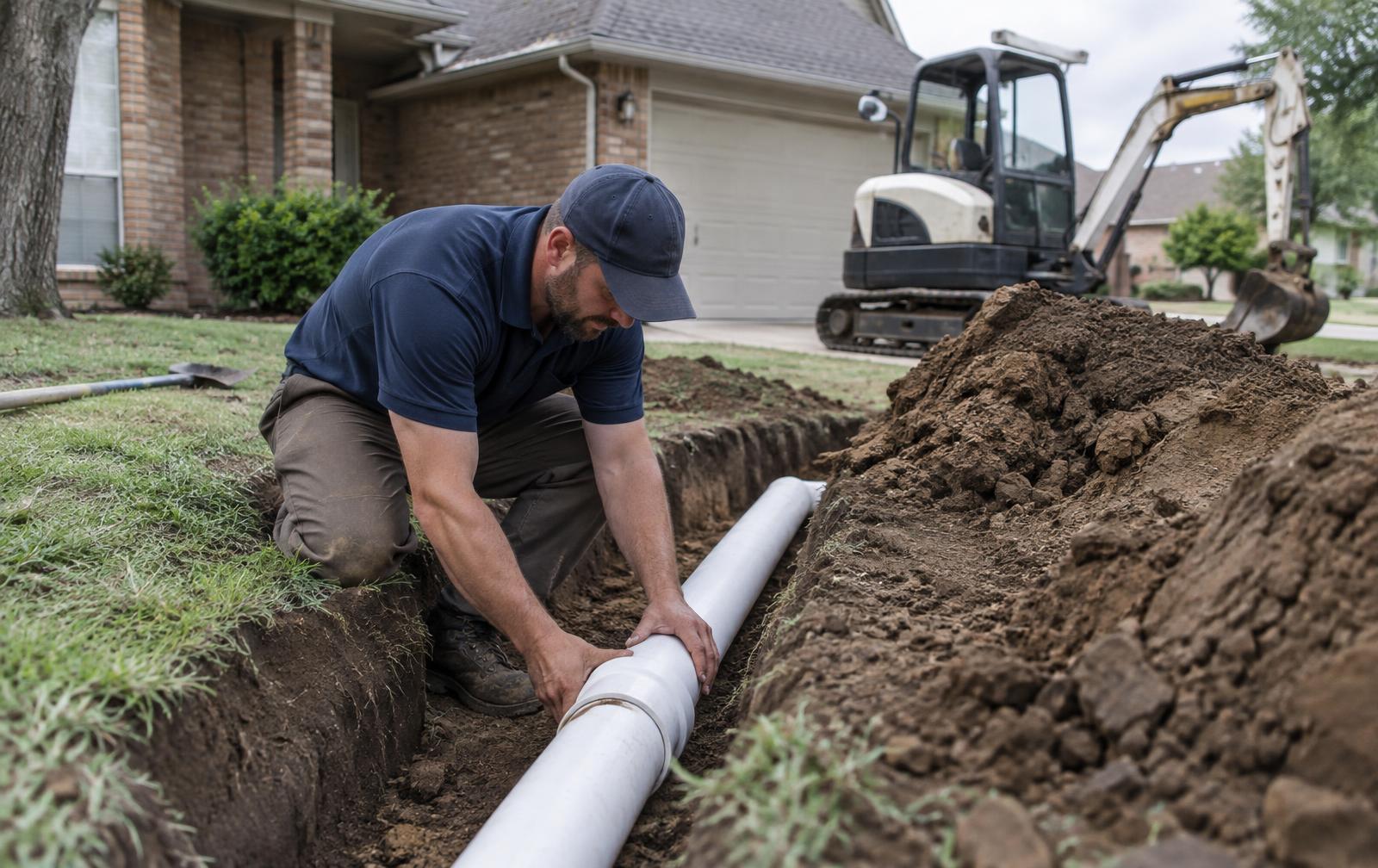
Trenchless replacement for the aging laterals across Lake Dallas's older runs — camera first, quote in writing, minimal yard damage.
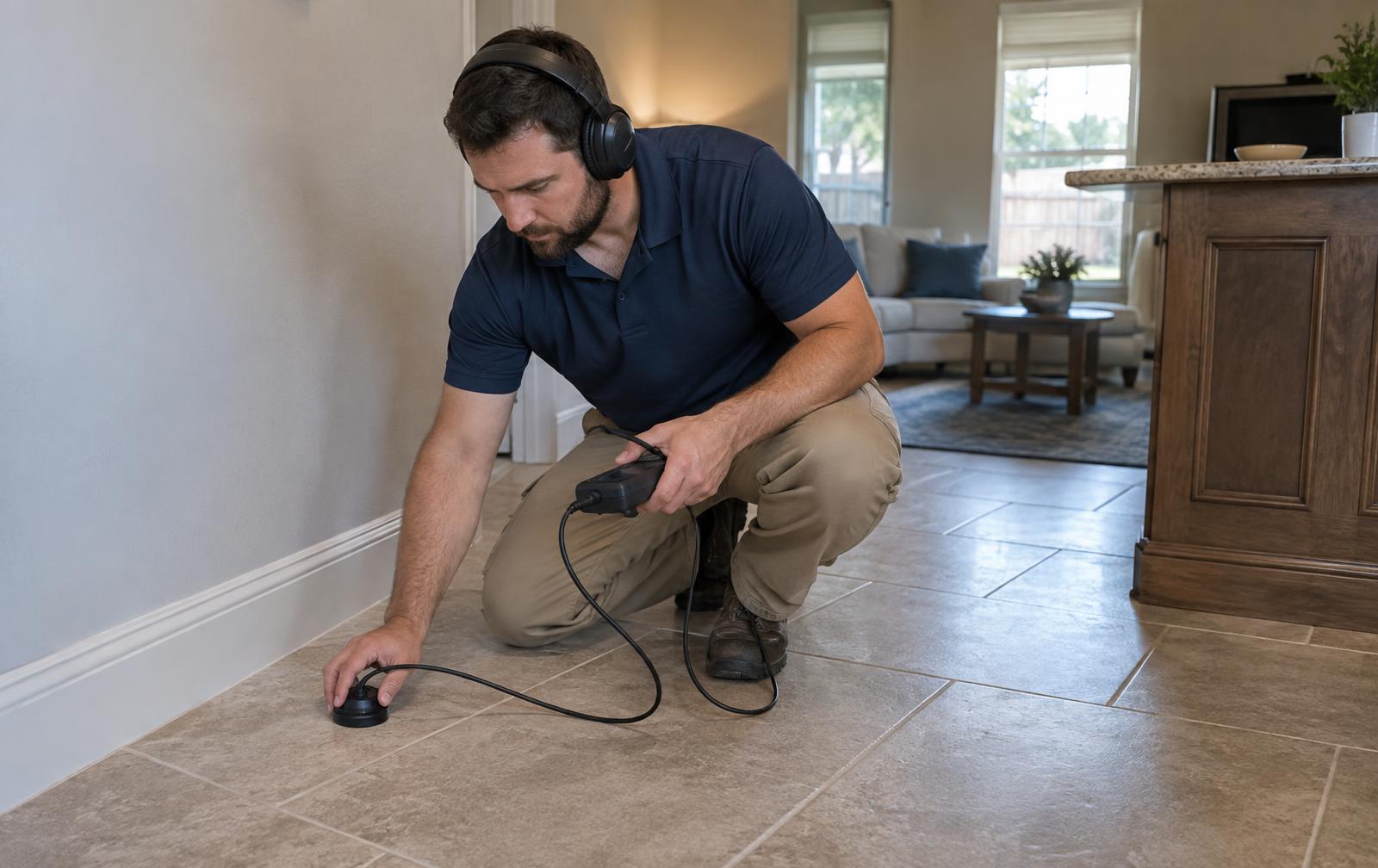
Acoustic, thermal, and pressure testing to pinpoint hidden leaks in Lake Dallas slab and wall lines without tearing into finishes.
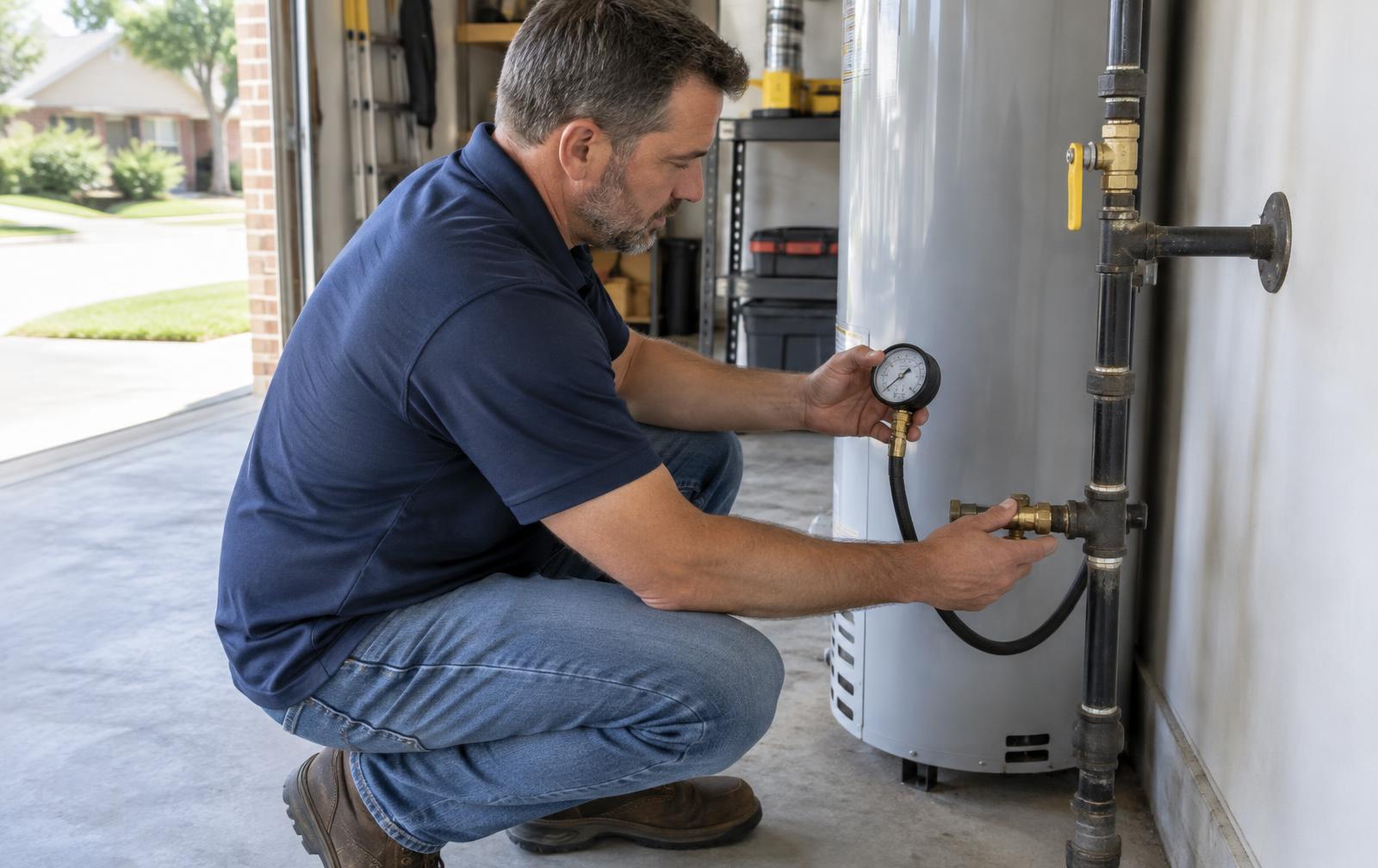
Licensed install, repair, and pressure-testing for Lake Dallas homes — every line signed off to Texas code and Atmos requirements.
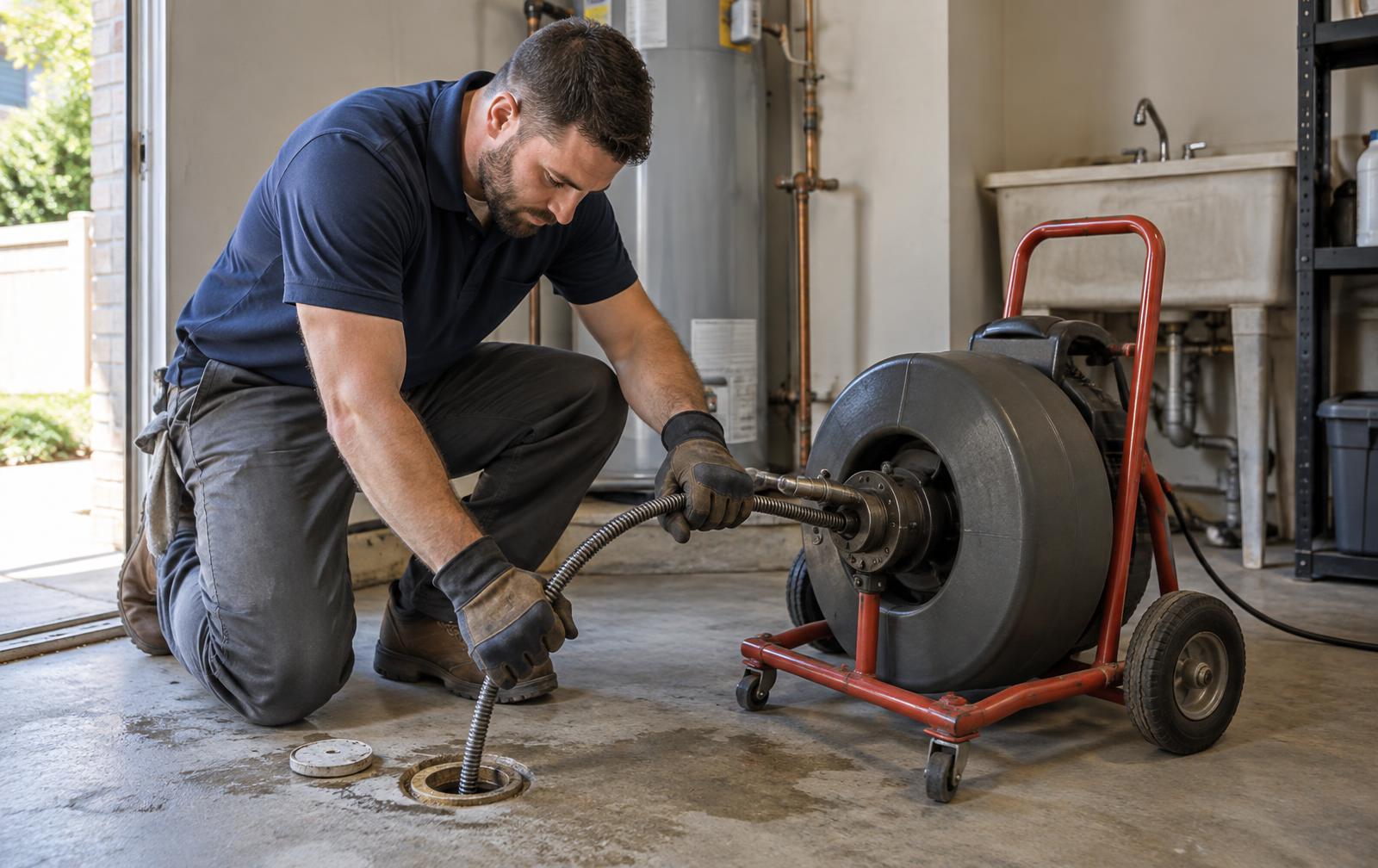
Full-clear service and camera confirmation for the drains under Lake Dallas's neighborhoods.
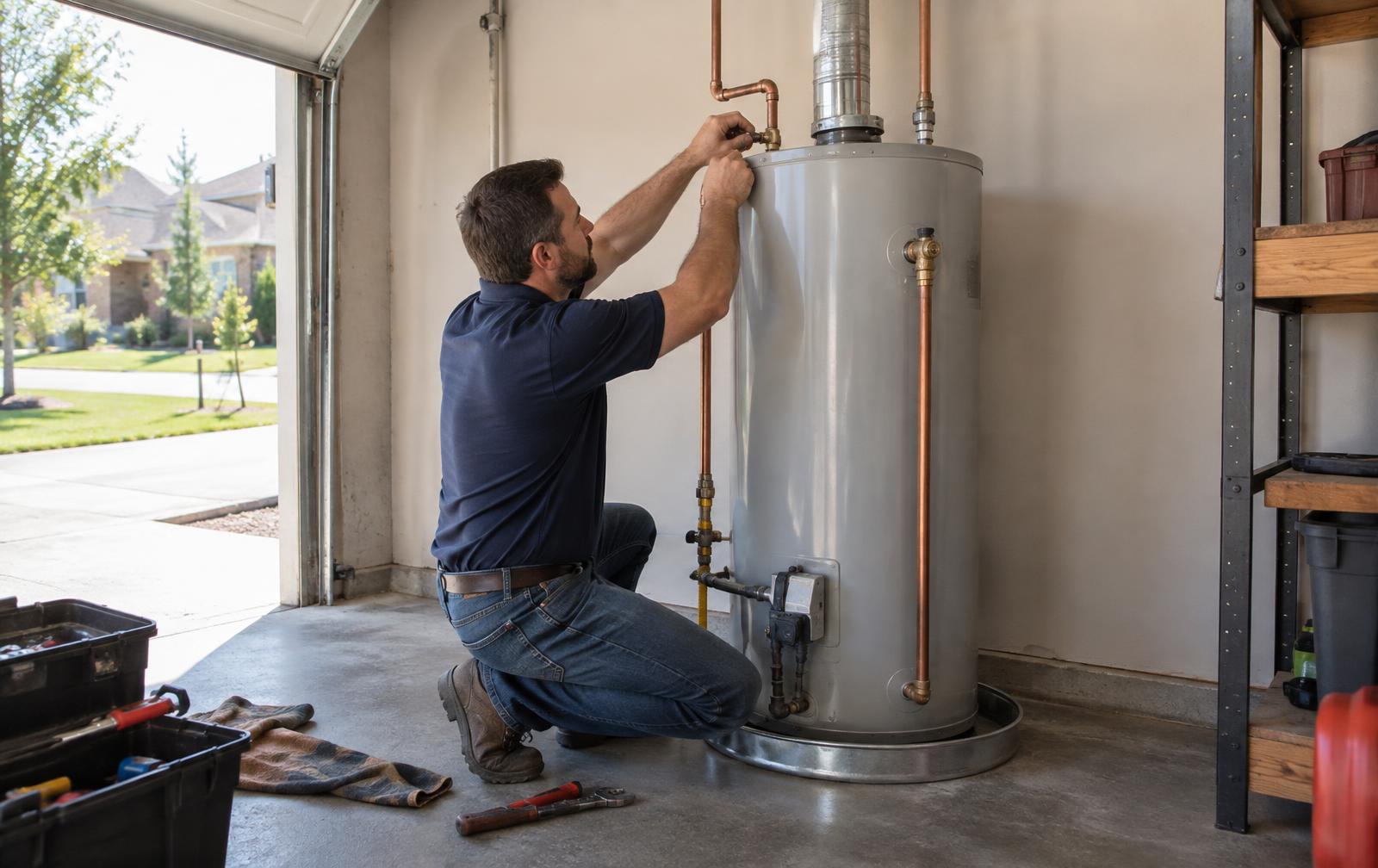
Repair, flush, and replacement of tank units — including attic and garage heaters common to Lake Dallas homes.
same-day, 7 days a week response across Lake Dallas for burst pipes, heater failures, and main-line backups.
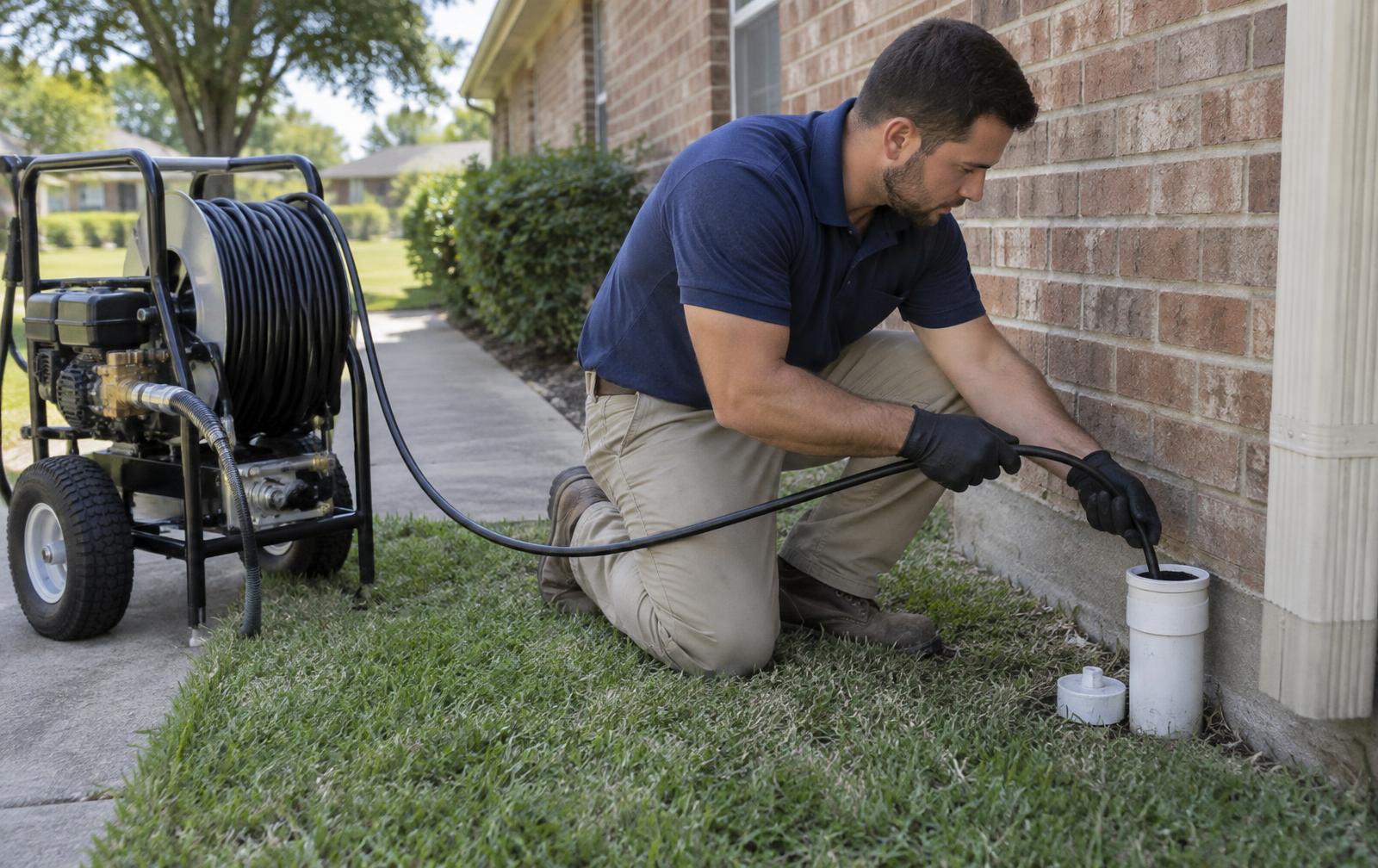
High-pressure cleaning that clears scale, grease, and roots from Lake Dallas's lateral runs — full-diameter, lasting clean.
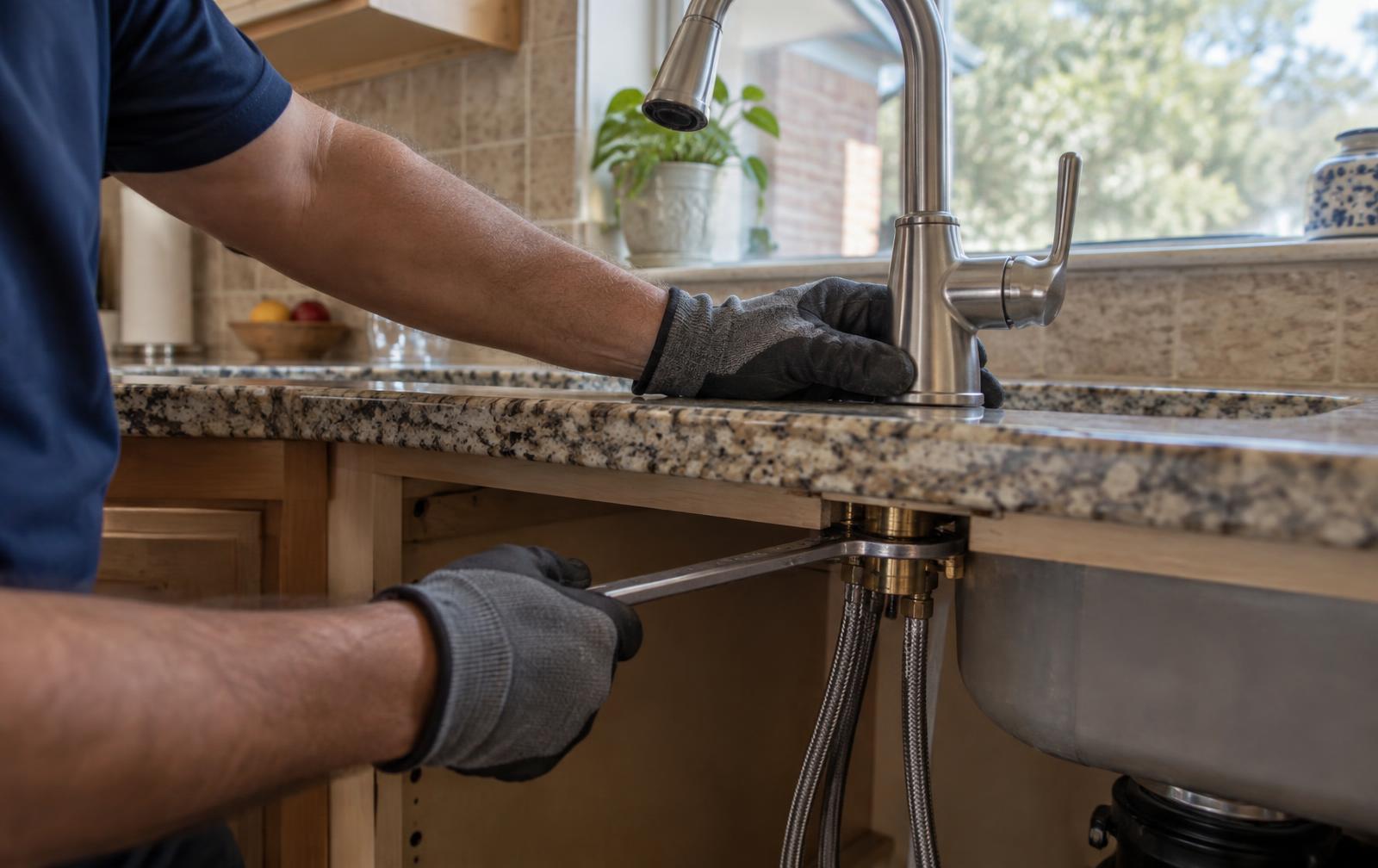
Cartridge, stem, and full-fixture replacement for Lake Dallas kitchens and bathrooms — hard-water-ready parts stocked on the truck.
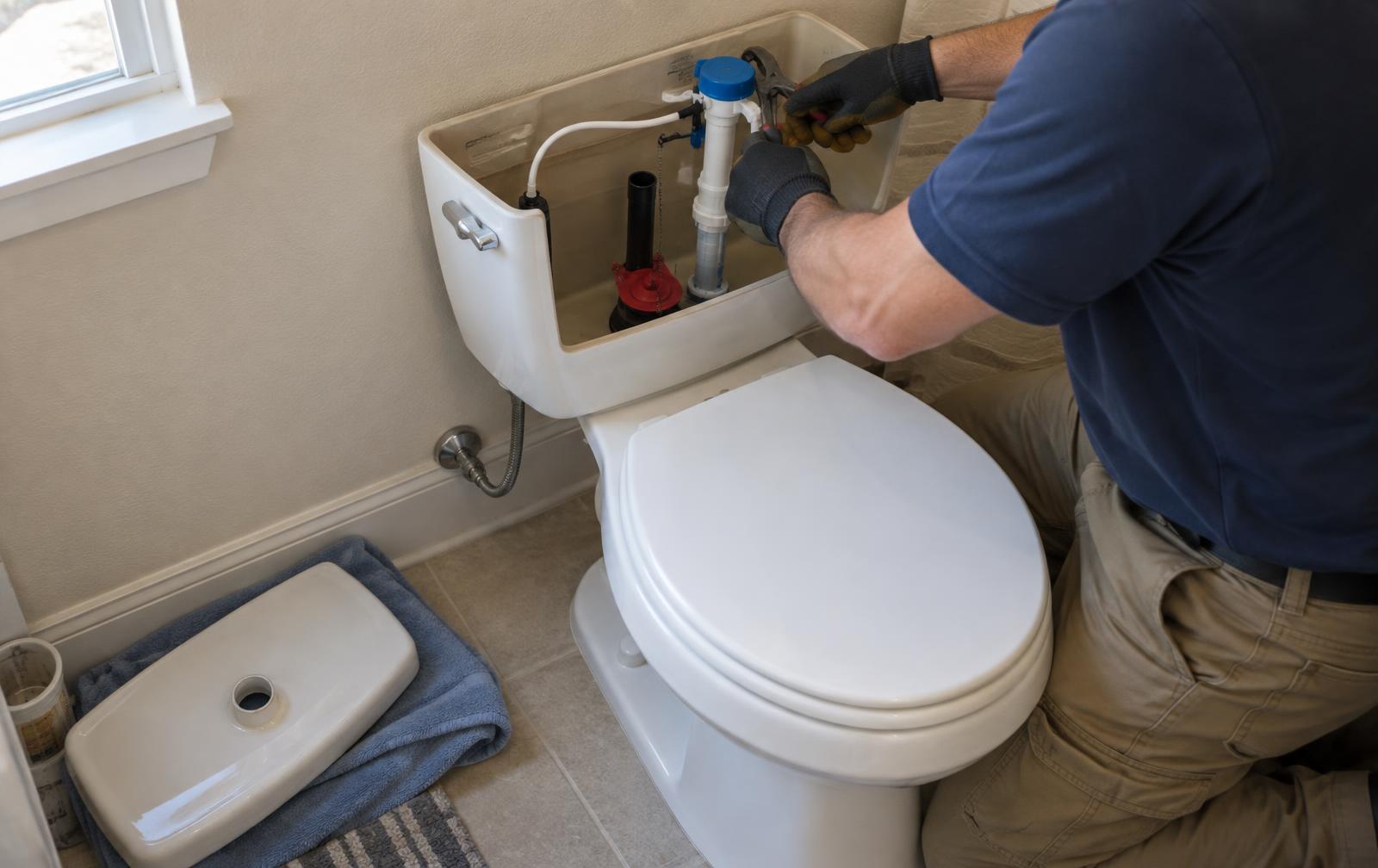
Rebuilds, wax-ring resets, flange repairs, and full replacements — the running toilets and rocking bowls in Lake Dallas homes.
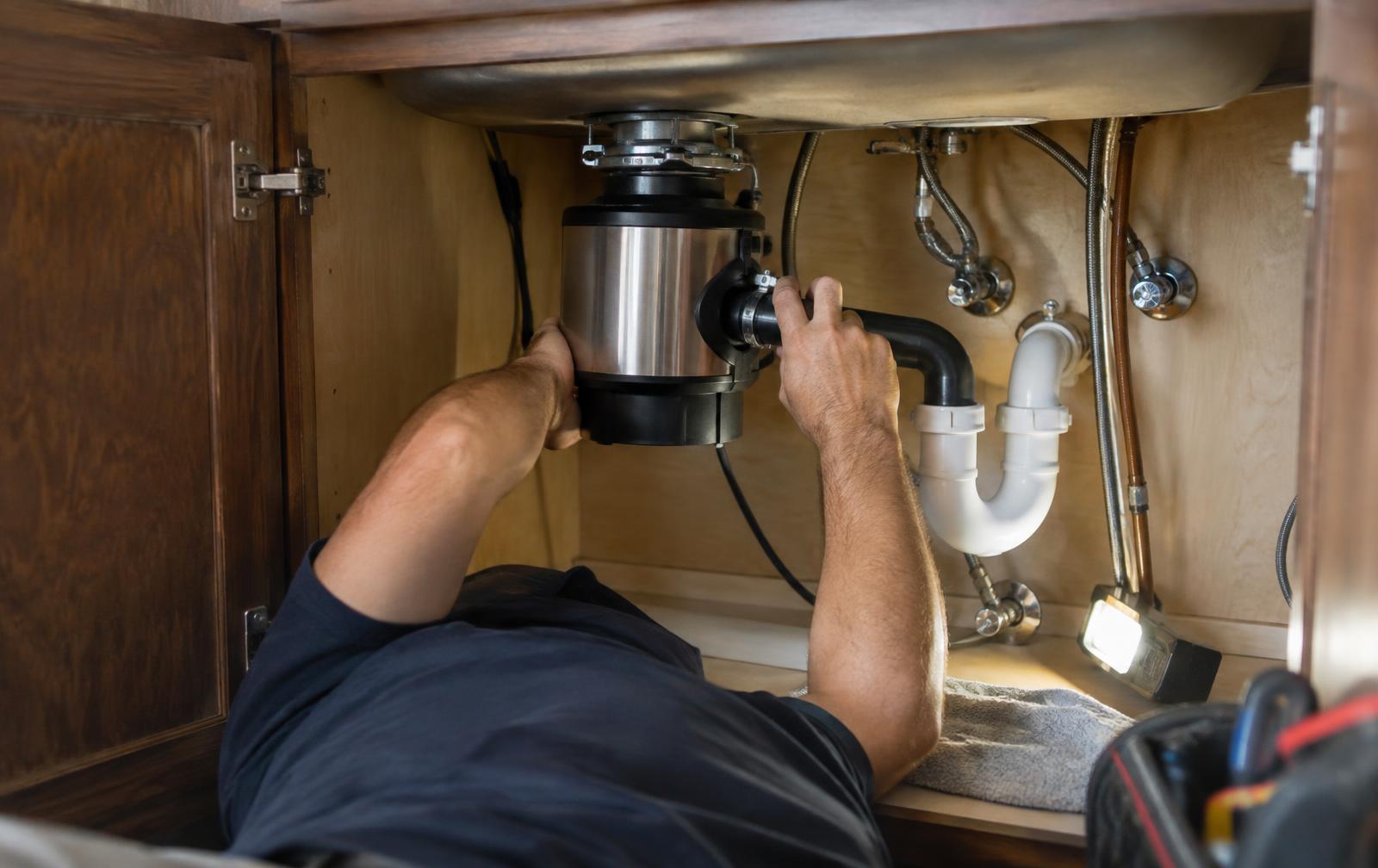
Jam clearing, leaking-unit swaps, and quiet 3/4 HP upgrades for Lake Dallas kitchens — same-visit install.
Need Tankless Work Done in Lake Dallas?
Sized and vented to the manufacturer's numbers, flushed on schedule, warranty kept intact. Get on the calendar.