
Leak Detection in Lake Dallas, TX
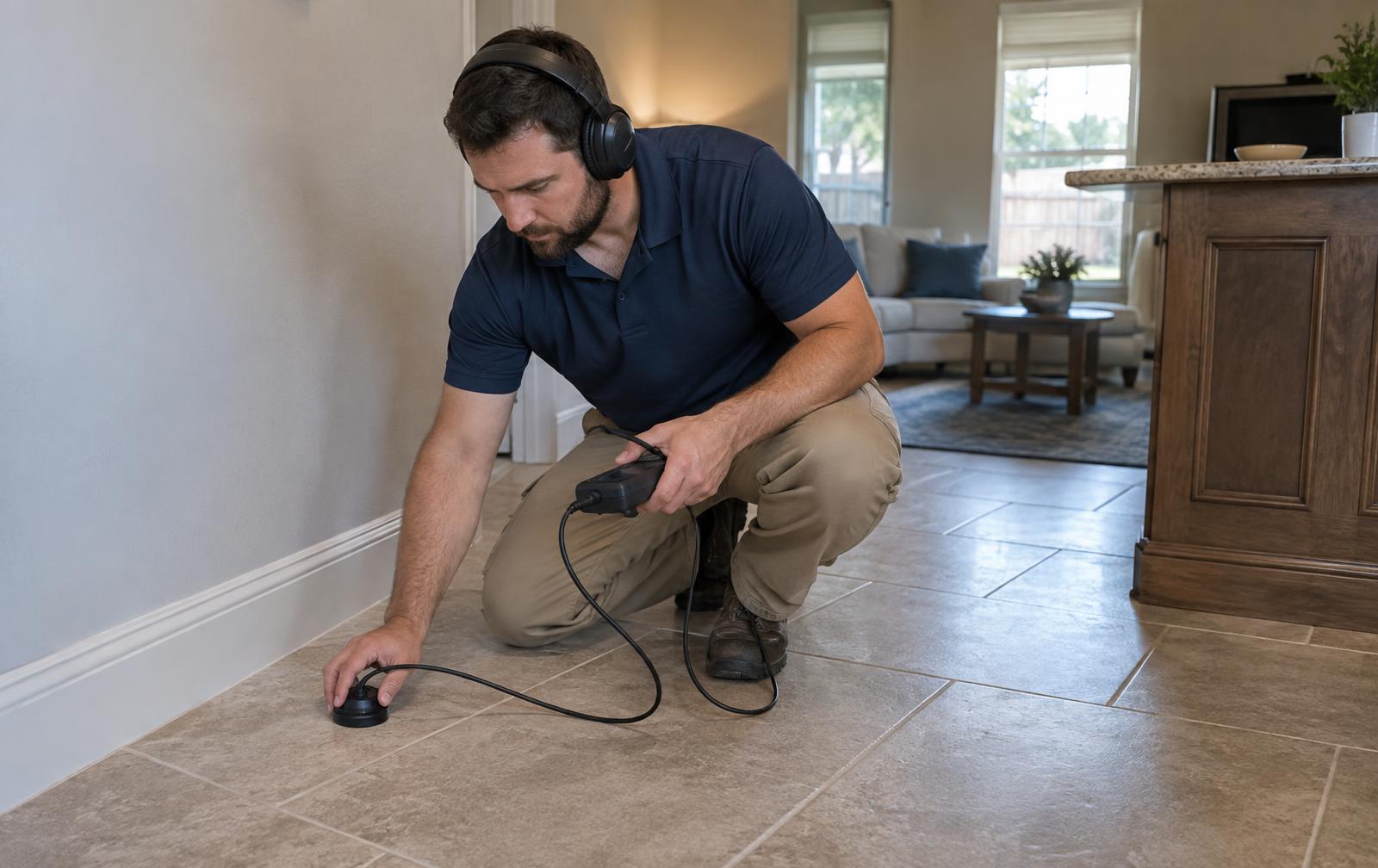
Your water bill went up and you can't explain why. A ceiling tile stays dark no matter how many times it gets painted over. The meter needle keeps ticking even with the whole house shut off. Rather than opening drywall to search, we bring gear that reads sound, heat, and pressure to name the exact spot before anything gets torn out.
The Wall Comes Out After We Know Where, Not Before
Lake Dallas has been a lakeside town since the 1850s, with rebuilding after the railroad reached it in 1881 and again once the reservoir was enlarged into today's Lewisville Lake in the mid-1950s. That history shows up in the housing: older single-family homes and lake cottages clustered around the original town center, next to newer construction filled in over the decades since. A cottage from that earlier building period usually has copper or galvanized supply lines that have had a long stretch of years to develop a small pinhole, so that's typically where we look first.
Sitting directly on the lakeshore also changes the diagnostic picture in ways an inland suburb doesn't deal with. Homes near the water hold more ambient moisture in crawlspaces and foundations, and where a property has its own dock or boathouse, that structure carries a short run of exposed plumbing worth checking before we assume the wet spot is coming from inside the house.
None of that guesswork goes into the wall itself, though. We confirm with sound, heat imaging, or a pressure hold, and only after one of those points to a specific spot do we talk about opening anything.

What a Hidden Leak Looks Like in a Lake Dallas House
One of these by itself is worth a phone call. Two together usually means it's time to get someone out.
No new sprinkler zone, no extra loads of laundry, no new fixture — just a bill that's noticeably higher. That pattern by itself is reason enough to check the supply side before anything else.
Turn off every faucet, toilet, and appliance in the house, then watch the small low-flow dial on the meter for a few minutes. If it's still spinning, something on the supply line is open somewhere.
Damage from a past leak stops changing shape. If the edges of a stain keep creeping outward, the source is still active, usually somewhere above where the mark shows on the surface.
Damp drywall or insulation gives off a smell before you can see anything wrong. When it's isolated to a single room, that's usually a good clue to where the leak actually sits.
That's almost always a hot-water line leaking underneath or inside, warming whatever material surrounds it. A thermal reading confirms it fast.
A large enough leak steals volume and pressure from the rest of the system. Combined with any sign above, it usually points straight at one specific run of pipe.
Sound, Heat, and Pressure Do the Talking
We narrow the search one tool at a time and stop as soon as one gives us a confident answer.
- 1Confirm it's a supply leak at all
Before reaching for any equipment, we shut valves in order and read the meter to see if this is genuinely a pressurized supply-side problem, or something simpler like a running toilet or an irrigation valve stuck open.
- 2Listen for it under pressure
With the line pressurized, ground microphones and a wall probe pick up the specific frequency a small pinhole leak makes as water forces through it. That sound gets sharper the closer we get to the source.
- 3Read the heat signature
A leak on the hot side changes the surface temperature of the material around it enough for a thermal camera to pick up, even through tile or paint. On the cold side, we sometimes run hot water first to create that same contrast artificially.
- 4Use tracer gas on the stubborn ones
Occasionally acoustic and thermal both come back inconclusive. When that happens, we introduce a harmless tracer gas into the isolated line and sniff along its path — the gas concentrates right where the pipe has failed.
- 5Put it on paper
Once we're confident, you get a photo of the exact spot marked up, a plain-language note on what's happening, and a written number for fixing it, whether we do that work or someone else does.
What Part of Lake Dallas Usually Tells Us Something
Age of construction and distance from the shoreline both matter.
The original townsite, settled well before the 1955 lake expansion and rebuilt in stretches since. Homes from that earlier era commonly still carry the supply lines they were built with, so an aging pinhole leak is a reasonable first guess here.
A single-family area drawing both families and retirees for its lake views. Build years vary house to house, so instead of assuming pipe age we confirm supply-versus-drain with a quick shut-off test on every call.
A subdivision without a confirmed build year on file, so we treat every visit here as a blank page and ask the homeowner directly rather than guessing at what era of plumbing is behind the wall.
Waterfront lots carry extra ambient moisture in the crawlspace and, on properties with a dock or boathouse, a short separate run of plumbing that gets ruled out before we call anything a house leak.
This stretch mixes decades of construction side by side, so the first thing we do on any call along here is confirm the specific house's age rather than assume from the road.
Construction near this corridor skews newer, which usually shifts our first suspicion toward a fitting or appliance connection rather than an aging length of supply pipe.
What Lake Dallas Homeowners Say

A Marked Photo First, a Cut Second
Every call wraps up with a marked photo, a plain explanation of what we found, and a number for the fix — the price depends on where the leak sits, how deep it is, and what material we're working through, so you see it before we start.
We're licensed through the Texas State Board of Plumbing Examiners, insured, and family-owned, and every truck comes from our shop in The Colony. If the repair that follows needs a city permit, we pull it ourselves.
Straight Answers, No Sales Pitch
Our Other Plumbing Services in Lake Dallas, TX
A hidden leak is frequently the first symptom of an aging supply system overall. We also handle what usually comes next — slab work, water heater service, full re-pipes — through the same local visit.
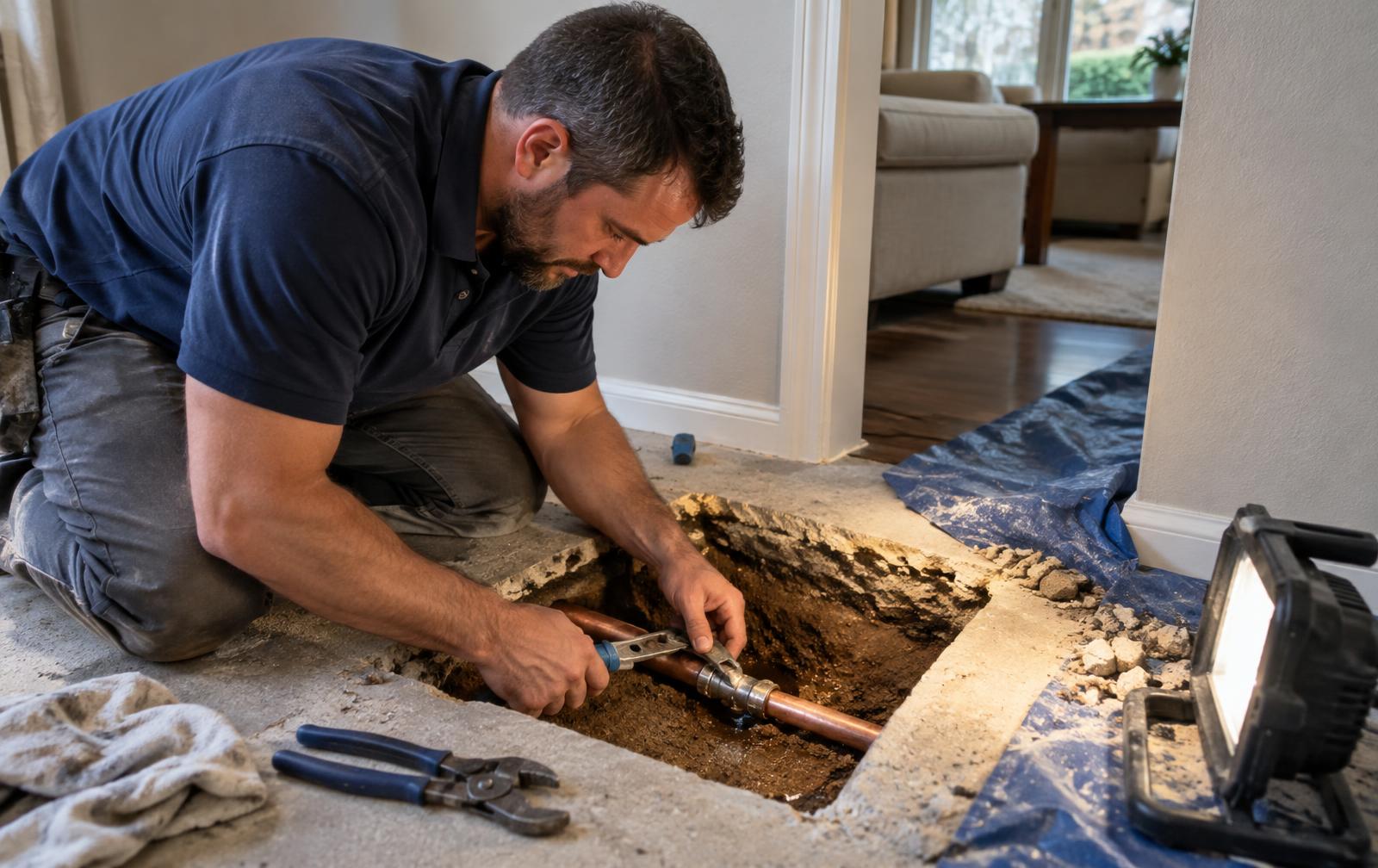
Electronic detection under Lake Dallas slabs — reroute options that save your finished floors when possible.
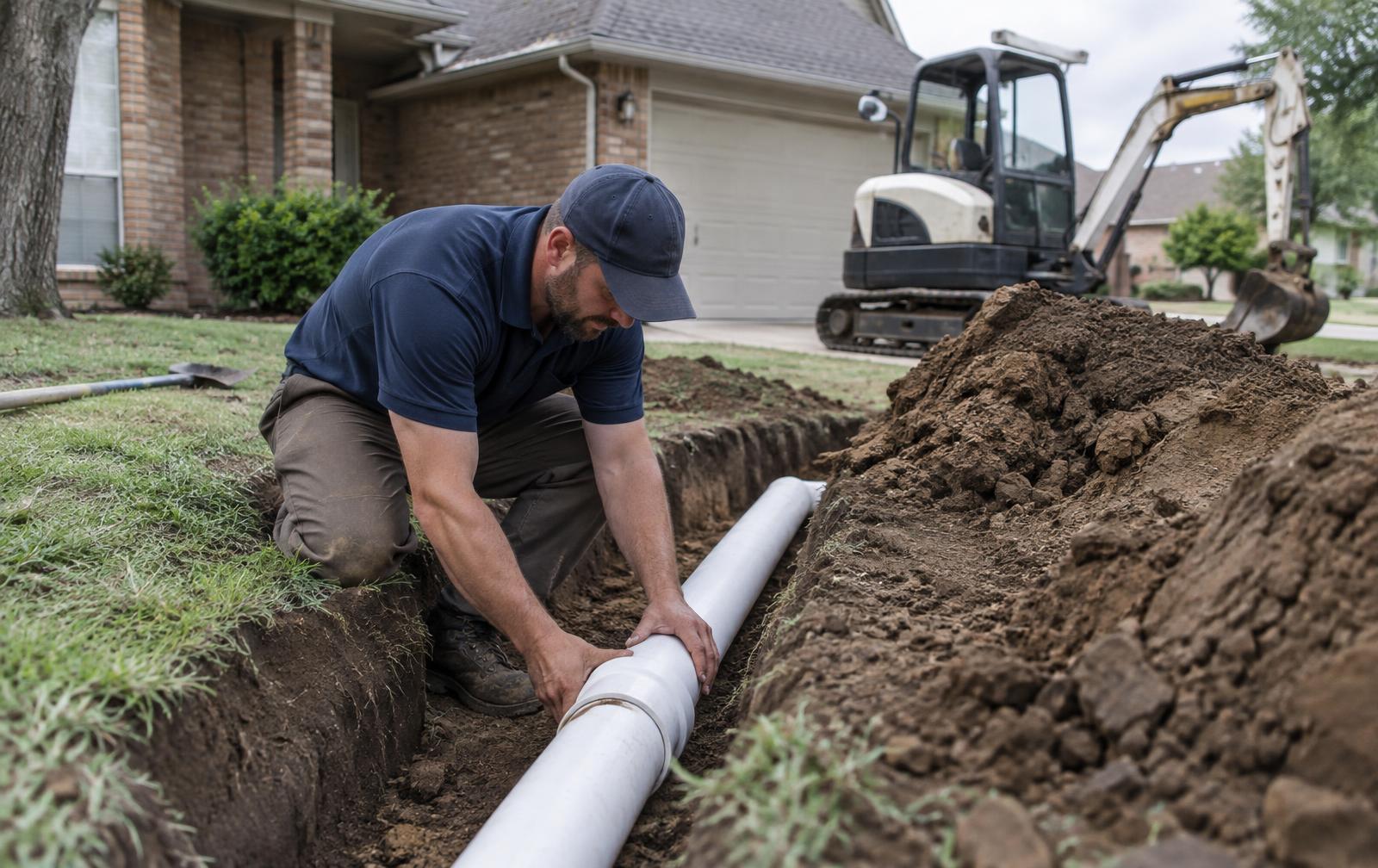
Trenchless replacement for the aging laterals across Lake Dallas's older runs — camera first, quote in writing, minimal yard damage.

Licensed install, repair, and pressure-testing for Lake Dallas homes — every line signed off to Texas code and Atmos requirements.

Full-clear service and camera confirmation for the drains under Lake Dallas's neighborhoods.

Repair, flush, and replacement of tank units — including attic and garage heaters common to Lake Dallas homes.
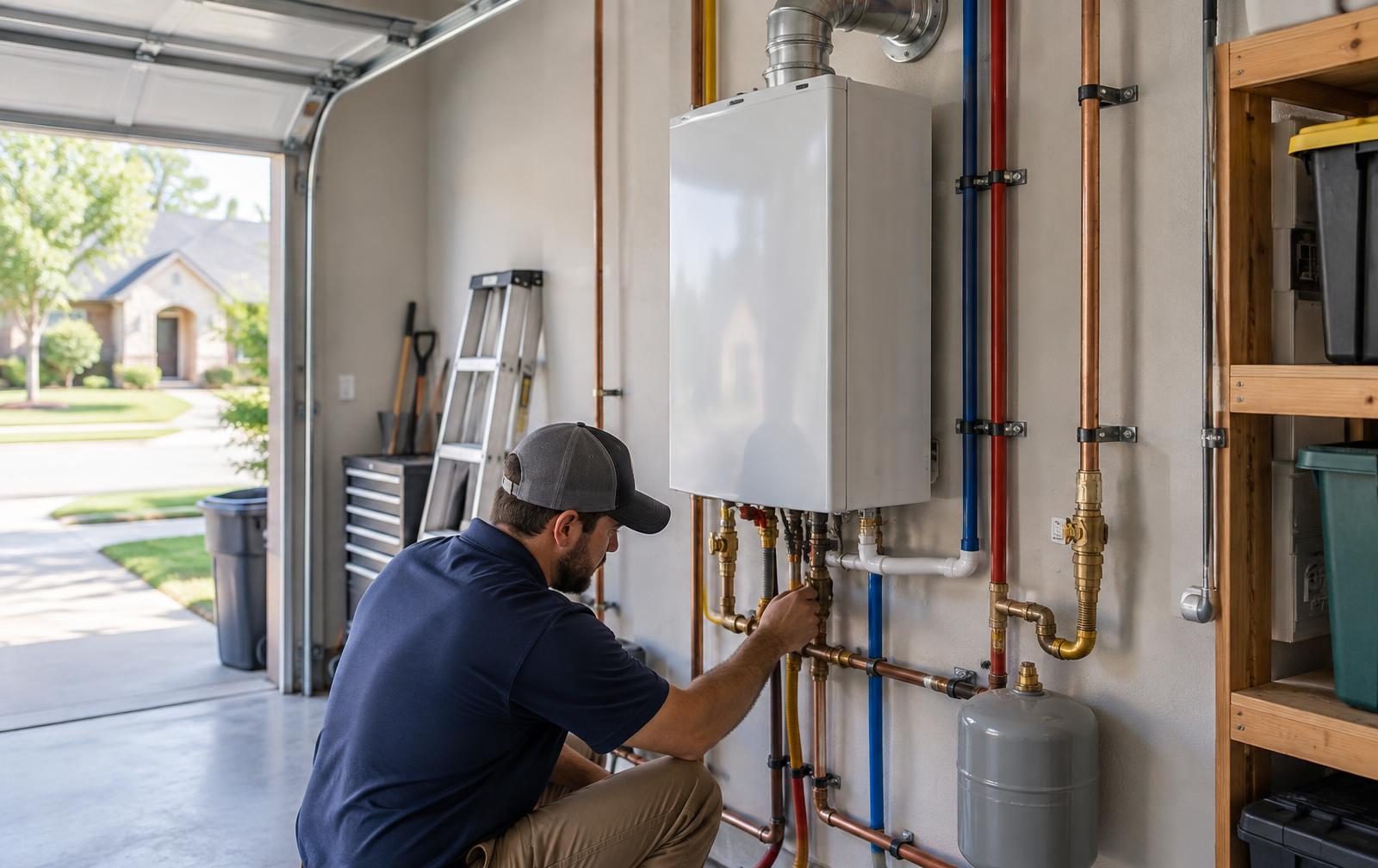
Install, service, and annual descaling — Lake Dallas's hard tap water eats tankless heat exchangers without it.
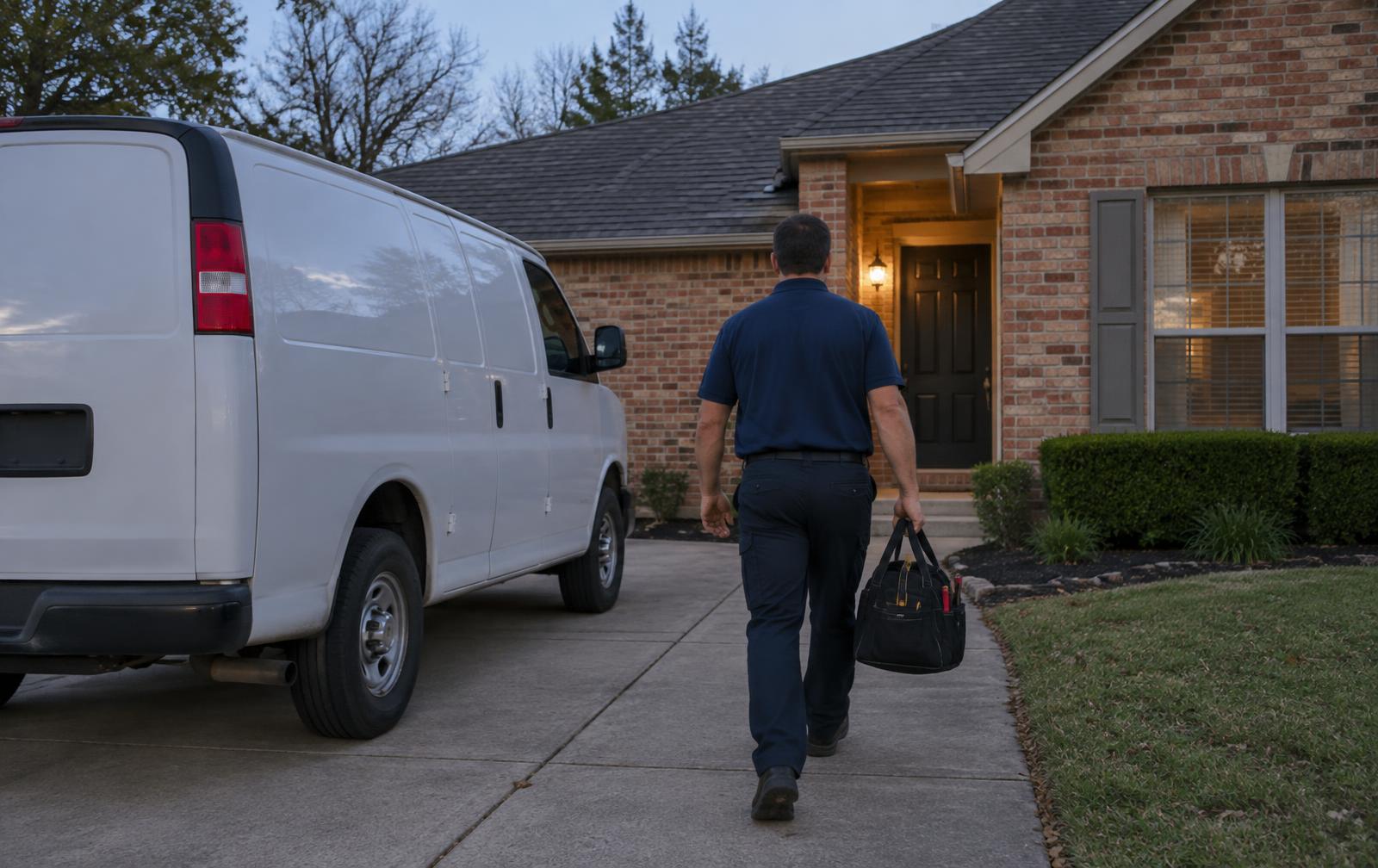
same-day, 7 days a week response across Lake Dallas for burst pipes, heater failures, and main-line backups.
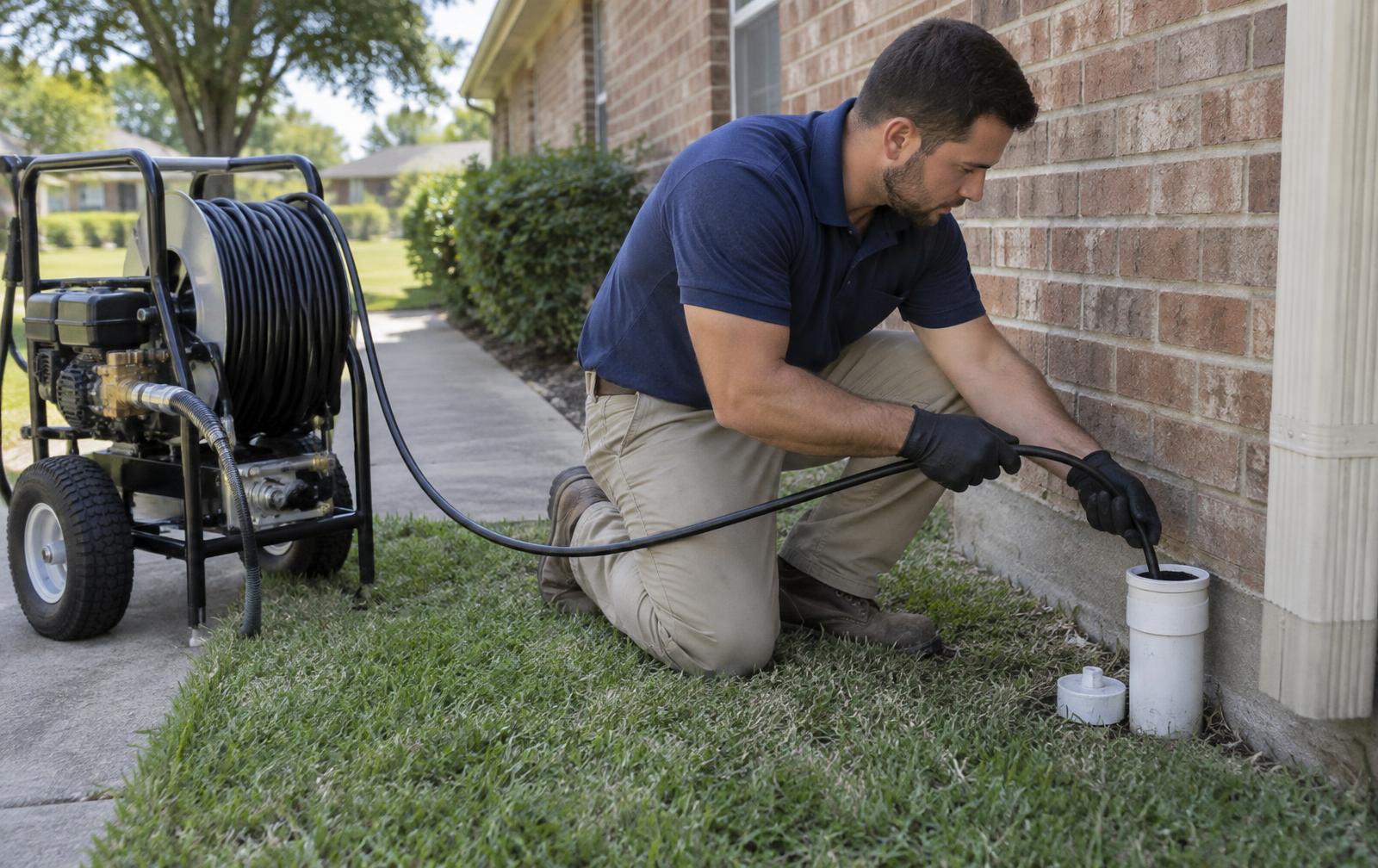
High-pressure cleaning that clears scale, grease, and roots from Lake Dallas's lateral runs — full-diameter, lasting clean.
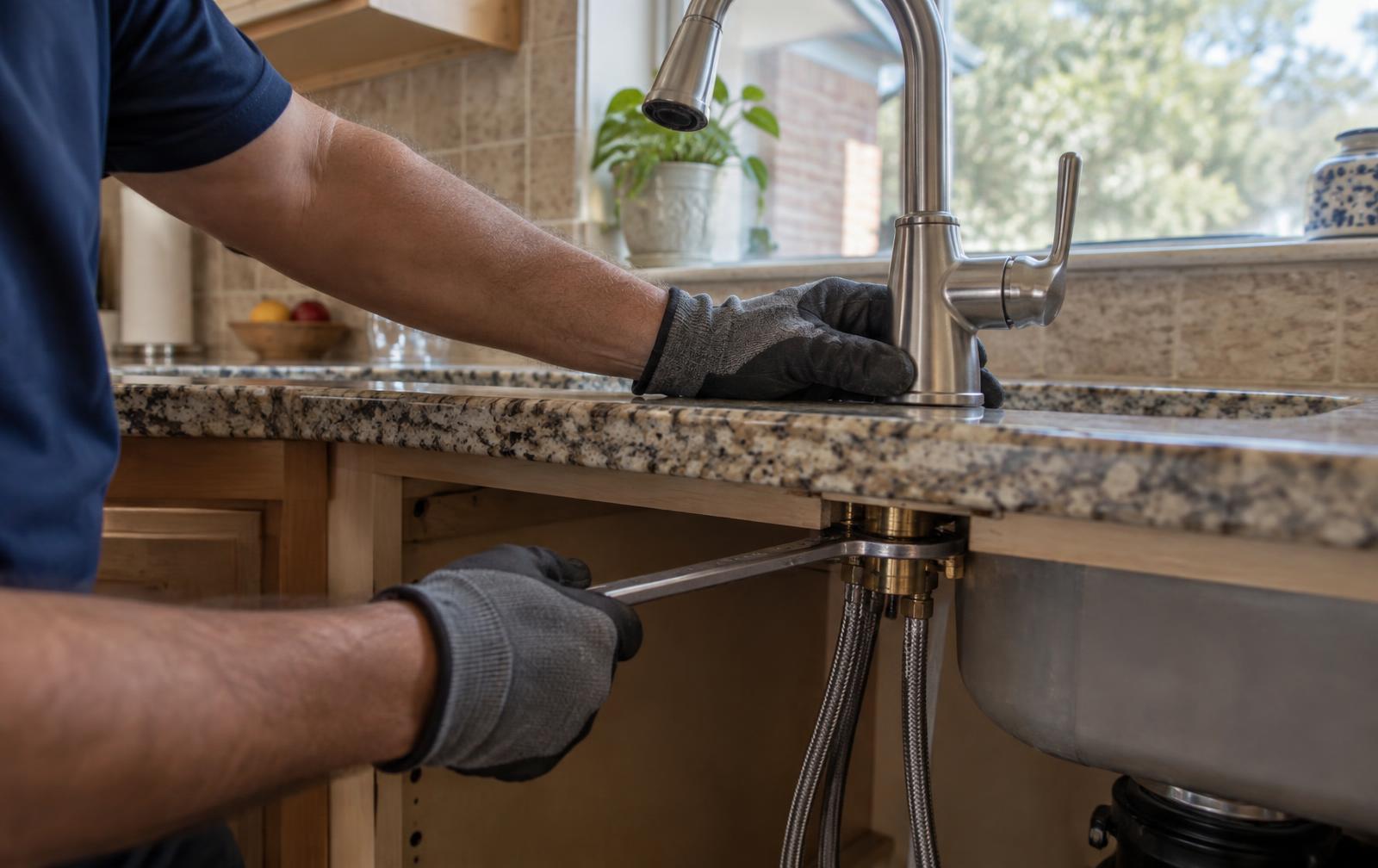
Cartridge, stem, and full-fixture replacement for Lake Dallas kitchens and bathrooms — hard-water-ready parts stocked on the truck.
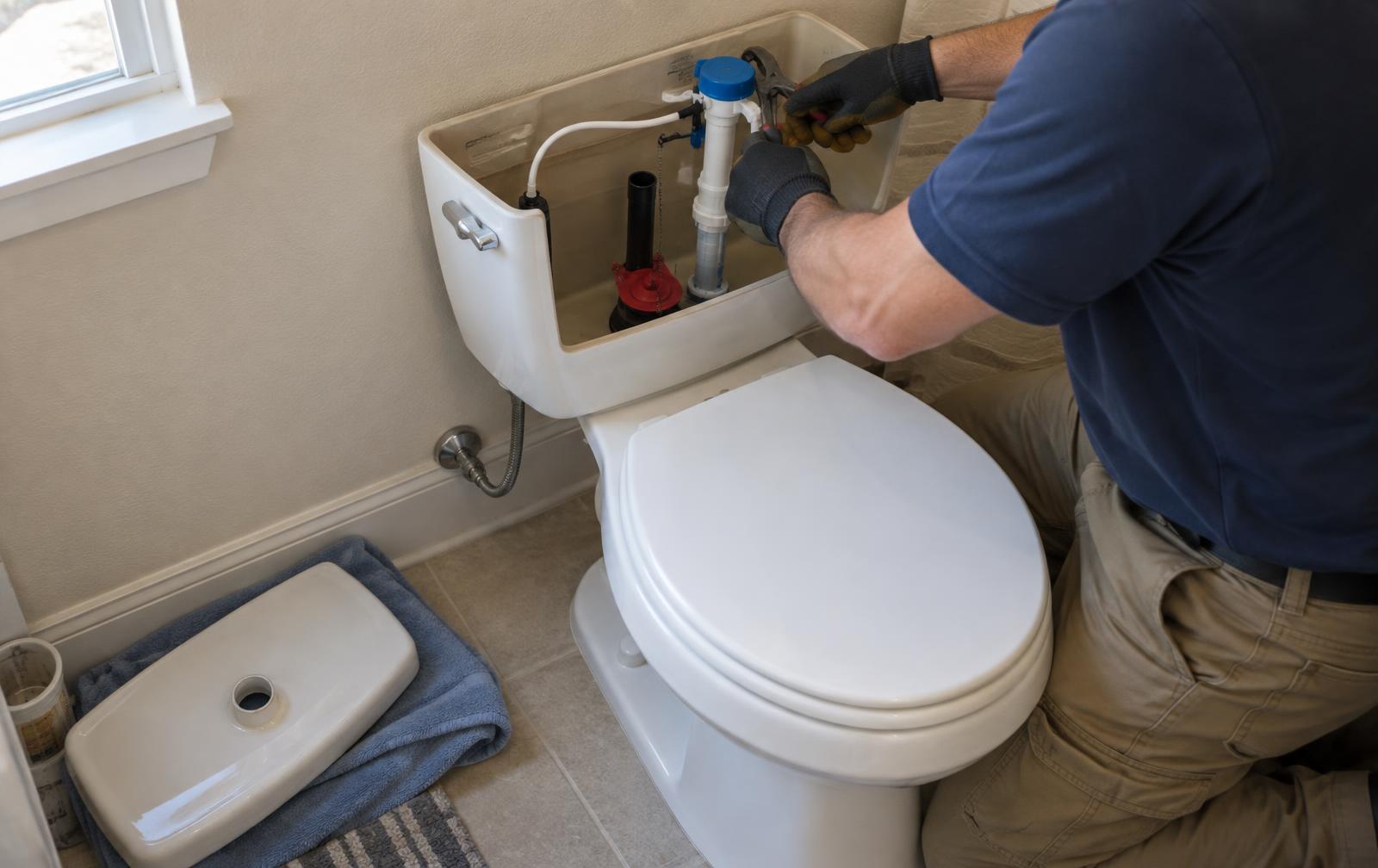
Rebuilds, wax-ring resets, flange repairs, and full replacements — the running toilets and rocking bowls in Lake Dallas homes.
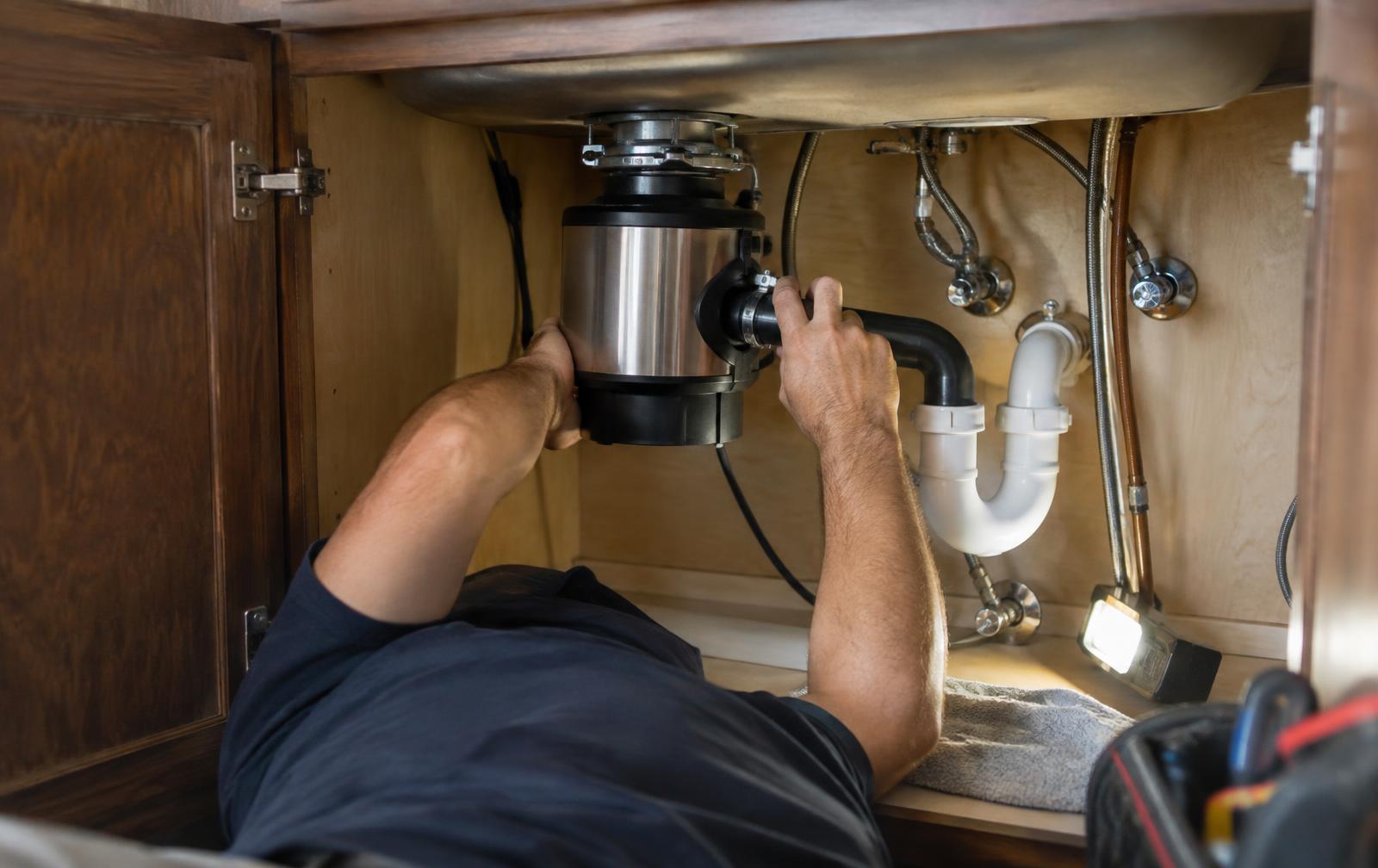
Jam clearing, leaking-unit swaps, and quiet 3/4 HP upgrades for Lake Dallas kitchens — same-visit install.
Something Leaking Inside Your Lake Dallas Home?
We locate it without guesswork, document it in writing, and quote the repair honestly. Same-day scheduling, seven days a week.