
Slab Leak Repair in Lake Dallas, TX
One corner of the bathroom floor feels noticeably warmer than the rest. There's a damp patch on the tile that nobody caused. Your utility bill went up and you can't point to why. Before anything gets torn open, we map where the trouble actually lives under a Lake Dallas home, then talk you through whether a small patch or a full overhead bypass makes more sense for that particular house.
The Real Question Is Patch-and-Cap or Bypass Overhead
This part of Denton County has been a lake town since 1852, with two main waves of building — one after the railroad reached town in 1881, another once the old reservoir got expanded into today's Lewisville Lake in the mid-1950s. Houses standing from either of those stretches are candidates for copper that's now well past middle age, and copper buried in concrete that long has usually earned at least one weak point somewhere along its run.
Sitting right on the shoreline changes the read, too. Ground near the water table holds moisture that an inland lot wouldn't, and that extra dampness can throw off a straightforward thermal scan if we don't factor it in ahead of time. A shoreline job gets a different starting assumption than one three miles inland toward the highway.
None of that answers the bigger question, though: patch the one bad spot in the concrete, or give up on that stretch of pipe entirely and run a fresh line through the attic instead. We put a real number next to each option before deciding anything for you.

What a Slab Leak Looks Like Around a Lake Dallas House
Slab leaks stay hidden for a while. The earlier you notice, the smaller the fix ends up being.
Walk the house in bare feet before the AC or heat kicks on for the day. A spot that feels distinctly warmer than the surrounding tile or wood almost always sits above a leaking hot line.
Slab leaks can waste a surprising amount of water day after day without a drop ever reaching a visible surface. An unexplained jump in your bill deserves a look underneath before anything else.
When hot water keeps escaping under the floor, the heater fires more often trying to keep the tank at temperature. A closet that runs warmer than usual, or a heater you hear kick on constantly, is a clue.
Moisture trapped under flooring for weeks eventually pushes grout apart and curls hardwood at the seams. By the time you see this, the leak has likely been running a while.
Shut off every fixture, stand near the floor or an interior wall, and just listen for a minute. A faint, steady sound usually means pressurized water moving somewhere it isn't supposed to.
If hot water pressure fades faster than it used to, while cold pressure stays normal, that imbalance points toward a leaking hot-side line rather than a whole-house pressure problem.
Find It First, Argue for a Fix Second
Concrete stays closed until we can point to the exact spot and explain why opening it there makes sense.
- 1Split hot from cold at the heater
We pressure-test both supply lines separately right at the water heater. That single test tells us which side is losing pressure and narrows everything that follows.
- 2Sweep for sound and heat
A listening disk moved slowly across the floor, paired with a thermal reading on nearby walls, usually brackets the leak to roughly a square foot of floor space. Near the shoreline we allow for the ground's natural dampness before trusting that reading blindly.
- 3Talk through both fixes, plainly
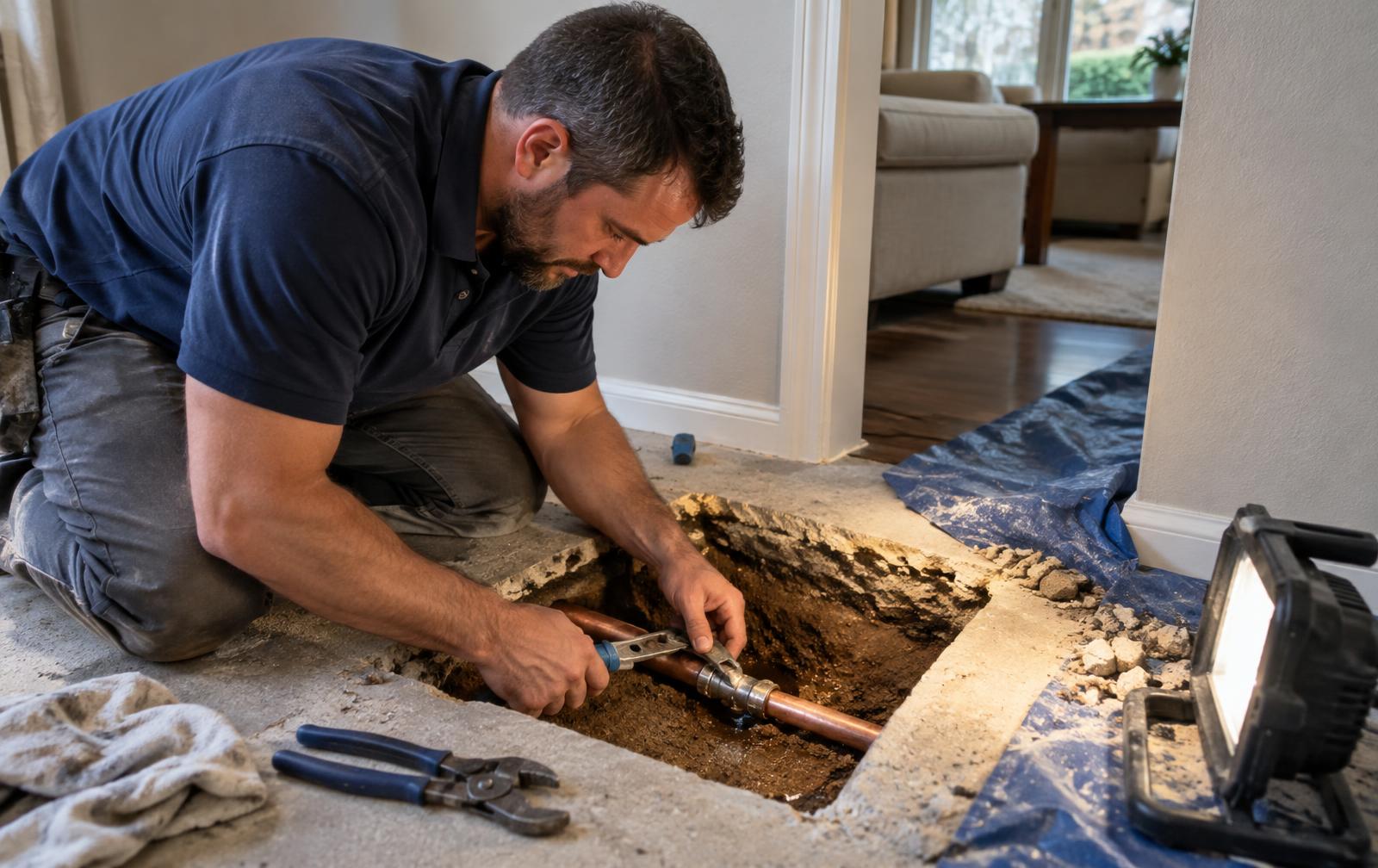
Cutting a small window in the concrete to splice the bad section is often the cheaper move if the rest of that copper run still looks healthy. Bypassing the whole run with a new line through the attic tends to make more sense when the pipe age is uniform and more trouble is probably coming.
- 4Carry out whichever one you choose
Going the concrete route, we open just enough floor to reach the bad section, tie in a proper fitting, and close the opening back up. Going overhead, new tubing runs through the attic space, ties into the plumbing above the fixtures, and the old buried section gets capped off and left alone.
- 5Prove the fix holds
The finished line gets held under test pressure while you watch the gauge yourself, and you keep photos from before and after so there's a clear paper trail of what changed.
Two Ways Forward, Both Quoted Up Front
Which one fits depends on how old the copper is, how many bathrooms tie into that particular run, and how much finished floor sits above it.
A small opening in the slab exposes the failed section, a proper splice goes in, and the opening closes back up. Works well when this looks like an isolated failure rather than a symptom of the whole line aging out.
- Usually the lower-cost path for one clear, isolated failure
- Leaves the original supply routing exactly as it was
- Restoring the finish flooring over the patch is a separate line item for your flooring crew
- Not the best pick if the rest of that copper run is the same vintage
Instead of touching the concrete, a fresh line goes in through the attic and connects above the fixtures it feeds, and the old buried section simply gets abandoned in place.
- Removes the possibility of cutting that same line again later
- Sidesteps buried copper you can never fully inspect once it's under concrete
- On homes with limited attic access, a soffit run is often available instead
- Costs more going in but tends to save money over years of ownership
Where Slab Leaks Turn Up Around Lake Dallas
Build era and how close a lot sits to the shoreline both shape what we expect to find.
Structures dating to the earlier building waves — post-1881 and again post-1955 — carry the highest odds of original slab-run copper, and pipe that old is the profile most likely to develop a pinhole somewhere along its length.
Build years here run the gamut across this single-family stretch, so we test hot against cold at the heater on every visit instead of assuming an age based on the area's reputation for lake views.
There's no reliable build-year record for this subdivision in what we've reviewed, so every job here starts by simply asking the homeowner rather than guessing at the plumbing underneath.
Lots right against the shoreline sit on lower ground with more ambient moisture, which we account for before trusting a thermal scan at face value on those addresses.
Decades of construction sit side by side along this stretch, so each house gets judged on its own rather than by what's built next door.
Construction closer to this corridor tends to run newer, meaning PEX rather than slab-run copper is more often what we find, which points the likely cause toward a fitting instead of pipe age.
What Lake Dallas Homeowners Say

A Fix Sized to the House, Not a Default Answer
Labor on every slab repair we perform is warrantied. If our own work is the reason a fix fails, we return and make it right. If a separate leak turns up elsewhere on the same aging copper down the road, that's the exact scenario we flagged when we first quoted the reroute option.
We carry a Texas State Board of Plumbing Examiners license, insurance, and family ownership, and every truck runs from our shop address in The Colony. Same-day scheduling applies to active slab leaks, seven days a week.
Straight Answers, No Sales Pitch
Our Other Plumbing Services in Lake Dallas, TX
A slab leak is usually a sign that the rest of the supply system is getting up there in age too. We handle sewer, water heater, and full re-pipe work as well, in one local visit around Lake Dallas.
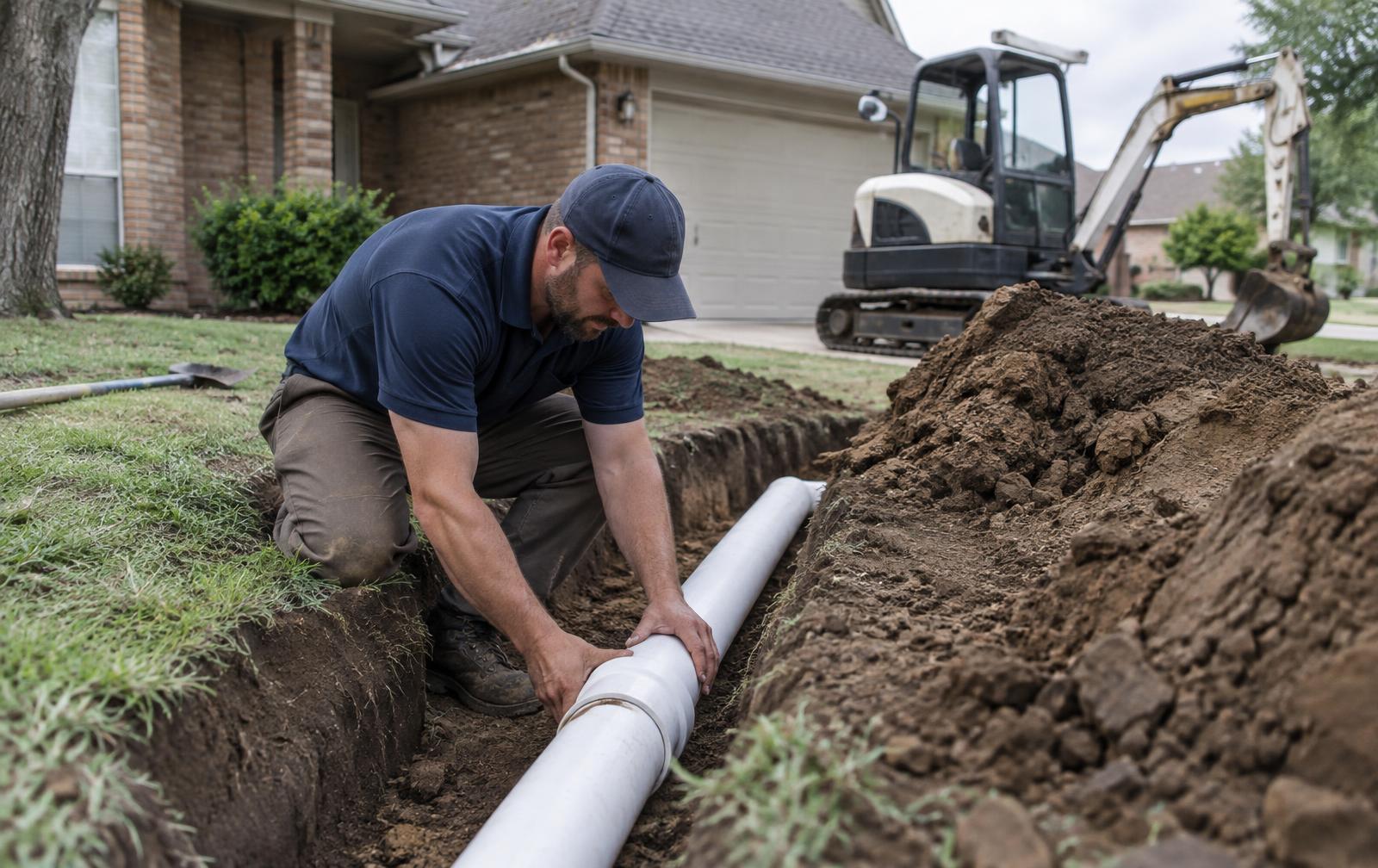
Trenchless replacement for the aging laterals across Lake Dallas's older runs — camera first, quote in writing, minimal yard damage.
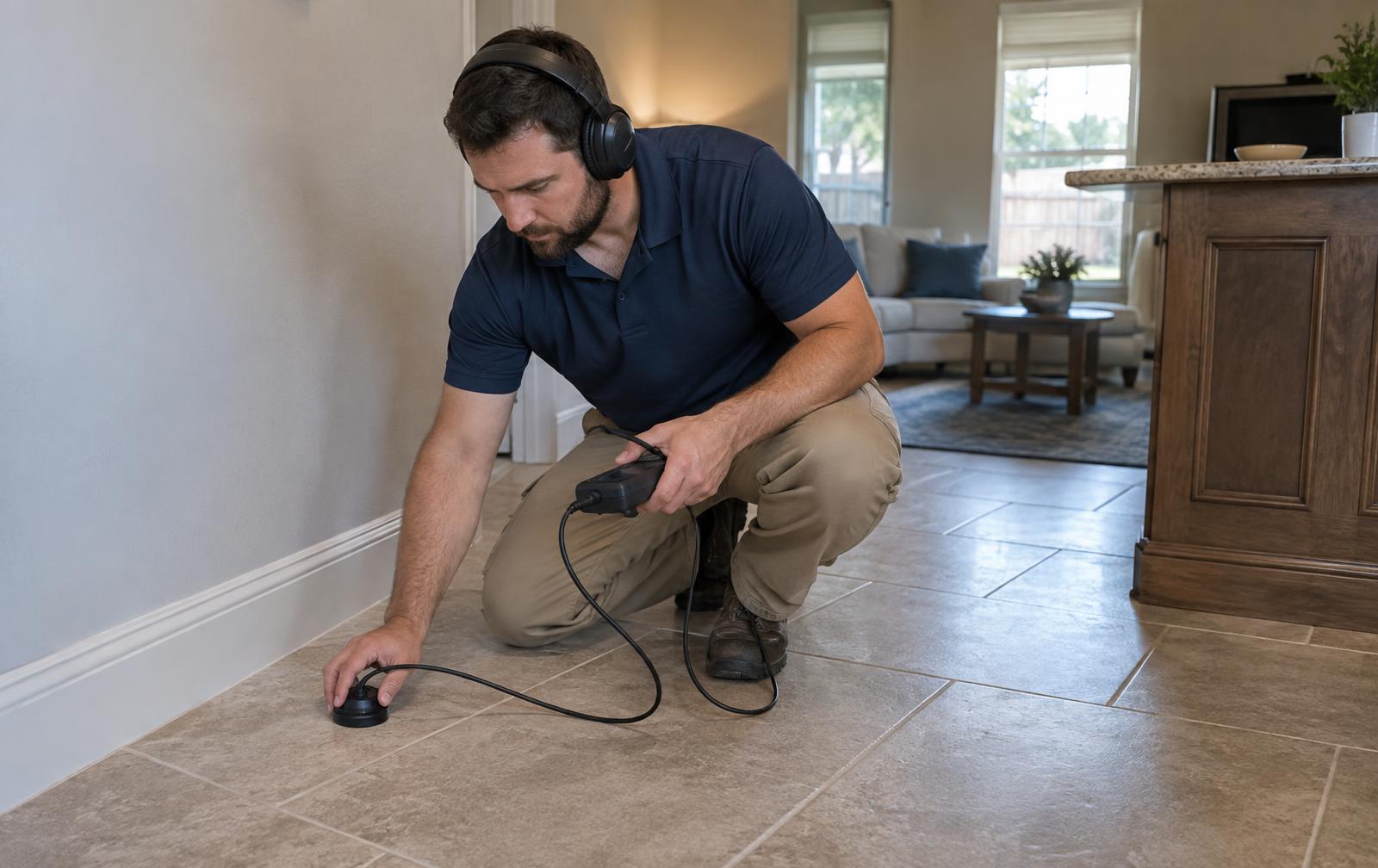
Acoustic, thermal, and pressure testing to pinpoint hidden leaks in Lake Dallas slab and wall lines without tearing into finishes.

Licensed install, repair, and pressure-testing for Lake Dallas homes — every line signed off to Texas code and Atmos requirements.
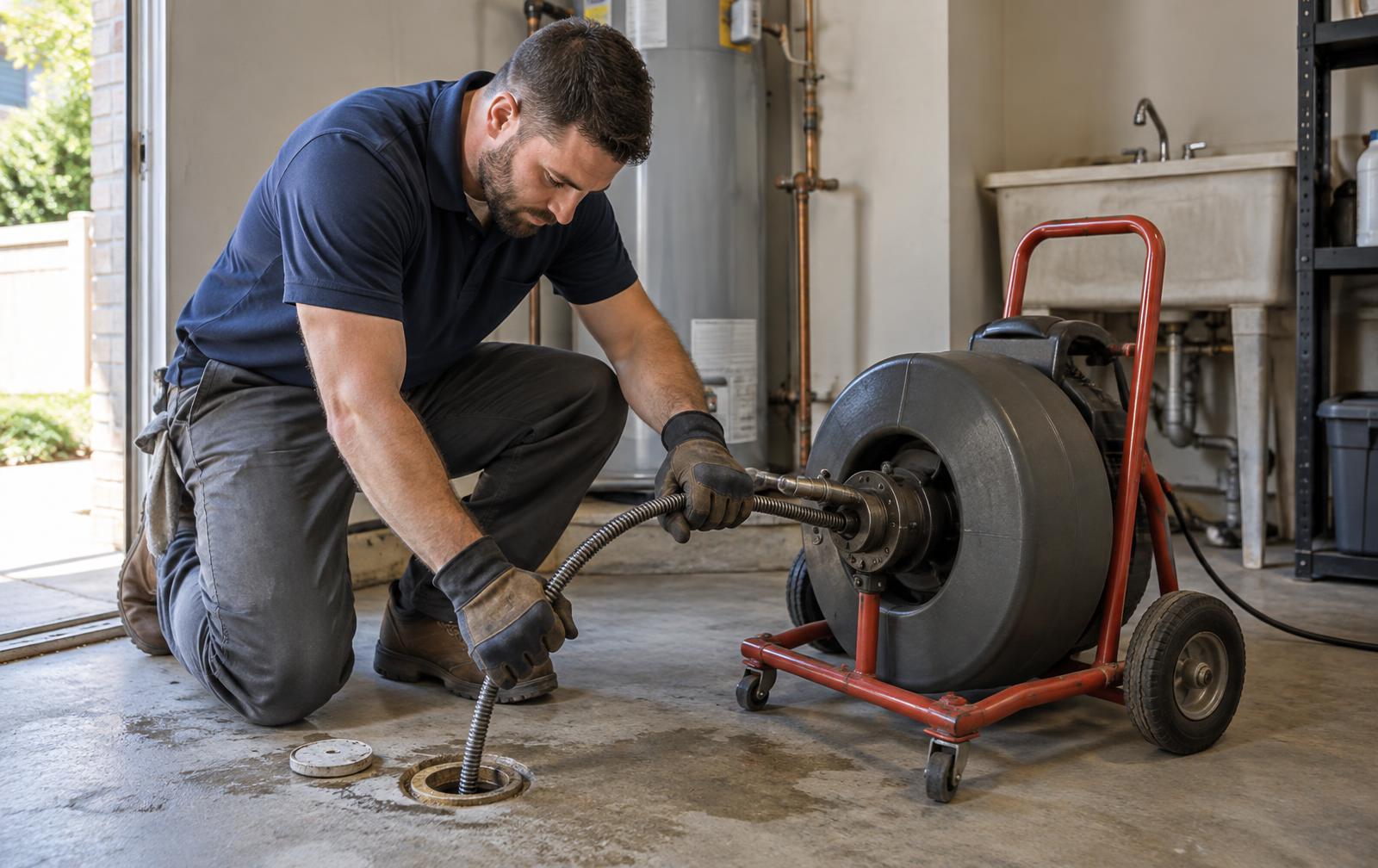
Full-clear service and camera confirmation for the drains under Lake Dallas's neighborhoods.
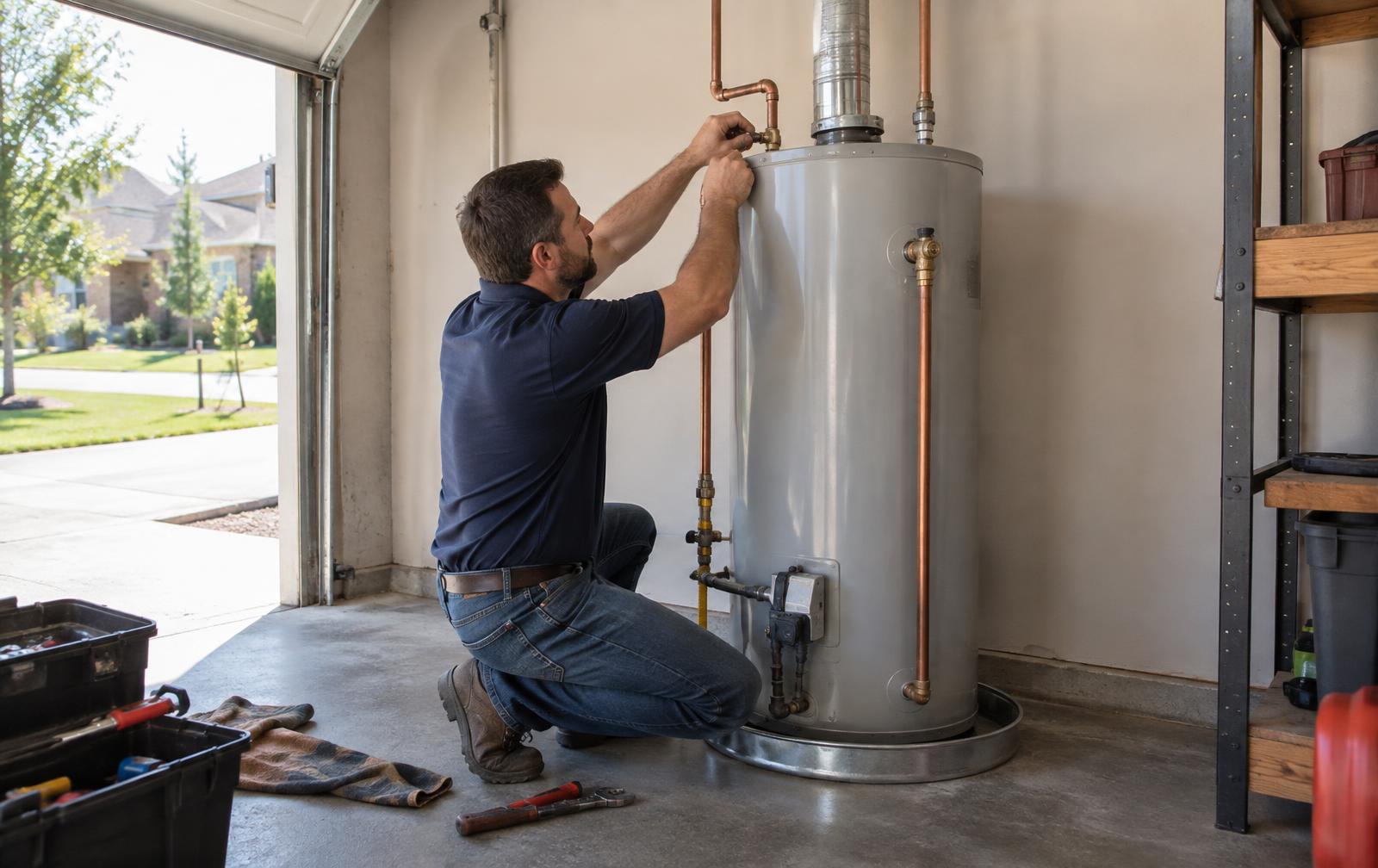
Repair, flush, and replacement of tank units — including attic and garage heaters common to Lake Dallas homes.
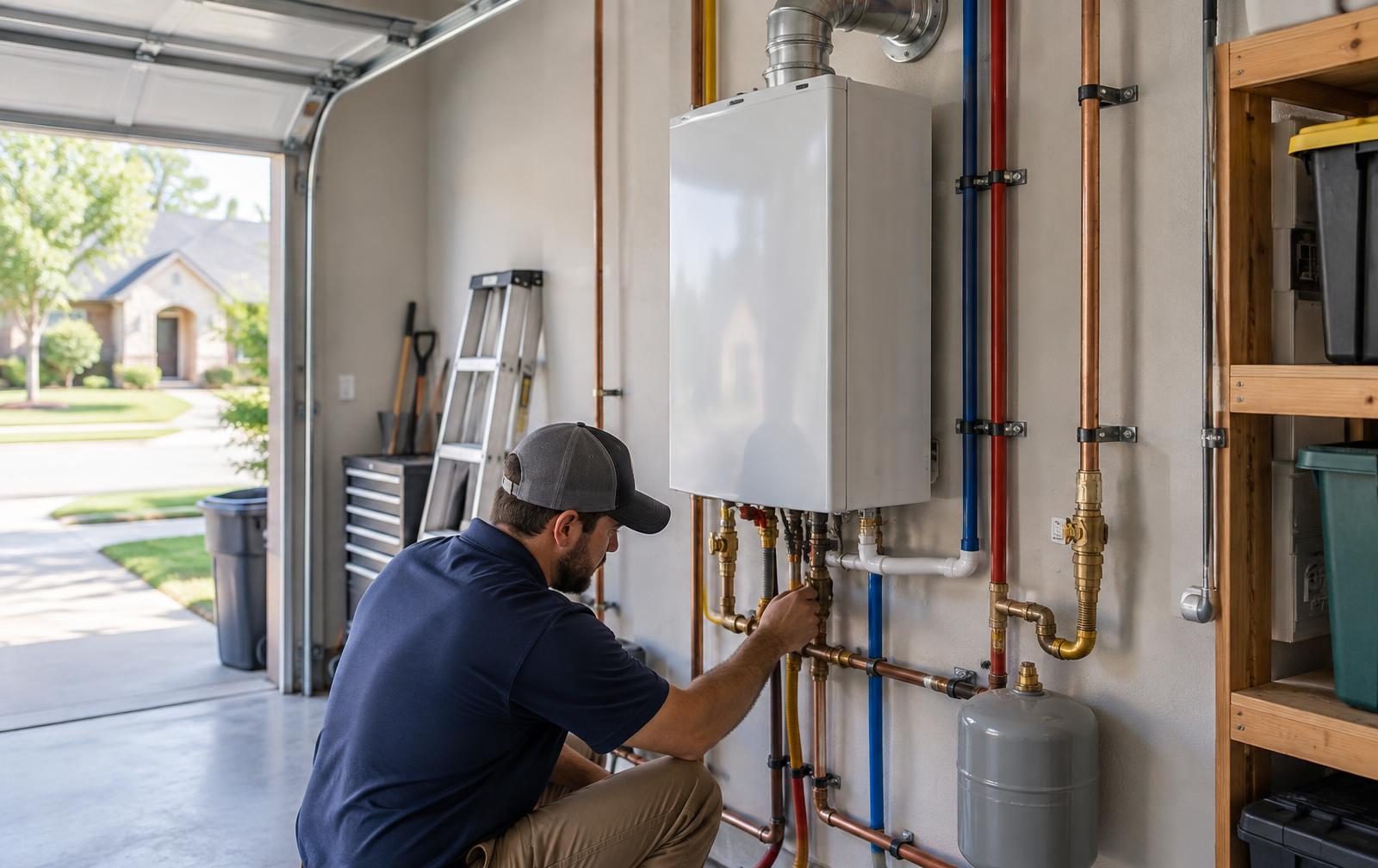
Install, service, and annual descaling — Lake Dallas's hard tap water eats tankless heat exchangers without it.
same-day, 7 days a week response across Lake Dallas for burst pipes, heater failures, and main-line backups.
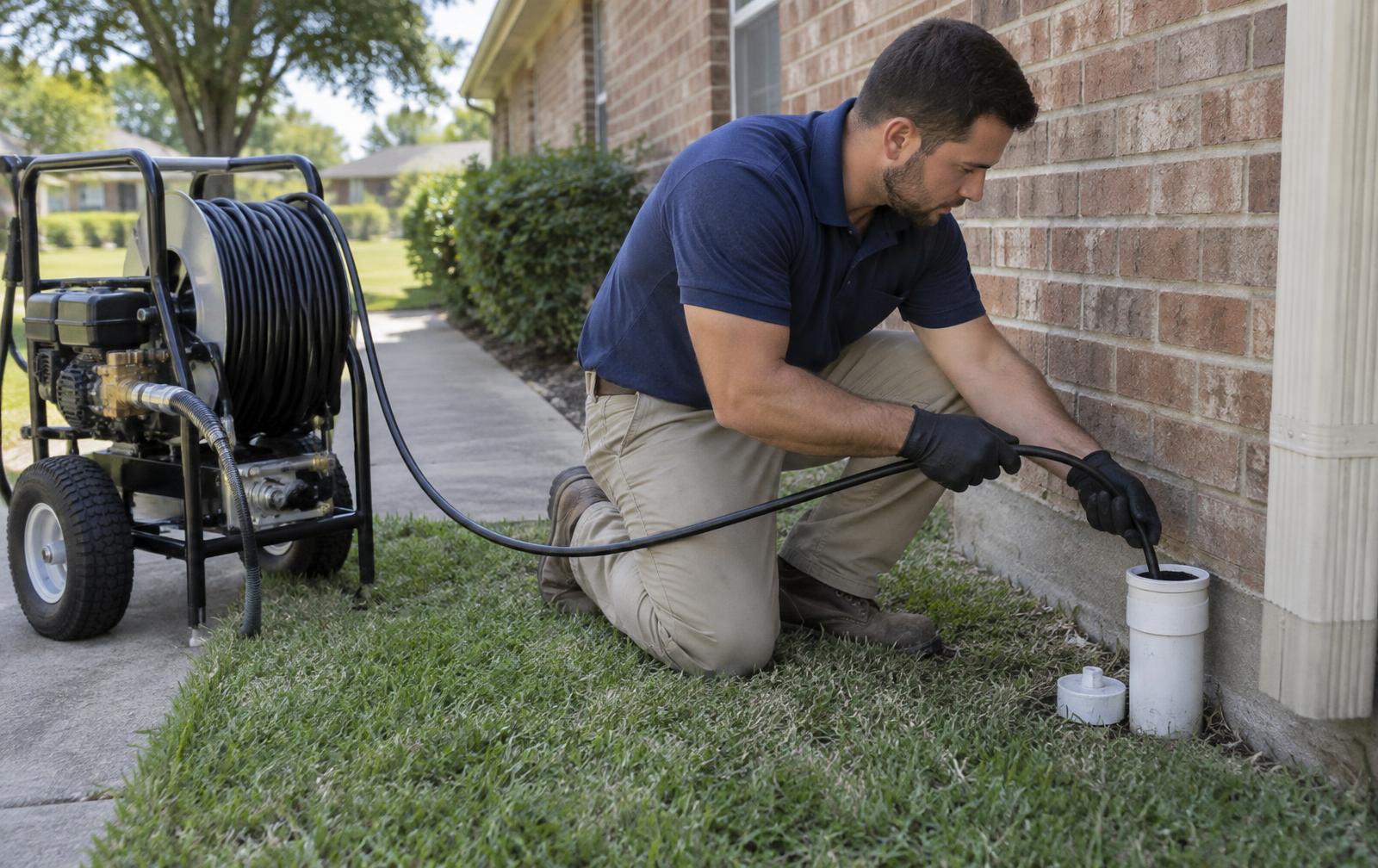
High-pressure cleaning that clears scale, grease, and roots from Lake Dallas's lateral runs — full-diameter, lasting clean.
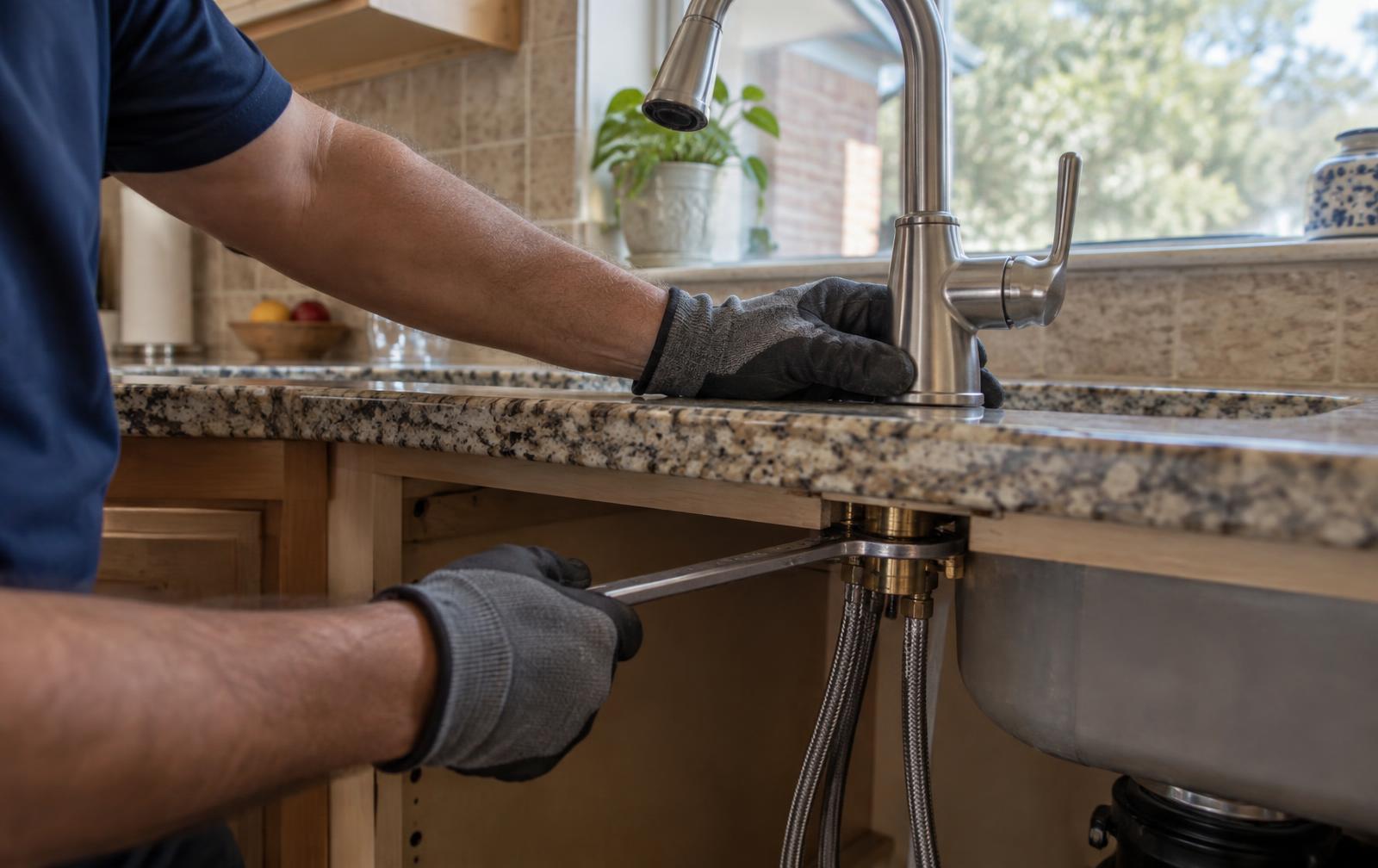
Cartridge, stem, and full-fixture replacement for Lake Dallas kitchens and bathrooms — hard-water-ready parts stocked on the truck.
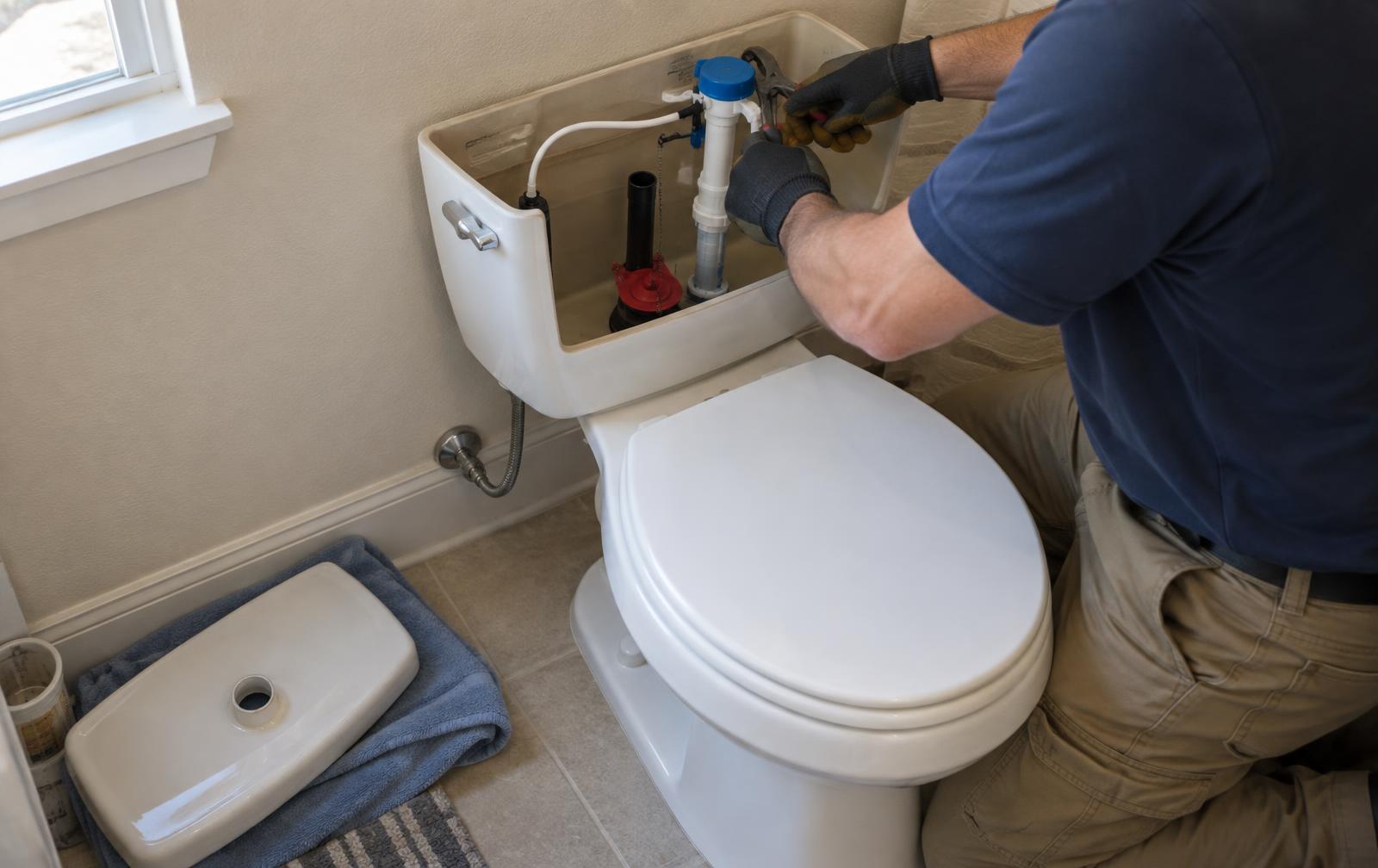
Rebuilds, wax-ring resets, flange repairs, and full replacements — the running toilets and rocking bowls in Lake Dallas homes.
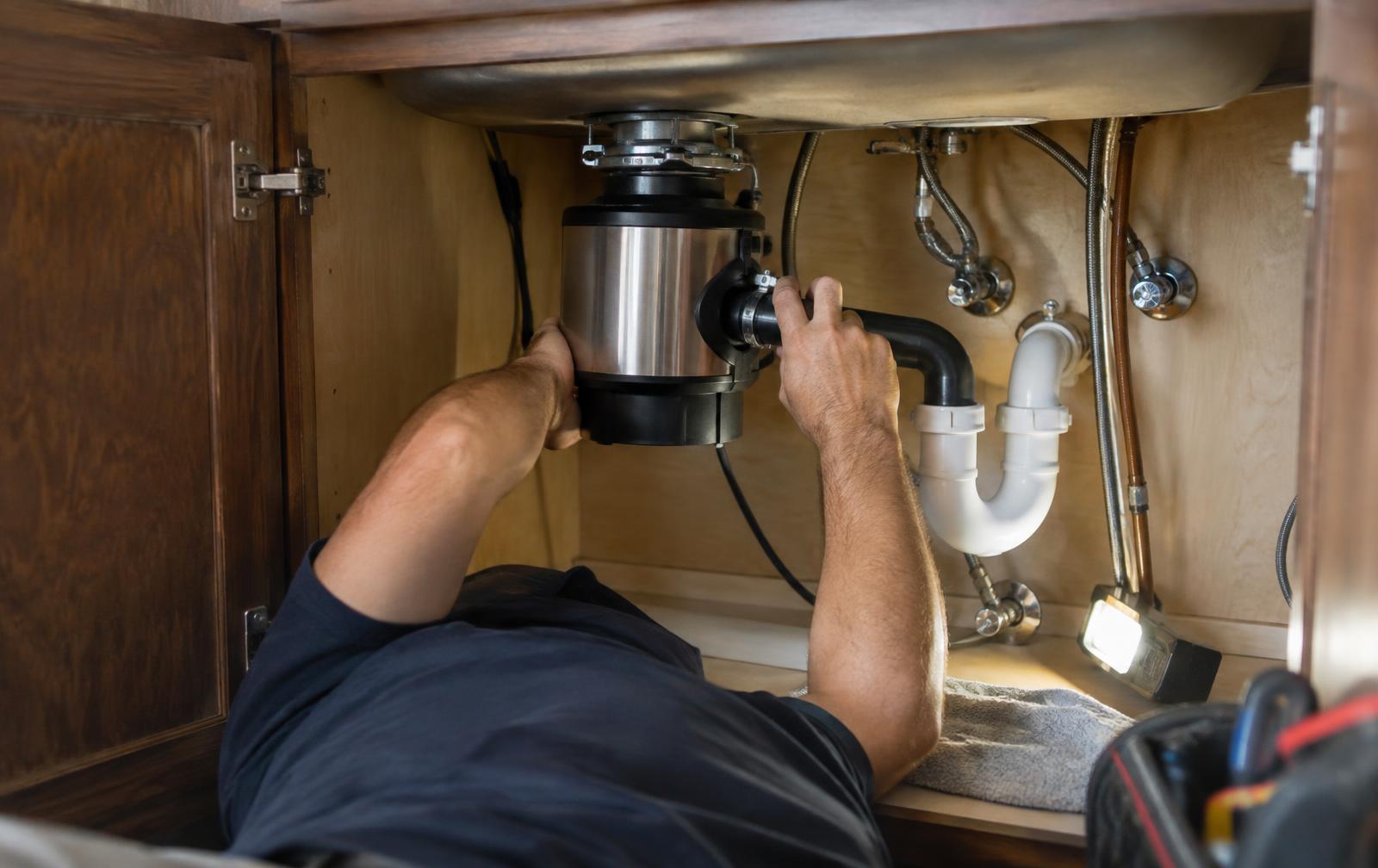
Jam clearing, leaking-unit swaps, and quiet 3/4 HP upgrades for Lake Dallas kitchens — same-visit install.
Dealing With a Slab Leak in Lake Dallas?
Electronic detection, a plain comparison of patch versus reroute, and no concrete cut until we're sure exactly where the leak is.