
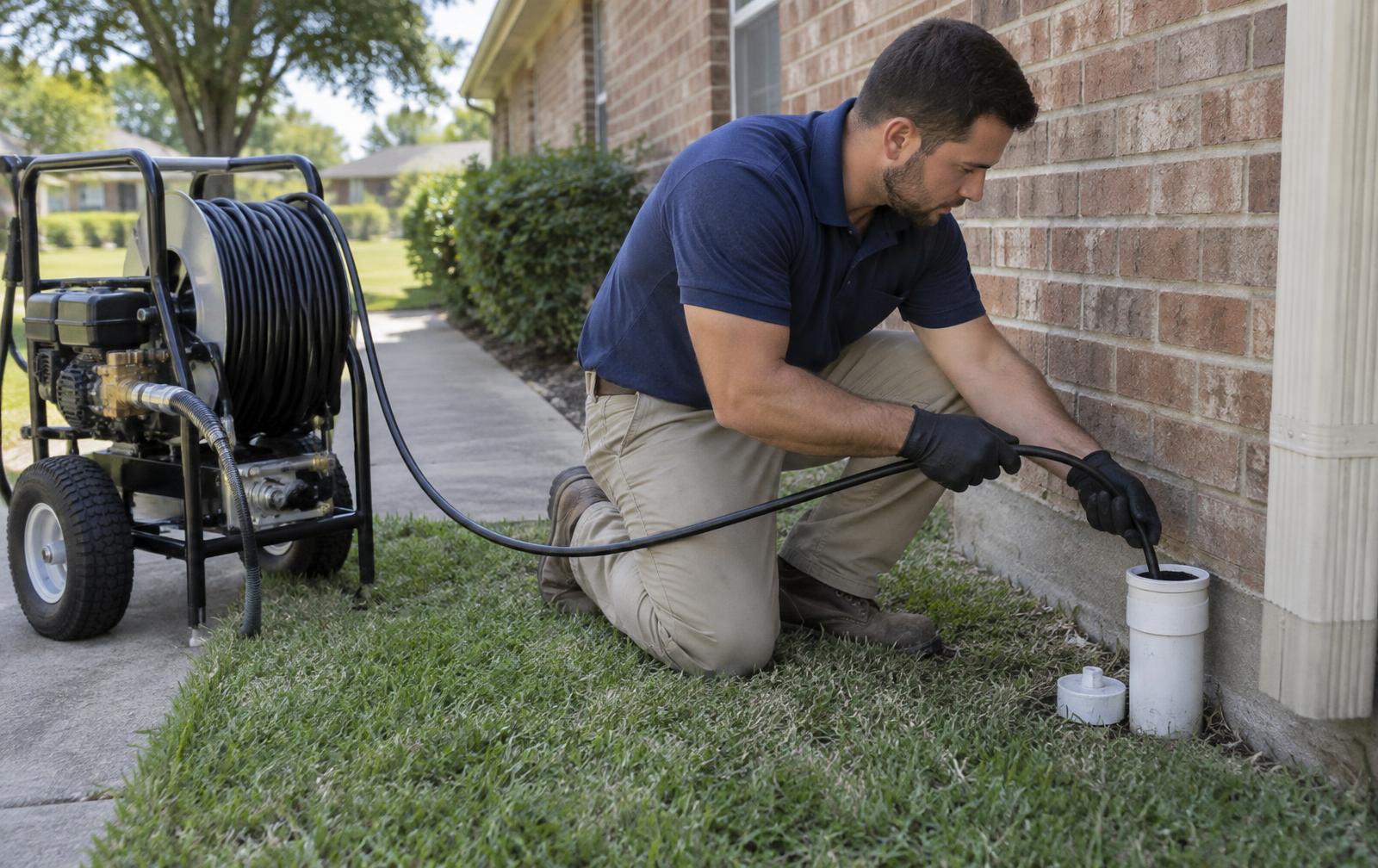
Hydro Jetting in Lake Dallas, TX
You cabled it, and it slowed down again anyway. The scope showed buildup lining the whole run, not just one blockage. For homes on Lake Dallas's older sewer lines, that pattern usually means the pipe needs a real scrub, not another pass with a blade.
Two Tools, Two Very Different Results
Think of a cable as a drill — it bores a path through whatever is in its way and calls it done. A jetter behaves more like a pressure washer aimed sideways: water at roughly 3,500 to 4,000 pounds per square inch shoots outward from a nozzle as it is dragged back through the pipe, stripping the entire circumference clean rather than leaving a tunnel through the middle of the blockage.
That gap between the two methods shows up constantly on Lake Dallas's older laterals, where a cast iron line that has had decades to scale up on the inside can lose real usable width. Iron pipe loses usable width from the inside as mineral deposits build up year after year, so a line that started at four inches across can effectively act like something closer to two and a half. Punching a hole through that buildup gets water flowing again for a while; stripping the buildup off entirely is what actually gives the pipe its width back.
We reach for a jetter most often on older cast iron runs, wherever they turn up, on lots where roots have worked into the joints and a blade risks cutting through pipe rather than roots, and on shared lines beneath older duplex-style construction where grease keeps returning. A scope before we start and another after tells you plainly whether the job actually changed anything.

When a Cable Alone Won't Cut It Here
Plenty of everyday clogs respond fine to cabling. These situations tend to call for the stronger tool from the start.
A drain that clogs at the exact same point repeatedly usually has something stuck to the pipe wall that a blade never actually removes. That is the situation jetting is built to solve.
A pipe in good shape looks clean on camera. A textured, coated interior along a long stretch of the line is a sign to scrub the whole surface rather than clear one point.
A cutter chops a root mass apart but tends to leave hair-fine roots behind, which come back within a season. A jetter clears that debris out and slows the regrowth considerably.
If the drain was just cabled and still runs sluggish, the pipe's usable width is probably the real problem, not a single obstruction — jetting addresses that directly.
Households that cook frequently build grease coating on the inside of a line faster than most systems handle gracefully. A jetting visit on a regular interval avoids the surprise backup later.
A cast iron lateral on the older end of the age range can be worth jetting proactively, simply to buy back lost diameter before a complaint ever comes in.
See It, Scrub It the Right Way, Prove It Worked
The equipment settings change based on the pipe in front of us — nothing about jetting is one-size-fits-all.
- 1We look before we do anything else
A scope run through the line first tells us what we are actually dealing with — grease, scale, roots, or a mix — and gives us a baseline picture. It also flags a pipe that is already cracked, which should never be jetted since the pressure would just force debris out through the break.
- 2We pick equipment to match what we saw
Different attachments handle different problems — something that scrapes scale off cast iron is not the same tool as one built to cut through roots or clear solid grease. Pressure gets dialed down on older or more delicate pipe to protect the joints.
- 3We work from the far side back toward you
The hose travels past the clog first, then does its work as it is pulled back out, so loosened material heads toward the access point instead of getting shoved further down the line.
- 4We repeat the pass if the buildup demands it
Thick scale or a heavy root mat sometimes takes a couple of passes with increasingly aggressive nozzles to fully clear. That extra time is part of the quoted job, not billed separately.
- 5We scope it one more time to show you
A closing camera run lets you compare the interior against the opening footage directly. If it turns up a structural crack under all that buildup, we say so and quote a repair — no amount of water pressure fixes a broken pipe.
What Tends to Be Inside the Line, Area by Area
The contents of a Lake Dallas sewer line track closely with when that block was originally built.
This is where the oldest housing stock in town survives, and any cast iron lateral that has been in the ground for decades is the pipe material most prone to internal narrowing over time — exactly what a jetting pass is meant to reverse.
An established area where lines generally show up in reasonable shape already, so jetting visits here lean preventive rather than reactive to a fresh backup.
PVC branch and lateral lines are common in this subdivision and resist internal scaling well, so calls here are more likely about grease than about pipe-wall buildup.
Lots nearest the shoreline sit on lower, historically wetter ground, which is something we factor into the scope pass around a lateral even when the surface complaint looks ordinary.
Recent PVC installation along this corridor rarely needs jetting for scale specifically, so a service call here more often traces back to grease or an isolated root intrusion.
Older infill sits beside newer homes through this stretch, so we ask the property's approximate age before the visit — it tells us whether older cast iron or newer PVC is more likely waiting under the yard.
What Lake Dallas Homeowners Say

Nothing Said, Everything Shown
Every jetting job leaves you with footage from both ends of the visit so the result is something you can actually see, not just take our word for. If the opening scope turns up a broken section of pipe, we stop right there and explain why jetting would only make that particular problem worse.
Aqua Pure Plumbing is licensed by the Texas State Board of Plumbing Examiners, insured, and family-owned, and our trailer-mounted jetting rig runs out of The Colony, reaching most Lake Dallas properties in roughly 15 to 25 minutes under normal traffic — same-day when a backup has already returned after cabling.
Straightforward Jetting Answers
Our Other Plumbing Services in Lake Dallas, TX
Jetting often lands right between a routine cabling and a full pipe replacement. When a scope shows the line itself has failed, we handle that replacement locally too, right here in Lake Dallas.
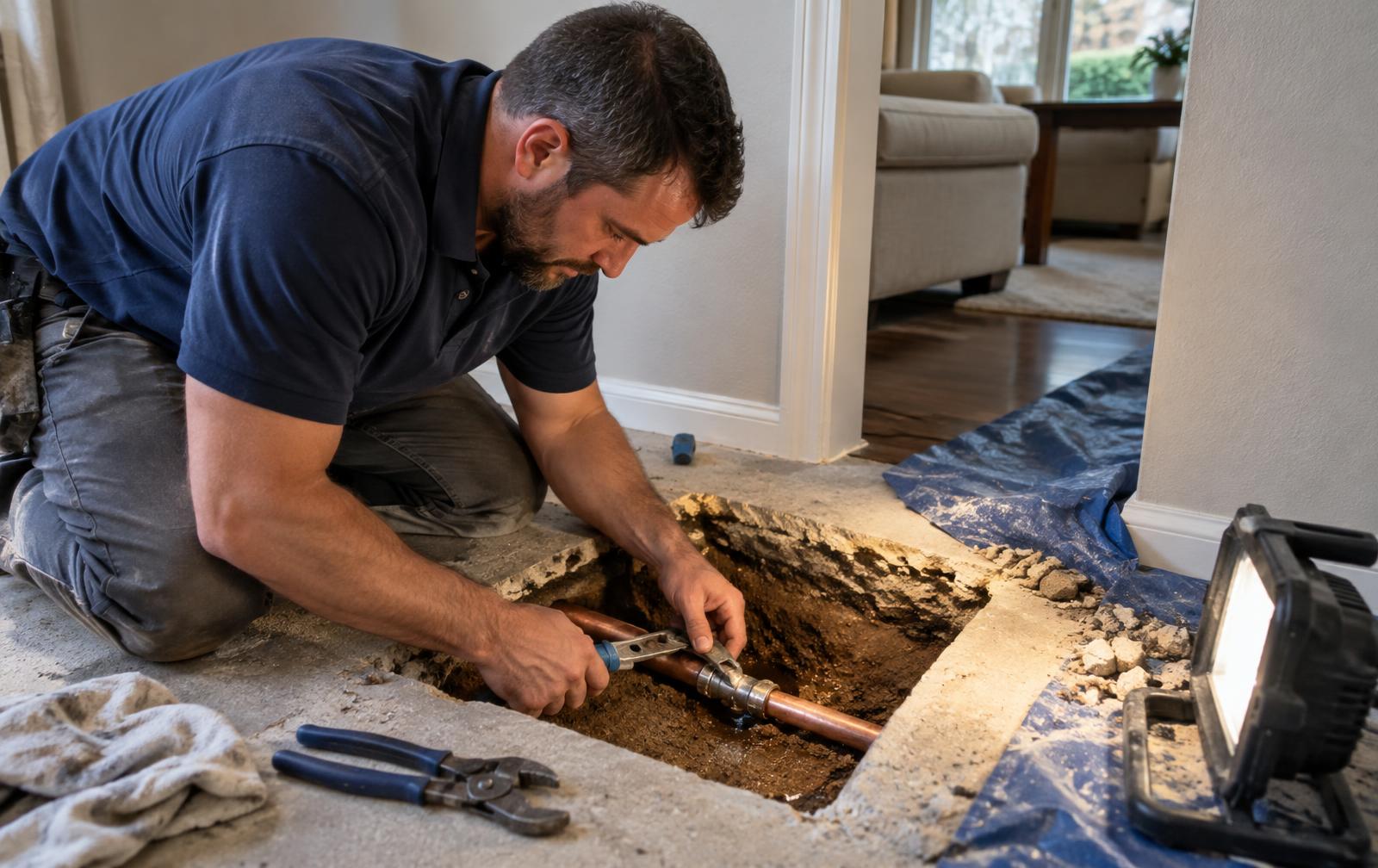
Electronic detection under Lake Dallas slabs — reroute options that save your finished floors when possible.
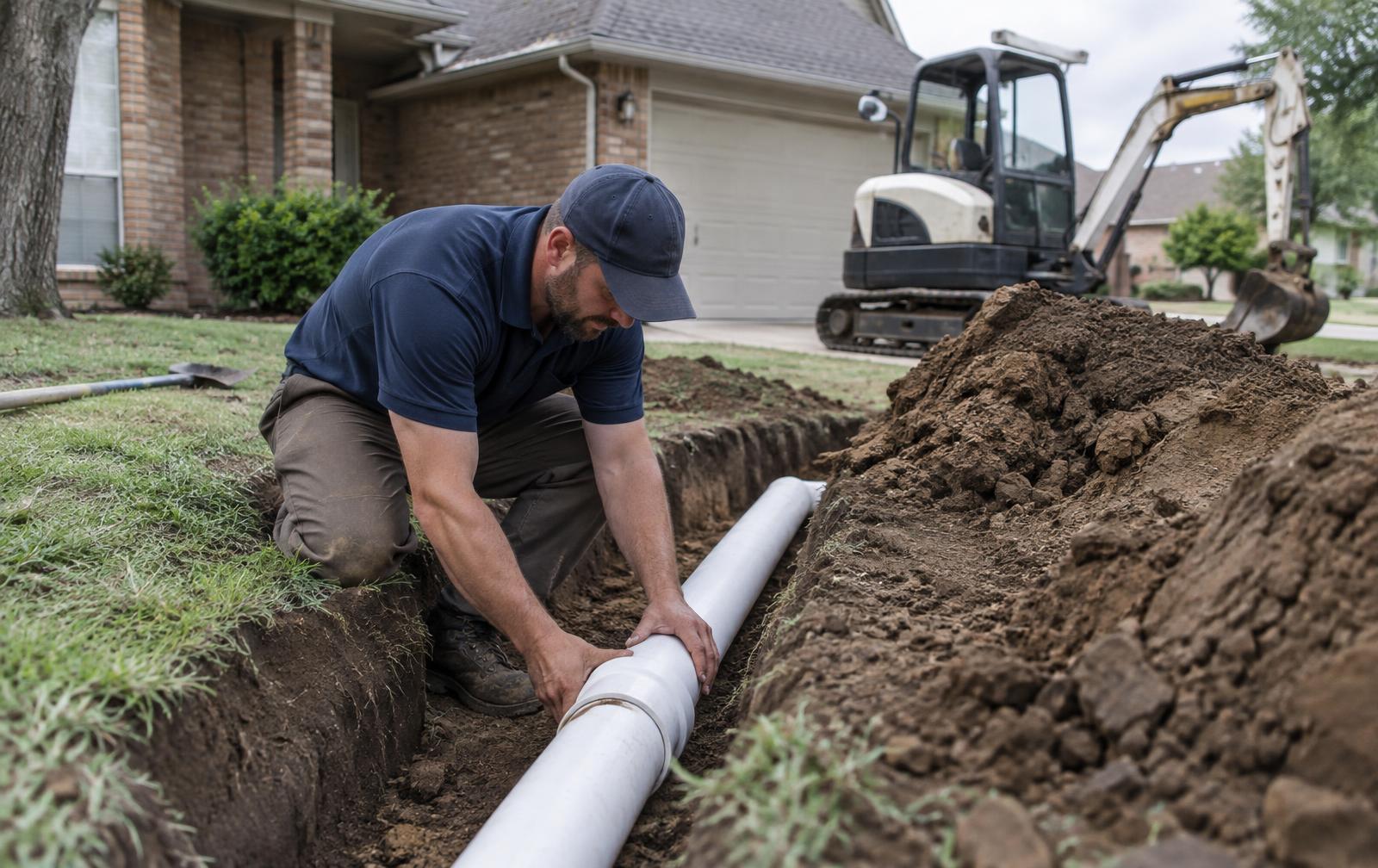
Trenchless replacement for the aging laterals across Lake Dallas's older runs — camera first, quote in writing, minimal yard damage.
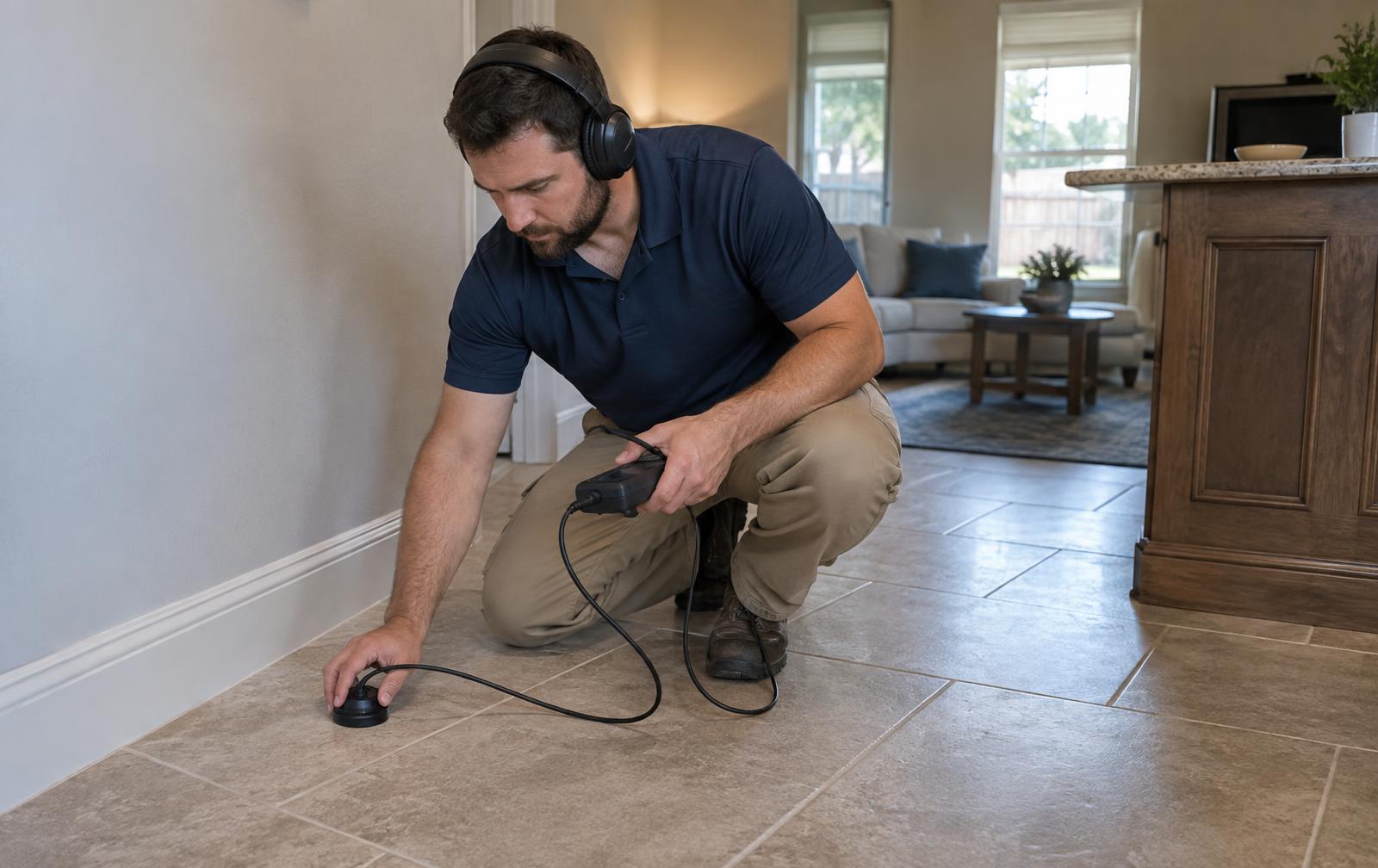
Acoustic, thermal, and pressure testing to pinpoint hidden leaks in Lake Dallas slab and wall lines without tearing into finishes.
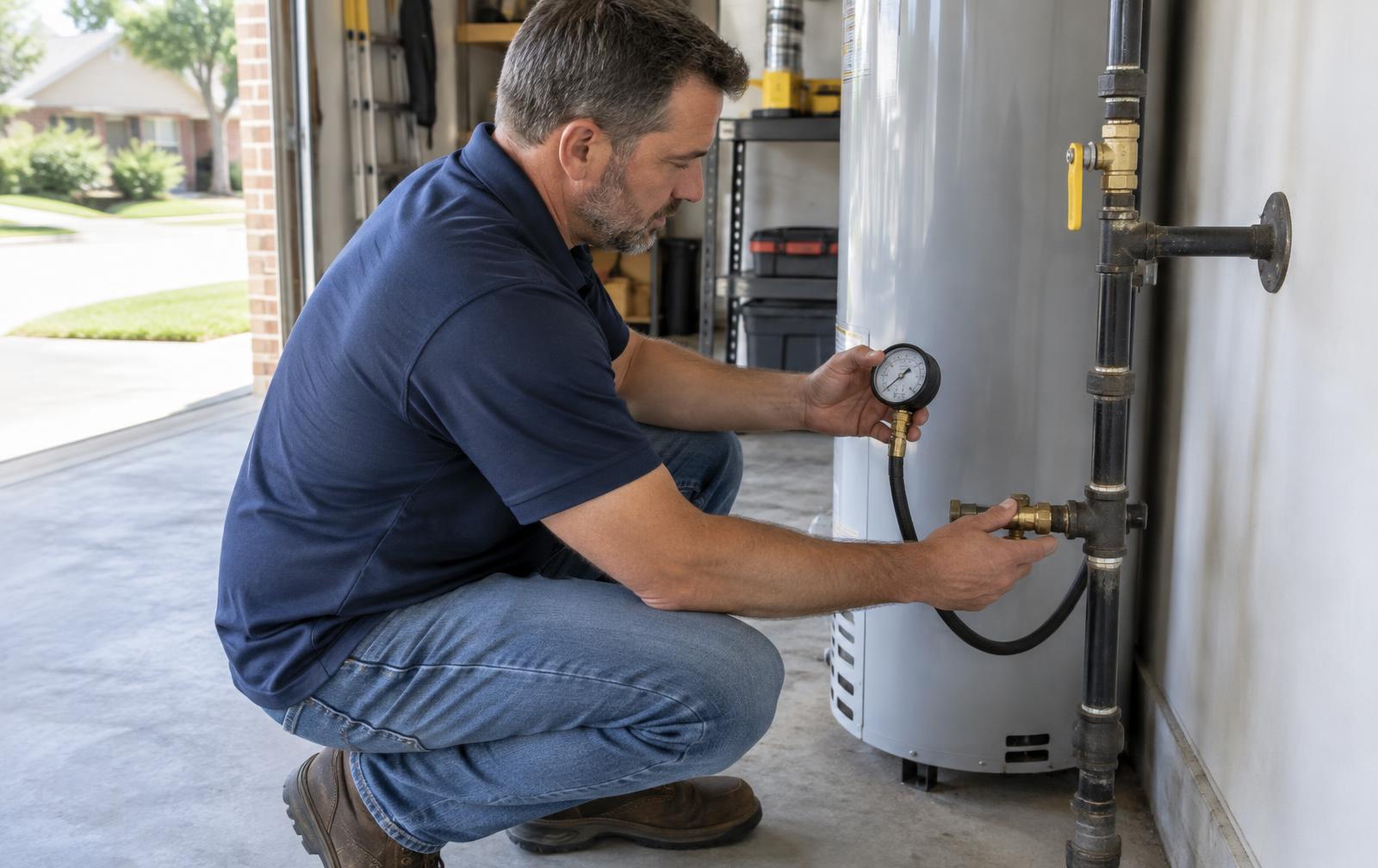
Licensed install, repair, and pressure-testing for Lake Dallas homes — every line signed off to Texas code and Atmos requirements.
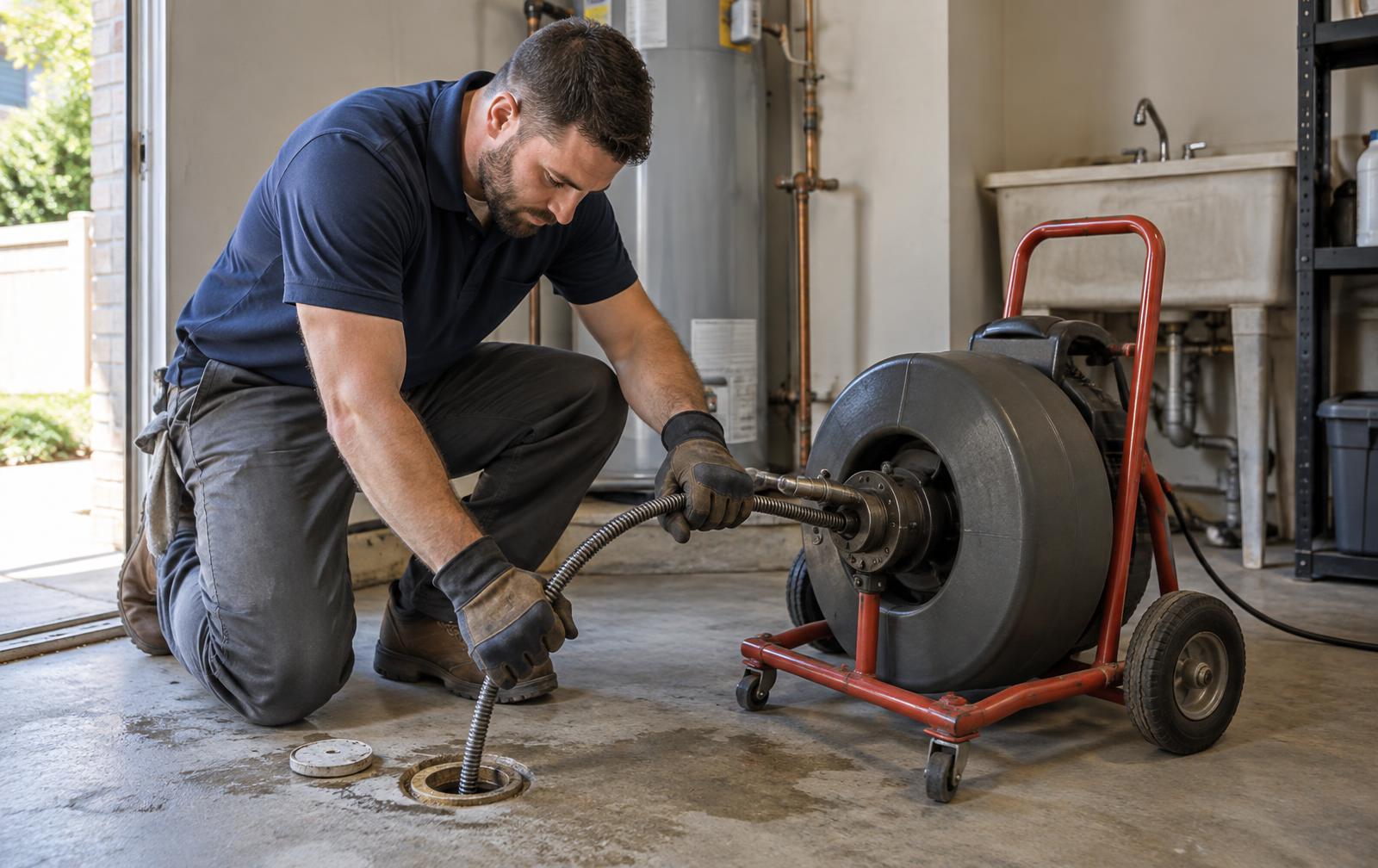
Full-clear service and camera confirmation for the drains under Lake Dallas's neighborhoods.
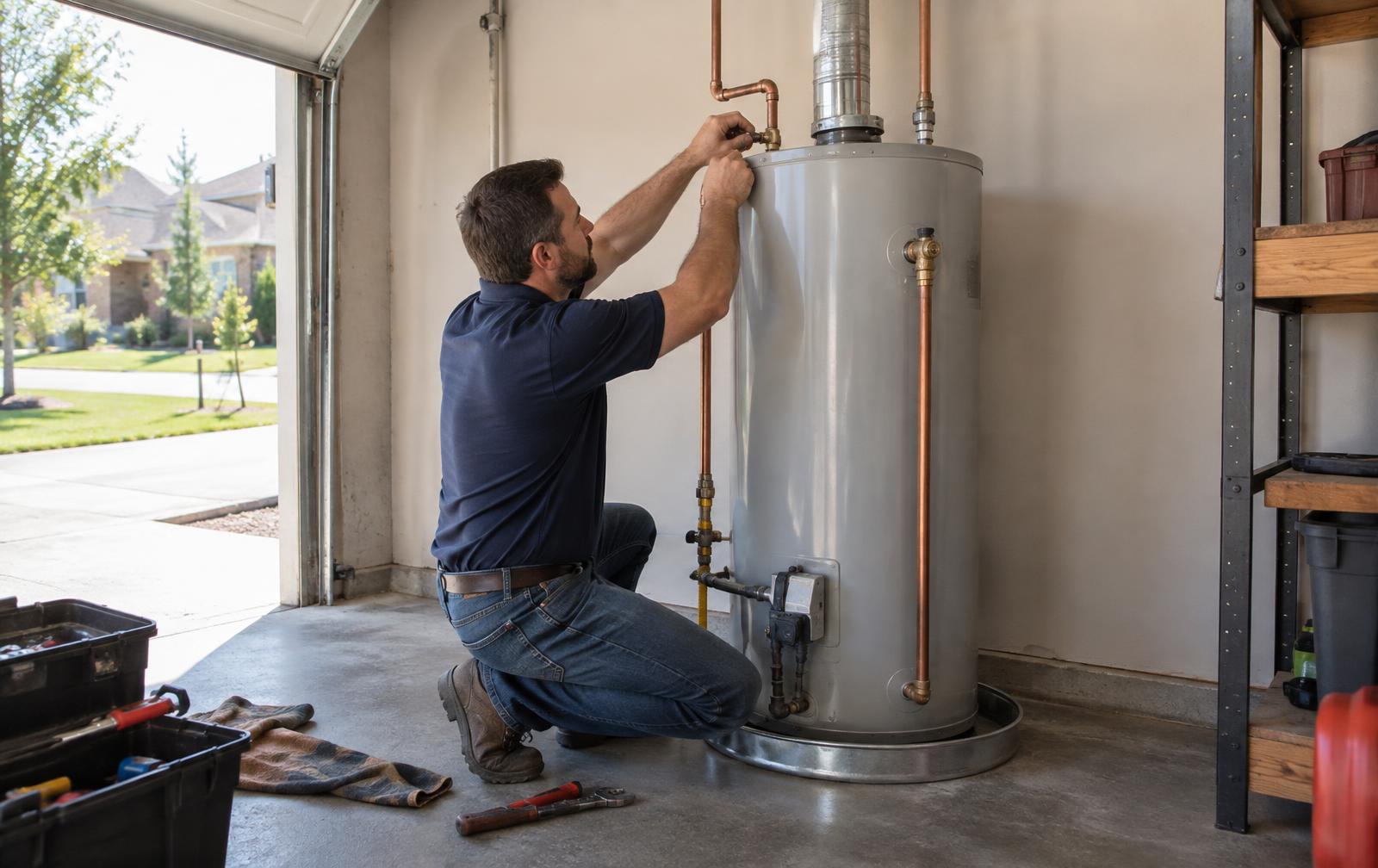
Repair, flush, and replacement of tank units — including attic and garage heaters common to Lake Dallas homes.
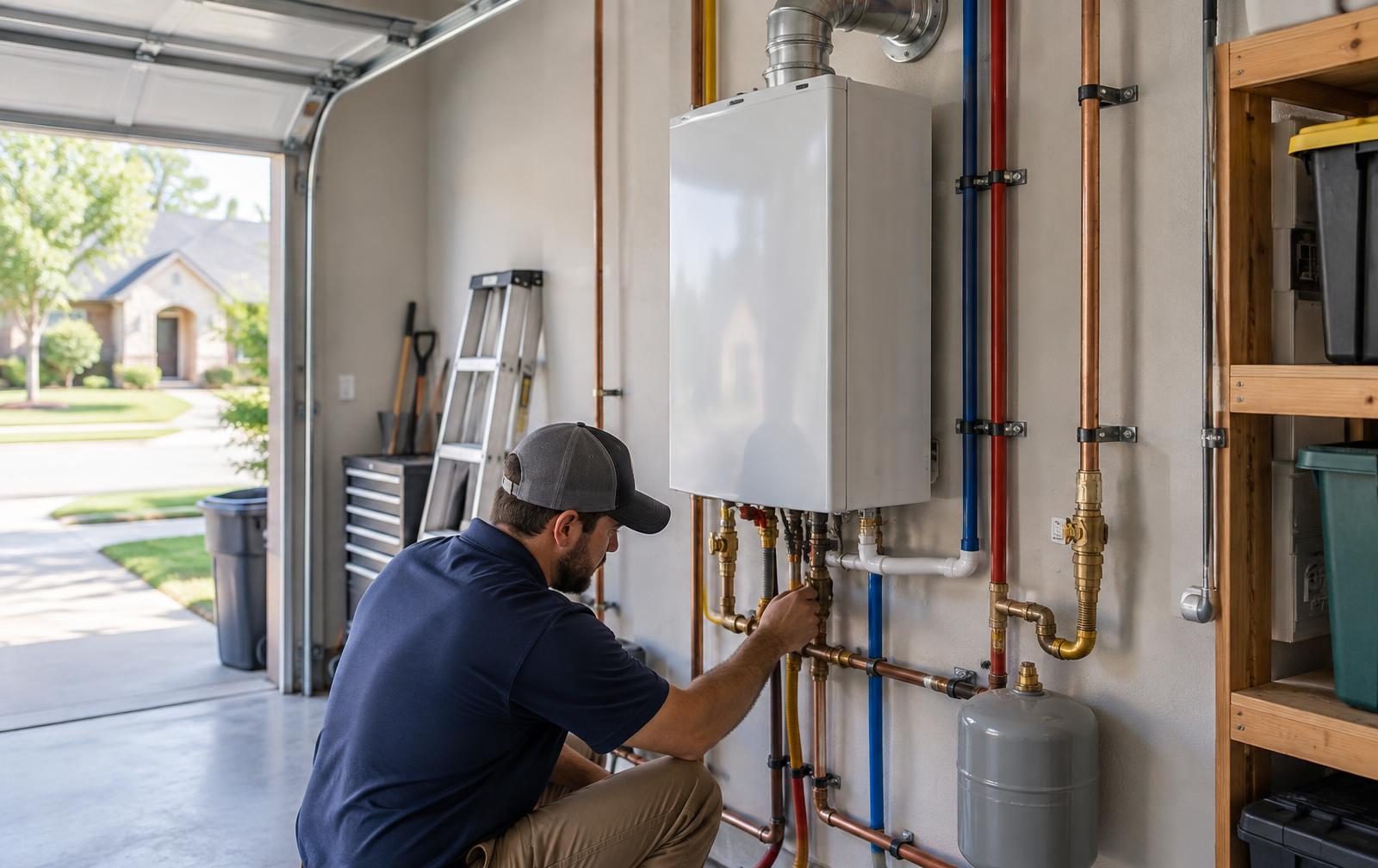
Install, service, and annual descaling — Lake Dallas's hard tap water eats tankless heat exchangers without it.
same-day, 7 days a week response across Lake Dallas for burst pipes, heater failures, and main-line backups.
Cartridge, stem, and full-fixture replacement for Lake Dallas kitchens and bathrooms — hard-water-ready parts stocked on the truck.
Rebuilds, wax-ring resets, flange repairs, and full replacements — the running toilets and rocking bowls in Lake Dallas homes.
Jam clearing, leaking-unit swaps, and quiet 3/4 HP upgrades for Lake Dallas kitchens — same-visit install.
Same Drain Backing Up Again in Lake Dallas?
Full interior scrub, scope footage both ways, warrantied work. Get it scheduled.