
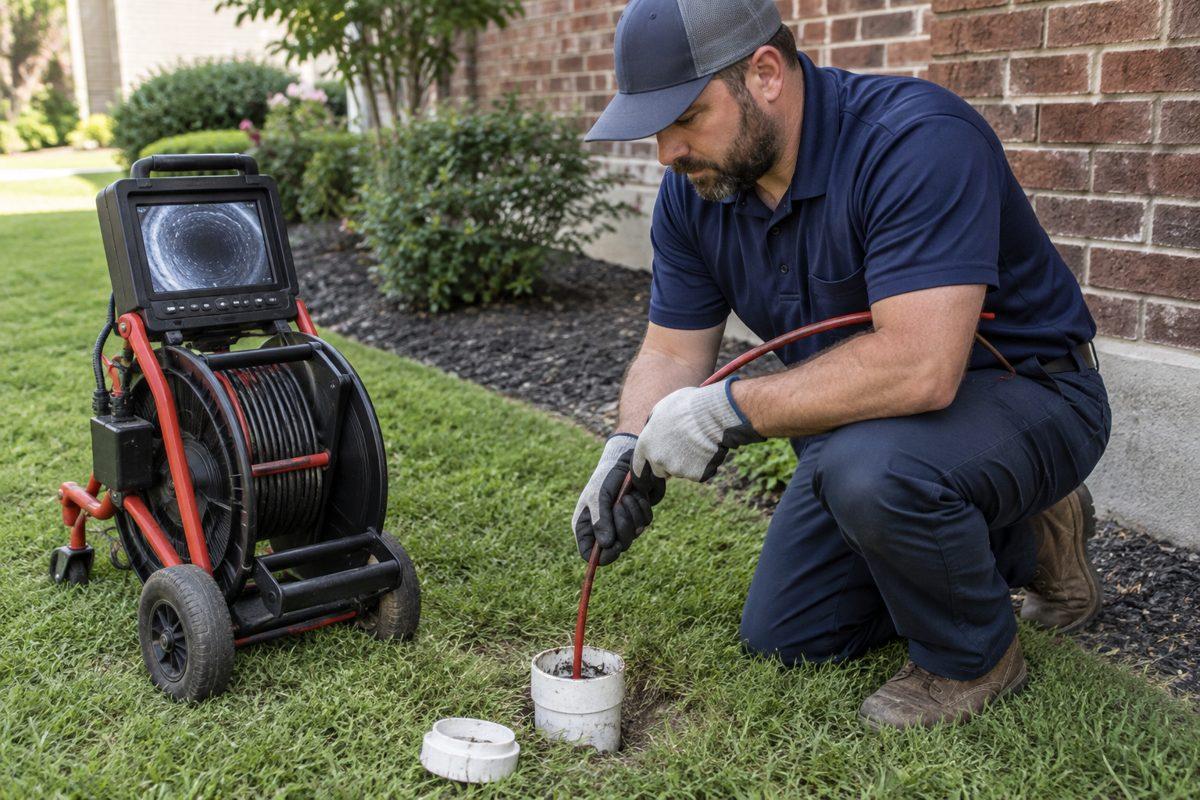
A sewer camera inspection lets you see inside the pipe that carries everything from your home to the city main, without digging up the yard to find out what is wrong. In The Colony, where clay soil shifts with the seasons and mature trees send roots toward any moisture they can find, a camera is often the fastest way to turn a guess into a clear answer. This guide walks through when to schedule one, how the inspection works step by step, what the footage can reveal, and what your options look like afterward.
Dealing with slow drains, gurgling toilets, or a sewer smell you cannot track down?
Key Takeaways
- A sewer camera inspection shows the actual condition of your line, including roots, offset joints, bellies, cracks, scale, and collapsed sections.
- We camera the line first and show you the footage, so every recommendation is based on what you can see for yourself.
- Results lead to one of three paths: cleaning, a spot repair on one failed section, or replacement by digging, tunneling, or trenching.
- Every sewer quote from Aqua Pure Plumbing includes a free camera inspection and an upfront written quote.
When Should You Get a Sewer Camera Inspection?
A camera inspection makes sense any time you suspect the problem is in the main sewer line rather than a single fixture. One clogged sink usually points to that drain. Several drains acting up at once, especially the lowest ones in the house, usually point to the main line.
Common reasons homeowners in The Colony call us for a camera inspection include:
- Backups or slow drains in more than one fixture at the same time.
- Gurgling from toilets or tubs when another fixture drains or the washer empties.
- Sewage odors inside the house or in the yard.
- Soggy, sunken, or unusually green patches of lawn over the sewer path.
- Repeat clogs that come back weeks after being cleared.
- Buying or selling an older home and wanting to know the condition of the line.
If you are unsure whether your symptoms point to the sewer, our guide to the 10 signs your home in The Colony has a sewer line problem is a good place to start.
Older Homes Deserve a Closer Look
Homes built before the mid-1980s often still have their original cast iron or clay tile sewer lines. Cast iron can corrode and build up scale on the inside, while clay tile joints give roots an easy path in. If your home falls in that age range and you have never had the line inspected, a camera is a smart baseline check even before trouble starts.
Soil and Trees Play a Big Role in North Texas
The Colony sits on Blackland Prairie clay soil, which swells when wet and shrinks when dry. That repeated movement can shift pipe sections out of alignment over time. Add live oak, pecan, and crape myrtle roots searching for water, and it is easy to see why sewer lines here benefit from a direct look.
How Does a Sewer Camera Inspection Work?
The process is simpler and less disruptive than most homeowners expect. Here is what a typical visit with our team looks like.
Quick checklist:
- Talk through symptoms.
- Find an access point.
- Run the camera through the line.
- Locate problem areas.
- Review the footage together.
- Get an upfront written quote.
1. We Talk Through Your Symptoms
We start by asking what you have noticed, which fixtures are affected, and how long it has been going on. That conversation helps us decide where to begin and what to watch for once the camera is in the line.
2. We Find an Access Point
The camera goes into the line through a cleanout, which is usually a capped pipe near the foundation or in the yard. If there is no accessible cleanout, we may enter through a toilet flange or a roof vent, depending on the layout of the home.
3. We Run the Camera Through the Line
A waterproof camera on a flexible push rod travels through the pipe while we watch a live feed on a monitor. The camera head has its own lights, so we can see the pipe walls, joints, and any blockage clearly.
4. We Locate Problem Areas
When we find a defect, we note how far it is from the access point. Many camera systems also include a locator that lets us mark the exact spot and approximate depth from above ground. That matters because it tells us exactly where a repair would happen if one is needed.
5. We Show You the Footage
We camera the line first and show the homeowner the footage. You will see the same images we see, and we will explain what each finding means in plain terms. There is no guessing and no pressure.
6. You Get an Upfront Written Quote
If the line needs work, we put the recommendation and the price in an upfront written quote before anything begins. Every sewer quote comes with a free camera inspection, so you know what you are paying for and why.
What Can a Sewer Camera Inspection Show?
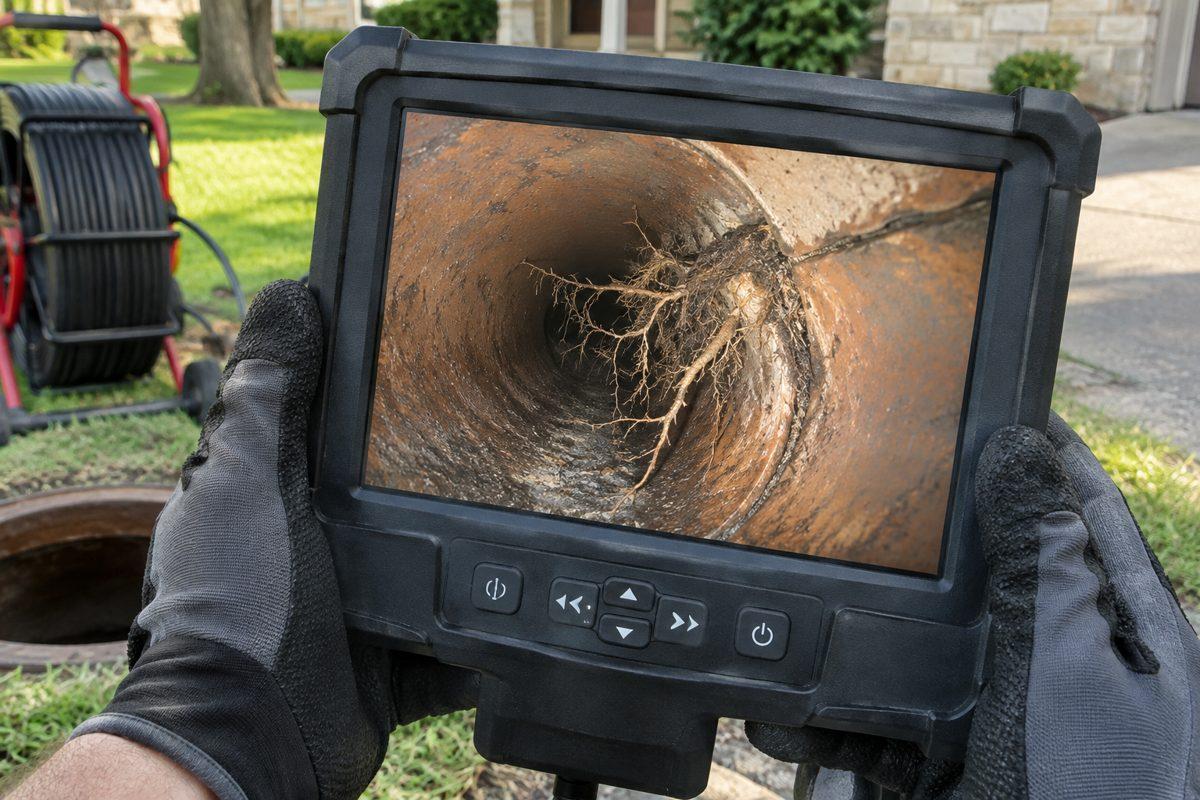
The footage tells a story about how your line has aged and what is causing your symptoms. These are the findings we see most often in The Colony and surrounding communities.
| What the camera shows | What it often means |
|---|---|
| Roots at a joint | Roots entered through a gap; cleaning may help short term, the joint may need repair |
| Step or lip at a joint | Offset caused by soil movement, a common catch point for debris |
| Standing water in the line | Often a belly or sag where the pipe has sunk |
| Rough, flaky walls | Scale and corrosion, common in older cast iron |
| Camera cannot pass | Possible collapse or heavy blockage that needs a closer look |
Tree Root Intrusion
Roots find their way into small gaps at joints and cracks, then grow into dense masses that catch waste and paper. On camera, they look like hair-like strands or thick clumps filling part or all of the pipe.
Offset Joints
When soil moves, one pipe section can shift up, down, or sideways from the next. The camera shows a visible lip or step at the joint. Offsets catch debris and often lead to repeat clogs.
Bellies or Sags
A belly is a low spot where a section of pipe has sunk. Water and waste collect there instead of flowing through. On camera, you will see the lens dip into standing water that does not drain away.
Cracks and Fractures
Cracks can start small and grow as the soil expands and contracts. The camera picks up hairline cracks, longer fractures, and broken pieces of pipe wall.
Scale and Corrosion
Inside cast iron lines, corrosion and mineral scale build up along the pipe walls and narrow the opening. Our area's moderately hard water can add to that buildup over time. Heavy scale looks like rough, flaky ridges on the footage.
Partial or Full Collapse
In the most serious cases, part of the pipe has caved in or flattened. The camera may not be able to pass that point at all. A collapse usually means that section needs to be replaced.
Grease and General Blockages
Not every finding is structural. Sometimes the footage shows a grease buildup or a blockage from items that should not be flushed, with the pipe itself in good shape. That is often the best news a homeowner can get.
Want to see exactly what is happening inside your sewer line? Call Aqua Pure Plumbing at (945) 500-8335.
What Happens After a Sewer Camera Inspection?
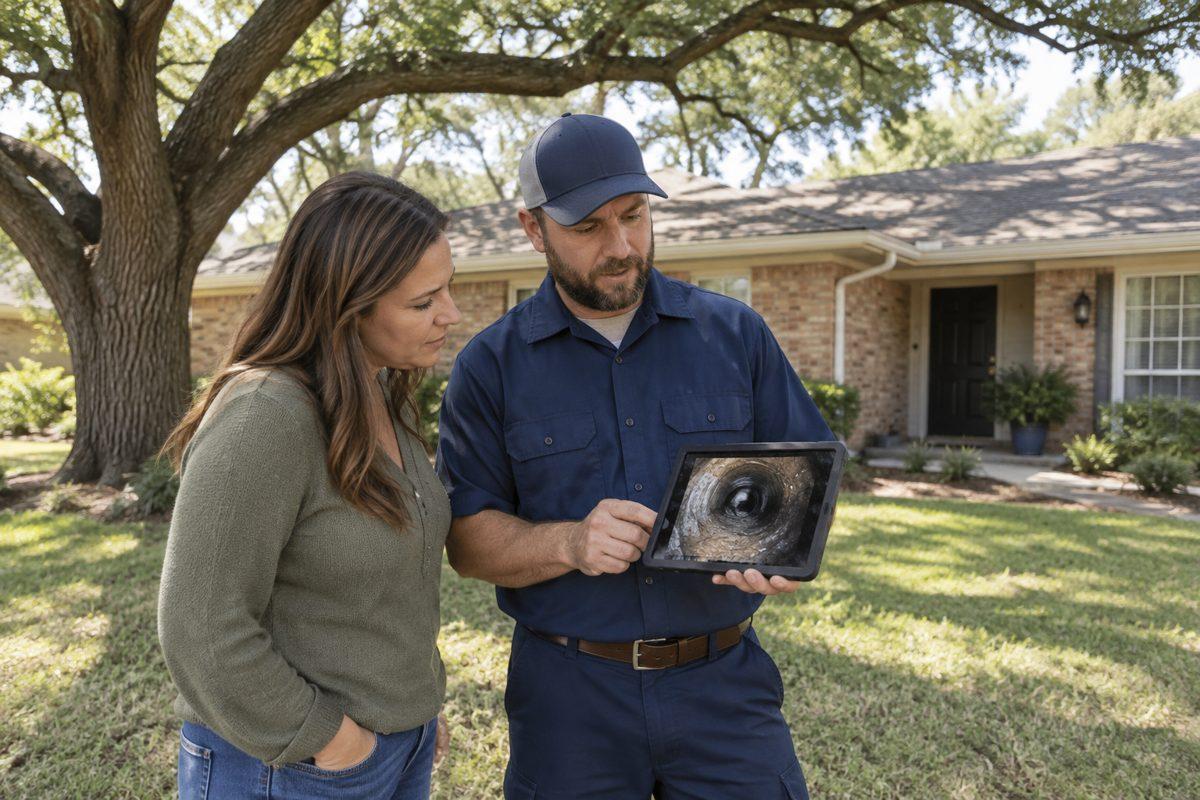
Once we have reviewed the footage together, the next step depends on what we found. We match the fix to the actual condition of the pipe, not to a one-size-fits-all approach.
Option 1: Cleaning
If the pipe is structurally sound and the problem is grease, buildup, or light root growth, cleaning may be all you need. Standard drain cleaning clears many blockages, while hydro jetting uses high-pressure water to scour pipe walls and cut through roots and scale. We often run the camera again afterward so you can see the clean line.
Option 2: Spot Repair
When only one section of pipe has failed, such as a single offset joint, a localized crack, or one root-damaged joint, a spot repair can make sense. We excavate at the marked location, remove the damaged section, and install new pipe there, leaving the healthy parts of the line in place.
Option 3: Full Sewer Line Replacement
If the footage shows damage along much of the line, repeated failures, or a collapse, replacement is usually the more reliable choice. We replace sewer lines by digging, tunneling, or trenching, depending on the layout of your property, the depth of the line, and what sits above it. New lines are installed with HDPE or PVC pipe. Learn more about our sewer line replacement service.
If your home has an original cast iron system, our cast iron pipe replacement service covers the drain lines inside and under the home as well.
Permits and Inspection
For repair and replacement work that requires it, we pull the permits and schedule the city inspection. That keeps the job compliant and gives you documentation that the work was done correctly.
Ready to find out what is going on in your line? Request your free camera inspection with an upfront written quote.
How to Prepare for a Sewer Camera Inspection
A little preparation helps the visit go smoothly and keeps the camera footage as clear as possible.
- Know where your cleanout is, if you can. Check near the foundation, along the side of the house, or in flower beds for a capped pipe. If you cannot find it, that is fine, and we will locate it.
- Clear a path. Move vehicles, outdoor furniture, or stored items away from the cleanout area and any spot where we may need to work.
- Limit water use during the visit. Avoid running the dishwasher, washer, or showers while the camera is in the line so the view stays clear.
- Write down your symptoms. Note which drains back up, when it happens, and how long it has been going on.
- Share what you know about the home. The year it was built, past sewer repairs, and any large trees near the line all help us read the footage.
- Plan to watch. We encourage you to be there when we review the footage so you can ask questions as we go.
Sewer Camera Inspections Around The Colony
We serve homeowners in The Colony and nearby cities, where the same clay soil and mature trees create similar sewer challenges. If you live in a neighboring community, see our pages for sewer line replacement in Lewisville, sewer line replacement in Carrollton, and sewer line replacement in Plano.
Our owner, Devan Adair, is a Master Plumber (TSBPE License 46028), and Aqua Pure Plumbing is licensed, insured, and bonded. We offer a free on-site quote and same-day service whenever possible.
Have a backup right now? Call (945) 500-8335 and we will get someone out as soon as possible.
Frequently Asked Questions
How Long Does a Sewer Camera Inspection Take?
Most inspections are completed during a single visit. The time depends on the length of the line, access, and how many problem areas we need to document.
Do You Need to Dig to Do a Camera Inspection?
No. The camera enters through an existing cleanout, toilet flange, or vent. In most homes, digging only happens later if a repair or replacement is needed.
Will I Get to See the Footage?
Yes. We camera the line first and show you the footage, then explain each finding before we recommend anything.
Can a Camera Find Tree Roots in My Sewer Line?
Yes. Roots are one of the most common findings in The Colony. The camera shows where they entered and how much of the pipe they fill.
Is a Camera Inspection Included With a Sewer Quote?
Yes. Every sewer quote from Aqua Pure Plumbing includes a free camera inspection. You also receive an upfront written quote before work begins.
Does Every Problem Mean the Whole Line Needs Replacing?
No. Many lines only need cleaning, and a single failed section can often be handled with a spot repair. Full replacement is reserved for widespread damage or collapse.
Get a Clear Look at Your Sewer Line Before You Decide
If you are dealing with sewer backups, slow drains, or odors and want a clear look at your line, call Aqua Pure Plumbing at (945) 500-8335. Our team is available daily from 8:00 a.m. to 6:00 p.m.
Ready to Get Started with Aqua Pure Plumbing?
Call (945) 500-8335 to speak with our team directly. We're ready to answer your questions, walk you through your options, and help you find the right solution for your needs. From your first call to the finished job, we'll explain each step clearly. Aqua Pure Plumbing is located at 1671 Riverview Dr Ste 205, The Colony, TX 75056.
Reach out today and let's talk about how we can help.
Need a licensed plumber in The Colony?
We answer 7 days a week, 8 AM to 6 PM, with same-day service across The Colony and 13 nearby DFW cities.