
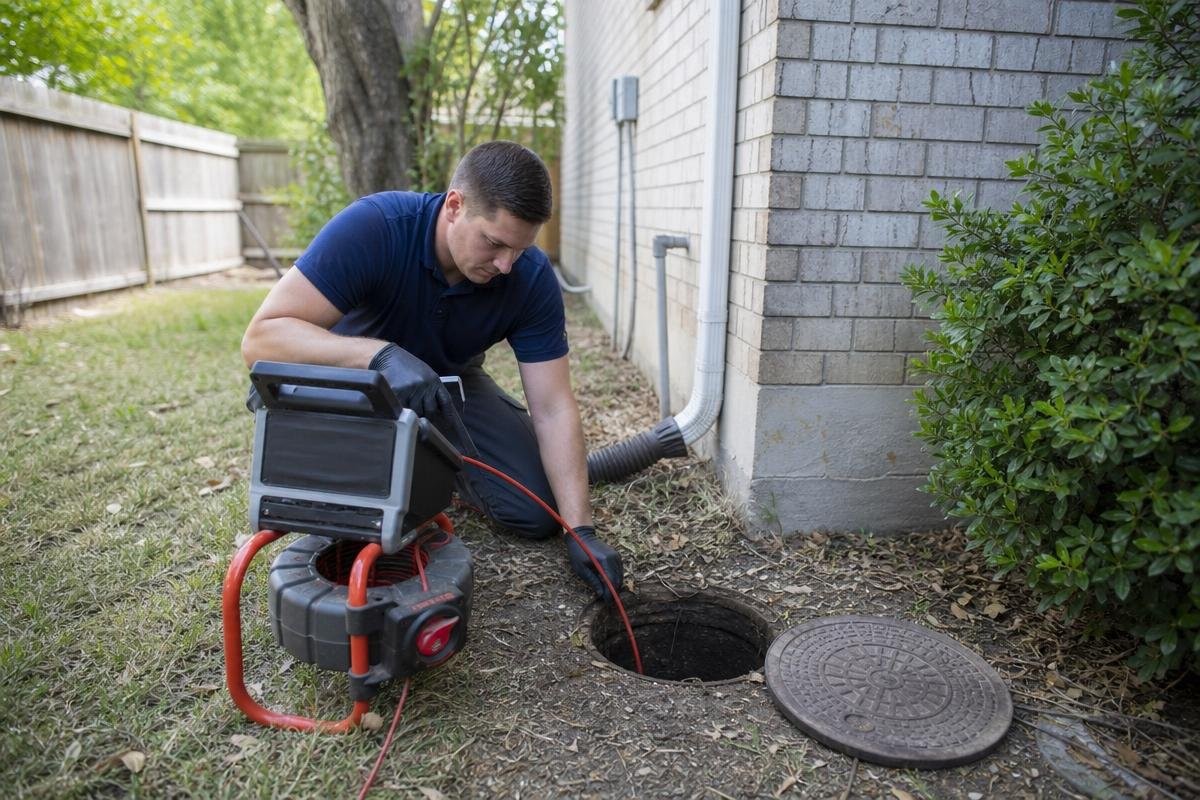
Slow drains in every room. A gurgling toilet. A smell in the yard you can't explain. These are the early signs of sewer line problems, and in The Colony, they're more common than most homeowners expect. The Blackland Prairie clay under your foundation shifts with every rain cycle, and that movement quietly stresses buried pipe joints year after year. We're Aqua Pure Plumbing, located right here at 1671 Riverview Dr #205, The Colony, TX 75056, and we can usually tell you what's wrong with your sewer line before we ever dig a single inch.
Seeing warning signs? Get a straight answer from a local plumber today.
Key Takeaways
- Sewer line problems in The Colony are often caused by clay soil movement stressing buried pipe joints over time.
- Homes built before 1985 near Main Street may still have original cast iron or Orangeburg sewer laterals that are overdue for inspection.
- Multiple slow drains, gurgling toilets, and sewage odors in your yard are the most common sewer line warning signs to watch for.
- A camera inspection is the only way to know for certain whether your line needs cleaning, repair, or full replacement.
- Catching damage early almost always costs less than waiting until you have a full backup or a collapsed sewer line.
Why The Colony's Soil and Pipe Age Make Sewer Problems More Likely
Most sewer line problems don't happen overnight. They build up over years, quietly working against your pipes. Right here in The Colony, two things speed that process up: the ground your home sits on and the age of the pipe buried in it. Aqua Pure Plumbing has spent years diagnosing these exact failures across the city, and the patterns are consistent.
Clay Soil That Never Stops Moving
The Colony has expansive clay soil that changes as moisture levels rise and fall. During dry periods, the soil can shrink again. That cycle repeats every single year. Buried sewer pipe joints take the full force of that movement. Over time, joints shift, separate, and crack. A small gap becomes an open invitation for groundwater, roots, and debris.
Newer western subdivisions in the 75056 zip code use PVC laterals, but even PVC is not immune. Clay fill soil settlement around the pipe can cause joint separation just as effectively as the native soil beneath it.
Pipes That Were Never Meant to Last This Long
Homes built off Main Street and along Paige Road in the late 1970s and early 1980s may still have original cast iron or Orangeburg sewer laterals. Cast iron corrodes from the inside out through a process called tuberculation, where rust builds up and narrows the pipe bore over decades. Orangeburg pipe, a bituminized fiber material, can deteriorate over time. A camera inspection can help determine its current condition. If you don't know what your lateral is made of, a sewer camera inspection is the only way to find out without digging. If replacement is needed, our sewer line replacement avoids tearing up your yard to get the job done.
How Tree Roots Find and Destroy Sewer Joints
Live oaks, pecans, and cottonwoods along the Stewart Creek corridor send feeder roots 40 to 60 feet from the trunk. Those roots follow moisture and warmth. A sewer-pipe joint can provide the moisture roots seek. A root enters as a hairline crack, then expands radially as it grows, eventually filling the pipe bore completely. That's a full blockage, and sometimes a structural collapse. Properties near the Lake Lewisville shoreline face this most acutely, since higher water tables keep the surrounding soil saturated and give roots a constant path toward any joint.
Hydro jetting can clear an active root intrusion, but if the pipe wall is already compromised, clearing it alone won't fix the underlying damage.
Signs 1-3: What You Notice at Your Drains and Toilets
Sign 1: Multiple Drains Slowing Down at the Same Time
Why Are All My Drains Slow at Once?
When every drain slows together, the blockage is in your main sewer lateral rather than in a single fixture branch.
One slow drain is usually a branch-line clog. Hair in the bathroom, grease in the kitchen. That's a localized problem. But when your kitchen sink, bathroom sink, and tub all start draining slowly at the same time, that points to your main sewer lateral. That's the single pipe carrying all your wastewater out to the city main. A partial blockage there backs up every fixture in the house above it. These are classic sewer line symptoms that homeowners often dismiss as separate problems.
Our same-day drain cleaning service can clear most blockages fast. But if multiple drains are slow together, we want to look deeper before we just snake it.
Sign 2: Your Toilet Gurgles When Another Fixture Runs
Why Does My Toilet Gurgle When I Run the Dishwasher?
A gurgling toilet means a partial blockage downstream is forcing air backward through your drain system, and the toilet is the closest escape point.
Run the dishwasher and hear your toilet bubble. Start the washing machine and watch the toilet water move. That's air being pushed backward through your drain system by a partial blockage downstream. The air has nowhere else to go, so it comes up through the toilet. This is one of the clearest sewer line warning signs there is. It means the blockage is past the point where individual fixture drains connect to the main line.
If you're seeing this pattern, don't wait for it to progress into a full backup. A sewer camera inspection can pinpoint whether the cause is a shifted joint, root intrusion, or scale buildup before it turns into a repair you can't schedule around.
Sign 3: The Same Drain Keeps Clogging Back
Why Does the Same Drain Keep Clogging After I Snake It?
A drain that reclogs within weeks almost always has a structural cause the snake can't remove, such as roots or a partial pipe collapse.
You snake it. It drains. Three weeks later it's slow again. That's not a coincidence. Recurring clogs in the same line usually mean a structural cause: root intrusion, a partial pipe collapse, or heavy scale buildup that a cable snake can't fully clear. Snaking cuts through the clog but leaves the root or the damaged pipe wall behind.
In those cases, hydro jetting at 3,000 to 4,000 PSI can clear grease and scale a snake won't touch. But we always run a camera first. High pressure on a structurally damaged pipe can make things worse, not better.
Signs 4-6: Outdoor and Yard Warning Signs You Should Not Ignore
Most sewer line symptoms start indoors. But once problems move outside, the pipe damage is usually well past the early stage. These outdoor clues are serious, and they get worse fast.
Sign 4: Sewage Odors in the Yard or Near a Clean-Out Cap
Why Does My Yard Smell Like Sewage?
A properly working sewer line is airtight, so a sewage smell outdoors means the pipe has cracked or separated enough to vent gas at ground level.
A sewage smell in your yard can indicate a sewer-line issue. Arrange a professional inspection promptly.
Clean-out caps in this area are typically near the foundation or close to the property line in the front yard. Odor near those points almost always confirms a breach in the main lateral. If you smell it, treat it like the same-day emergency plumbing situation it is.
Sign 5: A Strip of Grass That Stays Greener or Wetter Than the Rest
Why Is One Strip of My Lawn Greener Than the Rest?
Leaking sewage is high in nitrogen and phosphorus, so it feeds the grass directly above the pipe path faster than the surrounding lawn.
Sewage is high in nitrogen and phosphorus. A slow leak feeds the grass directly above the pipe path from your house to the street. That one strip grows faster, stays darker green, and never seems to dry out.
The clay soil here holds water near a break rather than letting it drain away. That makes wet spots more persistent and obvious than you would see in sandier soil suburbs. It is one of the clearest yard-level warning signs there is.
Sign 6: New Cracks in Walls, Floors, or a Sinking Spot in the Yard
Can a Sewer Leak Cause Cracks in My Foundation?
Yes. A leaking under-slab sewer line washes away the soil supporting your foundation, creating voids that shift the slab and crack walls and floors.
A leaking sewer line under a slab foundation quietly washes away the soil supporting your home. Voids form. The slab shifts. You start seeing interior wall cracks, doors that stick, or a soft or sunken spot in the yard above the pipe path.
Slab foundations are the norm across this area, so under-slab sewer leaks are a direct foundation risk. If you are seeing several of these signs together, get a camera inspection before the damage compounds further.
Not sure if that wet patch is a sewer leak? We can check it today.
Signs 7-10: Age, History, and What a Camera Already Told You
Sign 7: Your Home Was Built Before 1985
Homes in the older sections near Paige Road and The Colony High School are the highest-risk addresses for age-related sewer failure. Cast iron and Orangeburg laterals installed in the late 1970s and early 1980s are at or past their service life. Even without active symptoms, a baseline camera inspection is responsible ownership at this age.
Sign 8: You Have Large Trees Within 50 Feet of Your Sewer Line
Mature oaks and pecans along lakeside streets near Lake Lewisville are a statistical root intrusion risk. Roots follow moisture, and your sewer line is the most reliable moisture source in the yard. Consider a camera inspection if you have recurring drainage problems or suspect root intrusion. If roots are already inside the pipe, hydro jetting can clear them before they cause a full blockage.
Sign 9: Sewage Is Backing Up Into a Tub, Shower, or Floor Drain
This is not a slow-drain situation. Sewage backing up into a tub or floor drain means your main lateral is completely or nearly completely blocked. Avoid contact with sewage and arrange prompt professional service. Call our same-day emergency plumbing line at (945) 500-8335 right now.
Sign 10: A Plumber Already Showed You the Camera Footage and You Waited
Every seasonal clay shift widens existing cracks. A documented crack can worsen over time. If you have camera footage showing root intrusion, offset joints, or cracks, the damage is not sitting still. Options like sewer line replacement exist precisely to avoid tearing up your yard. Waiting converts a manageable repair into a far more expensive job.
If any of these signs match what you're seeing, we can usually tell you what you're dealing with before we ever touch a pipe.
What Does Sewer Line Repair or Replacement Actually Cost in The Colony?
No one wants a vague answer here. Cost depends on four things: how bad the damage is, where it sits in the line, what the pipe is made of, and how old it is. A camera inspection is the only way to know for sure which category you fall into. Without it, any quote is a guess.
Repair and replacement costs depend on the pipe condition, access, pipe length, depth, repair method, and excavation requirements. We provide an estimate after the camera inspection, before any work starts.
If the cost feels like a lot, we do offer flexible plumbing financing options so you are not forced into a bad decision because of timing.
Repair vs. Replacement: How the Decision Gets Made
One isolated crack or a single point of root intrusion? That is usually repairable. Widespread corrosion, multiple offset joints, or a collapsed section of cast iron or Orangeburg pipe? That almost always means full sewer line replacement. The camera footage tells us which situation you have. There is no guesswork involved.
Trenchless Options and Why They Matter for The Colony Yards
If you have stamped concrete, mature landscaping, or an established yard near the Lake Lewisville shoreline, trenchless methods can save you serious restoration costs. Trenchless pipe bursting pulls new HDPE pipe through while fracturing the old pipe outward. Both methods need access at only two points instead of a full trench. That matters a lot when the expansive clay here means any open trench requires careful backfill and compaction to prevent future settlement.
How We Diagnose Sewer Line Problems in The Colony
You call us, describe what you're seeing, and we get to work right away. No guesswork. No sending you to three different departments before anyone picks up a tool. Our team handles the diagnostic process from start to finish, and same-day appointments may be available.
Step 1: Symptom Walkthrough and Fixture Mapping
Before any equipment comes off the truck, Devan walks through your home with you. We ask which drains are slow, where gurgling happens, and whether you've noticed wet spots or odors outside. That conversation narrows the problem fast. A single slow drain usually points to a branch line. Gurgling at multiple fixtures at once points to the main sewer lateral.
That distinction matters before we ever touch the clean-out.
Step 2: Sewer Camera Inspection Through the Clean-Out
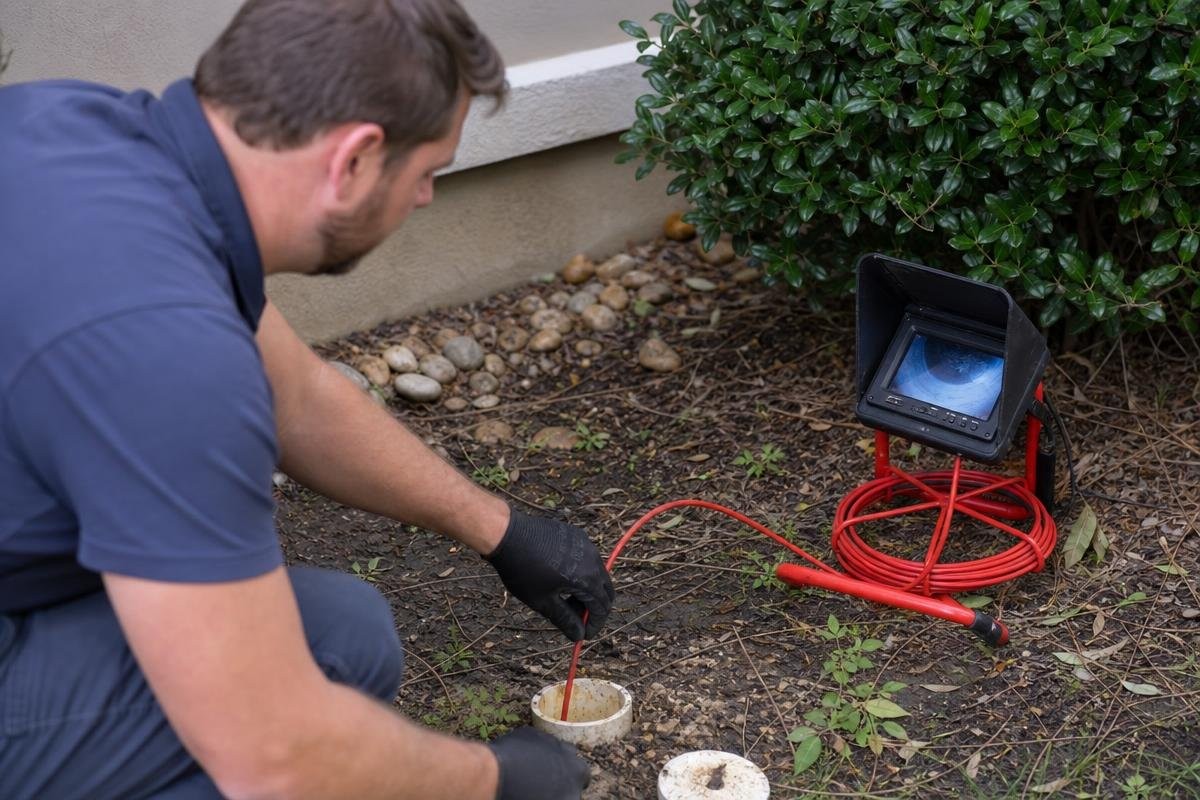
We feed a CCTV camera through your clean-out access point and push it through the main lateral all the way to the city connection. You see live video alongside us. The camera locator, a sonde transmitter, helps identify the surface location of any defect so we know exactly where the problem sits, no excavating blind.
Clay soil in the Cascades area and western subdivisions near the 75056 zip code can shift clean-out access points slightly over time. We account for that during insertion so the camera reaches the full line.
Step 3: Repair Plan Based on What the Camera Shows
Once we see what's there, we give you a straight answer. Grease or debris buildup means hydro jetting. A localized crack gets a spot repair. Widespread corrosion may call for trenchless pipe bursting. A collapsed lateral means sewer line replacement. We explain every option and the cost before any work begins.
Sewer Line Problems Across The Colony and Local Neighborhoods
Not every address carries the same risk. After years of sewer line repair work across this city, we see three clear risk profiles depending on where your home sits.
Pre-1985 Homes Near Main Street and The Cascades Area
Homes built in the late 1970s and early 1980s in the older eastern neighborhoods are the highest-risk addresses we visit. Many still have original cast iron laterals quietly corroding from the inside out. If your home is in this age range, sewer line replacement is often the smarter call over repeated repairs.
Lakeside Streets Near Lake Lewisville
Higher water tables along the Lake Lewisville shoreline keep soil saturated longer. That accelerates corrosion in metal pipes and gives tree roots a direct path toward any joint with even a hairline crack. These yards tend to have mature trees, which makes the problem worse. Properties in the 75057 side of The Colony that back up to creek drainage see a similar pattern.
Newer Western Subdivisions in 75056
PVC pipe is more durable, but clay fill soil in newer western developments still settles. Joint separation shows up five to fifteen years after construction, often with no obvious warning signs until a backup hits.
Our team works all of these neighborhoods from our office at 1671 Riverview Dr #205, The Colony, TX 75056. We also serve nearby cities including Carrollton, Frisco, Plano, and Lewisville.
Frequently Asked Questions
How do I know if my sewer line is broken or just clogged?
A clog usually hits one fixture. A broken pipe hits several at once. If your kitchen sink backs up but every other drain runs fine, you likely have a branch-line clog. If multiple drains are slow, your toilet gurgles when you run the washing machine, or you smell sewage in the yard, that points to a main sewer line problem. A camera inspection settles it in a few hours with no guesswork.
Can tree roots really destroy a sewer line?
Yes, and it happens faster than most homeowners expect. Mature live oaks and pecans common in neighborhoods near Lake Lewisville send roots toward any moisture source, including pipe joints. Hydro jetting clears roots temporarily, but if the pipe wall is already cracked, you need lining or replacement. Root intrusion is one of the leading sewer backup causes we see in established areas around The Cascades and The Tribute.
How long does sewer line repair or replacement take?
A spot repair on accessible pipe usually wraps up in one day. Trenchless pipe bursting timing varies by site. Full lateral replacement runs two to three days. Add a few hours for the camera inspection upfront, and you avoid rework later.
Is trenchless sewer replacement available in The Colony?
Yes. Our team offers sewer line replacement for qualifying pipes. Trenchless methods need two access points and work best before a pipe fully collapses. A camera inspection confirms whether your line is a candidate.
What happens if I ignore the warning signs?
Ignoring a sewer-line problem can allow damage to worsen and may lead to a more extensive repair. Clay soil movement here can accelerate joint damage, so scheduling a camera inspection early helps you understand the right repair options for your home.
Does Homeowners Insurance Cover Sewer Line Repair in Texas?
Standard Texas homeowners policies typically exclude gradual deterioration, root intrusion, and age-related sewer failure. Sewer line coverage exists as an add-on endorsement, so check your policy before assuming you are covered. If repair costs are a concern, ask us about plumbing financing options for qualifying work.
If your drains are slow, your toilet is gurgling, or you have not had a sewer camera inspection since buying your home, call our team at (945) 500-8335. We serve all of The Colony's neighborhoods, with same-day availability for urgent situations when scheduling permits. A camera inspection takes a few hours and tells you exactly what you are dealing with. Waiting costs more than the inspection.
Need a licensed plumber in The Colony?
We answer 7 days a week, 8 AM to 6 PM, with same-day service across The Colony and 13 nearby DFW cities.