
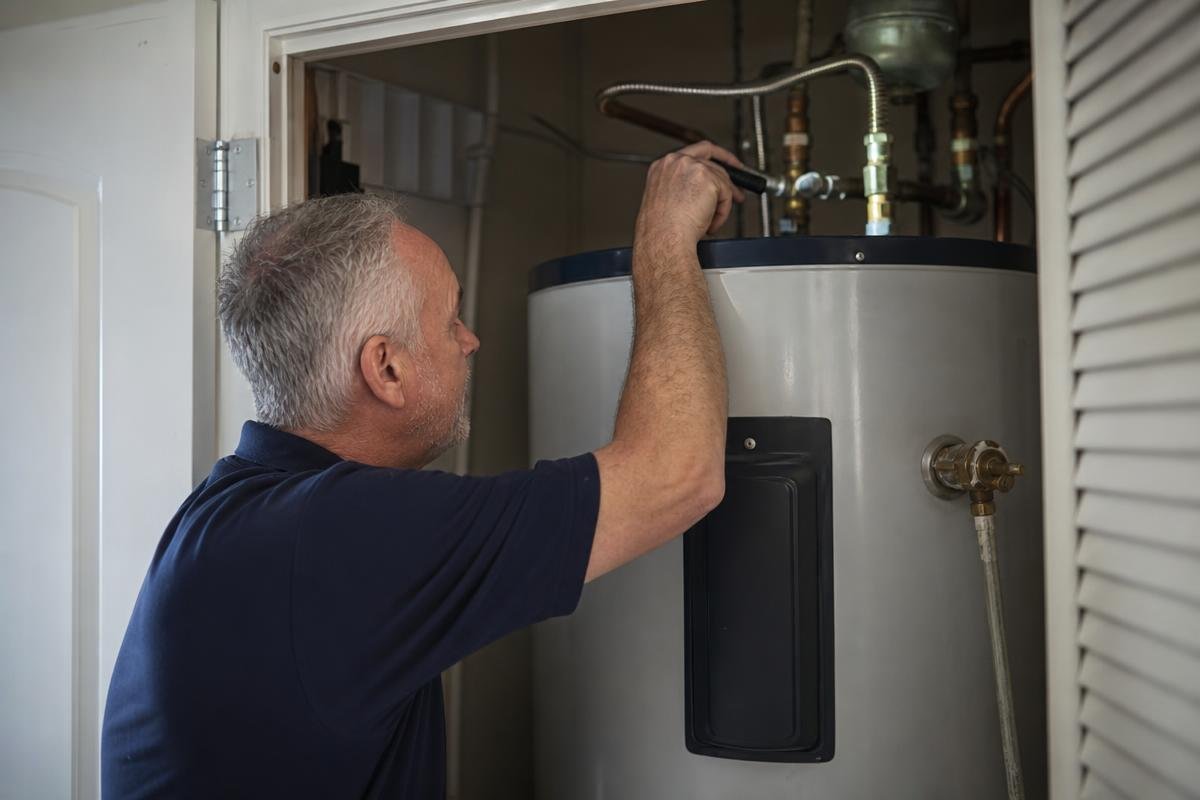
A water heater making noise is one of those problems that's easy to ignore until it isn't. For homeowners in The Colony, that noise often means sediment from the city's hard water supply is building up inside your tank, and it's quietly working against you. Aqua Pure Plumbing, licensed by the Texas State Board of Plumbing Examiners, serves The Colony seven days a week, and we can tell you exactly what that sound means and what to do about it before it becomes a costly repair or a cold shower.
Most water heater noise calls are diagnosed same-day. Call Aqua Pure Plumbing at (945) 500-8335 or book online and stop guessing about that sound.
Key Takeaways
- A water heater making noise in The Colony is often caused by sediment buildup from the city's hard water supply.
- Different sounds point to different problems: popping and rumbling usually mean sediment, while hissing or whistling can signal a pressure issue.
- Some noises are harmless, but others mean your water heater needs attention before it fails completely.
- Unusual sounds from your water heater are an early warning sign worth taking seriously, especially on units past the 10-year mark.
- A licensed plumber can diagnose the noise, flush the tank, or recommend replacement without guesswork.
Why Is My Water Heater Making Noise? A Homeowner's Guide for The Colony
It's 2 a.m. and your water heater is banging, hissing, or rumbling loud enough to pull you out of bed. You don't know if it's about to fail or just making noise. That uncertainty is stressful, and you deserve a straight answer.
A noisy water heater is one of the most common calls we get in The Colony. Most sounds have a clear cause, and many can be fixed before they turn into a cold shower or a flooded garage. Local water chemistry plays a real role here. The municipal supply draws from Lewisville Lake and runs approximately 8 to 12 grains per gallon of hardness depending on the source and season, well above the point where minerals settle out and accelerate sediment buildup inside your tank faster than in most parts of the country.
This article covers the six most common noises and what each one means, which sounds signal real danger, steps you can safely take yourself, and when to call a plumber. Our team handles these calls every day. If you want to skip ahead, you can go straight to our water heater services page. Otherwise, keep reading and get the answers you need right now.
What Your Water Heater Is Trying to Tell You With the 6 Most Common Noises
Your water heater talks to you. Most homeowners just don't know how to read the sounds. Each noise points to a specific problem, and knowing the difference helps you act before a minor issue becomes a costly repair. If you're on a tankless unit, note that tankless units produce different sounds and have their own set of causes worth understanding separately.
Rumbling or Gurgling: Sediment on the Tank Floor
This is the most common sound we hear in The Colony. Calcium and magnesium from that hard supply settle to the bottom of your tank over time, forming a thick layer that forces your burner to overheat just to push heat through the sediment.
That rumbling is the sound of water trapped beneath the layer heating up and forcing its way out. Left alone, it shortens tank life significantly. A professional flush can clear it before the tank is damaged past the point of saving.
Popping or Crackling: Scale on the Heating Element
A popping sound is not the same problem as rumbling, even though both involve mineral buildup. This one is specific to electric units. Scale coats the heating element itself, and water trapped beneath that scale superheats and forces through it, producing a sharp pop or crackle.
Ignoring it accelerates element failure. Replacing the element early is far cheaper than replacing the whole tank.
Hissing: The T&P Valve Warning You
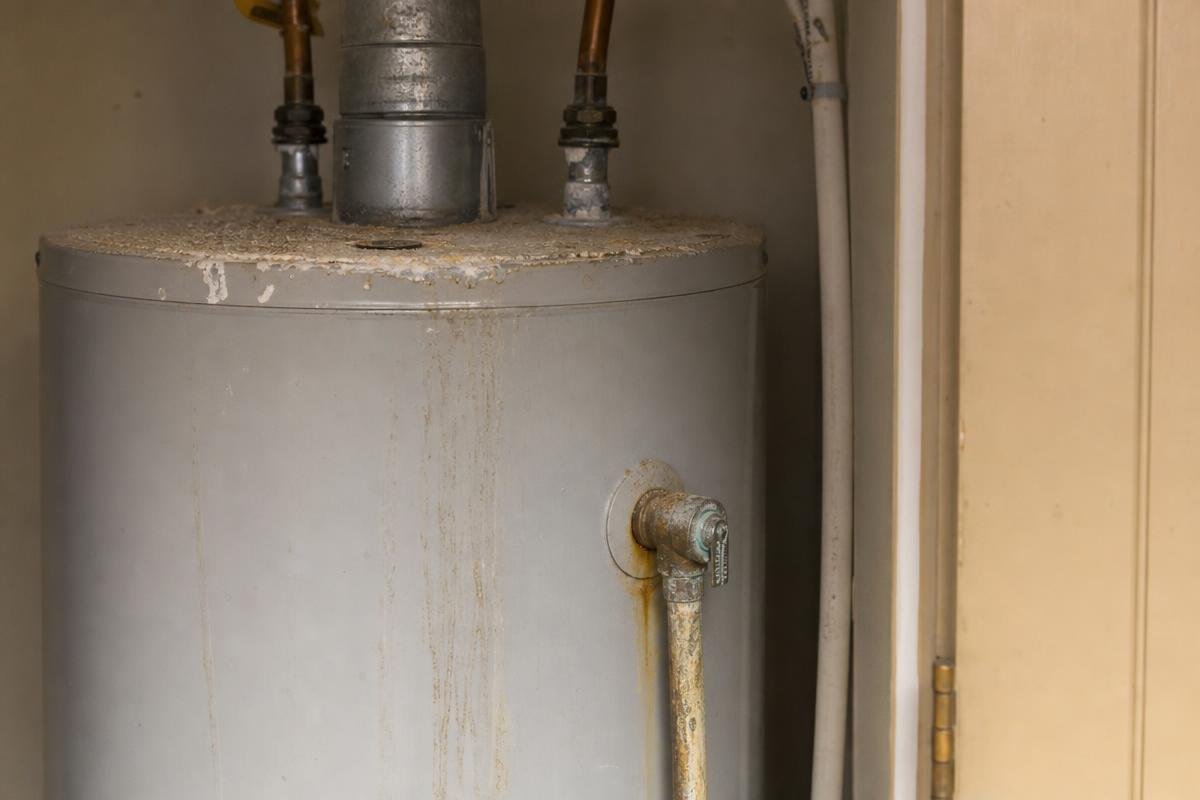
Hissing from the temperature and pressure relief valve is not a normal operating sound. It means pressure inside the tank has climbed above 150 psi, or temperature has pushed past 210 degrees Fahrenheit. That valve is your last line of defense against a dangerous overpressure event.
Treat this as urgent. This is not a maintenance item to schedule for next week. Our same-day emergency plumbing team handles T&P valve calls the same day for exactly this reason.
Ticking: Thermal Expansion or a Failing Check Valve
Ticking is usually the least alarming sound, and the cause is often simple: supply pipes expanding and contracting with temperature changes. That's normal. However, a failing check valve on the cold-water inlet can produce the same sound and does need attention.
If the ticking is rhythmic and tied to heating cycles, it's likely thermal expansion. If it's irregular or new, have the check valve inspected.
Humming: A Loose Heating Element
Humming almost always points to a loose lower heating element vibrating against the tank wall as water flows around it. It's specific to electric water heaters. The fix is straightforward: tighten or replace the element.
It won't fix itself, and a loose element can eventually fail or cause inconsistent water temperatures. Catching it early keeps the repair simple.
Screeching or Whistling: A Partially Closed Valve
Screeching means water is being forced through a restricted opening. The most common cause is a cold-water inlet valve that isn't fully open. Before calling anyone, check that the valve is turned completely open.
If the valve is fully open and the screeching continues, the valve itself may be worn and needs replacing. That's a quick fix for a licensed plumber and not something to put off, since restricted flow quietly stresses the whole system.
Is a Noisy Water Heater Dangerous?
A noisy water heater is rarely dangerous on its own, but certain sounds, particularly hissing from the T&P valve, require same-day attention. Knowing the difference saves you from unnecessary panic and, more importantly, keeps you from ignoring a sound that actually needs immediate action.
Annoying but Not Urgent: Sounds That Signal Overdue Maintenance
Ticking, mild humming, and occasional popping fall into this category. They mean your unit is overdue for service, not that it is about to fail. Sediment-related rumbling, covered in the previous section, is a maintenance issue rather than a safety emergency.
These sounds are quietly telling you that a flush or inspection is needed before the problem gets worse. Ignoring them long enough turns a straightforward maintenance visit into a much costlier repair. Schedule water heater service before it reaches that point.
Safety Risk Right Now: Sounds That Require Same-Day Action
Screeching or hissing from the temperature and pressure relief valve is a different situation entirely. That valve releases when internal pressure exceeds 150 psi or temperature climbs past 210 degrees Fahrenheit. Both are code-level safety events. If you hear screeching from the relief valve, treat it as an emergency and call us right away.
Banging loud enough to shake your pipes, or any noise paired with water pooling at the base of the unit, also requires same-day action. Many homes in The Colony subdivisions built during the 1980s and 1990s have T&P valves that have never been tested or replaced. A valve that old may not release properly when pressure builds, which is exactly why you cannot afford to wait on these sounds.
Why The Colony Homes Hear These Sounds More Often Than You Might Expect
If your water heater is making noise, your zip code is part of the reason. Homes in the 75056 and 75057 areas deal with two conditions that push water heaters toward problems faster than most people realize: unusually hard water and aging equipment.
Hard Water From Lewisville Lake Accelerates Sediment Buildup
As covered in the intro, the water here draws from Lewisville Lake and runs through the City of The Colony's municipal water system at approximately 8 to 12 grains per gallon depending on the source and season. Neighborhoods near Stewart Creek, the Stewart Peninsula, The Tribute golf community, and older subdivisions off Windhaven Parkway can see sediment-related rumbling within three to five years of a new installation when the tank goes unflushed. Cities with softer water sources simply do not accumulate scale at the same rate.
Aging Equipment Means More Units Near the End of Their Lifespan
The Colony grew fast during the 1980s and 1990s. A large share of homes in established subdivisions have water heaters that are either original units or first replacements now pushing past the 10-year mark.
A unit making noise that is also over 10 years old is rarely a simple repair situation. It is usually a replacement candidate. If that describes your unit, take a look at your options for water heater replacement in The Colony before the problem gets worse.
Repair or Replace? How to Make the Right Call on a Noisy Water Heater
Noise tells you something is wrong. Your job is figuring out whether that problem is worth fixing or whether the unit has run its course. Here is a clear framework to help you decide before a small issue becomes a flooded utility room.
When Repair Is the Right Move
If your unit is under 8 years old and the noise has one clear cause, repair is almost always the smarter financial call. A professional flush can clear sediment rumbling in a single visit. A loose heating element or a partially closed inlet valve costs a fraction of what a new unit runs.
No visible corrosion at the base, no rust-colored water at the hot tap, and a single noise type all point toward repair. Catch it now before it becomes a costly repair down the road.
When Replacement Makes More Sense
A unit that is 10 or more years old is already past the midpoint of its typical lifespan. In a hard-water area like The Colony, scale builds faster than the national average, so a 12-year-old tank here carries more wear than one in a soft-water city.
Replace rather than repair when you see rust-colored water at the hot tap, multiple noise types happening at once, or a unit that has already been repaired once for the same problem. Many homes built during the area's 1980s and 1990s growth period have units that are quietly spiking energy costs every month while moving toward failure. If your T&P valve is also showing signs of stress, as covered in the safety section above, that adds urgency to the replacement case.
Understanding what these sounds mean is only useful if you act on that information before the tank gives out entirely.
Not sure whether your unit needs a repair or a full replacement? Call us at (945) 500-8335 and we will give you a straight answer.
Troubleshooting Steps You Can Safely Take Before Calling a Plumber
There are a few things you can check yourself before picking up the phone. None of these require special training. But be honest about where your comfort level ends, because a small misstep can turn a noisy water heater into a wet floor fast.
Check the Cold-Water Inlet Valve First
Find the cold-water supply line running into the top of your unit. There is a valve on that line. The handle should sit parallel to the pipe when fully open. If it is turned even slightly, water flow gets restricted and that restriction can cause screeching or whistling sounds. Turn it fully open and listen. This check takes about two minutes and costs nothing.
How to Flush Sediment From Your Tank
Yes, you can flush your own tank to address that popping or rumbling. Here is the basic process:
- Set the thermostat to "pilot" on a gas unit, or shut off the breaker for an electric unit.
- Connect a garden hose to the drain valve at the base of the tank.
- Run the hose to a floor drain or outside.
- Open the drain valve and let water run until it clears. Plan on 10 to 20 minutes for a 40 to 50 gallon tank.
- Close the valve, refill the tank, then restore power or relight the pilot.
One important warning. If your drain valve is original and the unit is over 8 years old, it may not reseal after you open it. That is one of the most common reasons homeowners end up calling us after a DIY flush attempt. In The Colony's hard-water environment, a tank that has never been flushed in five years may push out far more buildup than you expect. If you are not confident, schedule a water heater flush and inspection with our team instead.
Inspect the Anode Rod for Depletion
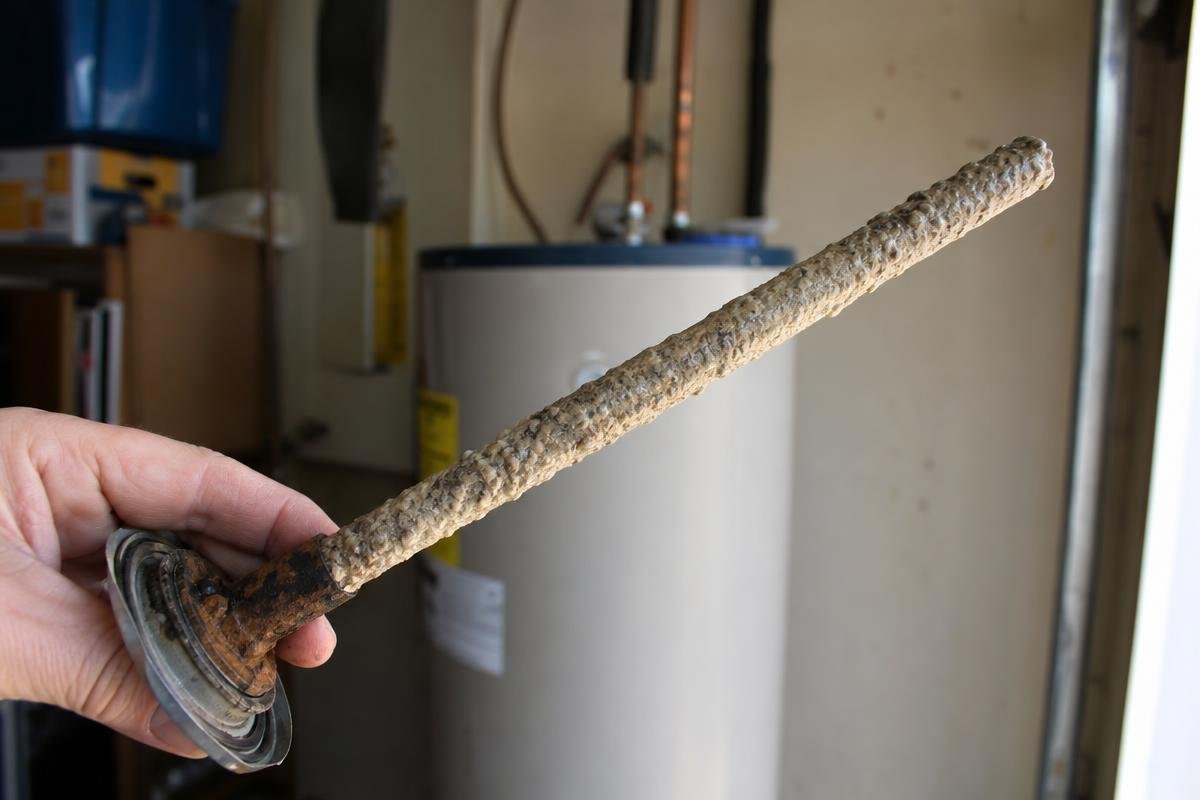
You will need a 1-1/16 inch socket to remove the anode rod from the top of the tank. Pull it out and look at it. A magnesium or aluminum rod that crumbles or breaks apart on removal needs to be replaced right away. A depleted rod is also a common reason a tank starts making noise in the first place, and it can produce a sulfur or rotten-egg smell alongside the sound. If the rod is gone, corrosion inside the tank is already underway.
How to Prevent Water Heater Noises Before They Start
Most rumbling problems are preventable. The hard water coming into homes here deposits minerals faster than in softer-water cities. Staying ahead of that buildup is the difference between a quiet tank and a unit that fails early.
Annual Flushing and Anode Rod Inspection
Flush your tank once a year, minimum. In a hard-water area like this, that is not optional maintenance. It removes sediment before it hardens into an insulating layer that causes that familiar rumbling and drives up your energy bill.
Check the anode rod every two to three years. A depleted rod lets the tank corrode from the inside out. Catching it early extends tank life significantly and keeps repair costs down. A plumber can also check for slow leaks around the unit during a maintenance visit before a small drip becomes a costly problem.
Lower the Thermostat to Slow Scale Formation
Most tanks ship from the factory set to 140 degrees F. The EPA recommends 120 degrees F for most households. Dropping to 120 slows mineral precipitation inside the tank and cuts energy costs. Do not go below 120, though. That threshold protects against Legionella growth.
Consider a Water Softener or Scale Inhibitor
A whole-home water softener or a dedicated scale inhibitor on the cold-water inlet can stretch your flush interval from 12 months to 24 to 36 months. For homeowners on The Colony's hard-water supply, this single upgrade does more to prevent a water heater making noise than almost anything else you can do.
When Should You Call a Professional About Water Heater Noise?
Some noises are worth monitoring. Others mean you should pick up the phone today. Knowing the difference protects your home before a noisy water heater becomes a flooded utility room or a failed unit.
Signs That Mean Call Today, Not Tomorrow
If your water heater is making noise and any of the following are also true, stop troubleshooting and call us:
- Water on the floor near the unit. Any pooling around the base points to a failing tank or a connection leak that needs immediate attention.
- Rust-colored hot water. Discolored water means the tank interior is corroding and the anode rod has likely failed.
- T&P valve dripping or releasing steam. This valve is a safety device. If it's activating, pressure or temperature inside the tank is too high.
- Burning smell near an electric unit. That odor signals an overheating element and is a fire risk.
- A noise that started suddenly and is getting louder. Rapid changes usually mean something has broken loose or sediment buildup has reached a critical level.
What Happens When Our Team Arrives
Our licensed plumbers inspect the thermostat, heating elements, T&P valve, anode rod, and drain valve. You get a clear diagnosis before any work begins. No guesswork, no pressure.
If you're weighing when to replace a noisy water heater, we walk you through standard tank and tankless water heater options so you can make the right call for your home and budget. If you live in Lewisville, our water heater service in Lewisville covers repairs, flushing, and replacements there too.
Aqua Pure Plumbing holds a 5-star rating across 136 Google reviews and is available any day of the week. A same-day call for a T&P valve hissing in a 1990s-built home off Windhaven Parkway is exactly the kind of job we handle regularly. Reach us at our office at 1671 Riverview Dr Ste 205, The Colony, TX 75056, or schedule same-day emergency plumbing service online.
Frequently Asked Questions
What causes a water heater popping sound?
That popping sound is almost always mineral scale on the heating element. Water gets trapped beneath the buildup, and as the element heats up, that water forces through the scale and pops. A licensed plumber can flush the tank or replace the element to stop it.
Are water heater noises dangerous?
Most of these sounds come down to maintenance, not emergencies. The exception is a hissing or screeching sound from the T&P valve. That signals dangerous over-pressurization, and you should call a plumber immediately. Do not wait on that one.
How much does it cost to fix a noisy water heater?
Cost depends on whether the fix is a flush, a part replacement, or a full unit swap. We give you a clear price before any work begins, no surprise invoices. A diagnostic visit is the fastest way to get a firm number.
How often should I flush my water heater?
Annual flushing is the minimum for homes in this area. The municipal water supply here carries elevated mineral content, so sediment builds faster than in cities with softer water. Homes with older units or no water softener may benefit from flushing every six months.
Will the noise go away on its own?
No. Sediment keeps accumulating, scale keeps building, and loose components wear further. Ignoring the noise typically leads to a more expensive repair or an earlier replacement than you planned for.
Should I repair or replace a noisy water heater?
Under 8 years old with a single identifiable cause, repair is usually the right call. At 10 or more years, multiple noise types, or visible corrosion, explore your water heater replacement options before the unit fails on you. Older housing stock in neighborhoods off Windhaven Parkway and near Stewart Creek tends to hit that threshold faster because of the hard water conditions here.
Your water heater is telling you something. Call (945) 500-8335 or book online with us. Our team is available every day of the week from 8 AM to 6 PM. We serve Plano, Allen, McKinney, Richardson, Flower Mound, Coppell, Farmers Branch, Addison, Highland Village, Lake Dallas, and the surrounding DFW area. We will inspect the unit, give you a clear diagnosis, and tell you exactly what it will cost before we touch anything.
Ready to Get Started with Aqua Pure Plumbing?
Call (945) 500-8335 to speak with our team directly. We're ready to answer your questions, walk you through your options, and help you find the right solution for your needs. Whether you're just starting to plan or ready to move forward, we'll make the process simple and stress-free.
Reach out today and let's talk about how we can help.
Need a licensed plumber in The Colony?
We answer 7 days a week, 8 AM to 6 PM, with same-day service across The Colony and 13 nearby DFW cities.