
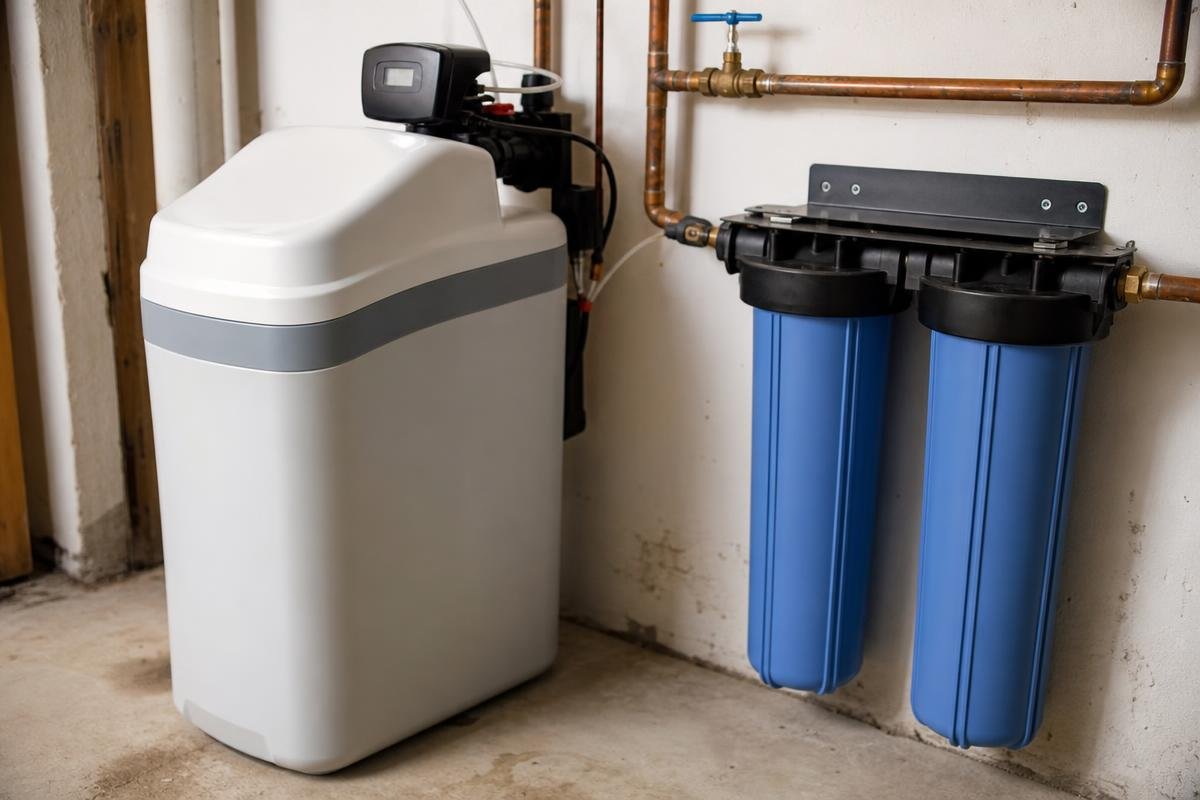
White film on your faucets. Soap that won't lather. A water bill creeping up for no clear reason. The Colony's municipal supply runs hard, and that hardness does real damage to pipes, appliances, and skin over time. But hard water and contaminated water are two different problems, and choosing between a water softener vs water filter without knowing which problem you actually have is how homeowners end up spending money on the wrong system.
We help you figure out exactly what your water needs before anything gets installed. Not sure which system your home actually needs? Book a free water test and get straight answers.
Not sure which system your home actually needs? Book a free water test and get straight answers.
Key Takeaways
- The Colony's water tests hard to very hard at 15 to 20 grains per gallon, making scale buildup a real and ongoing problem for most homes.
- A water softener removes hardness minerals through ion exchange; a water filter removes contaminants like chloramines, sediment, and heavy metals.
- Choosing the wrong system means spending money without fixing the problem you actually have.
- Local utilities disinfect with chloramines, which require catalytic carbon media to remove, not standard carbon block filters.
- Many Colony homeowners need both systems working together, but the right starting point depends on a water test, not a guess.
Hard Water or Contaminated Water: Two Different Problems
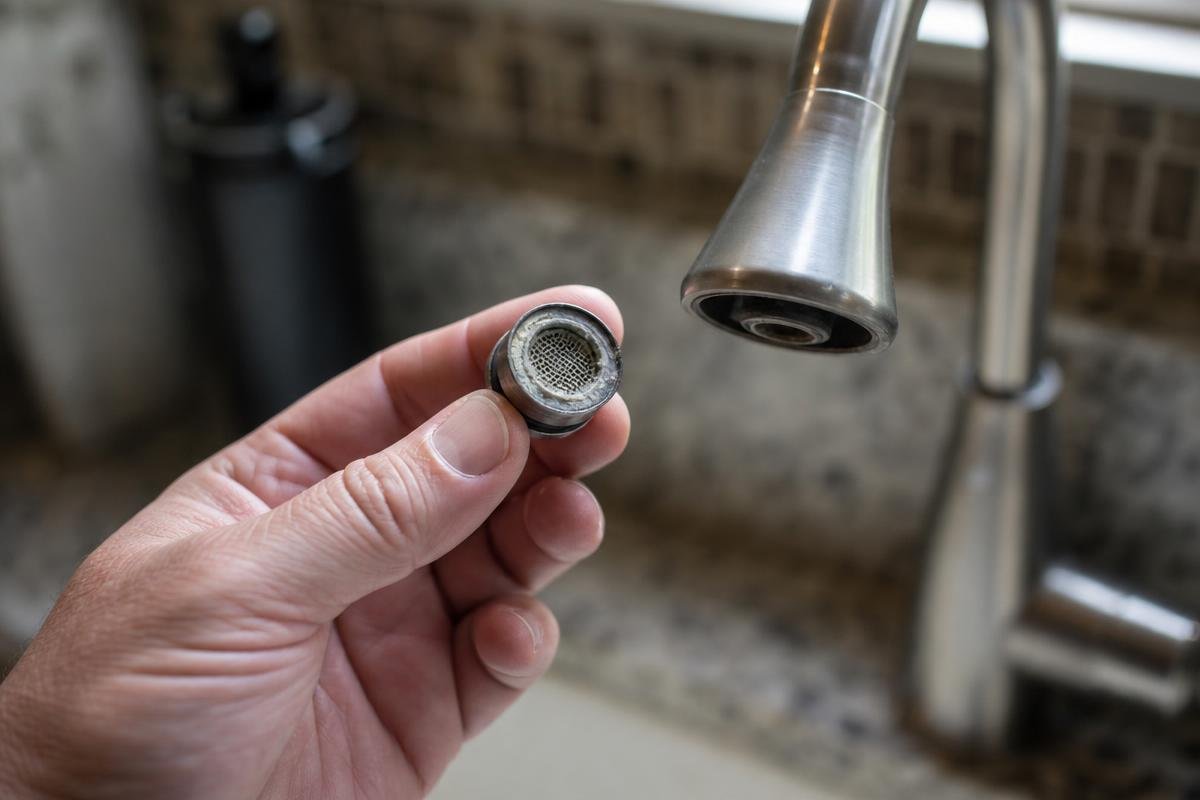
White crust ringing your faucet aerators. Cloudy film on dishes straight out of the dishwasher. Chlorine smell every time you fill a glass. Those are not the same problem, and they do not have the same fix.
The water softener vs water filter question is one we hear constantly from homeowners across the 75056 area, from Stewart Peninsula out to The Tribute and the newer developments along the SH 121 corridor. Most people assume it is either/or. It is not. For most homes pulling water from Lewisville Lake, it is a sequencing question. That water comes in hard to very hard. The Water Quality Association classifies anything above 10.5 gpg as very hard, and Colony water clears that bar by a wide margin before it ever reaches your tap.
Hardness minerals and disinfection chemicals are two separate issues traveling through the same pipe. One system does not solve both. This guide walks you through what each system actually does, what The Colony's specific water conditions demand, and how to decide which to install first, or whether you need both.
Aqua Pure Plumbing installs water treatment systems across The Colony and throughout Frisco, McKinney, and Carrollton, and the same hard-water reality shows up in every ZIP code we serve.
What Does a Water Softener Actually Do?
A water softener removes hardness minerals, specifically calcium (Ca2+) and magnesium (Mg2+), from your water supply through a process called ion exchange. Here in the Lewisville Lake service area, municipal water runs hard to very hard, typically 15 to 20 grains per gallon. That is a heavy mineral load hitting your pipes, fixtures, and appliances every single day.
Inside the softener, water passes through a resin tank packed with tiny resin beads carrying a sodium charge. Calcium and magnesium ions stick to those beads, and sodium ions release into the water in their place. The resin bed eventually fills up with hardness minerals and needs to flush itself clean. That is the regeneration cycle. Your softener pulls brine from a salt tank, sodium chloride or potassium chloride, and washes the resin bed clear. Most systems regenerate every 3 to 7 days depending on household size and how hard your incoming water is.
The real-world payoff is visible fast. No white scale crusting around your faucets. Soap that actually lathers instead of fighting the minerals. Laundry that comes out softer. And longer appliance life across the board. Hard water scale is one of the leading causes of premature water heater failure in North Texas homes, so a softener is a direct investment in your equipment. If you are already seeing signs of scale damage, our licensed technicians handle water heater service in The Colony before the problem gets worse.
What a Softener Does Not Remove
This is the part most salespeople skip. A softener does not remove chlorine, chloramines, VOCs, nitrates, sediment, bacteria, or heavy metals. It only trades hardness minerals for sodium. Local treatment uses chloramines, a stable chlorine-ammonia compound, and your softener does nothing to address that. If you want cleaner-tasting, safer drinking water, a softener alone is not enough. That is exactly why getting this choice right matters for homeowners dealing with hard water signs in The Colony.
How Water Filters Work and What They Actually Remove
A water filter removes contaminants like chlorine, chloramines, sediment, and dissolved metals, but the right filter depends entirely on what is actually in your water. Cloudy water from the tap, a chemical smell that lingers after you fill a glass, rust-colored staining around the drain: filters tackle these problems, and matching the media to the contaminant is everything.
There are three filter types you will run into as a homeowner. Activated carbon adsorbs chlorine, volatile organic compounds, and taste and odor compounds. It is the most common whole-house and under-sink option. Reverse osmosis (RO) forces water through a semi-permeable membrane, stripping dissolved solids, lead, arsenic, nitrates, fluoride, and most bacteria. RO is almost always a point-of-use under-sink system. Sediment filters use mechanical filtration to catch particulates, rust, and sand. They are typically the first stage in a multi-stage setup, protecting the finer media downstream.
One detail that matters specifically in this area: because our supply is disinfected with chloramines rather than free chlorine, standard carbon block cannot break them down reliably. You need catalytic carbon media to do that job. If a contractor quotes you a standard carbon filter for whole-house filtration in Frisco, Plano, or anywhere else on chloraminated water, ask them directly whether the media is catalytic. The wrong media and you are paying for a filter that does not solve the problem.
Point-of-Entry vs. Point-of-Use Systems
A point-of-entry (POE) system installs where the main line enters your home and treats every drop that flows to every fixture. A point-of-use (POU) system, like an under-sink RO unit, treats water at a single tap only. POE is the right call if you want filtered water for bathing, laundry, and appliance protection. POU makes sense when your primary concern is drinking water quality. Many homeowners in the area run both, and that combination is worth considering if your tankless water heater is already showing scale buildup alongside taste complaints at the kitchen tap.
Want to see the quality of our installs? Contact us for a same-day quote.
Water Softener vs Water Filter: The Side-by-Side Breakdown
Different problems. Different tools. The whole comparison comes down to one question: what is your water actually doing to your home? The table below cuts through the confusion.
| Problem Solved | Water Softener | Water Filter |
|---|---|---|
| Calcium/magnesium scale | Yes | No |
| Chlorine/chloramine taste and odor | No | Yes (catalytic carbon) |
| Lead, arsenic, nitrates | No | Yes (RO) |
| Bacteria/cysts | No | Yes (RO or UV) |
| Sediment/rust | No (minor) | Yes (sediment filter) |
| Sodium added to water | Yes | No |
| Appliance scale protection | Yes | No |
| Drinking water quality | No direct benefit | Yes |
No overlap. Each system solves a distinct set of problems. If you pick only one, you leave the other problem completely unaddressed.
Which One Protects Your Pipes and Appliances?
A water filter does not prevent scale. Full stop. At the hardness coming out of Lewisville Lake's treatment plant, calcium and magnesium deposit inside every appliance connected to your supply lines. That buildup restricts flow over time, and scale in supply lines is one of the most common reasons homeowners in Frisco and McKinney call us about low water pressure that keeps getting worse.
Tankless units take the hardest hit. Scale on the heat exchanger cuts efficiency by 25 to 30 percent and voids most manufacturer warranties outright. If you have a tankless heater or are planning to install one, a softener is not optional. Our tankless water heater service includes descaling, but protecting the unit from scale in the first place is always the smarter call. A softener handles that. A filter does not.
The Colony's Water Is Hard. Here's What That Means for Your Home.
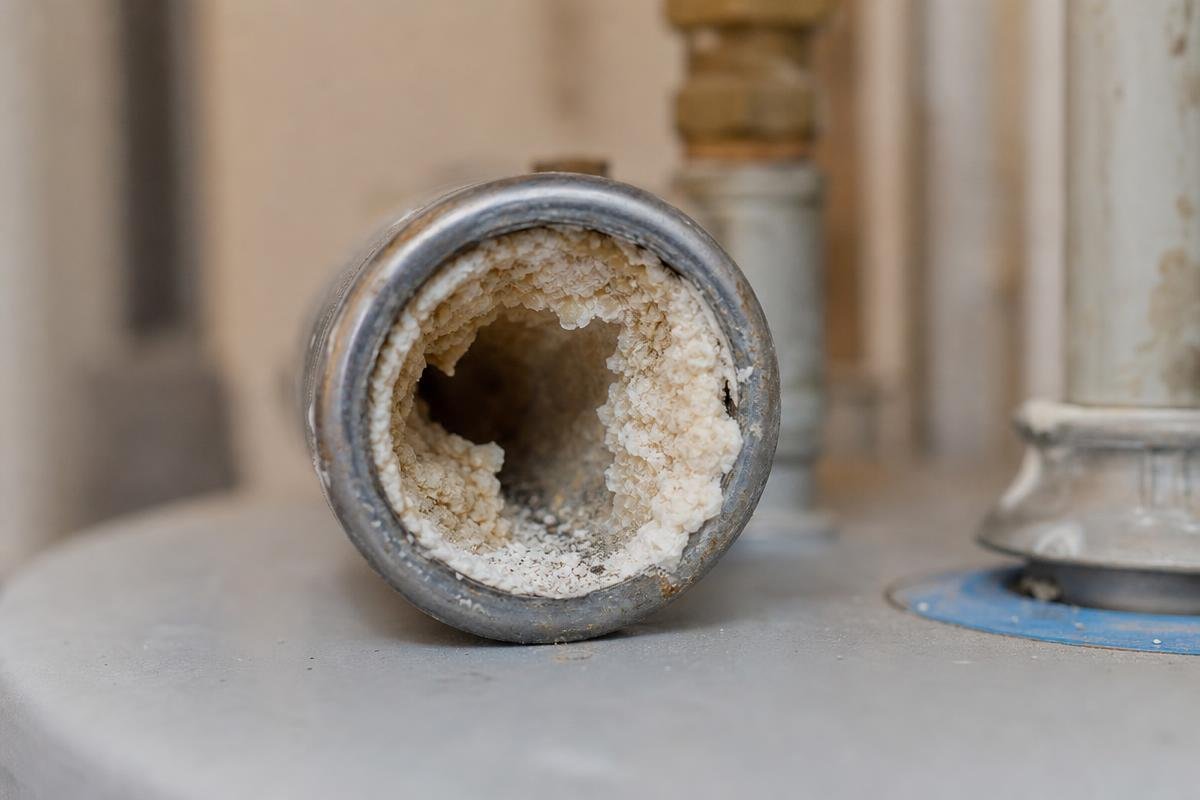
Scale on your showerhead. Cloudy film on clean glasses. A water heater that works harder every year. Your tap water comes from Lewisville Lake, processed through a municipal treatment plant before it reaches your fixtures. By the time it gets to you, it measures well past the very hard threshold.
That hardness level is not a health risk. It is a plumbing and appliance risk, and there is a real difference. At these levels, a household of four can deposit several pounds of calcium carbonate scale per year inside water heaters, dishwashers, and supply lines. That scale acts as insulation inside your tankless water heater, forcing the unit to burn more energy to hit the same output temperature. Over a few years, it shortens equipment life noticeably.
Why Hard Water Hits Plumbing Systems Harder Here
The Colony sits on the edge of the Blackland Prairie clay belt, which adds a layer of mechanical stress to supply lines that are already contending with hard water scale. Expansive clay shifts with our wet-to-dry seasonal swings, stressing joints and fittings at the same time mineral buildup narrows them. That is two problems compounding each other at once.
There is a third factor most homeowners miss. Local disinfection uses chloramines rather than free chlorine, and as noted above those are harder to remove and require catalytic carbon media. Chloramines also degrade rubber gaskets and O-rings in older fixtures over time. That degradation is a slow-leak precursor, which is why we recommend leak detection for older homes in this area. It is why Colony homeowners often need both a softener and a carbon filter, not one or the other.
Your water is harder than most cities in North Texas. Schedule a water test and we will tell you exactly what your home needs.
Which System Do You Need? A Plain-Language Decision Guide
Run through this list. Your answers tell you which system belongs in your home.
Signs You Need a Water Softener
- White or yellow scale building up on faucets, showerheads, and drain openings
- Soap that won't lather, no matter how much you use
- Laundry coming out stiff or dingy after a normal wash cycle
- Your water heater running longer than it used to, or your energy bill creeping up
- Dishwasher leaving spots and film on glassware
- A hardness test result above 7 grains per gallon
If your tankless unit is scaling up faster than expected, hardness is almost certainly the reason.
Signs You Need a Water Filter
- Tap water smells like chlorine or has a chemical aftertaste
- Your home was built before 1986 and may have copper or brass fittings with lead solder
- You have infants or immunocompromised household members
- You received a boil-water notice recently
- You're on a well or secondary water source with an unknown contaminant profile
When You Need Both
If your checklist has items in both columns, you need both systems. That is the honest answer for most homes in this area. Very hard water plus chloramine disinfection is a dual problem. One system does not fix the other.
Installation order matters. Start with a sediment pre-filter, then the softener, then a catalytic carbon post-filter or a reverse osmosis unit at the point of use. Skipping that sequence cuts the life of every component downstream. If you're weighing what else hard water may already be doing to your supply lines, that's worth a separate look before you install anything.
Salt-Free Water Conditioners: The Third Option Worth Knowing
No salt. No regeneration cycle. No brine dumped down the drain. A salt-free water conditioner sounds like the best of everything, and for some homes it genuinely is, but it works differently than most people expect.
These systems use a process called template-assisted crystallization, or TAC. Instead of pulling calcium and magnesium out of the water, TAC converts those minerals into microscopic crystals that stay suspended in the water rather than bonding to pipe walls or appliance heating elements. Your water still tests as hard on a strip. Scale buildup on pipes and inside a tankless heater drops significantly. Soap lathering does not improve. Spotting on fixtures may still show up.
That distinction matters for Carrollton and Plano homeowners too, not just those in The Colony dealing with very hard water off the treatment plant. A salt-free conditioner protects appliances and supply lines without adding sodium to your water, which is a real benefit if someone in your household watches sodium intake.
The honest trade-off: it does nothing for chloramines, taste, or odor. You still need catalytic carbon media to address that. A conditioner alone is not a complete answer to hard water treatment in North Texas. It is one tool, and a useful one, but not the only one your home may need.
What Aqua Pure Plumbing Installs and Why It Matters Who Does the Work
Wrong bypass valve placement. Incorrect drain line routing for brine discharge. An undersized pre-filter housing that voids your equipment warranty before the first regeneration cycle. These are not edge cases. They happen when water treatment gear gets installed by someone who treats it like a DIY project.
Aqua Pure Plumbing installs whole-house softeners, whole-house carbon filtration systems, under-sink reverse osmosis units, and combination softener-plus-filter setups, handling every water line connection, drain tie-in, and permit requirement a licensed plumber is required to touch.
Devan, who neighbors in Carrollton and Plano have recommended to each other for exactly this kind of work, sizes each system to your household's actual water usage and hardness level, not a one-size-fits-all spec. That matters when your water tests very hard and your tankless unit is already showing scale. If you want to know more about who does the work, read about our team and how we operate.
Our office is right here at 1671 Riverview Dr Ste 205, The Colony, TX 75056. If your water heater is already taking the hit from hard water scale, our tankless service pairs directly with a new softener install.
Frequently Asked Questions
Does The Colony have hard water?
Yes, and it is not borderline hard. Water sourced from Lewisville Lake consistently tests in the 15 to 20 grains per gallon range, which puts it firmly in the very hard category. Scale is already building inside your water heater and dishwasher right now.
Can I use a water filter instead of a water softener?
A filter and a softener solve different problems. Filters remove chloramines, sediment, and dissolved metals. They do not remove calcium and magnesium. If hardness is your primary issue, a filter alone will not stop scale buildup.
Will a water softener fix the taste and smell of my tap water?
No. A softener swaps hardness minerals for sodium. It does not touch chloramines, which cause that chemical taste and odor. An activated carbon filter or a reverse osmosis system at the drinking tap is what handles taste and odor.
How much does it cost to install a water softener or water filter in The Colony?
Cost depends on system type, household size, and how complex the installation is. We give you a firm price before any work begins, with no surprise charges after the fact. Financing options are available if you need them.
Do water softeners add a lot of sodium to drinking water?
At typical local hardness levels, a standard ion exchange softener adds roughly 20 to 40 mg of sodium per 8 oz glass. For most people that is negligible. If sodium intake is a medical concern, potassium chloride is an alternative regenerant, or an RO system at the drinking tap removes the added sodium entirely.
How do I know which system is right for my home before I buy anything?
Start with a water quality test. A test shows your actual hardness level, chloramine concentration, and any other contaminants present. We recommend a system based on real numbers, not a generic package.
Your water is hard. That is not a maybe. Scale is building inside your water heater right now, and if your tap smells like a swimming pool, a softener alone will not fix that. Our team is at 1671 Riverview Dr Ste 205 in The Colony, and we install the system your household's actual water demands.
Need a licensed plumber in The Colony?
We answer 7 days a week, 8 AM to 6 PM, with same-day service across The Colony and 13 nearby DFW cities.