
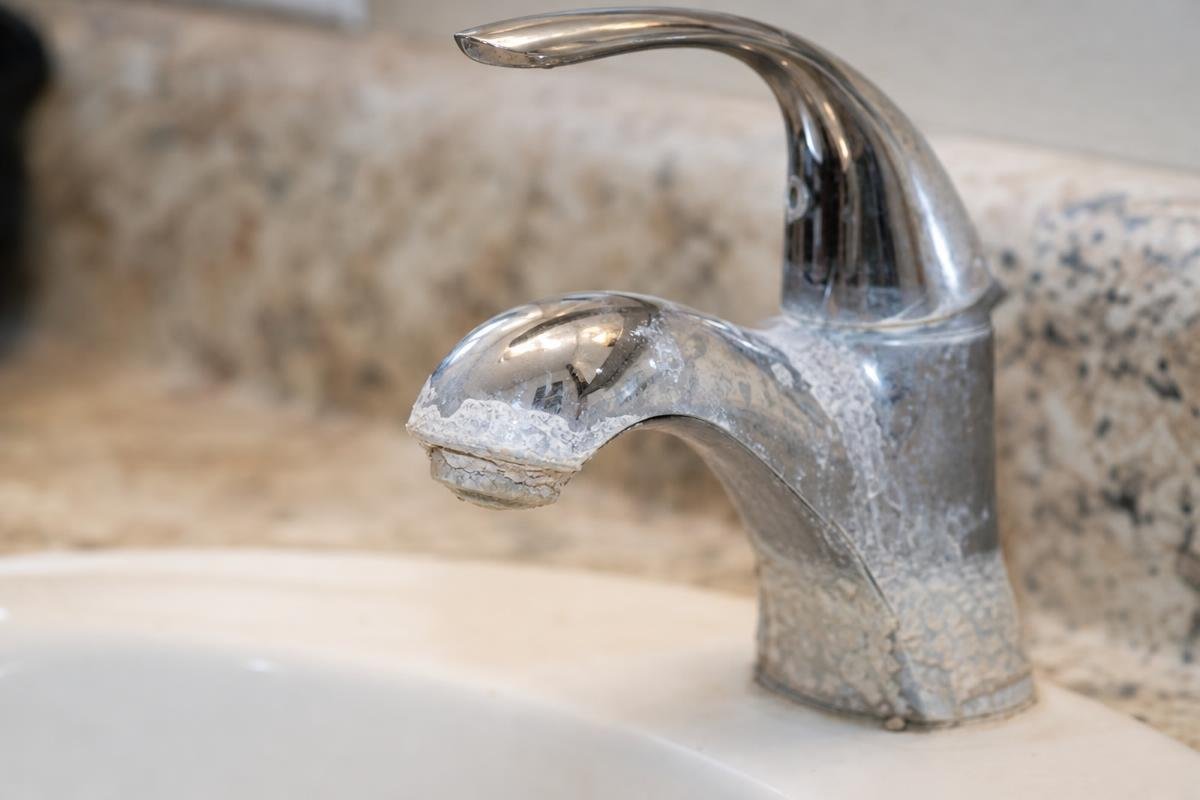
The Colony's municipal water supply pulls from Lake Lewisville, and it consistently tests in the hard to very hard range, typically running 8 to 12 grains per gallon depending on the source and season. That mineral load quietly damages your pipes, fixtures, and water-using appliances long before you notice anything obvious. Knowing the hard water signs early gives you a real chance to protect your plumbing before it becomes a costly repair. Our licensed team at Aqua Pure Plumbing works out of 1671 Riverview Dr Ste 205 in The Colony, and we see this damage in homes across the city every week.
Seeing white buildup, weak water pressure, or spotty dishes? Let us take a look before the damage goes deeper. Call us today at (945) 500-8335.
Key Takeaways
- The Colony's water typically runs 8 to 12 grains per gallon depending on the source and season, placing it in the hard to very hard range.
- Hard water signs include white scale buildup, soap scum, low water pressure, and spotty dishes or glassware.
- Mineral scale inside your pipes restricts flow and forces your water heater to work harder, raising energy costs over time.
- Homes built before 1985 near Main Street and Windhaven Parkway with galvanized or copper supply lines face the highest risk of hard water buildup.
- Catching the damage early can prevent pipe corrosion, appliance failure, and expensive slab leak repairs down the road.
What to Do About Hard Water Signs in The Colony, TX
You have probably noticed the white crusty buildup around your faucets, or the way your soap never quite lathers the way it should. Maybe every glass you pull from the dishwasher comes out spotted. These are not cosmetic annoyances. They are signs of hard water, and in North Texas they point to a systemic plumbing problem quietly building inside your pipes.
Your municipal water draws from Lake Lewisville, which carries a naturally high mineral load. That is a geological fact of the Blackland Prairie region, not a water quality failure. But it does mean hard water is the baseline reality for nearly every property in this area, not the exception.
Here are 8 hard water signs, what each one means for your faucets, fixtures, and supply lines, and what to do before the damage compounds into something far more costly to fix.
What Makes Water 'Hard' and Why The Colony Homes Are Especially Vulnerable
Hard water is water that carries a high concentration of dissolved calcium and magnesium, and The Colony homes are especially vulnerable because aging galvanized pipes combined with 8 to 12 GPG mineral loads accelerate scale buildup faster than newer construction. These minerals are harmless to drink, but they leave deposits on everything they touch: your faucets, your pipes, your water heater, your dishes. Over time, those deposits build up and cause real damage.
How Mineral Content Is Measured
Water hardness is measured in grains per gallon, or GPG. Soft water tests below 1 GPG. Hard water starts at 7 GPG. Once you cross 10.5 GPG, you are in the very hard range. At 7 GPG, you notice soap scum and spotted dishes. At 10 GPG and above, scale builds inside your pipes fast enough to reduce water pressure within just a few years. That is not a slow, invisible problem. You feel it.
The Colony's Water Source and Hardness Levels
Local water comes primarily from Lake Lewisville and the Trinity River system. Both sources run through Blackland Prairie geology, which naturally loads the water with calcium and magnesium before it ever reaches a treatment plant. Municipal treatment removes bacteria and contaminants, but it does not strip out minerals. What comes out of your tap typically runs 8 to 12 GPG depending on the season and source blend, putting it in the hard to very hard range and well above the point where scale damage to pipes and appliances becomes a serious concern.
This is not unique to one city. Frisco, Plano, and Carrollton draw from the same North Texas surface water sources and face the same challenge. But older supply lines, like the galvanized steel pipes in The Colony homes built near Main Street in the late 1970s, make mineral buildup more damaging here than in newer construction. If your home has aging pipes, hard water accelerates corrosion fast enough to create slab leak risks in lines buried under your foundation.
8 Hard Water Signs You Should Not Ignore in Your Home
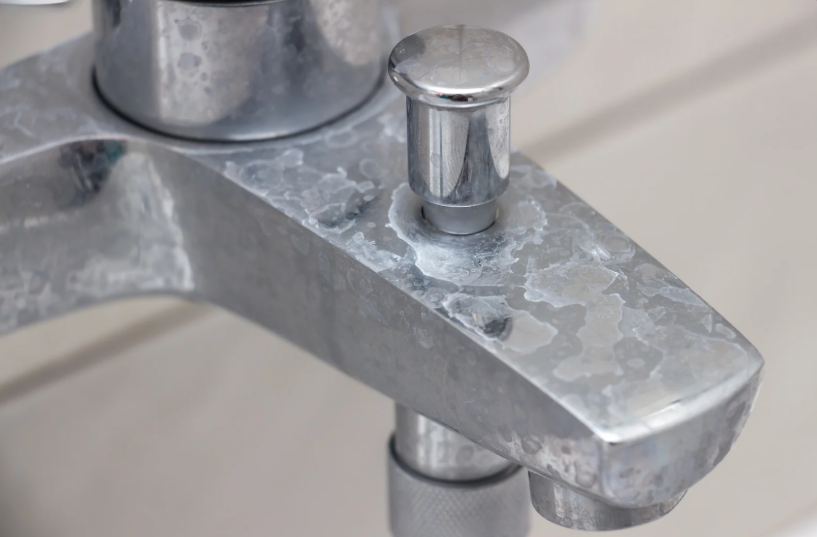
Hard water damage rarely announces itself all at once. It builds slowly, sign by sign, until a fixture fails, a pipe clogs, or a water heater gives out years ahead of schedule. Here are the eight signs we see most often in North Texas homes, and what each one actually means for your plumbing.
Sign 1: White or Yellowish Crust on Faucets and Showerheads
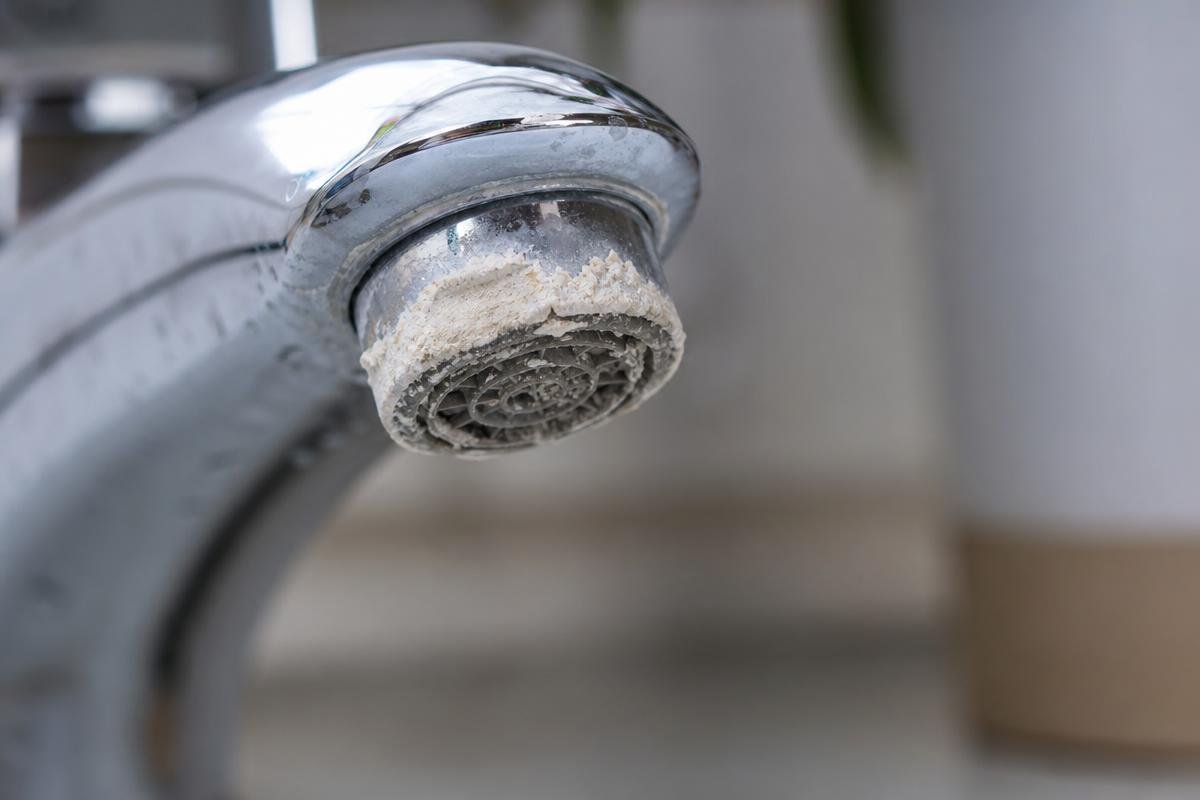
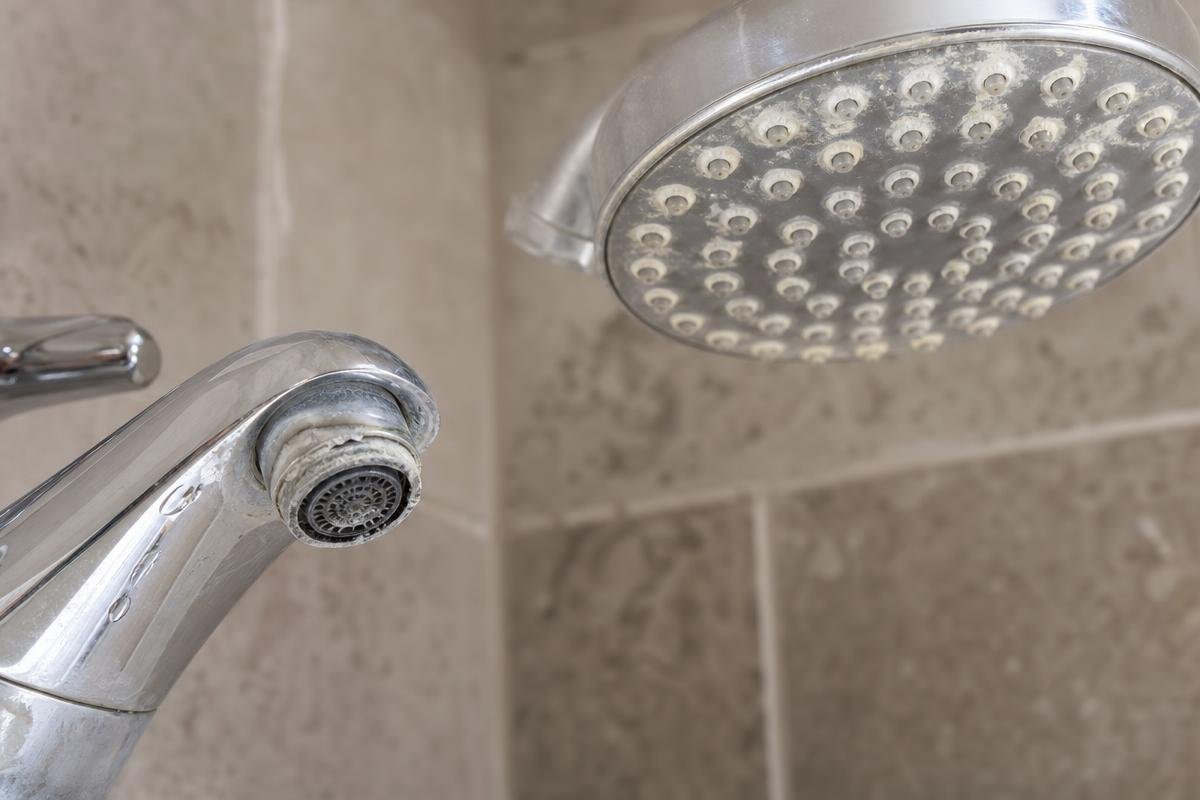
That chalky buildup around your faucet aerator and showerhead nozzles is calcium carbonate and magnesium depositing as water evaporates. It is one of the most common signs of hard water we find during a fixture inspection. The same scale is forming inside your supply lines and valve bodies, narrowing the passage water flows through. Our faucet repair and installation team removes scale from valve bodies regularly before it causes a full blockage.
Sign 2: Soap Scum That Will Not Stay Gone
Soap scum on your shower walls and tub is not a cleaning failure. It is calcium stearate, a compound formed when hard water minerals react chemically with soap. It also cuts the effectiveness of your shampoo, body wash, and detergents, so you end up using more product without better results.
Sign 3: Spotted or Hazy Dishes After the Dishwasher
White spots and a cloudy film on glasses after a full wash cycle are a reliable indicator of the mineral load moving through your pipes. Your dishwasher is working harder to compensate, which shortens its lifespan. This sign alone is worth paying attention to, even though it looks purely cosmetic.
Sign 4: Gradual Loss of Water Pressure
Scale accumulates on the interior walls of supply lines, slowly narrowing the diameter water travels through. In older galvanized steel lines found in The Colony's Ridgepointe and Stewart Peninsula neighborhoods built in the early 1980s, this process moves faster than most homeowners expect. Gradual pressure loss is a plumber's job to diagnose. Sudden pressure loss is different. Address it before it becomes a costly problem, because sudden drops can signal a pipe failure that warrants professional leak detection.
Sign 5: Stiff, Faded Laundry
Calcium and magnesium ions bond with fabric fibers during the wash cycle, leaving clothes rough and colors dull faster than normal wear would explain. This is one of the hard water signs homeowners often overlook because they blame the detergent. The same minerals coat your washing machine's water inlet valve and drum interior over time. If your laundry feels coarse and colors are fading quickly, hard water effects on your appliances are already underway.
Sign 6: Faucet Washers and Cartridges Wearing Out Too Fast
Mineral deposits grind against rubber seals and ceramic disc cartridges every time a faucet opens or closes. If you are replacing washers or cartridges more often than you should, mineral buildup inside the valve body is the likely cause. Our faucet repair service can inspect the valve body and clear scale before the seat itself is damaged.
Sign 7: Water Heater Making Popping or Rumbling Sounds
Sediment, mostly calcium and magnesium scale, settles at the bottom of your tank and forms a layer between the water and the burner. The popping or rumbling you hear is water trapped beneath that sediment layer boiling unevenly. Your heater runs longer cycles, uses more energy, and wears out faster. Our water heater service includes sediment flushing that restores efficiency and extends the life of the unit.
Sign 8: Rust-Colored or Brownish Water from Your Taps
Hard water scale can actually accelerate corrosion inside aging steel pipes, and discolored water is one of the more serious signs of hard water attacking your supply lines. When the mineral layer that forms on pipe walls breaks down unevenly, rust particles enter your water stream. In homes with older supply lines embedded in a concrete slab, this is a warning sign that needs prompt attention. Discolored water paired with any drop in pressure is a reason to schedule a slab leak inspection before pipe corrosion causes foundation damage.
What Hard Water Does to Your Pipes Over Time
Hard water damage on pipes is not sudden. It builds in layers, quietly narrowing your supply lines and stressing your plumbing system for years before anything obvious breaks. Hard water effects on pipes are cumulative, and older pipe materials make the problem worse faster.
Scale Buildup Inside Supply Lines
Calcium carbonate scale sticks to pipe walls and adds layers with every gallon that flows through. In galvanized steel pipes common in neighborhoods near Windhaven Parkway and Lewisville Lake Estates, where many properties were built between the late 1970s and early 1980s, scale combines with rust to create a rough interior surface that catches debris and steadily chokes flow. In copper pipes, sustained high mineral concentrations can trigger pinhole corrosion over time.
Reduced water pressure at your faucets is often the first sign you notice. By then, the restriction has been building for years. Our same-day drain cleaning service can help clear mineral and debris buildup before it becomes a costly pressure problem.
The Accelerated Wear on Water Heaters and Appliances
Tank water heaters accumulate sediment at the bottom of the tank, cutting effective lifespan by several years compared to manufacturer estimates. The trouble reaches well beyond the pipes themselves. Dishwashers, ice makers, and washing machines all have water inlet solenoids and spray nozzles that scale progressively restricts.
Tankless water heater heat exchangers are especially vulnerable. Scale buildup inside the exchanger forces the unit to work harder, and a fully clogged exchanger can trigger a complete shutdown. If your tankless unit is running hot or cycling off unexpectedly, our tankless water heater descaling service can restore normal function before the exchanger fails entirely.
When Scale Contributes to Slab Leaks
North Texas homes sit on concrete slabs over Blackland Prairie clay soil. Copper supply lines embedded in or running beneath those slabs face hard water from the inside and aggressive, shifting soil chemistry from the outside. That combination accelerates pinhole corrosion in slab-embedded copper lines.
A slab leak left unaddressed causes foundation damage that costs far more to repair than the plumbing fix itself. Warm spots on your floor, unexplained spikes in your water bill, or the sound of running water when all fixtures are off are warning signs you should act on right away. Our slab leak repair team can locate and fix the problem before it reaches your foundation.
Why Ignoring Hard Water Signs Costs More Than Fixing Them
Mineral damage to your plumbing builds quietly. There is no single dramatic failure moment. Instead, you lose money in small amounts every month until a bigger repair forces your hand.
The Hidden Cost in Your Monthly Energy Bill
U.S. Department of Energy data shows that just a quarter-inch of sediment in a water heater tank can cut efficiency by up to 40 percent. Texas homeowners run their water heaters year-round. That inefficiency shows up on every utility bill, every month, not just in winter.
Sediment from hard water effects on pipes and tank walls is the main cause. Our water heater services, including sediment flushing, can recover that lost efficiency before your energy costs climb further.
Premature Fixture and Appliance Replacement
Faucet cartridges, toilet fill valves, showerhead diverters, and dishwasher spray arms all carry rated lifespans based on normal water conditions. Persistent scale shortens those lifespans significantly. Replacing a cartridge is minor. Replacing the entire faucet body because scale cracked the ceramic disc seat is a larger job.
The same applies to your water heater. Replacing it five years early because sediment caused tank failure is a real, unplanned expense. Our team handles toilet fill valve and flapper repairs that hard water accelerates, catching those failures early.
Water Damage and Repair Bills That Compound Fast
Pinhole leaks in slab-embedded lines or corroded supply stub-outs behind walls do not announce themselves. By the time water appears at a baseboard or a floor buckles, the damage has been building for weeks. In North Texas, slab-on-grade construction over expansive clay soil makes those hidden leaks especially destructive.
Mold remediation, drywall replacement, and flooring repairs stacked on top of the plumbing fix can turn a manageable repair into a major project. Non-invasive leak detection can find hidden leaks before it becomes a serious problem, before that cascade of secondary damage begins.
Hard water costs you money every month you wait. Call us at (945) 500-8335 to schedule a plumbing inspection and stop the damage now.
What To Do When You Spot Hard Water Signs in Your Home
Spotting signs of hard water damage in your house means you have two jobs ahead of you: fix what is already broken, then stop it from happening again. The order matters more than most people realize.
Start With a Professional Plumbing Assessment
Before you buy any equipment or pour money into water treatment, get your plumbing inspected first. A licensed plumber should check water pressure at multiple points, inspect accessible supply lines, and look at every fixture showing scale or reduced flow. Our team can cover drain line assessment for scale-related buildup during that same visit, so you get the full picture in one appointment.
This step tells you whether you are dealing with early-stage mineral buildup a softener can manage, or actual pipe damage that needs repair first. Skipping the inspection and going straight to a softener is a mistake. Installing a softener on compromised pipes can change the water chemistry in ways that speed up certain types of corrosion, because the scale that was forming had actually been partially buffering the pipe walls.
Address the Damage That's Already Done
Repairs cover a range of issues depending on what the assessment finds. Corroded faucets, sediment-clogged water heater tanks losing efficiency to mineral buildup, and scale-narrowed supply lines all need to be fixed before any treatment system goes in. Our full range of plumbing repair services covers every category that hard water typically damages, from fixtures through to slab-embedded lines.
Consider Long-Term Water Treatment Options
Once repairs are done, a whole-home ion-exchange water softener is the most direct way to prevent scale from forming again. It replaces calcium and magnesium ions with sodium ions throughout your entire system. If you prefer to avoid added sodium, salt-free template-assisted crystallization conditioners are a real alternative, though neither type is a substitute for plumbing repairs already needed.
Your plumber should confirm which system is compatible with your pipe material and water heater type before anything is installed. We are based at 1671 Riverview Dr Ste 205, The Colony, TX 75056 and serve properties across the area, so call us before you buy equipment.
Hard Water and Plumbing in The Colony and What Local Homeowners Are Dealing With
This is a regional challenge, not just a personal one. Every city in this part of DFW draws from the same surface water sources, and every homeowner here is dealing with water hardness signs to some degree. What varies is how your plumbing has held up over time.
Neighborhoods Where Pipe Age Compounds the Problem
If your property sits in one of the older sections of town, near the Main Street corridor or the Windhaven area, your supply lines may be galvanized steel or early copper installed in the late 1970s and early 1980s. The Colony incorporated in 1969, so many of its first residential streets predate the pipe materials we install today. Those pipes have been fighting mineral buildup for 40 to 50 years. Scale accumulates on the inside walls, pressure drops, and corrosion sets in faster than it would in newer pipe materials.
Newer developments like Castle Hills and The Tribute were built with PEX and CPVC piping, which handles scale differently. But hard water still quietly damages fixtures, water heaters, and appliances in those properties. When scale reaches the drain lines, standard snaking often is not enough. Our hydro jetting service clears mineral and grease buildup that a snake simply cannot reach.
How The Colony's Water Compares to Neighboring Cities
Plano, Frisco, and the Carrollton area all pull from similar North Texas surface water sources. Water hardness levels across this region typically fall in the 8 to 12 grains per gallon range depending on source and season, placing all of these communities in the hard to very hard category. The difference between cities is minor. The shared reality is that every household here benefits from knowing the hard water signs before they become a costly plumbing problem.
Our team serves neighborhoods across this entire service area, and we are based locally at 1671 Riverview Dr Ste 205, The Colony, TX 75056. No guesswork about who to call.
Frequently Asked Questions
How do I know if The Colony's water is actually hard?
The city publishes an annual Consumer Confidence Report that includes hardness measurements for the municipal supply. You can also pick up an inexpensive water hardness test strip kit at most hardware stores in the Allen or Plano area. If you want a precise reading alongside a fixture inspection, we can test at the tap and check your plumbing in the same visit.
Can hard water make me sick?
Hard water is safe to drink. Calcium and magnesium are naturally occurring minerals, not health hazards. The damage is entirely to your plumbing, fixtures, and appliances, not to you.
How fast does hard water scale build up inside pipes?
At local hardness levels, measurable scale can form inside a water heater tank within the first year without treatment. Hot water lines scale faster than cold lines because heat speeds up mineral precipitation. Significant flow restriction in supply lines typically develops over several years, but the buildup starts immediately.
Will a water softener fix the damage that's already happened to my pipes?
A softener stops new scale from forming, but it does not remove existing deposits. Softened water can slowly loosen scale and carry it downstream, which can temporarily clog aerators or affect faucet cartridges. Existing damage needs a plumber to assess before or alongside any softener installation.
How much does it cost to repair hard water damage to plumbing?
Cost depends entirely on what has been damaged and how far the damage has progressed. A water heater flush or faucet cartridge swap is a minor service call. A corroded supply line section is a larger job. A slab leak caused by pipe corrosion is the most significant repair you can face. We give you clear pricing before any work begins, no guesswork.
Is hard water worse for tankless water heaters than tank heaters?
Yes. Tankless heat exchangers heat water rapidly through very narrow passages, which makes them especially vulnerable to scale. A scaled exchanger loses efficiency, triggers error codes, and can shut the unit down completely. In this area, tankless water heater descaling should happen every 12 to 18 months to keep the unit running right.
If you are seeing any of these signs in your home, do not wait for a fixture to fail or a water bill to spike before you act. Call Aqua Pure Plumbing at (945) 500-8335 or visit us at 1671 Riverview Dr Ste 205, The Colony, TX 75056. We serve homeowners throughout the Frisco, Plano, Carrollton, Lewisville, and surrounding DFW area. We will inspect your plumbing, give you a clear picture of what hard water has done, and tell you exactly what it will cost to fix it before we touch a single pipe.
Ready to Get Started with Aqua Pure Plumbing?
Call (945) 500-8335 to speak with our team directly. We're ready to answer your questions, walk you through your options, and help you find the right solution for your needs. Whether you're just starting to plan or ready to move forward, we'll make the process simple and stress-free.
Reach out today and let's talk about how we can help.
Need a licensed plumber in The Colony?
We answer 7 days a week, 8 AM to 6 PM, with same-day service across The Colony and 13 nearby DFW cities.