
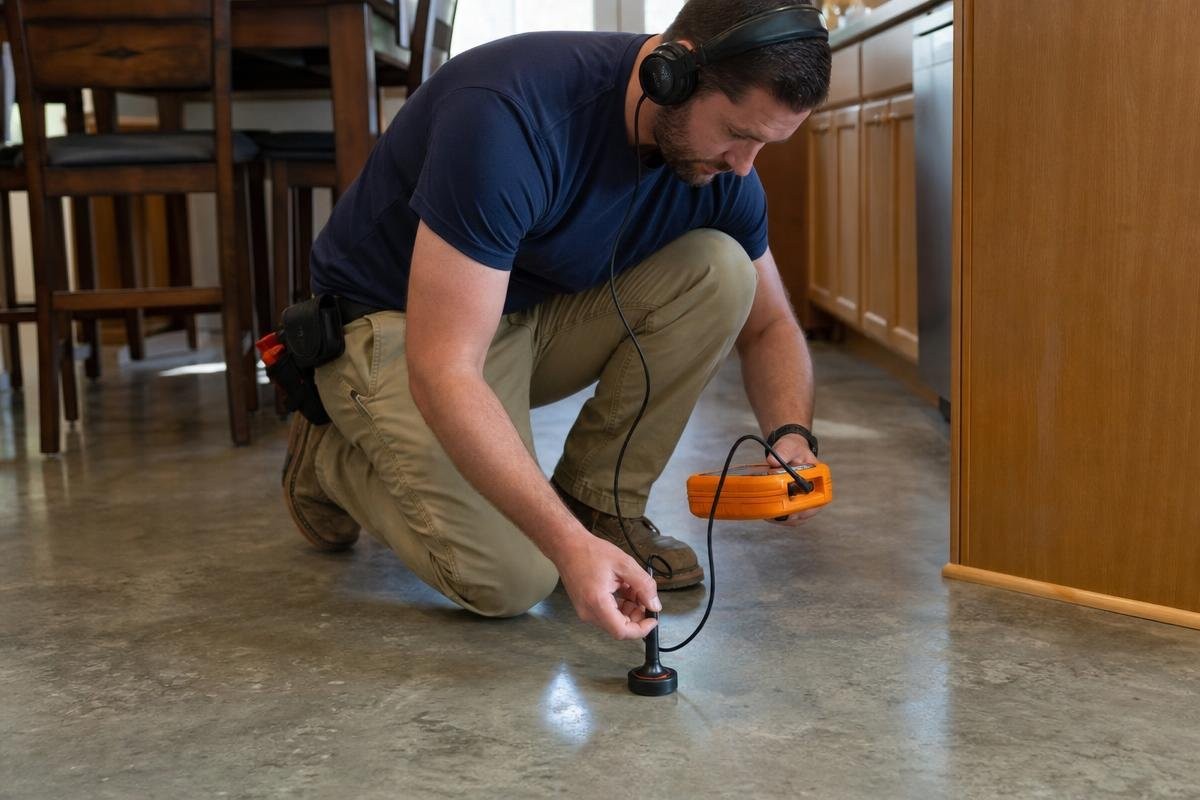
Hot spots on your floor. A water bill that jumped 25% for no reason. The sound of running water at 2 a.m. when every faucet in the house is off. These are the slab leak signs that homeowners in The Colony tend to dismiss until the damage is already done. We're Aqua Pure Plumbing, based right here at 1671 Riverview Dr #205, The Colony, TX 75056. These symptoms are not random quirks, and in this area they show up more often than most homeowners expect because of the soil and water conditions we deal with every day. We use non-invasive detection equipment to pinpoint a leak beneath your slab before we ever break ground, so we can usually tell you exactly where the problem is before it becomes a costly repair. A slab leak caught early is a repair. One ignored for weeks becomes a foundation problem.
Think you have a slab leak? Get a straight answer today.
Key Takeaways
- A water bill increase of 20% or more with no change in usage is one of the earliest slab leak signs to watch for.
- Warm spots on your floor, musty odors, and low water pressure can all point to a leak running beneath your slab.
- The Colony's expansive black clay soil shifts seasonally and puts real physical stress on buried copper supply lines.
- Cracks in walls, shifting tile, or doors that suddenly won't close can signal foundation movement caused by an active slab leak.
- Non-invasive leak detection lets us locate the problem without tearing up your floors before we know exactly where to dig.
Aqua Pure Plumbing has served The Colony and the surrounding communities for years, and Devan Adair, our licensed master plumber, leads our detection work. The six signs below explain what to watch for, how to confirm your suspicion, and what to do next if you suspect a slab leak.
What Is a Slab Leak and Why Are They So Common in The Colony?
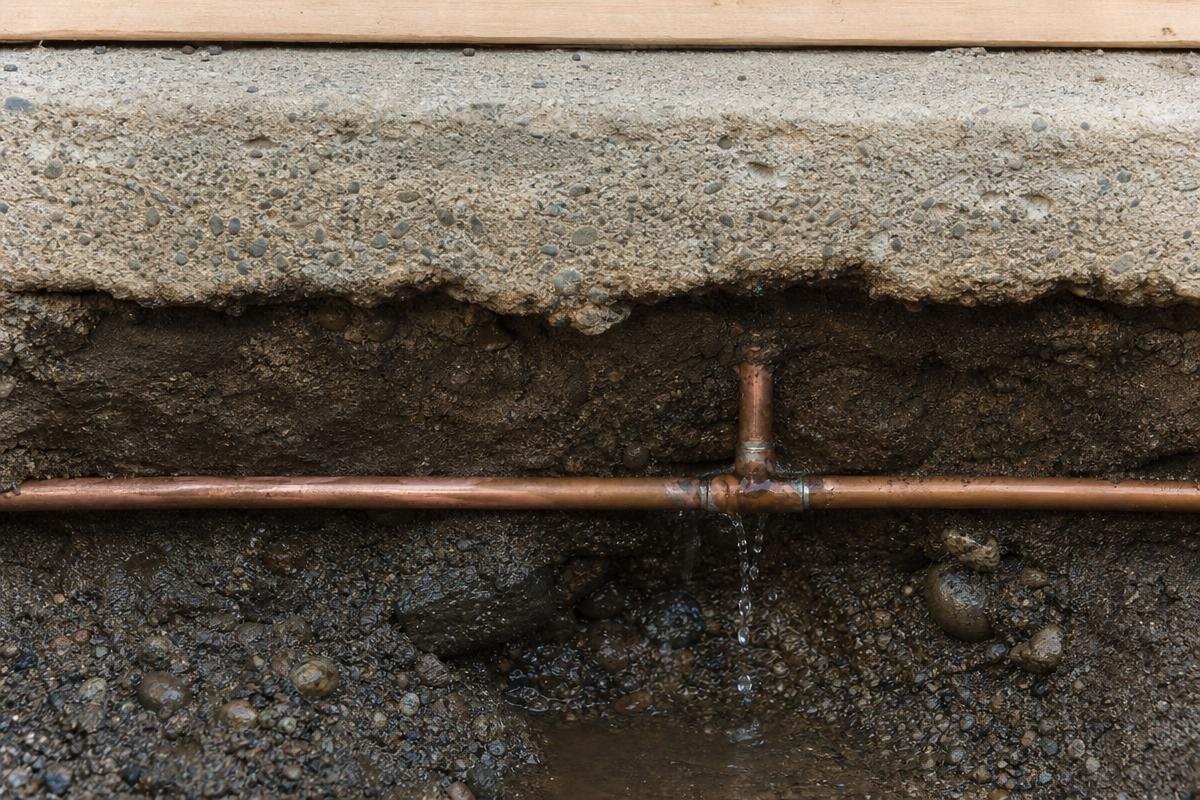
A slab leak is a water line failure that happens beneath your concrete foundation. The pipe cracks, corrodes, or develops a pinhole, and water escapes into the soil or wicks upward through the slab. It can run for weeks before you notice a single visible sign.
How Slab Leaks Form Under a Concrete Foundation
Most homes built in this area between the early 1980s and late 1990s have original copper supply lines running through or beneath the slab. Copper supply lines can last for decades, but service life varies with installation conditions, water chemistry, and soil movement.
When a copper pipe thins enough to fail under normal water pressure, water escapes into the surrounding soil. That water has nowhere obvious to go. It quietly saturates the ground beneath your slab, shifts soil, and eventually works its way upward. By the time you see a warm spot or a wet floor, the leak may have been running for a month or more.
Why The Colony's Clay Soil and Hard Water Make Things Worse
The soil under your slab is working against your pipes every single day. The expansive black clay common across neighborhoods like Stewart Creek Estates and The Cascades swells when it rains and shrinks during dry spells. That constant seasonal movement physically abrades and shifts buried copper lines from the outside.
Hard water can contribute to mineral buildup inside plumbing over time. Combined with soil movement, that can put added stress on older plumbing systems.
If you notice other causes of low water pressure in The Colony, a slab leak may already be part of the picture. Our team uses non-invasive leak detection in The Colony to pinpoint the failure without tearing up your floor first.
The 6 Warning Signs of a Slab Leak Every Homeowner Should Know
Slab leak symptoms rarely announce themselves all at once. Most homeowners notice one small thing, brush it off, and only connect the dots weeks later after real damage is done. Here are the six slab leak warning signs to watch for, what each one means, and when to act.
Sign 1: Your Water Bill Jumped With No Explanation
Pull up your NTMWD bill and compare this month's gallon usage to the same month last year. A jump of 20% or more with no change in habits is a red flag. Even a slow leak beneath the slab can waste hundreds of gallons per day without a single visible drop inside your home.
If your usage climbed and you did not fill a pool, add a sprinkler zone, or host extra people, the water is going somewhere. A slab leak is one of the most common reasons.
Sign 2: You Hear Running Water When Everything Is Off
Turn off every fixture in the house. Stand still and listen near the floor. A hiss, gurgle, or faint rushing sound coming through the slab or a wall is a classic slab leak symptom. It is easiest to hear at night when the house is quiet.
Then step outside and check your water meter. If the dial or digital display is still moving with everything off, water is actively escaping somewhere in your system.
Sign 3: Warm or Hot Spots on Your Floor
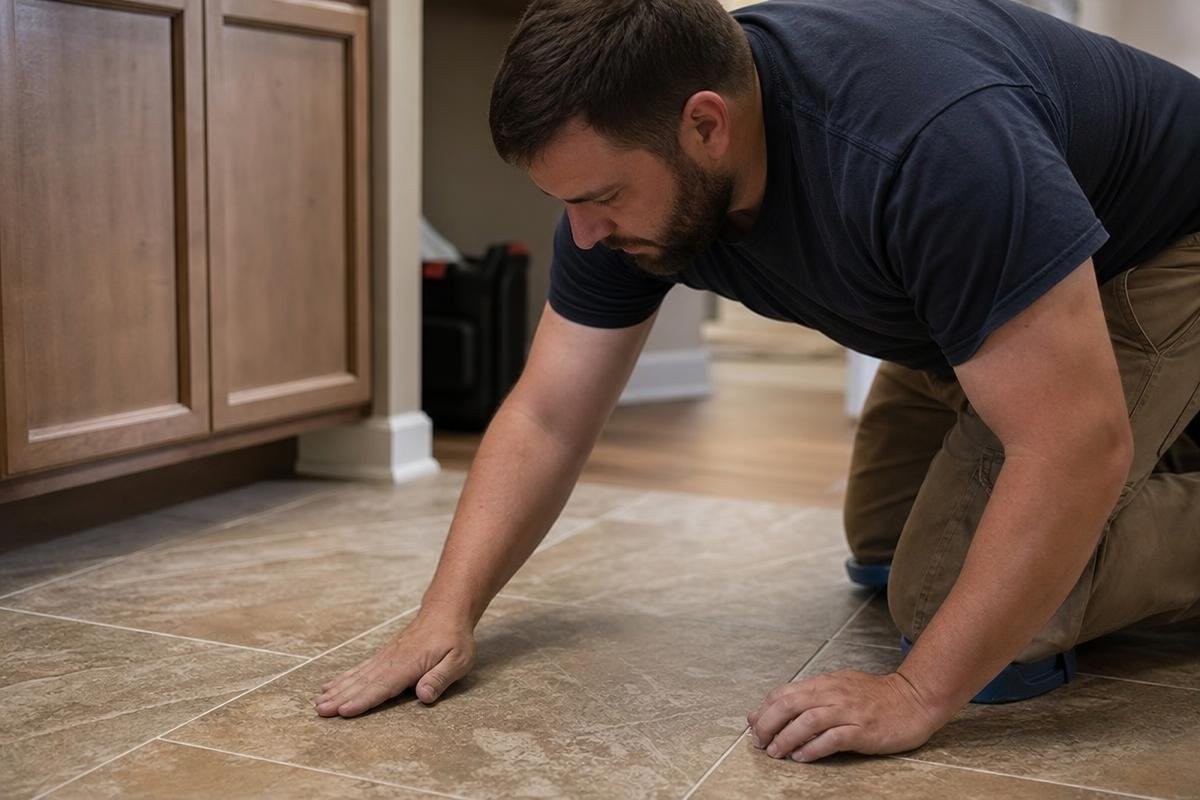
Hot water line leaks are the most common type of slab leak. When a hot supply line breaks beneath the slab, heat radiates up through the concrete. Press your palm flat to the floor in kitchens, hallways, and bathrooms. A patch that feels noticeably warmer than the surrounding floor is a problem.
The higher-end custom builds around The Tribute often feature hardwood or tile laid directly over slab, and owners there sometimes notice this warmth first. Carpet can hide it, so press down and feel rather than just looking.
Feeling a warm spot on your floor? Let us pinpoint it before you dig.
Sign 4: Moisture, Wet Baseboards, or a Musty Smell
Water wicking up through a concrete slab does not always pool visibly. It saturates the subfloor and soaks into wall cavities. You might notice damp baseboards, soft flooring near a wall, or a persistent musty smell at floor level with no obvious source.
Moisture can affect walls and flooring before the source is obvious. A persistent musty odor at ground level is worth investigating.
Sign 5: Sudden Drop in Water Pressure
A slab leak bleeds pressure directly from your supply line before water ever reaches a faucet or showerhead. If multiple fixtures throughout the house suddenly feel weak at the same time, that points to a supply-side problem, not a single clogged aerator or a fixture issue. There are other causes of low water pressure in The Colony worth ruling out, but a whole-house drop paired with any other sign on this list moves slab leak to the top of the list.
Sign 6: Cracks in Walls, Sticking Doors, or Popping Tiles
This is the sign most homeowners miss because it looks like a house-settling issue. Water saturating the clay soil beneath your slab causes uneven foundation movement. The result: hairline cracks in drywall or brick, tiles that crack or pop up from the floor, and interior doors that stick or will not latch.
These are late-stage signs. By the time your doors stop closing, the leak has been quietly working against your foundation for months. If you see any of these alongside a higher water bill or floor warmth, call for leak detection before the structural damage gets worse.
How to Confirm You Have a Slab Leak Before Calling a Plumber
Yes, you can do a quick check yourself before picking up the phone. It won't tell you where the leak is, but it will tell you if water is quietly escaping somewhere it shouldn't be. That's a useful thing to know.
The Water Meter Test: A Step-by-Step Guide
Your NTMWD meter sits near the curb and is one of the most honest diagnostic tools you have. Here's how to use it.
- Turn off every water-using fixture and appliance. That means faucets, toilets, the dishwasher, washing machine, and your ice maker. If you have an irrigation system, shut that off too.
- Find your water meter near the curb. NTMWD installs standard disc or digital units in most neighborhoods around the area. Lift the cover and locate the leak indicator, usually a small triangle or dial on the face of the meter.
- Watch the indicator. If it spins with everything off, water is actively escaping somewhere in your system.
- Record the reading, wait 30 minutes, check again. Any change in the number confirms an active leak. No change means the problem may be intermittent or already resolved.
This test confirms a leak exists. It does not tell you where the water is going.
What You Can and Cannot Diagnose on Your Own
You can confirm an active leak using the meter test. You can also identify surface slab leak symptoms like warm floor sections, wet baseboards, or a water bill that jumped without explanation. Those observations matter and you should write them down before you call.
What you cannot do is pinpoint the exact pipe location under concrete, determine whether it's a hot or cold supply line, or assess how much the foundation has shifted. That requires electronic and acoustic detection equipment that finds the exact break point without unnecessary cutting. That precise location work is how we find the problem before any repair work starts.
Guessing where to cut costs more than finding it right the first time.
What to Do Right Now If You Suspect a Slab Leak
You don't need to panic. But you do need to move quickly. Every hour water runs beneath your slab, the soil shifts more and your foundation takes on more stress.
Step 1: Shut Off Your Water Supply
Find your main shutoff valve. In most Colony-area homes, it's near the front of the house, at the meter box along the street, or inside a utility closet. Turn it off completely to stop active water loss and limit further saturation under the slab.
One caution: older homes in established neighborhoods sometimes have corroded or frozen shutoff valves. Do not force it. A stuck valve that breaks makes the situation worse. Call us instead and we'll handle it.
Step 2: Document the Damage
Before anything gets moved or dried out, take photos and video. Capture warm spots on the floor, wet baseboards, wall cracks, buckled flooring, and any visible moisture. Do it now, before repair work starts.
Coverage for a slab leak depends on the policy and the cause of the damage. Document the condition and contact your insurer before repairs begin.
Step 3: Call a Licensed Leak Detection Specialist
A general handyman cannot find a slab leak accurately. It takes a licensed plumber with acoustic or electronic detection equipment to pinpoint the break without tearing up your floor unnecessarily. Our team can typically get to you the same day.
If you suspect the problem might be on the drain side rather than the supply side, that's a different repair path entirely. Our sewer line replacement covers that scenario.
The longer water runs beneath your slab, the more your foundation moves, and foundation repair costs far more than pipe repair.
Suspect a slab leak? We'll get someone out to you today.
How Slab Leaks Are Repaired in The Colony
No, you don't always have to tear up your whole floor. The right repair method depends on where the leak is, how old your pipes are, and what your long-term plans are for the home. We look at all three before we recommend anything.
Spot Repair vs. Full Repipe: Which Option Fits Your Home?
A spot repair means we cut a small section of concrete directly above the leak, replace the damaged pipe segment, and patch the slab. It's a solid choice when you have a single, isolated failure in a pipe that's otherwise in decent shape.
But if your home was built before 1995 and still has original copper running beneath the slab, one spot repair may not be your last. The same hard water and soil movement that caused this leak has been working on every other pipe in that system. In those cases, a full repipe makes more sense. We run new supply lines through the walls or attic, bypassing the slab entirely. In some cases, the scope may include replacing an older cast iron sewer system alongside a full-house repipe. For sewer-side concerns, our sewer line replacement covers that ground.
Trenchless Repair: Protecting Your Floors and Landscaping
If you have custom tile, hardwood, or finished landscaping you'd rather not disturb, repair approaches that minimize disruption are worth discussing. The right approach depends on the leak location and the condition of the plumbing system.
This option is especially practical for homeowners with premium flooring who want to avoid a full demolition footprint. We pinpoint the exact location first, so we're never guessing about where to start. Every home gets evaluated on its own. We'll give you a straight answer on which method fits yours.
Why The Colony Homeowners Trust Our Team for Slab Leak Detection
We are not a regional call center routing your job to whoever is available three towns over. Our team works out of 1671 Riverview Dr #205, The Colony, TX 75056, which means when you call about a slab leak, same-day response is a real commitment, not a marketing line. Devan and the crew know this area's clay soil, aging copper lines, and hard water firsthand.
We use electronic and acoustic equipment to pinpoint the break before anyone touches the concrete. That matters. Less guesswork means less slab removal, less mess, and a faster repair. We can usually tell you exactly where the leak is before we ever start cutting.
We aim to provide prompt, professional service on every job, whether it is a slab leak in a home near Lake Lewisville or a supply line issue in an older neighborhood off Main Street.
When you call us, you get a straight answer, not a sales pitch. Learn more about Aqua Pure Plumbing and the team behind the work.
Frequently Asked Questions
What is the difference between a regular pipe leak and a slab leak?
A regular leak shows up at a fixture, under a sink, or at a visible joint. You can see it or find it fast. A slab leak is buried beneath your concrete foundation, so you only see the downstream effects: a climbing water bill, warm floors, or damp carpet. The meter test tells you water is escaping somewhere. Only electronic or acoustic detection equipment confirms it is under the slab rather than inside a wall.
How much does slab leak repair cost in The Colony?
There is no honest flat number we can give you here. Cost depends on whether it is a spot repair or a full repipe, how deep the slab is, and what pipe material is involved. What we can promise is a firm price after the detection inspection, before any work begins. No guesswork, no surprises. For a broader look at what plumbing repairs cost in The Colony, our blog breaks it down clearly.
Can a slab leak damage my foundation?
Yes, and in this area it happens faster than most homeowners expect. Water saturating the clay soil beneath your slab causes uneven settling and heaving. You will start to notice sticking doors, wall cracks, and tile separating at the grout lines. The longer it goes, the worse the foundation movement gets.
How long does slab leak repair take?
Detection itself usually takes a few hours. A spot repair, including concrete patching, typically wraps up in one to two days. A full repipe or reroute runs two to four days depending on your home's size and layout. We give you a realistic timeline before we start.
Will my homeowner's insurance cover a slab leak?
Coverage depends on your policy and the cause of the damage. Document the condition and contact your insurer before repairs begin. Our team can provide the written diagnosis your adjuster needs to process the claim.
What happens if I ignore a slab leak?
The water keeps saturating the soil, which accelerates foundation movement. Mold grows inside the subfloor and walls, creating a real health hazard. What starts as a pipe repair quietly becomes a foundation repair. That is a much bigger bill.
Can I stay in my home during slab leak repairs?
For most spot repairs, yes. Water will be off during active work, but the home stays habitable. A full repipe may require a day or two without water in certain areas. We coordinate the schedule to keep disruption as short as possible.
If you noticed any of the six signs covered in this article, do not wait to see if it gets better on its own. It will not. Call our team at (945) 500-8335 or book online for same-day response. We serve Frisco, Plano, McKinney, Carrollton, Allen, Lewisville, Richardson, Flower Mound, Coppell, Farmers Branch, Addison, Highland Village, Lake Dallas, and the surrounding area. The sooner we find it, the less it costs to fix.
Need a licensed plumber in The Colony?
We answer 7 days a week, 8 AM to 6 PM, with same-day service across The Colony and 13 nearby DFW cities.