
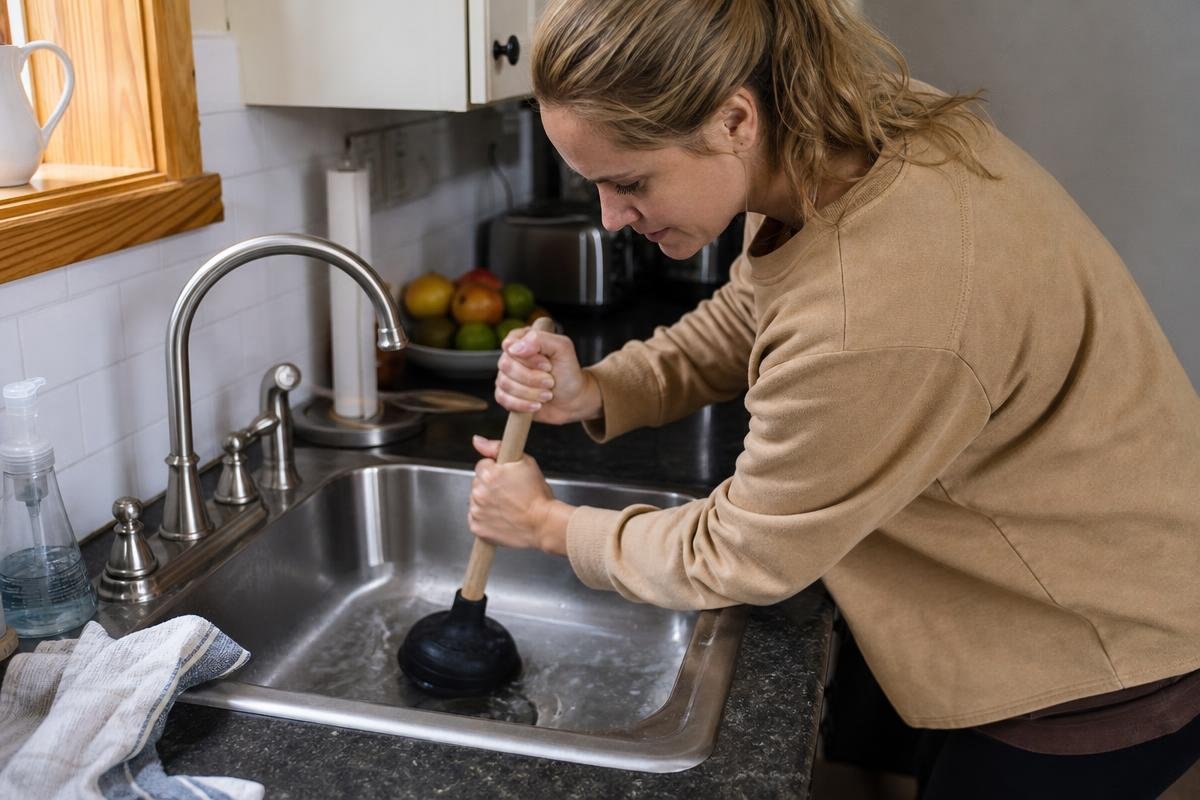
A slow or stopped drain is one of the most common plumbing problems homeowners in The Colony face, and knowing how to unclog a drain yourself can save you time and money. Some clogs clear with a plunger or a simple fizzing flush. Others, especially in older homes near The Cascades with aging cast iron lines, run deeper than any DIY fix can reach. Aqua Pure Plumbing works out of 1671 Riverview Dr Ste 205 in the 75056 area, so when the clog does not budge, help is close by and there is no out-of-area dispatch delay.
Tried everything and the drain is still backed up? We can fix it today. Call us today at (945) 500-8335.
Key Takeaways
- Most minor drain clogs respond to a plunger, boiling water, or a baking soda and vinegar flush.
- Knowing how to unclog a drain correctly prevents damage to your pipes and P-traps.
- Older homes in The Colony with cast iron or galvanized lines are more prone to deep, recurring clogs.
- Chemical drain cleaners can corrode aging pipes and should be a last resort, not a first step.
- If DIY methods fail twice, a recurring clog is a sign of a bigger problem that needs a licensed plumber.
Clogged Drain? Here's What to Try Before You Call a Plumber
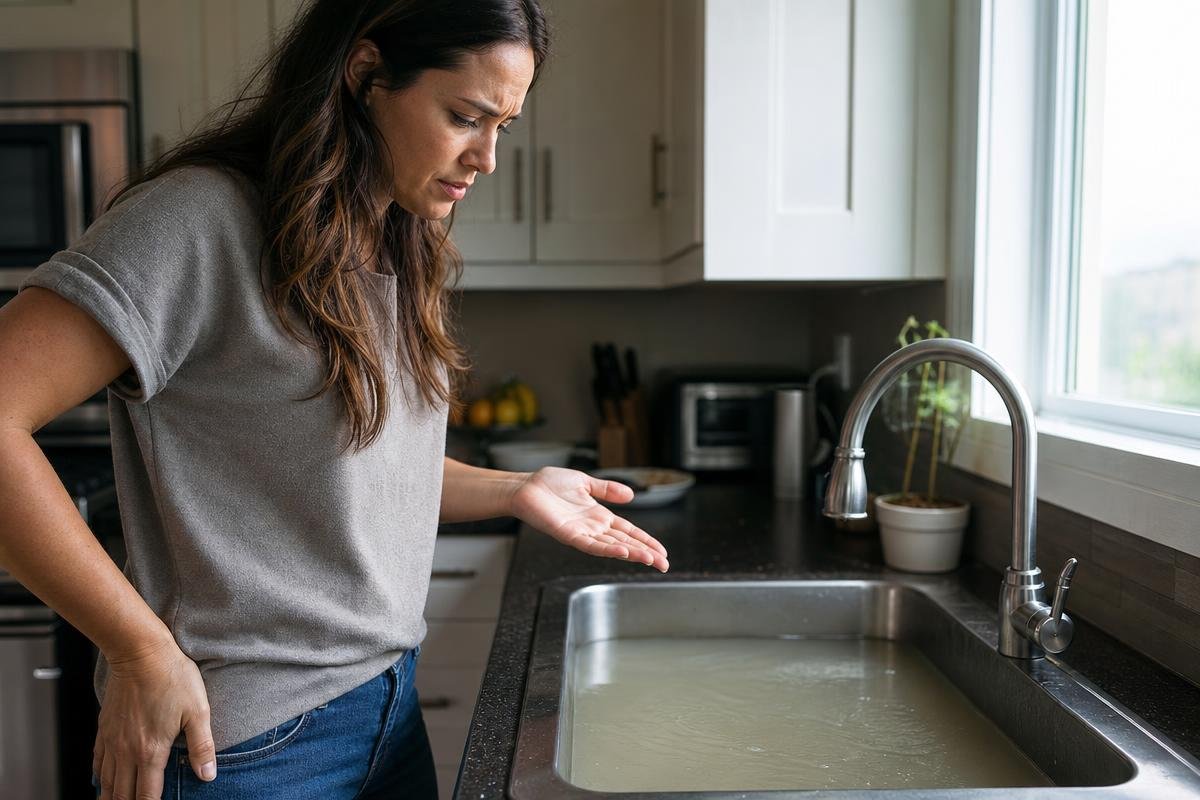
You're standing in the shower watching the water pool around your ankles. Or your kitchen sink is still half-full ten minutes after you finished the dishes. If you own a home in The Colony, TX, you've probably dealt with this more than once.
To unclog a drain, start with boiling water, then try a plunger, a baking soda and vinegar flush, a drain snake, and finally an enzyme cleaner, in that order. This guide gives you real, usable steps to try first. You'll get five DIY methods worth attempting, a clear list of warning signs that mean it's time to stop and call someone, and a look at what professional drain cleaning in The Colony actually involves. No guesswork. Just the information you need to decide what to do next.
Why Drains Clog in The Colony Homes
Drain clogs here are not random. The water supply, the soil, and the age of your pipes all work against you in ways that homeowners in other cities simply do not face. Understanding why your drain keeps backing up is the first step to fixing it the right way.
Hard Water Mineral Buildup
Water here comes from Lewisville Lake through the City of The Colony's municipal water system. That water runs approximately 8 to 12 grains per gallon depending on the source and season, which puts it firmly in the hard to very hard range. Calcium and magnesium slowly coat the inside of your drain pipes and P-traps, narrowing the opening over years.
The pipe is not broken. It is coated. That distinction matters because a coated pipe needs a different fix than a simple surface clog. Homes in established neighborhoods like Stewart Creek Estates, built in the 1980s and 1990s, have had decades for this scale to accumulate. If you clear the clog today and it returns in a few weeks, mineral buildup is often why. Professional drain cleaning can remove that scale in a way a plunger never will.
Clay Soil Movement
This area sits on Blackland Prairie expansive clay soil. That clay swells when it rains and shrinks during dry spells, which is a normal part of North Texas seasons. But that constant ground movement stresses your buried drain lines.
Over time, joints shift, pipes develop minor offsets, and those gaps become traps for debris and entry points for tree roots. If you have a recurring clog in the same drain, especially in a home with older drain infrastructure, the problem may be underground. No bottle of drain cleaner poured from your kitchen will ever reach a buried line offset. A sewer line inspection can confirm whether you have a structural issue before it becomes a costly repair.
Common Household Culprits
Most clogs start with ordinary debris. Hair and soap scum are the top offenders in bathroom drains. Grease, food particles, and flushed wipes cause most kitchen and toilet backups. These are the fixable ones, and the DIY methods in the next section are built around them.
The difference between a clog you can clear yourself and one that needs a pro usually comes down to what is causing it. Surface debris responds to simple tools. Mineral scale and pipe damage do not.
5 DIY Methods to Unclog a Drain Before Calling a Plumber
Most drain clogs start small and respond well to simple fixes you can do yourself. Try these five methods in order before reaching for the phone. If none of them clear the blockage, that tells you something important about what is happening deeper in the pipe.
1. Boiling Water
Boiling water melts and flushes away grease and soap buildup, making it your first move on a slow drain. Boil a full kettle, then pour it down the drain in two or three slow stages, waiting about 30 seconds between each pour. The heat carries the softened grease through the line.
One hard caution: skip this entirely on PVC pipes. Sustained high heat softens PVC joints and can loosen fittings. Never use boiling water on a toilet either. Use it only on metal drain lines.
2. Plunger Technique
A plunger creates a pressure differential that physically dislodges a solid blockage sitting in the trap. Use the right plunger for the right fixture. A cup plunger works on sinks and tubs. A flange plunger is built for toilets. Before you plunge a sink, stuff a wet rag into the overflow drain opening. If you skip that step, all the pressure you create escapes through the overflow and you get nothing.
Give it ten to fifteen firm, even strokes. You want steady pressure, not fast jabbing. That pressure is what breaks the blockage loose.
3. Baking Soda and Vinegar
A baking soda and vinegar flush breaks down hair, soap, and food buildup through a foaming reaction, though it will not touch mineral scale or a solid object. Pour half a cup of baking soda down the drain, then immediately follow with half a cup of white vinegar.
Cover the drain opening and wait 15 to 20 minutes. The CO2 fizzing action loosens organic debris from the pipe walls. Flush with hot (not boiling) water to clear it out.
4. Drain Snake or Zip-It Tool
A drain snake or barbed plastic tool physically hooks and pulls out hair and soap clogs the plunger cannot move. The Zip-It plastic barbed tool costs three to five dollars at any hardware store. Insert it into the drain, rotate it slightly, and pull straight out. You will probably be surprised by what comes out.
For deeper blockages, a hand-crank drain auger reaches 15 to 25 feet into the pipe. Feed it slowly and rotate as you push. Take your time near porcelain fixtures to avoid scratching them.
5. Enzyme Cleaners
Enzyme cleaners use live bacteria to slowly digest organic matter over 8 to 24 hours and are safe for every pipe material. Products like Bio-Clean or Green Gobbler work on PVC and cast iron alike. Use them after clearing a clog to keep buildup from coming back, not as a first-response tool for a full blockage.
Avoid caustic chemical drain cleaners if you have older cast iron drain lines, since the heat they generate warps PVC fittings and accelerates corrosion in thinning walls. In homes with hard water mineral buildup already narrowing the lines, that damage adds up fast. If DIY methods are not cutting it, our team can clear the blockage the right way without guesswork.
What NOT to Pour Down Your Drain: Mistakes That Make Clogs Worse
Some of the most stubborn drain problems we see come from well-meaning fixes that backfired. Knowing what to keep out of your pipes saves you from a much bigger repair bill down the road.
Chemical Drain Cleaners
Drano and similar products are not a plumber myth. They are a real problem. Sodium hydroxide and sulfuric acid formulas generate heat as they react with water. That heat warps PVC fittings and speeds up corrosion in pipes that already have thinner walls from years of mineral scale buildup. Homes in Frisco and Carrollton with aging metal drain lines face the same risk.
If the clog does not clear, your pipe is now full of caustic liquid. A plumber has to manage that safely before any real work can start. You are better off calling for professional drain cleaning before reaching for a bottle of chemicals.
Grease, Oil, and Fat
Hot grease goes down liquid and congeals as it cools, coating pipe walls and trapping every food particle that follows. Your garbage disposal grinds food, but it does not eliminate grease. The buildup is quietly damaging your drain line long before the water stops moving. By the time you notice a slow drain, the coating is already thick. If your disposal is part of the problem, our garbage disposal repair and installation team can assess the full picture.
Flushable Wipes
The package says flushable, but wipes do not break down the way toilet paper does. They catch on pipe joints and stack up into solid blockages. Cotton balls, dental floss, and paper towels behave the same way. None of them belong in your drain or toilet, regardless of what the label says.
When DIY Drain Methods Stop Working and You Need a Pro
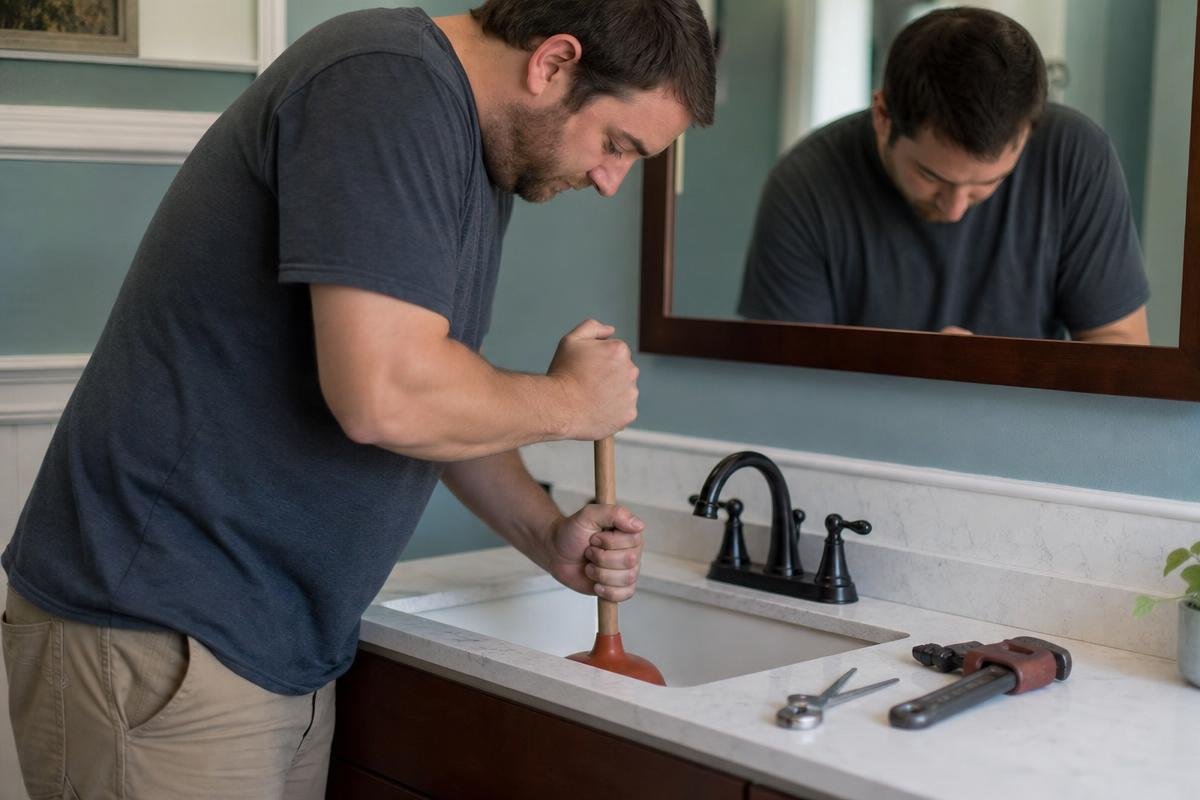
You tried the plunger. You ran a baking soda and vinegar flush. The water still drains slowly, or it stopped moving altogether. That tells you something. The clog is either deeper than DIY methods can reach, or there is a problem with the pipe itself. Here is how to read the signals.
Multiple Drains Clogging at Once
If your kitchen sink, bathroom sink, and tub are all slow at the same time, the problem is not in any individual drain. It is in the shared main sewer line. No home remedy reaches a main line blockage.
This is the point where you need a sewer line inspection, not another DIY attempt. A blockage that affects every fixture in your home will keep getting worse until the line backs up completely.
Gurgling Sounds and Sewage Smells
A gurgling toilet after you run the sink, or a sewer smell rising from a floor drain, is not just annoying. It means sewer gases, including hydrogen sulfide, are entering your home. That is a health concern, not a cosmetic one.
Address it before it becomes a serious safety problem. Call us right away. Our same-day emergency plumbing team can diagnose a venting or main line issue the same day you call at (945) 500-8335.
Recurring Clogs in the Same Drain
A drain that clears and re-clogs within a few weeks has either a partial obstruction sitting deeper in the line or a pipe defect, such as an offset joint, crack, or root intrusion point, that keeps catching debris. Homes in the Stewart Creek area, built in the 1980s and 1990s, are especially prone to this because of aging clay and cast iron sewer laterals. Our same-day drain cleaning service includes a camera inspection that finds the exact cause without guesswork.
You tried the right things first. Now the drain is telling you it needs professional attention. That is not a failure. That is just useful information.
If your drains keep coming back clogged or you smell sewer gas, call us at (945) 500-8335. We will find the problem and get it fixed the right way.
How We Clear Drains in The Colony
When DIY methods stop working, we bring the right tools to get the work done right. Our approach depends on what the drain actually needs, not a one-size-fits-all fix. Here is how our team handles drain cleaning in The Colony from start to finish.
Drain Snaking
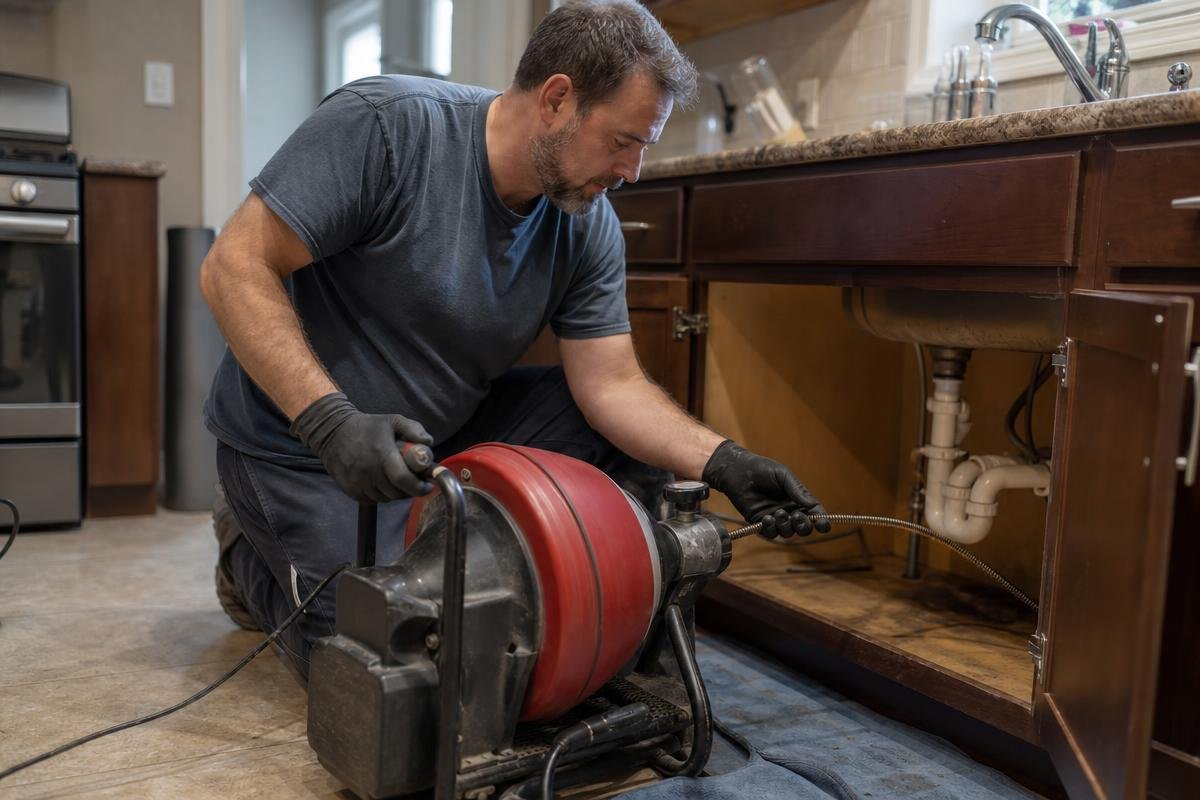
A hardware store hand-crank snake reaches maybe 15 to 20 feet. Our motorized drain snake reaches 50 to 100 feet into the line, clearing blockages well past the trap and into the main stack. For most straightforward residential clogs, this is the fastest and least disruptive first step.
Hydro Jetting
Hydro jetting pushes pressurized water through the pipe at 3,000 to 4,000 PSI. It does not just break up the clog. It scours the pipe walls clean, removing the grease film and mineral scale that cause the same drain to keep clogging. Homes in Frisco and Lewisville deal with similar hard water buildup, but the mineral scale that forms in local lines here is tied directly to the water chemistry we covered in the section on why drains clog. Our professional hydro jetting service is the right call for kitchen lines with grease buildup and main lines with root debris.
Camera Inspection
A drain camera is a flexible fiber-optic cable with a camera head that sends live video of the pipe interior directly to our screen. We can see root intrusion, pipe offsets, collapsed sections, and grease buildup at the exact location. No guesswork. Aqua Pure Plumbing uses camera inspections to make sure every repair is targeted, without unnecessary disruption to your home. If the camera reveals something deeper, we can connect you to our precision leak detection service before a small problem becomes a costly one.
Drain Maintenance Tips to Prevent Clogs in The Colony Homes
Preventing a clog is easier than clearing one. A few consistent habits protect your pipes year-round and keep emergency calls off your calendar.
Monthly Habits That Keep Drains Clear
The single best thing you can do right now is put a drain strainer in every shower and tub. Hair is the top cause of bathroom drain clogs, and a strainer catches it before it ever enters the pipe.
After washing dishes, run hot water for 30 seconds to flush grease residue down and out before it congeals on pipe walls. Once a month, pour a kettle of hot water down your kitchen drain to soften any grease film that has built up. Skip boiling water if you have PVC pipes.
Enzyme-based drain treatments are worth buying. They break down organic buildup safely and work on all pipe types. Use one monthly. Chemical drain cleaners are not a substitute for this kind of routine maintenance.
- Strainer in every shower and tub drain
- Hot water flush after every dish-washing session
- Monthly enzyme treatment for kitchen and bathroom drains
Hard water in the 75056 area accelerates mineral scale inside pipes faster than in softer-water cities like Frisco or Lewisville, which makes these habits matter more here.
When to Schedule Preventive Drain Cleaning
If a drain is running slower than it was six months ago, that is the right time to act, before it becomes a serious problem. Do not wait for a full backup.
Annual professional drain cleaning is the right interval for most homes in this area, especially those with a history of clogs or lines that have not been serviced in years. One cleaning per year keeps buildup from reaching the point where DIY drain cleaning no longer helps.
Drain Clogs in The Colony, TX and What Local Homeowners Deal With
Not every drain problem is the same, and where you live in the 75056 ZIP code matters more than most homeowners realize. The housing stock here splits into two distinct generations, and each one comes with its own drain headaches.
Homes Near Stewart Creek and The Tribute
Homes in the Stewart Creek corridor were built in the 1980s and 1990s. Many still have their original cast iron or galvanized steel drain lines. Decades of grease and mineral buildup have narrowed those pipes significantly. A plunger or fizzing rinse will not fix that kind of restriction.
Newer homes in The Tribute and Northshore communities have PVC drain lines, so pipe corrosion is not the issue. But they sit on the same Blackland Prairie clay that shifts every dry summer and wet spring. That movement stresses underground lines and opens gaps where roots find their way in. If your newer home keeps backing up, clay soil stress is worth investigating. Our same-day drain cleaning service covers both housing types across every neighborhood we serve.
Hard Water from Lewisville Lake
Municipal water here comes from Lewisville Lake through the City of The Colony's municipal water system. It runs hard, and that mineral load does not stop at your faucets. It builds inside P-traps and drain pipes too. If you notice scale on your fixtures, the same buildup is quietly narrowing your drains. You may even want to check out our faucet repair and installation page if scale has already damaged your fixtures.
We work out of 1671 Riverview Dr Ste 205, right here in the 75056 area, which means no long dispatch times and no out-of-area markup. Our team has 136 Google reviews at a 5-star average because we get the work done right, every time.
Frequently Asked Questions
What is the fastest way to unclog a drain?
It depends on the clog. For hair in a bathroom drain, a Zip-It tool pulls the blockage out in under two minutes. For a greasy kitchen drain, pour baking soda down the drain first, follow with white vinegar, wait five minutes, then flush with hot water. If neither method clears it within 15 minutes, the clog is deeper than any DIY tool will reach.
Is Drano safe to use on my pipes?
It can work on minor organic clogs, but it generates heat that warps PVC and speeds up corrosion in metal pipes. The bigger problem: if the clog does not clear, your pipe is now full of caustic liquid that is hard to remove safely. For routine maintenance, enzyme cleaners are a much safer choice. Save chemical drain cleaners for true emergencies, not regular use.
How much does professional drain cleaning cost in The Colony?
A standard snake service typically runs $100 to $300, depending on which drain and how deep the blockage sits. Professional hydro jetting for main lines or heavily fouled kitchen lines runs higher. We give you a firm price before any work begins, so there are no surprises on the invoice.
How do I know if the problem is in one drain line or the main sewer line?
One slow fixture points to an individual drain line. If two or more fixtures in different parts of your house are slow or backing up at the same time, the main sewer line is the likely cause. A gurgling toilet when you run the bathroom sink is another clear signal. A camera inspection confirms the exact location in minutes, so there is no guesswork about where to dig or snake.
Can a clogged drain cause a slab leak or water damage?
A clog does not directly cause a slab leak, but severe pressure buildup can stress pipe joints over time. More commonly, an ignored slow drain backs up and overflows at the fixture. Water pooling near the base of a toilet or under a sink cabinet needs attention right away, before it works its way into the subfloor or slab.
How often should drains be professionally cleaned?
Every 12 to 18 months works for most households. If you have a large family, a history of repeat clogs, or pipes from the 1980s or 1990s, annual service makes more sense. Hard water in this area accelerates mineral buildup inside drain lines, so most Frisco and Lewisville area homeowners we serve benefit from annual cleaning rather than waiting 18 months. Our same-day drain cleaning service is available seven days a week when a drain stops entirely.
If your drain is not clearing after trying the steps in this article, or you are seeing any of the warning signs we covered, call us at (945) 500-8335. We serve the area seven days a week, show up ready to fix it the same day, and give you a firm price before any work starts. You can also book with us online.
Ready to Get Started with Aqua Pure Plumbing?
Call (945) 500-8335 to speak with our team directly. We're ready to answer your questions, walk you through your options, and help you find the right solution for your needs. Whether you're just starting to plan or ready to move forward, we'll make the process simple and stress-free.
Reach out today and let's talk about how we can help.
Need a licensed plumber in The Colony?
We answer 7 days a week, 8 AM to 6 PM, with same-day service across The Colony and 13 nearby DFW cities.